The escalating global demand for sustainable business practices and products has placed unprecedented pressure on procurement managers, operations directors, sustainability officers, and supply chain executives. Across industries, from hospitality and food service to retail and institutional catering, the imperative to “go green” is non-negotiable. Yet, this shift has introduced a complex challenge: navigating the dense, often misleading landscape of “eco-friendly” labels, particularly for ubiquitous single-use items like straws. Terms such as “biodegradable,” “compostable,” and “plant-based” are frequently used interchangeably, creating a confusing environment for even the most astute decision-makers.
This ambiguity isn’t merely a semantic issue; it represents a high-stakes dilemma impacting brand reputation, operational compliance, and long-term environmental goals. A misstep in sourcing can lead to severe consequences, including accusations of greenwashing, regulatory penalties, and a profound disconnect with an increasingly eco-conscious customer base – a significant 80% of whom now prefer brands with clear sustainability commitments. The European Union’s ambitious Single-Use Plastics Directive, alongside a growing number of state-level bans across the United States, underscores a global regulatory push, transforming informed sourcing into an absolute imperative. Businesses must grasp the precise differences between these “green” claims not just to avoid fines, but to genuinely align with environmental mandates and consumer expectations, ensuring their investments in sustainable solutions deliver actual, verifiable impact. For a deeper understanding of this crucial distinction, explore our comprehensive B2B guide onBiodegradable vs. Compostable Straws.
Understanding the ‘Eco-Friendly’ Spectrum: A Deep Dive for Business Leaders
The journey of the drinking straw is a compelling reflection of human ingenuity and environmental awareness. From Marvin C. Stone’s innovative paper straw patent in 1888, born out of a desire to avoid the grassy taste and rapid deterioration of natural rye grass, to the widespread plastic dominance of the mid-20th century, convenience often overshadowed ecological impact. However, the 21st century has heralded a powerful resurgence of eco-friendly alternatives, primarily driven by a stark awakening to the catastrophic effects of plastic pollution on marine life. Viral moments, such as the widely shared 2015 video of a plastic straw being removed from a sea turtle’s nostril, ignited global public outrage, fueling powerful campaigns like #stopsucking and catalyzing significant policy changes. Cities like Seattle led the charge in 2018 with single-use plastic straw bans, followed by California’s “straw upon request” policy in 2019, and the EU’s sweeping ban on single-use plastics by 2021.
Cu toate acestea, această schimbare urgentă către durabilitate a dezvăluit o provocare critică: capcanele omniprezente ale afirmațiilor vagi „verzi”. Multe produse comercializate ca „biodegradabile” nu reușesc adesea să îndeplinească criteriile autentice pentru defecțiunea mediului, ceea ce duce la consecințe nedorite și riscuri semnificative de reputație pentru întreprinderi. Aici precizia devine primordială. Fără o înțelegere clară și aderarea la standardele certificate, companiile riscă să investească în soluții care oferă doar un strat superficial de eco-compatibilitate. O astfel de spălare ecologică erodează încrederea consumatorilor și poate anula însuși scopul adoptării de alternative durabile. Prin urmare, stabilirea recordului cu privire la termeni precum „biodegradabil” și „compostabil” nu este doar o chestiune de semantică, ci un imperativ strategic pentru aprovizionarea responsabilă și gestionarea deșeurilor.
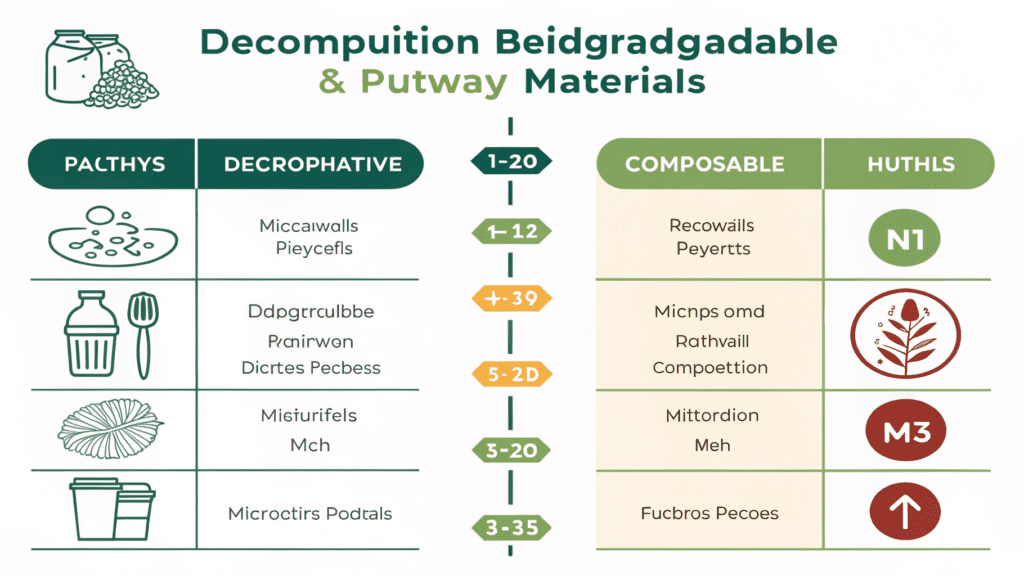
Biodegradable vs. Compostable: Unpacking the Critical Distinctions for Your Operations
To achieve verifiable sustainability, it’s crucial for B2B decision-makers to unpack the critical distinctions between biodegradable and compostable straws, understanding their implications for operational efficiency and environmental impact.
The Biodegradable Lens: What It Really Means for Your Supply Chain
Paiele biodegradabile sunt concepute pentru a se descompune în mod natural în timp prin activitate biologică, în primul rând cu ajutorul microorganismelor și enzimelor. Materialele includ adesea acid polilactic pe bază de amidon de porumb (PLA), hârtie generică, bambus sau grâu. În timp ce conceptul sună atrăgător, realitatea pentru lanțul dvs. de aprovizionare și gestionarea deșeurilor este mult mai complexă. Thetimpul de descompuneredeoarece aceste paie variază foarte mult, de la luni la ani, și sunt foarte imprevizibile. Defalcarea lor se bazează pe „condițiile potrivite” – niveluri specifice de căldură, umiditate și prezență microbiană – care sunt rareori îndeplinite în depozitele convenționale sau mediile naturale. De exemplu, paiele PLA pot persista câțiva ani la temperatura camerei în gropile de gunoi tipice.
A crucial concern is theenvironmental residuethey can leave behind. Many biodegradable bioplastics, particularly some forms of PLA, may still fragment into microplastic residues, continuing to contaminate soil and marine environments. Furthermore, some can leach chemicals as they slowly degrade, contrary to genuine eco-friendly claims. This ambiguity is compounded by a pervasivelack of universal certification. Many biodegradable products rely solely on manufacturer claims for decomposition capabilities, often lacking the stringent, third-party verified standards that truly ensure environmental safety. For an in-depth look at biodegradable options, consult our dedicated guide onPaiele biodegradabile.
The Compostable Advantage: Achieving Verifiable Circularity
Compostable straws represent a more advanced subset of biodegradable alternatives. They are specifically engineered to decompose completely into organic matter—water, carbon dioxide, and nutrient-rich biomass (humus)—within a short, defined timeframe under specific, controlled composting environments, leaving no harmful residues. These typically include materials like PHA (polyhydroxyalkanoates), sugarcane bagasse, and certified PLA. The key differentiator lies in theircontrolled decomposition. Compostable straws require specific conditions, namely high temperatures, controlled moisture levels, and active microbial environments, which are predominantly found inindustrial composting facilities. În timp ce câțiva sunt certificate pentru compostare acasă, mulți necesită ca instalațiile comerciale să se defecteze în mod eficient în câteva săptămâni sau luni, de obicei între 90 și 180 de zile.
Această defalcare rapidă, completă este garantată destandarde stricte de certificare. Organisme de renume, cum ar fi Institutul pentru Produse Biodegradabile (BPI), CMA și TÜV AUSTRIA (care eliberează certificări precum OK Compost Home/Industrial) oferă verificări de la terți care asigură că produsele îndeplinesc standarde stricte de mediu pentru descompunere, toxicitate și reziduuri. Această certificare oferă factorilor de decizie B2B asigurarea necesară pentru impactul real asupra mediului și conformitatea.
| Criteriu | Paiele biodegradabile | Paie compostabile |
|---|---|---|
| Definiție fundamentală | Se descompune în mod natural în timp prin activitatea biologică. | Decomposes completely into organic matter (CO2, H2O, biomass) in controlled conditions. |
| Decomposition Speed | Months to years; highly variable and often unpredictable. | Weeks to months (e.g., 90-180 days) in industrial composting facilities. |
| Required Conditions | “Right conditions” (often unspecified and rarely met in nature/landfill). | Specific high temperatures, moisture, and microbial activity (industrial or certified home compost). |
| Environmental Residue | Can leave microplastics or leach chemicals; does not enrich soil. | No harmful toxic residues or microplastics; creates nutrient-rich humus. |
| Certification Standards | Often lacks universal certification; relies on manufacturer claims. | Certified by recognized bodies (BPI, TÜV AUSTRIA, CMA) ensuring strict environmental standards. |
| Common Materials | Generic PLA, paper (sometimes with plastic coatings), wheat, bamboo. | Certified PLA, PHA (e.g., from canola oil), sugarcane bagasse, advanced paper. |
| Implicații ale costurilor | Potentially lower upfront cost, but higher environmental risk and potential for greenwashing. | Generally higher initial cost, but stronger, verifiable sustainability claim and brand value. |
| Waste Management Path | Primarily landfill-bound, where decomposition is negligible; can contaminate recycling. | Requires access to industrial composting infrastructure; some are home compostable. |
| Brand Reputation Impact | Risk of greenwashing accusations if claims are not met. | Strong, verifiable message of genuine environmental responsibility. |

Industry Insights & Future Outlook: Positioning Your Business for Sustainable Leadership
Dincolo de aceste cuvinte la modă, companiile trebuie să se confrunte cu mai multe concepții greșite și provocări critice. O preocupare semnificativă, în special cu multe paie de hârtie și bambus, esteProblema PFAS. Studies have detected per- and polyfluoroalkyl substances (PFAS), known as “forever chemicals,” in a high percentage of these products. These chemicals, used for water resistance, do not easily break down and have been linked to serious health issues, fundamentally undermining their eco-friendly claims. This issue necessitates diligent sourcing and supplier transparency. For more on the compliance and ROI implications of your choices, read our guide onBiodegradable Straws: B2B Compliance and ROI.
Another stark reality is theIndustrial Composting Dilemma. Even truly “compostable” straws often end up in landfills due to inadequate composting infrastructure. The US, for example, has just over 100 qualified industrial composting facilities, making proper disposal challenging for many businesses and consumers. This infrastructure gap negates the intended benefits and highlights the need for broader systemic changes. Furthermore, the perennial issue ofdurability vs. customer experiencepersists. Paper straws, despite advancements, are frequently criticized for becoming soggy and losing structural integrity, leading to a poor user experience and potentially increased waste if multiple straws are used. Finally,accessibility concernsnu poate fi trecută cu vederea. Pentru persoanele cu dizabilități, înmuierea rapidă a paielor de hârtie sau rigiditatea alternativelor precum metalul sau sticla pot prezenta provocări semnificative și riscuri de siguranță, făcând trecerea de la paiele flexibile din plastic o problemă capabilă dacă nu este abordată cu atenție.
These challenges are not insurmountable; rather, they serve as crucial considerations for businesses positioning themselves for sustainable leadership. The global compostable straws market, valued at approximately USD 1.8 billion in 2024, is projected to reach USD 3.8 billion by 2035, growing at a robust CAGR of 7.1%. The broader eco-friendly straw market is expected to surge from USD 12.3 billion in 2025 to nearly USD 25.1 billion by 2035, driven by stringent plastic bans, surging consumer demand for sustainable products, and proactive corporate sustainability initiatives. The foodservice sector, accounting for 52.8% of the compostable straws market in 2025, is a key demand driver, with major chains like McDonald’s and Starbucks investing in compostable alternatives.

In terms ofkey material trends, advanced paper straws are expected to dominate the compostable market, holding a 44.3% share in 2025. This is due to continuous innovation in multi-ply construction and moisture-resistant coatings that prevent sogginess without compromising biodegradability. Certified PLA straws, derived from plant starches like corn or sugarcane, also continue to gain traction, though their reliance on industrial composting remains a critical point of consideration. However, the most exciting developments lie innext-generation innovations. Paiele polihidroxialcanoaților (PHA), de exemplu, sunt biopolimeri de ultimă generație, care imită plasticul tradițional, dar oferă o biodegradabilitate robustă în diverse medii, inclusiv în apă marină, sol, casă și compost industrial, fără a lăsa microplastice. „Paiele Phade”, fabricate din PHA, este un exemplu excelent al acestei tehnologii, concepută pentru a rezista la lichide fierbinți de până la 100°C, rămânând în același timp aprobat de FDA și fără PFAS.
Beyond PHA, “hyper-compostable” solutions are emerging. Loliware, a pioneering startup, has developed seaweed-based straws that look and feel like plastic, yet rapidly biodegrade in the ocean within weeks and can even be eaten. Researchers are also exploring bacterial cellulose straws, produced by bacteria feeding on sugar, which are reported to be stronger than paper, cost-comparable to plastic, and capable of breaking down without industrial composting. These innovations are reshaping the landscape of sustainable packaging, moving towards solutions that seamlessly integrate with existing consumer habits while minimizing environmental impact.
Manufacturing advancementsare also crucial, with advanced automated systems capable of producing thousands of straws per hour, employing biodegradable paper rolls and food-safe adhesives, further improving durability and cost-effectiveness. This trend aligns with a broader focus oncircular economy integration, fostering partnerships between manufacturers and composting facilities to streamline end-of-life disposal and repurposing. Regionally, North America has historically been a dominant market, with the US projected for a 7.5% CAGR in compostable straws. Asia-Pacific, however, held a significant 48.5% market share in the eco-friendly straws market in 2024, driven by expanding retail and consumer spending, and is poised for the fastest growth. Europe, with its stringent regulations, also remains a key market. These strategic opportunities allow forward-thinking businesses to leverage these trends for genuine differentiation, ensuring compliance, mitigating environmental risks, and ultimately building long-term brand value.
Paving Your Path to Authentic Sustainability: Next Steps for Your Business
Paving your path to authentic sustainability requires a proactive and informed strategy. Begin by conducting a thorough audit of your current straw usage, waste streams, and local composting infrastructure to understand your unique needs.Prioritize certified options, insisting on straws with verifiable certifications like BPI or TÜV AUSTRIA to ensure genuine environmental benefits and avoid the pitfalls of greenwashing. Demand radical transparency from your suppliers, asking for detailed material breakdowns, decomposition data, and proof of certifications. Crucially,educate your team and customersprin strategii de comunicare clare cu privire la metodele adecvate de eliminare și beneficiile ecologice ale paielor durabile alese. Explorați soluții inovatoare, cum ar fi PHA sau paiele avansate de hârtie, care oferă performanțe superioare și opțiuni mai largi de degradabilitate. Luați în considerare o abordare pe mai multe direcții, combinând opțiunile compostabile de unică folosință cu alternative reutilizabile, acolo unde este cazul pentru contextul dumneavoastră operațional specific. În cele din urmă, conectați-vă cu experți și colaborați cu consultanți în sustenabilitate sau furnizori specializați pentru a personaliza o strategie de paie care se aliniază perfect cu nevoile dvs. de afaceri și cu obiectivele de mediu.
Don’t let greenwashing obscure your commitment to genuine environmental stewardship. Embrace the opportunity to lead in a market projected to reach over $25 billion, mitigate regulatory risks, and elevate your brand’s market position by delivering verifiable sustainability. Ready to transform your packaging strategy with truly sustainable and certified straw solutions? Contact us today for a personalized consultation and a comprehensive assessment of your business’s eco-friendly straw needs.
întrebări frecvente
Biodegradable straws break down naturally over time through biological activity, but the timeline and environmental conditions are often undefined and may take months or years. Compostable straws are a subset designed to completely decompose into organic matter (water, CO₂, biomass) within a short, specified timeframe (about 90–180 days) under controlled industrial composting conditions, leaving no harmful residues.
Certification by organizations such as BPI (Biodegradable Products Institute), CMA, or TÜV AUSTRIA provides third-party verification that compostable straws meet strict environmental standards. This ensures they break down completely within a specified timeframe, leave no toxic residues, and are safe for their intended composting environment. Without certification, compostability claims can be misleading.
PFAS (per- and polyfluoroalkyl substances) are synthetic chemicals often used to make paper and bamboo straws water-resistant. They are called “forever chemicals” because they do not break down easily in the environment or the human body and are linked to various health risks. Their presence undermines the eco-friendly claims of straws and poses compliance and safety concerns.
Paiele compostabile sunt concepute pentru a se descompune, dar numai dacă ajung la instalațiile potrivite. Multe au nevoie de medii industriale de compostare cu temperaturi ridicate și umiditate controlate. Dacă sunt plasate în gropile de gunoi convenționale, acestea pot persista ani de zile, ca plasticele tradiționale. Unele materiale mai noi sunt compostabile acasă sau chiar biodegradabile marine, dar eliminarea adecvată rămâne critică.