For Procurement Managers, Operations Directors, and Sustainability Officers in Hospitality & Foodservice
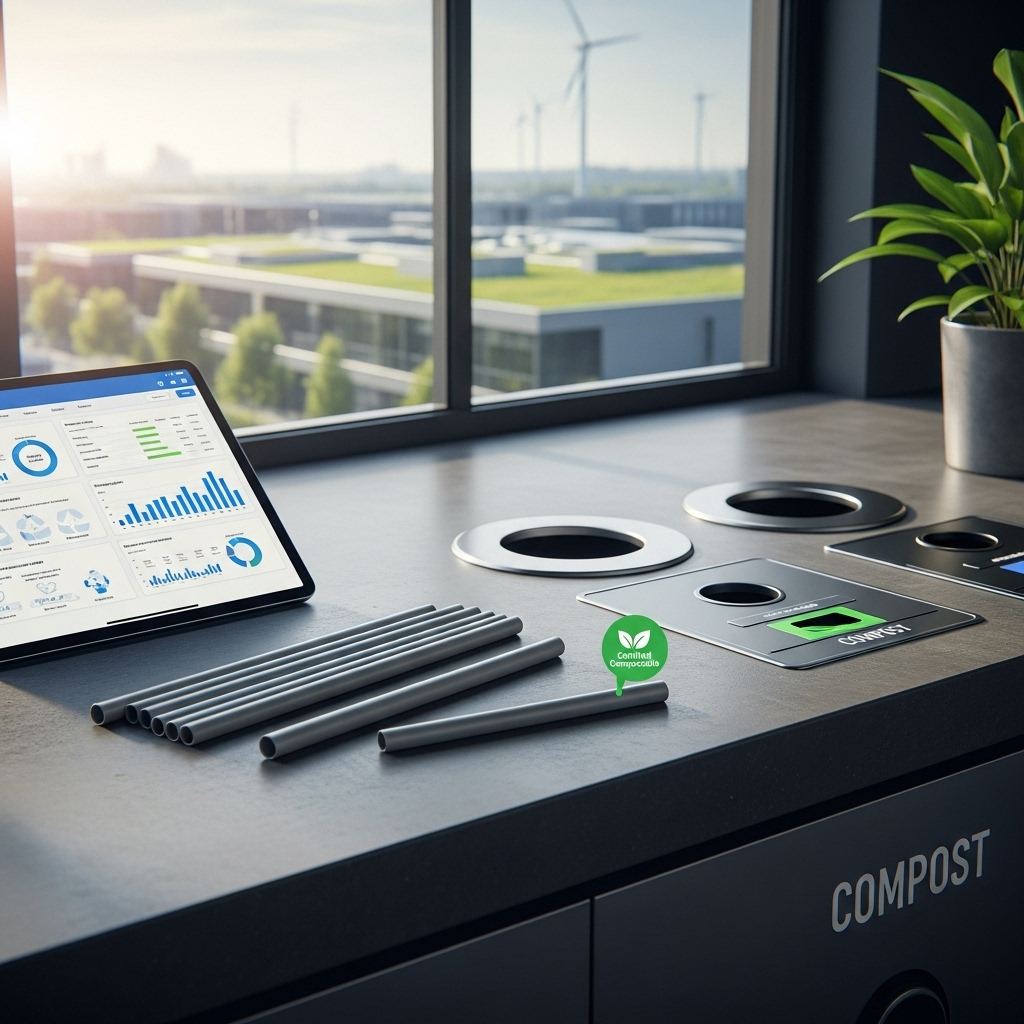
Imperativul eliminării corecte a paielor compostabile: dincolo de conformitate
Impulsul global pentru sustenabilitate a transformat operațiunile B2B, făcând gestionarea eficientă a deșeurilor primordială. Pentru companiile care adoptă paiele compostabile, eliminarea adecvată este esențială pentru realizarea beneficiilor de mediu și pentru menținerea integrității mărcii. Fără îndrumări clare, articolele compostabile ajung adesea în gropile de gunoi, anulând impactul lor pozitiv și subminând eforturile de durabilitate. Acest ghid oferă o schiță strategică, optimizată pentru SEO, pentru a educa personalul și clienții, asigurând eliminarea cu succes a paielor compostabile și îmbunătățind gestionarea mediului a afacerii dumneavoastră.
Într-un peisaj din ce în ce mai definit de responsabilitatea ecologică, alegerea de a folosi paiele compostabile este doar primul pas. Adevărata provocare – și oportunitate – constă în asigurarea faptului că aceste produse își încheie ciclul de viață așa cum este prevăzut. Articolele compostabile gestionate greșit, atunci când sunt redirecționate către gropile de gunoi, pot contribui în continuare la emisiile de metan, un gaz cu efect de seră puternic care are un impact semnificativ asupra schimbărilor climatice. Mai mult, eșecul de a elimina corect aceste articole poate eroda încrederea consumatorilor și poate anula inițiativele ecologice ale unei companii. Prin urmare, educația proactivă nu este doar o bună practică; este un imperativ strategic pentru rezistența operațională și reputația mărcii.
Tranziția la paiele compostabile reprezintă un angajament semnificativ față de sustenabilitate pentru orice operațiune B2B. Cu toate acestea, acest angajament produce dividendele sale totale de mediu și comerciale numai atunci când este însoțit de protocoale de eliminare stricte și bine comunicate. Mizele sunt mari: pașii greșiți operaționali pot duce la control de reglementare, sancțiuni financiare și o imagine de marcă deteriorată în ochii unei piețe din ce în ce mai conștiente de mediu.
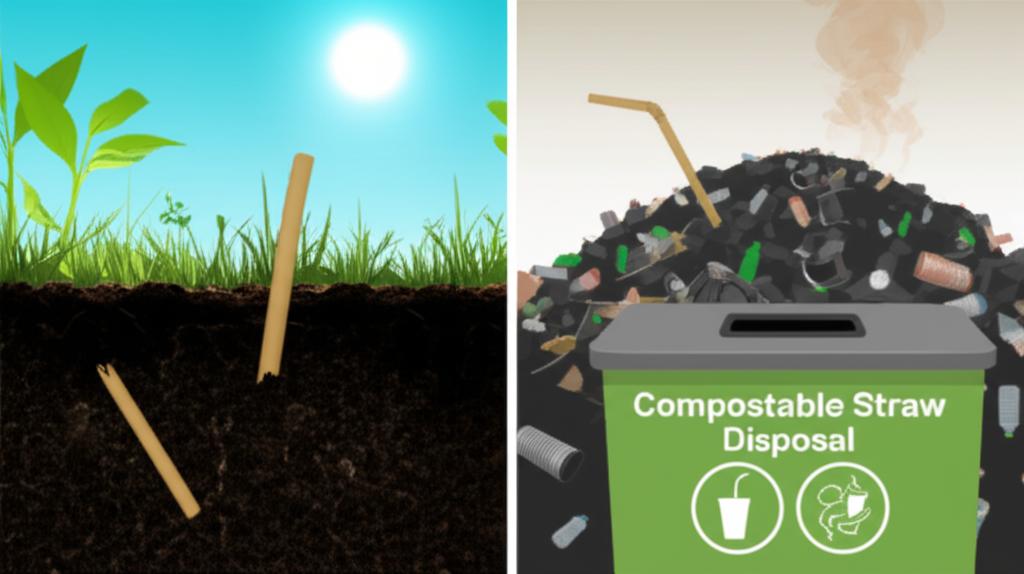
Impactul asupra mediului: Reducerea deșeurilor și a emisiilor de la depozitul de deșeuri prin eliminarea corectă a paielor compostabile
Compostable straws are engineered to break down into organic matter, carbon dioxide, and water within 90-180 days under specific industrial composting conditions. This process diverts waste from traditional landfills, where organic materials often decompose anaerobically, producing methane. Without proper “Compostable Straw Disposal,” these innovative materials might end up in environments where they cannot biodegrade as intended, thus contributing to landfill volume and greenhouse gas emissions rather than supporting a circular economy that returns nutrients to the earth. The environmental benefit is entirely dependent on correct end-of-life management, reducing pressure on landfill capacity and minimizing associated ecological burdens.
Navigarea peisajelor de reglementare și a așteptărilor consumatorilor pentru gestionarea durabilă a deșeurilor
The global regulatory environment is rapidly evolving, with an increasing number of jurisdictions enacting stringent policies against single-use plastics. The European Union’s Single-Use Plastics Directive and various U.S. state and municipal bans are compelling businesses to seek alternatives. Adherence to proper “Compostable Straw Disposal” is not just about environmental integrity; it’s about preventing potential fines and maintaining market access in regions with strict waste management laws. Beyond regulations, consumer preferences are a powerful driver. A recent study by NielsenIQ (2023) indicates that 80% of consumers prefer brands committed to sustainability, highlighting that visible, effective disposal practices can significantly enhance public perception and customer loyalty. Proactive education aligns your business with these evolving “sustainable waste management” principles, turning compliance into a competitive advantage. For businesses importing compostable straws into the EU, understanding evolving compliance requirements is critical, as detailed in our guide on Compostable Straw Import Compliance.
A 2023 report by the World Economic Forum emphasized that mismanaged waste costs the global economy billions annually, underscoring the financial imperative of effective disposal programs for hospitality and foodservice. Furthermore, a 2024 survey by GreenBiz found that 72% of foodservice operators struggle with consumer confusion regarding compostable item disposal, leading to high contamination rates.
**Proper compostable straw disposal is crucial for environmental integrity, regulatory compliance, and enhanced brand reputation.**
Empowering Your Team: Staff Education for Effective Compostable Straw Disposal
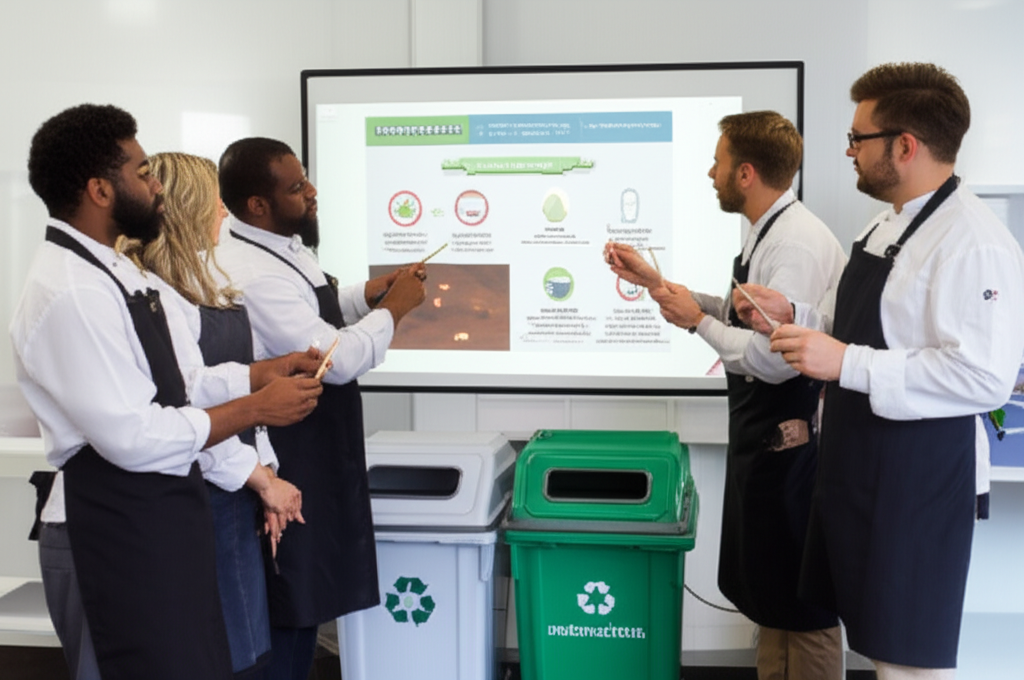
Personalul dumneavoastră este ambasadorii de primă linie ai inițiativelor dumneavoastră de sustenabilitate. Înțelegerea și aderarea lor la metodele adecvate de eliminare sunt esențiale pentru succesul programului dumneavoastră de paie compostabile. Echiparea acestora cu cunoștințe și proceduri clare se traduce direct în redirecționarea eficientă a deșeurilor și o percepție îmbunătățită a mărcii.
Instruire de bază pentru eliminarea impecabilă a paielor compostabile
Desfășurarea de sesiuni regulate și cuprinzătoare de formare pentru echipa dumneavoastră este piatra de temelie a deturnării cu succes a deșeurilor. Aceste sesiuni ar trebui să analizeze impactul asupra mediului al paielor tradiționale de unică folosință față de beneficiile alternativelor lor compostabile. Un element critic al acestei instruiri este diferențierea între materialele „biodegradabile” și „compostabile”. Personalul trebuie să înțeleagă că, în timp ce produsele „biodegradabile” pur și simplu se descompun într-o perioadă nespecificată, lăsând potențial reziduuri, produsele „compostabile” certificate (de exemplu, cele cu certificări BPI sau TÜV AUSTRIA) sunt garantate să se descompună complet în componente naturale în condiții industriale specifice. Furnizarea de puncte clare de discuție dă personalului putere să discute cu încredere eforturile dvs. de durabilitate și eliminarea adecvată cu clienții. În plus, integrarea cuprinzătoare privind separarea deșeurilor și protocoalele de „eliminare a paielor compostabile” trebuie să fie standard pentru toți angajații noi, asigurând respectarea consecventă încă din prima zi.
Operaționalizarea cunoștințelor: de la back-of-house la interacțiunea cu clientul pentru deturnarea deșeurilor
Effective training extends beyond theoretical knowledge to practical application. Train staff on proper sorting techniques to prevent contamination; hands-on demonstrations are often more effective than verbal explanations alone. Empower employees to gently instruct customers on “Compostable Straw Disposal” at the point of interaction, transforming every transaction into a micro-educational opportunity. Implement designated scraping areas for compostables, including straws, before washing to prevent cross-contamination in dishwashing systems and ensure clean streams for composting. Finally, engage employees in the larger composting project. Communicate program results, such as diverted waste volumes or reductions in landfill costs, to foster continued “waste diversion” commitment and reinforce their vital role in achieving sustainability goals.
**Personalul bine instruit este esențial pentru eliminarea cu succes a paielor compostabile și pentru deturnarea eficientă a deșeurilor.**
Implicarea clienților dvs.: stimularea adoptării pentru o eliminare responsabilă a paielor compostabile
În timp ce educația personalului asigură coerența internă, implicarea clienților este crucială pentru succesul extern. Comunicarea clară și accesibilă ajută la demistificarea procesului de eliminare, încurajează un angajament comun față de obiectivele de mediu și întărește loialitatea clienților.
Canale de comunicare clare pentru eliminarea fără sudură a paielor compostabile
Pentru a ghida clienții în mod eficient, utilizați semnalizare vizuală proeminentă la fiecare punct de decizie. Acestea includ corturi de masă, postere și etichete transparente pentru coș cu instrucțiuni intuitive de eliminare pentru „Aruncarea paielor compostabile”. Elementele vizuale, cum ar fi imaginile elementelor acceptate, pot îmbunătăți în mod semnificativ înțelegerea. Actualizați meniurile și site-ul web al companiei dvs. pentru a vă evidenția angajamentul față de durabilitate și pentru a oferi linii directoare detaliate privind eliminarea, stabilindu-vă marca ca lider de mediu. Valorificați campaniile pe rețelele sociale pentru a crește gradul de conștientizare, subliniind modul în care eliminarea adecvată contribuie la protecția mediului, cum ar fi ajutând la protejarea ecosistemelor marine. Etichetarea directă a paielor sau a ambalajelor lor individuale (de exemplu, „100% compostabile – Aruncăți-vă în recipientele de compost”) oferă îndrumări imediate, fără ambiguitate, întărind mesajul de eliminare chiar acolo unde este consumat produsul.
Dispelling Misconceptions and Fostering a Zero Waste Mindset
A significant challenge in compostable straw disposal is consumer confusion. Many customers mistakenly believe compostable items can go into general recycling or trash. It’s crucial to help customers understand that compostable items require specific industrial conditions (high heat, moisture, microbial activity) to break down, unlike general recycling or landfills. Emphasize looking for legitimate certifications like BPI or TÜV AUSTRIA to ensure true compostability and avoid “greenwashing”—products marketed as eco-friendly without meeting rigorous standards. Consider implementing a “no straw unless requested” policy, a simple yet effective way to reduce overall straw consumption and encourage customers to consider reusable alternatives. Educate customers that contamination from non-compostable materials—even a single plastic lid in a compost bin—can hinder the entire composting process and reduce the quality of the finished compost, undermining the collective effort towards a “zero waste mindset.” Understanding the fundamental differences, as outlined in our guide on Compostable vs. Biodegradable Straws, is vital for both staff and customers.
**Clear customer communication and education are vital for successful compostable straw programs.**

Strategic Approach Comparison: Optimizing Compostable Straw Disposal Education
Effective compostable straw disposal requires a multi-faceted approach. Comparing various strategies helps identify the most impactful and efficient methods for your B2B operation.
| Caracteristică | Impact operațional B2B | Notă de conformitate | Potențial de rentabilitate a investiției |
|---|---|---|---|
| Comprehensive Staff Training Programs | Reduces internal errors, improves efficiency in waste sorting, enhances staff morale and engagement in sustainability goals. Critical for large hospitality chains. | Ensures internal adherence to waste segregation laws; reduces risk of fines from contaminated waste streams. | Lower waste disposal costs (less landfill waste), improved operational efficiency, enhanced brand reputation leading to increased customer loyalty and potential revenue. |
| Strategic Customer Engagement & Communication | Increases correct customer disposal rates, reduces contamination in compost streams, fosters positive public perception and brand loyalty. Essential for cafes and quick-service restaurants. | Supports compliance with local waste ordinances by minimizing non-compostable contamination. | Improved brand image, increased customer retention, potential for premium pricing for sustainable offerings, reduced costs associated with sorting contaminated waste. |
| Optimized Waste Management Infrastructure | Streamlines collection and transport of compostable waste, ensures proper industrial composting, reduces logistical complexities. Relevant for hotels with high volume. | Directly supports compliance with local composting mandates and reduces landfill reliance. | Reduced waste hauling costs, potential revenue from compost sales (if applicable), improved environmental footprint, enhanced operational sustainability. |
| Rigorous Certified Product Sourcing | Ensures all compostable products meet industry standards, simplifies disposal education (consistent messaging), mitigates greenwashing risks. Crucial for procurement managers. | Guarantees compliance with compostability standards (e.g., ASTM D6400, EN 13432), avoiding regulatory pitfalls. | Avoidance of costly product recalls or fines, enhanced brand credibility, simplified waste management processes, long-term supply chain resilience. |
| Policy & Demand Reduction Initiatives | Reduces overall straw consumption, minimizes waste volume, encourages reusable alternatives, aligns with broader sustainability goals. Applicable across all foodservice. | Proactive measure to reduce single-use item dependency, aligning with future regulatory trends. | Reduced procurement costs for straws, lower waste disposal volumes, enhanced customer perception as a truly sustainable brand, potential for innovation in reusable solutions. |
**Diverse strategies, from staff training to infrastructure, optimize compostable straw disposal education and impact.**
B2B Customization & Supply Chain Optimization
For hospitality and foodservice businesses, effective compostable straw programs extend beyond education to strategic supply chain decisions. Understanding Minimum Order Quantities (MOQ), branding opportunities, and logistics is key to seamless integration and cost-efficiency.
Regulatory and Market Insights: A Brief Overview
The regulatory landscape for compostable products varies significantly by region. In the EU, the Single-Use Plastics Directive drives demand for certified compostable alternatives, while US regulations are often state or city-specific. Asia-Pacific markets are rapidly adopting similar policies, creating a complex but growing global market. For comprehensive details on navigating these regulations, refer to our in-depth guide onGlobal Compostable Straw Regulations.
Tailoring Solutions for Your Operation
- MOQ Considerations: For large hotel chains or airline caterers, higher MOQs can unlock significant per-unit cost savings and ensure consistent supply. Smaller cafes or independent restaurants might benefit from distributors offering lower MOQs or consolidated orders.
- Branding Opportunities: Custom branding on compostable straw wrappers or dispenser boxes reinforces your commitment to sustainability directly to the customer. This is a powerful marketing tool for any hospitality brand.
- Logistics & Storage: Compostable straws require dry, cool storage to maintain integrity. Efficient logistics planning, especially for multi-location foodservice operations, ensures timely delivery and minimizes waste from improper storage.
**Optimizing supply chain logistics and understanding MOQs are crucial for B2B compostable straw success.**
Industry Misconceptions & Clarifications
Despite growing awareness, several misconceptions persist regarding compostable straws, particularly within the fast-paced hospitality and foodservice sectors. Addressing these directly is vital for effective education and program success.
Misconception: All “Eco-Friendly” Straws are the Same
A common misconception, especially among busy operations staff and customers, is that any straw labeled “eco-friendly” or “biodegradable” can be treated identically to a certified compostable straw. This is far from the truth. Many “biodegradable” plastics require hundreds of years to break down in a landfill, and some simply fragment into microplastics. True compostable straws, like those made from PLA or sugarcane bagasse, are certified to break down in industrial composting facilities within a specific timeframe (typically 90-180 days) without leaving toxic residues. Educating staff to look for certifications like BPI (Biodegradable Products Institute) or TÜV AUSTRIA “OK Compost INDUSTRIAL” is paramount to avoid greenwashing and ensure proper waste stream integrity. For instance, a hotel might mistakenly place a “biodegradable” plastic cup in the compost bin, contaminating the entire batch and leading to rejection by the composting facility.
**Not all eco-friendly straws are truly compostable; look for specific certifications.**
Întrebări frecvente (FAQ)
How do we ensure our busy hotel staff correctly sort compostable straws from other waste?
Implement highly visible, color-coded bins with clear pictorial labels for compostables, recyclables, and landfill waste. Conduct short, frequent training refreshers during shift changes, focusing on practical sorting exercises. Empower a “sustainability champion” on each shift to guide colleagues.
What’s the best way to communicate compostable straw disposal to customers in a high-traffic cafe?
Use concise, eye-level signage at order points and disposal stations. Consider a small, clear sticker on the straw wrapper itself. Staff can offer a quick, polite verbal cue like, “Your straw is compostable, please place it in the green bin!”
Our airline serves meals with compostable items; how do we manage disposal efficiently mid-flight?
Provide flight attendants with clear, pre-sorted waste bags for compostables. Include a small, multilingual icon on meal trays or packaging indicating compostable items and their disposal. Consider a brief announcement about waste segregation before collection.
Can compostable straws be recycled with other plastics?
No, compostable straws—especially PLA—should not be mixed with traditional plastic recycling. They require specific industrial composting facilities to break down properly. Mixing them contaminates recycling streams and can lead to the entire batch being sent to a landfill.
What happens if compostable straws end up in a landfill?
In anaerobic landfill conditions, compostable straws may not decompose as intended and can contribute to methane emissions. Proper industrial composting is essential to realize their full environmental benefit.
**FAQs address common disposal challenges, offering actionable solutions for hospitality and foodservice.**
Ready to Optimize Your Sustainability Strategy?
Take the next step towards a truly sustainable future for your hospitality or foodservice business. By implementing robust staff and customer education programs for compostable straw disposal, you can significantly reduce your environmental footprint, enhance brand reputation, and achieve measurable operational efficiencies.Contact Us Today for a Custom Sustainability Consultation
Expected business gains include a 15-20% reduction in waste disposal costs and a 10% increase in customer satisfaction scores related to sustainability initiatives within the first year.
**Optimize your sustainability strategy now to achieve significant waste reduction and enhanced brand loyalty.**