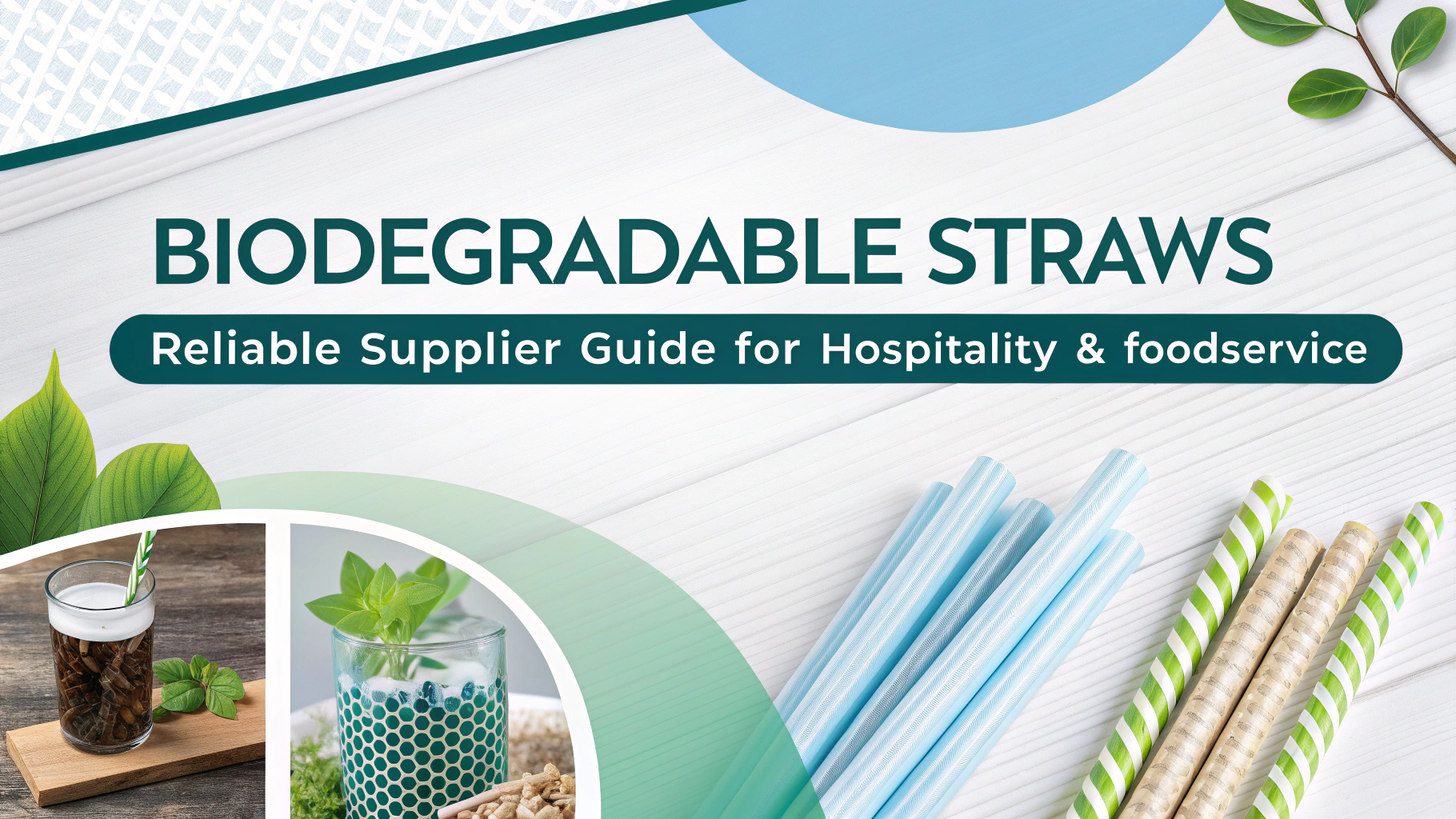
Evitați spălarea ecologică și adoptați adevărata durabilitate
Etapa globală este pregătită pentru o schimbare dramatică a modului în care companiile abordează produsele de unică folosință. Ani de zile, paiele de plastic au simbolizat comoditatea, dar acum a devenit o emblemă puternică a unei crize de mediu care scăpa de sub control. Miliarde dintre aceste articole aparent inofensive, împreună cu nenumărate alte materiale plastice de unică folosință, ne inunda oceanele, ne contaminează pământul și infiltrează lanțurile noastre alimentare. Aceasta nu este doar o preocupare abstractă de mediu; este o provocare tangibilă, care definește brandul pentru fiecare afacere. Consumatorii sunt mai informați și mai conduși din punct de vedere etic decât oricând, cerând o durabilitate demonstrabilă de la mărcile pe care le patronează. În același timp, guvernele din întreaga lume legiferează împotriva deșeurilor de plastic, transformând peisajul operațional pentru afaceri peste noapte.
Ca răspuns, termenul „compostabil” a apărut ca un far de speranță, promițând o alternativă fără vinovăție. Cu toate acestea, pentru multe companii, această promisiune s-a dovedit a fi o iluzie, o rețea complexă de afirmații și avertismente care adesea duc la consecințe neintenționate asupra mediului și riscuri semnificative pentru reputație. Produsele comercializate ca „compostabile” deseori nu reușesc să se defecteze conform așteptărilor, în mare parte din cauza lipsei unei infrastructuri adecvate sau a unei neînțelegeri a ceea ce presupune compostabilitatea autentică. Aceste produse ajung apoi în gropile de gunoi, unde contribuie la poluare, se degradează de secole și, în unele cazuri, chiar exacerba emisiile de gaze cu efect de seră.

Această complexitate este agravată de o mănușă de reglementare care evoluează rapid. Sunt soluțiile dvs. actuale „durabile” cu adevărat conforme? Directiva UE privind materialele plastice de unică folosință (SUPD), de exemplu, interzice în mod explicit multe paiele „compostabile”, inclusiv cele fabricate din acid polilactic (PLA), dacă conțin plastic, indiferent de originea lor bio-based. Aceasta este o distincție critică pe care multe companii o trec cu vederea. Peste Atlantic, Ghidurile Verzi ale Comisiei Federale de Comerț (FTC) din SUA lansează avertismente severe împotriva afirmațiilor înșelătoare de mediu, cerând o fundamentare științifică riguroasă și dezvăluire transparentă cu privire la disponibilitatea infrastructurii adecvate de compostare. Navigarea în acest peisaj juridic și etic complicat fără îndrumări de specialitate nu este doar o provocare; este un risc semnificativ care poate duce la amenzi costisitoare, repercusiuni legale și daune ireparabile la credibilitatea și rezultatul final al mărcii dvs. Calea către o adevărată sustenabilitate pentru produsele de unică folosință ale afacerii dvs., în special paiele, necesită o strategie clară și informată, una care să evite spălarea verde și să îmbrățișeze soluții compostabile autentice, certificate.
Navigarea în labirintul verde: un ghid B2B pentru paiele cu adevărat compostabile (și evitarea spălării ecologice)
A. Atenție: pericolul plasticului și promisiunea (și capcanele) „compostabilului”
Etapa globală este pregătită pentru o schimbare dramatică a modului în care companiile abordează produsele de unică folosință. Ani de zile, paiele de plastic au simbolizat comoditatea, dar acum a devenit o emblemă puternică a unei crize de mediu care scăpa de sub control. Miliarde dintre aceste articole aparent inofensive, împreună cu nenumărate alte materiale plastice de unică folosință, ne inunda oceanele, ne contaminează pământul și infiltrează lanțurile noastre alimentare. Aceasta nu este doar o preocupare abstractă de mediu; este o provocare tangibilă, care definește brandul pentru fiecare afacere. Consumatorii sunt mai informați și mai conduși din punct de vedere etic decât oricând, cerând o durabilitate demonstrabilă de la mărcile pe care le patronează. În același timp, guvernele din întreaga lume legiferează împotriva deșeurilor de plastic, transformând peisajul operațional pentru afaceri peste noapte.
Ca răspuns, termenul „compostabil” a apărut ca un far de speranță, promițând o alternativă fără vinovăție. Cu toate acestea, pentru multe companii, această promisiune s-a dovedit a fi o iluzie, o rețea complexă de afirmații și avertismente care adesea duc la consecințe neintenționate asupra mediului și riscuri semnificative pentru reputație. Produsele comercializate ca „compostabile” deseori nu reușesc să se defecteze conform așteptărilor, în mare parte din cauza lipsei unei infrastructuri adecvate sau a unei neînțelegeri a ceea ce presupune compostabilitatea autentică. Aceste produse ajung apoi în gropile de gunoi, unde contribuie la poluare, se degradează de secole și, în unele cazuri, chiar exacerba emisiile de gaze cu efect de seră.
Această complexitate este agravată de o mănușă de reglementare care evoluează rapid. Sunt soluțiile dvs. actuale „durabile” cu adevărat conforme? Directiva UE privind materialele plastice de unică folosință (SUPD), de exemplu, interzice în mod explicit multe paiele „compostabile”, inclusiv cele fabricate din acid polilactic (PLA), dacă conțin plastic, indiferent de originea lor bio-based. Aceasta este o distincție critică pe care multe companii o trec cu vederea. Peste Atlantic, Ghidurile Verzi ale Comisiei Federale de Comerț (FTC) din SUA lansează avertismente severe împotriva afirmațiilor înșelătoare de mediu, cerând o fundamentare științifică riguroasă și dezvăluire transparentă cu privire la disponibilitatea infrastructurii adecvate de compostare. Navigarea în acest peisaj juridic și etic complicat fără îndrumări de specialitate nu este doar o provocare; este un risc semnificativ care poate duce la amenzi costisitoare, repercusiuni legale și daune ireparabile la credibilitatea și rezultatul final al mărcii dvs. Calea către o adevărată sustenabilitate pentru produsele de unică folosință ale afacerii dvs., în special paiele, necesită o strategie clară și informată, una care să evite spălarea verde și să îmbrățișeze soluții compostabile autentice, certificate.
I. Interes: Înțelegerea ce înseamnă cu adevărat „compostabil” pentru afacerea ta
Pentru a îmbrățișa cu adevărat sustenabilitatea și a evita capcanele spălării ecologice, întreprinderile trebuie mai întâi să obțină o înțelegere clară a ceea ce înseamnă cu adevărat „compostabil”, extinzându-se cu mult dincolo de definițiile superficiale. Această claritate este esențială pentru a lua decizii responsabile de cumpărare care să beneficieze atât de mediu, cât și de brandul dumneavoastră.
Dincolo de „biodegradabil”: Adevărata definiție a paielor compostabile
Termenii „biodegradabil” și „compostabil” sunt adesea folosiți interschimbabil, ceea ce duce la o confuzie larg răspândită, dar distincțiile lor sunt esențiale pentru cumpărătorii B2B. În timp ce toate produsele compostabile sunt biodegradabile, nu toate produsele biodegradabile sunt compostabile.
- Biodegradabil înseamnă pur și simplu că un material se va descompune în timp prin procese biologice naturale. Cu toate acestea, acestei definiții îi lipsesc condiții sau intervale de timp specifice. Un plastic „biodegradabil” ar putea dura sute de ani să se descompună într-o groapă de gunoi sau să lase în urmă reziduuri de microplastic, făcând afirmația practic lipsită de sens fără un context suplimentar.
- Compostabil, dimpotrivă, se referă la produse special concepute pentru a se descompune în componente naturale, netoxice - cum ar fi apa, dioxidul de carbon și biomasa - într-un interval de timp definit, în condiții specifice, controlate (fie medii industriale sau de compostare casnică). În mod esențial, produsele compostabile autentice nu lasă reziduuri dăunătoare sau microplastice, iar compostul rezultat poate susține creșterea plantelor. Această definiție precisă oferă un standard măsurabil și verificabil pentru impactul asupra mediului.

Spectrul de materiale durabile
Piața paielor compostabile se diversifică rapid, oferind o gamă largă de materiale, fiecare cu proprietăți, avantaje și cerințe specifice de compostare unice. Înțelegerea acestor materiale este esențială pentru selectarea soluției potrivite pentru nevoile dumneavoastră operaționale și obiectivele de mediu.
- Acid polilactic (PLA): Derivat din resurse regenerabile, cum ar fi amidonul de porumb, trestia de zahăr sau manioc, PLA este un bioplastic popular. Oferă durabilitate și claritate excelente, imitând îndeaproape senzația și funcționalitatea plasticelor tradiționale pe bază de petrol. Cu toate acestea, majoritatea produselor PLA necesită instalații industriale de compostare, cu temperaturi ridicate și niveluri de umiditate controlate, pentru a se descompune eficient. În mediile de depozitare lipsite de oxigen, PLA nu funcționează mai bine decât plasticul convențional, fiind nevoie de secole pentru a se degrada și contribuind potențial la emisiile de metan.
- Bagas de trestie de zahăr: Acest produs secundar fibros, rămas după extragerea sucului de trestie de zahăr, oferă o alternativă extrem de durabilă. Paiele din trestie de zahăr sunt robuste, non-toxice și adesea compostabile acasă. Își păstrează bine integritatea atât în băuturile calde, cât și în cele reci, oferind o experiență de încredere pentru utilizator, fără umezeala asociată uneori cu hârtie.
- Polihidroxialcanoați (PHA): O clasă mai nouă de biopolimeri produși de bacterii, adesea din uleiuri sau zaharuri pe bază de plante. Paiele pe bază de PHA oferă o durabilitate excepțională și o capacitate remarcabilă de a se biodegrada nu numai în mediile industriale și de compostare casnică, ci și în medii naturale, cum ar fi solul și ecosistemele marine. Acest lucru face ca PHA un material foarte promițător pentru abordarea poluării cu plastic în diferite scenarii de eliminare.
- Bamboo & Wheat Straw: Aceste materiale folosesc resurse naturale, rapid regenerabile. Paiele de bambus sunt robuste și pot fi chiar reutilizabile, în timp ce paiele de grâu de unică folosință, fabricate din deșeuri agricole, sunt biodegradabile în mod natural și se descompun rapid. Ambele oferă o estetică rustică, naturală.
- Hârtie: Fabricate de obicei din celuloză pe bază de plante (pulpă de lemn sau bambus), paiele de hârtie sunt rentabile și, în general, foarte compostabile. Cu toate acestea, durabilitatea lor poate varia semnificativ, unele fiind predispuse la umezeala în lichide pe perioade îndelungate. Multe paie de hârtie sunt, de asemenea, acoperite cu o ceară pe bază de plante pentru a spori rezistența la apă, ceea ce le poate afecta compostabilitatea dacă nu este selectată cu atenție.
- Opțiuni inovatoare: Motivația pentru durabilitate alimentează inovația, ceea ce duce la paiele fabricate din materiale noi pe bază de plante, cum ar fi orezul, tapioca, iarba și chiar zațul de cafea. De exemplu, Paie macinate de cafea Momoio reprezintă o abordare de ultimă oră, transformând un deșeu comun într-o alternativă funcțională, ecologică. Aceste inovații depășesc adesea granițele performanței și durabilității, oferind o diferențiere unică a mărcii.
Distincția critică: Compostarea acasă vs. industrial
Mediul în care un pai compostabil se descompune este la fel de important ca și materialul din care este fabricat. Înțelegerea greșită a acestei distincții este o cauză principală a neconformității și a eforturilor ineficiente de sustenabilitate.
- Compost industrial: Aceste instalații oferă un mediu extrem de controlat, optimizat pentru descompunere rapidă. Mențin condiții specifice: temperaturi ridicate (de obicei 58-60°C), niveluri de umiditate gestionate cu atenție și comunități microbiene active. Produsele certificate pentru compostare industrială sunt proiectate să se defecteze în câteva săptămâni sau câteva luni (de exemplu, 180 de zile pentru ASTM D6400, 3-6 luni pentru EN 13432). Materiale precum PLA și multe produse PHA se încadrează de obicei în această categorie, necesitând acces la astfel de facilități specializate pentru a-și îndeplini promisiunea compostabilă.
- Compost la domiciliu: Operating at lower, less controlled ambient temperatures (typically 20-30°C), home composting environments are less aggressive. Products certified for home composting must break down safely and effectively within a longer timeframe, typically 12 months, without leaving harmful residues. Sugarcane bagasse, certain PHA varieties, and some specific paper straws are examples of materials that can achieve home compostability.
- The Landfill Reality: It’s a sobering truth that many products marketed as “compostable,” particularly PLA, often perform no better than traditional plastics when they end up in oxygen-free landfill environments. Here, without the necessary heat, moisture, and microbial activity, they can take centuries to degrade, just like conventional plastics, and contribute to methane emissions—a potent greenhouse gas. This underscores the critical need for proper disposal infrastructure and clear labeling.

Decoding the Certifications: Your Assurance Against Greenwashing
Navigating the landscape of “eco-friendly” claims can be daunting. Certifications from reputable third-party organizations are your business’s strongest defense against greenwashing and your guarantee of genuine compostability. These certifications provide objective, scientifically substantiated verification that a product meets stringent standards.
- BPI Certified Compostable (Biodegradable Products Institute): This is the leading North American standard for industrial compostability. Products bearing the BPI certification logo have been tested and verified to meet ASTM D6400 (for plastics) or ASTM D6868 (for plastic-coated materials like paper straws) requirements. This ensures they will break down into organic matter within 180 days in a commercial composting facility, without leaving behind toxic residues. You can learn more about their rigorous standards at the Biodegradable Products Institute’s website.
- TÜV AUSTRIA OK compost (Industrial & Home): A globally recognized European certification body.
- OK compost INDUSTRIAL: This certification is equivalent to EN 13432 and ASTM D6400, guaranteeing that products will compost fully within 180 days under industrial conditions.
- OK compost ACASĂ: This unique and highly sought-after certification verifies that a product will break down safely within 12 months in a less controlled home composting environment, at lower temperatures.
- EN 13432: This is the strict European standard for industrial compostability. To achieve EN 13432, a product must demonstrate:
- Over 90% biodegradation within 6 months.
- Over 90% disintegration (fragmentation into pieces smaller than 2mm) within 12 weeks.
- Adherence to strict limits for heavy metals.
- Successful ecotoxicity testing to ensure no harmful effects on plant growth.
- ASTM D6400 & D6868: These are the U.S. standards.
- ASTM D6400: Defines requirements for plastics to be aerobically composted in municipal or industrial facilities, with specific biodegradation (90% in 180 days) and disintegration (90% in 12 weeks) timelines.
- ASTM D6868: Specifically addresses products that incorporate biodegradable plastics as coatings or additives with other compostable substrates, such as paper straws with a bioplastic lining, ensuring they also meet industrial composting requirements.
De ce contează certificările:Certifications are not just badges; they provide essential third-party verification, offering scientific substantiation for environmental claims. For your business, this means:
- Risk Mitigation: Protecting your brand from legal repercussions (e.g., FTC Green Guides violations) and reputational damage associated with greenwashing.
- Consumer Trust: Building confidence with eco-conscious customers by demonstrating a verifiable commitment to sustainability.
- Market Access: Complying with evolving regional and international regulations that increasingly demand certified products.
To help visualize the distinctions, here is a comparison of key compostability certifications:
| Certification Standard | Region/Scope | Composting Environment | Typical Temperature | Biodegradation Timeframe | Disintegration Timeframe | Key Criteria |
|---|---|---|---|---|---|---|
| Certificat BPI | North America | Industrial | 58-60°C | 90% in 180 days | 90% < 2mm in 12 weeks | ASTM D6400/D6868, no toxic residues, heavy metal limits |
| TÜV OK compost INDUSTRIAL | Europe (Int’l Rec.) | Industrial | 58-60°C | 90% in 180 days | 90% < 2mm in 12 weeks | EN 13432 equivalent, chemical analysis, ecotoxicity |
| TÜV OK compost HOME | Europe (Int’l Rec.) | Home Compost | 20-30°C | 90% in 12 months | 90% < 2mm in 26 weeks | ISO 14855/20200, no toxic residues, heavy metal/fluorine limits |
| EN 13432 | European Union | Industrial | 58-60°C | 90% in 6 months | 90% < 2mm in 12 weeks | Biodegradation, disintegration, heavy metal limits, ecotoxicity, compost quality |
| ASTM D6400 | U.S. (Base Std) | Industrial | Specified for aerobic | 90% in 180 days | 90% < 2mm in 12 weeks | Plastics for industrial composting, non-toxic, heavy metal limits |
| ASTM D6868 | U.S. (Base Std) | Industrial | Specified for aerobic | 90% in 180 days | Proper disintegration | Plastic coatings/additives on compostable substrates, compost quality |
Navigating Global and Local Regulations
The regulatory landscape governing single-use plastics and compostable alternatives is a complex and fragmented mosaic, constantly evolving. Businesses operating across different regions must remain vigilant to ensure compliance and avoid costly missteps.
- EU SUPD (Directive 2019/904): Enacted on July 3, 2021, the EU Single-Use Plastics Directive represents one of the most comprehensive bans on single-use plastic items, including straws. Crucially, the SUPD defines “plastic” broadly to include “bio-based plastics” like PLA, if they contain a polymer. This means many products marketed as “compostable” or “bio-sourced” – if they are plastic in composition – are banned. The directive’s primary goal is to reduce marine litter by targeting the most commonly found plastic items on European beaches. Understanding its nuances and how individual Member States have transposed it into national law is critical for any business operating within or exporting to the EU. Further details can be found on the European Commission’s website.
- U.S. Landscape: While the U.S. lacks a federal ban on plastic straws, the regulatory environment is shaped by a patchwork of state and local initiatives. States like California and New York have prohibited plastic straws, driving demand for certified compostable alternatives. Major cities, including Seattle and San Francisco, often offer incentives or mandate specific standards, frequently requiring ASTM D6400/D6868 with BPI certification. The lack of a unified national standard means businesses must stay attuned to diverse local ordinances, which can vary significantly from one municipality to another.
- FTC Green Guides: These guidelines from the Federal Trade Commission are foundational for environmental marketing claims in the U.S. They mandate that all “compostable” claims must be scientifically substantiated and qualified if the necessary composting facilities are not readily available to a “substantial majority of consumers” in the selling area. Businesses are required to disclose if a product is only compostable in industrial facilities, ensuring transparency and preventing misleading consumers. The FTC actively reviews and updates these guides to reflect evolving market practices and consumer understanding. Refer to the FTC’s official guidance on environmental marketing claims for comprehensive details.
- PFAS Restrictions: An emerging and critical compliance framework revolves around Per- and Polyfluoroalkyl Substances (PFAS). These “forever chemicals,” often used in food packaging for grease and water resistance, are increasingly facing bans due to their persistence in the environment and potential health impacts. Many genuinely eco-friendly straw solutions, particularly those made from sugarcane bagasse or innovative plant-based compounds, are proudly PFAS-free, offering a safer and more compliant alternative. Ensuring your compostable straws are PFAS-free is becoming a significant factor in regulatory adherence and consumer safety.
- EPR (Extended Producer Responsibility) Trends: Beyond direct product bans, Extended Producer Responsibility (EPR) schemes are gaining traction globally. EPR policies shift the financial and physical responsibility for managing post-consumer waste from municipalities to producers. While not always directly impacting straw materials, EPR trends influence packaging design, material choices, and recycling/composting infrastructure, making it crucial for businesses to consider the full lifecycle impact of their products. Choosing materials that genuinely integrate into a circular economy through certified composting aligns with the spirit of EPR.
The table below summarizes key regulatory considerations for compostable straws:
| Regulation/Framework | Scope/Region | Key Mandate/Impact | Specifics for Compostable Straws |
|---|---|---|---|
| EU SUPD | European Union | Bans specified single-use plastic items, including straws (from July 3, 2021). | Defines “plastic” broadly to include bio-based plastics (e.g., PLA) if polymeric; bans them. |
| Ghiduri verzi FTC | U.S. (Federal) | Mandates truthful, substantiated environmental claims; prevents greenwashing. | Compostable claims require scientific evidence and disclosure of facility availability. |
| U.S. State/Local Bans | Various U.S. States/Cities | Prohibitions on plastic straws and/or mandates for specific compostable certifications. | Often require ASTM D6400/D6868 with BPI certification for allowed alternatives. |
| PFAS Restrictions | Growing Global/Local | Bans/restrictions on “forever chemicals” in food packaging due to health and environmental risks. | Drives demand for genuinely PFAS-free compostable straw options. |
| EPR Trends | Growing Global/Local | Shifts waste management responsibility to producers. | Encourages design for circularity, including certified compostability and recyclability. |
D. Desire: Achieve True Sustainability, Enhance Your Brand, and Drive Customer Loyalty with Certified Compostable Straws
In today’s competitive landscape, sustainability is no longer an optional add-on; it’s a core driver of business success. By adopting genuinely certified compostable straws, your business can transcend mere compliance, establishing itself as an environmental leader and reaping significant rewards in brand reputation, customer loyalty, and operational efficiency.
Beyond Compliance: Becoming an Environmental Leader
The shift to certified compostable straws is an opportunity to move beyond simply meeting minimum regulatory requirements. It’s a strategic move to position your brand at the forefront of the sustainability movement.
- Boost Brand Reputation: In an era where greenwashing is rampant, demonstrating a genuine, verifiable commitment to environmental stewardship through certified products dramatically enhances your brand’s reputation. This attracts discerning, eco-conscious customers who are increasingly prioritizing sustainable practices in their purchasing decisions. It differentiates your brand in a crowded market and builds a narrative of responsibility and authenticity, safeguarding against the FTC’s strict guidelines for environmental claims.
- Meet Consumer Demand: Research consistently shows that sustainability is a top influencer in consumer purchasing behavior. A significant percentage of consumers are willing to pay more for sustainable products. By offering certified compostable straws, you align directly with your customers’ values, fostering deeper loyalty and expanding your market reach to this growing segment.
- Contribute to a Circular Economy: Opting for certified compostable straws means choosing products designed to return to the earth harmlessly. This reduces landfill waste, minimizes pollution, and supports the principles of a circular economy where materials are kept in use for as long as possible and then returned to nature without harm. It’s a tangible step towards a waste-free future.

Superior Performance & Uncompromised User Experience
Concerns about the performance of eco-friendly alternatives are valid, but modern advancements in compostable straw technology have largely overcome early limitations. Today’s certified compostable straws offer a superior user experience, often mirroring or even surpassing the functionality of traditional plastics.
- Durability You Can Trust: Forget the image of flimsy paper straws disintegrating mid-drink. Modern compostable straws, especially those crafted from advanced PHA, robust PLA formulations, sugarcane bagasse, and strong bamboo fibers, are engineered for exceptional sturdiness. They resist sogginess and maintain their structural integrity in both hot and cold beverages for extended periods, ensuring a satisfying user experience from the first sip to the last.
- Health and Safety First: Prioritizing customer and employee well-being is paramount. Choosing certified compostable options ensures that your straws are BPA-free, PFAS-free, and free from other harmful chemicals often found in traditional plastics or inadequately tested alternatives. This commitment to safety means no toxic residues or microplastics are released into beverages or the environment, offering peace of mind and protecting public health.
- Variety for Every Need: Certified compostable straws are available in a comprehensive range of sizes, including standard, jumbo, and wide boba-specific diameters, ensuring there’s a perfect fit for every beverage on your menu. Many options also come individually wrapped, meeting stringent hygiene requirements for cafes, restaurants, hotels, and other food service operations, enhancing convenience for both staff and customers.
Momoio’s Commitment to Authenticity and Quality
LaMomoio, we understand the complexities of the eco-friendly market and the critical need for reliable, compliant, and high-performing solutions. We simplify this challenge for your business by meticulously sourcing and offering only genuinely certified compostable straws that meet or exceed stringent international standards. Our commitment extends to BPI, TÜV OK compost (Industrial and Home), EN 13432, and ASTM certifications, ensuring every product we supply is rigorously verified.
We pride ourselves on offering a diverse portfolio of truly sustainable straw solutions:
- Discover the remarkable strength and versatility of our Sustainable Eco-Friendly Sugarcane Straws. These straws are not only durable and non-toxic but also frequently home compostable and entirely free from PFAS and PLA, offering a truly progressive solution.
- Innovate with our unique Paie de cafea macinata, a novel plant-based alternative that embodies resourcefulness and sustainability, turning waste into a valuable product.
- Embrace the natural elegance and superior performance of our Bamboo Drinking Straws. Sturdy, reusable, and inherently biodegradable, they offer a touch of sustainable sophistication to any beverage service.
Our products are engineered not just to comply with current and future regulations, but to excel in performance and user satisfaction. Partnering with Momoio ensures your transition to sustainable alternatives is seamless, impactful, and genuinely contributes to a healthier planet.
E. Action: Partner with Momoio for Genuine Compostable Solutions
The time for decisive action on sustainability is now. The converging forces of consumer demand, evolving legislation, and heightened environmental awareness make a compelling case for businesses to embrace certified compostable solutions. Greenwashing carries severe penalties, both financially and reputationally. By partnering with Momoio, you secure a reliable source of genuinely compostable straws, navigate complex compliance frameworks with confidence, and elevate your brand as a true environmental leader.
Ready to make a truly sustainable impact and confidently navigate the evolving regulatory landscape?
- Explore Our Full Range of Certified Compostable Straws: Discover the perfect eco-friendly solution tailored to your business needs, from diverse materials to various sizes and certifications.
Browse All Compostable Straws & Eco-Friendly Products - Find Tailored Solutions for Your Industry: We understand that each sector has unique requirements. Our specialized solutions are designed to integrate seamlessly into your existing operations.
- Get Expert Guidance and a Custom Quote: Don’t navigate the green maze alone. Our specialists are ready to provide personalized consultation, helping you choose the right certified compostable straws and broader biodegradable packaging options for your specific requirements. We ensure your choices are both sustainable and operationally efficient.
Contactați-ne astăzi
întrebări frecvente
While all compostable products are technically biodegradable, the terms are not interchangeable, especially for B2B buyers.Biodegradabilsimply means a material will decompose over time through natural biological processes, but it lacks specific conditions or timeframes, often leaving behind microplastic residues or taking centuries in certain environments. In contrast,compostablerefers to products specifically designed to break down into natural, non-toxic components (water, carbon dioxide, and biomass) within a defined timeframe under specific, controlled conditions (either industrial or home composting environments). Genuine compostable products leave no harmful residues or microplastics and the resulting compost can support plant growth, providing a measurable, verifiable standard for environmental impact.
The market for compostable straws offers a diverse range of materials, each with unique properties and composting requirements:
- Acid polilactic (PLA): A popular bioplastic derived from renewable resources like corn starch, mimicking traditional plastics but requiring industrial composting facilities.
- Bagas de trestie de zahăr: A fibrous byproduct from sugarcane, offering robust, non-toxic, and often home compostable straws that are frequently PFAS and PLA-free.
- Polihidroxialcanoați (PHA): Newer biopolymers produced by bacteria, offering exceptional durability and the ability to biodegrade in industrial, home, and even marine environments.
- Bamboo & Wheat Straw: Natural, rapidly renewable resources; bamboo straws are sturdy and can be reusable, while single-use wheat straws are naturally biodegradable agricultural waste.
- Hârtie: Typically made from wood pulp or bamboo, these are cost-effective and generally highly compostable, though durability and the impact of plant-based wax coatings can vary.
- Opțiuni inovatoare: Materials like rice, tapioca, grass, and coffee grounds (e.g., Momoio Coffee Ground Straws) are emerging, pushing performance and sustainability boundaries.
Certifications from reputable third-party organizations are crucial for businesses to ensure genuine compostability and avoid greenwashing. They provide objective, scientifically substantiated verification that a product meets stringent standards.
- BPI Certified Compostable (Biodegradable Products Institute): The leading North American standard, verifying products meet ASTM D6400 (for plastics) or D6868 (for plastic-coated materials) requirements for industrial compostability, breaking down within 180 days without toxic residues.
- TÜV AUSTRIA OK compost INDUSTRIAL: A globally recognized European certification, equivalent to EN 13432 and ASTM D6400, ensuring full composting within 180 days under industrial conditions.
- TÜV AUSTRIA OK compost HOME: A unique certification verifying products will break down safely within 12 months in a less controlled home composting environment, at lower temperatures.
These certifications mitigate legal and reputational risks, build consumer trust, and ensure compliance with evolving global regulations.
Businesses must navigate a complex regulatory landscape:
- EU Single-Use Plastics Directive (SUPD): This directive, effective July 3, 2021, broadly bans single-use plastic straws, *including many bio-based plastics like Polylactic Acid (PLA)* if they contain a polymer. The SUPD defines “plastic” broadly and aims to reduce marine litter, pushing businesses toward genuinely plastic-free alternatives.
- U.S. FTC Green Guides: These guidelines mandate scientific substantiation for all “compostable” claims. They require businesses to clearly disclose if necessary composting facilities are not readily available to a “substantial majority of consumers” or if a product is only compostable in industrial facilities, to prevent misleading consumers and avoid greenwashing penalties.
- U.S. State/Local Bans & PFAS Restrictions: A patchwork of state and local bans on plastic straws (e.g., California, New York) and emerging restrictions on “forever chemicals” (PFAS) further drive the demand for certified, genuinely eco-friendly, and PFAS-free compostable straw options.
The proper disposal environment is critical for compostable straws to fulfill their environmental promise:
- Industrial Composting Facilities: Most compostable straws, particularly those made from PLA and many PHA products, require industrial composting. These facilities provide optimal conditions (high temperatures of 58-60°C, controlled moisture, and active microbial communities) for rapid decomposition within weeks or a few months.
- Compost la domiciliu: Only products specifically certified as “OK compost HOME” (e.g., some sugarcane bagasse, certain PHA varieties, or specific paper straws) can break down effectively in backyard compost bins, which operate at lower, less controlled ambient temperatures (20-30°C) over a longer timeframe (typically 12 months).
- Landfills: It’s a critical misunderstanding that “compostable” means it will break down anywhere. Many products marketed as compostable, especially PLA, perform no better than traditional plastics in oxygen-deprived landfill environments. They can take centuries to degrade and contribute to methane emissions, a potent greenhouse gas. Proper disposal infrastructure and clear labeling are essential to avoid this “landfill reality.”