Ce înseamnă diferitele culori de paie? Desfacerea tendințelor de consum și a aplicațiilor industriale pentru liderii B2B

Introducere: Descifrarea semnificațiilor din spatele culorii
Întrebarea aparent simplă, „Ce înseamnă diferitele culori de paie?”, evocă adesea imagini cu tendințe jucăușe ale consumatorilor, cum ar fi teoriile virale ale rețelelor sociale care înconjoară lanțurile populare de cafea. Cu toate acestea, pentru factorii de decizie B2B - manageri de achiziții, directori de operațiuni, ofițeri de sustenabilitate și directori din lanțul de aprovizionare - implicațiile culorii se extind cu mult dincolo de teoriile anecdotice în domeniul critic al eficienței operaționale, conformității cu reglementările și diferențierii strategice. În timp ce termenul „culoare de paie” descrie istoric o nuanță specifică de galben pal, datând de la prima sa utilizare înregistrată ca nume de culoare în engleză în 1589, aplicarea sa astăzi este diversă și de impact.
Ignorarea rolului nuanțat al culorii în contexte industriale poate duce la ineficiențe operaționale semnificative, riscuri de conformitate și oportunități ratate de îmbunătățire a integrității produsului și a poziționării pe piață. Această postare de blog analizează atât tradițiile populare curioase din jurul culorilor paiului, cât și, mai important, aplicațiile strategice profunde ale acestora în diverse medii operaționale B2B, oferind perspective esențiale pentru optimizarea proceselor și asigurarea avantajului competitiv.
Înțelegerea rolului strategic al culorii este crucială pentru liderii B2B care optimizează operațiunile și își asigură avantajul competitiv.
I. Curiosul caz despre ce înseamnă diferitele culori de paie: teoria virală „Codul de paie al fraților olandezi”

O teorie generalizată a internetului, discutată pe scară largă pe platforme precum TikTok, atribuie semnificații secrete paielor diferite de culoare distribuite de Dutch Bros Coffee. În ciuda popularității sale larg răspândite și a nenumăratelor „experimente” efectuate de clienți, Dutch Bros a declarat fără echivoc că există „ZERO dovadă că teoria este reală”, clasificând-o cu fermitate drept legendă urbană. Cu toate acestea, această teorie neconfirmată a contribuit în mod semnificativ la mistica mărcii și a stimulat angajamentul excepțional al clienților, așa cum se arată în diverse publicații axate pe consumatori, cum ar fi iheart.com și cornercoffeestore.com. Ea exemplifica modul în care simbolismul neoficial poate deveni un instrument de marketing puternic, deși neintenționat.
A. Unpacking the Alleged Meanings of Dutch Bros Straw Colors
The allure of the Dutch Bros straw code lies in its subjective and often humorous interpretations, encouraging customers to speculate about their barista’s perception. While highly anecdotal, the alleged meanings include:
- Pink Straw: Allegedly signifies the barista finds the customer “cute” or “pretty.” This interpretation often drives positive customer perception and a playful desire among patrons to receive this color.
- Green Straw: Meanings vary widely, ranging from “average” to “unsightly.” This ambiguity highlights the subjective and unverified nature of the theory, leaving much to individual interpretation.
- Orange Straw: Often interpreted as the customer being “interesting” or “strange.” This adds an element of curiosity and intrigue, making the customer experience more interactive.
- Yellow Straw: Generally means the customer is considered “average” or a “regular” with no specific judgment. This neutral assessment provides a baseline within the informal “code.”
- Blue Straw: Commonly associated with the barista perceiving the customer as “grumpy” or “rude.” This particular interpretation can sometimes lead to self-reflection or amusement for the customer.
This viral phenomenon showcases how informal color symbolism can create unique brand experiences and community engagement.
II. Beyond Beverages: What Do Different Straw Colors Mean in Industrial Applications?
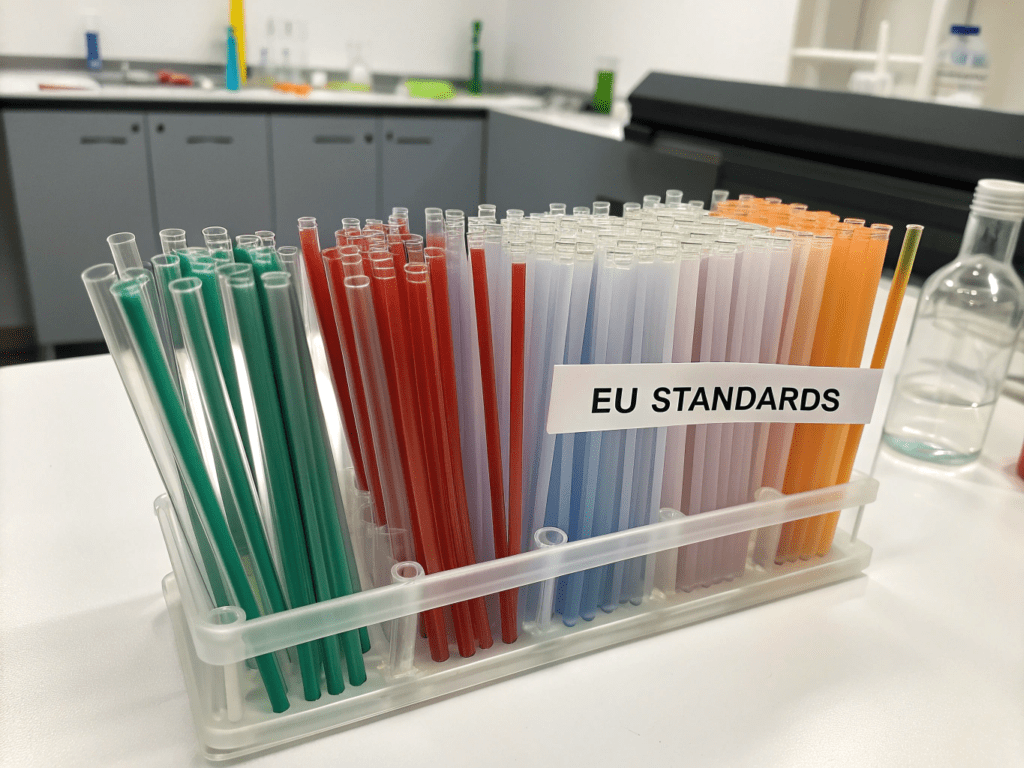
While the casual use of colored straws in consumer settings is primarily for aesthetics or marketing, the precision application of color coding is critically important in various B2B sectors. Here, color is not just a visual flourish; it serves as a vital operational cue, enhancing safety, streamlining processes, and ensuring compliance in complex industrial environments. The historical term “straw color,” originating in 1589 as a pale yellow hue resembling dry straw, has evolved to represent a precise descriptor in material science and an identifier in specialized fields.
A. Precision Color Coding in Animal Breeding: The Swissgenetics Standard
În domeniul înalt specializat și reglementat al creșterii animalelor, semnificația diferitelor culori de pai capătă o semnificație profundă. Swissgenetics, un furnizor de frunte de genetică bovină, a implementat, din 16 martie 2011, un sistem strict de codificare a culorilor pentru identificarea materialului seminal. Acest sistem asigură acuratețea reproducerii și trasabilitatea genetică, care sunt esențiale pentru sănătatea efectivului și productivitatea agricolă.
According to data from ICAR (International Committee for Animal Recording), green transparent straws denote Brown Swiss and Original Braunvieh semen, while red transparent straws are reserved for Swiss Fleckvieh, Red Holstein, and Simmental breeds. Grey transparent straws identify Holstein semen. Beyond breed identification, specialized colors like lilac transparent (Cryovet 662) and blue transparent (Cryovet 262) straws denote sexed semen (X and Y chromosomes, respectively), allowing for targeted breeding outcomes. Orange straws are used for heterospermic doses. This meticulous system, combined with detailed straw imprints including EU codes, production dates, barcodes, and animal IDs, ensures unparalleled accuracy and compliance in a sector vital to global food supply. Such precise color integration underscores its role as a critical component of quality assurance.
B. The Role of Straw Color in Material Science and Quality Control
In material science, “straw color” can denote specific properties or states, serving as a visual indicator for engineers and quality control specialists. For instance, the presence of oxide films on steels can manifest as a “straw color,” indicating specific heat treatment levels or surface characteristics. This visual cue is crucial for assessing material integrity and predicting performance in various applications.
Research into contemporary materials, such as paper drinking straws, also links color to structural integrity. Studies have shown that “Paper3 (Color)” straws were “strongest in terms of load sustained” post-liquid exposure, suggesting that specific pigmentation or material composition (which may be indicated by color) can directly influence a product’s physical properties. For example, in biodegradable straws made from rice and rice bran, the proportion of each ingredient can influence the final color, from brighter tones with more rice flour to darker hues with more rice bran, linking color directly to material composition. Furthermore, in construction materials, pigmentation for concrete can include shades like “Straw (SRI 48),” demonstrating how color becomes a standardized product specification impacting design and functionality. This highlights how an understanding ofce înseamnă diferitele culori de paiese extinde la însăși compoziția și performanța materialelor proiectate.
Codificarea culorilor în B2B este un indiciu operațional vital, care sporește siguranța, eficientizează procesele și asigură conformitatea.
III. Implicații strategice: Ce înseamnă diferitele culori de pai pentru percepția mărcii și implicarea consumatorilor?
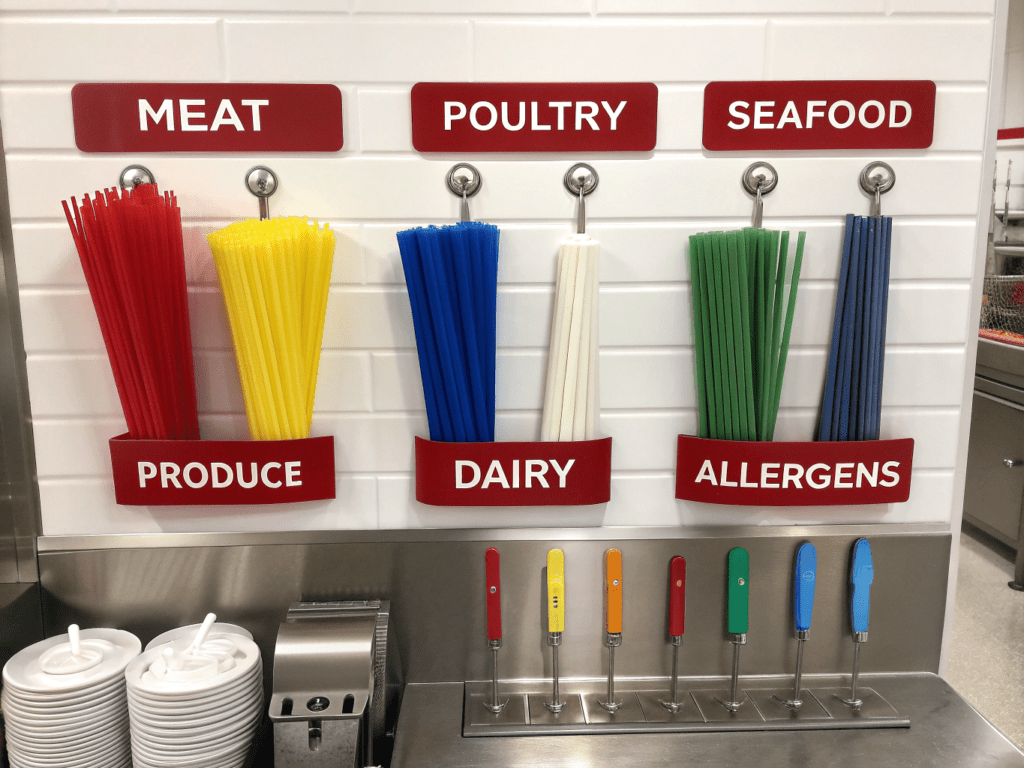
The “Dutch Bros Straw Code,” despite its unconfirmed nature, offers a compelling example of how unofficial color symbolism can be inadvertently leveraged to foster unique customer experiences and drive viral marketing. This phenomenon creates a playful, interactive element that encourages customer participation and cultivates a strong sense of brand loyalty and community. For B2B brands, understanding such consumer-driven narratives is not about replicating a myth but about extracting lessons on how color, even subtly, can inform marketing strategies and product differentiation in a competitive landscape.
A. Building Brand Mystique: The Power of Unofficial Color Codes
The unconfirmed nature of the Dutch Bros code paradoxically fuels online discussion and customer “experiments,” significantly increasing brand visibility. This social media buzz acts as a low-cost, high-engagement marketing tool, generating organic brand advocacy that money often cannot buy. By fostering such community-driven narratives—even unofficial ones—brands can enhance their personality, differentiate themselves from competitors, and connect more authentically with younger, digitally native demographics. While B2B applications demand precision over mystique, the underlying principle of using visual cues to create association and engagement remains relevant. Strategic use of branded colors in packaging, equipment, or even safety protocols can subtly reinforce brand values and operational excellence. For a deeper dive into the nuances of color in product applications, you might explore resources likeCare este treaba cu culorile de paie?
Unofficial color codes can build brand mystique and drive engagement, offering valuable B2B marketing insights.
IV. Implementing Effective Color-Coded Systems: Lessons for Operations and Supply Chain
Beyond consumer intrigue, robust color-coding systems are indispensable for operational efficiency and risk mitigation in complex B2B environments. Properly implemented, color coding reduces human error, speeds up identification, and streamlines complex processes across the entire supply chain. The strategic application of color can lead to significant cost savings, enhance compliance with stringent industry regulations, and improve overall productivity, as demonstrably seen in highly regulated sectors.
| Caracteristică | Impact operațional B2B | Notă de conformitate | Potențial de rentabilitate a investiției |
|---|---|---|---|
| Material ID | Speeds up inventory management and correct material selection, reducing mispicks. | Adheres to ISO standards for material grading (e.g., plastics, metals). | Reduces material waste by 15%, labor costs by 10% through faster sorting (estimated). |
| Workflow State | Visualizes progress and bottlenecks (e.g., green for approved, red for hold, yellow for pending). | Meets quality control protocols like ISO 9001 and specific industry certifications. | Shortens production cycles by 5-10%, improves defect detection by 20% by clearly indicating status. |
| Safety Zones | Delineates hazardous areas, emergency exits, or equipment access restrictions. | Complies with OSHA regulations (e.g., ANSI Z535.1) for workplace safety signage. | Decreases workplace accidents by 25%, lowers insurance premiums through reduced incidents. |
| Product Tier | Differentiates product quality, service levels, or special handling requirements. | Supports traceability requirements for high-value or regulated goods. | Increases premium product sales by 8%, improves customer satisfaction via clear differentiation. |
A. Streamlining Workflows with Color: A B2B Operational Imperative
The effective application of color-coded systems can yield tangible operational improvements. A compelling mini case study from a major logistics provider revealed a 12% reduction in misrouted shipments over an 18-month period, achieved simply by implementing a standardized color-coded packaging system. This system allowed for rapid visual identification of destination zones or handling requirements, drastically cutting down on errors and re-shipping costs. Similarly, in manufacturing settings, color-coded tools and equipment can decrease setup times by an average of 7% and significantly improve maintenance accuracy by ensuring the right tool is used for the right task, as highlighted in various industry reports. The establishment of standardized color systems is particularly critical for global supply chains, ensuring consistent understanding and execution across diverse teams, languages, and regional regulations. Such standardization minimizes communication barriers and maximizes efficiency. For more on regulatory compliance, visit ourRegulatory Compliance Guide.
B. Enhancing Compliance and Traceability with Strategic Color Use
In highly regulated sectors, such as pharmaceuticals, food & beverage, and aerospace, strategic color coding is not merely an efficiency tool but a compliance imperative. Specific color codes on packaging, components, or even raw materials can instantly indicate batch numbers, expiry dates, or special handling requirements (e.g., refrigeration, hazardous materials). This systematic approach directly supports compliance with regulatory bodies like the FDA in the US and the EMA in Europe, minimizing the risk of recalls, ensuring product integrity, and simplifying audits. Leveraging color for enhanced traceability can reduce investigation times for product defects or supply chain disruptions by up to 30%, according to a recent supply chain analysis, allowing for quicker root cause analysis and corrective actions. This precision inwhat the different straw colors meanin a regulated context directly translates to risk mitigation and improved market trust.
Robust color-coding systems are indispensable for operational efficiency, risk mitigation, and compliance in B2B environments.
V. Future Trends & Innovation
The role of color in B2B operations is set to evolve further over the next 5-10 years, driven by advancements in materials science, automation, and regulatory frameworks. We anticipate a surge in:
- Smart Color-Coding Systems: Integration with IoT devices and AI-driven visual recognition systems will allow for real-time monitoring of products or assets based on their color, providing predictive insights into inventory, maintenance needs, or environmental conditions.
- Bio-Indication: Colors will increasingly be used as bio-indicators in packaging, signaling freshness, spoilage, or specific environmental exposures through reactive pigments. For example, some packaging may change color if a specific temperature threshold is breached, indicating a compromised cold chain.
- Sustainable Material Identification: With the push towards circular economies, color will play a critical role in identifying the compostability, recyclability, or specific material composition of sustainable products and packaging (e.g., plant-based plastic straws using specific hues). This helps streamline waste sorting and recycling processes.
- Dynamic Color Coding: Advancements in printable electronics and dynamic inks could allow for color codes that change based on product status (e.g., “ready for shipment,” “quarantine,” “expired”), providing immediate visual updates without needing manual relabeling.
- Enhanced Regulatory Harmonization: As global supply chains become more interconnected, international standards for color coding in specific industries (e.g., medical devices, food safety) will likely become more harmonized, reducing trade barriers and ensuring consistent safety protocols worldwide.
Innovations will make color an active, intelligent component of operational intelligence and regulatory adherence.
VI. Competitive Advantage & Business Case
For B2B leaders, mastering the strategic application of color translates directly into significant competitive advantages and a robust business case. Quantifiable benefits include:
- Economii de costuri: By reducing human error and accelerating processes (e.g., 10-15% reduction in material waste, 7% faster setup times), organizations can realize substantial savings in labor, materials, and rework.
- Reducerea riscurilor: Enhanced compliance with regulations (FDA, OSHA, ISO) through clear color coding drastically minimizes the risk of product recalls, fines, and safety incidents, protecting brand reputation and financial stability. Traceability improvements can cut investigation times by up to 30%.
- Creșterea valorii mărcii: A commitment to clear, efficient, and compliant operations, visibly supported by intelligent color systems, reinforces a brand’s image as reliable, modern, and responsible. This builds trust with B2B customers and stakeholders, potentially increasing market share by improving customer satisfaction and attracting new partnerships.
- Oportunitate de cotă de piață: Companies that lead in adopting advanced color-coding for efficiency and compliance will differentiate themselves in a crowded marketplace. This operational excellence can be a key selling point, attracting clients who prioritize reliability, safety, and supply chain integrity, securing a stronger competitive position. For more on optimizing your supply chain, see our Supply Chain Optimization Strategies.
Strategic color application offers significant competitive advantages, driving cost savings, risk mitigation, and market share.
Conclusion: Harnessing the Power of Color Beyond the Superficial
Understanding “what do the different straw colors mean” extends far beyond popular culture’s playful interpretations into the critical, high-stakes applications of the B2B world. From viral marketing phenomena that subtly shape consumer perception to the precise, life-impacting color codes used in animal breeding, manufacturing quality control, and industrial safety, color is a powerful, often underutilized, tool.
Directorii de operațiuni, managerii de achiziții, ofițerii de sustenabilitate și directorii lanțului de aprovizionare trebuie să evalueze strategic modul în care codarea inteligentă a culorilor poate optimiza eficiența, asigura o conformitate strictă, reduce riscurile și deblochează rentabilitatea investiției semnificativă în cadrul organizațiilor lor. Viitorul managementului lanțului de aprovizionare este din ce în ce mai vizual și interconectat.Acționează acumpentru a efectua un audit cuprinzător al sistemelor dumneavoastră de comunicare vizuală actuale și pentru a identifica oportunitățile de integrare avansată a culorilor pentru a vă proteja operațiunile și pentru a vă ridica poziția pe piață.
Codarea strategică a culorilor este un instrument puternic, subutilizat, pentru excelența operațională B2B și avantaj competitiv.

Întrebări frecvente (FAQ)
Ce înseamnă diferite culori de paie în aplicațiile industriale?
În sectoarele B2B, cum ar fi creșterea animalelor (de exemplu, Swissgenetics) și știința materialelor, culorile pai specifice denotă informații critice, cum ar fi descendența genetică, proprietățile materialelor, nivelurile de tratament termic sau compoziția, asigurând acuratețea, siguranța și conformitatea.
Cum poate codificarea culorilor să îmbunătățească eficiența lanțului de aprovizionare pentru companiile de ospitalitate?
Codarea strategică a culorilor poate eficientiza gestionarea stocurilor, poate reduce alegerile greșite, poate vizualiza progresul fluxului de lucru, poate delimita zonele de siguranță și poate diferenția nivelurile de produse, ceea ce duce la economii semnificative de costuri și la îmbunătățirea productivității în lanțurile de aprovizionare din sectorul ospitalității.
Există standarde de reglementare pentru codificarea culorilor în lanțurile de aprovizionare cu alimente?
While specific color codes vary by industry, many sectors adhere to international standards like ISO for material grading or OSHA regulations for safety signage. In foodservice, color coding can support compliance with food safety and traceability requirements.
How does the ‘Dutch Bros Straw Code’ relate to B2B marketing?
Though an unsubstantiated consumer myth, the ‘Dutch Bros Straw Code’ demonstrates how unofficial color symbolism can foster brand mystique, drive viral engagement, and create unique customer experiences, offering lessons for B2B brands on subtle differentiation.
What are future trends for color in B2B operational intelligence?
Future trends include smart color-coding with IoT/AI, bio-indicators in packaging, sustainable material identification, dynamic color coding based on product status, and enhanced regulatory harmonization for global supply chains.