Är plastsugrör förbjudna i Kalifornien? En komplett guide för företag

Introduktion: Navigera i Kaliforniens utvecklande plastlandskap
Kalifornien har länge legat i framkant när det gäller miljölagstiftning och har skapat prejudikat som ofta återkommer över hela landet och till och med globalt. För företag som är verksamma inom staten översätter detta ledarskap till en dynamisk reglerande miljö, särskilt när det gäller engångsplaster. Att förstå dessa föränderliga mandat handlar inte bara om laglig efterlevnad; det är ett strategiskt krav för operativ effektivitet, riskreducering och varumärkesrykte på en allt mer hållbarhetsmedveten marknad.
Att ignorera Kaliforniens regler för plasthalm, eller att misstolka deras nyanser, kan få påtagliga operativa och kommersiella konsekvenser. Utöver de direkta ekonomiska påföljderna riskerar företag att alienera ett växande segment av miljömedvetna konsumenter, smutskasta deras varumärkesimage och hamna bakom konkurrenter som proaktivt anammar hållbara metoder. Den här omfattande guiden kommer att dissekera de nuvarande statliga och lokala mandat som styr plaststrån i Kalifornien, och erbjuda inköpschefer, driftsdirektörer, hållbarhetsansvariga och leverantörschefer de insikter som behövs för att anpassa proaktivt, minimera plastföroreningar och säkra en konkurrensfördel i ett föränderligt landskap.Proaktiv anpassning till Kaliforniens regler för plasthalm är avgörande för affärsframgång och varumärkesrykte.
Kärnan i Kaliforniens regler för plasthalm för företag
I motsats till en vanlig missuppfattning, tillämpar Kalifornien inte ett fullständigt statligt förbud mot plaststrån. Istället fokuserar statens primära lagstiftning på att begränsaautomatisk distributionav engångsstrån av plast, snarare än ett direkt förbud. Denna distinktion är avgörande för företag, eftersom efterlevnad är beroende av att förstå var och när dessa begränsningar gäller. Att navigera i detta regelverk är ytterst viktigt för alla företag för att undvika böter, upprätthålla en positiv offentlig image och anpassa sig till Kaliforniens bredare miljömål.
Understanding AB 1884: The "Straws-Pon-Request" Policy
Den grundläggande delen av Kaliforniens plasthalmförordning är Assembly Bill 1884 (AB 1884), som officiellt trädde i kraft den 1 januari 2019. Denna landmärkeslagstiftning införde en policy för "halmstrån-på-begäran" främst för fullservicerestauranger. Enligt AB 1884 är dessa anläggningar uttryckligen förbjudna att automatiskt tillhandahålla engångsstrån av plast till kunder. Istället måste en kund specifikt be om ett sugrör för att få ett.
När han undertecknade AB 1884 i lag 2018, betonade dåvarande guvernör Jerry Brown dess blygsamma men symboliska avsikt, och påstod att "plast, i alla former, kväver vår planet." Han såg lagförslaget som ett "litet steg" som syftade till att öka allmänhetens medvetenhet och minska den genomgripande inverkan av plastföroreningar på miljön. För företag översätts detta till en grundläggande förändring av operativt protokoll, som går från ett standarderbjudande till ett opt-in-system.
Definiera "fullservicerestauranger" och nyckelundantag
En kritisk aspekt av AB 1884 ligger i dess specifika definition av de anläggningar som den styr. Lagen gäller för "fullservicerestauranger", kännetecknad som anläggningar där serveringspersonal tar emot beställningar vid bord och serverar mat för lokal konsumtion. Denna exakta formulering innebär att många anläggningar med stora volymer, icke-sit-down-anläggningar från början var undantagna från det statliga "halmstrån-på-begäran"-kravet.
Snabbmatsrestauranger, delikatessbutiker, kaféer och drive-throughs, till exempel, var inte föremål för AB 1884 vid starten. Denna lagstiftningsnyans skapade vad många observatörer kallade ett "kryphål" för en betydande del av livsmedelsbranschen, vilket gjorde det möjligt för dem att fortsätta erbjuda plastsugrör automatiskt. För verksamhetschefer och inköpsteam innebar detta en splittrad efterlevnadsstrategi, där reglerna varierade avsevärt utifrån tjänstemodellen.
Påföljder för bristande efterlevnad av California Plastic Straw Law
Även om den statliga lagen inte är ett direkt förbud, medför bristande efterlevnad av AB 1884 eskalerande straff för att uppmuntra efterlevnad. Statliga folkhälsotjänstemän är primärt ansvariga för efterlevnaden, vanligtvis initierad genom lokala miljöhälsoavdelningar, såsom Tulare County Environmental Health Division. Företag som upptäcks i strid med AB 1884 kommer först att få två varningar. Dessa första meddelanden tjänar som en möjlighet för anläggningar att rätta till sina rutiner och utbilda personalen i policyn för "halmstrån-på-förfrågan".
Efterföljande bristande efterlevnad efter dessa varningar får dock ekonomiska återverkningar. Överträdelser kan resultera i böter på 25 USD per dag. För att förhindra otillbörlig ekonomisk börda begränsar lagen det maximala årliga bötesbeloppet för AB 1884-överträdelser till 300 USD. Även om detta kan tyckas vara en blygsam summa för större företag, kan upprepade böter ackumuleras, och ännu viktigare, den tillhörande anseendeskadan från att identifieras som icke-kompatibel kan vida uppväga den monetära påföljden.Kaliforniens AB 1884 kräver "halmstrån-på-begäran" för fullservicerestauranger, med påföljder för bristande efterlevnad.

Beyond Statewide: Lokala förbud mot plasthalm i Kalifornien
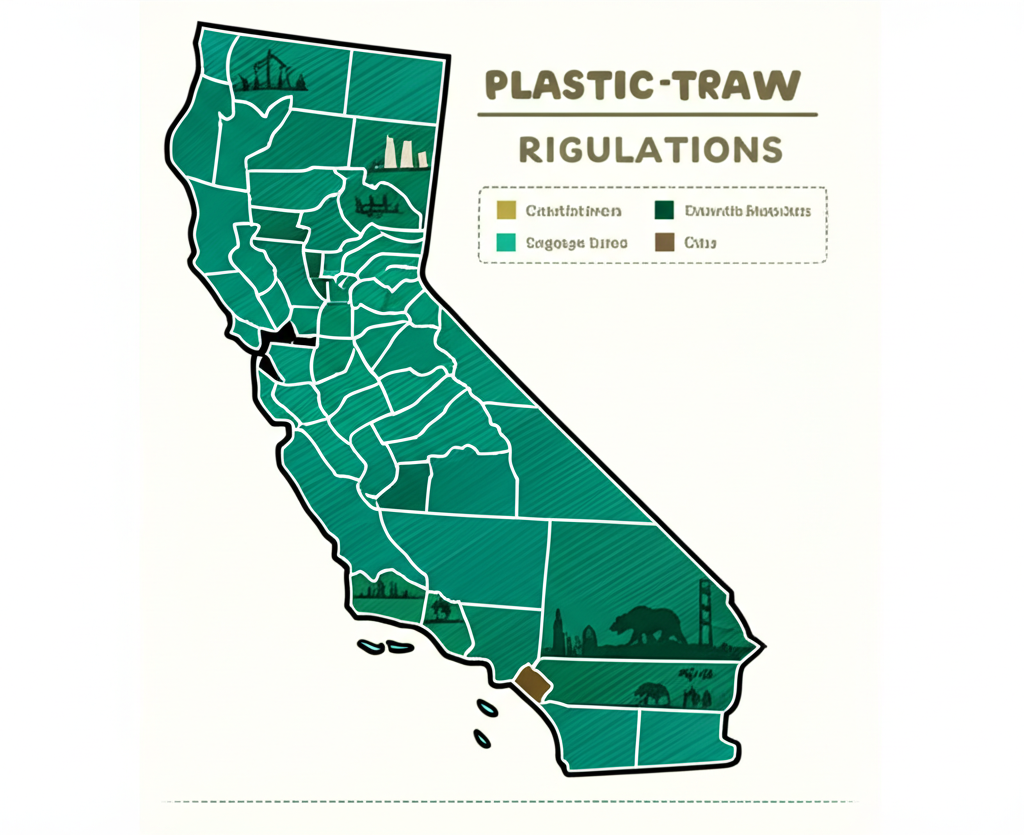
Även om AB 1884 sätter en baslinje för bestämmelser om plasthalm i hela landet, är det avgörande för företag, särskilt de som verkar på flera platser, att förstå att enskilda städer och grevskap i Kalifornien har behörighet att implementera strängare förordningar. Denna decentraliserade reglerande makt har lett till ett lapptäcke av lokala lagar som ofta går längre än "halmstrån-på-förfrågan"-policyn och kräver en lokaliserad strategi för verklig efterlevnad och hållbarhetsledarskap.
Städer med fullständiga förbud mot plasthalm
Flera städer över hela Kalifornien har intagit en mer aggressiv hållning mot engångsstrån av plast och infört direkta förbud inom sina jurisdiktioner. Dessa lokala förordningar innebär att plaststrån ofta inte tillhandahålls alls, inte ens på kundens begäran, med vissa undantag för medicinska behov eller behov av funktionshinder.
- San Francisco: San Francisco, som är en banbrytare inom miljöpolitik, implementerade ett fullständigt förbud mot sugrör, omrörare och andra plastmattillbehör från och med den 1 juli 2019. Denna förordning är särskilt sträng, eftersom den också begränsar komposterbara plaststrån och föreskriver att godtagbara engångsstrån (som papper) endast är tillgängliga på begäran. Plastsugrör ska endast tillhandahållas för funktionshinder eller medicinska behov.
- Malibu: Ännu tidigare, i juni 2018, flyttade Malibu till att spärra alla engångsstrån, omrörare och bestick av plast, vilket återspeglar dess starka engagemang för att skydda sin kustmiljö.
- Monterey, Santa Barbara och Del Mar: Dessa städer, tillsammans med andra som Calabasas, Davis, Alameda, Carmel, San Luis Obispo, Oakland och Berkeley, har också infört direkta förbud mot plaststrån, vilket understryker en växande kommunal trend.
- Överväganden för tillgänglighet: Det är viktigt att notera att även om vissa förbud är omfattande, innehåller många lokala förordningar, som San Franciscos, bestämmelser för personer med funktionshinder, vilket säkerställer att plaststrån kan tillhandahållas på begäran om de anses medicinskt nödvändiga. Detta erkänner legitima tillgänglighetsbehov samtidigt som det driver det bredare målet med plastminskning.
Los Angeles Countys utökade "halmstrå på begäran"
Los Angeles County, hem för en stor befolkning och många företag, har också utökat sina regler utanför den ursprungliga omfattningen av AB 1884. Från och med april 2019 utökade Los Angeles kravet på "halmstrån på begäran" till ett bredare utbud av livsmedelsförsäljare. Denna utökade policy gällde inte bara fullservicerestauranger utan även snabbmatskedjor, stora livsmedelsbutiker och andra stora livsmedelsförsäljare som är verksamma inom länets oinkorporerade områden. Dessutom förbjuder Los Angeles Countys förordning specifikt självbetjäningsflaskor av plasthalm, som syftar till att eliminera tillgängligheten som uppmuntrar omedveten konsumtion. Denna åtgärd stängde avsevärt "kryphålet" som ursprungligen fanns i den statliga lagen för snabbmatsställen, vilket påverkade ett segment med hög volym av marknaden.
Navigering i olika lokala regler för plasthalm
Förekomsten av ett varierat lapptäcke av regleringar i Kaliforniens städer och län utgör en komplex utmaning för efterlevnad för företag, särskilt de med flera platser eller omfattande leveranskedjor. En inköpschef för en restaurangkedja kan till exempel inte tillämpa en enda statlig policy utan måste istället bedriva noggrann forskning för att följa varje specifik lokal jurisdiktion. Detta kräver ofta en lokaliserad strategi för inköp, lagerhantering och personalutbildning.
Det bredare sammanhanget för dessa olika lokala regler signalerar en tydlig trend: ökande restriktioner för engångsplaster. Företag som proaktivt förutser och anpassar sig till denna bana, snarare än att bara reagera på individuella uppdrag, kommer att vara bättre positionerade för långsiktig framgång. Att förstå dessa nyanser är avgörande för chefer för leveranskedjan som måste säkerställa att deras upphandlingsstrategier ligger i linje med både statliga och kommunala miljömål.Lokala förordningar i Kalifornien inför ofta strängare förbud mot plasthalm, vilket kräver lokala strategier för företagsefterlevnad.
Operativa effekter och strategiska förändringar för företag
Det reglerande landskapet kring plaststrån i Kalifornien är inte bara ett juridiskt hinder; det innebär en betydande operativ utmaning och en strategisk möjlighet. Att anpassa sig till dessa mandat kräver mer än att bara byta ut ett material mot ett annat. Det kräver en holistisk omvärdering av upphandlingsprocesser, kundupplevelsestrategier och övergripande engagemang för hållbarhet. Denna pivot påverkas av en global strävan efter plastreduktion, som snabbt formar politik, konsumentbeteende och konkurrensdifferentiering.
Omfamnar alternativ till engångsstrån av plast
AB 1884, samtidigt som det begränsar plaststrån, tillåter uttryckligen användningen av icke-plastiska alternativ. Denna flexibilitet har stimulerat innovation och marknadstillväxt inom hållbara halmalternativ. För drift- och inköpsteam innebär beslutet om vilka alternativ som ska användas hänsyn till kostnad, hållbarhet, kundpreferens och miljöpåverkan.
- Pappersstrån: Ett vanligt och allmänt tillgängligt alternativ, pappersstrån uppfyller kraven för både AB 1884 och de flesta lokala förbud. Framsteg inom tillverkningen har förbättrat deras hållbarhet, även om uppfattningarna kring fuktighet består.
- Metallstrån: Ofta erbjuds som återanvändbara alternativ, metallstrån är tillåtna om de följer California Retail Food Code-standarder för renlighet och sanering. Dessa kan vara ett premiumerbjudande för matställen eller säljas som detaljhandelsartiklar.
- Bambu sugrör: Tillverkade av naturliga, snabbväxande resurser, bambu sugrör erbjuder en rustik, hållbar attraktionskraft. De kan vara engångs- eller återanvändningsbara beroende på bearbetning.
- Sockerrörsstrån: Sockerrörsstrån kommer från en biprodukt från sockerindustrin och är kända för sin robusta känsla och biologiska nedbrytbarhet, och erbjuder en övertygande blandning av funktionalitet och miljöfördelar.
- Pasta sugrör: Ätbara och biologiskt nedbrytbara, pastastrån erbjuder en unik lösning utan avfall, även om deras användning kan vara begränsad till vissa typer av drycker.
För företag som strävar efter övergripande hållbarhet utöver bara halmstrån är det viktigt att utforska ett bredare utbud av hållbara engångsartiklar. En omfattande B2B-guide för sugrör som inte är av plast kan ge ytterligare insikter om materialegenskaper, certifieringar och leverantörsalternativ, vilket hjälper inköpschefer att fatta välgrundade beslut.Lär dig mer om icke-plastiska sugrör för B2B.
Kostnads-nyttoanalys: Övergång till halmalternativ
Att övergå från konventionella plaststrån innebär en initial investering som chefer för leveranskedjan och verksamhetschefer noggrant måste utvärdera. Alternativa material har ofta en högre enhetskostnad jämfört med sina plastmotsvarigheter. Detta kräver justeringar av budgetar och eventuellt förhandlingar om nya nya villkor med leverantörer. Denna initiala utgift kompenseras dock snabbt av betydande långsiktig avkastningspotential.
Fördelarna sträcker sig längre än att bara undvika lagstadgade böter. Genom att anamma hållbara alternativ förbättrar företag sin varumärkesimage, tilltalar miljömedvetna konsumenter och bidrar positivt till deras profil för företagens sociala ansvar. Konsumenternas preferenser går onekligen mot hållbara alternativ; studier visar genomgående att kunder är villiga att stödja företag som är i linje med deras miljövärden. Denna förändring leder till ökad kundlojalitet, positiva PR och en stärkt marknadsposition. Dessutom kan ett proaktivt antagande minska framtida efterlevnadsrisker eftersom reglerna oundvikligen blir strängare.
Här är en strategisk uppdelning av vanliga alternativ för inköps- och driftsteam:
| Särdrag | B2B operationell påverkan | Efterlevnadsanteckning | ROI -potential |
|---|---|---|---|
| Plast sugrör | Låg omedelbar enhetskostnad, etablerade försörjningskedjor, hög lagerlätthet. | AB 1884 "på begäran" för fullservicerestauranger; direkta förbud i många städer i Kalifornien. | Risk för återkommande böter (upp till 300 USD/år efter varningar), betydande negativa PR, urholkning av varumärkesförtroendet bland hållbarhetsmedvetna konsumenter. |
| Pappersstrån | Högre enhetskostnad, potential för snabbare nedbrytning av drycker, hållbarhetsproblem. | Uppfyller AB 1884 "på begäran" policy; acceptabelt för de flesta lokala förbud. | Förbättrad "grön" varumärkesimage, undviker alla böter relaterade till distribution av plasthalm, positiv kunduppfattning, potential för ökad kundlojalitet från miljömedveten demografi. |
| Återanvändbara sugrör | Högre initial investering per enhet, kräver robusta rengörings- och sanitetsprotokoll, lagerhantering för återanvändningscykler. | Uppfyller alla befintliga Kaliforniens statliga och lokala regler för engångsplaster, i linje med starka hållbarhetsmandat. | Betydande kostnadsbesparingar på lång sikt genom att minska återkommande inköp av engångshalm, positionerat som ett premiumerbjudande, starkt miljöledarskap, tilltalar värdefulla, miljöengagerade kunder, potential för detaljförsäljning av återanvändbara märkesvaror. |
| Inga sugrör/opt-in | Minimal produktkostnad för verksamheten, enkel drift genom att minska lagervaror och hantering. | Överensstämmer med "på begäran"-lagar för fullservicerestauranger; överensstämmer med direkta förbud där det är tillämpligt. | Maximal avfallsminskning, avsevärda kostnadsbesparingar vid anskaffning av halm, stark och otvetydig "grön" hållning, tilltalar ett segment av konsumenter som föredrar att helt undvika halmstrån, bidrar till övergripande mål för avfallsminskning. |
För företag som vill gå över specifikt till biologiskt nedbrytbara alternativ kan en guide för att välja de bästa biologiskt nedbrytbara plastsugrören för B2B-behov erbjuda detaljerade insikter om materialsammansättning, prestanda och certifieringar som är avgörande för efterlevnad och hållbarhetskrav.Upptäck de bästa biologiskt nedbrytbara plaststråna för B2B.Övergången till hållbara halmalternativ erbjuder långsiktig avkastning på investeringen genom förbättrad varumärkesimage och minskade efterlevnadsrisker.
Minifallstudie: San Luis Obispo’s Full Ban (2019) och företagsanpassning
Staden San Luis Obispo ger ett övertygande verkligt exempel på hur lokala regler kan driva företagsanpassning. Under 2019 antog staden ett omfattande förbud mot plaststrån, vilket tvingade en fullständig övergång från användningen av dem i alla matserveringar. Denna förordning gick utöver den statliga "halmstrån-på-begäran"-modellen, och kräver att företag proaktivt söker efter och implementerar alternativa lösningar.
Lokala restauranger, inklusive populära platser som Splash Café, svarade genom att proaktivt gå över till icke-plastalternativ. De anammade papper och andra komposterbara sugrör, vilket garanterade en sömlös upplevelse för kunderna samtidigt som de höll sig till de nya reglerna. En nyckelaspekt i deras framgångsrika anpassning var noggrann kundkommunikation. Personalen utbildades för att förklara den nya policyn, utbilda kunder om miljöfördelarna med förändringen och introducera de nya halmmaterialen. Denna transparens hjälpte till att mildra potentiell kundfriktion och byggde upp goodwill.
Viktiga takeaways för inköp och drift
Erfarenheterna från företag i San Luis Obispo erbjuder värdefulla lärdomar för inköps- och verksamhetsledare över hela landet:
- Proaktiv leverantörsdiversifiering: Att förlita sig på en enda källa för engångsartiklar är riskabelt i en flyktig lagstiftningsmiljö. Företag måste identifiera och vettera flera leverantörer för alternativa halmmaterial för att säkerställa leverantörskedjans motståndskraft och konkurrenskraftiga priser.
- Personalutbildning: Frontlinjepersonal är den direkta kontakten med kunderna. Omfattande utbildning om policyer för "halmstrån på begäran", lokala förbudsspecifikationer och fördelarna med alternativa material är avgörande för smidig implementering och positiv kundinteraktion.
- Kundkommunikation: Att proaktivt informera kunder om nya policyer och hållbara val kan omvandla en regulatorisk utmaning till en positiv varumärkesberättelse. Att förklara "varför" bakom förändringen främjar förståelse och bygger upp positiv varumärkesuppfattning.
- Konkurrensfördel genom efterlevnad: Genom att anamma efterlevnad som en möjlighet till innovation, snarare än en börda, kan företag positionera sig som ledare inom hållbarhet. På en marknad där miljömedvetenheten växer kan denna proaktiva hållning bli en betydande konkurrensfördel. Företag som leder satsningen inom hållbar mat, som att fokusera på biologiskt nedbrytbara sugrör för restauranger, ser ofta en ökning av kundlojalitet och varumärkesrykte. Utforska alternativ för biologiskt nedbrytbart halm för restauranger.
San Luis Obispos förbud understryker vikten av proaktiv leverantörsdiversifiering, utbildning och kommunikation för affärsanpassning.
The Broader Context: California's Leadership in Plastic Reduction
Kaliforniens bestämmelser om plaststrån är inte en isolerad policy utan en medveten del av statens långtgående och konsekventa engagemang för miljövård. I decennier har Kalifornien historiskt sett lett nationen i att anta sträng miljölagstiftning, som ofta tjänar som en plan för andra stater och till och med länder. Att förstå detta bredare strategiska sammanhang är avgörande för företag, eftersom det indikerar en tydlig bana av ökande regleringar som kommer att fortsätta att påverka B2B-försörjningskedjor, produktdesign och operativa mandat under många år framöver.
Kaliforniens historiska ståndpunkt mot plastföroreningar
Kaliforniens ansträngningar för att bekämpa plastföroreningar sträcker sig långt bortom strån:
- Engångsplastpåsar: Staten var den första i USA att införa ett statligt förbud mot engångsplastpåsar. Proposition 67 antogs 2014 och befäste denna ståndpunkt ytterligare 2016, och förbjöd stora återförsäljare att distribuera plastpåsar och införde en avgift på minst 10 cent för alternativa påsar. Detta banbrytande drag minskade plastpåsskräp drastiskt och skapade ett kraftfullt prejudikat.
- Mikropärlor i plast: För att återspegla sitt engagemang för att skydda marina ekosystem förbjöd Kalifornien också mikropärlor av plast i personliga hygienprodukter, med förbudet som trädde i kraft 2020. Dessa små plastpartiklar, som vanligtvis finns i exfolianter och tandkrämer, identifierades som betydande bidragsgivare till mikroplastföroreningar i vattendrag och hav.
- Bekämpning av marint skräp: Dessa lagstiftningsåtgärder återspeglar tillsammans ett konsekvent och orubbligt engagemang för att bekämpa marint skräp. Plastsugrör, även om det är en liten del av det totala plastavfallet i vikt, är en mycket synlig symbol för engångsbruk av plast och rankas konsekvent bland de tio främsta bidragsgivarna till marint plastskräp globalt. Svårigheten att återvinna dem – eftersom de flesta återvinningsmaskiner inte är utrustade för att bearbeta sugrör – innebär att endast cirka 9 % av all använd plast har återvunnits över hela världen, vilket gör reduktion och alternativa material kritiska. (Källa: The Guardian)
Framtiden för plastreduktion: SB 54 Mandat och prognoser
Det regulatoriska landskapet i Kalifornien är redo för ännu mer omvälvande förändringar med antagandet av senatens lagförslag 54 (SB 54), även känd som Plastic Pollution Prevention and Packaging Producer Responsibility Act. Undertecknad i lag 2022, SB 54 representerar landets mest ambitiösa policy för utökat producentansvar (EPR) för förpackningar. Det kräver aggressiva mål för minskning och återvinning av plastavfall, vilket i grunden flyttar bördan av plastföroreningar från konsumenter och kommuner till tillverkarna.
Nyckelmandat och prognoser under SB 54 inkluderar:
- 25 % mindre engångsplastförpackningar: Senast 2032 kräver Kalifornien att 25 % mindre engångsplastförpackningar måste säljas inom staten. Detta mål tvingar tillverkarna att minska plastanvändningen vid källan, förnya sig i produktdesign eller byta till alternativa material.
- Återvinningsbar eller komposterbar senast 2032: Alla engångsplastförpackningar och matvaror som säljs i Kalifornien måste vara återvinningsbara eller komposterbara senast 2032. Detta kräver betydande investeringar i materialvetenskap och infrastruktur för att säkerställa korrekta uttjänta lösningar. (Källa: UCLA Institute of the Environment and Sustainability)
- 65 % återvinningsgrad till 2032: Lagen anger också ett utmanande mål om en återvinningsgrad på 65 % för engångsplastförpackningar till 2032. Detta kommer att kräva avsevärda förbättringar av insamlings-, sorterings- och upparbetningskapacitet.
- 5 miljarder dollar industrifond: SB 54 inrättar en industrifond på 5 miljarder dollar, finansierad av plastproducenter, för att ta itu med initiativ för plastföroreningar. Denna fond kommer att stödja förbättringar av infrastruktur, konsumentutbildning och miljöåterställningsarbete, vilket skapar en modell för kollektivt ansvar. (Källa: Stanford University)
Dessa omfattande mandat under SB 54 signalerar en tydlig riktning för företag: proaktivt engagemang för hållbarhet är inte längre valfritt. Plasthalmlagstiftningen, i detta bredare sammanhang, fungerar som ett "portplast"-initiativ, som förbereder konsumenter och industrier för mer omfattande regleringar riktade mot en cirkulär ekonomi.Kaliforniens omfattande plastreduktionsansträngningar, inklusive SB 54, signalerar en tydlig väg mot en cirkulär ekonomi.

Konkurrensfördelar och Business Case
På en marknad som i allt högre grad drivs av miljömedvetenhet erbjuder strategisk efterlevnad av plastreduktionsmandat mer än bara riskreducering – det utgör en djupgående möjlighet till konkurrensfördelar. För B2B-beslutsfattare kan kvantifiering av fördelarna med proaktiv hållbarhet bygga ett övertygande affärscase för investeringar.
Överväg förstkostnadsbesparingar. Även om initiala investeringar i alternativa sugrör kan vara högre, är undvikandet av återkommande böter (upp till 300 USD årligen per överträdelse av AB 1884) en direkt ekonomisk fördel. Ännu viktigare är att optimerade försörjningskedjor fokuserade på hållbara, kompatibla material kan ge långsiktiga besparingar genom att minska kostnaderna för avfallshantering och framtidssäkra mot allt strängare regler.
Andra,riskreduceringsträcker sig längre än ekonomiska påföljder. Att följa utvecklande plastlagar minimerar laglig exponering och skyddar mot skada på rykte. I en tid där negativ uppmärksamhet på sociala medier kan spridas snabbt, kan det att uppfattas som miljömässigt oansvarigt urholka kundernas förtroende och varumärkeskapital.
Omvänt kan investeringar i hållbara lösningar leda till en betydandehöjning av varumärkets värde. Konsumenter, särskilt på miljömedvetna marknader som Kalifornien, väljer i allt högre grad varumärken som ligger i linje med deras värderingar. Ett starkt engagemang för plastreduktion förbättrar varumärkesuppfattningen, främjar kundlojalitet och lockar till sig nya affärsmöjligheter. Denna positiva varumärkesassociation leder till högre försäljning och en mer motståndskraftig marknadsposition.
Slutligen finns det en tydligmarknadsandelsmöjlighet. Företag som proaktivt går över till hållbara alternativ och kommunicerar sina ansträngningar effektivt kan ta marknadsandelar från konkurrenter som rör sig långsammare. När reglerna skärps och konsumenternas preferenser stelnar, kan en erkänd ledare inom hållbara metoder differentiera ett företag, attrahera topptalanger och öppna dörrar till partnerskap med miljöanpassade organisationer. Detta framåtblickande tillvägagångssätt positionerar företag inte bara för efterlevnad, utan för hållbar tillväxt i en grönare ekonomi.Proaktiv hållbarhet erbjuder betydande konkurrensfördelar genom kostnadsbesparingar, riskreducering och varumärkeshöjning.

Vanliga frågor (FAQ)
F: Finns det ett fullständigt statligt förbud mot sugrör av plast i Kalifornien?
S: Nej, Kaliforniens AB 1884 implementerar i första hand en "halmstrån-på-förfrågan"-policy för fullservicerestauranger, inte ett direkt förbud. Men många enskilda städer och län har infört strängare, fullständiga förbud.
F: Vilka är påföljderna för gästfrihetsföretag som inte följer AB 1884?
S: Företag får två varningar, varefter överträdelser kan medföra böter på 25 USD per dag, upp till 300 USD per år. Skada på rykte kan vara mer betydande än penningavgifter.
F: Hur kan en restaurangkedja med flera ställen säkerställa efterlevnad i hela Kalifornien?
S: Kedjor måste undersöka och följa specifika lokala förordningar i varje jurisdiktion, vilket ofta kräver en lokaliserad strategi för upphandling, inventering och personalutbildning utöver statliga regler.
F: Finns det undantag för plaststrån för medicinska behov eller handikappbehov?
S: Ja, många lokala förbud och till och med vissa statliga tolkningar inkluderar bestämmelser som tillåter att plaststrån tillhandahålls på begäran för personer med funktionshinder eller medicinska behov.
F: Vilka är de bästa hållbara halmalternativen för storköksverksamheter?
S: Sugrör av papper, bambu och sockerrör är populära biologiskt nedbrytbara alternativ. Återanvändbara metallstrån är också användbara för att äta på, vilket kräver robusta rengöringsprotokoll.
Slutsats: Strategisk efterlevnad för en hållbar framtid
Kaliforniens progressiva inställning till att reglera plaststrån är en tydlig och otvetydig signal om dess orubbliga engagemang för miljövård och en bredare vision för en cirkulär ekonomi. För inköpschefer, verksamhetschefer, hållbarhetsansvariga och chefer för leveranskedjan kräver detta landskap mer än bara reaktionär efterlevnad. Det är ett strategiskt krav som direkt påverkar driftskostnaderna, varumärkets rykte och framtida marknadspositionering.
Proaktiv anpassning, inklusive en genomtänkt övergång till genomförbara alternativ och en djup förståelse för de nyanserade lokala uppdragen, kommer att säkerställa inte bara undvikande av påföljder utan också en robust konkurrensfördel. Genom att anpassa sig till utvecklande konsumentvärden och förbereda sig för en accelererande trend av plastreduktion, kan företag omvandla regulatoriska utmaningar till kraftfulla möjligheter för innovation, effektivitet och ökat varumärkesvärde. Det är dags att agera nu.
Optimera din verksamhet för efterlevnad och hållbarhet. Se över din nuvarande engångsplastinventering och utveckla en omfattande övergångsplan för alternativa sugrör idag för att säkra din marknadsposition i Kaliforniens gröna ekonomi.Kontakta oss för hållbara lösningar