Bortom förbudet: varför dina "miljövänliga" långa strån fortfarande kan vara en efterlevnadsrisk
Den globala strävan att ta bort traditionella plaststrån är obestridlig, driven av en universell önskan om en mer hållbar framtid. Förordningar, framför allt EU:s engångsplastdirektiv (SUPD), har redan infört direkta förbud mot konventionella plastvarianter, vilket tvingar företag över hela världen att kämpa efter hållbara miljövänliga alternativ. Detta brådskande är särskilt akut för anläggningar som serverar cocktails och långa drinkar, där ett långt, robust sugrör inte bara är en bekvämlighet utan ofta en viktig del av kundupplevelsen.
Men resan till sann hållbarhet är fylld av dolda komplexiteter. Många vanligt marknadsförda "biokällor" eller "komposterbara" sugrör, även om de verkar godartade, är faktiskt inte kompatibla med stränga internationella regler, vilket gör dem olagliga på marknader som EU. Ännu värre är att vissa alternativ innehåller dolda faror, såsom per- och polyfluoralkylsubstanser (PFAS) - "för alltid kemikalier" med miljö- och hälsokonsekvenser. Att navigera i detta intrikata landskap av genuint miljövänliga långa strån kräver mycket mer än goda avsikter; det kräver en djup, nyanserad förståelse av komplexa globala regelverk för efterlevnad. För företag som är engagerade i både miljövård och operativ integritet är det inte bara en bra praxis att skilja mellan marknadsföringshype och verifierbar hållbarhet – det är en absolut nödvändighet.
Packar upp det lagstadgade minfältet för hållbara sugrör
I en tid där konsumentvärden alltmer överensstämmer med miljöansvar, kan valet av till synes enkla föremål som sugrör avsevärt påverka ett varumärkes rykte och juridiska ställning. För B2B-köpare är det viktigt att förstå de reglerande nyanserna. Bristande efterlevnad är inte bara ett etiskt felsteg; det kan leda till rejäla böter, störningar i leveranskedjan och oåterkalleliga skador på varumärkesförtroendet.
Regelkravet: Varför efterlevnad är icke-förhandlingsbar
Övergången från plast för engångsbruk är inte en övergående trend utan ett globalt lagstiftningsmandat, med EU i spetsen.
- EU:s engångsplastdirektiv (direktiv EU 2019/904): A Game ChangerAntogs i juni 2019 och träder i kraft den 3 juli 2021, EU SUPD representerar ett avgörande ögonblick i kampen mot plastföroreningar. Det förbjuder uttryckligen placeringen av engångsstrån av plast på EU-marknaden, och avgörande är att detta förbud sträcker sig längre än traditionell petroleumbaserad plast. Många bioplaster, såsom Polylactic Acid (PLA), även om de är märkta som "biobaserade" eller "hemkomposterbara", faller under detta direktivs förbud om de anses vara "plastiska" enligt SUPD-definitionen (en polymer som tillsatser eller andra ämnen kan ha tillsatts till, och som kan fungera som en huvudsaklig strukturell komponent i slutprodukter). Undantag beviljas endast för medicinsk användning, vilket kräver en definitiv övergång till verkligt icke-plastiska, helt biologiskt nedbrytbara eller genuint återanvändbara material för alla andra tillämpningar. För företag som är verksamma inom eller levererar till EU innebär detta en grundlig omvärdering av nuvarande halmupphandling, som går bortom ytliga "miljövänliga" märkningar för att säkerställa djupgående efterlevnad.
Sanningen om "komposterbar": standarder som betyder något
Termen "komposterbar" missbrukas ofta, vilket leder till utbredd förvirring och oavsiktlig greenwashing. Sann komposterbarhet är inte ett subjektivt påstående utan en strikt definierad vetenskaplig standard, verifierad genom specifika certifieringar.
- Europeiska standarder (EN 13432): Kräver industriell komposterbarhetI Europa är EN 13432 guldstandarden för förpackningsmaterial som hävdar industriell komposterbarhet. Detta stränga ramverk kräver att produkter uppnår minst 90 % biologisk nedbrytning inom sex månader och 90 % sönderfall till fragment mindre än 2 mm inom 12 veckor, allt under de höga temperaturer (vanligtvis 40-60°C) och kontrollerade förhållanden som finns i industriella komposteringsanläggningar. Dessutom inför EN 13432 strikta gränser för tungmetaller och ekotoxicitet, vilket säkerställer att den resulterande komposten är säker och fördelaktig för växttillväxt. För alla produkter som strävar efter att bli märkta som "komposterbara" och säljs på EU-marknaden är överensstämmelse med EN 13432 inte förhandlingsbar.
- American Standards (ASTM D6400 & D6868): Ensuring Industrial Compostability in North AmericaÖver Atlanten tillhandahåller American Society for Testing and Materials (ASTM) jämförbara standarder för industriell komposterbarhet, främst genom ASTM D6400 och ASTM D6868.
- ASTM D6400: Denna standard behandlar specifikt komposterbarheten av plast som är designad för aerob kompostering i kommunala eller industriella anläggningar. Den kräver minst 90 % biologisk nedbrytning inom 180 dagar (sex månader) och sönderfall inom 12 veckor. I likhet med EN 13432 måste produkterna vara giftfria och fria från tungmetaller eller fluor.
- ASTM D6868: Denna standard är avgörande för sammansatta produkter, särskilt pappersstrån med foder eller beläggningar av bioplast. Det säkerställer att hela produkten, inklusive dess olika komponenter, bryts ner på lämpligt sätt i en industriell komposteringsmiljö. Båda ASTM-standarderna kräver att den färdiga komposten är giftfri och kan stödja växttillväxt. Att följa ASTM D6400 är en förutsättning för att en produkt ska uppnå certifiering från Biodegradable Products Institute (BPI).
Dessa certifieringar är inte utbytbara. Även om de delar gemensamma mål, kan deras specifika krav och testmetoder skilja sig åt, vilket understryker vikten av att köpa produkter som är explicit certifierade för din målmarknad.
Tabell 1: Jämförelse av viktiga industriella komposterbarhetsstandarder
| Särdrag | EN 13432 (Europa) | ASTM D6400 (Nordamerika) | ASTM D6868 (Nordamerika) |
|---|---|---|---|
| Fokus | Förpackningsmaterial | Compostable plastics | Produkter med komposterbara plastfilmer/beläggningar |
| Biologisk nedbrytning | ≥90 % på 6 månader | ≥90 % på 180 dagar (6 månader) | ≥90% of organic carbon into CO2 in 180 days |
| Upplösning | ≥90% fragments <2mm in 12 weeks | ≥90% fragments <2mm in 12 weeks | Visually indistinguishable in 12 weeks |
| Composting Env. | Industrial (40-60°C) | Industrial/Municipal | Industrial/Municipal |
| Ekotoxicitet | Required (safe for plant growth) | Required (non-toxic to plants) | Required (non-toxic to plants) |
| Tungmetaller | Strict limits | Strict limits | Strict limits |
| PFAS/Fluorine | Limits total fluorine (often <100ppm implicitly) | Explicitly requires no heavy metals/fluorine | Explicitly requires no heavy metals/fluorine |
| Primary Cert. | TÜV AUSTRIA OK compost INDUSTRIAL | BPI, TÜV AUSTRIA OK compost INDUSTRIAL | BPI, TÜV AUSTRIA OK compost INDUSTRIAL |
- BPI (Biodegradable Products Institute) Certification’s Strong StanceBPI is the leading certification body in North America, offering third-party verification that a product will truly break down safely in industrial composting facilities. By certifying against ASTM D6400 and D6868, BPI ensures products decompose into natural elements without leaving behind harmful chemicals. Critically, since January 1, 2020, BPI has elevated its standards: all certified items must now be PFAS-free, with total organic fluorine levels below 100 ppm. This proactive measure establishes a vital industry benchmark for safety and environmental integrity.
- TÜV AUSTRIA (OK compost) CertificationsTÜV AUSTRIA offers a comprehensive suite of “OK compost” certifications that provide granular detail about a product’s end-of-life pathway:
- OK kompost INDUSTRIAL: Aligns with EN 13432 and ASTM D6400/D6868, signifying industrial compostability under controlled conditions.
- OK kompost HEM: A more rigorous certification, guaranteeing that a product will compost safely and completely in a typical home compost heap, where temperatures are lower and less consistent. This certification significantly broadens disposal options and consumer convenience.
- Both TÜV AUSTRIA’s industrial and home compost certifications also mandate PFAS-free status, reinforcing the industry’s commitment to eliminating “forever chemicals.”
The Silent Threat: PFAS and the “Forever Chemicals” Problem
Beyond compostability claims, a more insidious threat has emerged in the world of eco-friendly alternatives: Per- and polyfluoroalkyl substances (PFAS). These “forever chemicals” are notorious for their persistence in the environment and their documented links to various health issues.
Studies have alarmingly detected PFAS in various types of “sustainable” straws, including paper and bamboo, often added to provide water resistance or as a result of supply chain contamination. The growing global concern surrounding PFAS has spurred significant legislative action. While the European Chemicals Agency (ECHA) is actively discussing a universal restriction on PFAS across the EU, individual US states are already enacting bans, such as California’s AB 1200, which restricts PFAS in food packaging.
The industry is responding forcefully. As mentioned, BPI certification already requires all certified items to be PFAS-free (total organic fluorine <100 ppm). Similarly, TÜV AUSTRIA’s OK compost certifications also mandate PFAS-free status for certified products. Savvy businesses are now prioritizingPFAS-fria produkternot just for compliance, but as a critical component of genuine environmental responsibility and consumer safety. Sourcing from manufacturers with explicit “no PFAS” clauses in their charters of trust and robust testing protocols is quickly becoming a non-negotiable aspect of sustainable procurement.
Avoiding “Greenwashing”: FTC Green Guides and Verifiable Claims
Spridningen av "miljövänliga" produkter har tyvärr lett till en ökning av "greenwashing" - vilseledande marknadsföringsmetoder som vilseleder konsumenter om en produkts miljöfördelar. För att bekämpa detta tillhandahåller U.S. Federal Trade Commission (FTC) sinaFTC Green Guides.
While not legally binding regulations, the Green Guides offer critical guidance for marketers on how to make environmental claims without deceiving consumers, functioning as an interpretative rule outlining acceptable practices under Section 5 of the FTC Act. They emphasize the need for specific, verifiable, and clearly evidenced claims. General claims like “eco-friendly” or “green” are discouraged unless substantiated with robust scientific data. The Guides address various environmental labels, including “compostable,” “biodegradable,” and “recyclable,” stressing that marketers must qualify claims to prevent deception. For instance, a product should not be labeled “compostable” if it can only be composted in specialized industrial facilities that are not readily available to most consumers. The FTC is currently reviewing and revising the Green Guides, signaling heightened scrutiny and a stricter enforcement landscape for environmental marketing claims. Businesses must therefore ensure their marketing accurately reflects the certified environmental attributes of their products. You can review the full guidance on theFTC website.
Extended Producer Responsibility (EPR): A Shifting Burden
Another significant global trend impacting B2B buyers is Extended Producer Responsibility (EPR). EPR schemes shift the financial and organizational responsibility for the end-of-life management of products and packaging from municipalities and taxpayers to the producers themselves.
The EU SUPD incorporates EPR schemes for specific single-use plastic products, including food containers and beverage cups containing plastics. Beyond Europe, several US states have already enacted EPR programs for packaging, with more in development. These laws typically require producers to register, report on the types and quantities of their packaging materials, and pay fees that often vary based on the recyclability or compostability of those materials.
EPR programs are designed to incentivize producers to design more sustainable packaging, reduce waste generation, and increase recycling and composting rates. For businesses sourcing eco-friendly long straws and other packaging, this translates to a critical need to rethink supply chain strategies, partner with compliant suppliers, and align operations with these evolving regulatory and consumer expectations. Proactive engagement with EPR ensures not just compliance, but a competitive advantage in a rapidly changing market.
Delivering Genuinely Compliant and Sustainable Long Straw Solutions
In this complex regulatory environment, businesses need more than just a label; they need verifiable compliance, transparency, and a partner who deeply understands the intricate regulatory landscape. The risk of greenwashing, non-compliance, and the presence of harmful chemicals like PFAS demands a higher standard from your suppliers.
The Solution: Partnering for True Sustainability and Peace of Mind
Momoio stands at the forefront of this evolution, offering genuinely compliant and sustainable long drinking straw solutions. Our commitment goes beyond superficial claims, focusing on rigorous certification and unwavering transparency. By partnering with Momoio, your brand ensures it meets the highest environmental and regulatory standards, effectively mitigating risks, enhancing your sustainable reputation, and demonstrating true leadership in environmental stewardship. We empower businesses to confidently navigate the compliance maze, providing peace of mind in every sip.
Momoio’s Industry-Leading Certifications and Materials:
We believe in substantiating our claims with concrete evidence. Our comprehensive product range for long drinking straws is meticulously designed and certified to meet the most stringent global standards.
- Comprehensive Compliance: Our products are rigorously tested and align with leading certifications, guaranteeing genuine biodegradability and compostability where applicable:
- EN 13432: For European industrial compostability.
- ASTM D6400/D6868: For North American industrial compostability.
- BPI-certifierad: Meeting the highest standards for industrial compostability in North America, including PFAS-free requirements.
- TÜV AUSTRIA OK compost (Industrial & Home): Verifying compostability under both industrial and home conditions, offering broader end-of-life solutions.
These certifications are our promise that our straws break down safely, returning to nature without harmful residues, thereby fulfilling the true spirit of eco-friendliness.
- Guaranteed PFAS-Free: We adhere to a strict “no PFAS” policy across our entire straw portfolio. This means our products are guaranteed to be free from “forever chemicals,” ensuring they meet the most rigorous safety and environmental requirements. Our commitment to PFAS-free solutions protects your customers, your brand, and the planet from these persistent contaminants, aligning with the rising global demand for safer food contact materials.
- Innovative Materials for Diverse Needs: Momoio offers a curated selection of advanced, eco-conscious materials, each engineered to provide superior performance and meet specific long drinking straw requirements:
- Sustainable Sugarcane Straws: Crafted from reclaimed sugarcane fiber (bagasse), these straws offer exceptional durability and heat resistance, making them a robust, compostable alternative perfect for long drinks and cocktails. They are a testament to circular economy principles, transforming agricultural waste into a high-value product. Learn more about Sustainable Eco-Friendly Sugarcane Straws
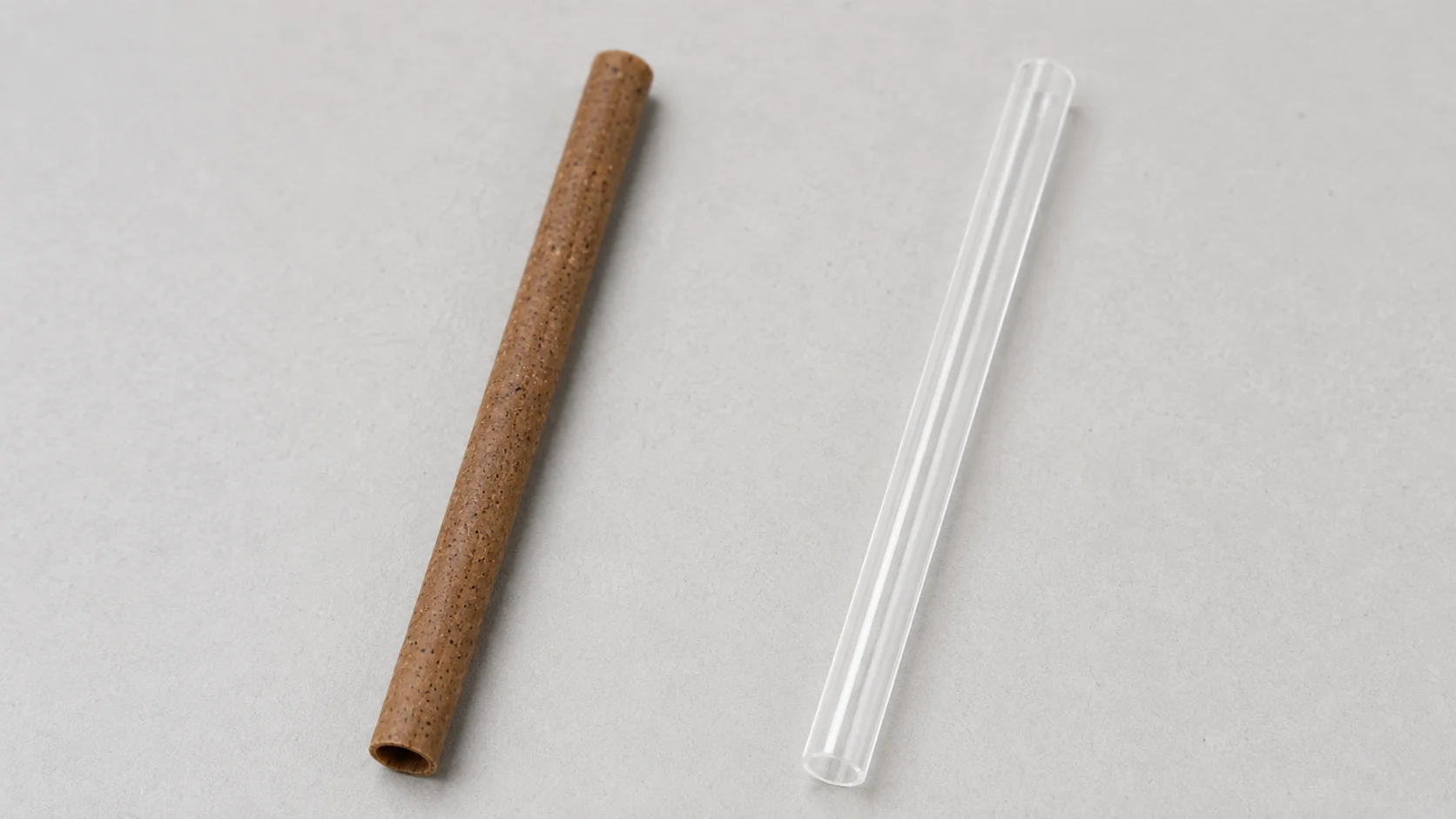
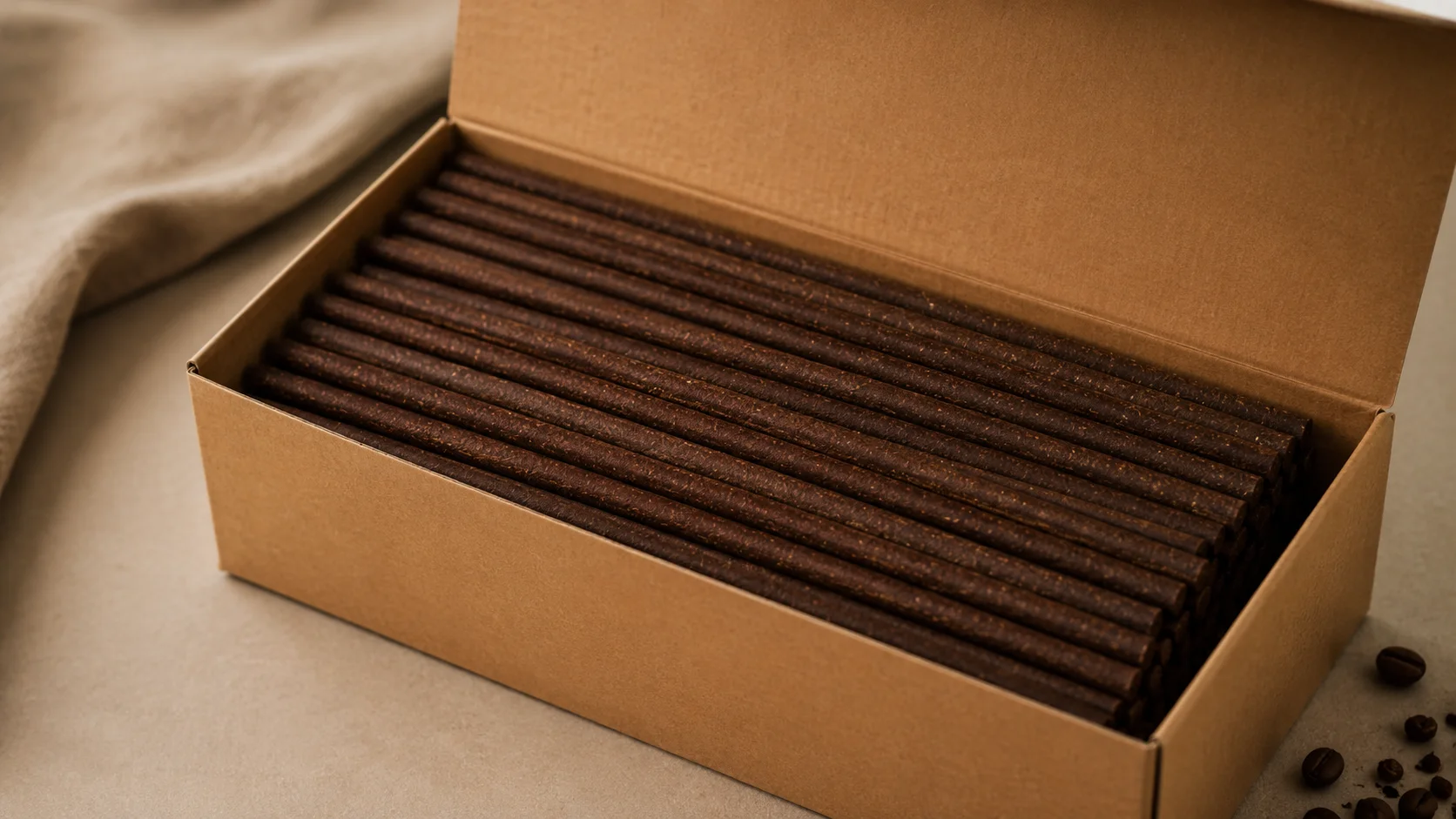
- Revolutionary Coffee Ground Straws: Unique and highly sustainable, our coffee ground straws leverage another abundant waste stream, offering a distinctive aesthetic and strong environmental credentials. These straws are a pioneering example of upcycling, providing a novel and compliant option for businesses seeking to stand out. Discover Coffee Ground Straws
- Eco-Conscious Bamboo Drinking Straws: For a natural, reusable, and premium feel, our bamboo drinking straws offer an elegant solution. Sourced responsibly, these durable straws are ideal for establishments aiming for a high-end, sustainable presentation. Explore Bamboo Drinking Straws
We understand that every business has unique needs. Explore our full range of certified eco-friendly long drinking straws and find the perfect match for your operation at Momoio Products.
Beyond Straws: A Holistic Approach to Sustainable Packaging
Momoio’s commitment to sustainability extends far beyond just drinking straws. We offer a comprehensive ecosystem of compliant, sustainable solutions designed to meet the diverse needs of businesses across various sectors. Frompaper food packagingto advancedbiodegradable food packagingand our elegantbamboo cutlery, our product lines are developed with the same rigorous adherence to compliance and environmental integrity.
We help businesses across sectors, including cafes, hotels, and retail, not only meet escalating consumer demand for genuine sustainability but also navigate complex EPR obligations. By partnering with Momoio, you gain access to a complete portfolio of responsibly sourced and certified products that support your holistic sustainability goals, streamline your supply chain, and reduce your overall environmental footprint. Our expertise ensures that every aspect of your packaging strategy is future-proof and compliant.
The Momoio Advantage: Reduce Risk, Enhance Reputation
Choosing Momoio means choosing a partner dedicated to your success and the planet’s well-being. Our advantage lies in:
- Reduced Environmental Impact: Our certified products ensure genuine biodegradability and compostability, actively contributing to waste reduction and a circular economy.
- Avoidance of Greenwashing Pitfalls: With our transparent certifications and PFAS-free guarantee, your brand can confidently make verifiable environmental claims, building genuine trust with your customers.
- Seamless Compliance: We continuously monitor and adapt to evolving global regulations, providing solutions that meet current and anticipated compliance frameworks, protecting your business from fines and reputational damage.
- High-Quality, Functional Products: Sustainability never compromises quality. Our long drinking straws are designed for superior performance, durability, and a positive customer experience, ensuring your sustainable choice doesn’t mean a sacrifice in functionality or aesthetics.
In a market saturated with vague “green” claims, the Momoio difference is clear: verifiable compliance, uncompromised quality, and a genuine commitment to a sustainable future. An organization likeEuropeiska bioplasterprovides excellent insights into the broader bioplastics industry, underscoring the importance of industry standards and certified products, which Momoio consistently champions. This dedication allows you to focus on your core business, secure in the knowledge that your sustainable choices are rigorously vetted and truly impactful.
Choose Proven Compliance. Choose Momoio.
The imperative for genuinely eco-friendly long drinking straws is no longer a choice—it’s a business necessity, shaped by evolving regulations and a discerning consumer base. Don’t let the complexity of compliance and the risk of greenwashing compromise your brand’s integrity or future growth.
Ready to Make the Right Choice for Your Business?
Partner with Momoio to ensure your long drinking straws, and all your packaging solutions, meet the highest global standards for sustainability and compliance. Our expert team is ready to guide you through our certified product lines, offering tailored solutions that perfectly align with your operational needs and environmental commitments.
Browse Our Sustainable Straws and PackagingContact Us Today for a Consultation
Download Resources:Empower your purchasing decisions with valuable insights and access our complete portfolio of certifications and product specifications. This knowledge will solidify your understanding of true sustainability and compliance. For a broader understanding of industry best practices and standards, consider exploring resources from reputable organizations such as theInstitutet för biologiskt nedbrytbara produkter (BPI). Their work highlights the critical role of certification in ensuring product compostability and safety.
By choosing Momoio, you’re not just buying straws; you’re investing in a compliant, sustainable, and responsible future for your brand.
Vanliga frågor
Why are “eco-friendly” long straws still a compliance risk for businesses?
Many “bio-sourced” or “compostable” long straws are non-compliant with strict frameworks like the EU Single-Use Plastics Directive (SUPD), making them illegal in the EU. Some alternatives also contain hidden PFAS (“forever chemicals”). Non-compliance risks fines, supply disruption, and brand damage—so a precise grasp of global rules is essential.
What certifications ensure a long drinking straw is truly compostable and compliant?
Look for EN 13432 (EU) and ASTM D6400/D6868 (North America). Prefer third-party marks such as BPI and TÜV AUSTRIA OK kompost INDUSTRIAL / OK kompost HEM. These verify safe breakdown without harmful residues and typically include PFAS-free requirements.
What are PFAS and why must long straws be PFAS-free?
PFAS (per- and polyfluoroalkyl substances) persist in the environment and are linked to health risks. They have been detected in some paper/bamboo straws (added for water/grease resistance or via supply-chain contamination). Laws such as California AB 1200 and expected EU-wide restrictions—plus BPI/TÜV criteria—now push PFAS-free products for safety and compliance.
How does the EU Single-Use Plastics Directive (SUPD) affect long drinking straws?
The SUPD (EU 2019/904), effective July 3, 2021, bans placing single-use plastic straws on the EU market. The ban extends to many bioplastics (e.g., PLA) if they meet the SUPD definition of “plastic.” Businesses must shift to truly non-plastic, fully compostable/biodegradable, or reusable materials (medical exceptions apply).
What is “greenwashing,” and how can businesses avoid it when selecting sustainable long straws?
Greenwashing is misleading environmental marketing. Follow the FTC Green Guides: make specific, verifiable claims backed by science. Demand third-party proofs (BPI, TÜV AUSTRIA, EN 13432, ASTM D6400/D6868) instead of vague “eco-friendly” labels, and clearly qualify any “compostable/biodegradable” claims.