Sugarcane Drinking Straws vs. Bamboo: A Definitive Procurement Guide
The global business landscape is undergoing a profound transformation, driven by an urgent imperative for environmental stewardship. For procurement managers, operations directors, sustainability officers, and supply chain executives in the **hospitality & foodservice industries**, the choice of seemingly minor items, such as drinking straws, now carries significant strategic weight. Non-compliance with evolving sustainability mandates and a failure to meet shifting consumer expectations can lead to substantial operational and commercial repercussions, including regulatory fines, diminished brand value, and erosion of market share.
The Imperative for Sustainable Straws: Navigating Global Regulations & Market Shifts
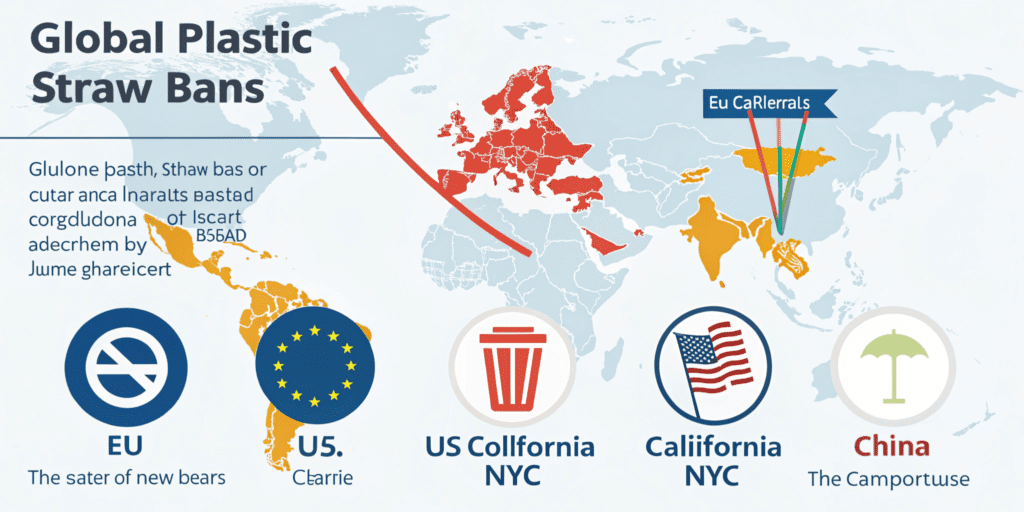
Eran med obegränsad engångsplast är snabbt över, framdriven av ett globalt lagstiftningsarbete. **EU:s plastproduktdirektiv 2019** förbjöd engångsstrån av plast och en mängd andra föremål, från och med den 3 juli 2021, vilket tvingade företag verksamma inom Europeiska unionen att snabbt svänga om. Storbritannien följde efter och implementerade sitt eget förbud mot engångsplaster från oktober 2023. Tvärs över Atlanten är regleringslandskapet, även om det är fragmenterat, lika betydelsefullt; Från och med mars 2025 har 19 amerikanska stater och territorier jurisdiktionsomfattande förbud mot en eller flera engångsplaster, med det amerikanska inrikesdepartementet som planerar att fasa ut engångsplastprodukter från nationalparker och offentlig mark senast 2032. För alla företag med ett globalt fotavtryck eller regional verksamhet, har en strategi för att få en direkt påverkan på fabriker blivit en strategi för att få tillträde till fabriker och att åtgärda den direkt. kontinuitet.
Detta regulatoriska tryck förstärks av övertygande marknadsdynamik. Den globala marknaden för miljövänliga halmstrån beräknas nå nästan 25,1 miljarder USD år 2035, växa med en robust 7,3 % sammansatt årlig tillväxttakt (CAGR) från uppskattningsvis 12,3 miljarder USD 2025. Mer specifikt värderades marknaden för biologiskt nedbrytbara sugrör till 23627 miljarder USD till 40 till 40,24 miljarder USD. 204,167 miljarder år 2031, vilket visar en imponerande CAGR på 22,46%. Denna explosiva tillväxt är ett direkt svar på konsumenternas känslor; cirka 70 % av konsumenterna föredrar nu företag som aktivt använder miljövänliga alternativ. Att ignorera detta dubbla tryck – reglerande efterlevnad och ökande konsumentefterfrågan – är inte längre ett hållbart alternativ för framåttänkande organisationer. Det utsätter företag för efterlevnadsrisker, komplicerar upphandling och påverkar kundernas uppfattning negativt, vilket i slutändan urholkar konkurrensfördelar.Framtidstänkande gästfrihets- och foodserviceföretag måste ta till sig hållbara sugrör för att säkerställa efterlevnad och möta konsumenternas efterfrågan.
Djupdykning: sugrör för sockerrör – fördelen med jordbruksavfall
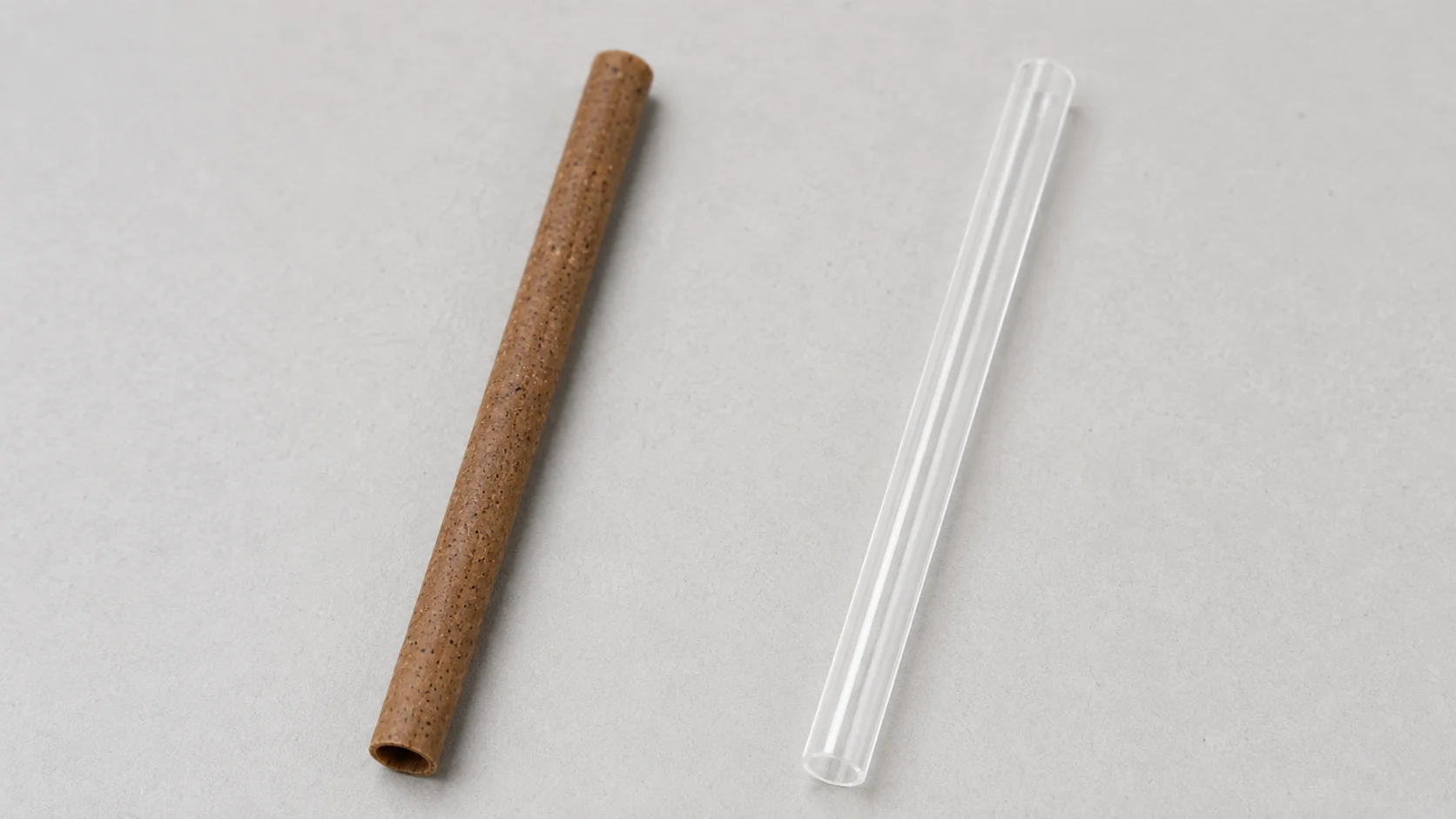
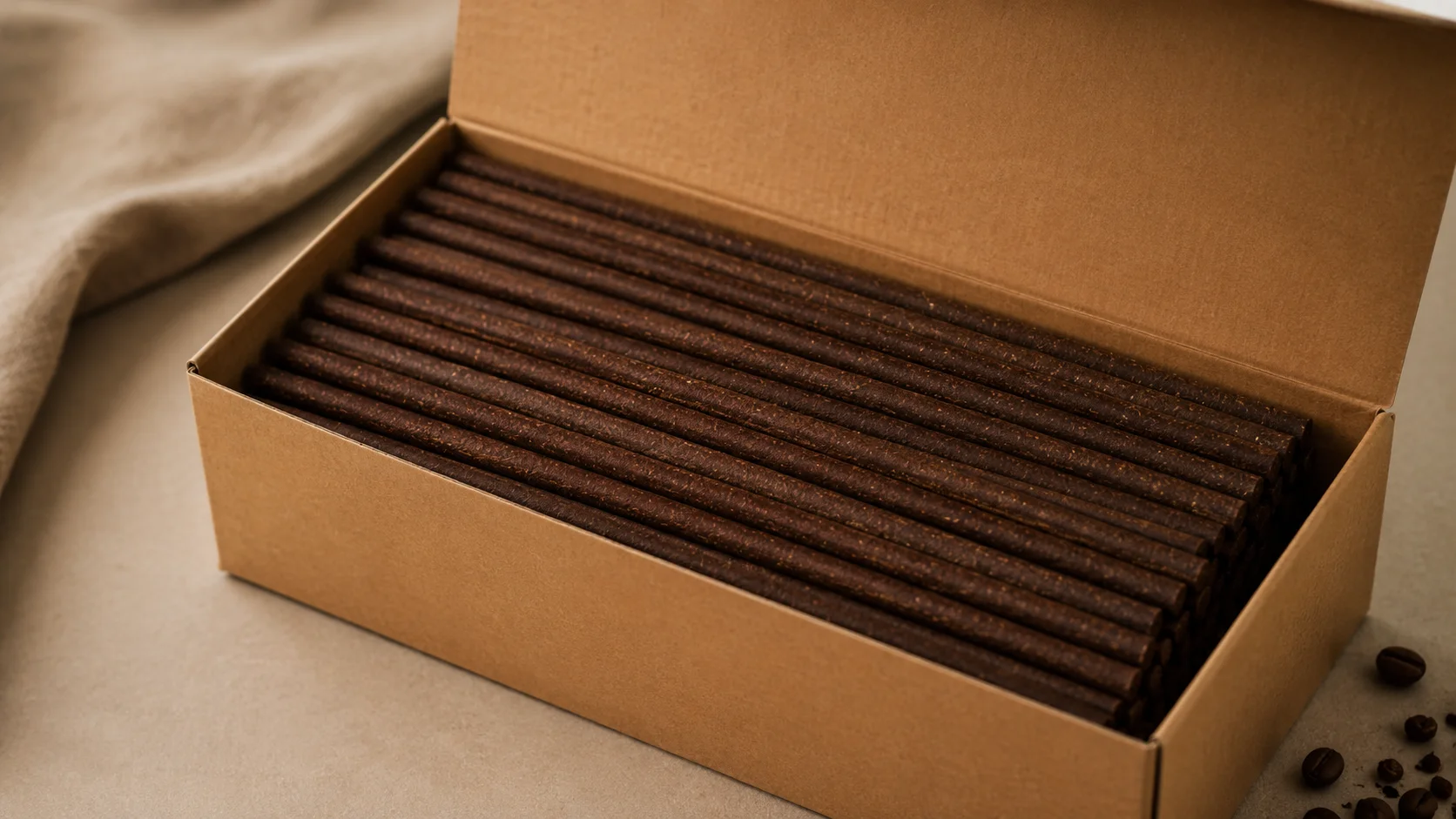
Sugrör för sockerrör representerar ett betydande steg framåt inom hållbar materialvetenskap. Till skillnad från traditionell plast är dessa sugrör tillverkade av bagasse, den fibrösa biprodukten som finns kvar efter extraktion av sockerrörsjuice. Detta innovativa tillvägagångssätt återanvänder jordbruksavfall och omvandlar en potentiell utmaning för bortskaffande till en värdefull, förnybar resurs.
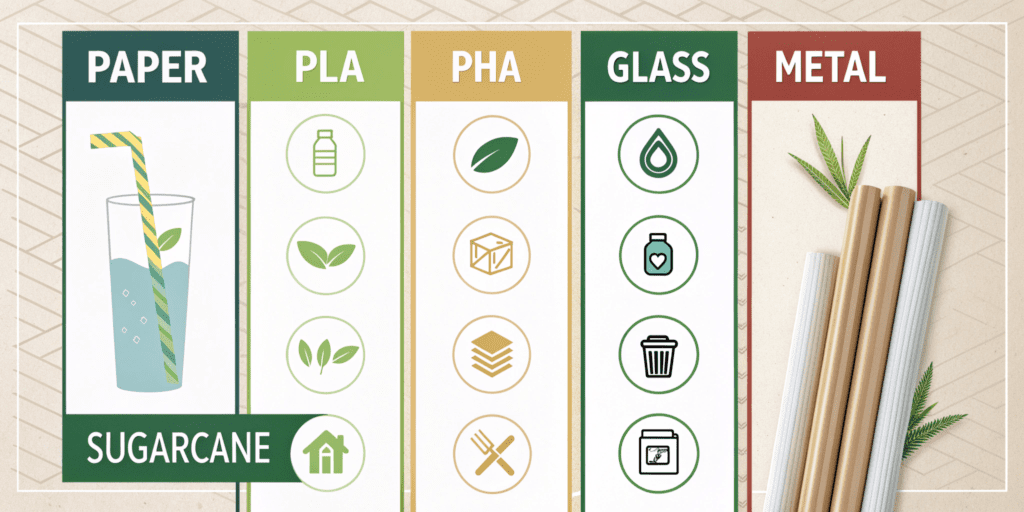
Sockerrörsstrån är 100 % växtbaserade, vilket gör dem helt biologiskt nedbrytbara och komposterbara. Ledande produkter går vanligtvis sönder inom 90-180 dagar i kommersiella komposteringsanläggningar, med vissa varianter som också är certifierade för hemkompostering, vilket ger en ännu mer strömlinjeformad livscykel. Prestandamässigt sticker de ut för sin hållbarhet och flexibilitet, och motstår fukt även när de är nedsänkta i heta vätskor upp till 220°F (104°C). Denna motståndskraft säkerställer en konsekvent, högkvalitativ användarupplevelse, en kritisk faktor för **matservice och gästfrihetsverksamhet** i syfte att undvika de "blöta halm"-klagomålen i samband med tidigare pappersalternativ. Av avgörande betydelse är att välrenommerade sockerrörsstrån är naturligt smakfria, giftfria och uttryckligen fria från skadliga kemikalier som BPA och PFAS (Per- och Polyfluoroalkyl Substances), vilket skyddar både konsumenternas hälsa och varumärkets integritet.
För inköpsproffs är certifieringar avgörande för att validera hållbarhetskrav. Ledande sugrör för sockerrör har en serie certifieringar som vittnar om deras miljö- och säkerhetsuppgifter. Dessa inkluderar BPI Industrial, TUV OK Compost Home och US FDA-godkännande. Dessutom är många certifierade fluorfria, 5 plastfria (vilket betyder ingen PP, PE, PS, PVC, PET) och PFAS-fria, vilket ger en robust garanti mot "för evigt kemikalier". Överensstämmelse med globala komposterbarhetsstandarder som AS5810 (hem) och AS4736 (kommersiellt) är en nyckelindikator på verklig miljöpåverkan. Att förstå dessa certifieringar är avgörande för att göra verkligt hållbara upphandlingsval. För att utforska ytterligare detaljer om hur dessa innovativa lösningar formar framtiden för hållbar matservice, läs mersockerrörsstrån och framtiden för hållbar matservice.
Real-World Impact: A Sugarcane Straw Case Study
Övergången till hållbara alternativ kommer ofta med upplevda utmaningar, men verkliga tillämpningar visar betydande fördelar. Strwd, en framstående leverantör av hållbar halm, erbjuder ett övertygande exempel. Under sitt invigningsår ersatte Strwd framgångsrikt över 500 000 pappersstrån med sockerrörsalternativ på 60 platser. Detta initiativ ledde inte bara till en avsevärd minskning av plastavfall utan bevisade också den operativa livskraften och överlägsna prestandan för sugrör från sockerrör i en kommersiell miljö med stora volymer. Sådana övergångar understryker potentialen för företag att uppnå betydande miljöpåverkan utan att kompromissa med operativ effektivitet eller kundnöjdhet.Sockerrörsstrån erbjuder en hållbar, komposterbar och PFAS-fri lösning, idealisk för stora volymer av gästfrihet och matservering.
Deep Dive: Bamboo Straws – Det återanvändbara, naturliga valet
Bambu sugrör, tillverkade av hela bambu stjälkar, representerar ett annat övertygande hållbart alternativ. Bambu hyllas som en snabbt förnybar resurs, som kräver minimalt med vatten och inga bekämpningsmedel för odling, vilket gör det till ett naturligt miljövänligt material. En primär fördel med bambu sugrör ligger i deras hållbarhet och design för återanvändning; med rätt skötsel kan dessa sugrör hålla i åratal och erbjuder en verkligt långsiktig lösning på engångsavfall. Utöver sina funktionella fördelar erbjuder bambusugrör en unik, rustik och naturlig estetik, som starkt tilltalar miljömedvetna varumärken och konsumenter som söker en organisk touch.
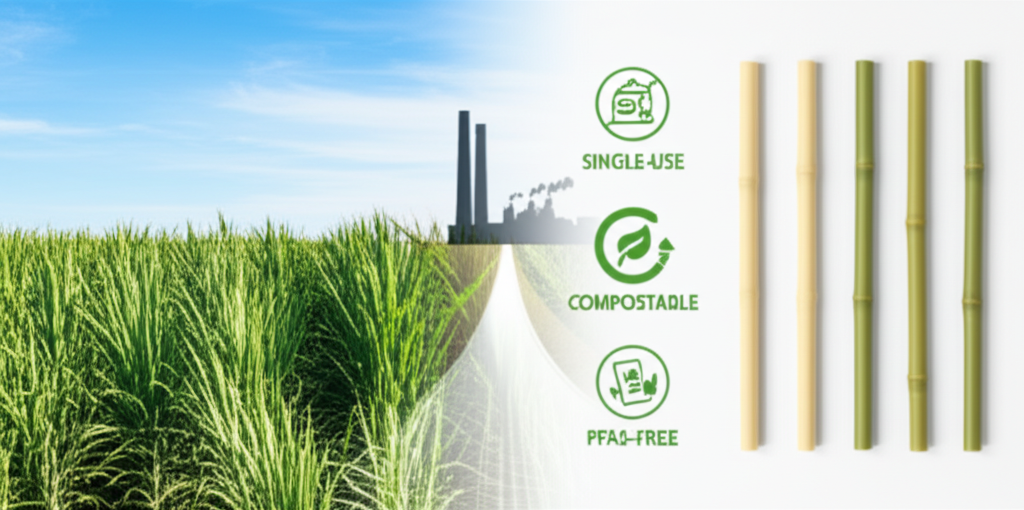
Upphandlingen av bambuhalm kräver dock ett noggrant övervägande av deras utmaningar, särskilt när det gäller hygien och potentiell PFAS-kontamination. En berörande belgisk studie avslöjade närvaron av PFAS i 80 % av de testade bambuhalmmärkena, vilket höjde betydande röda flaggor om dessa "för evigt kemikalier". Detta fynd komplicerar berättelsen om bambu som ett universellt säkert och grönt alternativ, vilket kräver noggrann leverantörskontroll.
Dessutom kräver bambuns porösa natur noggrann rengöring med en dedikerad borste och noggrann torkning för att förhindra mögel och bakterietillväxt, vilket är ett kritiskt operativt övervägande för företag. I kommersiella miljöer, där rigorösa rengöringsprotokoll är viktiga, kan deras praktiska livslängd vara kortare än förväntat, ofta från 2-3 månader. Denna kortare kommersiella livslängd kan leda till en högre årlig kostnad, med en analys som citerar en årlig kostnad på 7,97 € per sugrör, vilket potentiellt gör dem mindre kostnadseffektiva än vissa engångsalternativ i miljöer med hög omsättning. Vissa användare rapporterar också en mild, naturlig "träaktig" smaköverföring till drycker, som, även om den är subtil, kan påverka kundupplevelsen för känsliga drycker.Bambu sugrör erbjuder återanvändbarhet och naturlig estetik men kräver noggrann hygien och kontroll för PFAS-kontamination.
Upphandlingsinsikter: Sockerrör vs. bambu – en strategisk jämförelse
Att välja mellan sugrör från sockerrör och bambu kräver ett nyanserat, datadrivet tillvägagångssätt som är skräddarsytt för ett företags specifika operativa behov och hållbarhetsmål. Varje material uppvisar distinkta fördelar och nackdelar, och det optimala valet beror ofta på faktorer som avsedd användning, avfallshanteringsmöjligheter och önskad varumärkesimage.
Feature-by-Feature: B2B Operational Impact & ROI Potential
| Särdrag | B2B operationell påverkan | Efterlevnadsanteckning | ROI -potential |
|---|---|---|---|
| Material | Sockerrörsfiber/bagass (återanvänt jordbruksavfall) vs. hela bambu stjälkar (snabbt förnybar resurs). Sockerrörsproduktion återanvänder jordbruksavfall, vilket underlättar modeller för cirkulär ekonomi. Bambu erbjuder ett naturligt, ofta handgjordt utseende. | Båda stöder efterlevnad av plastförbud (t.ex. EU SUPD, förbud i Storbritannien, restriktioner på amerikansk statsnivå). Säkerställ tredjepartscertifieringar (t.ex. BPI för sockerrör, FSC för bambuförsörjning). | Sänkta avgifter för bortskaffande av plastavfall; förbättrad varumärkesimage som en miljömedveten ledare. |
| Återanvändbarhet | Sockerrör: Primärt för engångsbruk, vilket eliminerar arbetsintensiv rengöring och förvaring för stora volymer. Bambu: Designad för återanvändning, kräver robusta rengöringsprotokoll och dedikerad personalutbildning för hygien. | Sockerrör: Förenklar efterlevnaden av engångsföreskrifter samtidigt som komposterbarheten säkerställs. Bambu: Kräver efterlevnad av strikta hygien- och sanitetsstandarder för återanvändning. | Sockerrör: Lägre direkta driftskostnader (inget städarbete, ingen återuppsättning av enskilda rena sugrör). Bambu: Lägre kostnad per användning på mycket lång sikt *om* noggrant hanteras och återanvändas hundratals gånger. |
| Varaktighet | Sockerrör: Motstår fuktighet och bibehåller integritet över temperaturer (upp till 220°F/104°C), fungerar konsekvent som plast utan miljöskador. Bambu: Robust, men kan spricka/splinter vid frekvent kommersiell användning och är mindre konsekvent än tillverkade produkter. | Sockerrör: Konsekvent prestanda minimerar kundklagomål och avfall från trasiga strån, vilket stöder efterlevnad av kvalitetsstandarder. Bambu: Kräver kvalitetskontroll för att förhindra problem som kan leda till missnöje hos konsumenterna eller slöseri. | Sockerrör: Högre kundnöjdhet på grund av konsekvent, pålitlig prestanda; färre omserveringar; minskat avfall från för tidigt kasserade sugrör. Bambu: Lång livslängd kräver noggrann vård, vilket kan uppväga vissa hållbarhetsfördelar i hektiska kommersiella miljöer. |
| Smak/lukt | Sockerrör: Neutral smak, säkerställer ingen förändring av dryckens smak. Viktigt för exklusiva drycker eller känsliga kunders gommar. Bambu: Mild naturlig smak, kan subtilt påverka känsliga smaker, ett potentiellt problem för gourmetdrycker. | Båda kan anpassas till livsmedelssäkerhetsstandarder om de tillverkas och rengörs på rätt sätt (för bambu). | Sockerrör: Högre kundnöjdhet och varumärkesrykte på grund av överlägsen smakneutralitet. Minimerar klagomål eller omserveringar baserat på smakpåverkan. |
| Förfogande | Sugarcane: Commercial & home compostable (2-4 months); transforms into nutrient-rich soil. Offers a clear, eco-friendly end-of-life solution reducing landfill burden. Bamboo: Biodegradable, but may require industrial composting for efficient breakdown; slower decomposition than sugarcane. | Sockerrör: Uppfyller stränga komposterbarhetscertifieringar (AS5810, AS4736, TUV OK Compost). Bambu: Biologisk nedbrytbarhet varierar; kräver noggrant övervägande av lokal komposteringsinfrastruktur för att säkerställa korrekt bortskaffande. | Sockerrör: Enklare, snabbare livscykel; minskar deponibördan och tillhörande avgifter för avfallshantering; förbättrar meriter för cirkulär ekonomi. Bambu: Om den inte komposteras ordentligt kan den fortfarande bidra till deponiproblem. |
| Kostnad (enhet/förskott) | Sockerrör: Mer överkomligt i bulk per enhet, perfekt för engångsmiljöer med stora volymer. Ett växtbaserat PLA-halmrör (liknande kategori) kostar ~$0,24 jämfört med ~$0,052 för plast. Bambu: Högre initial kostnad på grund av handgjord produktion, men återanvändbar med tiden. | Kostnadseffektivitet måste överensstämma med budget- och avfallsmålen. | Sockerrör: Lämplig för miljöer med hög volym och snabb omsättning; lägre initial investering för storskalig användning. Bambu: Högre initiala utgifter; långsiktiga besparingar för konsekvent, disciplinerad återanvändning. |
| PFAS-risk | Sockerrör: Ledande varumärken hävdar PFAS-fria och är certifierade fluorfria. Avgörande för att mildra regulatoriska risker och ryktesrisker. Bambu: Belgisk studie fann PFAS i 80 % av de testade varumärkena, vilket väcker betydande oro för "för evigt kemikalier". | Sockerrör: Överensstämmelse med nya PFAS-regler och konsumentsäkerhetsförväntningar. Bambu: Kräver noggrann granskning för att säkerställa PFAS-fri certifiering, eller riskera betydande efterlevnad och skada på rykte. | Sockerrör: Minskar regulatoriska risker/rykterisker från PFAS-kontamination, vilket ökar konsumenternas förtroende och marknadstillträde. Bambu: Potential för PFAS-exponering kan leda till produktåterkallelser, böter och allvarlig varumärkeserosion. |
För en mer omfattande guide om upphandling för hållbar gästfrihet, inklusive alternativ för bambu och sockerrör, se vårBambu sockerrör hållbar gästfrihet upphandling guide.Strategisk upphandling av hållbara sugrör kräver utvärdering av material, återanvändbarhet, hållbarhet, smak, kassering, kostnad och PFAS-risk.
Att övervinna adoptionsbarriärer vid hållbar upphandling av halm
Trots de tydliga miljömässiga och etiska drivkrafterna kan flera hinder hindra den utbredda användningen av hållbara sugrör i B2B-miljöer. Ett betydande hinder är uppfattningen om högre upphandlingskostnader. Visserligen, även om engångsstrån av plast kan kosta runt 0,052 USD, kan ett växtbaserat alternativ, som ett PLA-halmrör, vara cirka 0,24 USD – en betydande skillnad för stora volymer. Denna kostnadsskillnad kräver ett skifte i perspektiv från enhetspris till total ägandekostnad, med hänsyn tagen till miljöpåverkan, varumärkesvärde och regelefterlevnad.
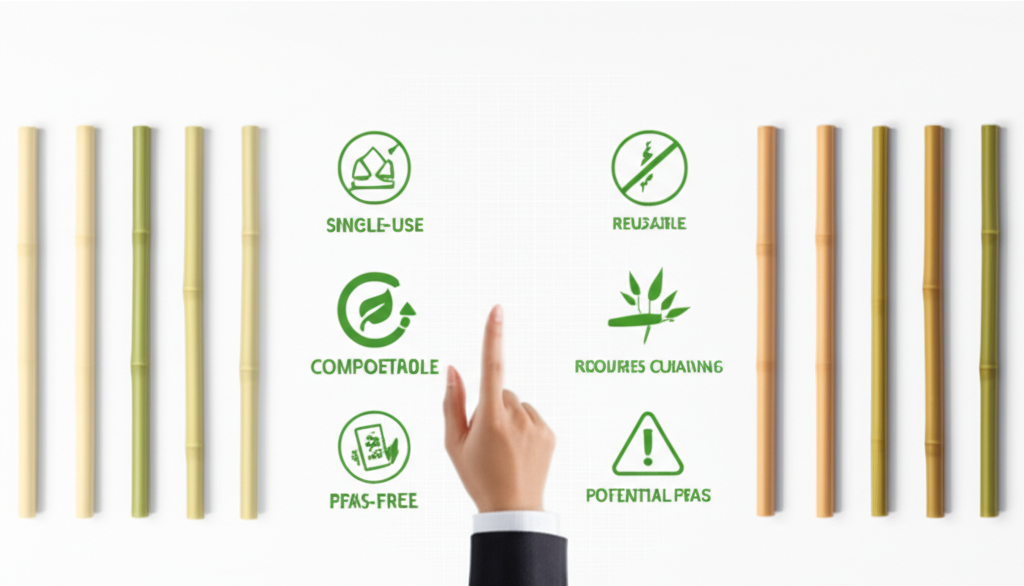
Kundupplevelse är en annan viktig faktor. Tidiga upprepningar av pappersstrån, till exempel, led ofta av fenomenet "blöta halm", vilket ledde till att en stor Quick Service Restaurant-kedja (QSR) upplevde en 15 % minskning av positiva dryckesrecensioner efter byte. Detta understryker vikten av att välja högpresterande hållbara alternativ som inte äventyrar slutanvändarens upplevelse.
Dessutom kan komplexiteten kring slutförvaring skapa förvirring och undergräva miljöarbetet. Många "komposterbara" alternativ, som PLA, kräver specifika industriella komposteringsanläggningar för att bryta ner effektivt. Med endast cirka 15 % av USA:s komposteringsanläggningar som accepterar bioplast, hamnar många sådana föremål fortfarande på deponier, där det kan ta århundraden att sönderfalla och till och med släppa ut potenta växthusgaser som metan. Detta understryker behovet av tydlig kommunikation och tillgång till lämplig infrastruktur för bortskaffande.
Att navigera i försörjningskedjan för biobaserade sugrör uppvisar också komplexitet. Medan den globala marknaden för biologiskt nedbrytbara sugrör värderades till 41 521,6 miljoner USD 2024, vilket tyder på ett robust utbud, kan logistiska utmaningar, såsom långa transportrutter från Asien för vissa bambuprodukter, påverka det totala koldioxidavtrycket och ledtiderna. Kontinuerlig innovation är dock fokuserad på att minska produktionskostnaderna och förbättra produktens prestanda för att övervinna dessa drifts- och leveranskedjehinder.Att övervinna barriärer för hållbar användning av halm innebär att ta itu med kostnadsuppfattning, säkerställa kundupplevelsen och klargöra hanteringskomplexiteten.
Framtidsutsikter: Innovationer och policy på den hållbara halmmarknaden
Resan med sugrör har varit lång, från sumeriska guldrör 3000 f.Kr. till rågräs, sedan plast och nu, en mångfald av hållbara material. Framtiden för den hållbara halmmarknaden präglas av obeveklig innovation och föränderliga politiska landskap. Vi bevittnar uppkomsten av helt nya lösningar, som ätbara sugrör gjorda av ingredienser som vete, ris eller pasta, som erbjuder en lösning utan avfall. Nya bioplaster, inklusive polyhydroxialkanoater (PHA), vinner också dragkraft och lovar förbättrad biologisk nedbrytbarhet och prestanda.
Experter räknar med att den miljövänliga halmmarknaden kommer att växa från 1,8 miljarder USD 2023 till 5,1 miljarder USD 2030, enligt *Journal of Industrial Ecology*. Denna exponentiella tillväxt kommer att drivas på av kontinuerliga framsteg inom materialvetenskap, vilket leder till mer hållbara, kostnadseffektiva och verkligt komposterbara lösningar. Tillsynsorgan förväntas intensifiera sitt fokus, inte bara på att förbjuda engångsplaster, utan på att granska hela livscykeln för alternativ, särskilt när det gäller PFAS och genuin biologisk nedbrytbarhet.
Procurement teams are uniquely positioned to act as catalysts for this greener supply chain. By proactively seeking and demanding truly sustainable materials, they can drive innovation and adoption throughout the industry. While plastic straw bans represent a tiny fraction (less than 1%) of overall plastic pollution, they serve as a critical entry point for businesses to engage with broader sustainability initiatives and reduce their environmental footprint. Strategic procurement of eco-friendly products like sugarcane straws fosters a positive cycle of demand and innovation, pushing the entire market towards more sustainable practices. Read more about how procurement can drive sustainability in hospitality by reviewing this resource onsustainable straws in hospitality.The sustainable straw market is rapidly evolving with innovations and policies driving demand for truly eco-friendly solutions.
Competitive Advantage & Business Case
For B2B decision-makers, the shift to sustainable straws is more than just compliance; it’s a profound opportunity to establish a competitive advantage and bolster the business case for environmental responsibility. Quantifiable benefits include:
- Kostnadsbesparingar: While initial unit costs may be higher, adopting genuinely compostable solutions like sugarcane straws can lead to significant long-term cost savings by reducing waste disposal fees, which are increasingly tied to volume and type of waste. Avoiding regulatory fines for non-compliance further safeguards profitability.
- Riskbedömning: Att proaktivt övergå till PFAS-fria och fullt certifierade komposterbara sugrör isolerar ditt varumärke från framtida regulatoriska tillslag och potentiella rättstvister relaterade till miljö- och hälsoproblem. Denna framsynthet minimerar driftstörningar och skyddar mot ryktesskador.
- Ökning av varumärkesvärde: I en tid då konsumenter och företagspartners prioriterar hållbarhet, förbättrar ett påvisbart engagemang för miljövänliga metoder varumärkesuppfattningen, attraherar ett växande segment av miljömedvetna kunder och förbättrar medarbetarnas moral och behållning. Detta kan direkt leda till ökade marknadsandelar och starkare kundlojalitet.
- Marknadsandelmöjlighet: Genom att leda ansvaret för hållbar upphandling kan företag differentiera sig på en trång marknad. Detta positionerar dem som innovatörer och ansvarsfulla företagsmedborgare, vilket öppnar dörrar till nya partnerskap, anbud och kundsegment som värdesätter miljöanpassning. Den förväntade tillväxten på flera miljarder dollar på den miljövänliga halmmarknaden signalerar en tydlig möjlighet till marknadsledarskap för dem som agerar beslutsamt.
Att anta hållbara sugrör ger betydande konkurrensfördelar, inklusive kostnadsbesparingar, riskreducering och ökat varumärkesvärde.
Slutsats
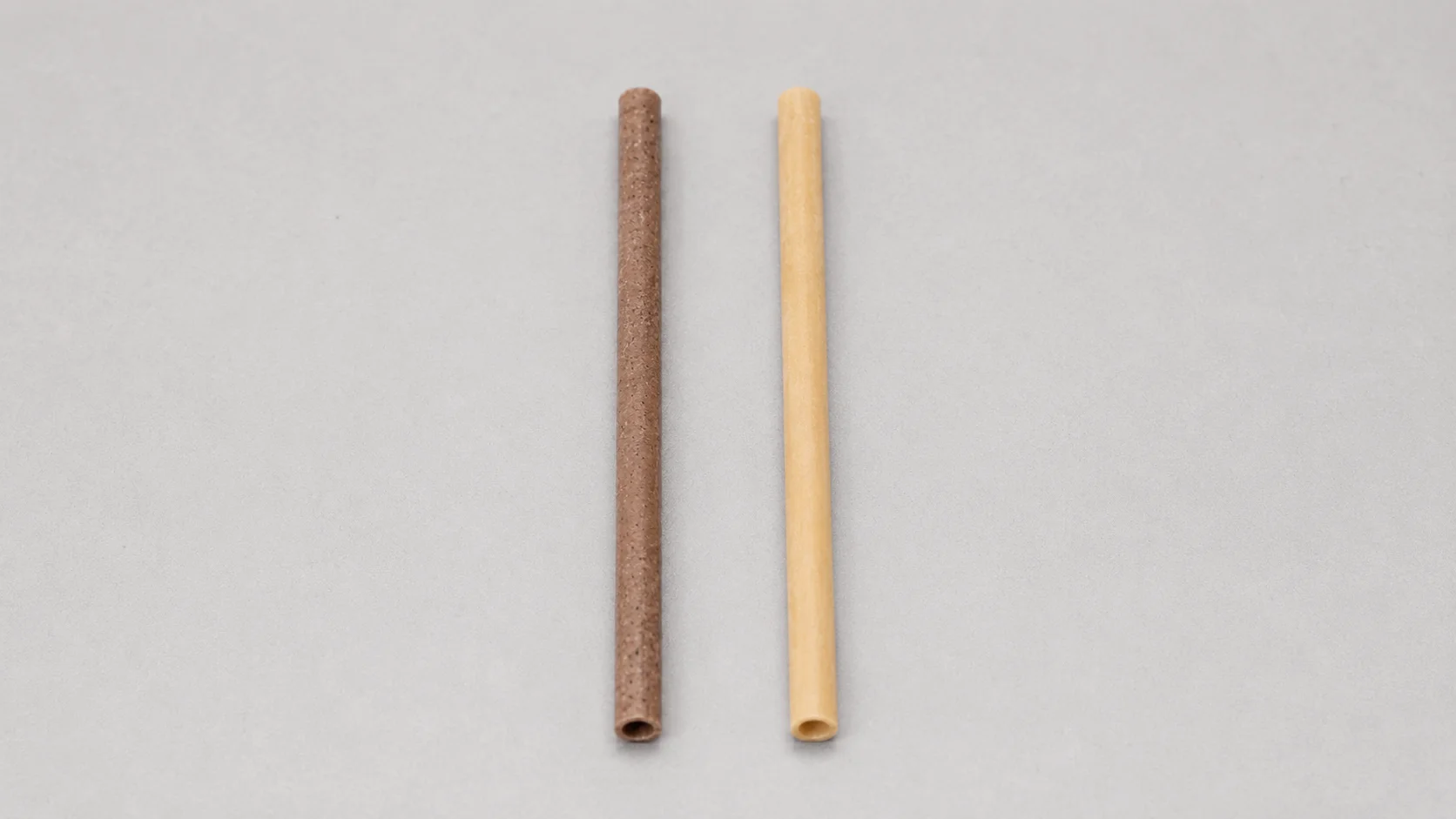
Att välja mellan sockerrör och bambu **sugrör** kräver en nyanserad **upphandlingsguide**-strategi, som väger operativa krav mot orubbliga miljöåtaganden. **Sockerrörsstrån** erbjuder en pålitlig, komposterbar engångslösning som minimerar hygienproblem och förenklar kassering för högvolymer, samtidigt som man uttryckligen undviker PFAS och återanvänder jordbruksavfall. **Bambu sugrör** utmärker sig i återanvändbarhet och naturlig estetik, idealiska för applikationer med mindre volymer där rengöringsprotokoll kan hanteras noggrant, trots potentiella PFAS-problem och kortare kommersiell livslängd i krävande miljöer.
The market is clearly moving towards sustainable alternatives, driven by both legislation and consumer demand. Embrace this shift now. Request a comprehensive sample pack of certified PFAS-free sugarcane straw varieties today to assess their superior performance and secure your supply chain before regulatory pressures tighten further and competitors seize market advantage.Request a Sample Pack Today
Vanliga frågor
Q: Why should hospitality businesses switch to sugarcane straws?
A: Sugarcane straws offer superior durability, remain taste-neutral, are 100% compostable, and repurpose agricultural waste, enhancing your brand’s sustainability without compromising customer experience.
Q: Are sugarcane straws truly compostable in commercial settings?
S: Ja, ledande sockerrörsstrån är certifierade för kommersiell kompostering (t.ex. AS4736, BPI Industrial), bryts ner inom 90-180 dagar till näringsrik jord, vilket minskar deponibördan.
F: Hur är sugrör från sockerrör att jämföra med sugrör av bambu för hygien i matservice?
S: Sockerrörsstrån är engångs- och icke-porösa, vilket förenklar hygienen. Bambu sugrör, även om de kan återanvändas, kräver noggrann rengöring och torkning för att förhindra mögel och bakterietillväxt, vilket kan vara utmanande i matservering med stora volymer.
F: Vilka är kostnadskonsekvenserna av att byta till hållbara sugrör för en stor hotellkedja?
A: While unit costs might be higher than plastic, sugarcane straws offer long-term savings by reducing waste disposal fees, avoiding regulatory fines, and boosting brand value, leading to increased customer loyalty and market share.
Q: Are sugarcane straws free from harmful chemicals like PFAS?
A: Yes, reputable sugarcane straw brands are certified PFAS-free and Fluorine-Free, ensuring consumer safety and mitigating regulatory and reputational risks for your business.