Sürdürülebilir paketleme ve atık yönetimi ortamında gezinmek, özellikle konaklama ve yiyecek hizmeti sektörlerindeki satın alma ve operasyon liderleri için kesin bir anlayış gerektirir. "Biyolojik olarak parçalanabilir" ve "kompostlanabilir" terimleri sıklıkla birbirinin yerine kullanılır ve bu da yaygın kafa karışıklığına ve potansiyel operasyonel yanlış adımlara yol açar. Bu anlamsal belirsizlik, gerçek çevresel, sosyal ve yönetişim (ESG) uyumluluğu için çabalayan işletmeler için önemli bir risk oluşturuyor ve potansiyel olarak maliyetli "yeşil yıkama" suçlamalarına ve verimsiz atık akışlarına yol açıyor.
B2B karar vericileri için bu terimleri birbirinden ayırmak yalnızca akademik bir çalışma değildir; bu stratejik bir zorunluluktur. 2024 yılında yaklaşık 55,53 milyar ABD doları değerinde olan küresel kompostlanabilir ambalaj pazarının (Grand View Research, 2024), 2032 yılına kadar 89,85 milyar ABD dolarına ulaşacağı ve 2025'ten 2032'ye kadar %6,20 Bileşik Yıllık Büyüme Oranı (CAGR) sergileyeceği tahmin edilmektedir (Öncelik Araştırması, 2023). Bu büyüme, işletmelerin gelişen tüketici beklentilerine ve düzenleyici ortamlara uyum sağlamaları için kritik bir fırsatın altını çiziyor. Bununla birlikte, sertifikalı kompostlanabilirlik konusunda net bir anlayışa sahip olmayan şirketler, vaat edilen çevresel faydaları sağlamayan veya giderek katılaşan uyumluluk standartlarını karşılayamayan, tedarik zinciri verimliliğinden marka itibarına kadar her şeyi etkileyen çözümlere yatırım yapma riskiyle karşı karşıya kalır. Bu ayrımı göz ardı etmek, gerçek sürdürülebilirliğe giderek daha fazla değer veren bir pazarda artan atık imha maliyetlerine, düzenleyici cezalara ve ciddi marka hasarına yol açabilir (Ellen MacArthur Vakfı, 2022).
Understanding this distinction is crucial for sustainable B2B operations and avoiding costly greenwashing.
Understanding “Biodegradable”: A Broad and Often Misleading Claim
The term “biodegradable” suggests a material breaks down naturally, yet it’s largely unregulated and lacks specificity for B2B applications. Without clear standards, this broad definition can hinder effective waste management and sustainability initiatives, creating a minefield for unsuspecting companies.
The Unregulated Nature of Biodegradability: Risks for Supply Chains
"Biyolojik olarak bozunabilir" ile ilgili temel sorun, bozunma için tanımlanmış bir zaman çerçevesinin veya belirli çevresel koşulların bulunmamasından kaynaklanmaktadır. Terim mikroorganizmalar tarafından parçalanma anlamına gelse de, "biyolojik olarak parçalanabilir" olarak etiketlenen bir ürünün gerçekte parçalanması "yüzlerce yıl" alabilir. Daha da önemlisi, arkasında zararlı kalıntılar bırakabilir, hatta mikroplastiklere parçalanabilir ve desteklediğini iddia ettiği çevresel hedefleri baltalayabilir.
ABD'deki Federal Ticaret Komisyonu (FTC), işletmeleri niteliksiz "biyolojik olarak parçalanabilir" iddialarda bulunmaya karşı açıkça uyardı ve yeşil aklamanın önemli risklerini vurguladı. Bu tür belirsiz iddialar tüketicileri yanıltabilir ve düzenleyici incelemelere yol açabilir. Örneğin, okso-bozunur ürünler gibi bazı "biyolojik olarak parçalanabilir" plastikler, esasen daha hızlı parçalanmalarına neden olan katkı maddeleri ile karıştırılmış geleneksel plastiklerdir, ancak tamamen yok olmak yerine, çevreyi ciddi şekilde kirletebilecek sayısız mikroplastiklere parçalanırlar. Bu durum, bu tür malzemeleri istemeden dahil eden tedarik zincirleri, özellikle de yüksek hacimli tek kullanımlık ürünleri yöneten konaklama işletmeleri için önemli bir itibar ve uyumluluk riski oluşturmaktadır.
Why “Biodegradable” Falls Short for B2B Sustainability Goals
The inherent lack of specificity in “biodegradable” claims makes them inadequate for robust B2B sustainability strategies.
- No Defined Timeframe: Garantili bir zaman çerçevesi olmadan işletmeler, ürünlerinin kullanım ömrü döngüsünü güvenilir bir şekilde tahmin edemez veya yönetemez; bu da özellikle hızlı yemek servisi ortamlarında öngörülemeyen atık birikimine ve verimsiz operasyonel ayarlara yol açar.
- Toksisite Testinin Olmaması: Genel olarak “biyolojik olarak parçalanabilen” malzemelerde toksik yan ürünler için gerekli bir test yoktur. Ürünler toprağa veya suya zararlı maddeler salabileceğinden bu durum çevresel ve itibar açısından riskler doğurur.
- Tüketici ve Atık Tesisi Karışıklığı: "Biyolojik olarak parçalanabilen" kavramıyla ilgili belirsizlik, hem tüketicilerin hem de atık yönetimi tesislerinin kafasını karıştırmakta, uygun şekilde imha edilmesini zorlaştırmakta ve otel atık yönetiminde yaygın bir sorun olan geri dönüşüm veya kompostlama akışlarındaki kirlenme oranlarını artırmaktadır.
- Legal and Regulatory Vulnerability: The use of “biodegradable” in sales and marketing for single-use products is considered problematic and is even “potentially illegal” in some U.S. states, such as California (AB 1201), which bans such claims without third-party certification. This creates a clear compliance risk for businesses operating in regulated markets.
“Biodegradable” lacks clear standards, posing significant greenwashing and operational risks for businesses.
Defining “BPI Compostable”: The Gold Standard for Sustainable Operations
"BPI Gübrelenebilir", belirli endüstriyel ortamlarda etkili bir şekilde parçalanmak üzere tasarlanmış, uyumlu ve etkili B2B sürdürülebilirlik çabaları için net avantajlar sunan, titizlikle test edilmiş ve onaylanmış bir ürünü ifade eder. Bu sertifika, gerçek döngüsel ekonomi katkılarına yönelik şeffaf ve doğrulanabilir bir yol sağlar.
Biyobozunur Ürünler Enstitüsünün (BPI) Sertifikasyondaki Rolü
Biyobozunur Ürünler Enstitüsü (BPI), 1999 yılında kurulmuş, kendini kompostlanabilir ürünleri ve ambalajları tanıtmaya ve sertifikalandırmaya adamış, Kuzey Amerika'nın önde gelen kar amacı gütmeyen kuruluşudur. BPI sertifikası sadece bir etiket değildir; ürünlerin kompostlanabilirlik açısından katı ASTM (Amerikan Test ve Malzeme Derneği) standartlarını karşıladığına dair bağımsız, üçüncü taraf bir doğrulamadır.
The BPI certification mark—a distinct swirl design—identifies products specifically designed for proper decomposition in commercial systems. This mark is invaluable for procurement managers and operations directors as it helps composters differentiate true compostables from look-alikes, thereby preventing costly contamination in their facilities. It provides a clear signal of integrity and adherence to scientifically backed standards, which is crucial for building trust with waste management partners and end-users, especially in high-volume hospitality settings.
Meeting Stringent ASTM Standards for BPI-Certified Compostables
To earn the BPI certification, products must undergo comprehensive and stringent testing to comply with specific ASTM standards.
- ASTM D6400 (plastikler/ambalajlar için) veya ASTM D6868 (kaplamalar/filmler için): Bunlar BPI sertifikalı ürünlerin karşılaması gereken temel standartlardır. Endüstriyel kompostlama tesislerinde bir ürünün ne kadar iyi parçalanacağını belirlerler.
- Tanımlanmış Parçalanma Zaman Çizelgesi: Products are required to physically disintegrate by 90% within 12 weeks (84 days) and biodegrade into carbon dioxide, water, and biomass within 90 to 180 days in commercial composting environments. This ensures timely processing and efficient throughput in industrial facilities, critical for foodservice waste management.
- Toksik Olmayan Bileşenler: Critically, the breakdown process must yield non-toxic components, leaving no harmful residues, unacceptable levels of heavy metals, or fluorinated chemicals (PFAS). The resulting compost must also be proven safe for plant growth, ensuring environmental benefit and resource recovery that genuinely enriches soil and supports regenerative agriculture.
- Exclusive to Industrial Composting: It’s important to note that BPI certification applies exclusively to products proven to break down in commercial composting environments, which maintain the necessary high heat, moisture, and microbial activity levels. These products are generally not intended for home composting or traditional landfills, where conditions for decomposition are insufficient.
BPI Compostable means certified breakdown in industrial facilities, ensuring genuine environmental benefits.
BPI Compostable vs. Biodegradable: A Critical Comparison for B2B Decision-Makers
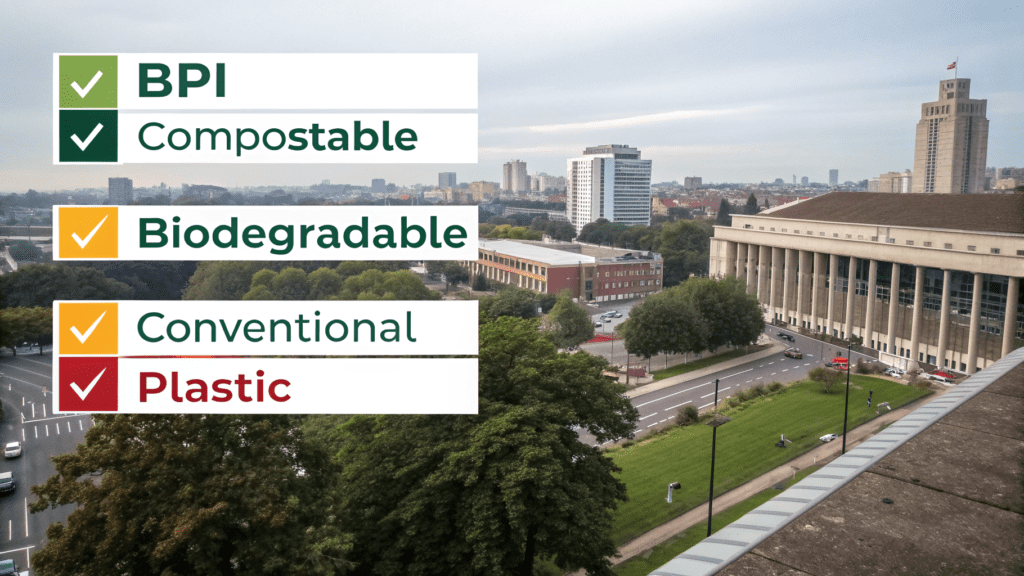
Understanding the operational, compliance, and financial implications of “BPI compostable” versus “biodegradable” is paramount for strategic procurement and sustainability initiatives. The distinctions profoundly impact waste management, regulatory adherence, and brand reputation.
Tedarik yöneticileri, yalnızca operasyonel ihtiyaçları karşılamakla kalmayıp aynı zamanda büyüyen kurumsal ESG hedefleri ve düzenleyici taleplerle de uyumlu malzemeleri seçme gibi karmaşık bir görevle karşı karşıyadır. Yanlışlıkla "biyolojik olarak parçalanabilir" olarak etiketlenen ürünlerin seçilmesi, atık akışının kirlenmesine, bertaraf maliyetlerinin artmasına ve yeşil aklama suçlamalarından dolayı markanın önemli ölçüde zarar görmesine neden olabilir. Bunun tersine, BPI sertifikalı kompostlanabilir çözümlere yatırım yapmak, özellikle yüksek hacimli organik atık yöneten konaklama ve yemek hizmeti işletmeleri için çevresel sorumluluk ve operasyonel verimliliğe yönelik doğrulanabilir bir yol sunar.
Karşılaştırma Tablosu: Özellik | B2B Operasyonel Etkisi | Uyumluluk Notu | Yatırım Getirisi Potansiyeli
| Özellik | B2B operasyonel etki | Uyum Notu | YG'nin potansiyeli |
|---|---|---|---|
| “Biyolojik olarak parçalanabilir” (Genel) | Unpredictable breakdown in varied environments; high risk of microplastic formation and landfill accumulation. May necessitate separate, unoptimized waste streams, increasing logistical complexity and costs for hotels and restaurants. | Lack of clear regulatory definitions globally; high risk of “greenwashing” claims leading to FTC/regulatory scrutiny. Potentially illegal for single-use product marketing in some U.S. states (e.g., California AB 1201) due to misleading claims. | Limited or negative ROI due to potential for landfill disposal, increased waste hauling costs from contamination, and severe reputational damage from misleading claims. Does not reliably contribute to circular economy initiatives or verifiable ESG metrics. |
| “BPI Compostable” | Guaranteed breakdown within 90-180 days in commercial composting facilities; enables efficient organic waste diversion and reduces landfill volume and methane emissions. Streamlines waste segregation and improves operational flow for foodservice operations. | Certified to ASTM D6400/D6868 standards by an independent third party; avoids “greenwashing” liabilities; aligns with and often required by increasing state/local regulations (e.g., CA AB 1201, Canada SOR/2022-138 for single-use plastics). | Positive ROI through significantly reduced waste disposal costs, enhanced brand reputation and market differentiation (supports ESG reporting), and contribution to circular economy goals (valuable compost production). Reduces future compliance risk. |
Choosing BPI compostable products offers clear operational, compliance, and financial advantages over vague “biodegradable” claims.

Navigating the Challenges: Infrastructure, Misinformation, and BPI Compostable Solutions
Despite the clear benefits of BPI-certified compostable products, B2B leaders face hurdles related to infrastructure, consumer perception, and regulatory complexities. Addressing these challenges is key to maximizing their environmental and operational advantages, especially within the hospitality and foodservice sectors.
The Industrial Composting Infrastructure Gap: A Key Hurdle
A major challenge for widespread adoption of BPI-certified compostables is the availability of adequate industrial composting facilities. Many regions lack sufficient infrastructure, which is essential for these items to break down properly under controlled conditions. This infrastructure gap means that even genuinely compostable products might end up in landfills or incinerators if proper collection and processing are unavailable, impacting the sustainability efforts of hotels and restaurants.
Contamination remains a significant issue; approximately 17% of composters’ operating expenses are for removing non-compostable items. Inconsistent curbside collection programs further exacerbate disposal challenges for compostable packaging. If BPI-certified products, or any organic material, end up in landfills, they may produce methane—a potent greenhouse gas—if conditions become anaerobic. This underscores the critical need for improved sorting and collection systems tailored for compostable materials, particularly for large-scale foodservice operations.
Battling “Greenwashing” and Consumer Confusion with “BPI Compostable”
Yanıltıcı "biyolojik olarak parçalanabilir" etiketleri yaygın kafa karışıklığına neden olur ve çoğu zaman herhangi bir ortamda arıza anlamına gelir. "Biyolojik olarak parçalanabilir" terimi, dikkatleri gerçek sürdürülebilirlikten uzaklaştıran "yeşil yıkama" nedeniyle geniş çapta eleştiriliyor. Konaklama sektöründeki satın alma ve sürdürülebilirlik görevlileri için bu, hem iç operasyonları hem de dış algıları etkileyen yanlış bilgiye karşı sürekli bir mücadele anlamına geliyor.
BPI certification directly combats this by providing clear, verifiable proof of compostability, thereby building consumer and stakeholder trust. It assures that products will perform as intended in an industrial composting setting. Educating staff, supply chain partners, and end-users on proper disposal of BPI-certified materials is crucial for effective waste diversion and maximizing the environmental benefits. This education extends to differentiating BPI-certified items from non-certified “look-alikes” to prevent contamination in hotel and restaurant waste streams.
Evolving Regulatory Landscape: Compliance and Opportunity
The regulatory landscape around sustainable packaging is rapidly evolving, moving towards greater clarity and enforcement. U.S. states like California (AB 1201) and Washington have already banned misleading “biodegradable” claims without robust third-party certification. In Canada, the SOR/2022-138 Regulation on single-use plastics often mandates ASTM D6400/BPI compliance for viable alternatives, reflecting a broader trend towards certified solutions across North America.
Organizations like the U.S. Composting Council and BPI actively collaborate to guide legislation, anticipating more laws on compostable products in the coming years. Proactive businesses that align with BPI standards can preempt future regulations, avoid potential penalties, and position themselves as leaders in responsible environmental stewardship. This forward-looking compliance not only mitigates risk but also unlocks opportunities for market differentiation in the competitive hospitality and foodservice industries. For full regulatory details,read our comprehensive guide on sustainable packaging regulations.
Addressing infrastructure gaps and misinformation is key to leveraging BPI compostable solutions effectively.
The Strategic Advantage of BPI-Certified Compostable Solutions for Procurement and Operations
Embracing BPI-certified compostable packaging offers more than environmental benefits; it provides tangible operational efficiencies, strengthens brand reputation, and contributes to long-term financial health. For procurement managers and operations directors in hospitality and foodservice, this translates into measurable business value.
Bolstering Corporate ESG Goals and Brand Reputation
Adopting BPI-certified products directly helps companies meet ambitious Environmental, Social, and Governance (ESG) targets. By verifiably diverting waste from landfills and contributing to a circular economy, businesses can credibly report on their waste reduction efforts, enhancing stakeholder trust and attracting socially conscious investors. The Ellen MacArthur Foundation’s 2025 targets, for example, include ensuring 100% of plastic packaging is reusable, recyclable, or compostable, setting a clear industry benchmark for the hospitality sector.
A strong commitment to certified compostables differentiates brands in a competitive, sustainability-conscious market. It demonstrates genuine leadership, resonating with environmentally aware consumers and partners, and can translate into improved brand loyalty and market share. This proactive stance on sustainability can become a significant competitive differentiator for hotels, cafes, and restaurants.
Operational Efficiency and Waste Stream Optimization
Properly implemented BPI-certified products streamline organic waste collection, directly reducing landfill volume and associated disposal costs. This is particularly valuable for businesses with significant food-related waste, such as hospitality providers or food service companies. Leveraging compostable packaging for food-contact applications (e.g., takeout containers, coffee cups) facilitates cleaner organic waste streams, as food contamination often makes conventional plastic recycling impractical.
This transition also reduces reliance on conventional plastics, which are increasingly subject to regulatory scrutiny and consumer backlash. By minimizing contamination in composting streams, businesses support local composting infrastructure, reduce disposal fees, and contribute to the production of valuable compost. For businesses seeking comprehensive sustainability strategies in the hospitality sector, exploring how BPI certification aligns with broader sustainability goals can yield significant benefits. Further insights on optimizing waste streams with certified compostable solutions can be found by reading more aboutBPI compostable certification and hospitality sustainability.
Case Study: Eco-Friendly Food Service Provider’s Waste Reduction Success
A major university food service provider implemented BPI-certified compostable foodservice ware (e.g., PLA cold cups, compostable paperboard containers) across its campuses starting in late 2023. This strategic shift was driven by a commitment to reduce landfill waste and enhance campus sustainability initiatives.
Within just 12 months, the provider reported a significant 35% reduction in landfill-bound waste originating from their dining halls. This impressive achievement was made possible by clearly labeling all BPI-certified items with the distinct swirl mark and by actively collaborating with local commercial composting facilities that accepted ASTM D6400 compliant materials. The streamlined organic waste collection, enabled by the identifiable compostable products, led to an estimated 15% reduction in waste hauling costs for their organic stream. This case demonstrates that with proper product selection, labeling, and waste stream partnerships, BPI-certified compostables offer a viable and economically beneficial solution for large-scale operations like university dining services.
BPI-certified solutions enhance ESG, streamline operations, and offer measurable financial and reputational gains.
The Future Landscape: Growth and Innovation in Compostable Materials
The trajectory for compostable materials is one of significant expansion and ongoing innovation, driven by a collective global commitment to reduce plastic pollution and foster a more circular economy. Procurement and operations leaders must recognize this evolving landscape to make informed, future-proof decisions.
Projected Market Growth and Driving Factors
The global compostable packaging market is projected to reach USD 89.85 billion by 2032, growing at a robust 6.20% CAGR from 2025. This growth is a direct response to escalating consumer demand for sustainable solutions, combined with increasingly stringent government regulations aimed at mitigating plastic pollution and promoting eco-friendly practices. The food and beverages segment is expected to continue its dominance, holding the largest revenue share in the compostable packaging market, as businesses in this sector prioritize packaging that can be co-composted with food waste. Paper and paperboard, alongside Polylactic Acid (PLA), are leading material segments due to their renewability and certified compostable properties.
Advancements in Biopolymer Innovation and Material Science
Continuous innovation is focused on developing new biopolymers that rival traditional plastics in performance while remaining compostable. Researchers are exploring novel materials like PHA (polyhydroxyalkanoates), derived from renewable resources like algae and bacteria. These advancements aim to create materials with enhanced durability, flexibility, and barrier properties, addressing previous limitations of compostable alternatives. New formulations are specifically designed to decompose into harmless compounds, enriching soil and contributing to natural nutrient cycling without leaving behind microplastics or toxins. Ongoing research is also addressing economic challenges, striving to reduce the cost and optimize the density of compostable materials, making them increasingly competitive with conventional packaging for hospitality and foodservice applications.
The Role of Compostable Materials in a Circular Economy
Compostable materials are crucial for diverting organic waste from landfills, thereby significantly reducing methane emissions—a potent greenhouse gas. By transforming into nutrient-rich compost, they contribute to soil health and fertility, potentially reducing reliance on synthetic fertilizers and supporting regenerative agricultural practices. Integrating compostables supports the broader circular economy goal of keeping resources in use for as long as possible. While not a “silver bullet” for all waste challenges, they are a vital component, particularly for food-contaminated items where recycling is challenging. For businesses interested in the long-term ROI of adopting these solutions, exploring the benefits ofBPI compostable straws for hospitality compliance and ROIcan provide valuable insights into future market advantages.
Innovation and market growth in compostable materials are driving a more circular, sustainable future.
Çözüm
Understanding the precise difference between “BPI compostable” and “biodegradable” is not merely semantic; it is fundamental for B2B decision-makers committed to genuine sustainability, operational efficiency, and regulatory compliance. While “biodegradable” offers a vague promise with potential hidden pitfalls like greenwashing and microplastic pollution, “BPI compostable” provides a certified, verifiable pathway to responsible waste management and a healthier planet. This distinction empowers procurement managers, operations directors, and sustainability officers in the hospitality and foodservice industries to make informed choices that mitigate risk, enhance brand reputation, and contribute positively to both the environment and the bottom line. Embrace BPI-certified solutions to ensure your environmental claims are robust, your operations are streamlined, and your brand’s commitment to a circular economy is impactful and credible.
Evaluate Your Waste Streams Today!
Leverage this clarity for measurable environmental and business benefits, reducing landfill waste by up to 35% and cutting hauling costs by 15%.
Embrace BPI-certified solutions for verifiable sustainability and operational excellence.
Sıkça Sorulan Sorular (SSS)
Q: Why is “biodegradable” often misleading for hospitality businesses?
A: The term “biodegradable” lacks specific standards for breakdown time or conditions, meaning products can take hundreds of years to decompose or leave harmful microplastics. For hospitality, this can lead to greenwashing accusations, regulatory fines, and contamination of waste streams, undermining genuine sustainability efforts.
Q: How does BPI certification benefit foodservice operations specifically?
A: BPI certification ensures products like takeout containers and cutlery break down efficiently in industrial composting facilities. This streamlines organic waste collection, reduces landfill volume, and minimizes contamination, leading to lower waste hauling costs and improved operational efficiency for high-volume foodservice providers.
Q: What are the key ASTM standards for BPI compostable products?
A: BPI-certified products must meet ASTM D6400 (for plastics/packaging) or ASTM D6868 (for coatings/films). These standards require 90% disintegration within 12 weeks and biodegradation into non-toxic components within 90-180 days in commercial composting environments.
Q: Can BPI-certified products be composted at home or in landfills?
A: BPI certification applies exclusively to products designed for industrial composting facilities, which maintain specific heat, moisture, and microbial conditions. They are generally not intended for home composting or traditional landfills, where conditions are insufficient for proper breakdown.
Q: How can hotels ensure proper disposal of BPI-certified items to avoid contamination?
A: Hotels should clearly label BPI-certified items with the distinct swirl mark, provide dedicated organic waste bins, and educate staff and guests on proper segregation. Partnering with local commercial composting facilities that accept ASTM D6400 compliant materials is also crucial to ensure effective waste diversion.