

Best Practices for Storing Compostable Straws in Hospitality Settings: A Strategic Guide
A comprehensive guide for procurement managers, operations directors, and sustainability officers in hospitality & foodservice.
Introduction: Elevating Sustainability Through Smart Storage
The global hospitality sector faces an urgent mandate to embrace sustainability, driven by escalating consumer demand and tightening environmental regulations. At the forefront of this shift is the widespread adoption of compostable single-use items, notably straws. However, the true value of this transition — from reduced plastic pollution to enhanced brand perception — hinges on a critical, often overlooked factor: proper storage. Without meticulous storage protocols, compostable straws can prematurely degrade, compromising their integrity, diminishing the guest experience, and negating substantial investments in sustainable procurement. This results in significant operational inefficiencies and financial losses.
Consider the regulatory landscape. Cities like New York, with its November 1, 2021, plastic straw restrictions, exemplify a growing trend. Such mandates underscore the need for hospitality businesses to not only adopt compliant solutions but also ensure these solutions remain viable from warehouse to customer. This strategic guide offers procurement managers, operations directors, and sustainability officers actionable best practices to safeguard their compostable straw inventory, optimize performance, and realize the full spectrum of sustainability benefits.Proper storage is key to unlocking the full sustainability and financial benefits of compostable straws.
The Imperative of Proper Storing Compostable Straws: Beyond Sustainability Goals
The decision to switch to compostable straws is a strategic one, aiming to align with green initiatives and meet evolving consumer expectations. Yet, the operational reality of these materials means that improper storage can undermine these objectives, turning an investment into avoidable waste.
- Preventing Premature Degradation and Waste: Unlike traditional plastics, compostable materials are designed to break down. Without correct storage – specifically controlled temperature and humidity – compostable straws can warp, mold, or break before they even reach a customer’s drink. This leads to an unacceptable discard rate, eroding cost savings and increasing your operational waste footprint.
- Maintaining Product Integrity and Performance: A warped or brittle straw compromises functionality and detracts from the guest experience. Imagine a premium beverage served with a straw that bends or breaks upon first use; it can subtly, yet negatively, impact perceptions of quality and service. Maintaining the straw’s intended performance ensures a seamless, high-quality interaction for your guests.
- Ensuring Compliance with Certification Standards: Products certified by recognized bodies like the Biodegradable Products Institute (BPI) in North America or TÜV AUSTRIA in Europe adhere to strict industrial composting standards such as ASTM D6400 or EN 13432. These certifications guarantee that a straw will biodegrade under specific industrial conditions. However, their performance as guaranteed is directly tied to optimal handling and storage conditions that prevent premature degradation.
- Mitigating Financial Loss and Operational Inefficiency: Damaged stock isn’t just a sustainability issue; it translates directly to wasted investment. Replacing unusable straws incurs additional procurement costs, increased shipping, and unnecessary administrative burden. Proactive storage minimizes these avoidable expenses, safeguarding your bottom line.
Effective storage of compostable straws directly impacts product integrity, compliance, and financial viability.
Material-Specific Best Practices for Storing Compostable Straws
Compostable straws are crafted from a diverse array of innovative materials, each possessing unique environmental sensitivities. Understanding these differences is paramount for effective storage. A one-size-fits-all approach risks compromising material integrity and performance.
- Diverse Material Sensitivities Demand Tailored Approaches: From plant-based polymers to natural fibers, each compostable material reacts differently to external factors like heat, humidity, and light. Generic storage practices can severely impact their shelf life and functionality.
- Optimizing Performance Through Material-Specific Storage: Adhering to guidelines tailored to each straw type maximizes its functional lifespan, ensuring it performs as intended until the moment of use. This attention to detail reflects a commitment to both sustainability and operational excellence.
PLA Straws: Precision Temperature & Humidity Control (Polylactic Acid)
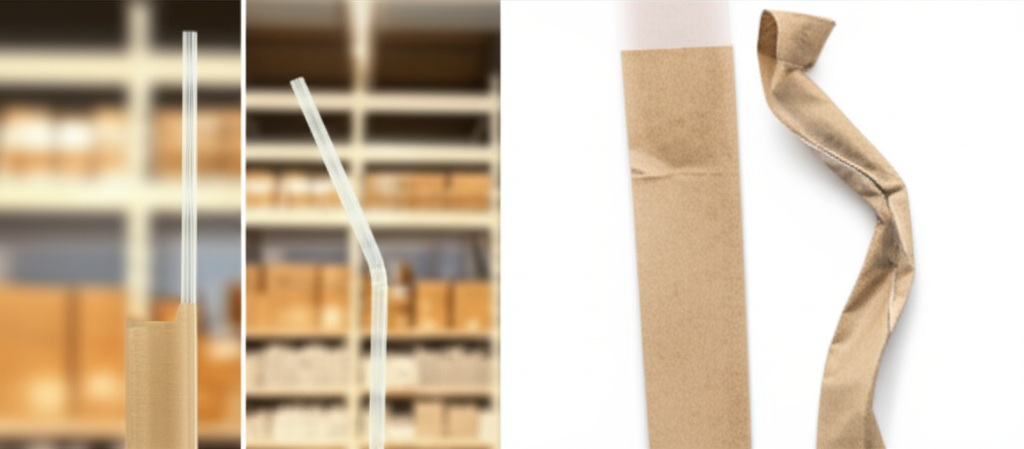
Polylactic Acid (PLA) straws are derived from fermented plant sugars and are a popular compostable alternative due to their resemblance to conventional plastic. However, they are notably sensitive to environmental conditions.
- Sensitive to Heat and Moisture: PLA straws should be stored in a climate-controlled environment, ideally between 59-77°F (15-25°C).
- Humidity Management is Critical: Maintain less than 50% relative humidity to prevent the material from becoming brittle, warping, or prematurely degrading. High humidity can cause PLA straws to crack.
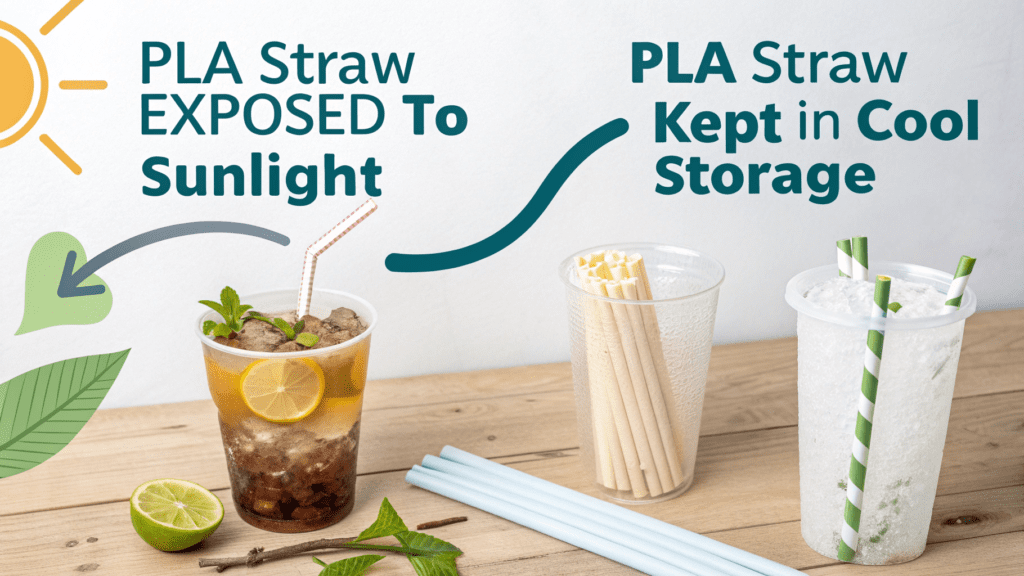
- Avoid High-Temperature Environments: PLA can deform at temperatures above 113°F (45°C). Therefore, avoid storing PLA straws in direct sunlight, near hot kitchen equipment, or in unventilated storage areas like food trucks where temperatures can soar. Promptly relocate PLA products upon delivery to a cool, stable location.
- Protection from Environmental Fluctuations: Even minor fluctuations can impact PLA’s structural integrity over time. Consistent, stable conditions are key.
Natural Material Straws: Prioritizing Low Moisture (Rice, Wheat, Dried Grass)
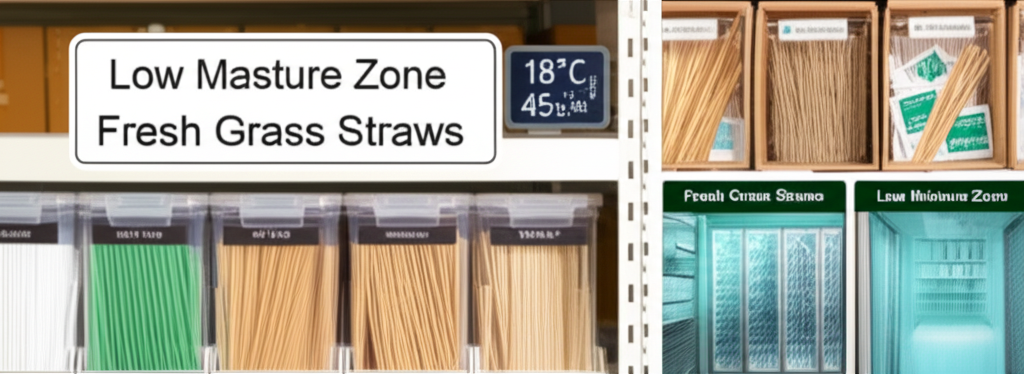
Straws made from natural fibers like rice, wheat, or dried grass offer an ultra-sustainable option, but their organic composition demands rigorous moisture control.
- Require Minimal Moisture Content: Low humidity is crucial to prevent premature decomposition and molding. These materials are inherently designed to break down organically, and moisture accelerates this process.
- Dried Grass Straws and Desiccant Packs: Dried grass straws, often made from Vietnamese Lepironia articulata grass, are optimized for storage for over 12 months. Each box typically includes a desiccant pack to absorb ambient moisture and maintain dryness, particularly vital in high-humidity regions.
- Ensure Adequate Ventilation: Store these natural straws in a dry, well-ventilated environment. Good airflow helps to dissipate any trapped moisture and guarantees their longevity and quality.
Fresh Grass Straws: Immediate Refrigeration & Short Shelf Life
A more niche but highly sustainable option, fresh grass straws, offer a unique natural aesthetic, but come with distinct storage requirements due to their perishable nature.
- Requires Immediate Refrigeration: Fresh grass straws need immediate refrigeration upon receipt from the factory to halt the natural decomposition process.
- Limited Usability Window: Given their organic composition, fresh grass straws have a very short shelf life. It’s recommended to use them within seven days of production to avoid organic decomposition and maintain freshness.
- Minimizing Spoilage Risks: Prompt refrigeration is essential for maintaining their freshness and preventing early breakdown, ensuring they are functional and hygienic for guest use.
PHA & Sugarcane (Bagasse) Straws: Durable Storage Options
Polyhydroxyalkanoates (PHA) and sugarcane (bagasse) straws represent more robust compostable alternatives, offering enhanced durability and flexibility in storage.
- Enhanced Heat Resistance: PHA straws are significantly more heat-resistant than PLA, capable of withstanding temperatures up to 212°F (100°C) without deforming. This makes them suitable for a wider range of hospitality settings, including those with less stringent climate control. PHA straws can have a 2-year shelf life under ideal conditions.
- Sturdy Bagasse Straws: Sugarcane (bagasse) straws are similarly robust, enduring temperatures up to 220°F (100°C). Their sturdy nature makes them resistant to sogginess and deformation, providing greater operational flexibility.
- Extended Shelf Life Potential: Both PHA and sugarcane straws generally offer an extended shelf life compared to PLA, reducing the urgency of strict FIFO rotation solely due to material degradation.
Tailored storage practices are essential for each compostable straw material to ensure optimal performance.
Operational Strategies for Optimal Storing Compostable Straws
Beyond material-specific guidelines, systematic operational strategies are fundamental to maximizing the lifespan and utility of compostable straw inventories.
- Strategic Procurement and Material Assessment: The journey to optimal storage begins with informed purchasing. Select compostable straws not just on price, but on durability, heat resistance, and taste neutrality, aligning these properties with your establishment’s specific operational needs and beverage offerings. For a deeper dive into materials and compliance, review our guide on compostable straw import compliance.
- Supplier Selection and Certification Verification: Prioritize suppliers who provide transparent documentation of third-party certifications. Products certified by BPI (Biodegradable Products Institute) in North America or TÜV AUSTRIA (e.g., “OK compost INDUSTRIAL”) in Europe ensure compliance with stringent standards such as ASTM D6400 (US) or EN 13432 (EU). These certifications validate that the straws will properly biodegrade in industrial composting facilities, supporting your broader sustainability claims.
Strategic Inventory Management: FIFO System and Shelf Life
Effective inventory management prevents waste and ensures product freshness, a critical factor for biodegradable items.
- Implement First-In, First-Out (FIFO): This fundamental inventory principle is paramount for compostable straws. Always ensure that older stock is used before newer deliveries to prevent products from exceeding their natural shelf life and degrading in storage.
- Monitor Manufacturer Shelf Life: Unlike traditional plastics, compostable materials are designed to break down and therefore have a defined shelf life, typically ranging from 10 to 18 months from the date of manufacture, depending on the material and storage conditions. Some edible straws generally remain stable for approximately two years when stored properly. Regularly checking and adhering to these dates is essential.
- Typical Shelf Life for Edible Straws: Edible straws, when stored in dry, cool conditions, typically maintain their stability and integrity for about two years.
Controlled Environments: Leveraging Airtight Containers & Desiccants
Protecting straws from environmental contaminants and moisture is crucial post-delivery.
- Utilize Sealed, Original Packaging: Whenever possible, keep straws in their original, sealed packaging until immediately prior to use. This packaging is designed to protect them from moisture, dust, and other contaminants, maintaining their hygienic quality and structural integrity.
- Airtight Containers for Opened Packs: Once a package of straws has been opened, transfer any remaining straws to an airtight container. This is particularly important for PLA and natural material straws, as it shields them from ambient humidity and airborne particles, preserving their quality.
- Desiccant Packs for Humidity Control: For materials like dried grass straws, and especially in high-humidity regions, actively utilizing desiccant packs within storage containers can be a game-changer. These packs absorb excess moisture, significantly extending the functional lifespan of the straws.
Staff Training: Ensuring Consistent Handling

The best storage protocols are only as effective as the team implementing them. Comprehensive staff training is non-negotiable for a successful compostable straw program.
- Educate Staff on Material Sensitivities: Train your procurement, operations, and front-of-house teams on the unique temperature, humidity, and handling requirements for each type of compostable straw your establishment uses. This includes recognizing signs of degradation and proper disposal methods.
- Proper Disposal Education: A critical component of sustainability is ensuring correct end-of-life processing. Instruct staff on how to differentiate between compostable items and non-compostable waste, emphasizing that compostable straws belong in designated composting bins, not recycling. This prevents contamination of waste streams and maximizes your environmental impact. For more guidance, see our playbook on what to do with BPI compostable items.
- Transparent Customer Education: Empower staff to inform guests about your commitment to sustainable choices and educate them on proper disposal. Clear signage and verbal communication about designated composting bins can significantly improve guest participation and ensure that compostable straws reach industrial composting facilities where they can truly break down.
Systematic operational strategies, including training, are vital for maximizing compostable straw lifespan.
The ROI of Proactive Storage: Compliance, Quality, and Cost Savings
Investing in best practices for compostable straw storage yields tangible returns, transforming what might seem like a logistical overhead into a strategic competitive advantage.
| Feature | B2B Operational Impact | Compliance Note | ROI Potential |
|---|---|---|---|
| PLA Straw Storage | Reduces warping; maintains structural integrity and appearance. | Meets ASTM D6400 (US) or EN 13432 (EU) standards for industrial composting viability. | Minimized product waste (up to 20%); enhanced guest experience with functional straws. |
| Dried Grass Straw Storage | Ensures 12+ months shelf life; prevents mold and premature decay. | Supports certified compostable claims; avoids contamination of waste streams. | Reduced re-ordering frequency; improved brand reputation for sustainability. |
| Staff Training | Ensures consistent product quality and proper waste segregation. | Essential for meeting local regulations (e.g., NYC requirement for labeled bins and proper disposal). | Reduced waste management costs; increased customer satisfaction and loyalty. |
Regulatory Compliance and Brand Reputation
Adhering to optimal storage practices is a silent but powerful demonstration of regulatory diligence and environmental stewardship.
- Adherence to Industry Standards: Ensuring your compostable straws maintain their integrity through proper storage means they remain compliant with the biodegradation and disintegration standards set by certifications like BPI and TÜV. This avoids issues where prematurely degraded products might fail to perform as certified.
- Navigating Local Regulations: Proactive storage helps you seamlessly comply with local mandates. For instance, New York City’s plastic straw restrictions (post-Nov 2021) allow compostable straws for on-premise dining if a commercial composting program is in place. Ensuring your straws are always in optimal condition supports this program’s effectiveness.
- Fostering Positive Public Perception: In an era of heightened environmental consciousness, demonstrating a genuine commitment to sustainability, from sourcing to proper disposal, significantly enhances your brand image. Guests increasingly choose businesses that reflect their values.
Minimizing Waste and Enhancing Guest Experience
The direct benefits of effective storage resonate throughout your operations and directly impact your customers.
- Reducing Breakage and Spoilage: Proper storage leads to significantly fewer unusable straws. Hospitality groups that implement climate-controlled storage and use desiccant packs can reduce their discard rate for compostable straws by up to 20%, translating directly into tangible cost savings and reduced waste.
- Consistent Quality for Guests: Guests receive functional, appealing straws every time, free from warping, brittleness, or mold. This seemingly small detail significantly improves their overall dining or hospitality experience, reinforcing the perception of a high-quality establishment.
- Operational Efficiency Gains: Fewer quality control issues, reduced need for re-ordering due to spoilage, and streamlined inventory management contribute to substantial operational efficiencies across your supply chain.
Mini Case Study: “GreenPlate Hospitality Group”
GreenPlate Hospitality Group, a regional chain committed to sustainable operations, initially faced a considerable challenge. They observed a 15% discard rate for their PLA straws, primarily due to warping and brittleness caused by fluctuating temperatures and high humidity in their general storage areas. To address this, they initiated a comprehensive storage overhaul.
By implementing dedicated climate-controlled storage zones for PLA straws, maintaining temperatures strictly between 59-77°F (15-25°C) and relative humidity below 50%, and integrating desiccant packs for their natural material straw inventory, GreenPlate saw a dramatic improvement. Within six months, their overall discard rate for compostable straws plummeted to under 3%. This operational refinement resulted in an estimated 10% reduction in annual straw procurement costs, directly impacting their bottom line. Beyond the financial gains, GreenPlate reported a noticeable improvement in positive guest feedback, specifically regarding the consistent quality and performance of their sustainable straws, further enhancing their brand reputation as an environmentally conscious leader.Proactive storage yields significant ROI through compliance, reduced waste, and enhanced guest satisfaction.
Future Trends and Strategic Evolution in Compostable Materials
The landscape of compostable materials is rapidly evolving, driven by innovation, consumer demand, and increasingly stringent global regulations. Over the next 5-10 years, hospitality leaders must anticipate and adapt to these shifts.
One significant trend is the rise of next-generation biopolymers and novel natural fibers. Research is actively exploring new blends of PHA, PLA, and other plant-based materials that offer enhanced durability, wider temperature tolerances, and even greater biodegradation efficiency across various composting environments. Expect to see materials that degrade faster in industrial composters, or even home composting settings, without sacrificing performance during use.
Regulatory frameworks are also becoming more granular. The European Union’s Single-Use Plastics Directive, which discourages and bans certain single-use plastics, is a precursor to more expansive global legislation. Future regulations may not only ban traditional plastics but also set stricter performance standards for “compostable” materials, potentially mandating specific biodegradation rates and residue limits for different types of composting facilities. This could push for more universally compostable solutions that don’t rely solely on large-scale industrial infrastructure, which currently varies widely by region.
Furthermore, supply chain transparency will become paramount. As consumer scrutiny of “greenwashing” intensifies, demand for certified, traceable compostable materials will grow. Businesses will need to partner with suppliers who can provide clear provenance of raw materials and verifiable third-party certifications, enhancing trust and demonstrating genuine commitment to sustainability. This may also lead to the development of “smart packaging” that provides real-time data on environmental conditions, helping businesses optimize storage and reduce waste even further.Anticipate evolving biopolymers, stricter regulations, and increased supply chain transparency in compostable materials.
Conclusion
Effective storage of compostable straws is far more than a logistical detail; it is a critical component of a robust, financially sound sustainability strategy in the hospitality sector. By deeply understanding the material-specific needs of your compostable straw inventory, implementing sound operational practices like FIFO and controlled environments, and prioritizing comprehensive staff training and transparent customer education, your business can maximize its investment. This proactive approach ensures regulatory compliance, significantly reduces waste, and consistently delivers a superior customer experience that reinforces your brand’s commitment to a greener future.
Elevate your sustainable operations and secure your competitive edge. Optimize your compostable straw storage today to dramatically reduce waste, enhance customer satisfaction, and solidify your establishment’s leadership in environmental stewardship.Optimize compostable straw storage to boost sustainability, reduce waste, and enhance guest satisfaction.