

Coffee Ground Straws: The Complete Guide for B2B Buyers
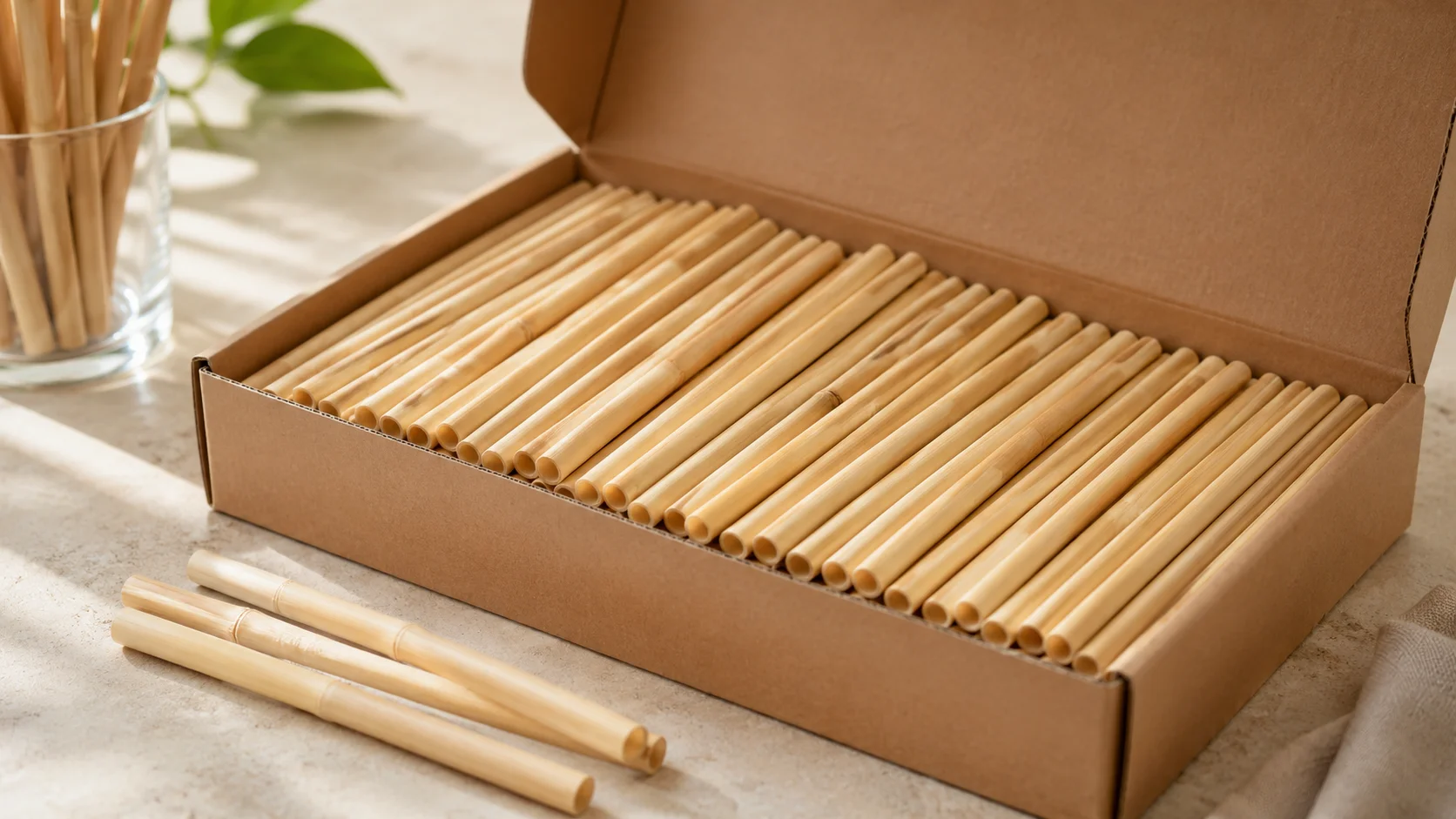
Every day, cafes worldwide produce tons of spent coffee grounds — a waste stream that typically ends up in landfills. Coffee ground straws turn that waste into a functional, compostable product. For procurement managers, restaurant owners, and sustainable packaging buyers, these straws represent an opportunity to close the loop between coffee consumption and waste reduction.
This guide covers everything a B2B buyer needs to know: how coffee ground straws are made, how they compare to PLA, sugarcane, and paper straws, what certifications to look for, and how to source them at wholesale scale.
Explore MOMOIO Coffee Ground Straws: View full product range, bulk pricing, and custom branding options. Also see our wholesale inquiry page for custom orders.
What Are Coffee Ground Straws?
Coffee ground straws are drinking straws manufactured from recycled coffee grounds combined with bio-based binding agents. Unlike PLA (polylactic acid) straws, which are made from fermented corn starch and require industrial composting facilities, high-quality coffee ground straws contain no PLA coating and can decompose in home compost conditions.
The key distinction: these are not “coffee-flavored plastic straws.” The coffee grounds serve as the primary structural material — not a decorative additive.
Material composition (typical):
– Recycled coffee grounds: 40-60%
– Natural plant-based binders: 30-50%
– Natural pigments (from the coffee itself): None additional needed
– PLA content: 0% (in PLA-free formulations)
The resulting straw has a natural brown color, a mild earthy texture, and — depending on the formulation — a faint coffee aroma that dissipates quickly in liquid.
How Coffee Ground Straws Are Made — From Waste to Product
The production process transforms spent coffee grounds into durable drinking straws through four stages:
Step 1 — Collection
Spent coffee grounds are collected from coffee shops, roasters, and instant coffee production facilities. These grounds — which would otherwise decompose in landfills and release methane — are diverted from the waste stream.
At industrial scale, manufacturers source from large coffee processing facilities that generate consistent, high-volume waste streams. This ensures material consistency and traceability.
Step 2 — Processing & Sterilization
The collected grounds undergo cleaning to remove any residual oils and impurities. They are then dried to a specific moisture content and sterilized at high temperature to eliminate any microbial activity. This step is critical for food-contact safety compliance.
Step 3 — Compounding & Molding
The processed coffee grounds are mixed with natural bio-based binders — typically plant-derived polymers that function similarly to traditional plastic binders but are biodegradable. This compound is then extruded and molded into straw shapes at controlled temperatures.
Crucially, no petroleum-based plastics or PLA are used in the binding process for PLA-free formulations. The binders are designed to break down under the same conditions as the coffee grounds themselves.
Step 4 — Quality Control & Packaging
Finished straws pass through dimension checks, strength tests, and visual inspection. They are then packaged — typically in bulk for B2B customers, with options for individual wrapping and custom branding.
The Circular Economy Story Behind Coffee Ground Straws
Coffee ground straws are a practical example of circular economy principles applied to food service supply chains.
The linear model (traditional waste stream):
The circular model (with coffee ground straws):
For businesses, this narrative carries commercial weight:
– For cafes: “Your spent coffee grounds become your straws” is a customer-facing sustainability story that reinforces brand values
– For hotels and restaurants: Aligns with corporate sustainability reporting (ESG) requirements
– For distributors: Differentiates product catalogs with a unique, story-driven offering
This is not greenwashing — it is verifiable material traceability. A buyer can trace the feedstock source, the manufacturing process, and the end-of-life pathway.
Coffee Ground Straws vs Other Biodegradable Straws
Choosing the right straw type depends on your specific requirements: beverage temperature, desired decomposition pathway, cost structure, and brand narrative. Here is how coffee ground straws compare to the three most common alternatives.
Comparison Table
When to Choose Coffee Ground Straws Over Sugarcane Straws
| Feature | Coffee Ground Straws | Sugarcane Straws | PLA Straws | Paper Straws |
|---|---|---|---|---|
| Raw Material | Recycled coffee grounds | Sugarcane bagasse | Corn starch (fermented) | Virgin or recycled paper |
| PLA Content | 0% (in PLA-free types) | 0% (in PLA-free types) | 100% PLA | 0% |
| Compost Type | Home + Industrial | Home + Industrial | Industrial only | Home + Industrial |
| Decomposition Time | 3-6 months (home compost) | 3-6 months (home compost) | 6-12 months (industrial) | 2-4 months |
| Heat Resistance | Up to 80°C / 176°F | Up to 80°C / 176°F | Max 40-50°C / 122°F | Up to 60-70°C |
| Sogginess | Low (holds shape well) | Low | Low (but melts in heat) | High (degrades quickly) |
| Color | Natural brown | Natural beige/tan | Transparent or opaque white | Various |
| Aroma | Faint coffee scent (dissipates) | Neutral | Neutral | Neutral (sometimes glue-like) |
| Brand Story | Circular economy / waste-to-product | Agricultural waste utilization | Bio-based renewable | Recycled / FSC-certified |
| Cost (relative) | Mid | Low-Mid | Low | Lowest |
| Best Use Case | Cafes, coffee shops, hot/cold drinks | All food service | Cold drinks only | Short-use cold drinks |
Choose coffee ground straws when:
– Your business is a cafe or coffee shop — the circular narrative aligns directly with your brand
– You want to tell a “waste-to-product” sustainability story rather than a generic “plant-based” story
– Your customers value visible differentiation (the natural brown color signals “this is different”)
– You serve both hot and cold coffee beverages (both types perform well at heat)
Choose sugarcane straws when:
– You need a neutral-colored straw (natural beige)
– You serve non-coffee beverages primarily
– Cost is the primary decision factor
Why Coffee Ground Straws Beat PLA Straws
PLA straws look and feel like plastic — which can undermine their sustainability message. They also:
– Cannot withstand hot beverages (max ~50°C)
– Require industrial composting (most municipal systems don’t accept them)
– May persist in marine environments despite being “biodegradable”
Coffee ground straws, by contrast, are heat-resistant, home-compostable, and visibly not plastic.
Key Benefits of Coffee Ground Straws for Businesses
1. Tangible Sustainability Metric
Each box of coffee ground straws diverts a measurable amount of coffee waste from landfill. This can be quantified and included in sustainability reports.
2. Customer Perception Premium
Studies consistently show that consumers are willing to pay more for products from environmentally responsible businesses. A visibly sustainable straw signals values alignment.
3. Regulatory Readiness
With the EU Single-Use Plastics Directive (SUP) and similar legislation expanding globally, businesses that have already switched to compostable alternatives avoid last-minute supply chain disruption.
4. Supply Chain Resilience
Unlike petroleum-based plastics, the feedstock (coffee grounds) is renewable and widely available. Supply is not dependent on fossil fuel markets.
5. Employee Engagement
Sustainability initiatives that employees can see and touch — like switching to coffee ground straws — boost morale and reinforce company values internally.
6. Differentiation in a Commoditized Market
Most cafes still use paper or PLA straws. Coffee ground straws are a visible differentiator on the table and on social media.
Certifications and Safety Standards
When sourcing coffee ground straws, verify the following certifications:
| Certification | What It Means | Required For |
|---|---|---|
| **EN 13432** | Industrial compostability standard (EU) | EU market compliance |
| **OK Compost HOME (TÜV)** | Home compostability certification | Consumer-facing “home compostable” claim |
| **BPI Certification** | Biodegradable Products Institute (US) | US market compostability claim |
| **ASTM D6400** | US industrial compostability standard | US market |
| **EU No.10/2011** | Food contact materials safety (EU) | EU food safety compliance |
| **FDA 21 CFR** | Food contact substances (US) | US food safety compliance |
| **ISO 17088** | Specifications for compostable plastics | International |
| **PFAS-Free Testing** | No perfluoroalkyl substances detected | Health safety / regulatory compliance |
> ⚠️ Important: Do not accept “eco-friendly” or “biodegradable” as substitutes for specific certification numbers. Request the certificate document and verify it with the issuing body.
For MOMOIO coffee ground straws, 【需用户确认】 specific certifications held. Contact us with your certification requirements — we provide documentation for procurement verification.
Why Cafes and Coffee Shops Choose Coffee Ground Straws
Coffee shops face unique pressures in the sustainability transition:
The customer expectation gap: Coffee shop customers are disproportionately likely to care about sustainability. A 2023 survey by the National Coffee Association found that 53% of US coffee drinkers prefer eco-friendly products. Serving a plastic-looking PLA straw to this audience is a missed opportunity.
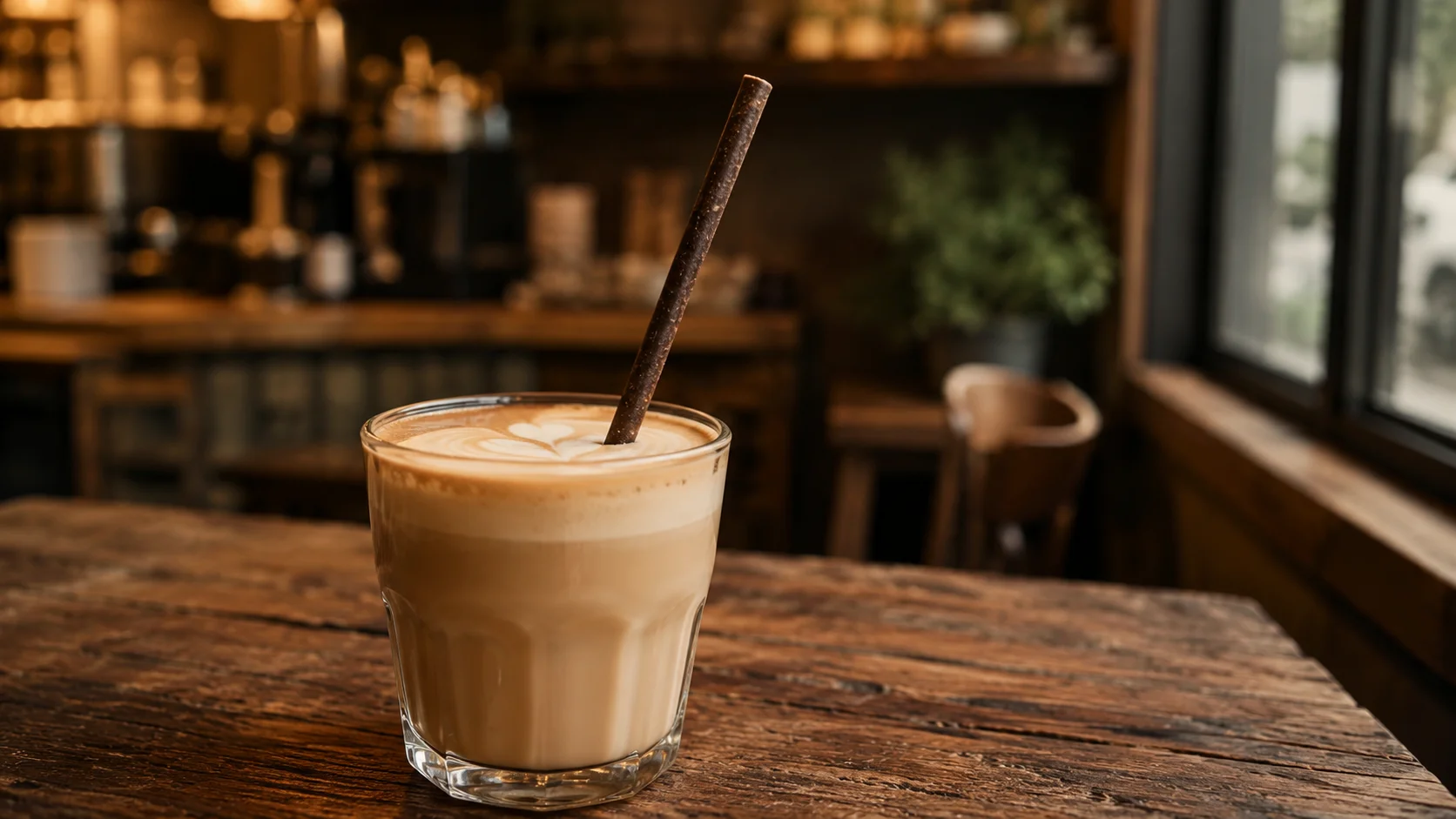
The Instagram factor: Coffee ground straws’ natural brown color and visible texture photograph well — and customers post them. This is free brand exposure that paper and clear PLA straws do not generate.
The “full circle” narrative: A cafe that serves coffee and uses coffee ground straws completes a story. Staff can say: “These straws are made from coffee grounds — like the ones we produce every day.” This is more compelling than “these are made from corn.”
Practical considerations for cafe operations:
– Heat resistance: Works for hot lattes, Americanos, and drip coffee (unlike PLA)
– Soak time: Does not disintegrate during a normal 30-60 minute drink consumption window (unlike paper)
– Storage: No special conditions required — standard dry storage
– Customer feedback: Typically positive — the texture and mild coffee aroma are perceived as “premium”
How to Store and Dispose of Coffee Ground Straws
Storage:
– Keep in a cool, dry place away from direct sunlight
– Avoid exposure to high humidity (may accelerate natural degradation)
– Shelf life: typically 12-24 months when stored correctly
– No refrigeration or special ventilation required
Disposal for businesses:
– Best option: Industrial or municipal composting facility that accepts EN 13432-certified materials
– Acceptable option: Home compost bin — decomposition within 3-6 months depending on conditions
– Fallback: General waste — will still biodegrade in landfill much faster than plastic, but landfill conditions slow the process and may generate methane
– Do NOT: Place in plastic recycling bins. Coffee ground straws are not recyclable as plastic.
Disposal instructions for cafe customers (include in-house signage):
– “Please place used coffee ground straws in the compost bin. These straws are home compostable and will biodegrade within 6 months.”
– Provide clear bin labeling separating compost, recycling, and general waste.
Wholesale and Custom Branding Options
Wholesale purchasing:
Coffee ground straws are typically sold in bulk cartons for B2B buyers. Common packaging configurations:
– Inner pack: 50-100 straws per box or sleeve
– Outer carton: 500-6,000 straws
– Pallet quantities: Customizable
Custom branding:
Businesses can order coffee ground straws with:
– Individual paper or PLA-free sleeve wrapping with custom print
– Branded outer boxes
– Custom straw dimensions (diameter, length)
– Logo embossing on straws (subject to technical feasibility)
> 📌 For MOMOIO wholesale pricing and minimum order quantities, visit: https://momoio.com/coffee-ground-straws/ or use the contact form below.
Frequently Asked Questions
Q: What are coffee ground straws made of?
A: Coffee ground straws are made from recycled spent coffee grounds combined with natural plant-based binders. No PLA, no petroleum-based plastics. The coffee grounds typically constitute 40-60% of the material composition.
Q: Do coffee ground straws smell like coffee?
A: They have a faint, natural coffee aroma that is most noticeable when first unwrapped. This scent dissipates quickly when the straw is placed in liquid and does not transfer significant flavor to beverages.
Q: Can coffee ground straws be used for hot drinks?
A: Yes. Unlike PLA straws, PLA-free coffee ground straws can withstand beverage temperatures up to approximately 80°C (176°F), making them suitable for hot coffee, tea, and other hot beverages.
Q: Can coffee ground straws be composted at home?
A: Yes — this is one of their key advantages. PLA-free coffee ground straws are home compostable. They will biodegrade in a home compost bin or pile within approximately 3-6 months, depending on temperature, moisture, and microbial activity.
Q: Are coffee ground straws gluten-free?
A: Yes. Coffee ground straws do not contain wheat, gluten, or common allergens. They are made from coffee grounds and plant-based binders. Confirm with your supplier for specific allergen certifications.
Q: What certifications should I look for?
A: For EU buyers: EN 13432 (industrial compostability), OK Compost HOME (home compostability), and EU No.10/2011 (food contact safety). For US buyers: BPI certification, ASTM D6400, and FDA 21 CFR compliance. Also verify PFAS-free testing results.
Q: How long do coffee ground straws take to biodegrade?
A: In home composting conditions: 3-6 months. In industrial composting facilities: typically 90-180 days. In landfill conditions: significantly longer due to anaerobic conditions — which is why proper disposal matters.
Q: Can coffee ground straws be custom branded?
A: Yes. Custom sleeve printing, logo-embossed outer cartons, and branded individual wrapping are available for wholesale orders. Contact your supplier for minimum order quantities and artwork specifications.
Q: Are coffee ground straws more expensive than paper or PLA straws?
A: Coffee ground straws are typically priced in the mid-range: more expensive than basic paper straws but comparable to high-quality PLA or sugarcane straws. The premium is offset by the unique marketing and brand differentiation value they provide. For wholesale pricing, contact MOMOIO directly.
Related: Sugarcane Straws: The Complete B2B Guide — Compare with our detailed sugarcane straws guide for a broader perspective on plant-based alternatives.
Conclusion — Is This the Right Straw for Your Business?
Coffee ground straws are not for everyone. If your primary objective is the lowest possible unit cost, paper straws will always win on price. If you serve only cold drinks and your customers do not care about sustainability narrative, PLA works.
But if your business is a cafe, coffee shop, restaurant, or hotel that:
– Serves hot and cold beverages
– Values sustainability as a brand differentiator
– Wants to tell a compelling circular-economy story
– Needs a straw that performs better than paper and looks better than PLA
Then coffee ground straws are the right choice.
The coffee industry produces an estimated 6 million tons of spent coffee grounds annually. Turning even a fraction of that into functional products — starting with drinking straws — is a practical step toward a more sustainable food service industry.
Quick Answer for B2B Buyers
- Coffee ground straws turn used coffee material into a practical, visible sustainability upgrade for cafes and foodservice brands.
- They are especially relevant for coffee shops, hotels, bars, and distributors that want a distinctive straw with a natural brown color and clear waste-to-product story.
- MOMOIO supplies coffee ground straws for wholesale, private-label packaging, and B2B sampling programs.
Best fit keywords: coffee ground straws, coffee ground straws wholesale, coffee straw supplier, upcycled coffee straws, sustainable straws for cafes.
Need Samples or Wholesale Pricing?
MOMOIO helps cafes, restaurants, hotels, distributors, and private-label buyers compare sustainable straw options, request samples, and prepare bulk orders with clear documentation.
Contact MOMOIO for samples, MOQ, lead time, carton specs, and custom packaging options.
Buyer FAQ
What are coffee ground straws made of?
Coffee ground straws are made with upcycled coffee material and food-grade plant-based components. Buyers should request the supplier’s exact composition, safety documents, and compostability claims before purchasing.
Are coffee ground straws a good fit for cafes?
Yes. Coffee ground straws are a natural fit for cafes because the material story is easy for staff and customers to understand, and the appearance matches coffee and cold-drink service.
Can coffee ground straws be ordered in bulk?
Yes. MOMOIO supports bulk coffee ground straw orders, custom packaging, and wholesale supply for cafes, restaurants, hotels, and distributors.