

Where to Buy Compostable Straws for Bulk Orders

The Imperative for Sustainable Sipping: Why Businesses Are Choosing Compostable Straws
The global landscape for disposable drinkware is undergoing a profound transformation. Driven by an undeniable groundswell of environmental consciousness and an increasing tide of stringent regulations, the era of ubiquitous single-use plastics is rapidly drawing to a close. From widespread plastic straw bans implemented across various states and cities in the US to comprehensive EU directives targeting disposable plastics, businesses in the foodservice, hospitality, and retail sectors face a critical juncture. This paradigm shift presents not only the challenge of ensuring operational compliance but also a significant opportunity for astute brand differentiation. Companies that proactively embrace genuinely sustainable alternatives are poised to meet surging consumer demand for environmental responsibility, enhance their brand image, and secure a competitive edge. The urgent imperative now is for businesses to secure reliable, high-volume sourcing of alternatives that seamlessly integrate into existing operations, ensuring a smooth transition towards a greener future. For a deeper dive into sustainable sourcing strategies, explore our guide on Sustainable Supply Chain Management.
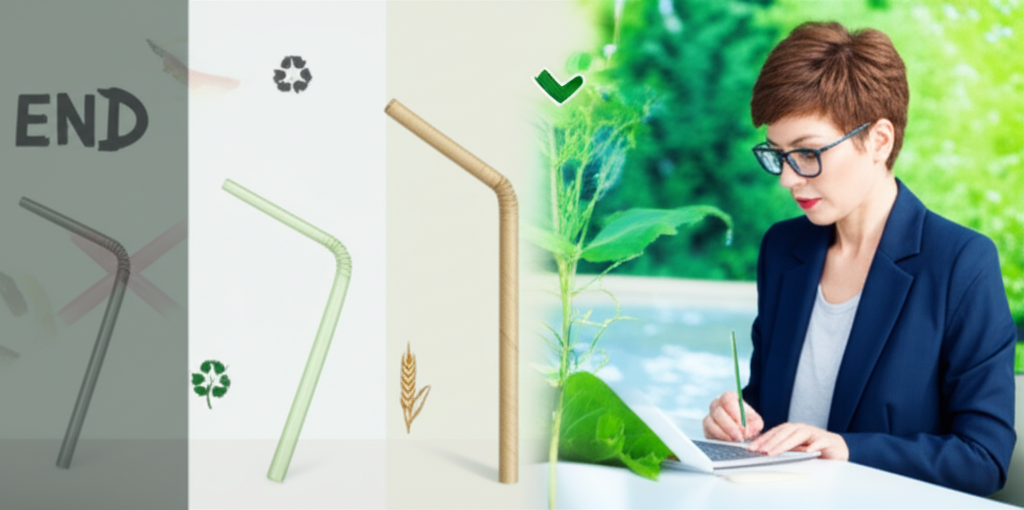
Beyond the Buzzwords: Understanding Compostable Straw Materials and Their Impact
Navigating the eco-friendly product market can be fraught with confusion and the potential for “greenwashing.” For B2B buyers, understanding the crucial distinctions between seemingly similar terms is paramount. While “biodegradable” simply means a material will eventually break down, often without a specific timeframe or environmental condition, “compostable” implies a more rigorous standard: the material must fully decompose into natural, non-toxic components within a defined period under specific conditions. For instance, many bioplastics like Polylactic Acid (PLA), derived from plant starches (e.g., corn), require industrial composting facilities with high heat and controlled moisture to break down effectively within 3-6 months. Without access to such infrastructure, PLA can persist in landfills for extended periods, similar to conventional plastics. In contrast, home compostable options, such as those made from sugarcane (bagasse) or wheat stems, are designed to decompose more broadly, offering greater flexibility in disposal.
The genuine environmental benefits of certified compostable straws are compelling: they significantly reduce plastic waste and microplastic pollution, lower carbon footprints by utilizing renewable resources, and support a circular economy by returning nutrients to the soil. However, it’s vital to acknowledge challenges. The limited availability of industrial composting infrastructure remains a hurdle, particularly in some regions of the US and Europe. Performance variations, such as paper straws becoming soggy, have been a past concern, though innovations have greatly improved durability. Furthermore, some paper products have faced scrutiny for containing PFAS “forever chemicals” for water resistance, highlighting the importance of seeking certified non-toxic options. The market is continuously evolving, with innovative plant-based materials like Polyhydroxyalkanoates (PHA) emerging as superior alternatives. PHA, a bioplastic produced by bacteria from plant sugars or oils, offers durability comparable to traditional plastic and can biodegrade in diverse environments, including industrial and home composting, soil, and even marine environments. This broad degradability makes PHA a highly promising “next-generation” solution. Beyond PHA, the diverse portfolio of compostable straw materials includes traditional paper and bamboo, along with natural grass, rice, and even seaweed, each offering distinct properties in terms of durability, aesthetic appeal, and suitability for various hot or cold beverage applications. For more on material certifications, visit our Product Certifications Explained.
Strategic Sourcing: Unlocking Operational Efficiency and Brand Value with Bulk Compostable Straws
Making the right choice in compostable straws is a strategic decision that can directly impact your operational efficiency and enhance brand value. Understanding the nuances of different materials is key for B2B procurement:
Comparing Compostable Straw Solutions: A B2B Buyer’s Guide
| Material Type | Compostability | Durability/Feel | Certifications (Common) | Ideal Bulk Use Cases |
|---|---|---|---|---|
| Paper Straws | Home/Industrial | Variable (can soften) | FSC, some BPI/TÜV | Cost-effective, general QSR, eco-conscious |
| PLA (Corn-based) | Industrial Compost Only | Plastic-like | BPI, CMA, TÜV Austria | Cold drinks, clear aesthetic, large volume |
| PHA (Plant-oil) | Industrial/Home/Marine | Plastic-like, sturdy | BPI, TÜV OK Compost | Premium brands, diverse beverages (hot/cold) |
| Sugarcane (Bagasse) | Home/Industrial | Sturdy, no sogginess | Non-toxic, home-compostable | Hot/cold beverages, natural feel, no taste transfer |
| Wheat Stems | Home/Industrial, Natural | Natural, flexible | 100% biodegradable | Niche cafes, zero-waste stores, unique aesthetic |
Connecting your material choice to operational benefits is crucial. For instance, PHA straws offer a superior user experience with their plastic-like feel and broad degradability, making them ideal for premium brands. Sugarcane straws excel in hot beverages, providing a natural feel without sogginess or taste transfer. Crucially, aligning with essential regulatory compliance often hinges on relevant third-party certifications like BPI, TÜV AUSTRIA, or CMA, ensuring your bulk purchase genuinely meets compostability standards. The market for eco-friendly straws is projected for significant growth, with some estimates indicating the overall market could reach nearly USD 25.1 billion by 2035, while the compostable straw segment specifically is expected to grow from USD 1.9 billion in 2025 to USD 3.8 billion by 2035. (Source: Future Market Insights) This robust growth trajectory underscores how early adoption positions businesses for substantial competitive advantage in both the US and European markets.
Top Suppliers for Bulk Compostable Straws: Navigating Your Options
For high-volume B2B buyers, several leading suppliers offer diverse and specialized compostable straw solutions:
- Panda Bambu: Specializes in wholesale and export from China, providing a wide array of materials including paper, bamboo, PLA, and wheat. They offer extensive customization options for length, diameter, and packing, with favorable Minimum Order Quantities (MOQs) starting from 50 cartons for new importers, making them an accessible option for businesses scaling up their sustainable initiatives.
- Good Start Packaging: Provides cutting-edge PHA and PLA/PBAT options across various sizes (standard, smoothie, cocktail, boba). They emphasize customer convenience with free samples and free shipping on larger orders, demonstrating a commitment to service alongside sustainability by donating 20% of profits to charity.
- Servous: Focuses on 100% bio-based, renewable materials. They offer a wide array of sizes, types, and colors, including wrapped and unwrapped options, serving diverse foodservice facilities from QSR chains to healthcare.
- UrthPact: Offers certified compostable straws by the case, pallet, or truckload, providing comprehensive custom manufacturing services to align precisely with specific brand requirements and ensuring products maintain integrity without affecting taste.
Key decision factors for your procurement strategy should include not only customization capabilities and MOQs but also shipping logistics (especially for international sourcing) and, critically, robust third-party certifications to validate compostability claims.
The future is undeniably green, and by integrating these advanced compostable solutions into your supply chain, you are driving growth and innovation. This strategic shift reinforces an enhanced brand perception, meets the evolving expectations of environmentally conscious consumers and regulators, and demonstrates undeniable leadership in environmental stewardship within your industry. For more insights on sourcing and supplier selection, explore our B2B Procurement Solutions.
Make Your Sustainable Shift: Partnering for Bulk Compostable Straw Solutions
The strategic imperatives are clear: investing in high-quality, certified bulk compostable straws is no longer just an option, but a necessity for ensuring regulatory compliance, bolstering brand image, and minimizing your environmental impact. The global push for sustainability, especially evident in legislative changes across the US and Europe, demands a proactive approach from businesses. While challenges in composting infrastructure persist in some areas (e.g., read more about infrastructure challenges), the market for truly compostable materials continues to innovate.
To initiate your greener operation, we encourage businesses to conduct a thorough internal assessment of their specific needs. Consider the types of beverages you serve, the required volumes, the desired certifications (e.g., home vs. industrial compostable), and your budget constraints.
Ready to optimize your supply chain with genuinely sustainable and operationally superior compostable straws?
Contact our bulk procurement specialists today to discuss your specific requirements, explore tailored solutions, or request a free sample kit of our certified compostable straw options.