

Eco-Friendly or Greenwashed? The B2B Straw Playbook
Is your business truly eco-friendly, or just falling for greenwashing? The world of “biodegradable” straws is more complex than it appears, and making the wrong choice could cost you more than just a momentary lapse in judgment. Single-use plastic pollution has spiraled into a global crisis, pushing every sector, from hospitality to retail, to seek sustainable alternatives. Yet, this urgent demand for change has unfortunately birthed a confusing landscape filled with misleading claims and hidden environmental pitfalls. Businesses find themselves navigating a minefield of “forever chemicals,” unfulfilled promises of decomposition, and a barrage of certifications that can be difficult to decipher.
For B2B companies, this isn’t merely an abstract environmental debate. The stakes are profoundly high: it’s about safeguarding your brand reputation, ensuring rigorous regulatory compliance, and meeting the evolving, increasingly discerning demands of consumers who expect genuine sustainability, not just lip service. The choice of straw, seemingly small, can cast a long shadow over your operational integrity and market perception.
The Shifting Landscape of Straw Materials: Beyond Paper and Plastic
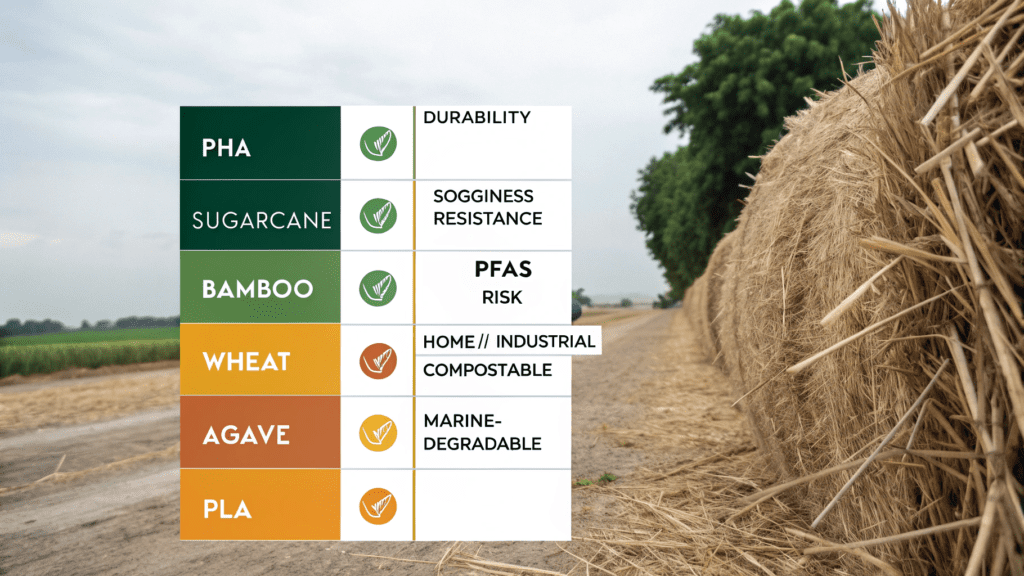
The quest for plastic-free solutions has ushered in a diverse array of alternative straw materials, each with its own promise and complexities. Moving beyond the flimsy paper or enduring plastic of yesteryear, today’s market offers innovations ranging from plant-based bioplastics to natural fibers. Understanding these materials is the first step in making an informed, compliant, and truly sustainable choice.
- Polylactic Acid (PLA): Often derived from cornstarch or sugarcane, PLA is a bioplastic that mimics the feel and appearance of traditional plastic. While it’s marketed as biodegradable, PLA typically requires specific high temperatures and microbial activity found only in industrial composting facilities to decompose effectively. In a landfill, it can take significantly longer and may even contaminate traditional recycling streams if not correctly identified.
- Sugarcane (Bagasse): Made from the fibrous residue left after sugar extraction, bagasse straws are celebrated for their sturdiness, durability, and natural resistance to sogginess. Many varieties are home compostable, offering a robust, genuinely eco-friendly alternative to fragile paper or persistent plastic.
- Bamboo: As a fast-growing, renewable resource, bamboo offers naturally aesthetic, reusable, and durable straw options. Its natural properties make it an attractive alternative, often requiring minimal processing.
- Wheat: These straws are crafted from the stems of wheat plants, a byproduct of agriculture. They offer an affordable and sturdy single-use option, utilizing existing waste streams.
- Agave: Derived from the waste fibers of the agave plant, these straws are known for their durability and biodegradability, providing another sturdy, plant-based choice.
- Polyhydroxyalkanoates (PHA): This promising bioplastic is produced through the fermentation of plant-based oils. PHA straws are durable, highly resistant to sogginess, and uniquely capable of degrading in industrial and home composting environments, as well as in marine settings, offering a truly versatile solution.
- Coffee Grounds, Rice, Grass, Seaweed: Innovative approaches are also leveraging other agricultural byproducts and natural resources, such as coffee grounds, rice plant stems, various grasses, and seaweed, to create unique, biodegradable straw solutions, each bringing distinct benefits in terms of resource utilization and decomposition properties.
It’s crucial to understand that the term “biodegradable” itself is not a blanket guarantee. It simply means a material will break down into simpler compounds over time when exposed to certain environmental conditions. However, the timeframe can vary wildly from months to years, and the conditions required (e.g., moisture, heat, specific microorganisms) are often not met in a typical landfill. This is where “compostable” becomes a more precise and valuable term, indicating that a product is designed to degrade into nutrient-rich compost under specific, controlled conditions, either in a “home-compost” bin or an “industrial-compost” facility. “Marine-degradable” refers to materials specifically engineered to break down safely in saltwater environments, addressing the critical issue of ocean plastic pollution.
Here’s a snapshot comparing common straw materials:
| Material Type | Primary Composition | Key Advantages | Decomposition Requirements | Common Challenges |
|---|---|---|---|---|
| Traditional Plastic | Petroleum-based polymers | Cheap, durable, widely available | Hundreds of years in landfill | Microplastic pollution, finite resource, toxic additives |
| Paper | Wood pulp | Widely available, perceived as eco-friendly | Biodegrades in ideal conditions | Can get soggy, potential PFAS, often not truly compostable |
| PLA (Bioplastic) | Cornstarch, Sugarcane | Looks/feels like plastic, renewable source | Industrial composting facilities (high heat) | Slow degradation in landfill, recycling contamination |
| Sugarcane (Bagasse) | Bagasse (sugar residue) | Sturdy, water-resistant, home compostable | Home/Industrial composting | Availability, cost compared to plastic |
| Bamboo | Natural bamboo stems | Reusable, natural aesthetic, fast-growing resource | Biodegradable, can be reused | Requires cleaning for reuse, natural variations |
| PHA (Bioplastic) | Plant-based oils | Durable, resists sogginess, marine-degradable | Home/Industrial composting, marine | Currently higher cost, newer to market |
The Regulatory Maze: Staying Compliant is Non-Negotiable
The global push for sustainability is rapidly transforming the regulatory landscape, making compliance a critical, rather than optional, component of B2B operations. Ignorance of these evolving frameworks is no longer an excuse and can lead to severe penalties, reputational damage, and a loss of market trust.
EU Single-Use Plastics Directive (SUPD): A Game Changer
Effective July 3, 2021, the EU Single-Use Plastics Directive (SUPD) delivered a comprehensive ban on single-use plastic straws across all EU member states. This directive is particularly stringent, defining “plastic” broadly to include any material containing a polymer that serves as a main structural component. Crucially, this ban extends even to straws marketed as “bio-based,” “biodegradable,” or “compostable” if they contain plastic polymers, regardless of their origin (e.g., corn-derived PLA is still considered plastic under this definition). The objective is clear: to eliminate plastic pollution, especially in marine environments, by steering businesses towards genuinely sustainable, non-plastic alternatives or robust reusable options. Businesses operating within or importing into the EU must ensure their straw solutions are unequivocally plastic-free. This directive also introduces Extended Producer Responsibility (EPR) schemes, discussed later, which hold producers accountable for waste management costs.
US State-Level Bans & Federal Directives: A Patchwork of Progress
While the US lacks a single federal ban on single-use plastics, a growing number of states are taking decisive action. States like California and New York have implemented stringent bans on single-use plastics, including straws, and are increasingly restricting the use of Per- and Polyfluoroalkyl Substances (PFAS) in food packaging. California’s ban on PFAS in paper, paperboard, or plant-based food packaging, utensils, and paper straws became effective in January 2023. New York enacted a similar ban on intentionally added PFAS in food packaging on December 31, 2022. Several other states, including Connecticut, Vermont, and Maine, have also enacted or are developing similar restrictions.
In a significant federal development, Executive Order 14208, issued in February 2025, directly impacts the US federal government’s policy on paper straw use. This order directs federal agencies to cease purchasing paper straws and to develop a national strategy to end their use, largely driven by mounting health concerns associated with PFAS contamination found in many paper products. This federal shift signals a broader move away from paper straws, even those considered “eco-friendly,” if they pose a PFAS risk.
The FTC Green Guides: Battling Greenwashing with Strict Scrutiny
The Federal Trade Commission’s (FTC) Green Guides serve as a critical framework for environmental marketing claims in the US, designed to prevent greenwashing and ensure truthfulness in advertising. For B2B companies, understanding these guides is paramount to avoid deceptive practices and potential legal ramifications.
- “Biodegradable” Claims: The FTC considers unqualified “biodegradable” claims to be deceptive unless the marketer can prove the product will completely break down and decompose into elements found in nature within a reasonably short period (typically one year) in the customary disposal settings where it is discarded. This is a crucial distinction, as most landfills are not designed for biodegradation, meaning a product that might biodegrade in a specialized facility but not in a landfill cannot be unqualifiedly labeled “biodegradable.”
- “Compostable” Claims: Similarly, “compostable” claims require clear and prominent qualification if the product necessitates a specialized industrial composting facility that is not widely available to a substantial majority of consumers or communities where the item is sold. Without these qualifications, consumers may mistakenly believe they can home compost or dispose of the item in a readily available industrial compost stream, when in reality, it may end up in a landfill, undermining the entire environmental premise. The FTC has actively pursued enforcement actions against companies making unsubstantiated “green” claims, imposing significant penalties. For reliable information on environmental marketing claims, businesses should consult the FTC Green Guides directly at ftc.gov.
Unmasking the Hidden Threat: PFAS in “Eco-Friendly” Straws
Just as businesses embraced paper and bamboo straws as seemingly safe eco-friendly alternatives, a new and alarming threat emerged: the widespread presence of Per- and Polyfluoroalkyl Substances (PFAS). These synthetic chemicals, often dubbed “forever chemicals” due to their extreme persistence in the environment and the human body, have been found in a significant majority of paper and bamboo straws tested in both European and US studies. Their presence challenges the very definition of “eco-friendly” for these products.
PFAS are often intentionally added to paper and bamboo straws to provide water resistance and prevent sogginess—addressing a common complaint about early iterations of paper straws. However, their presence can also be unintentional, resulting from contamination in raw materials, recycled fibers, processing water, or even the soil where plant-based materials are cultivated. The critical concern for businesses is that these PFAS can leach into beverages, posing a direct route of human exposure to chemicals linked to serious health issues, including certain cancers, high cholesterol, reduced infant birth rates, and decreased immune response.
The regulatory backlash against PFAS is intensifying globally. While the US Food and Drug Administration (FDA) currently permits some PFAS in food contact applications, numerous states have acted to restrict or ban PFAS in food packaging. In the EU, specific PFAS compounds like PFOS, PFOA, and PFHxS have been restricted for years, with a comprehensive proposal submitted to the European Chemicals Agency (ECHA) in January 2023 to restrict all PFAS. This mounting regulatory pressure, coupled with increasing consumer awareness, makes sourcing PFAS-free straw solutions not just an ethical choice, but a strategic imperative to avoid future liabilities and maintain brand trust.
The Critical Role of Certification Standards
In a market rife with ambiguous claims and hidden dangers like PFAS, third-party certification standards are invaluable. They provide the verifiable, scientific assurance that a product truly meets its environmental promises, offering businesses a clear pathway to genuine sustainability and compliance.
Ensuring Genuine Compostability: European and US Standards
- EN 13432 (Europe): This European standard sets stringent requirements for packaging and products to be considered industrially compostable and biodegradable. For a straw to earn EN 13432 certification, its materials must break down into natural elements in an industrial composting facility without leaving harmful residues. This involves:
- Biodegradation: At least 90% of the organic carbon converting to carbon dioxide within six months.
- Disintegration: At least 90% of the material fragmenting into pieces smaller than 2mm within 12 weeks.
- Chemical Composition: Strict limits on heavy metals and fluorine to prevent compost contamination.
- Ecotoxicity: The resulting compost must not negatively impact plant growth.
It’s important to remember that EN 13432 focuses on industrial composting conditions and does not automatically imply home compostability.
- ASTM D6400 & D6868 (USA): From the American Society for Testing and Materials (ASTM), these standards are the benchmarks for industrial compostability in North America.
- ASTM D6400: Standard Specification for Labeling of Plastics Designed to be Aerobically Composted in Municipal or Industrial Facilities. This standard applies to plastics and plastic products intended for aerobic composting in commercial facilities. Products must achieve at least 90% biodegradation within 180 days and 90% disintegration (passing through a 2mm screen) within 12 weeks, with no eco-toxicity to plants.
- ASTM D6868: Standard Specification for Labeling of End Items that Incorporate Plastics and Polymers as Coatings or Additives with Paper and Other Substrates Designed to be Aerobically Composted in Municipal or Industrial Facilities. This standard is specifically for products like paper straws with a biodegradable plastic lining. It ensures the entire product, including coatings, can be industrially composted, with similar requirements for disintegration, biodegradation, and eco-toxicity as D6400.
For detailed information on these standards, businesses can refer to the American Society for Testing and Materials (ASTM) website at astm.org.
Recognized Certifications: Third-Party Verification You Can Trust
To simplify the complexities of these standards, third-party certification bodies provide easily recognizable logos and assurances.
- Biodegradable Products Institute (BPI): BPI is North America’s leading certification body for compostable products. BPI-certified products comply with ASTM D6400 or D6868 standards, ensuring they break down safely in industrial composting facilities. BPI also certifies products free of intentionally added PFAS, with total organic fluorine levels below 100 parts per million. You can learn more about BPI and their certification process at bpiworld.org.
- TÜV AUSTRIA: A globally recognized certification organization, TÜV AUSTRIA offers several critical certifications:
- OK compost INDUSTRIAL: This certification confirms compliance with EN 13432, guaranteeing industrial compostability.
- OK compost HOME: A more stringent certification, ensuring products can degrade in typical backyard compost bins at lower, less consistent temperatures.
- OK biodegradable MARINE: Certifies products capable of breaking down safely in saltwater environments.
Choosing straws with these certifications is not just a mark of quality; it’s a strategic decision that demonstrates genuine environmental stewardship, builds consumer trust, and protects your business from the pitfalls of greenwashing and non-compliance.
Extended Producer Responsibility (EPR): A Driving Force for Change
Extended Producer Responsibility (EPR) schemes are rapidly emerging as a powerful global policy approach, fundamentally reshaping the landscape of packaging and product design. EPR shifts the financial and physical responsibility for the entire lifecycle of products and packaging, including collection, sorting, recycling, and ultimate disposal, from municipalities and taxpayers to the producers themselves. This paradigm shift is not just about waste management; it’s a potent incentive for sustainability and a key driver in the move away from traditional plastic straws.
Shifting Accountability and Incentivizing Sustainability
EPR makes producers directly accountable, compelling them to consider the end-of-life impact of their products from the design stage. A core trend within EPR is ecomodulation, where the fees producers pay into the system are adjusted based on the environmental impact of their packaging. Packaging that is harder to recycle, more costly to process, or contains problematic materials (like PFAS) incurs higher fees. Conversely, packaging that is easily recyclable, contains recycled content, or is genuinely compostable receives incentives or lower fees. This direct financial lever pushes businesses towards innovative, more eco-friendly materials and designs, forcing a move towards circular economy models where materials are kept in use for as long as possible.
Link to Straws: Mandating Sustainable Alternatives
Many EPR laws explicitly include single-use items like straws and stirrers as covered materials, underscoring their environmental significance. For instance, California’s landmark SB 54, a comprehensive packaging EPR law, lists “straws and items used to stir beverages” as covered materials under its mandatory producer responsibility program. This means that producers selling products with straws in these regions must ensure their straw choices align with EPR objectives, favoring genuinely recyclable or compostable alternatives. The proposed U.S. “Break Free From Plastic Pollution Act” (2021) also sought to prohibit single-use plastic straws and classify them as covered products under an EPR scheme, highlighting a growing federal-level interest in this approach.
EPR programs are not just about compliance; they are about fostering a systemic shift. They drive investment in advanced recycling infrastructure, support consumer education on proper disposal, and, most importantly for businesses, push for the development and adoption of packaging solutions that genuinely contribute to a healthier planet. By selecting straws that are not only compliant but also designed for circularity, businesses can actively participate in this global movement, enhancing their brand reputation and gaining a significant competitive edge.
The Momoio Difference: Truly Sustainable Straws for Modern Businesses
Navigating the complexities of eco-friendly claims, evolving regulations, and consumer expectations can be daunting. At MOMOIO, we understand that true sustainability requires more than just good intentions; it demands unwavering commitment to transparency, rigorous compliance, and innovative, high-performing products. We position ourselves as your trusted partner, offering genuinely eco-friendly straw solutions that meet stringent global standards and empower your business to thrive in a greener economy.
A Range of Certified & PFAS-Free Solutions
MOMOIO offers a diverse portfolio of cutting-edge straw solutions, meticulously designed to meet the varying needs of the modern B2B landscape while adhering to the highest environmental and safety benchmarks. We prioritize materials that are genuinely biodegradable, compostable, and, critically, PFAS-free.
- Sugarcane Straws: Experience the perfect blend of durability and environmental responsibility. Our sugarcane straws are sturdy, robust, and inherently water-resistant, eliminating the common issue of sogginess associated with many paper alternatives. They are an exceptional choice for a wide range of beverages and are home compostable, ensuring a truly circular end-of-life. Discover the resilience and sustainability of our sugarcane straws at https://momoio.com/sustainable-eco-friendly-sugarcane-straws/.
- Coffee Ground Straws: Innovation meets sustainability with our coffee ground straws. These pioneering straws creatively repurpose agricultural byproducts, transforming what would be waste into a valuable, eco-friendly solution. They embody our commitment to utilizing renewable resources and minimizing environmental impact through ingenious material science. Learn more about our unique coffee ground straws at https://momoio.com/coffee-ground-straws/.
- Bamboo Drinking Straws: For businesses seeking reusable, naturally aesthetic options, our bamboo drinking straws are an ideal choice. Crafted from fast-growing, sustainable bamboo, these straws offer durability and a distinctive, natural appeal, perfect for enhancing the customer experience while promoting reusability. Explore our versatile bamboo drinking straws at https://momoio.com/bamboo-drinking-straws/.
Every product in the MOMOIO range is rigorously tested to be PFAS-free, offering peace of mind and protecting your brand from the liabilities associated with “forever chemicals.” Our straws meet relevant compostability certifications, including BPI, TÜV OK compost (Industrial and Home where applicable), EN 13432, and ASTM D6400/D6868, ensuring their genuine environmental credentials.
Beyond Straws: A Holistic Approach to Eco-Friendly Packaging
MOMOIO’s commitment extends far beyond straws. We offer a comprehensive suite of sustainable packaging solutions, enabling your business to adopt a holistic, eco-conscious approach across all operations. From biodegradable food packaging that genuinely returns to nature to eco-friendly paper packaging designed for minimal environmental impact, we provide innovative alternatives for every need. Our plant-based options include robust bagasse bowls and a diverse selection of sustainable cutlery, crafted from bamboo and wood, ensuring every aspect of your serving and packaging meets the highest standards of sustainability.
Benefits for Your Business: Realizing Tangible Value
Partnering with MOMOIO for your straw and packaging needs offers tangible, strategic benefits that extend far beyond simple compliance:
- Achieve Regulatory Compliance: Navigate the complex maze of global environmental regulations with confidence. Our certified, PFAS-free products ensure you avoid costly penalties and legal issues stemming from non-compliance with the EU SUPD, US state-level bans, federal directives like EO 14208, and the FTC Green Guides. Stay ahead of the curve and operate responsibly, everywhere you do business.
- Enhance Brand Reputation: In today’s market, genuine environmental stewardship is a powerful differentiator. By choosing MOMOIO’s truly eco-friendly offerings, you visibly demonstrate your commitment to sustainability, resonating deeply with customers who increasingly prioritize ethical and responsible brands. Studies show that a staggering 92% of shoppers consider sustainability important when making purchasing decisions, and they are often willing to pay more for sustainable products. Elevate your brand perception and build lasting loyalty.
- Gain a Competitive Edge: Differentiate your business in a crowded marketplace. While competitors struggle with greenwashing accusations or outdated plastic solutions, you can confidently offer superior, genuinely sustainable alternatives. This proactive approach fosters positive consumer perception, strengthens customer relationships, and positions your brand as a leader in the green revolution, attracting new business and driving growth.
- Simplify Operations: Entrust MOMOIO’s expertise to supply compliant, high-performing, and readily available products. Our commitment to quality and consistency simplifies your procurement process, reduces the risk of supply chain disruptions related to regulatory changes, and frees your team to focus on your core business operations, rather than the complexities of environmental material sourcing.
- Support the Circular Economy: Make a meaningful contribution to a healthier planet. By choosing products that genuinely biodegrade or compost, you actively participate in the circular economy, drastically reducing plastic waste and supporting materials that truly return to nature. This aligns your business with global sustainability goals, fostering a positive impact that extends far beyond your immediate operations.
We also offer tailored solutions for a variety of B2B sectors, from cafes and restaurants seeking high-volume, cost-effective options to hotels and retail establishments requiring premium, branded sustainable packaging. Our expertise ensures that whatever your industry, your sustainable straw and packaging solutions are perfectly matched to your specific operational and brand requirements.
Comparison Table: Why Choose Certified Sugarcane & PHA Over Uncertified “Eco-Friendly” Options
To illustrate the critical distinction, let’s compare certified sugarcane and PHA straws with common uncertified or problematic “eco-friendly” alternatives:
| Feature/Criterion | Momoio Sugarcane/PHA Straws (Certified) | Paper Straws (Uncertified/Generic) | PLA Straws (Often Uncertified/Misunderstood) | Bamboo Straws (Often Uncertified/Misunderstood) |
|---|---|---|---|---|
| Material Origin | Bagasse (sugarcane pulp), PHA (plant-based oils) | Wood pulp | Corn starch, sugarcane | Natural bamboo |
| Durability | Sturdy, water-resistant, resists sogginess | Prone to sogginess, disintegrates in beverages | Similar feel to plastic, can be brittle | Variable, can splinter if poor quality |
| PFAS-Free | Guaranteed PFAS-Free | Often contain PFAS for water resistance | Generally PFAS-free, but check certification | Often contain PFAS for water resistance |
| Biodegradability Claim | Clearly defined (Home/Industrial Compostable, Marine-Degradable) | Vague “biodegradable” or “eco-friendly” claims | “Biodegradable,” but requires industrial composting | “Biodegradable,” but decomposition variable |
| Compostability | Certified Home/Industrial Compostable | Rarely home compostable; industrial if certified | Requires Industrial Composting (not home) | Variable; not typically certified compostable |
| Certification (e.g., BPI, TÜV, EN 13432, ASTM D6400) | Yes (verified third-party) | Often no, or only to basic paper standards | Yes, if industrial compostable | Often no |
| Regulatory Compliance (e.g., EU SUPD) | Fully Compliant (non-plastic, certified) | Non-compliant if containing plastic polymers or PFAS | Non-compliant if containing plastic polymers | Non-compliant if containing plastic polymers or PFAS |
| Consumer Perception | High trust, genuinely sustainable, responsible | Growing skepticism due to sogginess & PFAS | Confusion due to industrial composting requirement | Positive, but concerns about PFAS in some |
| Brand Risk | Low risk (transparent, verified) | High risk (greenwashing, PFAS, non-compliance) | Moderate risk (misleading claims without qualification) | Moderate risk (PFAS concerns) |
This table clearly illustrates why relying on uncertified or vaguely defined “eco-friendly” options can be detrimental. MOMOIO’s commitment to certified, PFAS-free solutions provides clarity, compliance, and genuine sustainability, protecting your brand and contributing to a healthier environment.
Frequently Asked Questions
What is the difference between “biodegradable,” “compostable,” and “marine-degradable” straws, and why does it matter for my business?
What is the difference between “biodegradable,” “compostable,” and “marine-degradable” straws, and why does it matter for my business?
These terms describe distinct decomposition pathways and conditions. “Biodegradable” means a material can break down via microbes, but timeframes and conditions vary widely and are rarely met in landfills. “Compostable” means designed to become nutrient-rich compost under controlled conditions (either home-compost or industrial-compost). “Marine-degradable” refers to materials engineered to degrade safely in seawater. Understanding the differences is essential for accurate claims, FTC Green Guides compliance, and meeting consumer expectations—helping you avoid greenwashing.
Why are PFAS (forever chemicals) a concern in “eco-friendly” straws, and how can my business ensure its straws are PFAS-free?
Why are PFAS (forever chemicals) a concern in “eco-friendly” straws, and how can my business ensure its straws are PFAS-free?
PFAS are sometimes added to paper/bamboo straws for water resistance or appear via raw-material contamination. They can leach into beverages, pose health risks, and undermine sustainability claims because they persist in the environment. Choose products with third-party verification such as BPI (no intentionally added PFAS; total organic fluorine < 100 ppm) or TÜV AUSTRIA, and work with suppliers that explicitly guarantee PFAS-free solutions.
What are the key global and US regulations impacting the use of biodegradable straws, and how can my business ensure compliance?
What are the key global and US regulations impacting the use of biodegradable straws, and how can my business ensure compliance?
EU SUPD bans plastic straws on the EU market (including many bio-based/compostable plastics if classed as “plastic”). In the US, multiple states (e.g., California, New York) restrict single-use plastics and PFAS in food packaging. At the federal level, policy guidance emphasizes accurate environmental claims via the FTC Green Guides. To stay compliant, select unequivocally plastic-free、PFAS-free options with recognized certifications, align labels with actual end-of-life pathways, and monitor evolving local requirements.
How do certification standards like EN 13432, ASTM D6400, and BPI help businesses choose truly sustainable straws?
How do certification standards like EN 13432, ASTM D6400, and BPI help businesses choose truly sustainable straws?
Third-party standards provide scientific assurance and reduce greenwashing risk. EN 13432 (EU) 和 ASTM D6400 / D6868 (NA) 规定工业堆肥条件下的生物降解率(常见阈值:≥90%/180 天)和解离率(≥90%/12 周),并要求无毒残留。BPI 与 TÜV AUSTRIA(OK compost HOME/INDUSTRIAL、OK biodegradable MARINE/SOIL)据此发证;BPI 还要求无有意添加 PFAS,且总有机氟 < 100 ppm。
What are the most genuinely sustainable material options for biodegradable straws for B2B use, beyond problematic paper or PLA?
What are the most genuinely sustainable material options for biodegradable straws for B2B use, beyond problematic paper or PLA?
优先考虑:sugarcane(甘蔗渣)、PHA、bamboo、wheat、agave 等材质。Sugarcane 通常坚固且耐水,常见家用或工业堆肥适配;PHA 抗软化,且可在工业/家用/海洋环境降解;bamboo 具有可复用美观特性。无论何种材质,务必选择PFAS-free且具备权威认证的产品,以确保真实环境效益与合规。