Ĉu Sukerkanaj Pajloj estas Sekuraj por Manĝa Kontakto?
In today’s rapidly evolving sustainability landscape, businesses worldwide are under immense pressure to reduce their environmental footprint, with a major focus on replacing single-use plastics. As innovative alternatives emerge, a crucial and complex question looms for B2B buyers: Are these “green” solutions, particularly sugarcane straws, unequivocally safe for food contact, and do they meet the increasingly rigorous regulatory standards expected by global markets and discerning consumers?
La merkato estas nuntempe inundita de kakofonio de eko-asertoj, kio faras ĝin nekredeble defia por B2B-aĉetantoj distingi aŭtentan sekurecon, kontrolitan konformecon kaj veran daŭripovon. Misinformado, neklaraj promesoj aŭ preteratentitaj reguligaj detaloj povas konduki al gravaj riskoj por via komerco. Imagu la eblajn sekvojn: zorgoj pri kliento pri sano kondukantaj al difektita marka reputacio, fortaj monpunoj sub ĉiam pli striktaj mediaj kaj manĝsekurecaj leĝoj, kaj la erozio de konsumantfido pene konstruita dum jaroj. La interesoj estas simple tro altaj por fidi nepruvitajn asertojn.
Ĉi tiu ampleksa gvidilo estas desegnita por tratranĉi la bruon, provizante definitivajn respondojn kaj profundajn komprenojn pri kial atestitaj sukerkanpajloj estas ne nur ekokonscia elekto sed plene sekura, konforma kaj estonteca solvo por la diversaj manĝservoj de via komerco. Ni malpakos la sciencon, malimplikos la atestojn kaj senmistifikos la reguligan pejzaĝon, ebligante vin fari informitajn decidojn, kiuj profitigas vian fundon, viajn klientojn kaj la planedon.

II. Intereso: Malkaŝado de la Senkompromisa Sekureco kaj Fortika Akreditaĵoj de Sukerkanaj Pajloj
La vojaĝo al vere daŭrigeblaj nutraĵservaj solvoj komenciĝas per senkompromisa engaĝiĝo al sekureco kaj kontroleblaj akreditaĵoj. Sukerkanaj pajloj elstaras kiel ĉefa alternativo, konstruita sur fundamento de naturaj materialoj, rigoraj provoj kaj ampleksa atestado.
1. La Fundamento de Sekureco: Materiala Komponado kaj Kemia Pureco
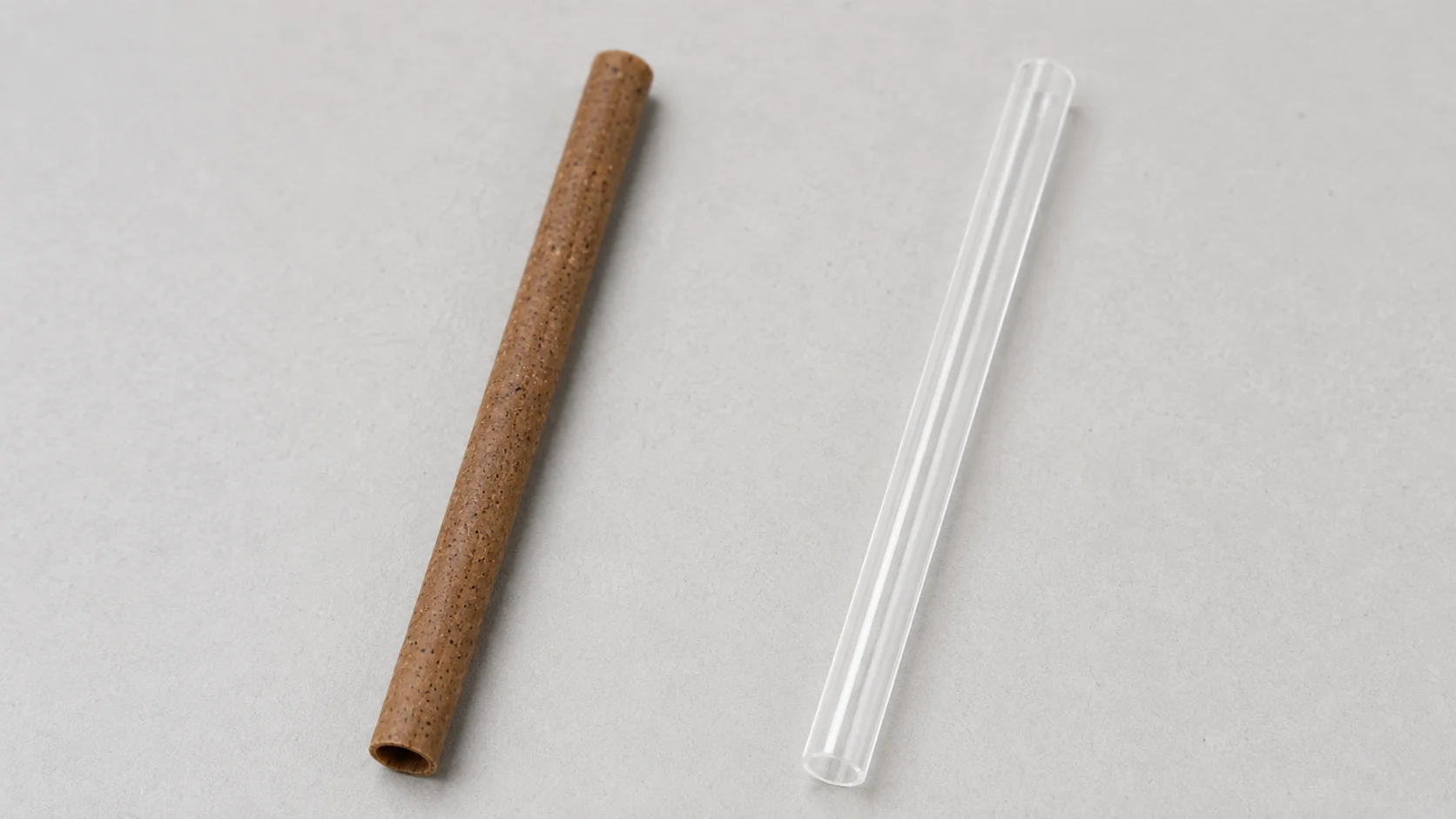
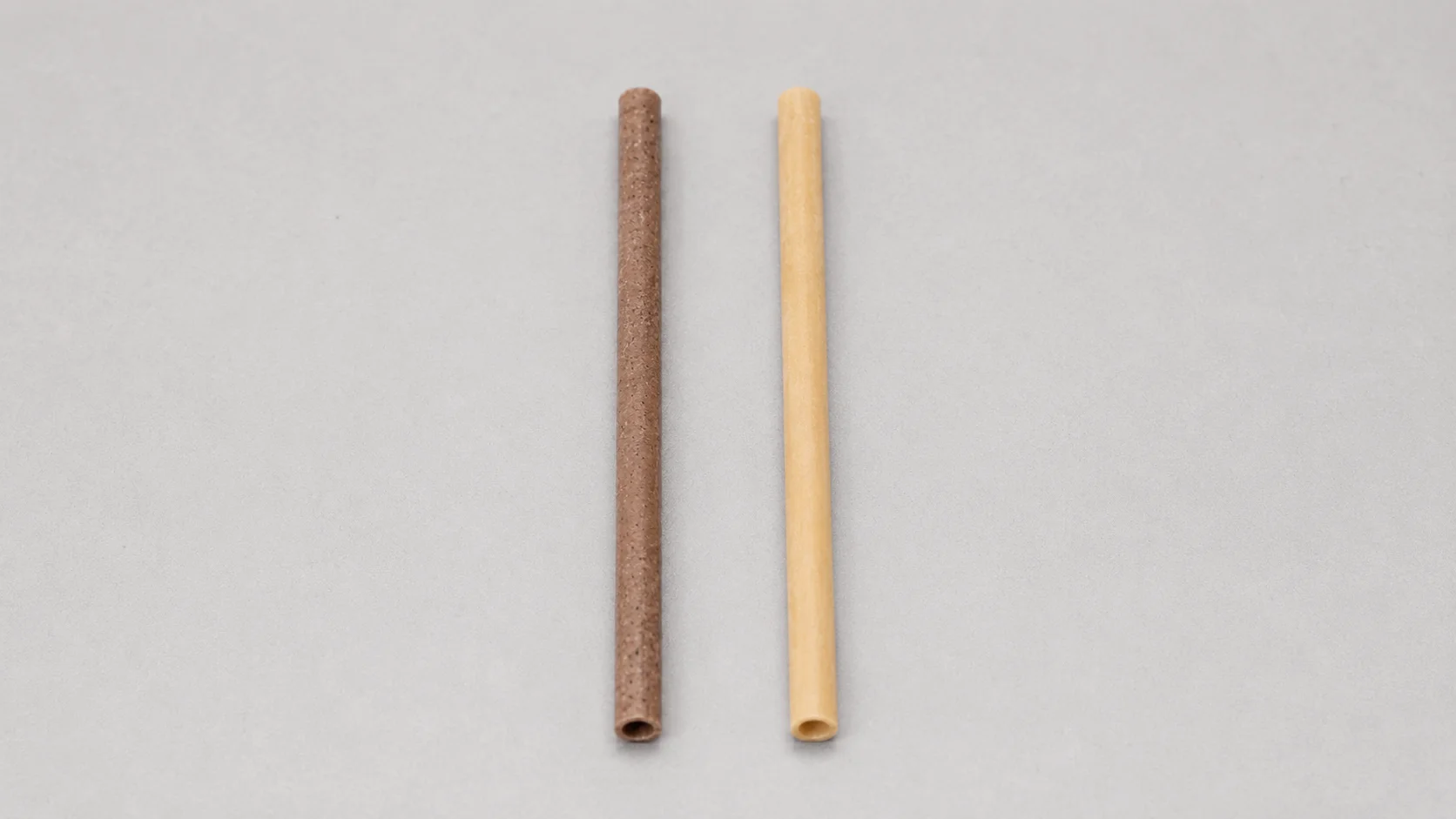
La eneca sekureco de sukerkanpajloj komenciĝas per ilia fundamenta konsisto. Ili estas ĉefe faritaj el sukerkanbagaso, la fibreca kromprodukto restanta post sukerekstraktado. Ĉi tiu materialo, daŭrigeble fonta celuloza rimedo, transformas tion, kio iam estis agrikultura rubo, en valoran, ekologian produkton. Esence, multaj altkvalitaj elektoj sur la merkato estas eksplicite "Senaj PLA", traktante specifajn reguligajn bezonojn kaj konsumantajn preferojn, kiuj celas eviti eĉ bio-bazitajn plastojn.
Bonfamaj fabrikistoj multe klopodas por garantii la kemian purecon de siaj sukerkanpajloj. Ĉi tiu devontigo certigas, ke ili estas rigore testitaj kaj atestitaj sen ampleksa aro da malutilaj substancoj ofte asociitaj kun tradiciaj plastoj:
- BPA (Bisphenol-A) and Phthalates: Known endocrine disruptors, these are entirely absent.
- PFAS (“Forever Chemicals”) and Fluorine: A critical safety concern, certified sugarcane straws are explicitly PFAS-Free and Fluorine-Free, putting your business ahead of emerging global restrictions.
- Heavy Metals: Strict limits are maintained to prevent any migration of toxic elements.
- Petroleum and Bleach: These harsh chemicals, often found in paper processing, are excluded.
- “5 Plastics Free”: High-quality sugarcane straws are certified free from Polystyrene (PS), Polyethylene (PE), Polypropylene (PP), Polyvinyl Chloride (PVC), and Polyethylene Terephthalate (PET/PETE), ensuring they are devoid of conventional plastic compounds.
- Gluten-Free: Provizante dietajn sentemojn, ĉi tiuj pajloj ankaŭ estas senglutenaj.
Preter la foresto de malutilaj substancoj, sukerkanaj pajloj aliĝas al striktaj materialaj normoj de manĝaĵo, certigante neriproĉeblan ne-leivan integrecon. Ĉi tio ne estas nur aserto, sed estas subtenata de fortikaj internaciaj aproboj, inkluzive de usona FDA-aprobo por manĝaĵkontakta sekureco kaj konformeco al EU-manĝaĵsekureca regularo (ekz. EU-Regulamento 10/2011). Ĉi tio garantias, ke neniuj nedezirindaj substancoj elfluos en trinkaĵojn, konservante la purecon kaj guston de trinkaĵoj. Krome, ili estas skrupule dezajnitaj por esti senodoraj kaj gusto-neŭtralaj, malhelpante ajnan ŝanĝon al la sensa sperto de la konsumanto.
Their thermal performance and durability are also key differentiators. Engineered to maintain structural integrity across a wide range of temperatures, they can withstand cold beverages and hot drinks up to 60°C, with some advanced varieties performing reliably at up to 90°C. Unlike many paper alternatives that quickly get soggy or collapse, sugarcane straws offer superior durability, ensuring a premium user experience that lasts throughout the drink.
For health-conscious businesses and consumers, it’s important to clarify that due to the sugar extraction process, sugarcane straws have no impact on blood sugar levels. While made from natural materials and non-toxic, it is crucial to note that they arene manĝeblaand should not be consumed. Like any non-food item, supervision is advised for children to prevent chewing or accidental ingestion.

2. A Mark of Trust: Global Certifications Validating Compostability and Environmental Claims
In a market saturated with “green” claims, verified certifications are your strongest assurance of a product’s true environmental performance and safety. Sugarcane straws distinguish themselves through an extensive suite of international certifications, demonstrating unparalleled commitment to both food safety and end-of-life biodegradability.
International Food Contact Safety
The foundation of trust begins with direct food contact safety. Our sugarcane straws are universally US FDA Approved and have successfully passed the rigorous EU Regulation EU No. 10/2011 food contact tests, verifying their safety for direct contact with food and beverages. These approvals are critical for any B2B operation serving the public.
Industrial Compostability Powerhouses
For products truly designed for a circular economy, industrial compostability is paramount. Sugarcane straws lead the way with multiple certifications:
- EN 13432 (Eŭropo): This European standard for industrial compostability is a cornerstone. Certified by bodies like DIN CERTCO, products meeting EN 13432 must achieve 90% biodegradation within six months and disintegrate into fragments smaller than 2mm within 12 weeks in industrial composting facilities. This ensures the material returns to the earth without harming the resulting compost. The official standard document for EN 13432 outlines stringent criteria for biodegradability, disintegration, chemical composition, and ecotoxicity, ensuring a holistic approach to compostable packaging. For more details on this crucial European standard, refer to the Eŭropaj Bioplastoj organization’s resources on EN 13432.
- ASTM D6400 (USA): In the United States, the Biodegradable Products Institute (BPI) certifies products against the American Society for Testing and Materials (ASTM) D6400 standard. This specifies that products must achieve 90% biodegradation within 180 days in municipal/industrial composting facilities, along with proper disintegration and non-toxicity to the compost. The BPIworld.org website is the authoritative source for BPI certification standards, including ASTM D6400, for compostable products in North America.
- ASTM D6868 (USA): This standard is critical for products incorporating plastics as coatings or additives with other compostable substrates. It ensures the entire product’s compostability in industrial settings, meaning both the bagasse and any binding agents are fully compostable.
- BPI Industrial Certification: As mentioned, the Biodegradable Products Institute (BPI) provides third-party verification, ensuring compliance with ASTM D6400/D6868 and promoting responsible waste management practices.
- TÜV OK Compost Industrial: An independent verification of industrial compostability provided by TÜV Austria, aligning with the stringent requirements of EN 13432.
Home Compostability Advantage
Going a step further, many sugarcane straws offer home compostability, providing even greater end-of-life flexibility:
- TÜV OK Compost Home & Home Material: This more stringent certification, also from TÜV Austria, verifies complete biodegradability in backyard soil environments, without the need for industrial conditions.
- ABA Home Composting: The Australian Biodegradable Plastics Association (ABA) provides certification for home composting in the Australian market.
Chemical Transparency & Carbon Footprint
Beyond biodegradability, comprehensive environmental responsibility extends to chemical transparency and climate impact:
- PFAS-Free and Fluorine-Free: Explicitly certified, this guarantees freedom from “forever chemicals,” a crucial consideration for modern food contact materials.
- SVHC Free: Certified free from Substances of Very High Concern.
- BSI Carbon Footprint Certified: Demonstrates a commitment to assessing and reducing the product’s carbon footprint throughout its lifecycle.
To illustrate the distinctions and shared criteria of these vital certifications, here is a comparison table:
| Atestado | Region | Fokuso | Key Requirements | Certification Body (Examples) |
|---|---|---|---|---|
| EN 13432 | Eŭropo | Industrial Compostability | 90% biodegradation in 6 months; 90% disintegration (<2mm) in 12 weeks; low heavy metals; no ecotoxicity. | DIN CERTCO, TÜV Austria |
| ASTM D6400 | USA | Industrial Compostability | 90% biodegradation in 180 days; disintegration comparable to compost; low heavy metals; no ecotoxicity. | BPI (Instituto de Biodiserigeblaj Produktoj) |
| ASTM D6868 | USA | Industrial Compostability (Coated Products) | Ensures compostability of entire product, including plastic coatings/additives on other substrates (e.g., paper). | BPI (Instituto de Biodiserigeblaj Produktoj) |
| TÜV OK Compost Industrial | Global (Europe-aligned) | Industrial Compostability | Aligns with EN 13432; verified by independent third-party. | TÜV Austria |
| TÜV OK Compost Hejmo | Tutmonda | Home Compostability | More stringent; complete biodegradation in lower, less consistent home composting temperatures. | TÜV Austria |

3. Navigating the Regulatory Landscape: Sugarcane Straws as a Future-Proof Solution
The global regulatory environment for single-use plastics and food contact materials is rapidly evolving, driven by growing environmental concerns and a push towards a circular economy. Sugarcane straws, with their robust material composition and comprehensive certifications, offer a crucial advantage in navigating this complex landscape.
EU Single-Use Plastics Directive (SUPD) Compliance (Directive 2019/904)
LaEU Single-Use Plastics Directive (Directive 2019/904), efektivigita en julio 2021, fundamente transformis la merkaton por unu-uzaj aĵoj en Eŭropo. Ĝi malpermesas gamon da unu-uzaj plastaj produktoj, inkluzive de pajleroj, por kontraŭbatali plastan poluon. La difino de la direktivo de "plasto" estas larĝa, ampleksante eĉ biobazitajn kaj biodiserigeblajn plastojn se ili konsistas el "kemie modifitaj naturaj polimeroj".
Jen kie la distingo de vere "PLA-Free" aŭ nemodifitaj bagasaj sukerkanpajloj fariĝas kritika. Se sukerkanpajloj estas faritaj tute el natura sukerkanbagaso kiu ne estis kemie modifita dum prilaborado, ili povas fali ekster la difino de la SUPD de plasto kaj tiel esti esceptitaj de la malpermeso de unu-uzaj plastaj pajleroj. Tamen, se ili enhavas kemie modifitajn naturajn polimerojn aŭ aliajn plastojn kiel PLA, eĉ se kompoŝteblaj, ili kutime estus submetitaj al la malpermeso. Elektante atestitajn "Senajn PLA" sukerkanajn pajlojn certigas, ke via komerco kongruas kun la plej strikta interpreto de ĉi tiu direktivo, provizante konforman solvon por la eŭropa merkato. La plena teksto de la direktivo estas havebla de oficialuloEuropa.eusources.
Global PFAS Restrictions & Bans
The global movement against Per- and Polyfluoroalkyl Substances (PFAS) in food contact materials represents one of the most urgent compliance challenges for businesses. These “forever chemicals” are under increasing scrutiny due to their environmental persistence and potential health impacts. Sugarcane straws’ certified PFAS-Free status positions businesses proactively ahead of critical and rapidly approaching deadlines:
- EU Ban: A full ban on PFAS in food packaging is set to take effect across the EU from August 12, 2026, under the new Packaging and Packaging Waste Regulation (PPWR). This will prohibit food packaging containing PFAS above stringent concentration limits.
- Usona Ŝtatnivelaj Malpermesoj: Several US states have already enacted stringent bans:
- Kalifornio: Banned plant fiber-based food packaging with intentionally added PFAS or exceeding 100 ppm total organic fluorine, effective January 1, 2023.
- New York: Prohibited distribution and sale of food packaging containing intentionally added PFAS from December 31, 2022.
- Maine, Colorado, Connecticut, Minnesota, Vermont, and Rhode Island: Have similar bans or phase-outs coming into effect between 2023-2024.
- FDA Voluntary Phase-out: At the federal level, the US FDA announced a voluntary phase-out by food packaging manufacturers of PFAS-containing grease-proof packaging in February 2024, demonstrating a clear industry shift.
- Canada’s Toxic Substance Designation: Canada is taking steps to add PFAS as a class to its official list of toxic substances, with a phased approach to address their use in consumer products, including food packaging, from 2025 onwards.
By choosing certified PFAS-Free sugarcane straws, businesses can confidently meet these diverse and evolving regulatory requirements, avoiding costly fines and upholding their commitment to public health.
FTC Green Guides Alignment (USA)
In the United States, the Federal Trade Commission (FTC) Green Guides provide essential guidance for marketers to avoid making deceptive environmental claims. While not legally binding regulations, claims inconsistent with the Green Guides can lead to FTC enforcement actions. Formore information on the FTC Green Guides, visit the official website of the Federal Trade Commission.
The extensive certifications for sugarcane straws (BPI, TÜV OK Compost, PFAS-Free) provide the robust scientific evidence and third-party verification needed to substantiate environmental claims truthfully. This allows businesses to confidently market their eco-friendly initiatives, avoid accusations of “greenwashing,” and uphold consumer trust, aligning perfectly with the FTC’s principles of clear and substantiated environmental marketing.
Extended Producer Responsibility (EPR) Trends
Extended Producer Responsibility (EPR) is a policy approach gaining global traction, shifting the responsibility for the entire lifecycle of products and packaging to their producers. EPR policies (such as the EU Waste Framework Directive, Packaging and Packaging Waste Directive, and new initiatives in the UK and various US states) are pushing producers to fund and manage product end-of-life, including collection, recycling, and disposal.
Compostable sugarcane straws align perfectly with these EPR trends:
- Incentivizing Sustainable Design: EPR encourages manufacturers to design packaging that is easier to recycle, reuse, or compost. Sugarcane straws embody this by being derived from renewable resources and designed for organic recovery.
- Infrastructure Support: As EPR schemes generate fees from producers, these funds are increasingly earmarked for improving waste management infrastructure, including dedicated composting facilities, which directly benefits the end-of-life processing of compostable items like sugarcane straws.
- Circular Economy Principles: By choosing compostable products, businesses contribute to a circular economy, where materials are kept in use for as long as possible, and waste is minimized. This proactive approach not only satisfies regulatory mandates but also demonstrates leadership in sustainable practices.
III. Desire: Transform Your Business with Smart, Sustainable, and Compliant Sugarcane Straws
Adopting certified sugarcane straws is more than just an eco-friendly switch; it’s a strategic business decision that delivers multifaceted benefits, elevating your brand and future-proofing your operations in a rapidly changing market.
1. Ensure Seamless Regulatory Compliance and Mitigate Risk
Navigating the intricate web of international and national environmental regulations can be daunting. With certified sugarcane straws, you can confidently steer through complex compliance landscapes, including the EU SUPD, global PFAS bans, US state PFAS laws, and the FTC Green Guides. This proactive approach helps you avoid costly fines, legal challenges, and reputational damage. By demonstrating unwavering adherence to the highest food safety and environmental standards, you protect your brand’s integrity and gain a significant competitive advantage.
Gain a competitive edge and ensure your business stays ahead of regulatory changes with our in-depth guide.
2. Elevate Your Brand’s Image and Meet Conscious Consumer Demand
Today’s consumers and B2B partners increasingly prioritize sustainability. By choosing sugarcane straws backed by verifiable, industry-leading certifications (BPI, TÜV OK Compost, PFAS-Free), you showcase an authentic, transparent commitment to environmental responsibility. This resonates deeply with eco-conscious customers, attracting new clientele and fostering stronger loyalty. Differentiate your brand in a crowded market as a leader in responsible, innovative, and genuinely safe food service solutions, demonstrating that your green claims are not just marketing, but a verifiable reality.
3. Optimize Operational Efficiency and Enhance Customer Experience
Beyond compliance and brand, sugarcane straws offer tangible operational and experiential benefits. Provide a superior drinking experience with durable, taste-neutral, and non-soggy straws that don’t compromise the quality or enjoyment of beverages. Their robust performance outshines many flimsy alternatives, reflecting positively on your service standards. Furthermore, simplifying waste management is a major operational advantage. With products that are industrially compostable and, in many cases, home compostable, you contribute to reducing landfill burden and streamline your waste streams. This reduces reliance on traditional plastics, simplifies procurement of compliant alternatives, and aligns your operations with a more sustainable future.
Compare sugarcane straws with other leading sustainable options like bamboo to make the best choice for your hospitality brand.Kajlearn more about sustainable straws for hospitality.
4. Drive Real Environmental Impact and Support a Circular Economy
Your choice of disposables has a direct impact on the planet. By integrating certified sugarcane straws, you actively contribute to the reduction of plastic pollution and landfill waste, choosing products designed to biodegrade and return valuable nutrients to the earth. This supports sustainable agricultural practices by utilizing sugarcane bagasse, a renewable byproduct, thereby reducing the need for virgin resources and fostering a more circular and regenerative economy. This commitment is a tangible demonstration of your business’s role in creating a healthier planet.
IV. Action: Secure Your Future with Certified Sugarcane Straws
Don’t just switch to “eco-friendly”—choose genuinely safe, certified, and compliant sugarcane straws that benefit your business, your customers, and the planet. The time to act is now, to ensure your operations are not only sustainable but also future-proof against evolving regulations and increasing consumer expectations.
Specific Next Steps:
- Explore Our B2B Sugarcane Straw Collection: Browse momoio.com’s full range of certified, high-performance sugarcane straws designed to meet the highest standards of safety and sustainability.
- Download Your Exclusive B2B Guide: Access the ultimate resource for seamlessly integrating sustainable straws into your operations and mastering compliance. Find it here: momoio.com/eco-friendly-sugarcane-straws-b2b-guide/
- Request a Sample Pack: Experience the quality, durability, and superior performance of momoio.com sugarcane straws firsthand before making a commitment.
- Connect with a Sustainability Expert: Get personalized consultation on selecting the optimal compliant and sustainable straw solution for your specific business needs.
Partner with momoio.com to confidently navigate the future of sustainable disposables, enhance your brand, and make a tangible positive impact on both your bottom line and the environment.
Oftaj Demandoj
Yes, certified sugarcane straws are unequivocally safe for food contact. They are crafted primarily from natural sugarcane bagasse, a sustainably sourced cellulosic material. Reputable manufacturers ensure they are rigorously tested and certified free from harmful substances such as BPA, PFAS, phthalates, heavy metals, petroleum, and bleach. Furthermore, these straws hold robust international food contact approvals, including US FDA approval for food contact safety and compliance with EU food safety regulations (e.g., EU Regulation 10/2011).
Sugarcane straws are backed by an extensive suite of international certifications that affirm their compostability and environmental performance. Key certifications include EN 13432 (Europe, certified by DIN CERTCO or TÜV OK Compost Industrial), ASTM D6400 / D6868 (USA, certified by BPI), and TÜV OK Compost Home certification for biodegradability in backyard soil environments. They are also PFAS-Free, SVHC Free, and BSI Carbon Footprint Certified.
Certified “PLA-Free” sugarcane straws comply with the EU Single-Use Plastics Directive (Directive 2019/904) as they are made from natural, unmodified sugarcane bagasse. Their PFAS-Free certification ensures compliance with the EU ban on PFAS in food packaging (effective 2026) and US state-level bans (California, New York, etc.), helping businesses avoid fines and maintain safety standards.
Yes, sugarcane straws are engineered to resist sogginess and collapse, unlike many paper alternatives. They perform reliably in cold beverages and hot drinks up to 60°C, with some variants tested up to 90°C. They are odorless and flavor-neutral, ensuring no impact on taste.
Sugarcane straws are safe for all ages, including children, as they are non-toxic and free from harmful chemicals. However, they are not edible and should not be consumed. Supervision is recommended to avoid chewing or swallowing, as ingestion could cause discomfort or choking risk.