Pailles écologiques pour les restaurants : équilibrer les coûts et la conformité pour une croissance durable
Le secteur hôtelier est confronté à un impératif sans précédent : intégrer profondément la durabilité dans toutes les facettes opérationnelles. Pour les restaurants, cette évolution se manifeste peut-être le plus visiblement dans l’humble paille. Après coup, le passage des plastiques traditionnels à usage unique à des alternatives respectueuses de l’environnement n’est plus un choix mais un mandat stratégique essentiel, motivé par une sensibilisation croissante à l’environnement, la demande des consommateurs et le renforcement des réglementations mondiales.
L'ampleur du problème est stupéfiante : on estime que 500 millions de pailles en plastique sont utilisées quotidiennement rien qu'aux États-Unis, contribuant de manière significative à la pollution des océans et à la contamination par les microplastiques. Ignorer ce changement entraîne des risques opérationnels et commerciaux directs, allant de lourdes amendes à une réputation de marque diminuée et à une perte de part de marché parmi les consommateurs soucieux de l'environnement. La décision à laquelle sont aujourd’hui confrontés les responsables des achats, les directeurs des opérations et les responsables du développement durable est de savoir comment gérer efficacement cette transition, en équilibrant les coûts initiaux avec la conformité à long terme et l’avantage concurrentiel.
I. L'impératif des pailles écologiques pour les restaurants
Les restaurants sont à l’avant-garde du mouvement mondial vers des pratiques durables. L’impact environnemental des pailles en plastique traditionnelles, depuis leur origine pétrolière jusqu’à leur dégradation au cours des siècles, en a fait un symbole éminent des déchets à usage unique. Ce changement de paradigme n’est pas simplement une tendance passagère mais une réorientation fondamentale motivée par de puissantes forces extérieures.
A. Pressions réglementaires croissantes sur les plastiques à usage unique
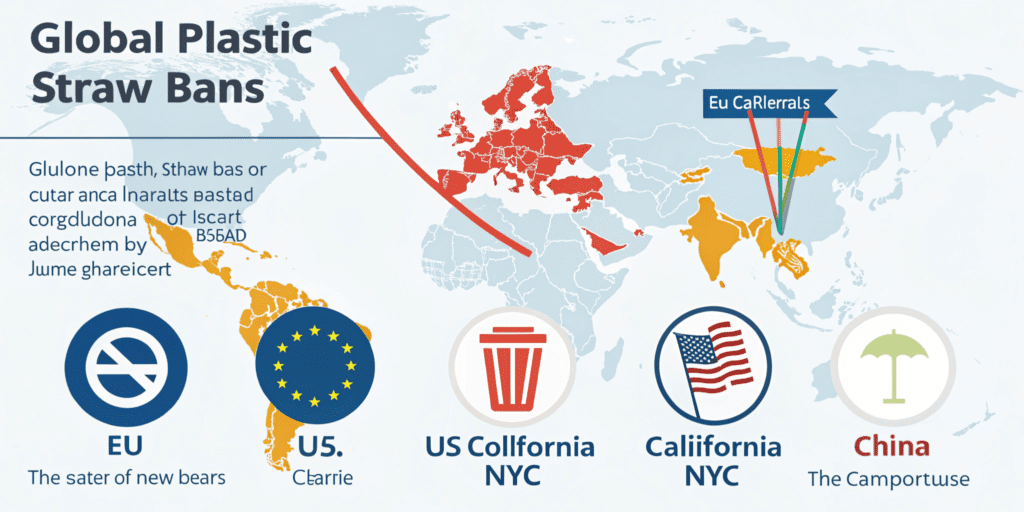
Les gouvernements du monde entier mettent en œuvre des réglementations plus strictes pour réduire la pollution plastique, obligeant le secteur de la restauration à s’adapter rapidement. La directive sur les plastiques à usage unique (SUPD) de l’Union européenne, entrée en vigueur en juillet 2021, a largement interdit de nombreux articles en plastique à usage unique, y compris les pailles. Cette directive a créé un formidable obstacle à l’accès au marché des produits non conformes dans les États membres de l’UE.
Aux États-Unis, une mosaïque de mandats au niveau des États et des villes fait écho à cette poussée mondiale. La ville de New York, par exemple, a mis en œuvre une politique de « pailles sur demande » en novembre 2021, interdisant complètement les agitateurs en plastique. La Californie a été la première à adopter une loi similaire « pailles sur demande » en janvier 2019 pour les restaurants à service complet, et Los Angeles a emboîté le pas en novembre 2021, imposant des amendes allant jusqu'à 1 000 $ par an en cas de non-conformité. Même de grands acteurs mondiaux comme la Chine ont interdit les pailles jetables non dégradables dans leurs secteurs de la restauration depuis janvier 2021. Ce paysage réglementaire complexe et évolutif nécessite des achats vigilants et une adaptation stratégique pour éviter les sanctions civiles et garantir l'accès au marché.
B. Demande croissante des consommateurs pour des options durables
Au-delà des bâtons réglementaires, les préférences des consommateurs constituent une puissante carotte économique. Les convives d’aujourd’hui, en particulier les millennials et la génération Z, intègrent de plus en plus la responsabilité environnementale dans leurs choix culinaires. Une enquête NielsenIQ de 2023 a révélé que 69 % des clients de la restauration rapide ont remarqué des changements en matière d'emballages écologiques, et 58 % d'entre eux déclarent que les emballages écologiques ont influencé leur choix de restaurant. En outre, 44 % des personnes interrogées se sont déclarées disposées à payer 5 à 10 % supplémentaires pour des repas servis dans des emballages compostables ou biodégradables.
This robust demand directly impacts brand loyalty and market share. Restaurants that visibly commit to sustainability not only attract but retain environmentally conscious customers, fostering positive sentiment and word-of-mouth promotion that transcends traditional marketing. Embracing eco-friendly straws is a tangible demonstration of this commitment, offering a competitive edge in a crowded market. Businesses looking to cater to this growing demographic should consider leveraging insights from acomprehensive B2B guide to eco-friendly cocktail strawsto meet specific customer needs.
Restaurants must adapt to evolving regulations and consumer demand for sustainable practices.
II. Navigating the Landscape of Eco-Friendly Straw Alternatives
The market for eco-friendly straws is diverse, offering a spectrum of materials with varied performance, environmental benefits, and cost implications. Understanding these distinctions is crucial for procurement and operations directors tasked with balancing functionality, sustainability, and budget. Innovations are continually addressing past issues such as sogginess or unwanted taste transfer, expanding the viable options for restaurant-goers.
A. Single-Use Biodegradable & Compostable Straws: Beyond Paper
The initial wave of plastic straw bans propelled paper straws into the mainstream. While affordable and customizable, early iterations often suffered from quick sogginess. Today, the landscape is richer:
- Pailles en papier : Still widely available and generally compliant with plastic bans. Advancements have led to improved waterproof coatings and natural adhesives, enhancing moisture resistance. However, some still pose challenges with durability and can contain PFAS, or “forever chemicals,” which are linked to health issues and can leach into beverages.
- Pailles PLA (acide polylactique) : Fabriquées à partir d'amidon végétal fermenté (par exemple du maïs), les pailles en PLA imitent la sensation du plastique traditionnel. Ils sont compostables mais nécessitent des installations de compostage industrielles pour se décomposer efficacement, ce qui pose un défi d'élimination si une telle infrastructure n'est pas disponible. L’UE a même interdit depuis juillet 2021 les pailles « biosourcées » ou « biopolymères » contenant du plastique, quelles que soient les certifications « compostables à domicile ».
- PHA (Polyhydroxyalcanoates) Pailles : Representing a next-generation biopolymer, PHA straws are produced by microorganisms from renewable resources like canola oil. They offer superior durability and resistance to hot and cold liquids, closely resembling conventional plastic. Crucially, PHA straws are marine and soil biodegradable, decomposing in diverse natural environments without leaving microplastics.
- Sugarcane/Hay/Agave Straws: Made from agricultural byproducts, these straws offer robust, eco-friendly alternatives. Sugarcane (bagasse) straws are strong and durable, even in hot beverages, and are entirely plastic-free. Hay straws are inexpensive and perform well without becoming soggy. Agave straws, derived from tequila production waste, are sturdy, long-lasting, and decompose in landfills within 90 days to three years.
B. Reusable Solutions: Durability and Operational Shifts
For dine-in establishments, reusable straws offer a powerful zero-waste solution, though they necessitate operational adjustments for washing and storage.
- Pailles en acier inoxydable : Highly durable, reusable, and easy to clean, making them ideal for long-term use. However, they transfer heat easily and are rigid, which may be a concern for some customers.
- Pailles en verre : Visually appealing and preserve the true taste of beverages without imparting any foreign flavors. While more fragile than metal, shatter-resistant borosilicate glass options are available.
- Pailles en bambou : Sustainable, naturally antibacterial, and reusable. They offer a unique, rustic aesthetic but require proper cleaning to prevent mold and may sometimes impart a subtle plant-like taste.
- Pailles en silicone : Flexible, durable, and child-friendly, making them a safe and versatile reusable option. They require proper washing protocols to ensure hygiene.
C. Innovative & Edible Straws for Niche Applications
For businesses seeking to offer a truly unique and zero-waste customer experience, edible and emerging bio-straws present intriguing possibilities.
- Pailles à pâtes : Biodegradable and edible, these straws typically last around an hour in cold drinks. They offer a novel, eco-friendly solution but are not suitable for hot beverages and may pose allergen concerns for gluten-sensitive individuals. A pack of 1,000 pasta straws can cost around $0.069 apiece.
- Seaweed Straws: An emerging innovation, these straws are compostable, marine-degradable, and durable, performing well in both hot and cold drinks without affecting taste. Companies like Loliware are at the forefront of this development.
- Pailles d'agave : As mentioned previously, made from tequila production waste, these provide a sturdy and quickly decomposing option.
- Pailles de riz : Another emerging edible option, offering durability and full biodegradability.
Diverse eco-friendly straw materials offer varied performance and environmental benefits for restaurants.
III. Balancing Cost and Compliance with Eco-Friendly Straws for Restaurants
La transition vers des pailles écologiques s’accompagne souvent d’une augmentation initiale des coûts d’approvisionnement par rapport au plastique conventionnel. Les pailles en papier, par exemple, peuvent être 2 à 3 fois plus chères que leurs homologues en plastique. Cependant, se concentrer uniquement sur les dépenses initiales néglige la valeur substantielle à long terme dérivée de l’amélioration de l’image de marque, de la fidélité accrue des clients et, surtout, de la nécessité d’éviter des amendes réglementaires croissantes. L'approvisionnement stratégique, les achats en gros et une compréhension claire du coût total de possession sont primordiaux.
A. Analyser les coûts d'approvisionnement et la valeur à long terme
Même si le coût unitaire des pailles durables peut être plus élevé, le marché propose continuellement des prix plus compétitifs. Les pailles de foin, par exemple, peuvent être achetées pour seulement 7 $ pour 100 pièces. Les agitateurs à cocktail biodégradables PHA, une solution avancée, sont disponibles entre 0,010 et 0,012 USD chacun dans de grandes caisses. Cela suggère que l’échelle et le choix des matériaux influencent considérablement les prix.
La valeur à long terme va au-delà du simple fait d’éviter les pénalités. Un restaurant qui s’engage visiblement en faveur du développement durable construit une marque plus forte, attirant et fidélisant les clients qui donnent la priorité aux entreprises soucieuses de l’environnement. Cela peut se traduire par une augmentation des revenus, compensant ainsi le coût initial plus élevé du produit. En outre, une moindre dépendance à l’égard des plastiques à usage unique peut entraîner une baisse des frais d’élimination des déchets et une amélioration de l’efficacité opérationnelle de la gestion des déchets.
B. Éviter les pénalités : respecter la réglementation sur l'interdiction de la paille en plastique
Le non-respect des interdictions sur la paille en plastique comporte des risques financiers tangibles. À Los Angeles, les violations peuvent entraîner des sanctions civiles pouvant aller jusqu'à 1 000 $ par an. La ville de New York a commencé à infliger des amendes aux établissements non conformes en novembre 2021. Alors que certaines régions, comme l'Indiana, ont offert un délai de grâce jusqu'au 1er juillet 2026 pour les premiers avertissements avant des sanctions civiles allant de 500 $ à 2 000 $, la tendance est claire : les réglementations se durcissent et leur application s'intensifie.
Beyond outright bans, certification requirements are becoming more stringent. San Francisco, for example, mandates that single-use straws must be certified by the Biodegradable Products Institute (BPI) or TÜV AUSTRIA for compostability. The EU’s directive, from July 2021, explicitly bans “biobased” or “biopolymer” straws if they contain any plastic, regardless of their “home compostable” claims. Staying abreast of these nuanced regulations is critical for procurement and supply chain executives. For a deeper dive into the importance of this shift, explorewhy eco-friendly drinking straws are the future of beverage service.
Strategic sourcing of eco-friendly straws offers long-term value and avoids costly regulatory penalties.

IV. Overcoming Operational Challenges and Ensuring Quality
The transition to eco-friendly straws isn’t just a procurement decision; it involves navigating new operational realities. Restaurants must ensure customer satisfaction, address performance concerns, and manage waste streams effectively. Staff and customer education are vital for a seamless transition.
A. Addressing Performance Concerns: The “Soggy Straw” Dilemma
The “soggy straw” phenomenon has become synonymous with early paper straw iterations, affecting beverage experience and often requiring multiple straws per drink. Research published in theJournal of Cleaner Productionin 2023 indicated that paper straws can even have higher environmental impacts than plastic in certain categories like acidification, due to their production processes.
However, innovation is rapidly mitigating this issue. Michael Winters, President and Chief Revenue Officer at WinCup, highlighted the transformative impact of advanced materials. In August 2022, First Watch, a prominent restaurant chain, transitioned to marine-biodegradable phade® straws made from PHA. Winters stated, “We know customers will be excited once they experience phade® as an alternative to traditional plastic straws that harm the environment and paper straws that create a poor customer experience.” Indeed, First Watch reported that customers “raved about them” and preferred them over other renewable alternatives.
B. Navigating PFAS and Other Health & Environmental Scrutiny
Beyond sogginess, concerns over chemical safety have emerged. Many paper and bamboo straws have been found to contain Per- and Polyfluoroalkyl Substances (PFAS), often referred to as “forever chemicals.” These chemicals, used for water resistance, have been linked to various health issues and can leach directly into beverages. This scrutiny highlights the importance of sourcing certified, PFAS-free alternatives.
While some biodegradable plastics offer a step forward, a 2023 study inEnvironmental Science & Technologynoted that even these can fragment into smaller pieces over time and potentially release chemicals if not properly composted. This underscores the need for robust composting infrastructure and adherence to standards like ASTM D6400, the US benchmark for compostable products, to ensure genuine environmental benefit.
Restaurants must overcome performance issues and chemical concerns to ensure quality and safety.
V. Mini Case Study: First Watch’s Seamless Transition to PHA Straws
En août 2022, First Watch, une chaîne de restaurants populaire, s'est lancée dans une importante initiative de développement durable, passant de millions de pailles en plastique traditionnelles aux pailles phade® biodégradables marines fabriquées par WinCup. Cette décision témoigne d’un équilibre réussi entre responsabilité environnementale, conformité réglementaire et engagement inébranlable envers l’expérience client.
The core of First Watch’s success lay in its choice of material: PHA. Unlike many paper or PLA alternatives, phade® straws offer the feel and performance of conventional plastic without the environmental burden. This material allowed First Watch to circumvent the “soggy straw” complaints often associated with paper, ensuring a consistent and pleasant drinking experience for their patrons. The positive feedback was immediate and resounding; customers “raved about them” and explicitly preferred them over other eco-friendly options. This real-world application demonstrates that with the right material choice, restaurants can achieve full compliance, reduce their environmental footprint, and elevate guest satisfaction simultaneously.
First Watch’s successful PHA straw adoption proves superior performance and customer satisfaction are achievable.
VI. The Future of Eco-Friendly Straws for Restaurants: Innovation and Market Growth
The trajectory for eco-friendly straws in the restaurant industry points towards substantial expansion and continuous innovation over the next 5-10 years. This growth is predominantly fueled by increasingly stringent global regulations and a deepening consumer preference for sustainable practices. Technological advancements are poised to revolutionize straw performance and overall sustainability, with even AI playing a role in optimizing production processes.
A. Market Projections: A Multi-Billion Dollar Opportunity in Sustainable Straws
The global eco-friendly straw market is currently valued at approximately $12.3 billion in 2025 and is projected to nearly double, reaching $25.1 billion by 2035, demonstrating a robust Compound Annual Growth Rate (CAGR) of 7.3% over this period. The foodservice segment, encompassing quick-service restaurants, cafes, bars, and hotels, held a commanding 64.05% of the paper straw market share in 2024, highlighting the industry’s critical role in this transition. By 2030, biodegradable straws are anticipated to capture a significant 60% market share, underscoring the shift away from less degradable alternatives.
B. Advancements in Materials and Manufacturing Technologies
The next decade will see a wave of material innovations. PHA is rapidly emerging as a leading next-generation biopolymer, offering superior heat resistance, durability, and broad biodegradability in various environments, including marine water, soil, and composting facilities, without leaving microplastics. Beyond PHA, research is focused on:
- Enhanced Coatings: New waterproof coatings and natural adhesives are improving paper straw moisture resistance and overall durability.
- AI for Bio-Polymers: Artificial intelligence is expected to play a growing role in researching novel bio-based polymers and optimizing their production efficiency, accelerating the discovery and scaling of sustainable materials.
- Edible Straw Evolution: Innovations in edible straws from diverse natural ingredients like rice, pasta, and seaweed will continue, offering attractive zero-waste solutions, particularly for high-end or niche hospitality settings.
C. Emerging Regulatory Frameworks and Industry Standards
Regulatory and industry bodies are actively shaping the future of sustainable disposables. In March 2021, the EU 360° Foodservice “Charter of Trust” was established, involving 15 supply chain companies to ensure consistent, high-quality standards for paper drinking straws, addressing concerns about compliance and product safety.
On a broader scale, the Global Reporting Initiative (GRI) Standards, updated in October 2021 and effective January 2023, provide comprehensive guidelines for organizations to report on their economic, environmental, and social impacts, promoting transparency in sustainability efforts. Furthermore, the European Sustainability Reporting Standards (ESRS, adopted July 2023) foster interoperability with global sustainability standards, aiming to prevent unnecessary double reporting for companies subject to the Corporate Sustainability Reporting Directive (CSRD). These evolving standards collectively promote transparency and informed procurement decisions, guiding businesses towards truly sustainable choices.
Le marché de la paille écologique est sur le point de connaître une croissance significative tirée par l’innovation et la réglementation.
VII. Tableau comparatif : Principaux types de pailles écologiques pour les décideurs des restaurants
| Fonctionnalité | Impact opérationnel B2B | Note de conformité | Potentiel de retour sur investissement |
|---|---|---|---|
| Pailles en papier | Coût initial inférieur, largement disponible. | Généralement conforme aux interdictions de plastique. | Modéré; renforcement de l'image de marque, mais remplacement fréquent des pailles détrempées, problème potentiel en matière de PFAS. |
| Pailles PLA | Sensation similaire à celle du plastique, mais nécessite une élimination spécifique. | Compostable dans les installations industrielles ; restreint dans certaines zones (par exemple, SF) s’il n’est pas certifié. | Modéré; perception améliorée, mais coûts potentiels pour la gestion spécialisée des déchets. |
| Pailles PHA | Haute performance (liquides durables, chauds/froids), ressemble au plastique. | Large biodégradabilité (sol/marin/compost) ; entièrement sans plastique. | Haut; expérience client haut de gamme, alignement fort sur la marque, à l’épreuve du temps contre des interdictions plus strictes. |
| Reusable Straws (Metal/Glass/Silicone) | Requires washing, storage, potential breakage/loss. | Fully compliant, eliminates single-use waste for dine-in. | High; one-time purchase, significant waste reduction, strong eco-brand. Long-term cost savings. |
| Edible Straws (Pasta/Seaweed) | Niche appeal, short lifespan in drinks, unique experience. | Biodegradable, zero-waste. May have allergen concerns (pasta). | Moderate to High; premium positioning, strong marketing potential for uniqueness, aligns with zero-waste goals. |
This table provides a quick reference for restaurant decision-makers on eco-friendly straw options.
Foire aux questions (FAQ)
What are the primary regulatory challenges for restaurants adopting eco-friendly straws?
How can restaurants balance the higher cost of eco-friendly straws with their budget?
What are the best alternatives to traditional paper straws to avoid the “soggy straw” problem?
Are there health concerns with certain eco-friendly straw materials, like PFAS?
How can restaurants educate their staff and customers about the switch to eco-friendly straws?
Conclusion: Investing in Sustainable Sips for a Resilient Future
The shift to eco-friendly straws is not merely a fleeting trend but a fundamental strategic imperative for restaurants navigating a landscape shaped by evolving regulations and increasingly discerning consumer expectations. While initial cost and operational adjustments are undeniable, making informed choices, particularly by leveraging innovations like advanced PHA straws or adopting robust reusable solutions, can yield substantial long-term benefits. These include significantly enhancing brand reputation, ensuring seamless compliance with tightening environmental laws, and unlocking sustained financial and environmental advantages. Proactive engagement in this transition is key to securing your restaurant’s place in a greener, more resilient future.
Empower your restaurant’s sustainability journey; explore advanced eco-friendly straw solutions today to elevate guest experience and secure future compliance. For a comprehensive overview of how these sustainable solutions fit into broader business strategies, consider reviewing ourGuide B2B des pailles écologiques.