Optimizing Your Boba Experience: A Comparative Guide to Sustainable Straw Alternatives
Le paysage mondial des boissons subit une profonde transformation, motivée par une demande urgente de durabilité. Pour les responsables des achats, les directeurs des opérations, les responsables du développement durable et les responsables de la chaîne d’approvisionnement du secteur en plein essor du thé boba, ce changement n’est pas simplement une considération environnementale mais aussi un impératif commercial essentiel. Le marché mondial de la paille écologique devrait à lui seul atteindre la somme incroyable de 25,1 milliards de dollars d’ici 2035, avec une croissance robuste de 7,3 %. Cette trajectoire souligne un changement important du marché, propulsé par les préférences des consommateurs et des pressions réglementaires strictes à l’échelle mondiale.
The stakes are high. In the United States, an estimated 500 million plastic straws are discarded daily, contributing to an environmental crisis that harms delicate ecosystems for centuries. Globally, legislative action is a clear signal of this urgency: the European Union effectively banned single-use plastics, including straws, from July 3, 2021, while Taiwan had already targeted similar bans by 2020. Ignoring these regulatory triggers and evolving consumer demands for sustainable practices risks not only environmental damage but also significant operational disruptions, commercial penalties, and severe brand reputation fallout. Businesses that fail to adapt face potential fines, negative press, and a loss of market share to more agile, eco-conscious competitors.
Adopter des alternatives durables à la paille de boba est crucial pour la viabilité commerciale à long terme et le leadership sur le marché.
Le besoin urgent d’alternatives à la paille Boba : faire face à un changement de marché de 25,1 milliards de dollars
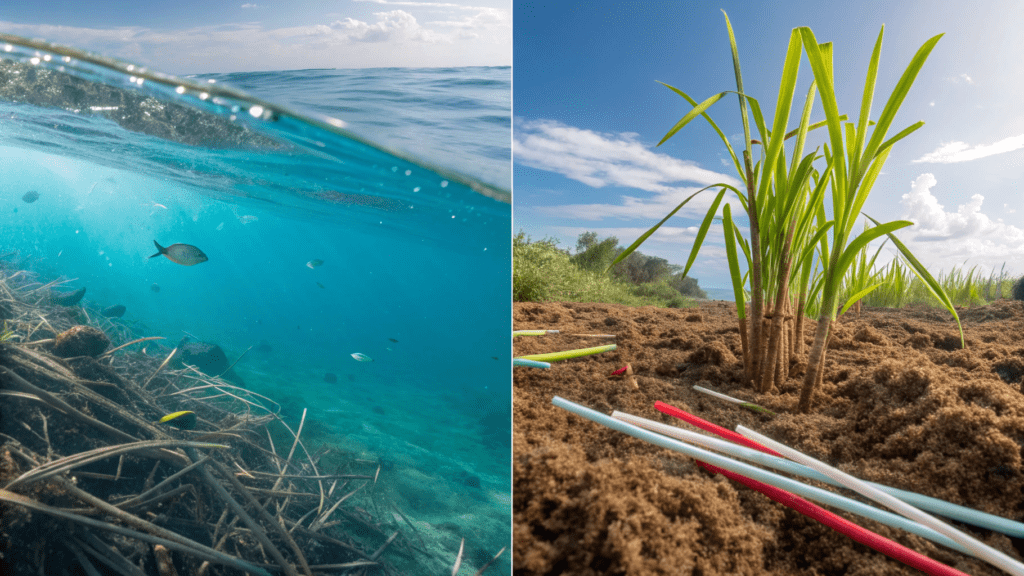
La large paille en plastique traditionnelle, autrefois un élément omniprésent dans l'expérience du thé boba, est devenue un symbole de pollution plastique à usage unique. Ces pailles, nécessaires à la consommation des perles de tapioca, échappent fréquemment aux flux de recyclage et persistent dans l'environnement pendant des centaines d'années, se décomposant en microplastiques nocifs. Ce bilan environnemental a un impact direct sur la vie marine, qui confond souvent les restes de plastique avec de la nourriture, entraînant ainsi de graves dommages écologiques.
Beyond the environmental mandate, the shift to sustainable alternatives presents tangible pain points and opportunities for businesses. Compliance risks are paramount; the EU’s Single-Use Plastics Directive and various state-level bans in the U.S., such as those in San Francisco and Seattle, mandate a transition. Non-compliance can result in substantial fines and customer backlash, jeopardizing market access, particularly in regions with strong environmental policies like many Asia-Pacific nations.
Procurement teams face immediate challenges. The cost of sustainable alternatives can be two to three times higher than traditional plastic straws. For operations directors, managing the performance trade-offs of new materials is critical. Soggy paper straws, the industrial composting requirements of PLA, and the cleaning logistics of reusable stainless steel options all impact operational efficiency and, crucially, the customer experience. A compromised drinking experience due to a flimsy straw can directly affect customer satisfaction and repeat business, eroding brand loyalty in a competitive market. Embracing a proactive, data-driven strategy to integrate green boba straws into your supply chain is no longer optional; it’s a strategic imperative to ensure long-term viability and market leadership.
Proactive adoption of sustainable boba straws is a strategic imperative for long-term viability and market leadership.
Paper Boba Straw Alternatives: Durability vs. Sustainability Trade-offs
Paper straws represent one of the most common disposable alternatives to plastic, aiming for improved biodegradability. Manufacturers like HSD Packaging have invested in advanced techniques, focusing on 3-ply or 4-ply constructions for improved sturdiness and boasting impressive annual capacities of 5 billion pieces. This scale of production, coupled with certifications like FSC, BRC, and ISO9001, reflects a mature effort to meet demand. They are often customizable with various colors and designs, allowing for branding.
Environmental Footprint & Compliance: Biodegradable but with Caveats for Paper Straws
Generally, paper straws are biodegradable and compostable, dissolving within weeks under appropriate conditions. This significantly reduces their contribution to landfills and plastic pollution. However, the environmental narrative of paper straws is not without complexities. Research has revealed that some paper straws contain “forever chemicals” (per- and polyfluoroalkyl substances, or PFAS), which are persistent in the environment and have been linked to various health issues. Their presence is often due to hydrophobic sizing agents used to achieve water resistance. While efforts focus on using food-safe, non-toxic, and BPA-free materials, this caveat highlights the need for careful sourcing. Furthermore, their production still requires energy and resources, and while often sourced from sustainably managed forests, large-scale demand can contribute to deforestation if not managed carefully. Government support and regulations generally favor paper as a compliant option in plastic bans, pushing their adoption.
Operational Challenges & Cost for Paper Boba Straws
Malgré les progrès, les pailles en papier continuent de présenter des défis opérationnels. Leur principal inconvénient est leur tendance à s’affaisser ou à se ramollir rapidement lorsqu’ils sont exposés à des liquides pendant de longues périodes, en particulier dans les boissons plus épaisses comme le thé boba. Cela a un impact direct sur l’expérience de consommation du boba, entraînant le mécontentement des clients. Les performances peuvent également varier considérablement selon les fabricants. Du point de vue du coût, les pailles en papier sont nettement plus chères que leurs prédécesseurs en plastique, coûtant généralement entre 7 et 19 cents par paille, contre 1 à 3 cents pour le plastique. Pour les entreprises utilisant des millions de pailles chaque année, cela représente une augmentation substantielle des dépenses opérationnelles. Certains utilisateurs signalent également que les pailles en papier peuvent altérer le goût des boissons en raison de résidus de papier ou de revêtements, ce qui a un impact supplémentaire sur la perception des clients.
Paper straws offer biodegradability but face challenges with durability, cost, and potential PFAS content.
PLA Boba Straw Alternatives: Bio-based Innovation & Disposal Complexities
Polylactic Acid (PLA) straws are derived from renewable plant sources such as corn starch or sugarcane. They offer a texture and durability akin to traditional plastic straws, making them a popular choice for businesses aiming for greener certifications. Market adoption is rising due to regulatory pressures and the increasing demand from eco-conscious consumers for sustainable yet functional alternatives.
Sustainable Composition & Composting Needs for Plant-Based Straws
PLA straws are certified biodegradable and compostable, meeting international standards such as European EN13432 and American ASTM D6400. Their production typically involves fermenting plant sugars into lactic acid, which is then polymerized into PLA, aiming for a lower carbon footprint than petroleum-based plastics. They are BPA-free, plastic-free, and non-toxic, ensuring safety for diverse beverages. However, a critical caveat for PLA straws is their disposal requirement: they typically need industrial composting facilities to break down effectively within 90-180 days. Without these specific high-temperature and microbial conditions, PLA straws may persist in landfills for centuries, similar to conventional plastics, undermining their intended environmental benefit.
Performance, Cost, and Recycling Challenges for PLA Straws
PLA straws generally offer superior durability compared to paper, resisting sogginess in cold and moderately warm drinks (up to 140°F/60°C). They provide a smooth texture and clear appearance, mimicking plastic without the associated environmental guilt, making them versatile for juices, shakes, and smoothies. From a cost perspective, PLA straws are generally more expensive than paper straws; a box of 2000 can cost around $229.66. This higher unit cost, combined with their specific disposal requirements, can influence procurement decisions. A significant recycling challenge is that PLA straws cannot be traditionally recycled with other plastics, as they require different processing and can contaminate recycling streams if mixed. They can also be brittle, potentially creating sharp edges if broken, which is an operational safety concern.
PLA straws offer plastic-like durability but require specific industrial composting for true environmental benefit.
Sugarcane Boba Straw Alternatives: Repurposed Waste & Natural Durability
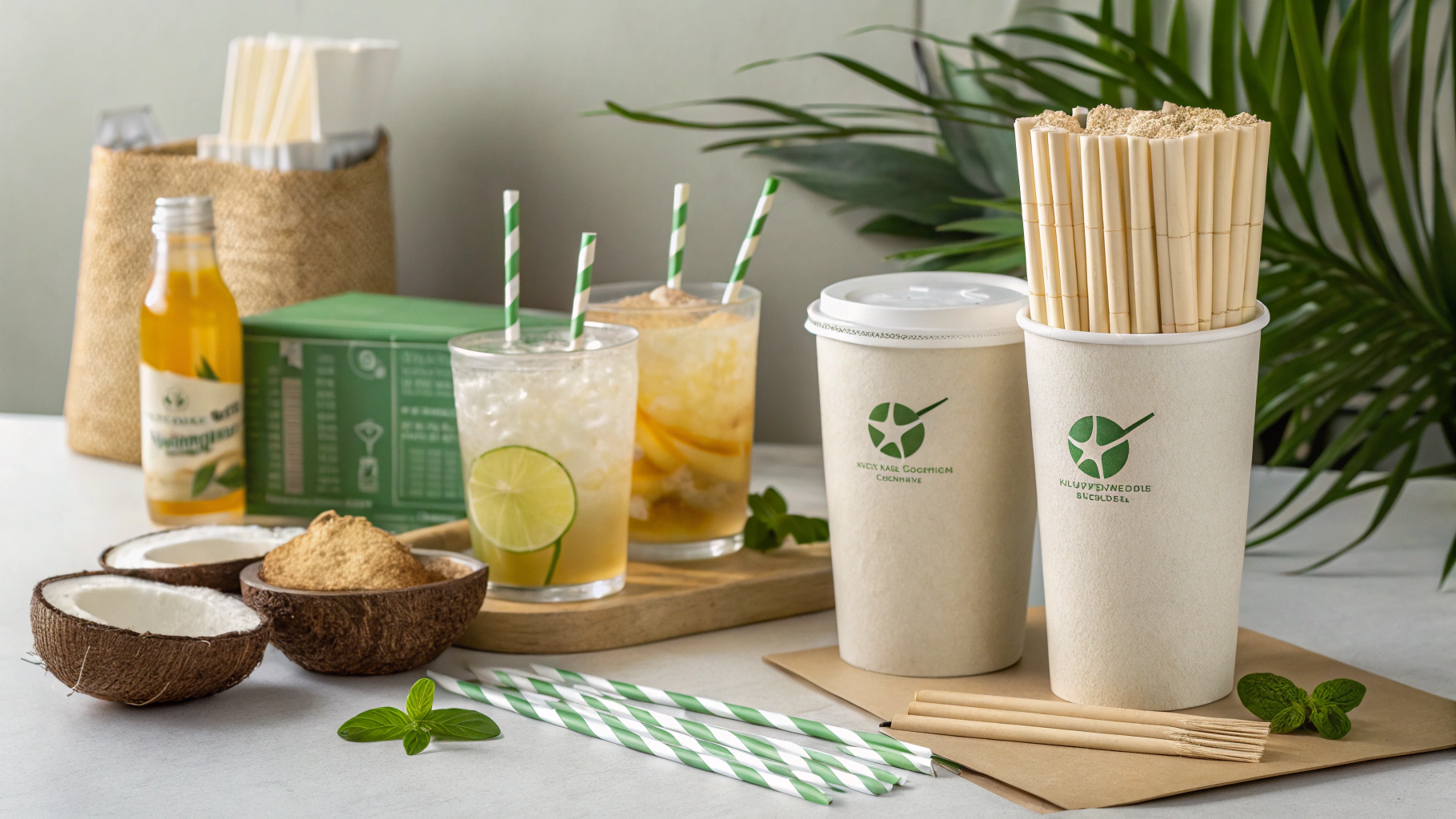
Sugarcane straws are an innovative solution made from bagasse, the fibrous byproduct remaining after sugarcane stalks are crushed to extract their juice. This repurposes agricultural waste, contributing directly to a circular economy model. They offer a sturdy, plastic-free alternative particularly well-suited for boba and other thick beverages, and are celebrated for not imparting any taste or odor to drinks, preserving the beverage’s intended flavor profile.
Circular Economy & Certifications in Sugarcane Straws
These straws are a prime example of sustainable innovation, certified compostable by leading organizations such as BPI, DIN CERTCO, and CMA; some even qualify for home composting. They decompose naturally within 90-180 days in compost facilities, significantly faster than plastic. Their production boasts a remarkably low carbon footprint, with some manufacturers achieving ISO 14067 certification for emissions as low as 9.69 grams CO2 eq per boba straw. Crucially, they are free from plastics, harmful dyes, and BPA, aligning with strict environmental and food safety standards. Their natural composition means they also decompose faster in general waste than conventional plastic straws, even if not commercially composted.
Performance, Cost-Effectiveness, and User Experience with Sugarcane Straws
Sugarcane straws stand out for their high durability and sturdiness, resisting sogginess far better than paper alternatives. This makes them ideal for prolonged use in boba drinks. They are also remarkably cost-competitive in bulk, with prices for large orders potentially dropping to as low as $0.01 per piece, making them an economically viable choice for high-volume operations. While suitable for cold and moderately warm drinks (up to 104°F/40°C), they might soften slightly in very hot beverages. Users report a smooth texture and a subtle, natural, light brown sugar aroma, which does not interfere with the beverage’s taste, enhancing the overall drinking experience. Their ability to puncture sealed boba cups without breaking is a significant operational advantage.
Sugarcane straws offer excellent durability, cost-effectiveness, and strong environmental credentials from repurposed waste.
Stainless Steel Boba Straw Alternatives: Reusable Durability & Long-Term ROI
Stainless steel boba straws offer a highly durable and reusable solution for drastically reducing single-use plastic waste. Made from food-grade 304 stainless steel, they ensure safety and exceptional longevity. This material choice aligns perfectly with the growing consumer preference for long-term sustainable choices and a zero-waste lifestyle. Furthermore, stainless steel straws offer a premium feel, making them an ideal choice for dine-in settings or as branded merchandise that subtly signals a business’s commitment to quality and sustainability.
Unmatched Longevity & Environmental Impact of Reusable Straws
The environmental benefit of stainless steel straws is rooted in their reusability, which significantly reduces plastic waste over time—lasting for years, even decades, with proper care. At the end of their extensive lifespan, they are fully recyclable, supporting a true circular economy approach. However, their lifecycle isn’t without environmental considerations. Life Cycle Assessments (LCAs) indicate that metallic straws can have significant emissions associated with their daily washing, contributing up to 85% of their annual impact. The initial production also involves the mining and processing of non-renewable resources, which can be energy-intensive. Despite this, their extended usability often outweighs these initial and recurring environmental costs.
Practical Considerations & Commercial Viability for Stainless Steel Boba Straws
From a practical standpoint, stainless steel straws require thorough cleaning with a specially designed brush, though they are typically dishwasher safe. This cleaning logistics can be a barrier for high-volume, fast-paced takeaway businesses. Additionally, stainless steel conducts temperature, meaning they can become uncomfortably hot with hot drinks, posing a safety concern. While offering a long-term economic advantage through reusability, their upfront cost is significantly higher than single-use alternatives, typically ranging from $0.40-$1.08 per straw wholesale. This higher initial investment makes them less practical for business models heavily reliant on disposable, high-volume straw distribution, but highly attractive for premium dine-in establishments or as part of a sustainable retail offering.
Stainless steel straws provide unmatched durability and long-term ROI, ideal for reusable models.
Comparative Analysis: Choosing the Right Boba Straw Alternative
Navigating the diverse landscape of boba straw alternatives requires a nuanced understanding of their B2B implications. The right choice can streamline operations, ensure compliance, and unlock significant ROI.
| Fonctionnalité | Papier | PLA | Canne à sucre | Acier inoxydable |
|---|---|---|---|---|
| Impact opérationnel B2B | High replacement frequency; customer dissatisfaction due to sogginess. Costs 2-3x plastic. | Requires industrial composting access; risk of recycling stream contamination. | Excellent durability; positive brand image; stable supply from waste. | High upfront cost; cleaning logistics; less suitable for high-volume takeaway. |
| Note de conformité | Generally compliant with plastic bans; check for PFAS-free certification. | Compliant if industrial composting is available; otherwise, not compliant with true biodegradable intent. | BPI, DIN CERTCO certified compostable; widely accepted in bans. | Promotes reusability; aligns with zero-waste goals; no single-use plastic ban issues. |
| Potentiel de retour sur investissement | Low; high ongoing cost, potential for customer complaints. | Moderate; higher unit cost than paper, but better user experience. | High; leverages waste product, strong durability, positive eco-branding. | High long-term ROI through reusability, but high initial investment. |
Selecting the optimal boba straw alternative requires balancing operational impact, compliance, and ROI potential.
Real-World Adoption: Mini Case Study on Boba Straw Alternatives
The transition to sustainable straws is not without its operational and financial hurdles, as exemplified by the experience of prominent businesses. Boba Guys, a well-known boba tea chain, provides a compelling real-world example. Having previously distributed approximately 2 million plastic straws annually at a minimal cost of 1-3 cents each, their pivot to paper boba straws led to “significant cost increases” and introduced new performance challenges.
This case study underscores the dual impact of switching to alternatives: while fulfilling environmental commitments, businesses must contend with both the financial implications of higher unit costs and the operational complexities of maintaining customer satisfaction with materials that may degrade over time or alter the user experience. The lesson learned is that strategic planning, thorough vendor vetting, and a clear understanding of material properties are essential to mitigate these impacts. Businesses must not only budget for increased procurement costs but also factor in potential customer service adjustments and marketing efforts to educate consumers about new straw experiences. This shift, while challenging, is fundamental for long-term sustainability and market relevance. Understanding how to strategize your green boba straw business strategy is key to success.
Real-world cases highlight the need for strategic planning to manage costs and customer experience during sustainable transitions.
The Future Outlook for Boba Straw Alternatives (5-10 Years): A $25.1 Billion Horizon
The trajectory of boba straw alternatives over the next 5-10 years points towards a dynamically expanding market, projected to reach an estimated $25.1 billion by 2035. This growth is underpinned by continuous innovation in material science and an intensifying focus on circular economy principles.
Innovation and Market Dynamics for Sustainable Boba Straws
The future will see biodegradable materials like Polyhydroxyalkanoates (PHA) and PHBH capture an estimated 60% market share by 2030, offering plastic-like performance with enhanced biodegradability. Reusable options will continue their strong ascent, with glass boba straws alone projected for a robust 14.1% CAGR from 2024-2030, reflecting their premium appeal and durability. A fascinating innovation front is the rise of edible straws, poised to reach $446.96 million by 2030, offering a truly zero-waste solution. These are made from materials such as rice, tapioca, or even repurposed coffee grounds, and some can be flavored to enhance the customer experience.
Further innovations include advanced water-resistant coatings for paper straws to address sogginess, and the development of hybrid materials that combine the best properties of different sustainable components for enhanced durability. New designs, such as multi-hole straws, are emerging to optimize the intake of both liquid and toppings, enhancing the boba drinking experience. The regulatory landscape, exemplified by the EU Single-Use Plastics Directive, will continue to be a primary driver, accelerating adoption and pushing for even more stringent compliance. Beyond mere compliance, adopting sustainable choices will increasingly differentiate brands, enhancing corporate image and meeting the evolving demands of environmentally conscious consumers, especially Gen Z.
Future trends indicate significant growth in biodegradable and reusable boba straw innovations driven by consumer demand and regulations.
Competitive Advantage & Business Case: Quantifying the Shift
For astute procurement managers and supply chain executives, transitioning to advanced boba straw alternatives isn’t just about environmental responsibility; it’s a robust business case offering quantifiable advantages.
- Cost Savings & Long-Term Value: While initial investments might appear higher, especially for reusable stainless steel or premium compostable options, the long-term ROI is compelling. Bulk procurement of cost-competitive options like sugarcane straws (as low as $0.01 per piece for large orders) or the elimination of recurring single-use costs with reusable strategies can lead to significant operational savings. Furthermore, avoiding regulatory fines and penalties for non-compliance represents direct financial risk mitigation.
- Risk Mitigation & Regulatory Resilience: The global regulatory tide against single-use plastics is irreversible. Early adoption and commitment to certified sustainable alternatives provide crucial regulatory resilience, safeguarding market access, particularly in heavily regulated regions. Non-compliance can lead to substantial fines, damaging legal battles, and extensive negative press, eroding shareholder value. By proactively managing your sustainable boba straw wholesale sourcing, you effectively future-proof your operations.
- Brand Value Uplift & Market Share Opportunity: Consumers, particularly millennials and Gen Z, increasingly base purchasing decisions on a brand’s sustainability credentials. A visible commitment to eco-friendly practices, such as offering superior sustainable straws, significantly enhances brand image, fostering loyalty and attracting a growing segment of environmentally conscious customers. This differentiation creates a powerful competitive advantage, allowing businesses to capture market share in the rapidly expanding eco-friendly beverage accessories market. The global bubble tea market itself is booming, projected to reach $5.4 billion by 2033, and aligning with its sustainability trends positions businesses for optimal growth. This is an opportunity to not just comply, but to lead.
Adopting sustainable boba straws offers significant competitive advantages, including cost savings, risk mitigation, and brand value uplift.
Conclusion: Strategic Selection for a Sustainable Boba Future
Choosing the right boba straw alternative demands a balanced consideration of environmental impact, operational feasibility, and consumer experience. From sugarcane’s sustainable, durable profile, offering impressive cost-efficiency in bulk, to stainless steel’s long-term reusability for premium settings, each option presents unique advantages for procurement managers and sustainability officers. Embrace data-driven decisions to align with evolving regulations and meet consumer demands for eco-conscious consumption, thereby solidifying your market position and enhancing brand equity.
Strategic selection of boba straw alternatives is key to enhancing brand value and reducing environmental footprint.
Transform your supply chain: Evaluate and integrate the optimal boba straw alternatives to enhance brand value and reduce environmental footprint. Request a consultation today to explore custom sustainable straw solutions for your business.
Foire aux questions (FAQ)
Q: How do boba tea shops manage the higher cost of sustainable straws? ▼
A: Boba tea shops can manage higher costs by purchasing in bulk, exploring long-term contracts with suppliers, or slightly adjusting beverage prices. Some also offer reusable straws for purchase, shifting the cost to the consumer while promoting sustainability.
Q: What are the best boba straw alternatives for hot beverages? ▼
A: For hot boba beverages, stainless steel straws are durable but can conduct heat, making them uncomfortable. Sugarcane straws can soften slightly, while PLA straws are generally not recommended for temperatures above 140°F (60°C). Paper straws are prone to sogginess. Reusable options like glass or bamboo (if wide enough) are often better for hot drinks.
Q: How can boba shops educate customers about new straw materials? ▼
A: Shops can use in-store signage, social media campaigns, and staff training to explain the benefits and proper disposal of new straw materials. Highlighting the environmental impact and the brand’s commitment to sustainability can foster customer appreciation and understanding.
Q: Are there any regulations specific to boba straws in Asia-Pacific markets? ▼
A: Yes, many Asia-Pacific countries are implementing single-use plastic bans. For example, Taiwan targeted bans by 2020, and other nations like South Korea and Thailand have similar initiatives. Businesses must consult local regulations for specific compliance requirements regarding boba straws. For full details, refer to our comprehensive guide to global plastic regulations.
Q: What is the typical MOQ for custom-branded sustainable boba straws? ▼
A: Minimum Order Quantities (MOQs) for custom-branded sustainable boba straws vary significantly by material and supplier. For paper and sugarcane straws, MOQs can range from 50,000 to 100,000 pieces. For stainless steel, MOQs might be lower, around 1,000 to 5,000 pieces, due to higher unit cost. It’s best to consult directly with suppliers for specific requirements and branding options.