Pailles en canne à sucre ou bambou : un guide d'approvisionnement définitif
The global business landscape is undergoing a profound transformation, driven by an urgent imperative for environmental stewardship. For procurement managers, operations directors, sustainability officers, and supply chain executives in the **hospitality & foodservice industries**, the choice of seemingly minor items, such as drinking straws, now carries significant strategic weight. Non-compliance with evolving sustainability mandates and a failure to meet shifting consumer expectations can lead to substantial operational and commercial repercussions, including regulatory fines, diminished brand value, and erosion of market share.
The Imperative for Sustainable Straws: Navigating Global Regulations & Market Shifts
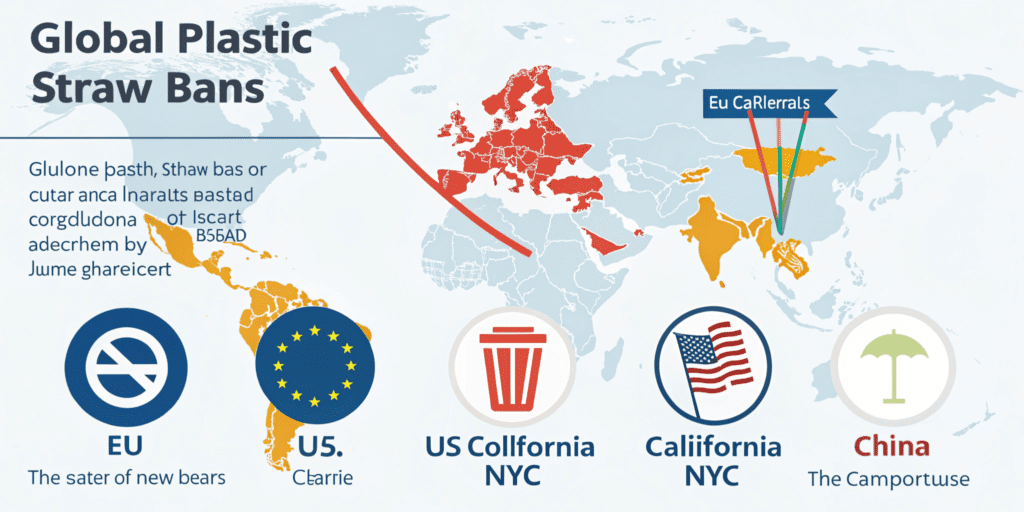
L’ère du plastique à usage unique sans restriction touche à sa fin, propulsée par une poussée législative mondiale. La **Directive européenne sur les produits en plastique 2019** a interdit les pailles en plastique à usage unique et une foule d'autres articles, à compter du 3 juillet 2021, obligeant les entreprises opérant au sein de l'Union européenne à pivoter rapidement. Le Royaume-Uni a emboîté le pas en mettant en œuvre sa propre interdiction des plastiques à usage unique à partir d’octobre 2023. De l’autre côté de l’Atlantique, le paysage réglementaire, bien que fragmenté, a tout autant d’impact ; en mars 2025, 19 États et territoires américains interdisent à l'échelle de leur juridiction un ou plusieurs plastiques à usage unique, le ministère de l'Intérieur des États-Unis prévoyant d'éliminer progressivement les produits en plastique à usage unique des parcs nationaux et des terres publiques d'ici 2032. Pour toute entreprise ayant une présence mondiale ou des opérations régionales, la conformité réglementaire est devenue un facteur non négociable dans la stratégie d'approvisionnement, ayant un impact direct sur l'accès au marché et la continuité opérationnelle.
Cette pression réglementaire est amplifiée par une dynamique de marché impérieuse. Le marché mondial des pailles écologiques devrait atteindre près de 25,1 milliards de dollars d’ici 2035, avec une croissance robuste de 7,3 % par rapport aux 12,3 milliards de dollars estimés en 2025. Plus précisément, le marché des pailles biodégradables était évalué à 40,367 milliards de dollars en 2024 et devrait monter en flèche pour atteindre 204,167 milliards de dollars d’ici 2035. 2031, démontrant un TCAC impressionnant de 22,46 %. Cette croissance explosive est une réponse directe à la confiance des consommateurs ; environ 70 % des consommateurs préfèrent désormais les entreprises qui utilisent activement des options respectueuses de l'environnement. Ignorer cette double pression – l’application de la réglementation et la demande croissante des consommateurs – n’est plus une option viable pour les organisations avant-gardistes. Cela expose les entreprises à des risques de non-conformité, complique les achats et a un impact négatif sur la perception des clients, érodant ainsi leur avantage concurrentiel.Les entreprises avant-gardistes de l’hôtellerie et de la restauration doivent adopter des pailles durables pour garantir la conformité et répondre à la demande des consommateurs.
Analyse approfondie : Pailles à boire en canne à sucre – L'avantage des déchets agricoles
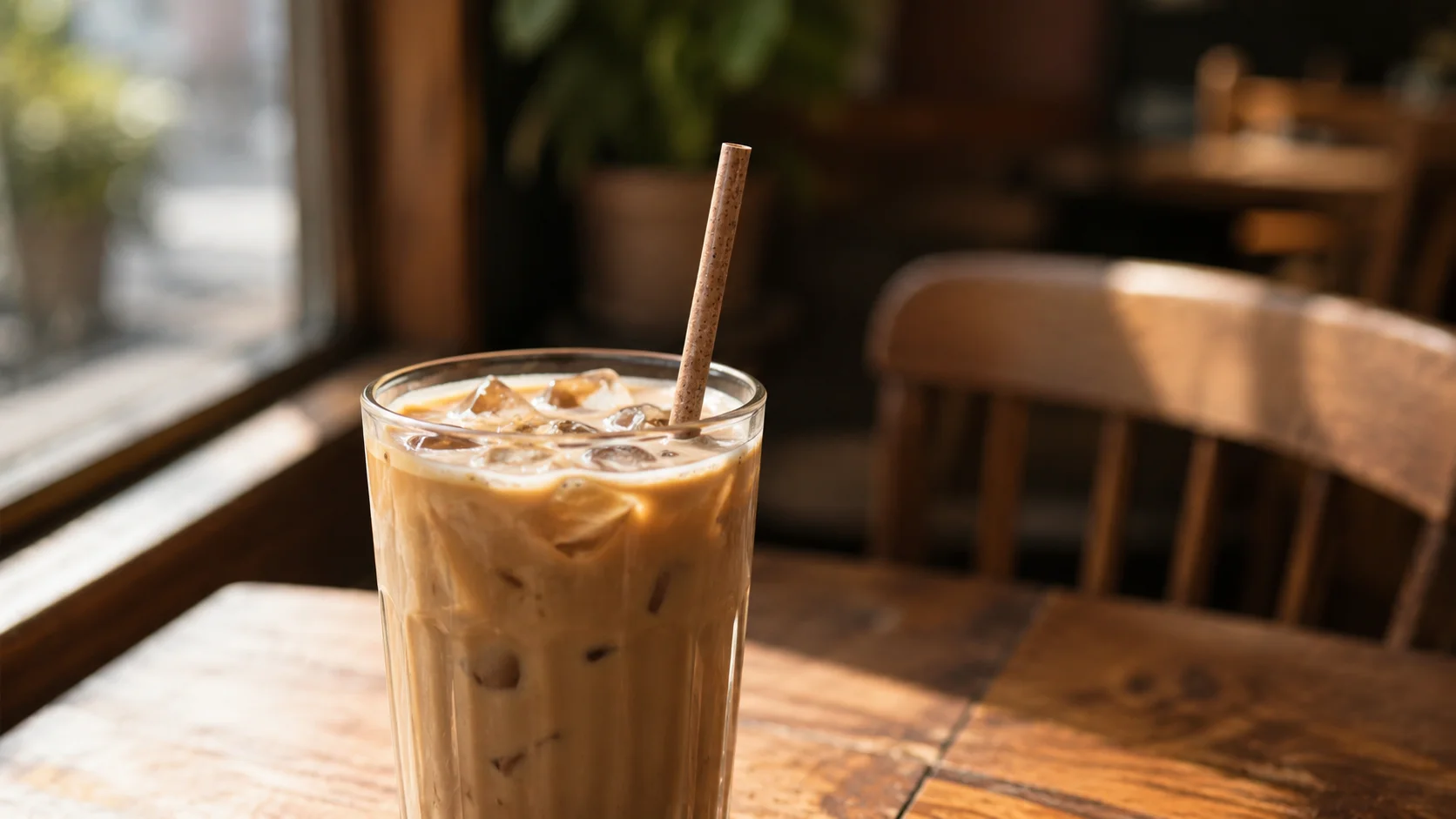
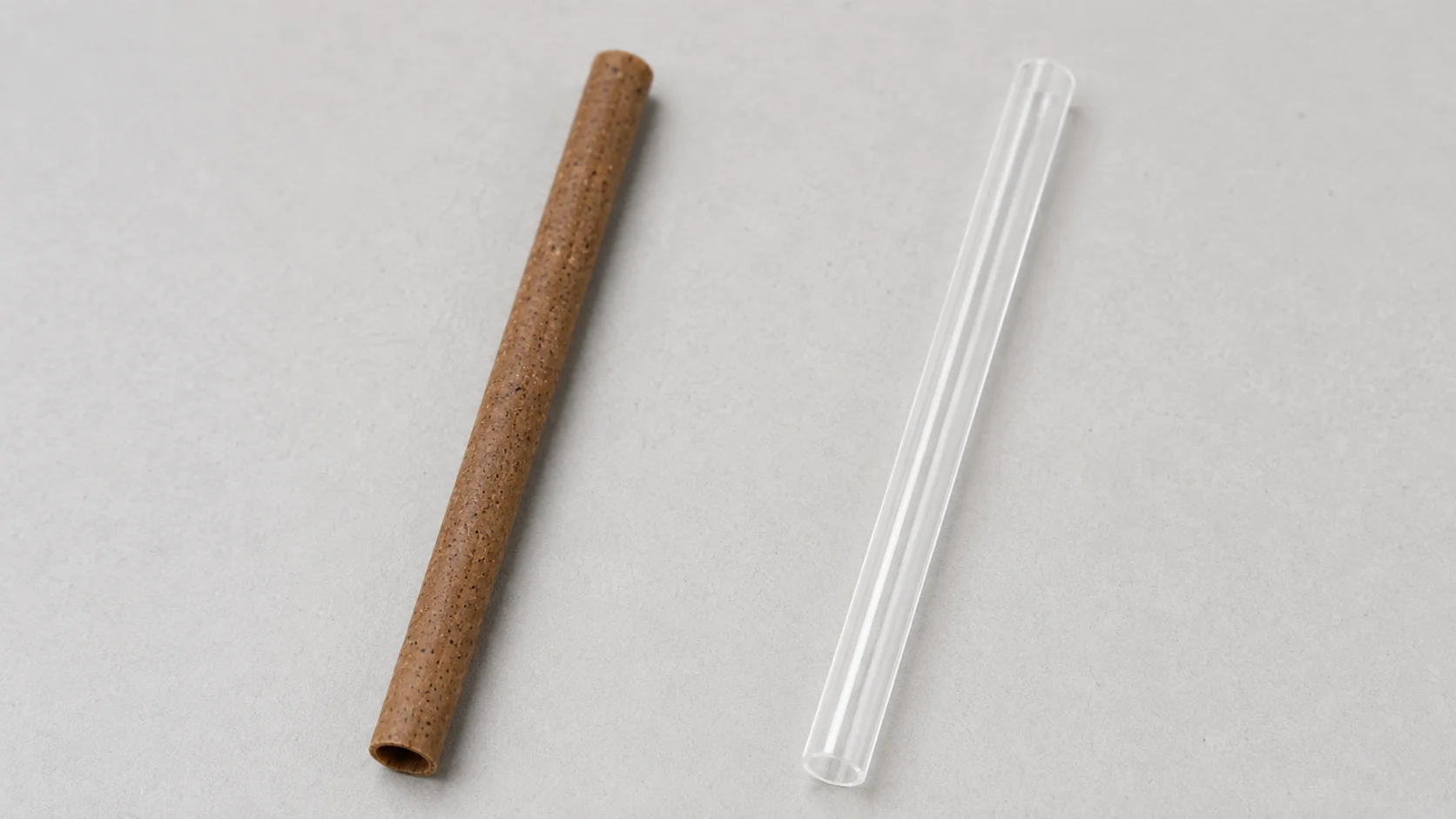
Les pailles en canne à sucre représentent un pas en avant significatif dans la science des matériaux durables. Contrairement aux plastiques traditionnels, ces pailles sont fabriquées à partir de bagasse, le sous-produit fibreux restant après l'extraction du jus de canne à sucre. Cette approche innovante réutilise les déchets agricoles, transformant un défi potentiel d'élimination en une ressource précieuse et renouvelable.
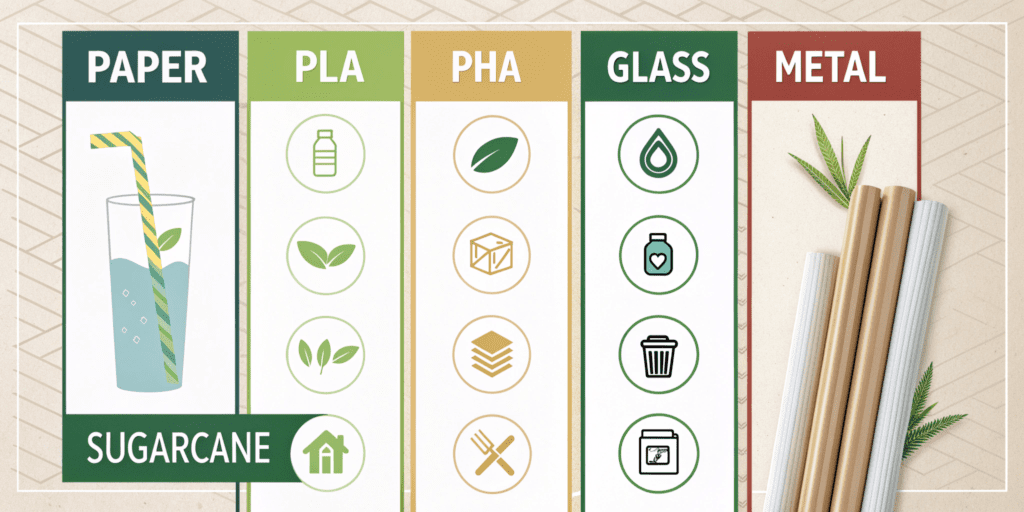
Les pailles de canne à sucre sont 100 % végétales, ce qui les rend entièrement biodégradables et compostables. Les produits phares se décomposent généralement en 90 à 180 jours dans les installations de compostage commerciales, certaines variantes étant également certifiées pour le compostage domestique, offrant ainsi un cycle de fin de vie encore plus rationalisé. En termes de performances, ils se distinguent par leur durabilité et leur flexibilité, résistant à la détrempe même lorsqu'ils sont immergés dans des liquides chauds jusqu'à 220°F (104°C). Cette résilience garantit une expérience utilisateur cohérente et de haute qualité, un facteur essentiel pour les **opérations de restauration et d'hôtellerie** qui visent à éviter les plaintes de « paille détrempée » associées aux anciennes alternatives papier. Surtout, les pailles de canne à sucre réputées sont naturellement sans goût, non toxiques et explicitement exemptes de produits chimiques nocifs comme le BPA et les PFAS (substances per- et polyfluoroalkyles), protégeant à la fois la santé des consommateurs et l'intégrité de la marque.
Pour les professionnels des achats, les certifications sont primordiales pour valider les allégations de durabilité. Les principales pailles de canne à sucre détiennent une série de certifications qui attestent de leurs qualités environnementales et de sécurité. Il s'agit notamment de BPI Industrial, TUV OK Compost Home et de l'approbation de la FDA américaine. De plus, beaucoup sont certifiés sans fluor, sans plastique (c'est-à-dire sans PP, PE, PS, PVC, PET) et sans PFAS, offrant une solide assurance contre les « produits chimiques éternels ». Le respect des normes mondiales de compostabilité telles que AS5810 (usage domestique) et AS4736 (commercial) est un indicateur clé d'un véritable impact environnemental. Comprendre ces certifications est essentiel pour faire des choix d'approvisionnement véritablement durables. Pour découvrir plus de détails sur la manière dont ces solutions innovantes façonnent l’avenir de la restauration durable, lisez la suite surles pailles de canne à sucre et l'avenir de la restauration durable.
Impact dans le monde réel : une étude de cas sur la paille de canne à sucre
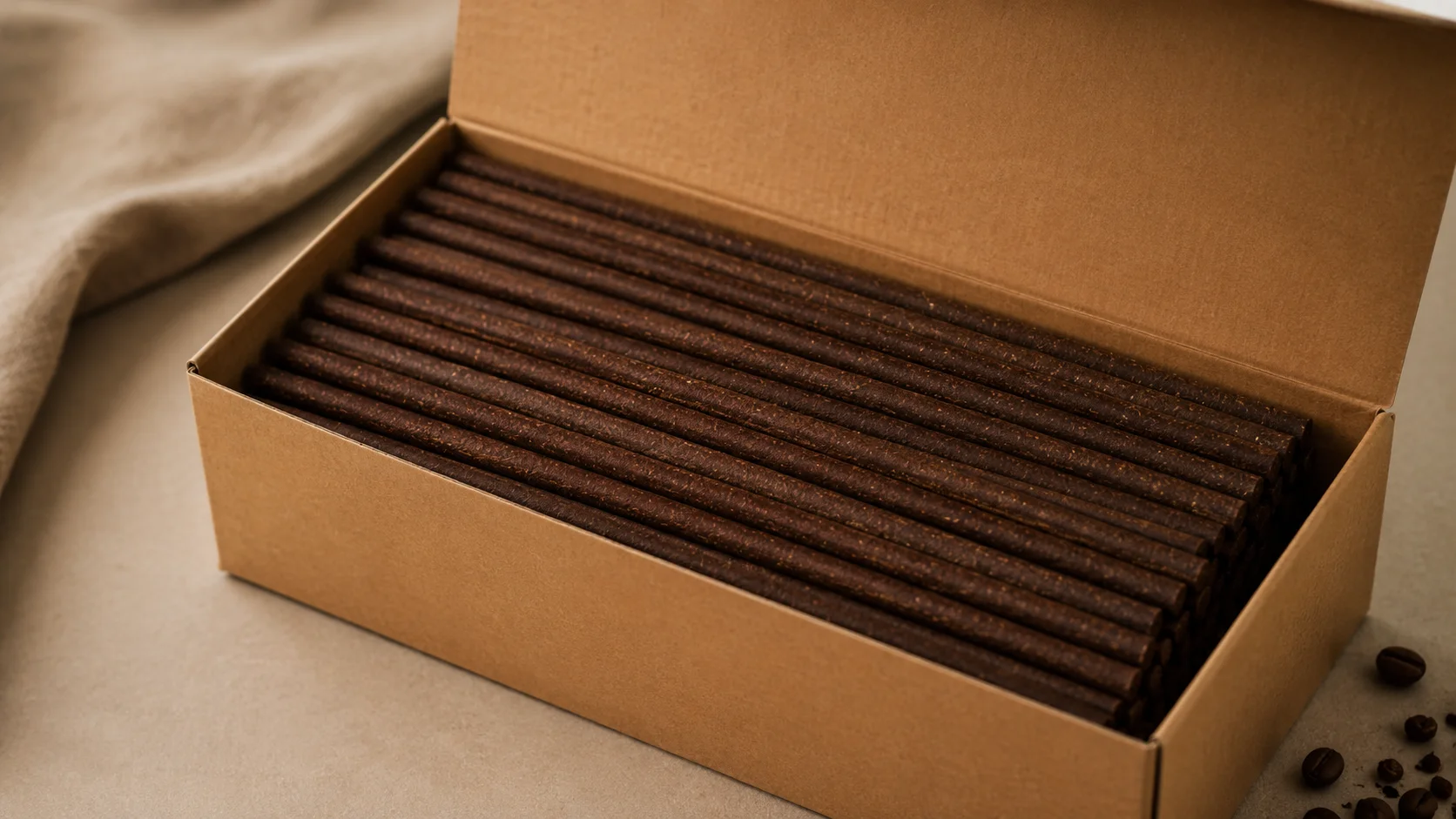
La transition vers des alternatives durables s’accompagne souvent de défis perçus, mais les applications concrètes démontrent des avantages significatifs. Strwd, un important fournisseur de paille durable, offre un exemple convaincant. Au cours de sa première année, Strwd a remplacé avec succès plus de 500 000 pailles en papier par des alternatives à la canne à sucre sur 60 sites. Cette initiative a non seulement conduit à une réduction substantielle des déchets plastiques, mais a également prouvé la viabilité opérationnelle et les performances supérieures des pailles de canne à sucre dans un environnement commercial à volume élevé. De telles transitions soulignent la possibilité pour les entreprises d’avoir un impact environnemental significatif sans compromettre l’efficacité opérationnelle ou la satisfaction des clients.Les pailles de canne à sucre offrent une solution durable, compostable et sans PFAS, idéale pour l'hôtellerie et la restauration à gros volumes.
Plongée profonde : Pailles en bambou – Le choix réutilisable et naturel
Les pailles de bambou, fabriquées à partir de tiges de bambou entières, représentent une autre alternative durable convaincante. Le bambou est considéré comme une ressource rapidement renouvelable, nécessitant un minimum d'eau et aucun pesticide pour sa culture, ce qui en fait un matériau intrinsèquement respectueux de l'environnement. L’un des principaux avantages des pailles de bambou réside dans leur durabilité et leur conception réutilisable ; Avec des soins appropriés, ces pailles peuvent durer des années, offrant une véritable solution à long terme aux déchets à usage unique. Au-delà de leurs avantages fonctionnels, les pailles de bambou offrent une esthétique unique, rustique et naturelle, séduisant fortement les marques soucieuses de l'environnement et les consommateurs à la recherche d'une touche biologique.
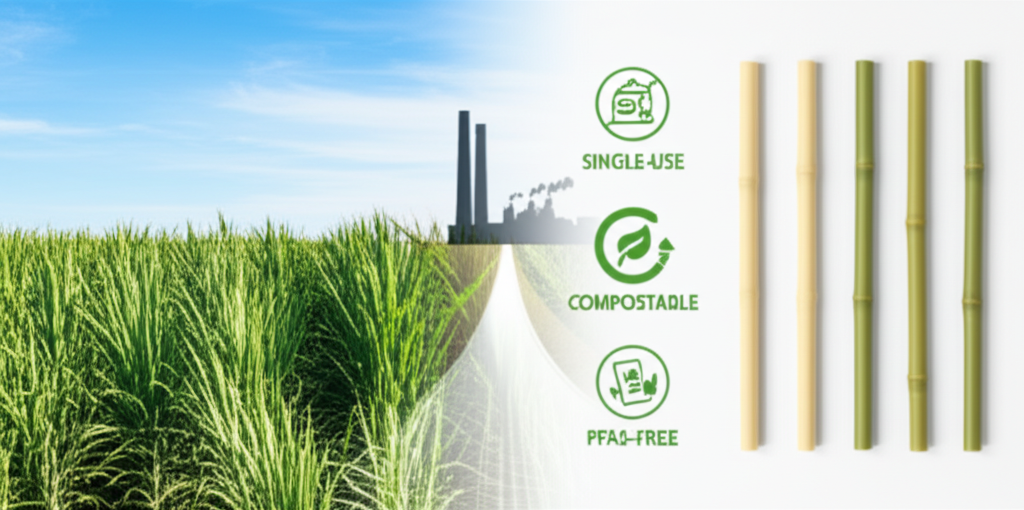
Cependant, l’achat de pailles de bambou nécessite un examen attentif de leurs défis, notamment en matière d’hygiène et de contamination potentielle par les PFAS. Une étude belge préoccupante a révélé la présence de PFAS dans 80 % des marques de paille de bambou testées, soulevant d’importants signaux d’alarme concernant ces « produits chimiques éternels ». Cette découverte complique le discours selon lequel le bambou est une option universellement sûre et verte, exigeant un contrôle rigoureux des fournisseurs.
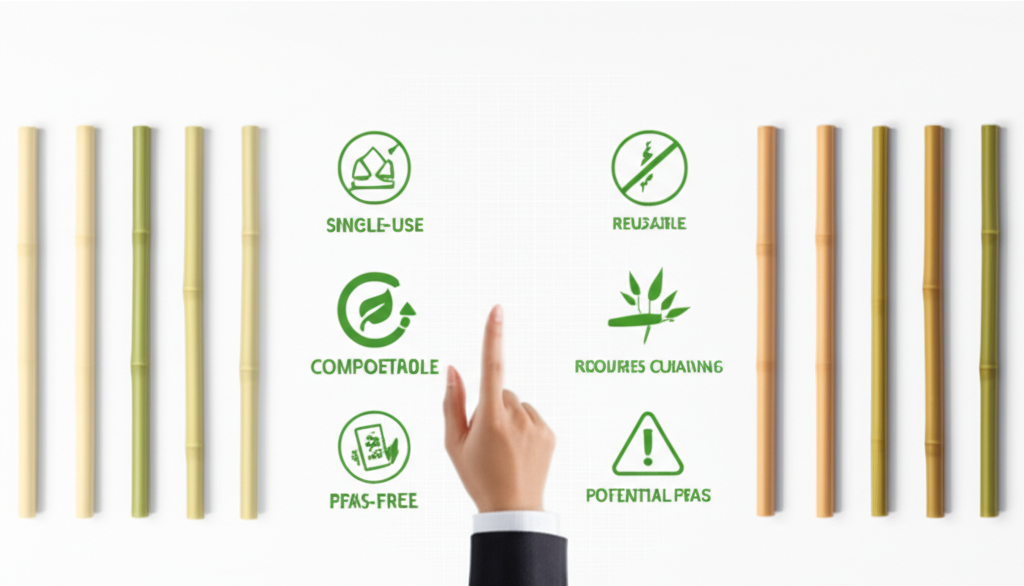
De plus, la nature poreuse du bambou nécessite un nettoyage assidu avec une brosse dédiée et un séchage minutieux pour éviter la croissance de moisissures et de bactéries, une considération opérationnelle essentielle pour les entreprises. Dans les environnements commerciaux, où des protocoles de nettoyage rigoureux sont essentiels, leur durée de vie pratique peut être plus courte que prévu, allant souvent de 2 à 3 mois. Cette durée de vie commerciale plus courte peut entraîner un coût annuel plus élevé, une analyse citant un coût annuel de 7,97 € par paille, ce qui les rend potentiellement moins rentables que certaines alternatives à usage unique dans les environnements à fort taux de rotation. Certains utilisateurs signalent également un transfert de goût « boisé » doux et naturel aux boissons, ce qui, bien que subtil, peut avoir un impact sur l'expérience client pour les boissons délicates.Les pailles de bambou offrent une réutilisation et une esthétique naturelle, mais nécessitent une hygiène et un contrôle minutieux pour détecter toute contamination par les PFAS.
Informations sur les achats : canne à sucre et bambou – une comparaison stratégique
Choisir entre les pailles de canne à sucre et de bambou nécessite une approche nuancée, basée sur des données, adaptée aux besoins opérationnels spécifiques et aux objectifs de développement durable d'une entreprise. Chaque matériau présente des avantages et des inconvénients distincts, et le choix optimal dépend souvent de facteurs tels que l'utilisation prévue, les capacités d'élimination et l'image de marque souhaitée.
Feature-by-Feature: B2B Operational Impact & ROI Potential
| Fonctionnalité | Impact opérationnel B2B | Note de conformité | Potentiel de retour sur investissement |
|---|---|---|---|
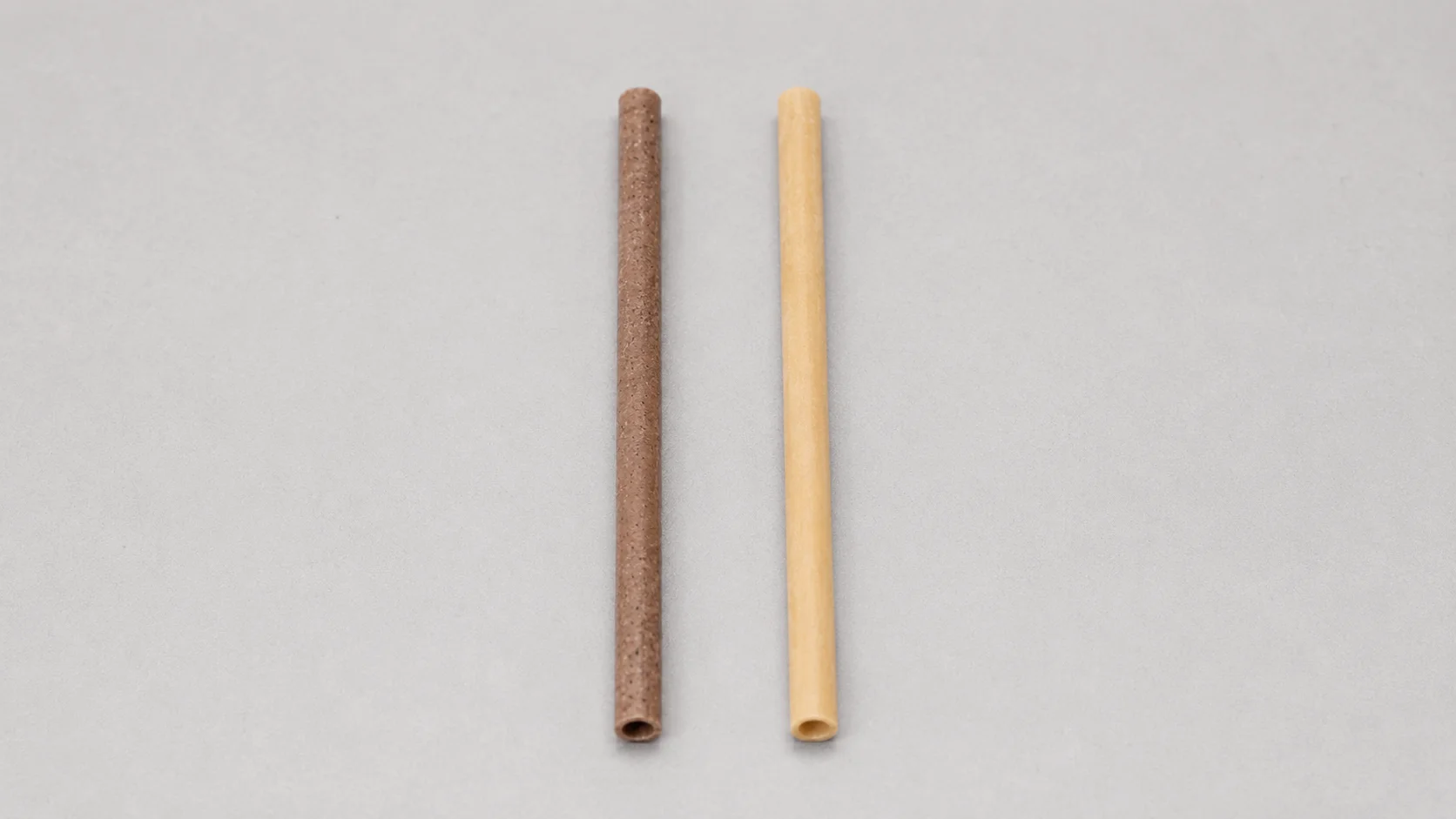
| Matériel | Fibre de canne à sucre/bagasse (déchets agricoles valorisés) vs tiges de bambou entières (ressource rapidement renouvelable). La production de canne à sucre valorise les déchets agricoles, favorisant ainsi les modèles d’économie circulaire. Le bambou offre un attrait naturel, souvent artisanal. | Les deux soutiennent le respect de l’interdiction du plastique (par exemple, SUPD de l’UE, interdiction au Royaume-Uni, restrictions au niveau des États américains). Garantir des certifications tierces (par exemple, BPI pour la canne à sucre, FSC pour l'approvisionnement en bambou). | Frais d’élimination des déchets plastiques réduits ; image de marque améliorée en tant que leader soucieux de l’environnement. |
| Réutilisabilité | Canne à sucre : principalement à usage unique, éliminant le nettoyage et le stockage à forte intensité de main-d'œuvre pour les opérations à volume élevé. Bambou : Conçu pour être réutilisé, nécessitant des protocoles de nettoyage robustes et une formation dédiée du personnel à l’hygiène. | Canne à sucre : Simplifie le respect de la réglementation sur l'usage unique tout en garantissant la compostabilité. Bambou : Nécessite le respect de normes strictes d’hygiène et d’assainissement pour sa réutilisation. | Canne à sucre : coûts opérationnels directs réduits (pas de main d'œuvre de nettoyage, pas de réapprovisionnement en pailles propres individuelles). Bambou : Coût d'utilisation réduit à très long terme *si* méticuleusement géré et réutilisé des centaines de fois. |
| Durabilité | Canne à sucre : résiste au détrempage et maintient son intégrité à des températures allant jusqu'à 220 °F/104 °C, fonctionnant de manière constante comme le plastique sans nuire à l'environnement. Bambou : Robuste, mais peut se fissurer/éclater en cas d'utilisation commerciale fréquente et est moins consistant que les produits manufacturés. | Canne à sucre : des performances constantes minimisent les plaintes des clients et le gaspillage dû aux pailles défectueuses, favorisant ainsi le respect des normes de qualité. Bambou : Nécessite un contrôle de qualité pour éviter les problèmes qui pourraient entraîner l'insatisfaction ou le gaspillage des consommateurs. | Canne à sucre : satisfaction client accrue grâce à des performances constantes et fiables ; moins de réserves ; réduction des déchets provenant des pailles jetées prématurément. Bambou : La longévité nécessite des soins méticuleux, compensant potentiellement certains avantages en matière de durabilité dans les environnements commerciaux très fréquentés. |
| Goût/Odeur | Canne à sucre : Goût neutre, garantissant aucune altération de la saveur de la boisson. Indispensable pour les boissons haut de gamme ou les palais sensibles des clients. Bambou : Goût naturel doux, peut affecter subtilement les saveurs délicates, une préoccupation potentielle pour les offres de boissons gastronomiques. | Les deux peuvent s’aligner sur les normes de sécurité alimentaire s’ils sont correctement fabriqués et nettoyés (pour le bambou). | Canne à sucre : Satisfaction client et réputation de marque plus élevées grâce à une neutralité gustative supérieure. Minimise les plaintes ou les réserves basées sur l'impact du goût. |
| Élimination | Sugarcane: Commercial & home compostable (2-4 months); transforms into nutrient-rich soil. Offers a clear, eco-friendly end-of-life solution reducing landfill burden. Bamboo: Biodegradable, but may require industrial composting for efficient breakdown; slower decomposition than sugarcane. | Canne à sucre : répond aux certifications strictes de compostabilité (AS5810, AS4736, TUV OK Compost). Bambou : La biodégradabilité varie ; nécessite un examen attentif des infrastructures de compostage locales pour garantir une élimination appropriée. | Canne à sucre : Cycle de fin de vie plus simple et plus rapide ; réduit le fardeau de la mise en décharge et les frais d'élimination des déchets associés ; améliore les références en matière d’économie circulaire. Bambou : s’il n’est pas correctement composté, il peut néanmoins contribuer aux problèmes de mise en décharge. |
| Coût (unité/initial) | Canne à sucre : Plus abordable en vrac par unité, idéale pour les environnements à grand volume et à usage unique. Une paille PLA à base de plantes (catégorie similaire) coûte ~ 0,24 $ contre ~ 0,052 $ pour le plastique. Bambou : Coût initial plus élevé en raison d’une production artisanale, mais réutilisable dans le temps. | La rentabilité doit être alignée sur les objectifs de budget et de réduction des déchets. | Canne à sucre : convient aux environnements à volume élevé et à rotation rapide ; un investissement initial inférieur pour une adoption à grande échelle. Bambou : mise de fonds initiale plus élevée ; des économies à long terme pour une réutilisation cohérente et disciplinée. |
| Risque de SPFA | Canne à sucre : les grandes marques prétendent être sans PFAS et sont certifiées sans fluor. Crucial pour atténuer les risques réglementaires et de réputation. Bambou : une étude belge a trouvé des PFAS dans 80 % des marques testées, soulevant de vives inquiétudes concernant les « produits chimiques éternels ». | Canne à sucre : Conformité aux réglementations émergentes sur les PFAS et aux attentes des consommateurs en matière de sécurité. Bambou : nécessite un contrôle rigoureux pour garantir une certification sans PFAS, sous peine de risquer une conformité importante et des dommages à la réputation. | Canne à sucre : atténue le risque réglementaire/réputation lié à la contamination par les PFAS, améliorant ainsi la confiance des consommateurs et l'accès au marché. Bambou : le potentiel d'exposition aux PFAS pourrait entraîner des rappels de produits, des amendes et une grave érosion de la marque. |
Pour un guide plus complet sur les achats pour l'hôtellerie durable, y compris les options en bambou et en canne à sucre, reportez-vous à notreguide d'approvisionnement en matière d'hôtellerie durable à base de canne à sucre de bambou.L'approvisionnement stratégique en pailles durables nécessite d'évaluer le matériau, la réutilisabilité, la durabilité, le goût, l'élimination, le coût et le risque PFAS.
Surmonter les obstacles à l’adoption en matière d’approvisionnement durable en paille
Malgré des facteurs environnementaux et éthiques évidents, plusieurs obstacles peuvent entraver l’adoption généralisée de pailles durables dans les environnements B2B. Un obstacle majeur réside dans la perception de coûts d’approvisionnement plus élevés. En effet, alors que les pailles en plastique à usage unique peuvent coûter environ 0,052 $, une alternative à base de plantes, comme une paille en PLA, peut coûter environ 0,24 $, soit une différence substantielle pour les opérations à volume élevé. Cette disparité des coûts nécessite un changement de perspective du prix unitaire au coût total de possession, en tenant compte de l'impact environnemental, de la valeur de la marque et de la conformité réglementaire.
L'expérience client est une autre considération essentielle. Les premières itérations de pailles en papier, par exemple, souffraient souvent du phénomène de « paille détrempée », ce qui a conduit une grande chaîne de restaurants à service rapide (QSR) à connaître une diminution de 15 % des avis positifs sur les boissons après le changement. Cela souligne l’importance de sélectionner des alternatives durables et performantes qui ne compromettent pas l’expérience de l’utilisateur final.
En outre, les complexités liées à l’élimination peuvent créer de la confusion et nuire aux efforts environnementaux. De nombreuses options « compostables », comme le PLA, nécessitent des installations de compostage industriel spécifiques pour se décomposer efficacement. Avec seulement environ 15 % des installations de compostage aux États-Unis acceptant les bioplastiques, bon nombre de ces produits finissent toujours dans les décharges, où ils peuvent mettre des siècles à se décomposer et peuvent même libérer de puissants gaz à effet de serre comme le méthane. Cela souligne la nécessité d’une communication claire et d’un accès à une infrastructure d’élimination appropriée.
Naviguer dans la chaîne d’approvisionnement des pailles biologiques présente également des complexités. Alors que le marché mondial des pailles biodégradables était évalué à 41 521,6 millions de dollars en 2024, ce qui indique un approvisionnement robuste, les défis logistiques, tels que les longs itinéraires de transport depuis l'Asie pour certains produits en bambou, peuvent avoir un impact sur l'empreinte carbone globale et les délais de livraison. L’innovation continue, cependant, se concentre sur la réduction des coûts de production et l’amélioration des performances des produits afin de surmonter ces obstacles opérationnels et de chaîne d’approvisionnement.Surmonter les obstacles à l’adoption durable de la paille implique de s’attaquer à la perception des coûts, de garantir l’expérience client et de clarifier les complexités de l’élimination.
Perspectives d'avenir : innovations et politiques sur le marché de la paille durable
Le parcours des pailles a été long, depuis les tubes d'or sumériens en 3000 avant notre ère jusqu'à l'ivraie, puis le plastique et maintenant, une gamme diversifiée de matériaux durables. L’avenir du marché de la paille durable est marqué par une innovation incessante et des paysages politiques en évolution. Nous assistons à l’émergence de solutions véritablement innovantes, comme les pailles comestibles fabriquées à partir d’ingrédients comme le blé, le riz ou les pâtes, offrant une solution zéro déchet. Les nouveaux bioplastiques, notamment les polyhydroxyalcanoates (PHA), gagnent également du terrain, promettant une biodégradabilité et des performances améliorées.
Les experts prévoient que le marché de la paille écologique passera de 1,8 milliard de dollars en 2023 à 5,1 milliards de dollars d'ici 2030, selon le *Journal of Industrial Ecology*. Cette croissance exponentielle sera alimentée par les progrès continus de la science des matériaux, conduisant à des solutions plus durables, plus rentables et véritablement compostables. Les organismes de réglementation devraient intensifier leurs efforts, non seulement sur l’interdiction des plastiques à usage unique, mais aussi sur l’examen minutieux de l’ensemble du cycle de vie des alternatives, notamment en ce qui concerne les PFAS et la véritable biodégradabilité.
Les équipes d’approvisionnement sont particulièrement bien placées pour agir comme catalyseurs de cette chaîne d’approvisionnement plus verte. En recherchant et en exigeant de manière proactive des matériaux véritablement durables, ils peuvent stimuler l’innovation et l’adoption dans l’ensemble de l’industrie. Même si l’interdiction des pailles en plastique ne représente qu’une infime fraction (moins de 1 %) de la pollution plastique globale, elle constitue un point d’entrée essentiel pour les entreprises qui souhaitent s’engager dans des initiatives de développement durable plus larges et réduire leur empreinte environnementale. L’achat stratégique de produits respectueux de l’environnement comme les pailles de canne à sucre favorise un cycle positif de demande et d’innovation, poussant l’ensemble du marché vers des pratiques plus durables. Apprenez-en davantage sur la manière dont les achats peuvent favoriser la durabilité dans le secteur de l'hôtellerie en consultant cette ressource surpailles durables dans l'hôtellerie.Le marché de la paille durable évolue rapidement avec des innovations et des politiques qui stimulent la demande de solutions véritablement respectueuses de l'environnement.
Competitive Advantage & Business Case
Pour les décideurs B2B, le passage à des pailles durables va au-delà de la simple conformité ; il s’agit d’une formidable opportunité d’établir un avantage concurrentiel et de renforcer l’analyse de rentabilisation en faveur de la responsabilité environnementale. Les avantages quantifiables comprennent :
- Économies de coûts : Même si les coûts unitaires initiaux peuvent être plus élevés, l'adoption de solutions véritablement compostables comme les pailles de canne à sucre peut conduire à des économies significatives à long terme en réduisant les frais d'élimination des déchets, qui sont de plus en plus liés au volume et au type de déchets. Éviter les amendes réglementaires en cas de non-conformité garantit davantage la rentabilité.
- Atténuation des risques : Une transition proactive vers des pailles compostables sans PFAS et entièrement certifiées protège votre marque des futures mesures réglementaires et des litiges potentiels liés aux problèmes environnementaux et de santé. Cette prévoyance minimise les perturbations opérationnelles et protège contre les atteintes à la réputation.
- Augmentation de la valeur de la marque : À une époque où les consommateurs et les entreprises partenaires donnent la priorité au développement durable, un engagement démontrable en faveur de pratiques respectueuses de l'environnement améliore la perception de la marque, attire un segment croissant de clients soucieux de l'environnement et améliore le moral et la fidélisation des employés. Cela peut se traduire directement par une augmentation de la part de marché et une plus grande fidélité des clients.
- Opportunité de part de marché : En prenant la tête des achats durables, les entreprises peuvent se différencier sur un marché encombré. Cela les positionne comme des innovateurs et des entreprises citoyennes responsables, ouvrant les portes à de nouveaux partenariats, appels d’offres et segments de clientèle qui valorisent l’alignement environnemental. La croissance projetée de plusieurs milliards de dollars sur le marché de la paille écologique signale une opportunité claire de leadership sur le marché pour ceux qui agissent de manière décisive.
L'adoption de pailles durables offre des avantages concurrentiels significatifs, notamment des économies de coûts, une atténuation des risques et une valeur de marque accrue.
Conclusion
Choisir entre les **pailles** en canne à sucre et en bambou nécessite une approche nuancée du **guide d'approvisionnement**, mettant en balance les exigences opérationnelles et les engagements environnementaux inébranlables. **Les pailles de canne à sucre** offrent une solution fiable et compostable à usage unique, minimisant les problèmes d'hygiène et simplifiant l'élimination pour les environnements à volume élevé, tout en évitant explicitement les PFAS et en réutilisant les déchets agricoles. **Les pailles en bambou** excellent en termes de réutilisation et d'esthétique naturelle, idéales pour les applications à faible volume où les protocoles de nettoyage peuvent être méticuleusement gérés, malgré les problèmes potentiels de PFAS et les durées de vie commerciales plus courtes dans des environnements exigeants.
Le marché évolue clairement vers des alternatives durables, motivées à la fois par la législation et par la demande des consommateurs. Acceptez ce changement maintenant. Demandez dès aujourd’hui un échantillon complet de variétés de paille de canne à sucre certifiées sans PFAS pour évaluer leurs performances supérieures et sécuriser votre chaîne d’approvisionnement avant que les pressions réglementaires ne se resserrent davantage et que les concurrents ne prennent l’avantage sur le marché.Demandez un pack d’échantillons aujourd’hui
Questions fréquemment posées
Q : Pourquoi les entreprises hôtelières devraient-elles passer aux pailles de canne à sucre ?
R : Les pailles de canne à sucre offrent une durabilité supérieure, restent neutres au goût, sont 100 % compostables et valorisent les déchets agricoles, améliorant ainsi la durabilité de votre marque sans compromettre l'expérience client.
Q : Les pailles de canne à sucre sont-elles vraiment compostables dans un environnement commercial ?
R : Oui, les principales pailles de canne à sucre sont certifiées pour le compostage commercial (par exemple AS4736, BPI Industrial), se décomposant en 90 à 180 jours en un sol riche en nutriments, réduisant ainsi la charge de mise en décharge.
Q : Comment les pailles de canne à sucre se comparent-elles aux pailles de bambou en termes d'hygiène dans la restauration ?
R : Les pailles de canne à sucre sont à usage unique et non poreuses, ce qui simplifie l'hygiène. Les pailles en bambou, bien que réutilisables, nécessitent un nettoyage et un séchage méticuleux pour éviter la croissance de moisissures et de bactéries, ce qui peut s'avérer difficile dans le secteur de la restauration à grand volume.
Q : Quelles sont les implications financières du passage à des pailles durables pour une grande chaîne hôtelière ?
R : Même si les coûts unitaires peuvent être plus élevés que ceux du plastique, les pailles de canne à sucre permettent de réaliser des économies à long terme en réduisant les frais d'élimination des déchets, en évitant les amendes réglementaires et en augmentant la valeur de la marque, ce qui entraîne une fidélisation accrue des clients et une part de marché accrue.
Q : Les pailles de canne à sucre sont-elles exemptes de produits chimiques nocifs comme les PFAS ?
R : Oui, les marques réputées de paille de canne à sucre sont certifiées sans PFAS et sans fluor, garantissant ainsi la sécurité des consommateurs et atténuant les risques réglementaires et de réputation pour votre entreprise.