Cos'è BPI compostabile? Una guida B2B alle operazioni sostenibili e alla diversione dei rifiuti
For Procurement Managers, Operations Directors, and Sustainability Officers in Hospitality & Foodservice
I. Introduzione: Navigare nel panorama verde per le operazioni B2B
Nel panorama aziendale odierno, le pratiche sostenibili non sono più un lusso ma un imperativo strategico. Per responsabili degli acquisti, direttori delle operazioni, responsabili della sostenibilità e dirigenti della catena di fornitura nelhospitality & foodservice industries, l’obbligo di integrare soluzioni rispettose dell’ambiente nelle funzioni aziendali principali si sta intensificando. Un aspetto significativo di ciò riguarda l’efficace diversione dei rifiuti organici, una componente fondamentale per ottimizzare l’efficienza della catena di approvvigionamento e dimostrare un’autentica gestione ambientale. La sfida, tuttavia, sta nel discernere prodotti veramente sostenibili in mezzo a un mare di affermazioni “verdi” fuorvianti.
Comprendere le complessità della certificazione “BPI compostabile” è quindi essenziale per prendere decisioni informate in materia di approvvigionamenti. Questa guida mira a demistificare la certificazione BPI, fornendo ai decisori B2B le conoscenze complete necessarie per sfruttare le soluzioni certificate BPI per una maggiore efficienza operativa, conformità normativa e una reputazione del marchio rafforzata. Ignorare lo spostamento verso materiali compostabili verificati comporta notevoli rischi operativi e commerciali, dall’accumulo di costi di discarica e sanzioni normative all’alienazione di una base di clienti sempre più eco-consapevole.
La certificazione BPI è fondamentale per l’ospitalità e la ristorazione per garantire una vera sostenibilità ed evitare il greenwashing.
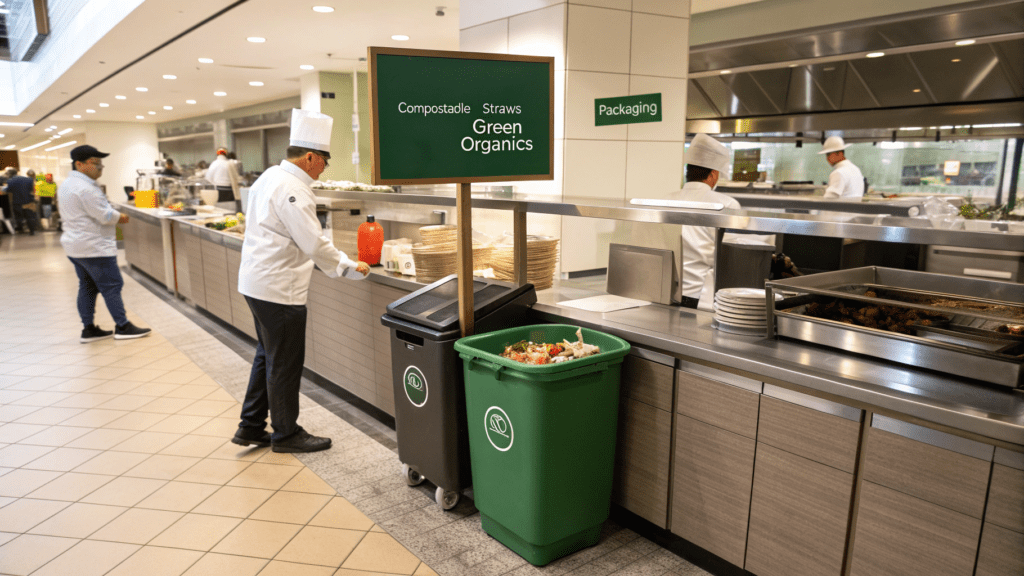
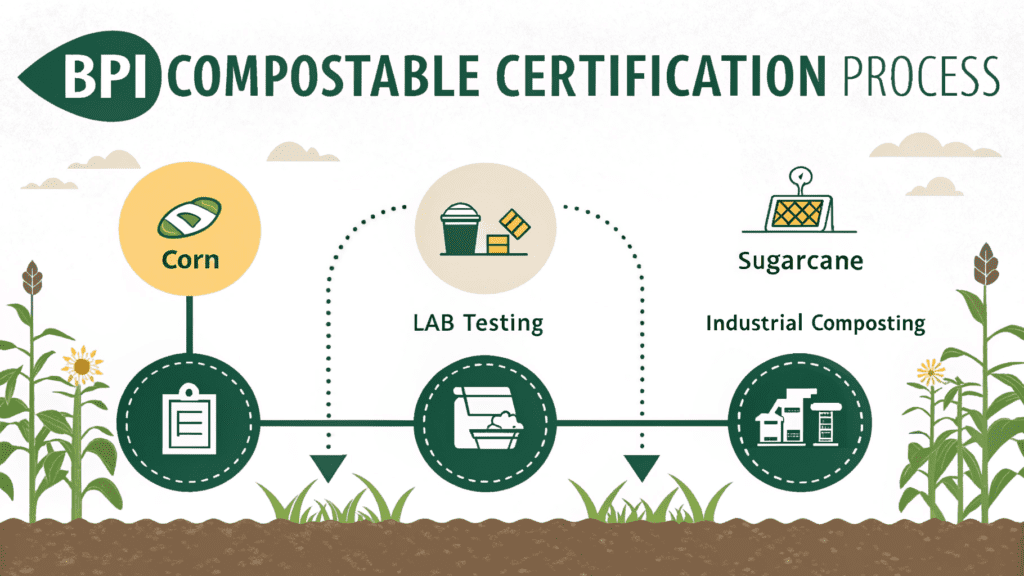
Illustrazione: il rigoroso processo di test e certificazione alla base dei prodotti compostabili BPI.
II. Demistificazione della certificazione compostabile BPI per i responsabili degli approvvigionamenti
Per i professionisti degli approvvigionamenti, identificare materiali realmente compostabili è fondamentale per evitare errori costosi e garantire il raggiungimento degli obiettivi di sostenibilità a lungo termine. ILIstituto dei prodotti biodegradabili (BPI)fornisce un percorso chiaro e scientificamente supportato a tal fine.
A. Cos'è BPI compostabile? Il Gold Standard nordamericano
Fondato nel 1999 come associazione senza scopo di lucro e multi-stakeholder, il Biodegradable Products Institute (BPI) è emerso come il principale certificatore di terze parti per prodotti e imballaggi compostabili nel Nord America. La missione di BPI è verificare che i prodotti e gli imballaggi si decompongano con successo in impianti di compostaggio commerciali o industriali gestiti professionalmente senza danneggiare la qualità del compost finito. Questo solido processo di certificazione garantisce che gli articoli certificati vengano compostati in modo completo, sicuro e tempestivo.
Il marchio di certificazione BPI, caratterizzato dal suo caratteristico design a spirale, fornisce una verifica affidabile da parte di terzi che un prodotto è stato testato e verificato in modo indipendente secondo standard scientificamente fondati. Questo marchio è ampiamente riconosciuto dai comuni e dagli impianti di compostaggio negli Stati Uniti e in Canada e funge da standard definitivo per i prodotti biodegradabili approvati nei programmi di diversione dei prodotti organici. Quando si acquistano prodotti come cannucce compostabili certificate BPI, ad esempio,imprese dell'ospitalitàpossono essere certi che stanno investendo in soluzioni progettate per un vero recupero a fine vita.
B. The Rigorous Standards Behind BPI Compostable Products: ASTM D6400 & D6868
L'integrità della certificazione BPI si basa sulla sua aderenza ai rigorosi standard tecnici dell'American Society for Testing and Materials (ASTM). I prodotti certificati BPI devono soddisfare la norma ASTM D6400 per la plastica o ASTM D6868 per i prodotti a base di fibre che incorporano polimeri come rivestimenti o additivi.
Questi standard sono meticolosamente progettati per garantire una scomposizione completa. Nello specifico, richiedono che i prodotti si disintegrino in piccoli pezzi entro 90 giorni (o 12 settimane/84 giorni) in un ambiente di compostaggio industriale. La biodegradazione completa, in cui il materiale si converte in anidride carbonica, acqua e biomassa, deve avvenire entro 90-180 giorni. Fondamentalmente, questa decomposizione non deve lasciare residui tossici o metalli pesanti nocivi, garantendo che il compost risultante sia sicuro per la crescita delle piante, un criterio verificato attraverso test di ecotossicità.
Un progresso significativo nel programma di certificazione di BPI è il divieto delle sostanze per- e polifluoroalchiliche (PFAS). A partire dal 1° gennaio 2020, BPI ha implementato un nuovo standard che richiede che tutti i prodotti certificati non contengano sostanze chimiche fluorurate aggiunte intenzionalmente e mostrino un rapporto di test con un contenuto di fluoro totale inferiore a 100 ppm. Questa misura proattiva risponde alle crescenti preoccupazioni sui “prodotti chimici per sempre” e rafforza l’impegno di BPI verso materiali veramente sicuri e sostenibili. Ulteriori dettagli su questi standard possono essere trovati sulSito web ASTM Internazionale.
La certificazione BPI garantisce che i prodotti soddisfino i rigorosi standard ASTM, compresi i requisiti senza PFAS per un compostaggio sicuro.
Illustrazione: Semplificazione della gestione dei rifiuti nel settore alberghiero con soluzioni certificate BPI.
III. Vantaggi strategici derivanti dall'adozione delle soluzioni compostabili BPI per i direttori delle operazioni
Per i direttori delle operazioni inospitalità e ristorazione, il passaggio alle soluzioni compostabili BPI offre molto più che una semplice buona volontà ambientale; fornisce vantaggi operativi e finanziari tangibili.
A. Migliorare la sostenibilità: una vera diversione dei rifiuti con i materiali compostabili BPI
Il principale vantaggio ambientale dei prodotti certificati BPI è la loro capacità di facilitare la vera e propria deviazione dei rifiuti organici dalle discariche e dagli inceneritori. Garantendo che i prodotti si decompongano in modo completo e sicuro negli impianti di compostaggio industriale, la certificazione BPI supporta direttamente la riduzione della contaminazione delle discariche. Questo è un problema critico per l’industria del compostaggio, poiché la plastica non degradabile e gli articoli ingannevoli “biodegradabili” possono costare milioni ogni anno in maggiori costi di lavorazione e materiale invendibile che finisce comunque nelle discariche.
L’adozione di materiali certificati BPI aiuta a promuovere un’economia circolare, trasformando i rifiuti organici scartati in compost ricco di sostanze nutritive che può restituire risorse preziose all’agricoltura. La crescita delle infrastrutture di compostaggio sottolinea questa tendenza: il numero di impianti di compostaggio negli Stati Uniti è aumentato del 55% tra il 2016 e il 2021, con un impressionante aumento dell’83% del tonnellaggio trattato. Questa crescente capacità rende l’integrazione dei prodotti certificati BPI sempre più fattibile e di grande impattooperazioni di ristorazione.
B. Ensuring Compliance & Mitigating Greenwashing with BPI Compostable Verification
In un mercato saturo di vaghe affermazioni ambientali, la certificazione BPI funge da solido scudo contro il greenwashing. Termini come “biodegradabile” o “degradabile” sono spesso fuorvianti; sebbene questi elementi possano eventualmente rompersi, spesso si frammentano in microplastiche o non si decompongono completamente nei sistemi di compostaggio industriale. BPI offre prove di compostabilità chiare e verificate da terze parti, distinguendo i veri prodotti compostabili da quelli che si limitano a frammentarsi.
Questa chiarezza è vitale per l’aderenza normativa. La legislazione statale in tutto il Nord America, come la California AB 1201 e le leggi dello Stato di Washington, richiedono sempre più la certificazione BPI per gli articoli compostabili da commercializzare come tali. Affidarsi alla certificazione BPI garantisce che la tua organizzazione rimanga conforme alle normative ambientali in continua evoluzione, mitigando significativi rischi legali e reputazionali. L'etichetta BPI spesso include esplicitamente "SOLO COMMERCIALMENTE COMPOSTABILE" per chiarire ulteriormente il corretto smaltimento e prevenire malintesi da parte del consumatore.
C. Operational Efficiency & ROI Potential with BPI Compostable Packaging
Oltre alla conformità e alla sostenibilità, i prodotti certificati BPI offrono chiari vantaggi operativi. A differenza della plastica convenzionale, i prodotti compostabili BPI sporchi di cibo possono essere smaltiti direttamente nei flussi di riciclaggio dei prodotti organici senza necessità di pulizia. Ciò semplifica notevolmente i processi di raccolta differenziata e raccolta dei rifiuti all'internostrutture ricettiveche hanno accesso al riciclaggio dei prodotti organici, migliorando l’efficienza operativa complessiva e riducendo i costi di manodopera associati alla gestione dei rifiuti.
Inoltre, il passaggio alle alternative certificate BPI può produrre benefici finanziari diretti. Alcuni programmi regionali, come MNimize Rebate, offrono incentivi finanziari fino a 500 dollari per le aziende che sostituiscono i prodotti in plastica monouso con opzioni compostabili certificate BPI. Inoltre, investire in soluzioni compostabili verificate migliora la reputazione del marchio, attraendo fortemente consumatori e partner attenti alla sostenibilità e aprendo potenzialmente nuove opportunità di mercato e assicurando contratti a lungo termine con aziende orientate all’ambiente. Puoi saperne di più su come si integrano le soluzioni certificate BPIsforzi per la sostenibilità dell’ospitalitàa questocollegamento interno.
La certificazione BPI offre efficienza operativa, conformità e ROI per la gestione dei rifiuti nel settore dell'ospitalità e della ristorazione.
IV. Tabella comparativa: comprensione delle opzioni di fine vita dei materiali
La scelta dei materiali giusti implica una chiara comprensione delle implicazioni di fine vita per il tuoAttività di ospitalità o ristorazione B2B. Questa tabella evidenzia le principali distinzioni tra le categorie di materiali comuni.
| Caratteristica | Impatto operativo B2B | Nota di conformità | Potenziale ROI |
|---|---|---|---|
| Compostabile BPI | Si integra perfettamente con i programmi di riciclaggio dei prodotti organici; riduce significativamente il volume dei rifiuti e i costi della discaricaoperazioni di ristorazione. | Conforme ASTM D6400/D6868; Senza PFAS dal 1° gennaio 2020; è conforme alle crescenti normative statali (ad esempio, CA AB 1201). | Miglioramento dell’immagine del marchio e della fidelizzazione del cliente; potenziali riduzioni della tariffa sui rifiuti; ammissibilità agli sconti di sostenibilità; costi di contaminazione ridotti per i composter. |
| Plastica convenzionale | Basso costo materiale immediato; tuttavia, comporta notevoli costi di smaltimento in discarica o di riciclaggio a lungo termine, soprattutto se contiene alimenti contaminaticucine dell'hotel. | Soggetto a crescenti divieti sulla plastica monouso e alle leggi sulla responsabilità estesa del produttore (EPR); spesso non riciclabile se sporco di cibo, con conseguente diversione in discarica. | I risparmi sui costi dei materiali a breve termine sono spesso compensati da crescenti spese di gestione dei rifiuti, potenziali multe e percezione negativa del marchio. |
| Affermazione “biodegradabile”. | Percorso di smaltimento poco chiaro o fuorviante; alto rischio di contaminare i flussi di riciclaggio o compostaggio; richiede l'ordinamento manuale se accettatoimpostazioni commerciali. | Spesso non soddisfa gli standard di compostaggio industriale; rischio di reazioni di greenwashing e di sfiducia dei consumatori a causa di affermazioni vaghe o non verificate. | Nessun vero vantaggio ambientale; rischio di danni reputazionali significativi e azioni legali per marketing ingannevole; contribuisce all’inefficienza del sistema dei rifiuti. |
Comprendere le opzioni di fine vita dei materiali è fondamentale per gli acquisti B2B informati e le strategie di sostenibilità.
Illustrazione: prodotti certificati BPI che si integrano perfettamente in un flusso di rifiuti sostenibile.
V. Impatto nel mondo reale: BPI compostabile in azione
L’adozione di materiali certificati BPI va oltre il semplice imballaggio, permeando diverse fasi della catena di fornitura per garantire una sostenibilità completa perimprese del settore alberghiero e della ristorazione.
A. Caso di studio: impegno di Zeller+Gmelin verso gli inchiostri compostabili BPI (maggio 2025)
Un esempio notevole dell’impatto della certificazione BPI sulla catena di fornitura più ampia proviene da Zeller+Gmelin North America. Nel maggio 2025, la loro linea di inchiostri offset a secco serie 76z50 ha ottenuto la certificazione BPI compostabile. Si tratta di uno sviluppo significativo, poiché gli inchiostri sono una componente cruciale nel packaging. Certificando i propri inchiostri, Zeller+Gmelin consente ai propri clienti – produttori di imballaggi – di utilizzare con sicurezza il marchio BPI sui propri prodotti di imballaggio compostabili finiti.
Questa innovazione dimostra un profondo impegno nel supportare intere catene di fornitura con componenti certificati, garantendo che anche gli elementi sottili come gli inchiostri da stampa soddisfino standard rigorosi per la sicurezza del contatto indiretto con gli alimenti e le prestazioni del compost. Tali integrazioni sono vitali per creare sistemi realmente circolari, in cui ogni parte di un prodotto contribuisce al suo ritorno sulla terra come prezioso compost, anziché diventare un inquinante, soprattutto perimballaggi alimentari nei ristoranti.
Gli inchiostri certificati BPI di Zeller+Gmelin esemplificano l’impegno della catena di fornitura verso una compostabilità completa.
VI. Navigare nel panorama: implementazione e prospettive future per BPI compostabile
Per integrare con successo i prodotti compostabili BPI è necessario affrontare le sfide esistenti, in particolare quelle relative al comportamento dei consumatori e allo sviluppo delle infrastrutture, cruciali per il settoreoperazioni di ospitalità su larga scala.
A. Affrontare la confusione dei consumatori per una migliore gestione del flusso di rifiuti
Nonostante la crescente disponibilità di prodotti compostabili, la comprensione da parte dei consumatori rimane un ostacolo. Uno studio congiunto di BPI e del Consorzio di Compostaggio Closed Loop Partners, pubblicato nel luglio 2023, ha rivelato una significativa confusione pubblica. Il sondaggio digitale condotto su 2.700 partecipanti ha rilevato che circa il 49% ha difficoltà a distinguere tra “biodegradabile” e “compostabile”. Inoltre, quasi un terzo degli intervistati ha collocato erroneamente gli imballaggi compostabili nei contenitori per il riciclaggio e fino al 50% credeva erroneamente che gli imballaggi etichettati come “prodotti da piante” potessero essere compostati, indipendentemente dalla certificazione.
Per contrastare questo fenomeno, sono fondamentali un’etichettatura standardizzata e l’esposizione ben visibile di dettagli chiari sulla compostabilità sugli imballaggi. BPI sostiene attivamente cambiamenti politici per migliorare la gestione del flusso di rifiuti, inclusa un’importante petizione presentata al Dipartimento dell’Agricoltura degli Stati Uniti nel 2023. Questa petizione cerca di aggiornare la definizione di compost vecchia di 25 anni nel Programma biologico nazionale, che attualmente consente solo materiali vegetali e animali, limitando così la capacità di molti trasformatori di gestire imballaggi compostabili. Affrontare questa confusione è vitale per massimizzare l’efficacia dei programmi di diversione dei prodotti organici, in particolare inambienti di ristorazione ad alto volume. Per ulteriori informazioni su questo studio e altre iniziative, visitare ilSito web dei partner a circuito chiuso.
B. Il panorama in evoluzione delle infrastrutture di compostaggio industriale
Sebbene la crescita degli impianti di compostaggio negli Stati Uniti – un aumento del 55% tra il 2016 e il 2021, che ha portato a un aumento dell’83% del tonnellaggio trattato – sia incoraggiante, è ancora necessaria una maggiore capacità a livello nazionale per gestire in modo efficace il crescente volume di rifiuti organici e compostabili. Il successo dei prodotti certificati BPI dipende in larga misura dalla disponibilità e dall’efficienza di questi impianti di compostaggio industriale, che rappresenta un fattore chiave percatene di ospitalità.
Per colmare il divario tra i test di laboratorio e le prestazioni nel mondo reale, BPI ha avviato un “programma di convalida sul campo”. Questo programma raccoglie dati completi sulle prestazioni dei prodotti certificati nei sistemi effettivi degli impianti di compostaggio. Un rapporto del febbraio 2022 di BPI e BioCycle, intitolato “Review of Publicly Available Field Testing Results and Programs”, ha raccolto dati provenienti da varie fonti, dimostrando che la maggior parte (85%) dei dati disponibili al pubblico indicava che i prodotti BPI hanno superato i test sul campo entro tempi di 49 giorni. Ciò suggerisce che i test di disintegrazione di 12 settimane (84-90 giorni) richiesti dagli standard ASTM sono sufficientemente conservativi.
Tuttavia, la revisione ha evidenziato anche aree di miglioramento. Sono state rilevate sfide per alcuni articoli in carta e fibra, compresi i prodotti in fibra stampata senza PFAS, che a volte faticavano a superare i test reali di 49 e 90 giorni. È stato osservato che i rivestimenti in bioplastica sulla carta, come quelli presenti sulle tazze calde, si rompono sufficientemente, ma occasionalmente lasciano dietro di sé un substrato di carta per lo più intatto. Il direttore esecutivo di BPI, Rhodes Yepsen, ha sottolineato la continua necessità di ulteriori ricerche per identificare le cause profonde della mancata rottura degli articoli, sia a causa della composizione specifica del materiale che delle condizioni ambientali di compostaggio. Questo ciclo di feedback continuo tra certificazione, ricerca e sviluppo delle infrastrutture è essenziale per il successo a lungo termine del mercato dei prodotti compostabili. Un elenco completo dei prodotti certificati BPI e delle relative certificazioni specifiche è disponibile sul sitocollegamento internoal catalogo prodotti ricercabile BPI qui.
Affrontare la confusione dei consumatori ed espandere le infrastrutture di compostaggio sono vitali per il successo dei prodotti BPI.
VII. Conclusione: promuovere il cambiamento sostenibile con BPI compostabile
Adottare le soluzioni compostabili BPI è più di una scelta ambientale; è un imperativo strategico per il modernoOperazioni di ospitalità e ristorazione B2B. Non solo garantisce il rispetto di rigorosi standard ambientali e una conformità normativa proattiva, ma catalizza anche una sostanziale diversione dei rifiuti, rafforza l’integrità del marchio e migliora l’efficienza operativa. Effettuando uno spostamento deliberato verso prodotti certificati BPI, le aziende possono quantificare i risparmi sui costi attraverso la riduzione delle tariffe di discarica e potenziali sconti, mitigare i rischi di conformità e di greenwashing e aumentare significativamente il valore del proprio marchio agli occhi di consumatori e partner sempre più consapevoli. Questo impegno apre notevoli opportunità di quote di mercato, posizionando la tua organizzazione in prima linea nella bioeconomia circolare.
Il tempo delle esitazioni è finito.Agisci adessoper valutare e integrare i prodotti certificati BPI nella tua catena di fornitura, garantendo un futuro più sostenibile, conforme e redditizio per la tua organizzazione. Richiedi oggi stesso una valutazione completa del prodotto certificata BPI per allineare le tue operazioni al futuro della gestione sostenibile dei rifiuti.
Adotta le soluzioni compostabili BPI per la sostenibilità strategica, la conformità e la redditività nelle operazioni B2B.
Domande frequenti (FAQ)
D: In che modo la certificazione BPI apporta vantaggi specifici alla gestione dei rifiuti in una grande catena alberghiera?
R: Per le grandi catene alberghiere, la certificazione BPI semplifica la raccolta differenziata dei rifiuti consentendo la raccolta di articoli compostabili sporchi di cibo (come posate, piatti e tazze) insieme ai rifiuti alimentari. Ciò riduce il volume della discarica, abbassa i costi di smaltimento e migliora l’immagine ecologica dell’hotel, attirando ospiti attenti all’ambiente e clienti aziendali.
D: Quali sono le sfide principali per le operazioni di ristorazione durante la transizione agli imballaggi compostabili BPI?
R: Le sfide includono garantire la formazione del personale sul corretto smaltimento, educare i clienti a prevenire la contaminazione e verificare l'accesso locale agli impianti di compostaggio industriale. I responsabili degli approvvigionamenti devono anche gestire le potenziali differenze di costo e gli aggiustamenti della catena di fornitura.
D: I prodotti certificati BPI possono resistere alle esigenze delle lavastoviglie commerciali in un ambiente di ristorante?
R: La certificazione BPI riguarda gli articoli monouso progettati per il compostaggio industriale, non per il riutilizzo o per le lavastoviglie commerciali. I ristoranti dovrebbero utilizzare prodotti certificati BPI per le loro esigenze usa e getta (ad esempio contenitori da asporto) e beni durevoli tradizionali per il servizio di ristorazione.
D: In cosa differisce la certificazione BPI dalle dichiarazioni “biodegradabile” o “degradabile”?
R: La certificazione BPI è una rigorosa verifica di parte terza che garantisce che i prodotti si decompongono completamente negli impianti di compostaggio industriale, senza lasciare residui nocivi. “Biodegradabile” o “degradabile” sono spesso termini di marketing vaghi che non garantiscono la completa decomposizione o sicurezza in ambienti specifici, portando potenzialmente all’inquinamento da microplastica.
D: Qual è il ROI tipico di un'azienda di ospitalità che investe in prodotti compostabili BPI?
R: Il ROI deriva dalla riduzione delle tariffe per le discariche, dalla potenziale ammissibilità per sconti sulla sostenibilità locale, dal miglioramento della reputazione del marchio che attira clienti eco-consapevoli e dal miglioramento dell’efficienza operativa nella raccolta differenziata dei rifiuti. Anche se i costi iniziali del prodotto potrebbero essere più elevati, spesso si ottengono risparmi a lungo termine e valore del marchio