Le decisioni di procurement che i leader B2B devono affrontare oggi sono più complesse che mai, soprattutto quando si tratta di articoli apparentemente semplici come le cannucce. Lo spostamento verso alternative sostenibili, un tempo un percorso chiaro per le imprese attente all’ambiente, è diventato complicato dai recenti cambiamenti politici. Una nuova direttiva federale degli Stati Uniti ha riacceso il dibattito sulle cannucce di carta, mettendone in discussione l’efficacia e il rapporto costo-efficacia, e lasciando molti dirigenti della catena di fornitura e direttori operativi a rivalutare le loro strategie di conformità e gli impegni di sostenibilità. Questo post approfondirà le complessità delle attuali politiche sulla paglia, confronterà le opzioni materiali e delineerà percorsi strategici affinché le aziende possano mantenere la conformità, ottimizzare le operazioni e sostenere i valori del proprio marchio.
Un panorama di conformità in continua evoluzione: rivalutare la strategia monouso
Per anni, la tendenza delle aziende che cercavano di allinearsi alle crescenti preoccupazioni ambientali e alle normative più severe era chiara: eliminare gradualmente le cannucce di plastica a favore della carta o di altre opzioni biodegradabili. Città e stati degli Stati Uniti e numerosi paesi a livello globale hanno adottato divieti sulla plastica monouso, creando una forte attrazione del mercato verso alternative. Tuttavia, il contesto normativo è raramente statico e una svolta significativa a livello federale statunitense ha introdotto nuove considerazioni per le organizzazioni, in particolare quelle coinvolte in contratti federali o con una presenza nazionale.

InFebbraio 2025, a U.S. executive order was signed, aiming to end the federal government’s procurement and provision of paper straws within federal buildings. This directive explicitly instructs federal agencies to cease buying paper straws and to eliminate policies that previously disfavored plastic alternatives. The stated rationale behind this shift is multifold: claims that paper straws “don’t work,” “don’t last very long,” are more expensive, and may contain potentially harmful chemicals like PFAS. It also controversially pointed out that some paper straws are individually wrapped in plastic, undermining their environmental benefit.
This federal action, while primarily impacting government operations, sends a strong signal that could ripple through the private sector, causing confusion among consumers and businesses alike. Previously, the Biden administration’s Executive Order 14057 (December 8, 2021) had aimed to phase out federal purchases of single-use plastics by 2027 for food service and packaging, and by 2035 for all federal operations. The swift reversal underscores the unpredictable nature of policy and the immediate challenge this presents for businesses that had structured their procurement and sustainability initiatives around previous directives. For procurement managers and operations directors, understanding this nuanced federal shift is critical to ensuring operational continuity and protecting brand reputation, especially if there’s any perceived misalignment with broader sustainability goals.
The Complex Web of Straw Regulations: Beyond Federal Directives
While the U.S. federal government has expressed a preference for moving away from paper straws, it’s imperative for businesses to recognize that this is not a universal ban, nor does it override existing state, local, or international regulations. The compliance landscape remains highly fragmented, demanding meticulous attention to detail from supply chain executives.

The Enduring State and Local Plastic Straw Bans in the U.S.:
Despite the federal pivot, numerous U.S. states and cities continue to uphold and enforce their bans or restrictions on single-use plastic straws. These local regulations often explicitly encourage or mandate the use of paper, compostable, or reusable alternatives, creating a patchwork of requirements across the country. Key examples include:
- California: Assembly Bill 1884 (2018) restricts full-service restaurants from automatically providing plastic straws.
- Seattle, Washington: A ban on plastic straws and utensils has been in effect since July 2018.
- Washington D.C.: Implemented its plastic straw ban in January 2019.
- Miami Beach, Florida: Enacted a ban on plastic straws in 2019.
- Other states like Maine, New Jersey, New York, Oregon, Rhode Island, Vermont, and Washington also maintain various restrictions, demonstrating a strong, ongoing local commitment to reducing plastic waste.
For businesses operating nationally, this means that a singular procurement strategy might not be feasible. A restaurant chain, for instance, must be prepared to comply with different straw requirements from one city to the next, even within the same state. This necessitates a robust understanding of local ordinances to avoid fines and maintain legal compliance.
Global Momentum Towards Single-Use Plastic Reduction:
Internationally, the prevailing trend continues to be a strong move away from single-use plastics. The European Union, for example, implemented a comprehensive ban on single-use plastic plates, cutlery, and straws, which came into effect in July 2021. This sweeping regulation affects all businesses importing into or operating within the EU, demanding a pivot towards sustainable alternatives.
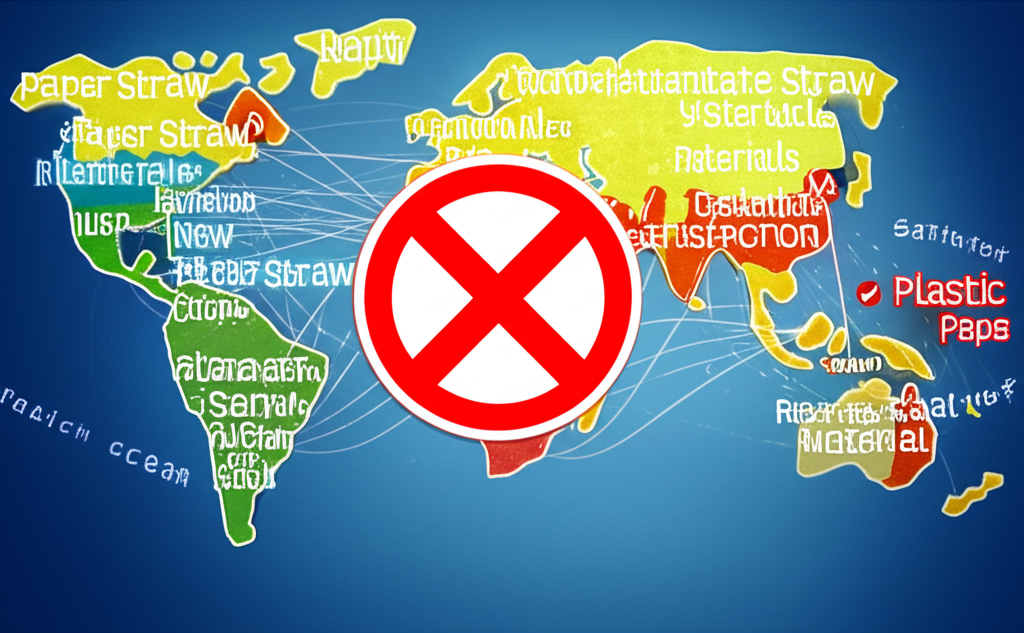
Beyond Europe, other major economies and regions have followed suit:
- China: Since 2021, China has progressively banned single-use plastic bags and utensils from major cities, with a nationwide ban on single-use straws in the restaurant industry by the end of 2020.
- Canada: Announced plans to ban a wide range of single-use plastic products, including straws, by the end of 2022.
- United Kingdom: A ban on plastic straws, stirrers, and cotton buds, though initially delayed, came into effect in October 2020.
- Other Countries: Countries like France (targeting a ban on all single-use plastics by 2040), Spain, Italy, Bali, Jamaica, Belize, and Taiwan have also implemented or announced similar restrictions.
Queste normative globali sottolineano un chiaro impegno internazionale per la protezione dell’ambiente e la riduzione dei rifiuti di plastica. Per le aziende con catene di fornitura internazionali o che si rivolgono ai mercati globali, allinearsi a queste tendenze più ampie non significa solo conformarsi, ma anche mantenere un vantaggio competitivo e una percezione favorevole del marchio in un’economia globale sempre più attenta all’ambiente.
Sentiment dei consumatori e realtà operative:
Il dibattito sui materiali in paglia non è puramente normativo; è anche modellato dalle preferenze dei consumatori e dagli aspetti pratici delle operazioni commerciali. Sebbene la spinta verso la sostenibilità sia forte, l’esperienza dell’utente con le cannucce di carta è stata spesso oggetto di contesa. I sondaggi indicano una significativa preferenza dei consumatori per la durabilità e l'usabilità delle cannucce di plastica. Un sondaggio IPSOS del 2018 ha evidenziato che la maggioranza degli americani preferisce la plastica, con solo il 4% che trova le cannucce di plastica “spiacevoli” rispetto a sette volte di più per le cannucce di carta. Un sondaggio YouGov del 2023 ha inoltre rivelato che il 33% degli americani “non amava” o “odiava” le cannucce di carta, citando problemi come la rapida rottura, la disintegrazione e la potenziale interferenza con il gusto delle bevande.
Queste preoccupazioni si traducono in vere e proprie sfide operative per le imprese. Una cannuccia che si disintegra può portare a reclami da parte dei clienti, spreco di prodotto e costi aggiuntivi se sono necessarie più cannucce per bevanda. Inoltre, i benefici ambientali delle cannucce di carta sono stati oggetto di esame accurato. Alcuni studi suggeriscono che il processo di produzione delle cannucce di carta può avere un’impronta di carbonio maggiore e richiedere più acqua rispetto alla plastica, sfidando la percezione che queste siano inequivocabilmente superiori in termini di impatto ambientale. Questa complessità significa che le aziende devono bilanciare la conformità con la soddisfazione del cliente e il reale impatto ambientale dei materiali scelti.
Strategic Solutions for Your Business: Adapting to the New Straw Economy
Navigating this intricate web of regulations, consumer preferences, and operational demands requires a robust, data-driven strategy. B2B leaders must go beyond simply reacting to policy changes and instead proactively explore sustainable and compliant solutions that align with their long-term business goals.
Comparing Your Options: A Business Decision Matrix
The choice of straw material has direct implications for cost, compliance, customer experience, and your brand’s sustainability narrative. Here’s a comparative look at common options:
| Caratteristica | Impatto B2B | Rischio di conformità | Potenziale ROI |
|---|---|---|---|
| Cannucce di carta | Eco-friendly image (generally), widely available. Customer complaints due to durability issues. Higher cost than plastic. | Conforme alla maggior parte dei divieti statali/locali sulla plastica e alle direttive UE. Sfavorevole federale nei contesti governativi degli Stati Uniti. Emergenza potenziale preoccupazione per i PFAS. | Percezione positiva del marchio (per il segmento eco-consapevole). Costo operativo più elevato per unità. Rischio di insoddisfazione del cliente. |
| Cannucce di plastica | Familiare, durevole, a basso costo. Elevata preferenza del consumatore. | Vietato/limitato in molti stati/città degli Stati Uniti e nel mondo (UE, Cina, Canada). Ri-enfatizzato a livello federale nei contesti governativi degli Stati Uniti. | Riduzione dei costi immediati. Rischio significativo di percezione del marchio a causa di preoccupazioni ambientali. Potenziale multa laddove vietato. |
| Materiali alternativi | (e.g., bamboo, metal, silicone, pasta, edible) Diverse options, varying durability & reusability. Often higher upfront cost. | Compliance varies by material & local regulations. Reusable options reduce waste. | Varies widely. Can be high for reusable (long-term savings). Can be low for single-use compostable. Strong positive brand perception (innovation, sustainability). Potential for premium pricing. Requires customer education for reusable options. |
Domande frequenti
Legal & market context for paper and plastic straw policies (U.S. & global), with practical guidance for foodservice operators.
Are paper straws illegal in the U.S.?
No. There is no nationwide prohibition on paper straws for the general public or private businesses. A February 2025 federal executive order directs federal agencies di smettere di procurarsi e fornire cannucce di carta all’interno degli edifici federali, ma questo non è un divieto pubblico generale. Molti stati e città limitano ancora l’uso delle cannucce di plastica, spesso incoraggiando la carta o altre alternative.
Qual è l’attuale posizione del governo federale degli Stati Uniti sulle cannucce di carta?
A partire dal febbraio 2025, un ordine esecutivo ordina alle strutture federali di interrompere l'approvvigionamento/fornitura di paglia di carta, invertendo la direzione rispetto all'EO 14057 (dicembre 2021). La logica citata include funzionalità, costi, potenziali problemi PFAS ed efficacia ambientale (ad esempio, involucro di plastica). Questa posizione si applica alle operazioni federali, non alle imprese private o al pubblico in generale.
Negli Stati Uniti esistono ancora divieti sulle cannucce di plastica?
Yes. Numerous states and municipalities (e.g., California, Seattle, Washington, D.C., Miami Beach) continue to enforce bans or “upon-request” policies for plastic straws. Operators must track local rules and update procurement and front-of-house SOPs accordingly.
What is the global trend regarding single-use plastic straws?
The trajectory is toward reduction or prohibition (e.g., EU Single-Use Plastics Directive, China’s restaurant straw restrictions, measures in Canada and Australia). Paper, plant-fiber, PHA/PLA, and edible options are scaling—but satisfaction varies by use case and drink type.
How do consumer preferences impact straw choices for businesses?
Consumers often prefer plastic for durability and mouthfeel; complaints about paper include sogginess and taste transfer. The winning strategy balances regulatory compliance with guest experience—for example, offering higher-performance compostable or edible straws for thick drinks, and a “straws-upon-request” policy to cut volume and cost.