Het mondiale gesprek over plastic voor eenmalig gebruik is dramatisch verschoven en geëvolueerd van een niche-milieuprobleem naar een cruciale zakelijke noodzaak. Geconfronteerd met de escalerende plasticvervuiling en steeds strengere regelgeving op alle continenten, overwegen bedrijven niet langer alleen maar alternatieven; ze integreren actief duurzame oplossingen in hun kernactiviteiten. Het alomvattende verbod van de Europese Unie op plastic voor eenmalig gebruik, in combinatie met een lappendeken van vergelijkbare regelgeving op staatsniveau die in de Verenigde Staten opduikt, transformeert naleving in een strategisch voordeel. Deze regeldruk wordt versterkt door een krachtig consumentensentiment: een overweldigende 72% van de consumenten geeft nu actief prioriteit aan en steunt merken die blijk geven van een oprecht engagement voor milieuvriendelijke praktijken. Deze afstemming van waarden biedt aanzienlijke kansen voor merkpositionering en marktdifferentiatie. De milieuvriendelijke stromarkt staat klaar voor een explosieve groei, die in 2025 naar schatting 12,3 miljard dollar zal bedragen en in 2035 naar verwachting zal stijgen tot 25,1 miljard dollar. Deze opmerkelijke groei duidt op een permanente, fundamentele verschuiving in het inkooplandschap voor de horeca-, foodservice- en detailhandelssector. Voor bedrijven die leiding willen geven en niet alleen willen voldoen, is het begrijpen en omarmen van deze duurzame keuzes van cruciaal belang. Bezoek voor een breed scala aan milieuvriendelijke verpakkingsoplossingen op maat voor bedrijvenmomoio.com.

Navigeren door deze nieuwe groene economie vereist meer dan alleen een overstap van plastic. Het vereist een diepgaand begrip van wat werkelijk een biologisch afbreekbare oplossing inhoudt en hoe de moderne, milieuvriendelijke strotechnologie is geëvolueerd om aan de strenge B2B-eisen te voldoen. Voorbij zijn de dagen van vroege, vaak “doorweekte” alternatieven; De innovaties van vandaag maken gebruik van geavanceerde bioplastics en natuurlijke materialen, waardoor eerdere prestatie-uitdagingen worden overwonnen. Het is van cruciaal belang voor B2B-kopers om het onderscheid te begrijpen tussen ‘biologisch afbreekbaar’ – wat betekent dat een materiaal uiteindelijk zal afbreken – en ‘composteerbaar’, wat inhoudt dat er specifieke industriële omstandigheden (zoals hoge temperaturen en gespecialiseerde microben) nodig zijn om binnen een bepaald tijdsbestek, doorgaans drie tot zes maanden, af te breken. Een verkeerde interpretatie van deze termen kan leiden tot ‘greenwashing’, waardoor de werkelijke impact op het milieu wordt ondermijnd.
Sleutelfactoren voor de aanschaf van duurzame rietjes
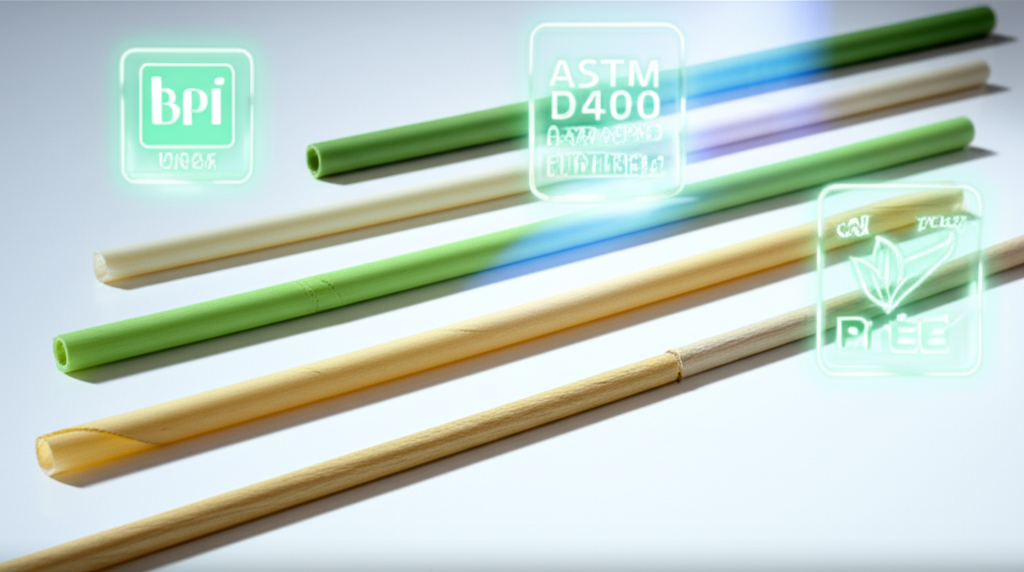
Wanneer u duurzame rietjes in bulk aanschaft, moeten verschillende sleutelfactoren uw beslissing bepalen. Geef prioriteit aan materialen die consistente prestaties bieden bij verschillende temperaturen, zodat ze bestand zijn tegen zowel hete koffie als gekoelde smoothies zonder de integriteit in gevaar te brengen. Over geverifieerde certificeringen kan niet worden onderhandeld: zoek naar BPI (Biodegradable Products Institute) en TÜV OK Compost-certificeringen (voor industriële of thuiscomposteerbaarheid), samen met naleving van internationale normen zoals ASTM D6400 (Amerikaanse benchmark voor composteerbaarheid) en EN 13432 (EU-norm voor biologisch afbreekbare verpakkingen). De afwezigheid van schadelijke “forever chemicaliën” (PFAS-vrij) wordt steeds meer een essentiële veiligheids- en milieuoverweging voor zowel het welzijn van de klant als het welzijn van de planeet. Evalueer bovendien de kosteneffectiviteit van bulkaankopen en de mogelijkheden voor maatwerk om uw merkidentiteit te versterken. Lees meer over hoe certificeringen echte duurzaamheid in verpakkingen definiëren.
Toonaangevende biologisch afbreekbare rietjes
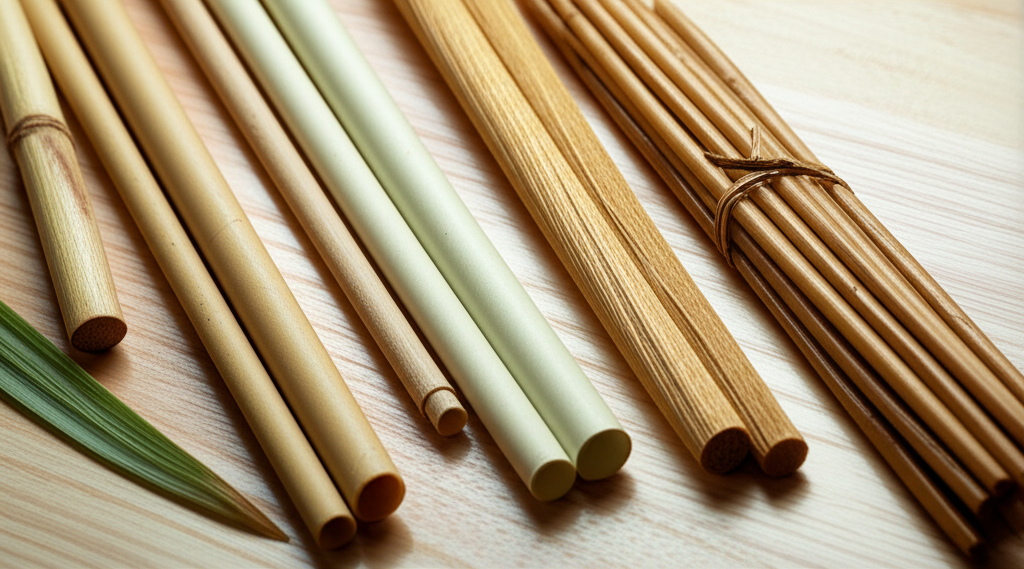
Voor bedrijven die streven naar zowel prestaties als compliance, onthult een vergelijkende blik op de belangrijkste opties voor biologisch afbreekbaar stro duidelijke voordelen:
- Suikerriet (Bagasse) rietjes: Deze rietjes, gemaakt van het vezelachtige bijproduct van de extractie van suikerrietsap, zijn zeer duurzaam en zijn tot 24 uur lang bestand tegen drassigheid. Ze zijn bestand tegen temperaturen tot 100 °C (220 °F), zijn gecertificeerd thuis- en industrieel composteerbaar (bijv. EN 13432) en zijn vaak PLA- en PFAS-vrij. Ideaal voor restaurants, bedrijfskantoren en horeca vanwege robuuste prestaties en neutrale smaak.
- PHA (polyhydroxyalkanoaten) rietjes: PHA, een plantaardig bioplastic, biedt een duurzaamheid die vergelijkbaar is met traditioneel plastic en is bestand tegen drassigheid bij warme en koude dranken. PHA-rietjes zijn met name afbreekbaar in de zee en zijn bovendien thuis- en industrieel composteerbaar (bijv. ASTM D6400, BPI, TUV Oostenrijk gecertificeerd), waardoor ze uitstekend geschikt zijn voor bedrijven die op zoek zijn naar een “plastic-achtig” gevoel met superieure milieuvoordelen. Ontdekken momoio.com's reeks innovatieve PHA-oplossingen.
- Agave rietjes: Deze plasticvrije rietjes zijn gemaakt van gerecyclede agavevezels en zijn zeer duurzaam voor meerdere uren, geschikt voor zowel warme als koude dranken, en zijn biologisch afbreekbaar/composteerbaar (bijvoorbeeld 95% afbraak in 180 dagen op een actieve stortplaats). Ze bieden een sterke duurzaamheid voor langdurig gebruik in omgevingen met een hoog volume, zoals coffeeshops, bars en hotels.
- Geavanceerde papieren rietjes: Aanzienlijke verbeteringen in waterbestendige coatings (met PFAS-vrije opties beschikbaar) voorkomen nu urenlang drassigheid. Ze zijn gemaakt van FSC-gecertificeerd papier en zijn biologisch afbreekbaar en composteerbaar (2-6 weken onder de juiste omstandigheden, voldoen aan de ASTM-normen). Papieren rietjes blijven een kosteneffectieve en algemeen erkende optie, die uitgebreide aanpassingen voor branding biedt.
- Reed & Wheat Straws: Deze natuurlijk verkregen stengels worden niet drassig, presteren uitzonderlijk goed in zowel warme als koude dranken en zijn 100% composteerbaar en biologisch afbreekbaar in land- of zeeomgevingen. Ze zijn vaak USDA BioPreferred en bieden een uitgesproken rustieke en milieuvriendelijke esthetiek voor milieubewuste branding.
Het adopteren van milieuvriendelijke rietjes gaat veel verder dan alleen naleving; het is een strategische zet die uw maatschappelijk verantwoord ondernemen (MVO) aanzienlijk vergroot en de merkreputatie versterkt bij steeds milieubewustere consumenten en partners. Voor bedrijven die actief zijn in de VS en Europa, waar regelgevingskaders zoals de EU-richtlijn voor single-use plastics en verschillende staatsverboden stevig zijn en het consumentenbewustzijn uitzonderlijk hoog is, biedt het omarmen van deze alternatieven een substantieel concurrentievoordeel. Grote spelers als Starbucks en McDonald’s hebben zich al gecommitteerd aan het uitfaseren van traditionele plastic rietjes, waardoor een precedent wordt geschapen dat bedrijven die deze verschuiving negeren dit op eigen risico doen. Door u aan te sluiten bij deze belangrijke duurzaamheidsbeloftes van bedrijven, maakt u uw activiteiten effectief toekomstbestendig. Bovendien zijn er tastbare operationele voordelen op de lange termijn, waaronder potentiële verlagingen van de afvalbeheerkosten als gevolg van een kleiner stortvolume en een verbeterde klanttevredenheid door het bieden van een superieure, schuldvrije drinkervaring. Omdat de markt voor milieuvriendelijke rietjes in Noord-Amerika en Europa een robuuste groei doormaakt – Noord-Amerika had in 2024 een aandeel van 34,89% op de papierstromarkt en wordt een CAGR van 12,5% verwacht, terwijl Europa hoogwaardige, volledig recyclebare opties ontwikkelt – is samenwerken met de juiste leverancier cruciaal.
Gerenommeerde leveranciers zoals Singreen Packaging, Good Start Packaging, KimEcopak, Crew Supply Co., YesStraws en Panda Bambu bieden bulkprijzen, uitgebreide productassortimenten en aanpassingsmogelijkheden. Geef prioriteit aan partners die uitgebreide certificeringen bieden, zoals BPI, TÜV, USDA BioPreferred, ASTM en EN-normen, samen met transparante inkoop. Dit zorgt ervoor dat uw investering voldoet aan de hoogste milieu- en prestatienormen, waardoor de toewijding van uw merk aan duurzaamheid wordt versterkt. Samenwerken metmomoio.comvoor op maat gemaakte duurzame verpakkingsoplossingen in bulk.
De B2B-markt voor biologisch afbreekbaar stro is klaar voor een explosieve groei, waardoor strategische adoptie een cruciale stap wordt voor marktleiderschap en veerkracht in een steeds meer gereguleerd en milieubewust landschap. Verder gaan dan plastic voor eenmalig gebruik is niet langer optioneel; het is een strategische noodzaak om de merkintegriteit te behouden, naleving van de regelgeving te garanderen en te voldoen aan de escalerende verwachtingen van consumenten op het gebied van duurzaamheid. Investeren in robuuste, gecertificeerde biologisch afbreekbare alternatieven toont aan dat u zich oprecht inzet voor milieubeheer, vergroot de loyaliteit van klanten en stelt uw concurrentiepositie veilig in 2025 en daarna.