Navigeren door de groene verschuiving: hoe u betrouwbare leveranciers kunt vinden voor biologisch afbreekbare rietjes
De mondiale noodzaak om de plasticvervuiling tegen te gaan heeft het landschap voor bedrijven over de hele wereld fundamenteel hervormd. Voor inkoopmanagers, operationeel directeuren, duurzaamheidsfunctionarissen en leidinggevenden in de toeleveringsketen is de verschuiving van conventionele kunststoffen naar milieuvriendelijke alternatieven niet langer een nicheprobleem, maar een strategische noodzaak. De markt voor biologisch afbreekbaar stro, een sleutelrol in deze transitie, onderstreept deze urgentie. Met een waarde van ongeveer 22 miljard dollar in 2021 zal deze markt naar verwachting bijna 22 miljard dollar bereiken50 miljard dollar in 2025 en zal naar verwachting omhoogschieten tot bijna 250 miljard dollar in 2033, wat een indrukwekkend samengesteld jaarlijks groeipercentage (CAGR) van 22,4% aantoont. Deze explosieve groei wordt aangedreven door wereldwijde inspanningen om plasticafval te verminderen en strengere regelgeving, waaronder de Single-Use Plastics-richtlijn (EU SUPD) van de Europese Unie, die in 2025 volledig van kracht moet zijn.
Het negeren van deze trend brengt aanzienlijke operationele en commerciële risico's met zich mee. Ongeveer70% van de consumenten geeft nu de voorkeur aan bedrijven die actief gebruik maken van milieuvriendelijke opties, waardoor duurzaamheid een krachtige onderscheidende factor wordt en een kritische factor voor markttoegang en merkentrouw. Regio's als Afrika ervaren een snelle adoptie, waarbij de hoogste regionale CAGR meer dan 24% bedraagt, wat wijst op een mondiale race naar duurzame oplossingen. Als bedrijven er niet in slagen zich aan te passen, riskeren ze niet alleen boetes van toezichthouders en reputatieschade, maar lopen ze ook het risico een snel groeiend marktsegment en het vertrouwen van een steeds milieubewuster klantenbestand mis te lopen. De uitdaging ligt in het navigeren door een complexe markt om echt betrouwbare leveranciers te vinden die aan strenge normen voldoen.Het omarmen van biologisch afbreekbare rietjes is een strategische noodzaak voor horeca en foodservice om te voldoen aan de consumentenvraag en verschuivingen in de regelgeving.
Kerncriteria voor het identificeren van betrouwbare leveranciers van biologisch afbreekbare rietjes
De overstap naar biologisch afbreekbare rietjes vereist meer dan alleen goede bedoelingen; het vereist een rigoureus controleproces om de werkzaamheid van het product, de milieu-integriteit en de betrouwbaarheid van de toeleveringsketen te garanderen. Beslissers moeten verder kijken dan oppervlakkige claims en zich verdiepen in de kernpraktijken van een leverancier.
Geef prioriteit aan uitgebreide certificeringen voor biologisch afbreekbare rietjes
Certificeringen vormen de basis van vertrouwen in de markt voor duurzame producten. Ze bieden onafhankelijke verificatie dat een product voldoet aan specifieke milieu-, veiligheids- en kwaliteitsnormen. Voor biologisch afbreekbare rietjes betekent dit dat de prestaties aan het einde van de levensduur en de voedselveiligheid onder de loep worden genomen.
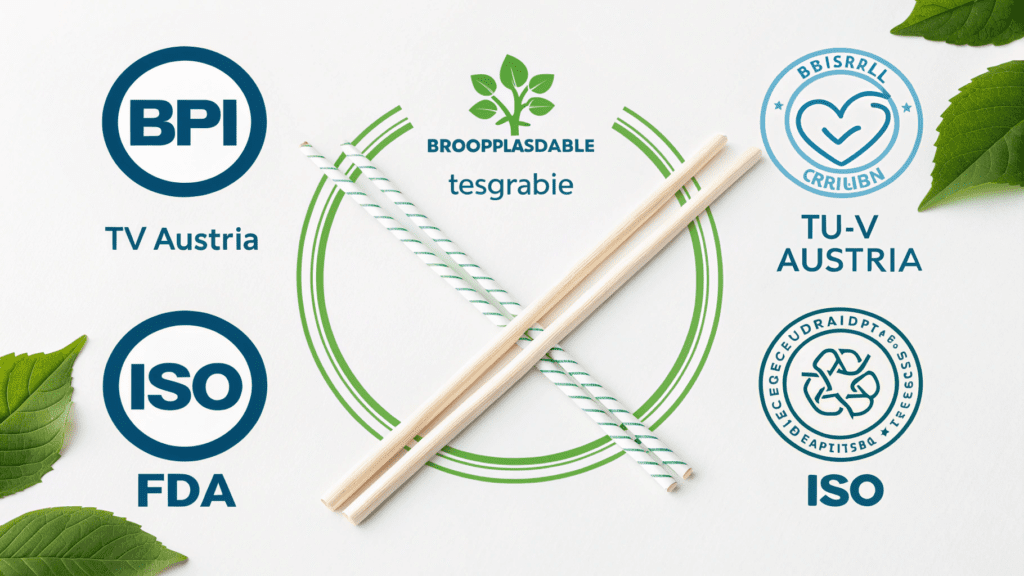
Ten eerste,normen voor biologische afbreekbaarheid en composteerbaarheidstaan voorop. Zoek leveranciers waarvan de producten zijn gecertificeerd door erkende organisaties zoals BPI Certified Compostable (voor de Amerikaanse markt) en TÜV AUSTRIA. Deze certificeringen bevestigen dat producten voldoen aan strenge criteria voor afbraak in industriële composteringsinstallaties. Concreet: zorg voor naleving vanASTM D6400ofEN 13432voor industriële composteringsnormen, aangezien deze van cruciaal belang zijn voor de toegang tot de Europese markt en een goed afvalbeheer. Het begrijpen van het onderscheid tussen “biologisch afbreekbaar” en “composteerbaar” is essentieel voor effectief afvalbeheer en het voorkomen van greenwashing. Voor een diepere duik kunt u overwegen om bronnen zoals onze gids over te raadplegenComposteerbare versus biologisch afbreekbare rietjes: een B2B-gids.
Ten tweede,certificeringen voor voedselveiligheidzijn niet onderhandelbaar. Controleer of producten certificeringen hebben zoals de FDA (Amerikaanse Food and Drug Administration), ISO 22000 (Food Safety Management System) of HACCP (Hazard Analysis and Critical Control Points) om de bescherming van de consument en de naleving van de regelgeving te garanderen.
Beoordeel ten slotte de bredere operationele integriteit van de leverancierkwaliteits- en milieumanagementsystemen. Zoek naarISO9001voor kwaliteitsmanagement enISO14001voor milieuprestatiesystemen. Leveranciers die zich inzetten voor initiatieven op het gebied van milieu, maatschappij en bestuur (ESG) zullen zich vaak ook houden aan normen voor sociale verantwoordelijkheid, zoals:SA8000voor ethische arbeidspraktijken. Deze holistische certificeringen geven aan dat een leverancier zich inzet voor verantwoorde bedrijfspraktijken, van de inkoop van materialen tot de productieprocessen.
Vraag naar transparantie in de toeleveringsketen en ethische inkoop
Echte duurzaamheid reikt verder dan het product zelf en strekt zich uit tot de gehele toeleveringsketen. Betrouwbare leveranciers van biologisch afbreekbare rietjes moeten uitgebreide documentatie verstrekken over de herkomst van het materiaal en de productieprocessen. Deze transparantie helpt bij het bestrijden van ‘greenwashing’ – ongefundeerde milieuclaims – die een aanzienlijk risico vormen in de milieuvriendelijke markt.
Focus op bedrijven die blijk geven van een verifieerbare inzet voor initiatieven op het gebied van milieu, maatschappij en bestuur (ESG). Dit omvat transparantie in hun corporate governance, milieuvriendelijke productiemethoden en toewijding aan het welzijn van werknemers. Controleer hun naleving van normen voor sociale verantwoordelijkheid, zoals SA8000, voor ethische arbeidspraktijken, waarbij eerlijke lonen, veilige werkomstandigheden en geen kinderarbeid worden gegarandeerd.
Werk bovendien samen met leveranciers die actief werken aan het verkleinen van hun ecologische voetafdruk en het minimaliseren van de afvalproductie binnen hun activiteiten. Dit kan het gebruik van hernieuwbare energie inhouden, het implementeren van programma's voor afvalvermindering of het optimaliseren van de logistiek om de transportemissies te verminderen. Sommige bedrijven, zoals BD Straws, zijn bijvoorbeeld voorbeelden van sterke ESG-initiatieven en transparant ondernemingsbestuur, en dienen als maatstaf voor verantwoorde inkoop.

Betrouwbare leveranciers bieden uitgebreide certificeringen en transparante toeleveringsketens, cruciaal voor duurzaam inkopen.
Diverse biologisch afbreekbare stromaterialen en hun operationele gevolgen
De markt biedt een groeiend aanbod aan biologisch afbreekbare stromaterialen, elk met verschillende eigenschappen, voordelen en operationele overwegingen. Het begrijpen van deze verschillen is cruciaal voor het selecteren van de juiste oplossing voor uw specifieke zakelijke behoeften.
Inzicht in de belangrijkste biologisch afbreekbare stromaterialen
- Papieren rietjes: Op grote schaal beschikbaar en vaak de meest betaalbare initiële optie. Ze zijn echter geneigd snel drassig te worden, waardoor de klantervaring afneemt. Een belangrijk punt van zorg is de potentiële aanwezigheid van PFAS (“forever chemicaliën”) en andere zorgwekkende stoffen die in dranken kunnen terechtkomen, vooral zure of hete dranken, wat gezondheidsrisico’s en problemen met het behoud van het milieu met zich meebrengt.
- PLA (polymelkzuur) rietjes: Afgeleid van hernieuwbare bronnen zoals maïszetmeel of suikerriet, voelen PLA-rietjes aan als plastic en zijn ze geschikt voor zowel warme als koude dranken. Ze zijn volledig composteerbaar, maar vereisen doorgaans industriële composteringsfaciliteiten (die bijvoorbeeld voldoen aan ASTM D6400) om goed te kunnen worden afgebroken, wat een uitdaging kan zijn op het gebied van verwijdering in gebieden waar een dergelijke infrastructuur ontbreekt.
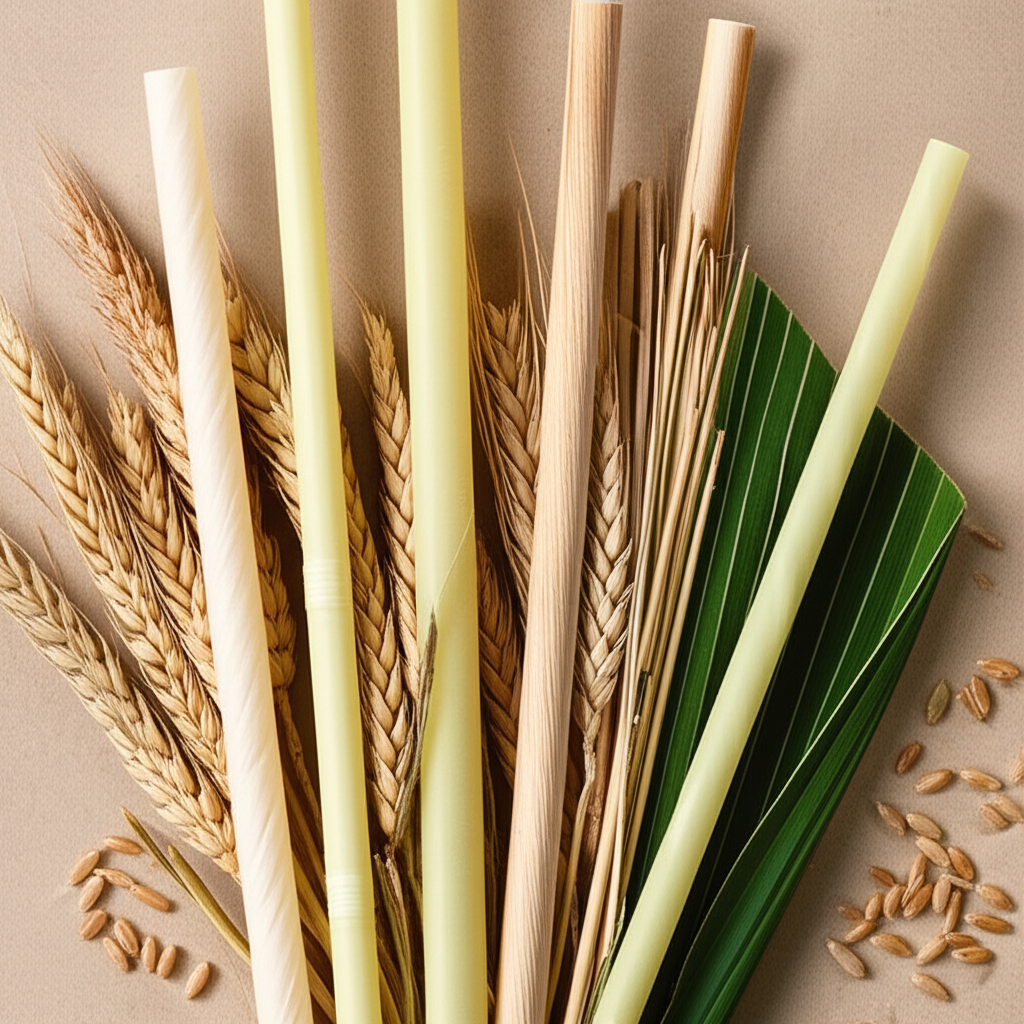
- Suikerriet (Bagasse) rietjes: Deze rietjes zijn gemaakt van het vezelachtige bijproduct van de verwerking van suikerriet en zijn duurzaam, bestand tegen zowel hitte als kou, en vaak gecertificeerd thuiscomposteerbaar. Ze zijn uiteraard PFAS-vrij en hergebruiken landbouwafval, wat goed aansluit bij de principes van de circulaire economie.
- Tarwe/hooi rietjes: Deze rietjes zijn natuurlijk, stevig en betaalbaar en worden gemaakt van de stengels van tarweplanten na de graanoogst. Ze zijn geschikt voor diverse dranksoorten en volledig biologisch afbreekbaar, waardoor ze een eenvoudig, natuurlijk alternatief bieden.
- Kokosbladrietjes: Een innovatieve en zeer duurzame optie: rietjes van kokosbladeren zijn milieuvriendelijk, uitzonderlijk stevig, kosteneffectief en worden vooral niet drassig. Ze bieden een unieke natuurlijke esthetiek en vormen een sterke onderscheidende factor voor merken die op zoek zijn naar nieuwe, werkelijk milieuvriendelijke oplossingen.
Vergelijking van biologisch afbreekbare stromaterialen
| Functie | B2B operationele impact | Nalevingsopmerking | ROI-potentieel |
|---|---|---|---|
| Papieren rietjes | Hoge volumebeschikbaarheid, relatief lage initiële kosten. | Zorgen over PFAS-verontreiniging en chemische uitloging, niet-naleving van de EU SUPD. | Lagere initiële investeringen, maar mogelijk risico op merkreputatie en ontevredenheid bij klanten. |
| PLA-rietjes | Voelt plasticachtig aan, veelzijdig voor zowel warme als koude dranken, goede houdbaarheid. | Vereist industriële composteringsfaciliteiten (bijv. ASTM D6400 of EN 13432). | Verbeterde klantervaring, in lijn met het verbod op plastic voor eenmalig gebruik, gezien als premium alternatief. |
| Suikerriet (Bagasse) | Superieure duurzaamheid, hitte-/koudebestendig, hergebruikt landbouwafval, PFAS-vrij. | Vaak thuiscomposteerbaar gecertificeerd, uiteraard PFAS-vrij. | Sterk duurzaamheidsverhaal, vermindert de complexiteit van afvalverwerking en superieure klantervaring. |
| Kokosblad rietjes | Unieke natuurlijke esthetiek, uitzonderlijke stevigheid (geen drassigheid), zeer duurzaam. | Nieuw materiaal; zorgen voor een betrouwbare toeleveringsketen voor consistentie, natuurlijk biologisch afbreekbaar. | Onderscheidt het merk, spreekt premium, milieubewuste consumenten aan, uniek verkoopvoorstel. |

Verschillende biologisch afbreekbare stromaterialen bieden uiteenlopende operationele gevolgen en nalevingsoverwegingen voor bedrijven.
Controleprocessen voor betrouwbare leveranciers van biologisch afbreekbare rietjes
Een robuust controleproces gaat verder dan alleen certificeringen en omvat ook praktische productprestaties en de reputatie van een leverancier. Deze due diligence zorgt ervoor dat de door u gekozen duurzame oplossingen hun beloften waarmaken.
Beoordeel de productprestaties en end-of-life-oplossingen
Voordat u een grote bestelling plaatst, is het van cruciaal belang dat u dit doetmonsters aanvragenom de duurzaamheid van de rietjes in vloeistoffen, hun weerstand tegen warme of koude temperaturen en hun algehele gebruikerservaring te testen. Deze praktijkgerichte evaluatie zal bevestigen of het product voldoet aan uw operationele normen en klantverwachtingen. Hoewel papieren rietjes alomtegenwoordig zijn, kan hun neiging om drassig te worden de consumentenervaring aanzienlijk aantasten.
Controleer bovendien dejuiste verwijderingsrichtlijnenvoor de rietjes. Sommige materialen, zoals PLA, vereisen expliciet industriële composteringsfaciliteiten, terwijl andere, zoals veel suikerriet- of tarwerietjes, geschikt zijn voor thuiscompostering. Een slecht beheer van de verwijdering kan de voordelen voor het milieu teniet doen, wat ertoe kan leiden dat “composteerbare” voorwerpen op stortplaatsen belanden. Zorgen voor transparantie met betrekking tot beweringen over biologische afbreekbaarheid om ‘greenwashing’-misvattingen te voorkomen; een echt betrouwbare leverancier zal duidelijk communiceren over de specifieke omstandigheden die nodig zijn om zijn producten kapot te laten gaan. Deze transparantie is essentieel om in lijn te zijn met uw duurzaamheidsdoelstellingen en toezicht door de toezichthouder te vermijden.
Het is ook essentieel om op de hoogte te zijn van lopend onderzoek waaruit blijkt dat bepaalde rietjes van papier en bamboe deze stoffen kunnen bevattenPFAS “forever chemicaliën”of show over chemische uitloging in dranken. Geef prioriteit aan leveranciers die expliciet PFAS-vrije producten garanderen, waarbij zowel de gezondheid van de consument als de integriteit van uw merk worden gewaarborgd.
Maak gebruik van validatie door derden en branche-erkenning
De geloofwaardigheid van een leverancier wordt vaak versterkt door onafhankelijke verificatie. Geef prioriteit aan leveranciers die actief meedoentesten en audits door derdenom productclaims en productiepraktijken te verifiëren. Deze onafhankelijke beoordelingen bieden een objectieve mate van zekerheid met betrekking tot de productkwaliteit, biologische afbreekbaarheid en veiligheidsnormen.
Evalueer die van de leveranciergeschiedenis, branche-ervaring en klantrecensies of getuigenissen. Een al lang bestaande positieve reputatie, gekoppeld aan consistente productkwaliteit en service, is een sterke indicator van betrouwbaarheid. Zoek bovendien naar leveranciers die dat wel zijnerkend door de grote foodservice-industrie of bekende supermarktketens. Een dergelijke erkenning betekent dat hun producten voldoen aan de hoge normen en eisen van belangrijke commerciële entiteiten. BD Straws staat bijvoorbeeld bekend om zijn sterke ESG-initiatieven en transparante corporate governance, waardoor het een betrouwbare partner is.
Grondige controle, inclusief prestatiebeoordeling en validatie door derden, zorgt voor betrouwbare, duurzame stro-oplossingen.
Casestudy: Straw Matters – Een model voor duurzame, biologisch afbreekbare stro-inkoop
Een overtuigend voorbeeld van een betrouwbare, op duurzaamheid gerichte leverancier isStro is belangrijk, een Canadees bedrijf dat een niche heeft veroverd in de productie van hoogwaardige, plantaardige composteerbare rietjes. Hun aanpak belichaamt verschillende best practices voor duurzame inkoop.
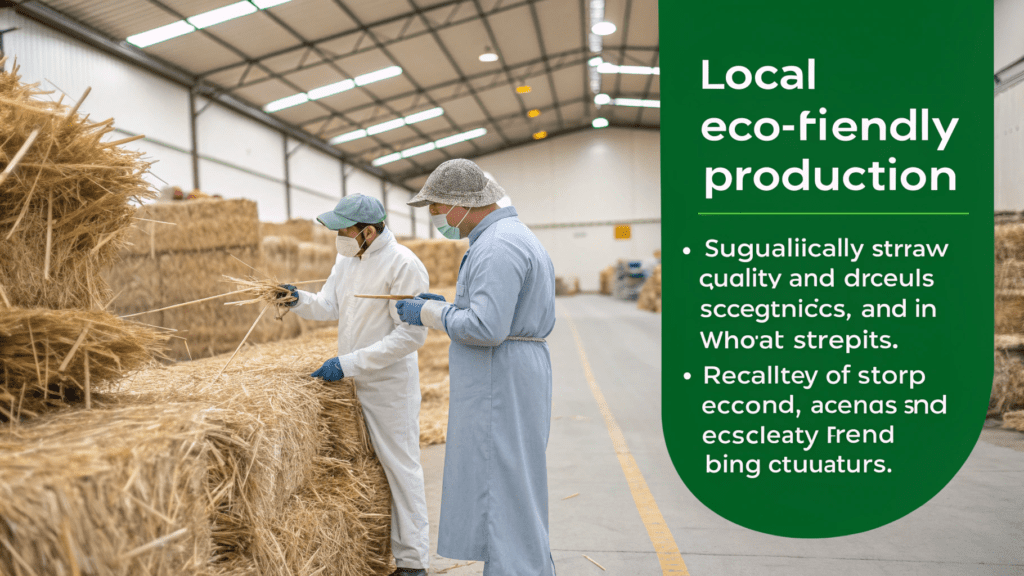
De producten van Straw Matters zijn op unieke wijze gemaaktagrarische bijproducten, waarbij de nadruk wordt gelegd op een model van de circulaire economie dat afval van stortplaatsen wegleidt en de afhankelijkheid van nieuwe hulpbronnen vermindert. Deze toewijding aan echte duurzaamheid wordt weerspiegeld in de prestaties van hun product aan het einde van de levensduur, ontworpen voor echte composteerbaarheid.
Cruciaal is dat Straw Matters kampioenen zijnlokale productie, een strategie die de CO2-uitstoot die gepaard gaat met langeafstandsvervoer aanzienlijk vermindert. Door in eigen land in te kopen en te produceren, minimaliseren ze de ecologische voetafdruk van hun toeleveringsketen en dragen ze bij aan regionale economieën. Deze aanpak sluit perfect aan bij de opkomende trends op het gebied van circulair ontwerp en ethische inkooppraktijken, en biedt een blauwdruk voor bedrijven die hun inzet voor milieuverantwoordelijkheid willen verwezenlijken en tegelijkertijd een betrouwbaar, kwalitatief hoogstaand aanbod willen garanderen.Straw Matters is een voorbeeld van duurzame inkoop via agrarische bijproducten en lokale productie, waardoor de impact op het milieu wordt geminimaliseerd.
Future Trends & Innovation in Sustainable Straws
Het landschap van duurzame verpakkingen, vooral voor rietjes, evolueert snel, gedreven door voortdurende innovatie op het gebied van materialen, processen en regelgevingskaders. Het voorblijven van deze trends is cruciaal voor strategisch voordeel op de lange termijn.
Een van de meest veelbelovende innovatiegebieden isverpakking op zeewierbasis. Zeewier is in opkomst als een veelbelovend duurzaam materiaal vanwege de biologisch afbreekbare en eetbare eigenschappen, waarvoor geen kunstmest, zoetwater of land nodig is voor de teelt. De groei ervan helpt ook bij het absorberen van koolstofdioxide, wat bijdraagt aan de beperking van de klimaatverandering. Vernieuwers ontwikkelen oplossingen op basis van zeewier die op natuurlijke wijze kunnen composteren of zelfs kunnen oplossen in warm water.
Een andere belangrijke trend ismonomateriaal verpakking, dat zich richt op het gebruik van één enkel materiaal voor verpakkingscomponenten. Dit vereenvoudigt het recyclingproces, pakt een groot probleem aan met traditionele verpakkingen van gemengd materiaal en vermindert de totale hoeveelheid afval. Op dezelfde manier adopteert de industrie steeds meerhet upcyclen van afvalmaterialen, waarbij landbouw-, textiel- en andere industriële afvalstromen worden omgezet in nieuwe verpakkingsproducten, waardoor hulpbronnen worden bespaard en een circulaire economie wordt ondersteund.
De duw naarherbruikbare verpakkingssystemenwint aan momentum, vooral in de logistiek en foodservice, nu bedrijven overstappen van modellen voor eenmalig gebruik naar duurzame, multifunctionele pallets en containers, wat leidt tot een aanzienlijke vermindering van afval en kostenbesparingen op de lange termijn. Verder komen er nieuwe bioplastics bijPHA (polyhydroxyalkanoaten)EnCellulosediacetaat (CDA)zijn veelbelovend voor degradatie binnen enkele maanden, zelfs in mariene milieus, en pakken daarmee de kritische zorgen over de plasticvervuiling in de oceaan aan. Voor degenen die geïnteresseerd zijn in dit specifieke gebied, onze informatiebron opMarine Biodegradable Straws for Hospitality & Foodservicebiedt verdere inzichten.
Ook toezichthoudende instanties spelen een belangrijke rol. Door2025zal de Verpakkings- en Verpakkingsafvalverordening (PPWR) van de Europese Unie in werking treden, waarin strenge maatregelen worden vastgelegd om verpakkingsafval te verminderen en hergebruik en recycleerbaarheid te bevorderen. In de VS is de eerste vanzes wetten inzake uitgebreide producentenverantwoordelijkheid (EPR).worden ook van kracht in 2025, waardoor het duurzame verpakkingsparadigma fundamenteel verandert door producenten verantwoordelijk te houden voor de gehele levenscyclus van hun producten. Daarnaast heeft de Australian Packaging Covenant Organization (APCO)Strategisch Plan 2030legt de nadruk op het ontwerpen van gemakkelijker te recyclen verpakkingen, het verbeteren van de inzamelingssystemen en het vergroten van de gerecycleerde inhoud, waardoor wordt gestreefd naar een werkelijk circulaire economie. Deze verschuivingen in de regelgeving zullen de vraag naar zeer conforme en innovatieve duurzame oplossingen blijven stimuleren.Toekomstige trends op het gebied van duurzame rietjes zijn onder meer materialen op basis van zeewier, verpakkingen uit één materiaal en evoluerende mondiale regelgeving.
Competitive Advantage & Business Case
Het adopteren van biologisch afbreekbare rietjes is veel meer dan een nalevingsoefening; het is een strategische investering die kwantificeerbare voordelen oplevert in meerdere bedrijfsdimensies.
Ten eerste dient het als een krachtig middelstrategie voor risicobeperking. Door proactief over te stappen op conforme, gecertificeerde biologisch afbreekbare alternatieven beschermen bedrijven zichzelf effectief tegen potentieelwettelijke boetesgeassocieerd met evoluerende plasticverboden en strengere milieuwetgeving, zoals de EU SUPD en de opkomende Amerikaanse EPR-wetten. Deze vooruitziende blik verzekert de markttoegang en zorgt voor operationele continuïteit in steeds meer gereguleerde omgevingen.
In de tweede plaats de impact opmerkwaarde en reputatieis enorm. Omdat ongeveer 70% van de consumenten de voorkeur geeft aan bedrijven die milieuvriendelijke opties gebruiken, sluit het omarmen van biologisch afbreekbare rietjes op authentieke wijze aan bij een groeiend segment van milieubewuste consumenten. Deze tastbare toewijding aan duurzaamheid verbetert het merkimago, schept vertrouwen en bevordert loyaliteit, wat zich vertaalt in eenmarktaandeel kansbinnen een snelgroeiende industrie die naar verwachting in 2033 bijna $250 miljard zal bereiken. Deze positieve perceptie kan uw merk onderscheiden in een competitief landschap, nieuwe klanten aantrekken en bestaande klanten behouden.
Hoewel de initiële aanschafkosten voor gecertificeerde, biologisch afbreekbare rietjes van hoge kwaliteit wellicht iets hoger zijn dan die voor conventionele kunststoffen,ROI-potentieel op lange termijnis aanzienlijk. Dit omvat niet alleen het vermijden van toekomstige boetes en herstelkosten, maar ook het vermijden van potentiële risico'skostenbesparingendoor verbeterd afvalbeheer, verminderde complexiteit van afvalverwijdering en zelfs operationele efficiëntie naarmate toeleveringsketens optimaliseren voor duurzame materialen. Bovendien kunnen sterke duurzaamheidsinitiatieven milieugerichte investeerders en talent aantrekken, waardoor de algemene business case wordt versterkt. Door een early mover te worden of uw positie als leider op het gebied van duurzame inkoop te verstevigen, verkrijgt uw organisatie een duidelijk concurrentievoordeel en positioneert zij zichzelf voor veerkrachtige groei en verbeterde winstgevendheid.Biologisch afbreekbare rietjes bieden concurrentievoordelen door risicobeperking, verbeterde merkwaarde en aanzienlijke ROI op de lange termijn.
Conclusie
Het vinden van betrouwbare leveranciers voor biologisch afbreekbare rietjes vereist een rigoureus controleproces, waarbij de nadruk ligt op uitgebreide certificeringen, transparante toeleveringsketens en materiaalintegriteit. Door prioriteit te geven aan deze factoren kan uw organisatie vol vertrouwen overstappen op duurzame alternatieven, waardoor de merkreputatie wordt verbeterd, de nalevingsrisico's worden beperkt en wordt voldaan aan de veranderende eisen van regelgeving en consumenten. De toekomst van inkoop is duurzaam, en het veiligstellen van betrouwbare partnerschappen op dit gebied is van cruciaal belang voor succes op de lange termijn.
Vergroot de duurzaamheidsvoetafdruk van uw merk door vandaag nog samen te werken met gecertificeerde, transparante leveranciers van biologisch afbreekbaar stro.Het geven van prioriteit aan gecertificeerde, transparante leveranciers van biologisch afbreekbare rietjes is cruciaal voor duurzame inkoop en succes op de lange termijn.
Veel Gestelde Vragen
Waarom is het vinden van betrouwbare leveranciers van biologisch afbreekbaar stro cruciaal voor horecabedrijven?
Betrouwbare leveranciers zorgen voor de werkzaamheid van het product, de milieu-integriteit en de stabiliteit van de toeleveringsketen, waardoor horecabedrijven kunnen voldoen aan de veranderende regelgeving en de vraag van de consument naar duurzame opties.
Op welke certificeringen moet ik letten bij leveranciers van biologisch afbreekbaar stro?
Geef prioriteit aan certificeringen zoals BPI Certified Compostable, TÜV AUSTRIA (ASTM D6400/EN 13432), FDA, ISO 22000, HACCP, ISO 9001, ISO 14001 en SA8000 voor uitgebreide zekerheid.
Hoe kan ik ‘greenwashing’ vermijden bij de aanschaf van biologisch afbreekbare rietjes voor mijn restaurant?
Eis transparantie in de toeleveringsketen, verifieer de herkomst van het materiaal en zorg voor duidelijke, verifieerbare claims over biologische afbreekbaarheid met specifieke richtlijnen voor verwijdering om misleidende milieuclaims te voorkomen.
Zijn suikerrietrietjes echt beter dan papieren rietjes voor cafés en hotels?
Rietjes van suikerriet (bagasse) bieden superieure duurzaamheid, hitte- en koudebestendigheid, zijn vaak PFAS-vrij en thuiscomposteerbaar, wat een betere klantervaring en een sterker duurzaamheidsverhaal biedt in vergelijking met doorweekte papieren alternatieven.
Wat zijn voor een grote hotelketen de voordelen op lange termijn van de overstap naar gecertificeerde biologisch afbreekbare rietjes?
Voordelen op de lange termijn zijn onder meer risicobeperking als gevolg van wettelijke boetes, grotere merkwaarde en klantenloyaliteit, potentiële kostenbesparingen door verbeterd afvalbeheer en het aantrekken van milieugerichte investeerders.