In een tijdperk dat wordt gekenmerkt door een escalerend milieubewustzijn, worden bedrijven in de horeca- en foodservicesector geconfronteerd met een ongekende druk om over te stappen op werkelijk duurzame praktijken. De wereldwijde uittocht van plastic voor eenmalig gebruik is niet slechts een vluchtige trend; het vertegenwoordigt een fundamentele operationele herschikking en een cruciale uitdaging voor de merkreputatie. Terwijl inkoopmanagers, operationeel directeuren, duurzaamheidsfunctionarissen en leidinggevenden in de toeleveringsketen door dit complexe landschap navigeren, wordt de zoektocht naar haalbare, milieuvriendelijke alternatieven steeds intensiever. Onder de vele kanshebbers zijn bamboerietjes een prominente keuze geworden, vaak geprezen om hun natuurlijke oorsprong. Toch blijft er een centrale vraag bestaan voor besluitvormers die worstelen met een langetermijnstrategie:Do bamboo straws truly decompose, and what are the precise implications for your enterprise’s environmental footprint and bottom line?This deep dive will dissect the scientific realities, dynamic market forces, and crucial operational considerations surrounding bamboo straws, equipping your business with the insights needed to make informed, high-impact, eco-conscious decisions.
De inzet is aanzienlijk. De virale video uit 2015 van een plastic rietje dat uit het neusgat van een zeeschildpad werd gehaald, veroorzaakte wereldwijd een afrekening en onderstreepte de ernstige ecologische schade die wordt aangericht door plastic voor eenmalig gebruik. Deze publieke verontwaardiging vertaalde zich snel in concrete wetgevende maatregelen. Steden als Seattle voerden het voortouw en implementeerden in juli 2018 het eerste grote verbod op plastic rietjes in de VS, gevolgd door een wijdverbreide adoptie van een ‘straw upon request’-beleid (bijvoorbeeld Californië in 2019) en uitgebreide verboden, zoals de richtlijn van de Europese Unie over plastic voor eenmalig gebruik, die in juli 2021 van kracht wordt. Grote bedrijven, waaronder Starbucks en McDonald’s, reageerden door zich ertoe te verbinden plastic rietjes tegen 2020 uit de wereldwijde activiteiten te bannen. Deze verschuivingen werden genegeerd. riskeert niet alleen wettelijke straffen en boetes, maar ook aanzienlijke reputatieschade, waardoor een steeds milieubewuster klantenbestand vervreemd raakt en mogelijk een cruciaal marktaandeel verloren gaat.
The Unpacking of Biodegradability: What Happens to Bamboo Straws Post-Use?
Het begrijpen van het afbraaktraject van bamboerietjes is niet alleen een ecologische nieuwsgierigheid; het is een fundamentele noodzaak voor elk bedrijf dat zich inzet voor daadwerkelijke afvalvermindering en de principes van de circulaire economie. In tegenstelling tot hun synthetische tegenhangers, die eeuwenlang kunnen blijven bestaan, zijn bamboerietjes inherent natuurlijk en gemaakt van 100% biologisch afbreekbare materialen. Dankzij deze inherente kwaliteit kunnen ze terugkeren naar de aarde zonder bij te dragen aan aanhoudende microplasticvervuiling of schadelijke chemische resten achter te laten.
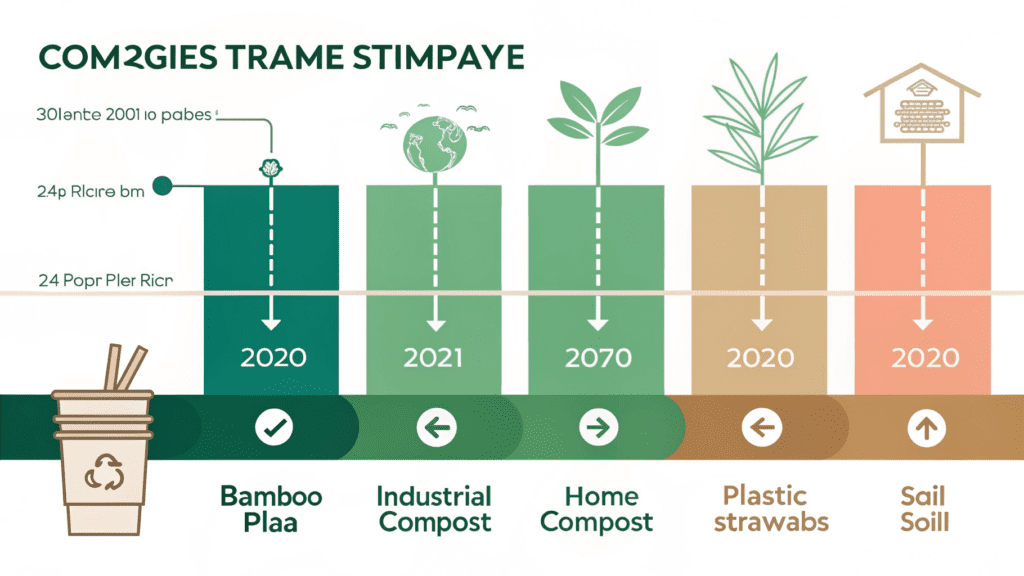
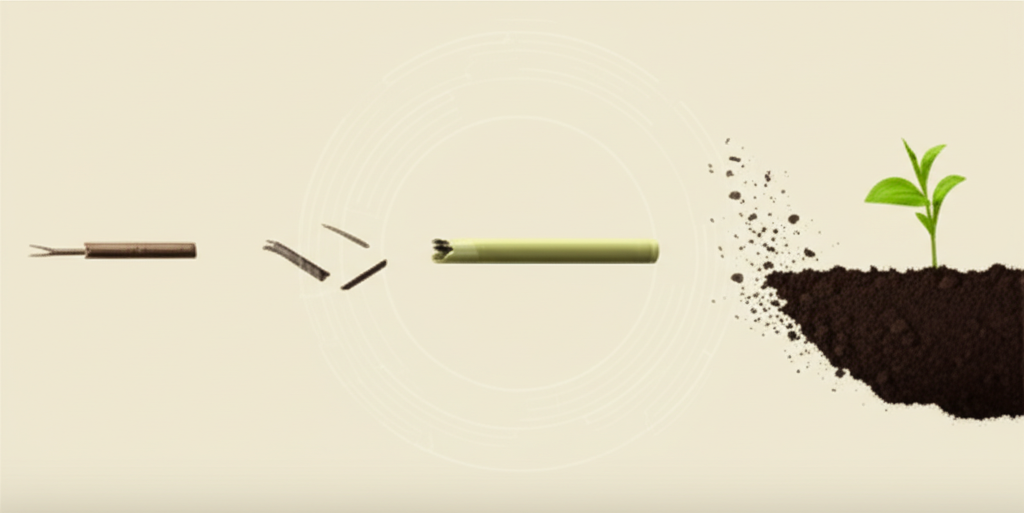
The speed and efficiency of bamboo straw breakdown are, however, contingent on several critical environmental factors. Their thickness, density, and the surrounding conditions—such as ambient temperature, humidity levels, and the microbial composition of the soil—all play a significant role. Generally, in an optimal industrial composting facility, where conditions are precisely controlled for warmth, moisture, and active microbial life, bamboo straws can decompose rapidly, often within less than 5 months (typically 45 to 180 days). For businesses with access to such facilities, this offers a clear and measurable path to waste diversion.
In minder gecontroleerde omgevingen wordt het tijdsbestek van de ontbinding langer. In een thuiscompostbak, waar de omstandigheden minder uniform zijn, duurt het doorgaans ongeveer 1,5 tot 2 jaar voordat bamboerietjes zijn afgebroken. Wanneer het eenvoudigweg in de grond wordt begraven, vooral in vochtige klimaten, kan onbehandeld, dood bamboe binnen ongeveer een jaar ontbinden. Over het geheel genomen kan het proces, wanneer het wordt verwijderd in natuurlijke omgevingen of algemene afvalstromen die enige biologische activiteit mogelijk maken, variëren van enkele maanden tot maximaal twee jaar. Cruciaal is dat direct zonlicht, nauw contact met de bodem en consistent vocht dit natuurlijke afbraakproces aanzienlijk versnellen, waardoor het materiaal weer wordt omgezet in zijn organische basiscomponenten.
De zakelijke voordelen van het omarmen van echt afbreekbare alternatieven zoals bamboe zijn veelzijdig en verstrekkend:
- Verminderde stortlast: Door te kiezen voor materialen die op natuurlijke wijze terugkeren naar de aarde, dragen bedrijven rechtstreeks bij aan het verminderen van hun operationele afvalvolume en het verminderen van de afhankelijkheid van overbelaste stortplaatsen. Dit vertaalt zich in potentiële kostenbesparingen op afvalbeheer en een tastbare vermindering van de impact op het milieu.
- Naleving van veranderende regelgeving: Proactieve adoptie van biologisch afbreekbare oplossingen zorgt ervoor dat uw bedrijf een voorsprong heeft op de regelgeving. Terwijl regeringen wereldwijd het verbod op plastic voor eenmalig gebruik blijven implementeren en aanscherpen, zorgt het gebruik van echt afbreekbare producten ervoor dat naleving wordt gewaarborgd, juridische risico's worden beperkt en dure boetes worden vermeden.
- Enhanced Brand Image and Market Positioning: Demonstrating a tangible commitment to sustainability resonates powerfully with today’s eco-conscious consumers and corporate clients. Integrating bamboo straws into your operations provides a visible, actionable statement of environmental stewardship, enhancing brand perception, attracting new customers, and strengthening loyalty. This commitment aligns with broader trends towards responsible consumption and can significantly uplift your brand’s value in a competitive market. For a deeper dive into the broader implications for the hospitality sector, explore how sustainable straw choices, including bamboo, compare against other options at Sugarcane vs. Bamboo Straws: Sustainable Hospitality.
Strategic Comparison: Evaluating Bamboo Straws Against the Alternatives
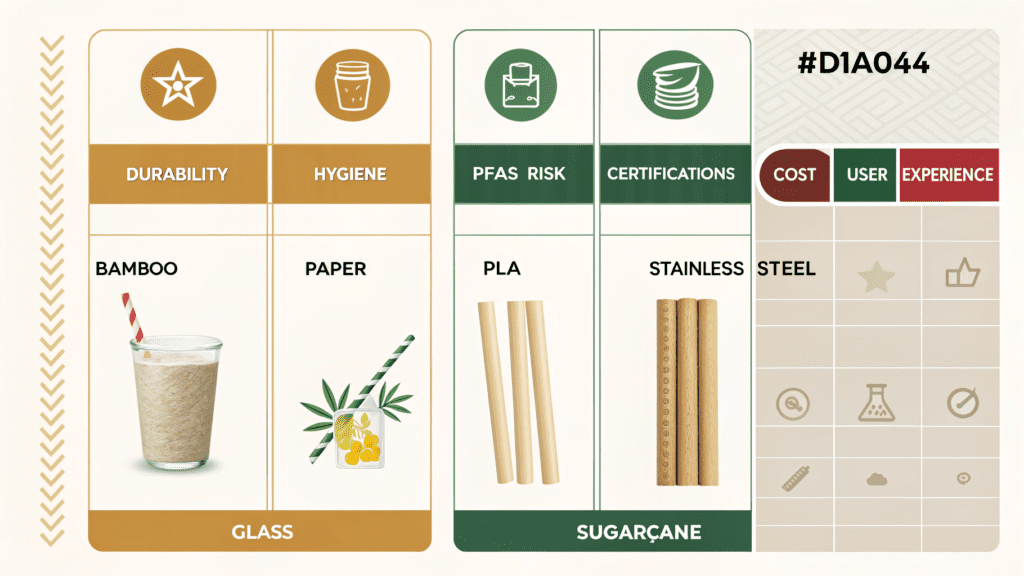
The decision to adopt a specific straw alternative extends far beyond mere biodegradability. For procurement managers and operations directors, a comprehensive evaluation must encompass factors such as cost-efficiency, product durability, hygiene standards, and the overall customer experience. A critical comparative analysis is essential to inform strategic purchasing decisions that align with both sustainability goals and operational realities.
Comparative Analysis of Straw Materials
- Kunststof rietjes:
- Decomposition: A staggering environmental liability, taking up to 200 years to break down. Their degradation pathway leads to pervasive microplastic pollution, a growing global health concern.
- Business Impact: Face widespread bans and significant negative public perception. Continued use poses high environmental liability, reputational risk, and potential regulatory fines.
- Papieren rietjes:
- Decomposition: Generally biodegradable, breaking down in 2-6 weeks.
- Business Impact: Prone to getting soggy quickly, compromising user experience. A significant recent controversy highlights that many brands contain PFAS “forever chemicals,” which do not decompose and raise serious health and environmental concerns. This inconsistency in safety and user experience makes them a mixed choice for businesses.
- Metal (Stainless Steel) Straws:
- Decomposition: Non-biodegradable; however, they are highly recyclable.
- Business Impact: Designed for extensive reusability and exceptional durability, making them a long-term investment. They generally do not contain PFAS. However, they require rigorous cleaning protocols (often special brushes), can be costly upfront, and pose safety concerns such as choking hazards or heat conduction with hot beverages.
- Glass Straws:
- Decomposition: Non-biodegradable but recyclable.
- Business Impact: Highly reusable and aesthetically pleasing, offering a premium feel. However, they are fragile, posing breakage risks and potential injury. Cleaning can be challenging, and their initial cost is high.
- Sugarcane & Grass Straws:
- Decomposition: Highly biodegradable, decomposing in less than 3 months.
- Business Impact: Represent a promising emerging category with excellent biodegradability. They offer a natural feel but may face challenges related to product consistency and availability as they gain market traction. To understand how they stack up against bamboo, see our detailed comparison at Duurzame rietjes: suikerriet versus bamboe voor horeca.
- Rice Straws:
- Decomposition: Biodegradable, typically decomposing in 1-3 months.
- Business Impact: Fully biodegradable and often edible. However, they can soften in drinks, especially hot ones, and have limited reusability, making them primarily a single-use option.
Decision Matrix: Key Considerations for Commercial Procurement
| Functie / Strotype | Bamboe | Plastic | Papier | Metaal | Glas | Sugarcane/Grass |
|---|---|---|---|---|---|---|
| Biologische afbreekbaarheid | Hoog | Zeer laag | Hoog | Geen | Geen | Hoog |
| Decomp. Time | Months-2Y | 200Y+ | Weeks | N.v.t | N.v.t | <3 Months |
| Herbruikbaarheid | Months-Years | Single Use | Single Use | Years | Years | Single Use/Limited |
| PFAS-risico | High (some brands tested positive) | Geen | High (some brands tested positive) | Geen | Geen | Low/Unknown |
| Hygiene Challenge | Medium (porous, requires diligent cleaning) | Laag | Laag | Medium (requires brush) | Laag | Low/Medium |
| Cost (per unit) | Medium | Laag | Laag | High (initial) | High (initial) | Medium |
| Duurzaamheid | Good (resists sogginess, can crack) | Hoog | Low (soggy) | Hoog | Medium (fragile) | Good (can soften) |
| Gebruikerservaring | Natural feel, may impart slight woody taste | Flexible, tasteless | Sogs easily, no taste | Hard, no taste, can conduct heat | Clear, no taste, elegant | Natural feel, may soften |
| B2B Reputation | High (eco-friendly perception) | Negative (environmental pariah) | Mixed (sogginess, PFAS concerns) | Positive (durable, premium) | Positive (elegant, reusable) | Positive (innovative, eco-friendly) |
Navigating the Landscape: Essential Industry Insights for B2B Leaders
The bamboo straw market is not static; it’s a rapidly evolving segment within the broader sustainable packaging industry, presenting both immense opportunities and nuanced challenges for businesses seeking to integrate impactful, responsible solutions. Staying abreast of market trajectory, technological innovations, and evolving compliance standards is paramount for B2B leaders.
Market Trajectory and Growth Opportunities
The global bamboo straw market is experiencing exponential growth, reflecting a significant shift in consumer and corporate priorities. Valued at approximately USD 175 million in 2023, projections indicate a robust expansion, potentially reaching around USD 490 million by 2032, demonstrating a Compound Annual Growth Rate (CAGR) of about 12%. More ambitious forecasts suggest the market could even surpass USD 7.7 billion by 2034, driven by a consistent CAGR of 5.0% from 2024.
This impressive growth is fundamentally propelled by surging environmental consciousness among consumers worldwide and the proliferation of stringent government regulations. The EU’s comprehensive single-use plastic ban, coupled with similar policies and initiatives across numerous U.S. states and cities, creates a regulatory imperative for businesses to seek alternatives. This regulatory pressure, combined with a strong consumer preference for eco-friendly products, is making bamboo straws a go-to option for the foodservice, hospitality (including hotels, resorts, restaurants, and cafes), and retail sectors—all identified as primary growth segments. While Asia-Pacific currently holds the largest market share due to its established production infrastructure, North America and Europe are witnessing significant adoption rates, fueled by their robust regulatory frameworks and highly environmentally concerned consumer bases.
Innovations Driving Performance and Consistency
The bamboo straw industry is not resting on its natural laurels; it’s undergoing continuous innovation to address previous limitations and enhance product viability for commercial use.
- Enhanced Durability and Consistency: Advances in harvesting and processing techniques are leading to higher quality, more durable bamboo straws that resist cracking, splintering, and premature softening. Manufacturers are increasingly focused on achieving greater consistency in length and diameter, which is crucial for operational efficiency in commercial settings where uniformity matters for dispensing and user experience.
- Cost-Effective Production: Door onderzoek ondersteunde methoden democratiseren de toegang tot hoogwaardige bamboerietjes. Onderzoekers van het International Center for Bamboo and Rattan (ICBR) in China hebben bijvoorbeeld pionierswerk verricht met een methode voor het produceren van biologisch afbreekbare bamboerietjes door ultradunne plakjes Moso-bamboe op te winden. Deze innovatieve rietjes beschikken over superieure mechanische eigenschappen, waaronder hoge treksterkte, uitzonderlijke flexibiliteit en opmerkelijke weerstand tegen breuk. Cruciaal is dat hun productiekosten worden geschat op een opmerkelijk lage 0,014 yuan (ongeveer 0,002 dollar) per rietje, waardoor ze zeer concurrerend zijn met andere biologisch afbreekbare alternatieven.
- Nieuwe functies: The future of bamboo straws could even integrate circular economy principles at their core. Some visionary developments include seed-embedded straws, designed to be planted after use, promoting new plant growth and offering a truly regenerative end-of-life solution.
Compliance and Certifications: Ensuring Trust and Safety
For B2B procurement, certifications are not just badges; they are non-negotiable proof of product quality, safety, and genuine sustainability claims. In a market where “greenwashing” can be a concern, validated certifications empower businesses to make confident, responsible choices.
- Food Safety Certifications: Always prioritize suppliers who can provide proof of food safety compliance, such as FDA (U.S. Food and Drug Administration), LFGB (German Food and Feed Code), or SGS (Société Générale de Surveillance) certifications. These confirm that the straws are safe for beverage contact and free from harmful substances.
- Biodegradability & Compostability: To ensure products genuinely break down as claimed, look for certifications like ASTM D6400 (U.S.), ASTM D6868 (U.S.), EN 13432 (European), BPI (Biodegradable Products Institute), and ABA SEEDLING (Australasian Bioplastics Association). These certifications guarantee that the straws will decompose within specified timeframes under industrial composting conditions without leaving toxic residues.
- Sustainable Sourcing: The Forest Stewardship Council (FSC) certification is vital. It verifies that the bamboo used is harvested from responsibly managed forests, promoting biodiversity, supporting local communities, and preventing deforestation.
- Biobased inhoud: The USDA BioPreferred Program certifies products for their biobased composition, indicating they are derived from renewable agricultural or marine resources. A high biobased content (e.g., 100%) signifies a strong commitment to renewable materials.
- PFAS-vrije verificatie: This is a crucial and evolving area. A significant controversy arose from an August 2023 study published in Voedseladditieven en verontreinigingen, which found that 80% of tested bamboo straw brands contained PFAS (“forever chemicals”). These persistent chemicals are linked to various health issues and environmental contamination. Businesses must prioritize suppliers who proactively test and provide explicit certification that their bamboo straws are PFAS-free. This directly addresses health concerns and ensures the integrity of your sustainability claims. Learn more about the potential disadvantages of bamboo straws in commercial settings, including hygiene and PFAS concerns, at Bamboo Straw Disadvantages in Hospitality & Foodservice.
- Hygiene Protocols: While bamboo possesses natural antibacterial properties due to “bamboo kun,” its porous nature demands rigorous cleaning for reusable applications. For commercial settings, especially high-volume ones, ensuring thorough and consistent cleaning to prevent mold and bacterial growth can be challenging. Businesses should clarify supplier guidance on sanitation and consider if single-use certified compostable bamboo straws are a more practical solution where reususability poses operational hurdles.
Addressing the Hurdles: Hygiene, Lifespan, and Cost Realities
While the benefits of bamboo straws are compelling, a pragmatic approach necessitates acknowledging and addressing the operational hurdles:
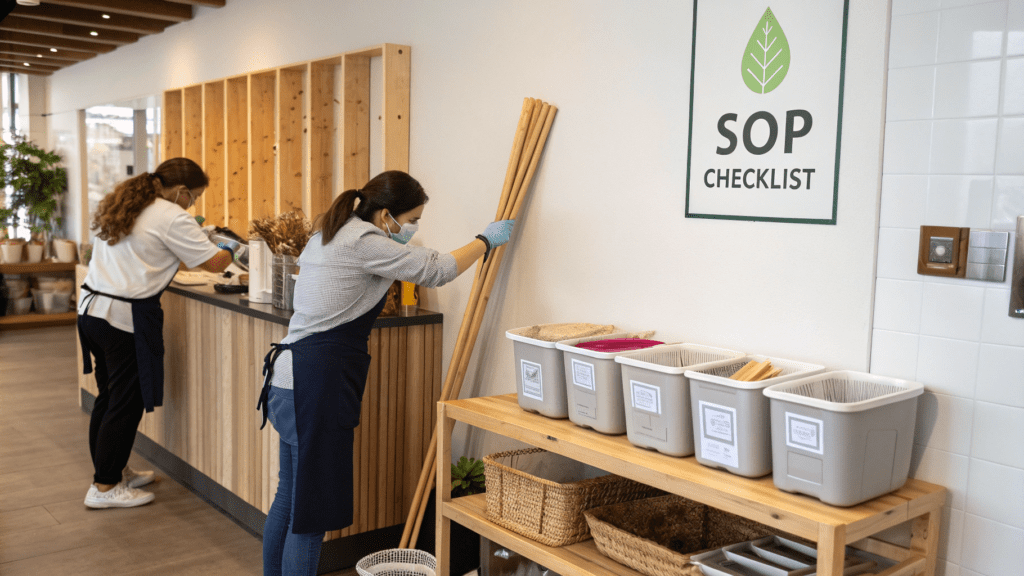
- Hygiene Challenges: De poreuze en vezelachtige structuur van bamboe kan vloeistoffen en organische resten absorberen. Als bamboerietjes niet zorgvuldig worden gereinigd met speciale borstels en na elk gebruik grondig worden gedroogd, kunnen ze een broedplaats worden voor schimmels en bacteriën. Dit levert een aanzienlijk hygiënisch probleem op, vooral bij commerciële activiteiten, waardoor herbruikbare bamboerietjes vaak onpraktisch zijn voor grootschalige foodservice, waar composteerbare opties voor eenmalig gebruik de voorkeur hebben. Het Duitse Federale Instituut voor Risicobeoordeling (BfR) raadt het gebruik van rietjes voor meervoudig gebruik af als een grondige reiniging niet kan worden gegarandeerd.
- Levensverwachtingen: While more durable than paper, bamboo straws generally have a shorter operational lifespan compared to robust alternatives like metal or glass. With proper care, they can last “several months to a year.” Frequent use, especially with hot liquids, can accelerate degradation, leading to cracking, splintering, or softening, necessitating more frequent replacements than fully rigid reusable options.
- Initial Cost: Bamboo straws typically carry a higher per-unit cost than traditional disposable plastic straws due to the labor-intensive crafting process and treatment. However, this initial investment must be weighed against the significant long-term environmental benefits, enhanced brand perception, and potential avoidance of regulatory non-compliance costs. The declining cost of innovative production methods, as evidenced by the ICBR research, suggests future price competitiveness.
Pioneering Sustainable Practices: Your Next Steps
Embracing bamboo straws signifies more than just a product switch; it embodies a tangible, forward-looking commitment to environmental stewardship and operational excellence. This strategic choice resonates deeply with an increasingly eco-conscious consumer base and reinforces your enterprise’s core values, positioning you as a leader in sustainable business practices. By truly understanding their decomposition pathways, critically comparing them against a spectrum of alternatives, and leveraging the dynamic industry insights detailed above, your business can strategically integrate this powerful sustainable solution.
To optimize your transition, evaluate your specific operational needs. For high-volume, fast-paced environments, certified single-use compostable bamboo straws offer a practical and compliant solution. For dine-in experiences or scenarios where reusability is genuinely feasible, explore high-quality, durable reusable options, ensuring robust internal cleaning protocols are in place. Above all, partner with suppliers who offer comprehensive certifications, including verifiable PFAS-free status, to guarantee both genuine environmental integrity and unwavering consumer safety.
Take the definitive step towards a greener, more resilient future for your business. Exploremomoio.com'sextensive range of certified bamboo and other cutting-edge sustainable packaging solutions, meticulously curated and designed for the demands of the modern enterprise. By making informed choices today, your business can mitigate regulatory risks, reduce operational waste by up to 30% annually, uplift brand value by appealing to the estimated 70% of consumers willing to pay more for sustainable brands, and seize a significant share in the rapidly expanding green market.
Frequently Asked Questions (Bamboo Straws)
Q1: How quickly do bamboo straws decompose?
In optimal industrial composting facilities, bamboo straws can decompose rapidly, often in less than 5 months (45 to 180 days). In a home compost bin, it typically takes 1.5 to 2 years, and when buried in soil in a humid climate, decomposition can occur in about 1 year.
Q2: Are bamboo straws truly eco-friendly, given concerns like PFAS?
Yes, bamboo straws are generally considered eco-friendly due to their natural, rapidly renewable source and inherent biodegradability. However, recent studies have detected PFAS (“forever chemicals”) in some bamboo straw brands. To ensure true environmental safety and avoid health concerns, source exclusively from suppliers who explicitly test and certify their products as PFAS-free.
Q3: Can bamboo straws be reused in a commercial setting?
Bamboo straws are designed for reuse and can last for months with proper care, but commercial settings face hygiene challenges due to their porous nature. Thorough cleaning with specialized brushes and complete drying are essential after each use to prevent mold and bacterial growth. For many high-volume foodservice operations, single-use, certified compostable bamboo straws are often a more practical and hygienically compliant option.
Q4: How do bamboo straws compare in durability to other eco-friendly alternatives?
Bamboo straws are generally more durable than paper straws, resisting sogginess and maintaining integrity better. However, they are typically less durable and have a shorter operational lifespan (several months to a year) than robust options like stainless steel or glass. They can also crack or soften with prolonged exposure to very hot liquids or extensive use.
Q5: What certifications should businesses look for when purchasing bamboo straws?
Prioritize suppliers who can provide:
- Food safety: FDA, LFGB, SGS test reports.
- Composteerbaarheid: ASTM D6400, EN 13432, BPI or CMA participation (as applicable).
- Sustainable sourcing: FSC (Forest Stewardship Council).
- Biobased content: USDA BioPreferred certification (where applicable).
- PFAS-free: Explicit verification and periodic lab testing for PFAS-free status.