Bedrijfsactiviteiten optimaliseren met hittebestendige, milieuvriendelijke rietjes voor warme dranken
A B2B Guide for Hospitality & Foodservice Procurement
I. De dringende noodzaak voor duurzame oplossingen op het gebied van warme drankenservice
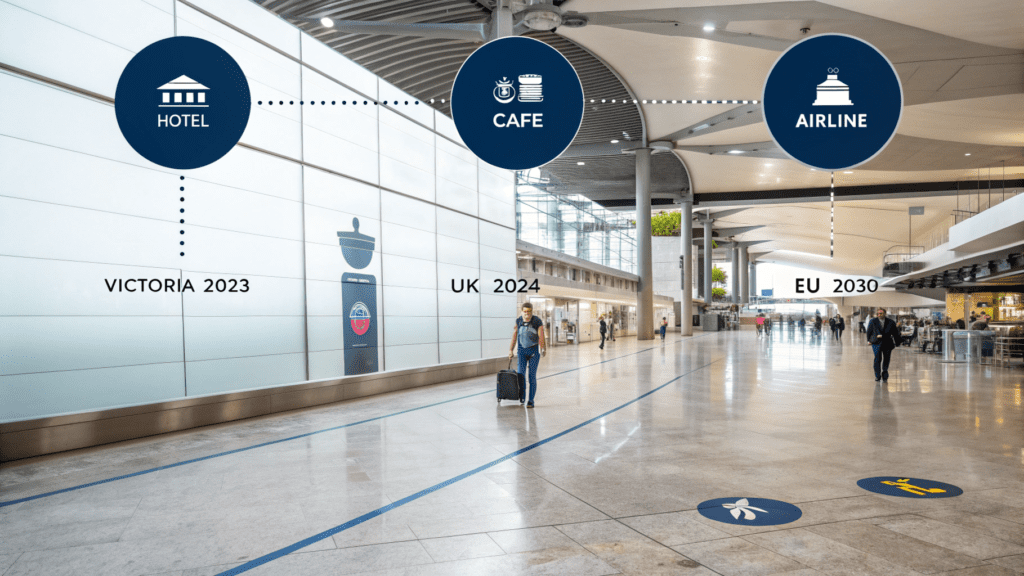
Het landschap van B2B-inkoop ondergaat een enorme verschuiving, aangedreven door escalerende milieuregelgeving en een wereldwijde drang naar duurzaamheid. Voor bedrijven die actief zijn in de drankensector vormt deze transformatie een cruciaal moment, vooral als het gaat om kunststoffen voor eenmalig gebruik. Regelgevende instanties over de hele wereld voeren strenge verboden uit, zoals bijvoorbeeld in Victoria, Australië, dat plastic rietjes voor eenmalig gebruik verbood vanaf 1 februari 2023, en in Groot-Brittannië, in navolging van dit voorbeeld vanaf 7 oktober 2024. Deze mandaten creëren een dringende noodzaak voor bedrijven om op zoek te gaan naar conforme, hoogwaardige alternatieven.
Er ontstaat een aanzienlijke operationele uitdaging bij het aanpakken van warme dranken: traditionele papieren rietjes haperen vaak, worden snel drassig en vallen uiteen, wat de klantervaring ernstig in gevaar brengt. Dit alomtegenwoordige ‘doorweekte stro’-dilemma heeft een flagrante marktkloof gecreëerd, waardoor innovatieve oplossingen nodig zijn die hoge temperaturen kunnen weerstaan zonder degradatie. Bovendien staan bedrijven onder enorme druk om hun activiteiten af te stemmen op de groeiende vraag van consumenten naar duurzame praktijken en het zich ontwikkelende ESG-aankoopbeleid (Environmental, Social, and Governance). Als u zich niet aanpast, riskeert u niet alleen niet-naleving van de regelgeving en de bijbehorende boetes, maar ook aanzienlijke reputatieschade in een markt die steeds meer waarde hecht aan milieubeheer. De financiële gevolgen van deze verschuiving zijn aanzienlijk; de mondiale markt voor duurzame verpakkingen, een segment dat rechtstreeks van invloed is op stro-alternatieven, zal naar verwachting stijgen van 316,8 miljard dollar in 2024 naar 662,4 miljard dollar in 2034, wat een robuuste samengestelde jaarlijkse groei (CAGR) van 7,6% aantoont. Dit traject onderstreept de commerciële levensvatbaarheid en het strategische belang van investeren in geavanceerde milieuvriendelijke oplossingen.**Omarm hittebestendige, milieuvriendelijke rietjes om aan de regelgeving te voldoen en de klanttevredenheid in de horeca te vergroten.**
II. Navigeren door het regelgevingslandschap en de marktvraag naar hittebestendige, milieuvriendelijke rietjes
Evoluerende plasticverboden en hun operationele impact: voorbij het PPWR-mandaat van de EU
De mondiale wetgeving tegen plastic voor eenmalig gebruik wordt steeds intensiever, waardoor inkoop- en supply chain-beslissingen voor bedrijven in alle sectoren fundamenteel worden hervormd. Naast nationale en regionale verboden verplichten overkoepelende regelgeving zoals de EU-Verordening inzake Verpakkingen en Verpakkingsafval (PPWR) dat alle verpakkingen die op de EU-markt worden gebracht tegen 2030 herbruikbaar of recycleerbaar moeten zijn. Deze richtlijnen zijn niet alleen maar suggesties; het zijn juridisch bindende vereisten die merken dwingen om duurzame alternatieven in hun kernactiviteiten te integreren.
De reikwijdte van deze verboden is breed en omvat alle soorten plastic voor eenmalig gebruik, of het nu conventioneel, biologisch afbreekbaar, composteerbaar of gerecycled is, en zelfs artikelen die gedeeltelijk van plastic zijn gemaakt, inclusief artikelen met plastic coatings of voeringen. Het verbod van de Victoriaanse regering uit 2023 op plastic rietjes voor eenmalig gebruik is bijvoorbeeld universeel van toepassing, met specifieke uitzonderingen alleen voor personen met een handicap of medische behoeften. Op dezelfde manier omvat het Britse verbod uit 2024 ook drankproducten met daaraan bevestigde plastic rietjes, maar uitzonderingen op producten die als verpakking voor bijvoorbeeld medicijnen worden gebruikt. Bedrijven die er niet in slagen om door deze complexe en evoluerende regelgeving te navigeren, worden niet alleen geconfronteerd met aanzienlijke boetes, maar ook met ernstige reputatieschade bij een publiek dat zich steeds meer bewust wordt van de verantwoordelijkheid van bedrijven voor het milieu. Om de verschuiving naar groenere opties in de drankensector volledig te begrijpen, kunt u onze uitgebreide gids raadplegenmilieuvriendelijke rietjes voor restaurants.
The Growing Sustainable Packaging Market & Why Hot Beverage Straws are Key
Het momentum achter duurzame verpakkingen valt niet te ontkennen, gedreven door een samenloop van een groter consumentenbewustzijn, ambitieuze duurzaamheidsdoelstellingen van bedrijven en de wereldwijde adoptie van principes van de circulaire economie. Deze markt maakt een snelle groei door, waarbij papier- en kartonmaterialen naar verwachting zullen domineren en in 2025 een geschat marktaandeel van 42% zullen hebben. Deze stijging wordt ondersteund door overheidscampagnes en een wijdverbreide transitie onder Fast-Moving Consumer Goods (FMCG)-merken die hun afhankelijkheid van traditionele kunststoffen willen verminderen.
Noord-Amerika was in 2024 bijvoorbeeld goed voor ongeveer 33% van de wereldwijde omzet uit duurzame verpakkingen, wat wijst op een sterke marktbereidheid en vraag naar milieuvriendelijke oplossingen. Terwijl uitdagingen zoals hogere productiekosten voor duurzame materialen en potentiële grondstoffenbeperkingen blijven bestaan, absorberen grotere bedrijven deze uitgaven steeds meer als onderdeel van hun strategische langetermijnverplichtingen. De focus op rietjes voor warme dranken binnen dit marktsegment is van cruciaal belang, omdat het een aanhoudend pijnpunt vertegenwoordigt dat standaard papieren rietjes of bioplastic rietjes van de eerste generatie met moeite hebben aangepakt. Innovaties in deze niche gaan niet alleen over compliance, maar ook over het verbeteren van de klantervaring en het versterken van de merkwaarde in een concurrerende omgeving.**Wereldwijde plasticverboden en marktgroei vereisen hoogwaardige, hoogwaardige alternatieven voor warme dranken voor de horeca.**
III. Baanbrekende materialen in hittebestendige, milieuvriendelijke rietjes
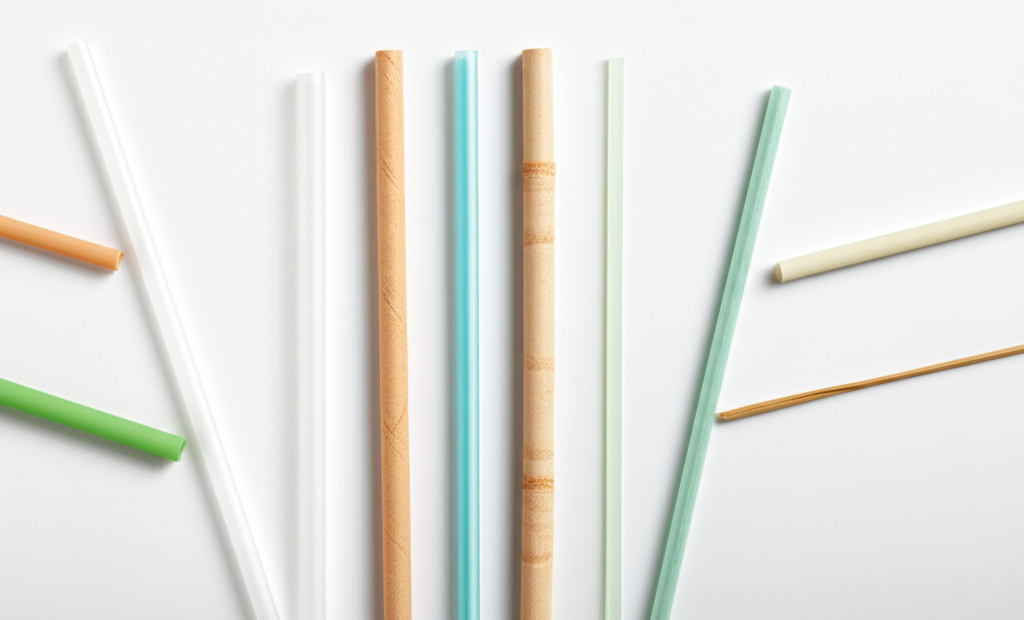
De zoektocht om het ‘doorweekte rietje’-dilemma in warme dranken te overwinnen heeft geleid tot aanzienlijke vooruitgang in de materiaalwetenschap, wat heeft geleid tot een nieuwe generatie hittebestendige, milieuvriendelijke rietjes. Deze innovaties zijn van cruciaal belang voor bedrijven die willen voldoen aan zowel de verwachtingen van de consument als aan de wettelijke mandaten.
Geavanceerde bioplastics: het ‘doorweekte stro’-dilemma bij hoge temperaturen oplossen
Traditionele rietjes van polymelkzuur (PLA), hoewel biologisch afbreekbaar, hebben in het verleden last gehad van een lage hitte-afbuigingstemperatuur (HDT), waarbij ze doorgaans vervormden boven 40°C (104°F). Deze beperking heeft standaard PLA ongeschikt gemaakt voor warme dranken. Recente doorbraken op het gebied van bioplastic engineering zorgen hier echter voor voor een revolutie.
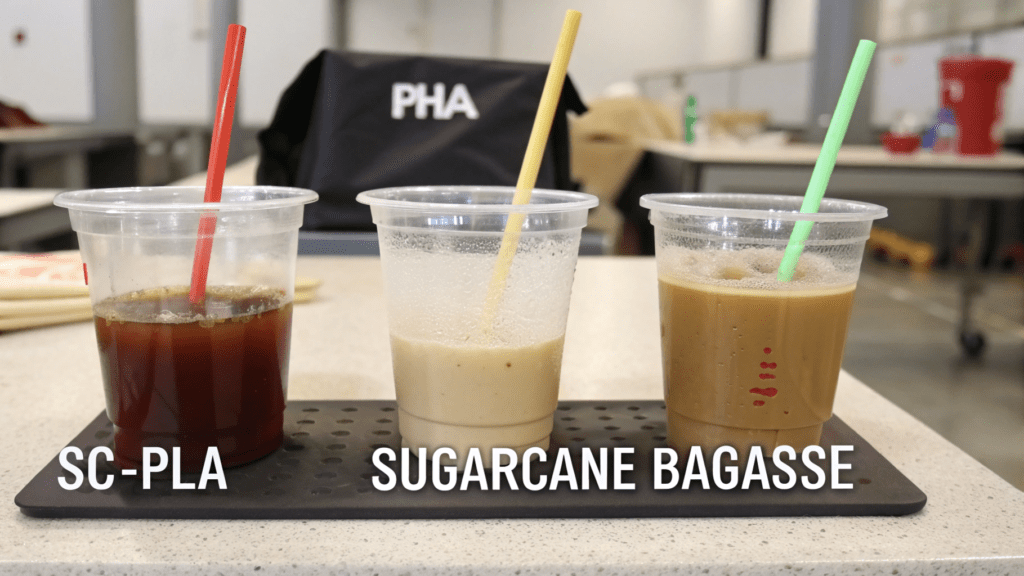
- Stereogecomplexeerde poly(melkzuur) (SC-PLA) rietjes betekenen een aanzienlijke sprong voorwaarts. Onderzoek wijst uit dat SC-PLA-rietjes opmerkelijk stabiel blijven, zelfs na onderdompeling in water van 100°C gedurende 10 minuten, met slechts een minimaal verlies aan treksterkte. Deze rietjes zijn volledig biologisch afbreekbaar en voldoen aan strenge composteerbare normen zoals BPI (ASTM D6400) en TÜV Austria (EN 13432), waardoor ze een premium gevoel en robuuste prestaties in hete vloeistoffen bieden.
- Vervliegen offers innovative plant-based straws that are heat-resistant up to 80°C. These are 100% commercially compostable and engineered to be free of harmful PFAS chemicals and microplastics, providing a safe and sustainable solution.
- Zein straws, derived naturally from corn, rice, and other grains, demonstrate excellent biocompatibility and stability in boiling water, offering a truly natural and highly functional alternative.
- Verder, advanced PLA options are now being developed that can withstand temperatures exceeding 70°C, with some formulations even surpassing 100°C. These advancements often involve specialized crystallization (CPLA, which can handle up to 82°C) or blending with other polymers to enhance thermal properties, directly addressing the historical heat limitations of bioplastics.
- Polyhydroxyalkanoates (PHA) straws are another promising plant-based bioplastic, offering durability comparable to traditional plastic. PHAs are notable for their resistance to sogginess across various beverage temperatures and are uniquely marine degradable, in addition to being home and industrially compostable, future-proofing investments for businesses.
Natural Fibers: Sustainable Straws for Hot Beverages that Deliver Durability
Naast geavanceerde bioplastics bewijzen rietjes op basis van natuurlijke vezels hun waarde in toepassingen voor warme dranken, waarbij ze zowel duurzaamheid als verrassende duurzaamheid bieden.
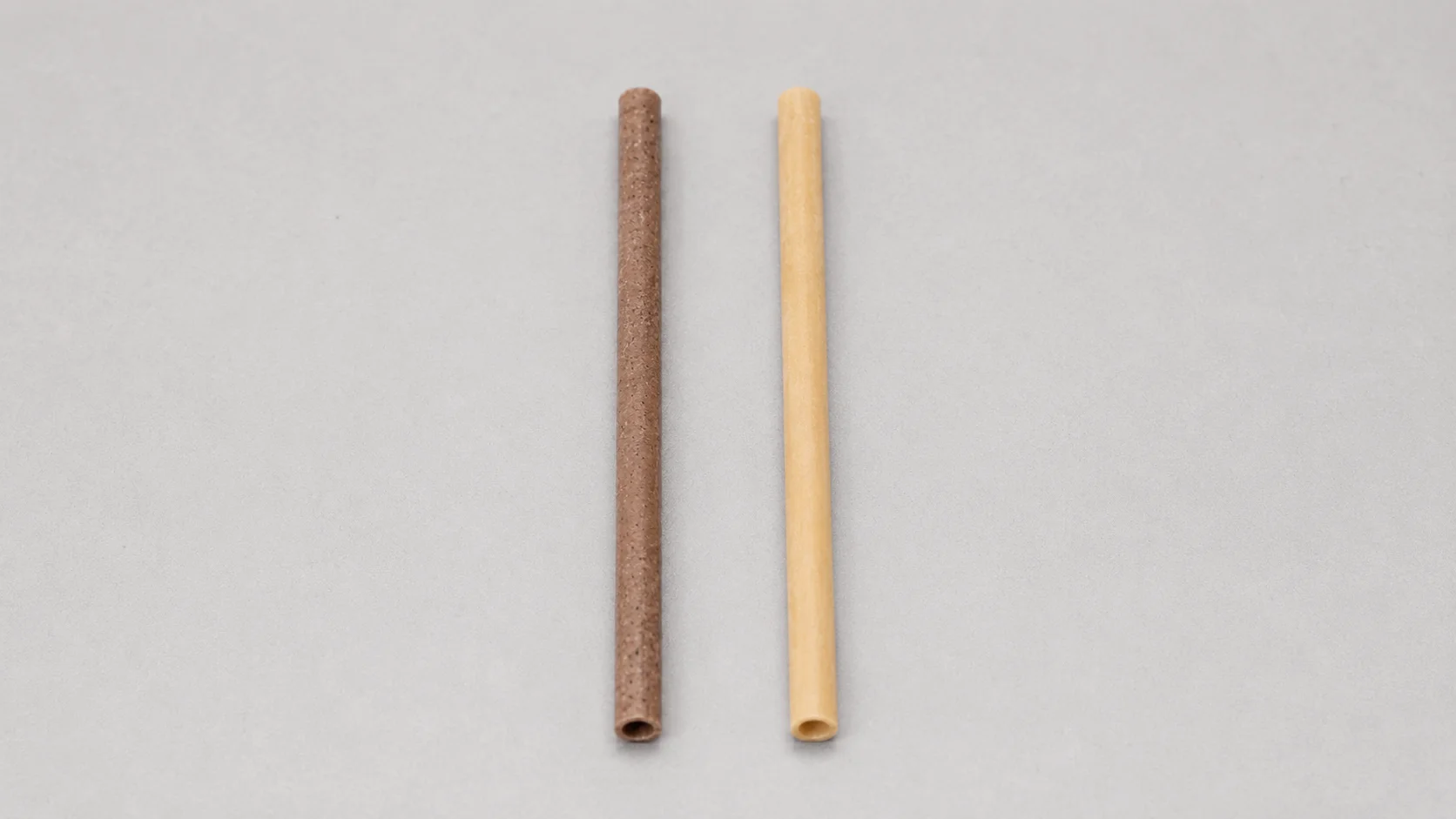
- Rietjes van suikerriet (Bagasse)., gemaakt van de vezelachtige resten die achterblijven na de extractie van suikerrietsap, zijn zeer duurzaam. Ze zijn bestand tegen temperaturen tot 100 °C en zijn langdurig bestand tegen vocht, waardoor ze een stevige en betrouwbare keuze zijn voor warme dranken. Ze zijn vaak gecertificeerd composteerbaar en worden algemeen geaccepteerd door commerciële composteringsfaciliteiten.
- Rijst rietjes, gemaakt van rijstmeel en tapiocazetmeel, bieden een innovatieve, eetbare en biologisch afbreekbare optie. Ze zijn 2-3 uur bestand tegen temperaturen tot 60°C (140°F) voordat ze zacht worden, wat een unieke en duurzame drinkervaring biedt.
- Wheat straws, derived from natural wheat stems, are naturally heat-resistant and prove more durable than many paper alternatives. They are 100% compostable and represent a zero-waste solution by utilizing an agricultural byproduct.
- Innovative materials such as lignin and citric acid-based “thermoset films,” derived from edible starch and polyvinyl alcohol, show enhanced hydrostability and superior tensile strength, outperforming traditional paper and even some plastic straws in functionality.
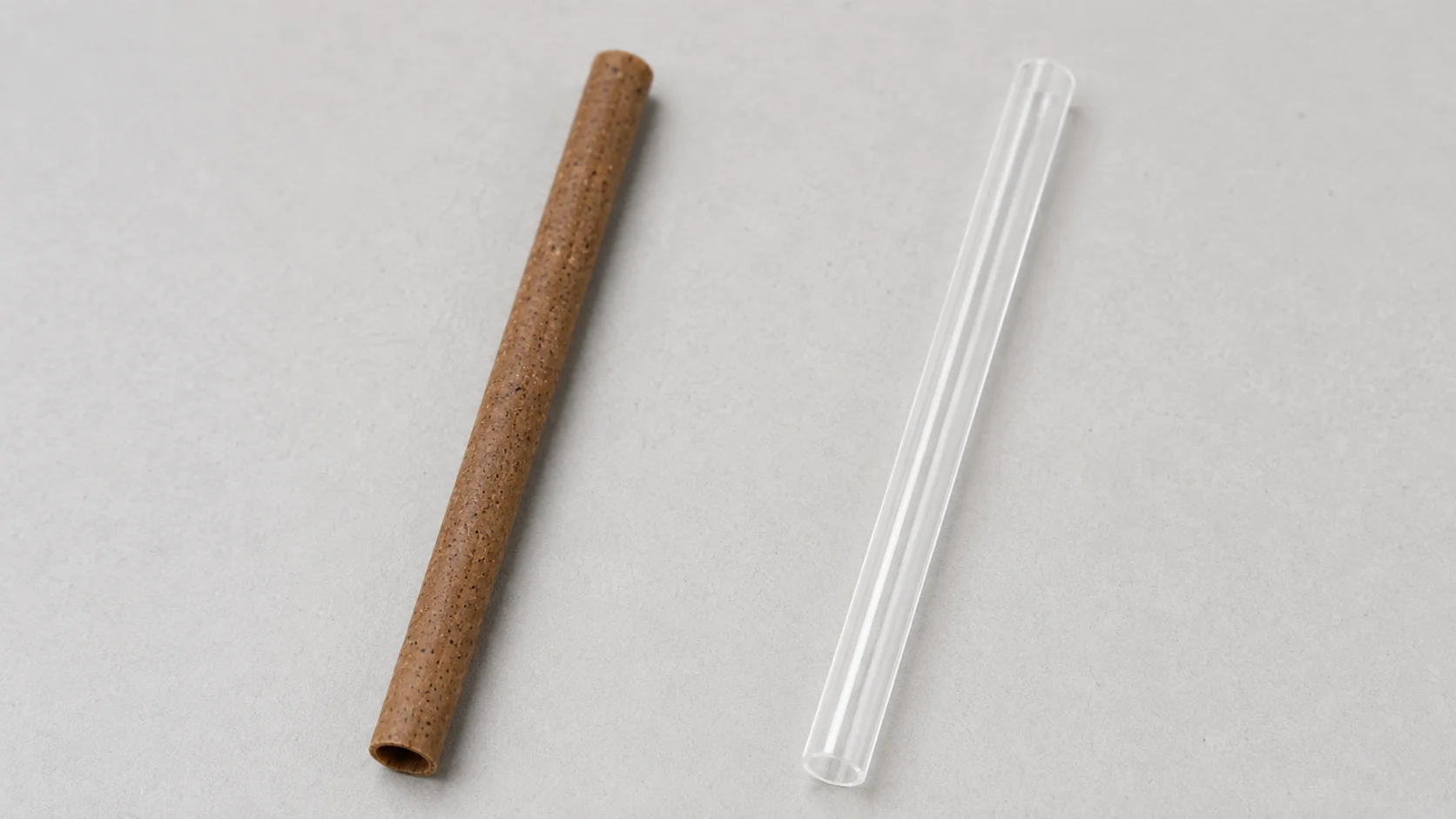
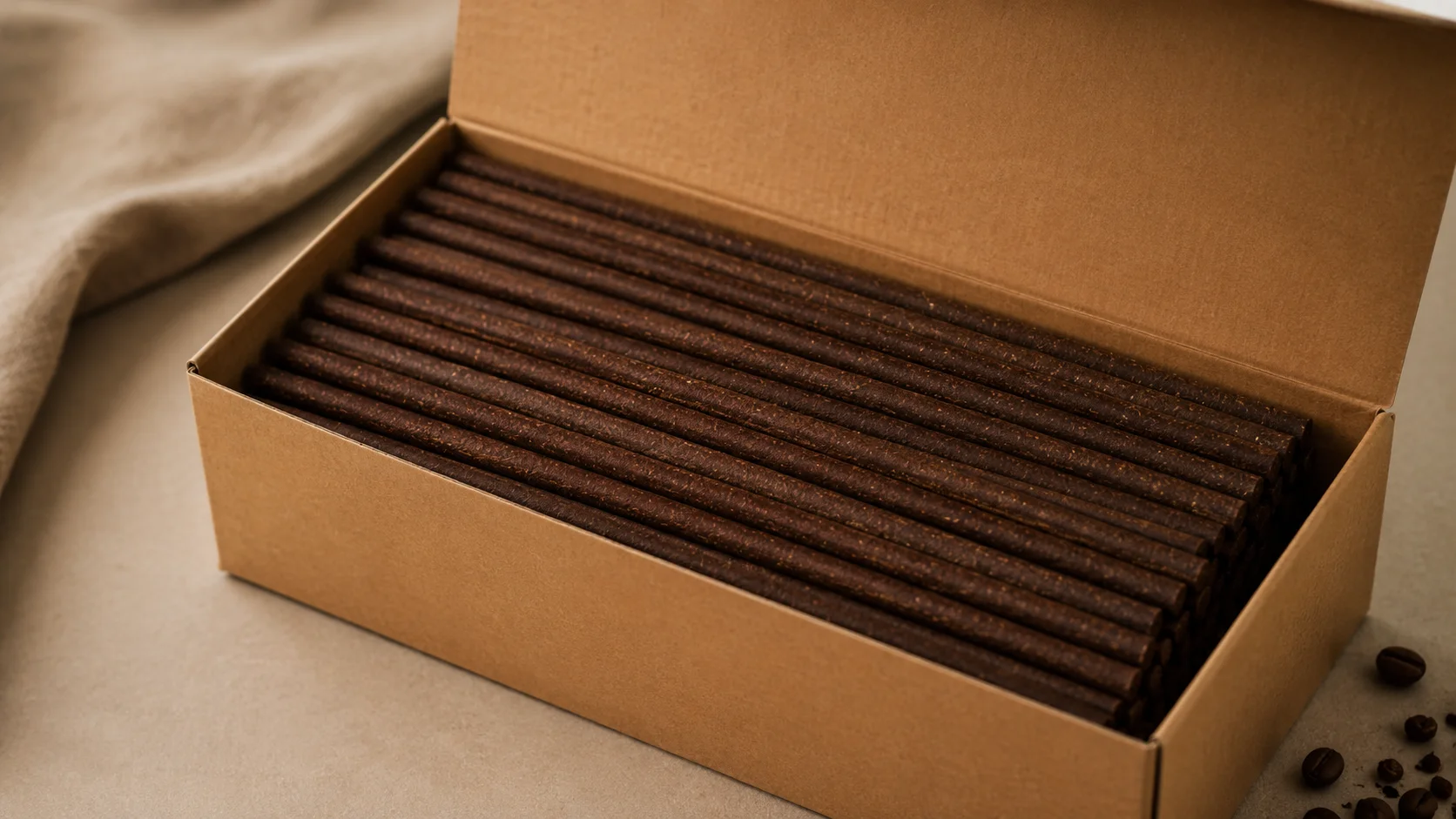
- Other notable natural alternatives include agave straws, made from upcycled agave fibers, which are durable, plastic-free, and designed to maintain their structure in hot and cold drinks, biodegrading within 12 months. Coffee straws, produced from recycled coffee grounds, are odorless, tasteless, and free from toxins. Additionally, reed straws offer natural water resistance and sturdiness, breaking down naturally in diverse environments.
**New bioplastics and natural fibers offer durable, heat-resistant, and compostable straw solutions for hot beverages.**
IV. Comparing Heat-Resistant Eco-Friendly Straws: A B2B Procurement Guide
Choosing the right heat-resistant eco-friendly straw requires a strategic evaluation of operational impact, compliance, and return on investment. The following comparison highlights key considerations for procurement managers, operations directors, and sustainability officers.
| Functie | B2B operationele impact | Nalevingsopmerking | ROI-potentieel |
|---|---|---|---|
| SC-PLA | Superior integrity in hot liquids (>100°C), offering a premium drinking experience. Maintains shape and structure longer, reducing customer complaints. | Volledig biologisch afbreekbaar, gecertificeerd composteerbaar volgens strenge normen zoals BPI (ASTM D6400) en TÜV Oostenrijk (EN 13432). Sluit aan bij de PPWR van de EU en het mondiale plasticverbod. | Verbetert het merkimago als leider op het gebied van duurzaamheid en ondersteunt premiumprijzen. Verlaagt de kosten voor afvalverwerking bij commerciële compostering. Draagt bij aan een hogere klanttevredenheid en terugkerende klanten dankzij superieure prestaties. |
| Suikerriet (Bagasse) | Zeer stevig voor warme dranken (tot 100°C), zorgt voor een natuurlijke, rustieke esthetiek. Bestand tegen vocht gedurende langere perioden, geschikt voor diverse warme dranken. | Gecertificeerd composteerbaar, breed geaccepteerd door commerciële composteerfaciliteiten. Voldoet aan de meeste plasticverboden voor eenmalig gebruik en biedt een betrouwbare optie die voldoet aan de eisen van de massamarkt. | Kosteneffectief voor bulkinkoop, waarbij duurzaamheid en budget in evenwicht worden gebracht. Voldoet aan de belangrijkste duurzaamheidsmandaten voor grootschalige activiteiten. Sterke aantrekkingskracht bij de consument dankzij natuurlijke oorsprong, verbetering van de merkperceptie en stimuleren van milieubewuste aankopen. |
| Geavanceerd papier | Aanzienlijk verbeterde duurzaamheid ten opzichte van standaard papieren rietjes, waardoor klachten over “doorweekt stro” worden verminderd. Algemeen verkrijgbaar en bekend bij de consument. Kan nog steeds zacht worden bij zeer langdurige blootstelling aan extreme hitte. | Over het algemeen biologisch afbreekbaar; Voor sommige varianten kan echter industriële compostering nodig zijn, afhankelijk van de coatings. De naleving varieert op basis van specifieke regionale regelgeving voor ‘plastic voor eenmalig gebruik’ (sommige verboden omvatten *alle* soorten plastic voor eenmalig gebruik, zelfs papier). | Lagere initiële investeringen in vergelijking met andere geavanceerde alternatieven, waardoor wijdverbreide adoptie wordt vergemakkelijkt. Behandelt directe feedback over ‘doorweekt stro’. Kan een opstapje zijn naar meer geavanceerde bioplastics en tegelijkertijd tegemoet komen aan de onmiddellijke druk op het milieu. |
| PHA | Biedt duurzaamheid en voelt vergelijkbaar met traditioneel plastic over een veelzijdig temperatuurbereik. Biedt consistente prestaties voor verschillende soorten warme dranken zonder de integriteit in gevaar te brengen. | Opvallend omdat het afbreekbaar is in de zee, naast thuis- en industrieel composteerbaar. Vertegenwoordigt een belangrijke stap in de richting van een circulaire economie, in lijn met toekomstige trends op het gebied van regelgeving. | Vertegenwoordigt een toekomstbestendige investering gezien de brede afbreekbaarheid ervan. Biedt sterke milieureferenties, aantrekkelijk voor een niche maar groeiend segment van zeer milieubewuste consumenten. Vermindert de milieuaansprakelijkheid op lange termijn. |
| Tarwe/rijstrietjes | Tarwerietjes zijn van nature hittebestendig en duurzamer dan papier. Rijstrietjes zijn 2-3 uur bestand tegen temperaturen tot 60°C en zijn eetbaar, wat een unieke klantervaring biedt. Beide zijn lichtgewicht. | Both are 100% compostable and truly biodegradable. Wheat straws use an agricultural byproduct, while rice straws are edible, eliminating waste. High compliance with natural material bans. | Very low environmental footprint, enhancing brand authenticity. Can be a cost-effective choice for specific use cases. The novelty of edible straws or the natural appeal of wheat can create unique marketing opportunities and customer delight. |
**Evaluate heat-resistant eco-friendly straws based on operational impact, compliance, and ROI for optimal procurement.**
V. Certifications and Standards: Ensuring Compliance and Trust
For decision-makers, navigating the array of eco-friendly straw options requires a clear understanding of the certifications and standards that guarantee both compliance and product integrity. Het verifiëren van deze referenties is van cruciaal belang voor het waarborgen van de merkreputatie en operationele continuïteit.
Navigeren door composteerbaarheidsnormen voor biologisch afbreekbare rietjes op hoge temperatuur
De term ‘milieuvriendelijk’ kan breed zijn, waardoor robuuste certificeringen essentieel zijn voor het valideren van claims over biologische afbreekbaarheid en composteerbaarheid. These standards ensure that products truly break down without leaving harmful residues, differentiating genuine sustainable solutions from greenwashing.
- Instituut voor Biologisch Afbreekbare Producten (BPI): In Noord-Amerika is BPI een toonaangevende certificeringsinstantie. Door BPI gecertificeerde producten voldoen aan de strenge ASTM D6400- of ASTM D6868-normen, waardoor ze volledig en veilig worden afgebroken in commerciële composteringsomgevingen. Deze certificering is van cruciaal belang voor bedrijven die afval afvoeren via industriële composteringsinstallaties.
- TÜV Oostenrijk: TÜV Austria, een vooraanstaande Europese certificeringsinstantie, biedt de certificeringen “OK Compost INDUSTRIAL” en “OK Compost HOME” aan. Deze verifiëren de naleving van de Europese Bioplastics-vereisten en de EN 13432-norm voor industriële compostering, of voor specifieke materialen, de geschiktheid voor thuiscomposteringsomstandigheden.
- Australasian Bioplastics Association (ABA): For businesses operating in Australia and New Zealand, the ABA’s “Certified Compostable” trademark is key. Products certified to AS4736 (for industrial composting) require 90% biodegradation within 180 days and 90% disintegration within 12 weeks, ensuring high performance in managed waste streams.
- De Compost Manufacturing Alliance (CMA) also plays a vital role by collaborating with commercial composting facilities to verify that products meet ASTM lab standards through combined lab and field tests, providing additional assurance of real-world performance. Businesses can reference the BPI website for a comprehensive list of certified compostable products and materials at bpiworld.org.
Food Safety Regulations and Responsible Sourcing
Beyond environmental degradation, the safety of food contact materials is non-negotiable.
- FDA Approval: For products sold in the United States, Food and Drug Administration (FDA) approval is crucial. This ensures that the materials used in heat-resistant eco-friendly straws are non-toxic, do not leach harmful chemicals into beverages, and are safe for direct food contact.
- Chemical Safety: Businesses must ensure that their chosen straw alternatives are free from harmful chemicals such as BPA (Bisphenol A) and PFAS (per- and polyfluoroalkyl substances). These “forever chemicals” pose long-term health and environmental risks and are increasingly under regulatory scrutiny.
- Ethische inkoop: Responsible sourcing practices extend beyond environmental impact to encompass the social aspects of production. Look for certifications or supplier commitments that confirm ethical labor practices, fair wages, and transparency throughout the supply chain. This enhances brand reputation and mitigates supply chain risks.
**Certifications like BPI and FDA approval are crucial for ensuring compliant, safe, and trustworthy eco-friendly straws.**
VI. Operationalizing Sustainability: Case Study & Strategic Advantages
The shift to heat-resistant eco-friendly straws is not merely a compliance burden but a strategic opportunity to enhance brand value, streamline operations, and build lasting customer loyalty.
Mini Case Study: The “Eco-Brew” Chain’s Hot Beverage Straw Transition
De ‘Eco-Brew’-keten, een belangrijke speler in de koffieservicesector, werd geconfronteerd met aanzienlijke uitdagingen als gevolg van de ontevredenheid van de consument en de veranderende regionale regelgeving. Hun traditionele papieren rietjes voor warme dranken waren een constante bron van klachten. Ze werden drassig en bederven snel, waardoor de premium koffie-ervaring die ze wilden bieden werd ondermijnd. Tegelijkertijd dwong het regionale verbod op plastic voor eenmalig gebruik, zoals het Victoria-mandaat uit 2023, hen ertoe om geschikte alternatieven te vinden.
Als reactie hierop startte Eco-Brew uitgebreide tests met verschillende hittebestendige, milieuvriendelijke rietjes. Na rigoureuze tests kozen ze ervoor om over te schakelen op geavanceerde suikerrietbagasse-rietjes, gecertificeerd composteerbaar en bewezen bestand tegen temperaturen tot 100°C (212°F) zonder de structurele integriteit te verliezen. Deze strategische draai leverde opmerkelijke resultaten op: binnen zes maanden na de volledige transitie stegen de klanttevredenheidsscores met betrekking tot hun warme drankervaring met maar liefst 15%. Bovendien is de naleving van hun afvalaudits aanzienlijk verbeterd, wat een tastbaar positief effect op hun ecologische voetafdruk en regelgevende status aantoont. Dankzij de succesvolle integratie van deze rietjes kon Eco-Brew voldoen aan strenge milieunormen en tegelijkertijd de merkperceptie onder een snel groeiend segment van milieubewuste consumenten vergroten.
ROI Beyond Compliance: Brand Image and Customer Loyalty
The return on investment for adopting superior heat-resistant eco-friendly straws extends far beyond simply avoiding fines. This strategic move can significantly bolster a company’s bottom line through:
- Enhanced Brand Perception: In today’s market, consumers are increasingly prioritizing sustainability. Adopting certified heat-resistant eco-friendly straws demonstrates a genuine commitment to environmental stewardship, improving brand perception and resonating deeply with eco-conscious customers. This positive image translates directly into increased sales and market share.
- Operational Efficiency & Cost Savings: While initial procurement costs for advanced materials might be higher, the reduction in “soggy straw” complaints leads to fewer refunds or remakes, enhancing operational efficiency. Furthermore, by adopting certified compostable options, businesses can reduce waste disposal costs associated with non-recyclable plastics, especially in regions with escalating landfill taxes or stricter waste segregation mandates.
- Strengthened Customer Loyalty: A superior customer experience, free from the frustration of a disintegrating straw, fosters repeat business and positive word-of-mouth. This enhances customer loyalty, transforming a potentially negative interaction into a moment that reinforces brand quality and care.
- Alignment with Corporate Sustainability Goals: Investing in these solutions directly contributes to a company’s broader corporate sustainability goals and Environmental, Social, and Governance (ESG) targets. This alignment is increasingly important for attracting ethically-minded investors, employees, and business partners. Procurement managers are keenly aware of the need for bulk supply, consistent quality, competitive pricing, and reliable supply chains for these crucial components. As consumer perception continues to drive demand for higher quality, durable eco-friendly options, the market for products like eco-friendly cocktail straws for B2B is also growing.
**Adopting heat-resistant eco-friendly straws boosts brand image, operational efficiency, and customer loyalty for hospitality businesses.**
VII. Future Outlook for Eco-Friendly Straw Innovations
The innovation pipeline for eco-friendly straws, particularly those designed for hot beverages, is robust and rapidly advancing. The drive for truly sustainable and high-performing alternatives will continue to shape material science and manufacturing processes over the next 5-10 years.
Ongoing Research and Development (R&D) is intensely focused on further improving the thermal stability and cost-effectiveness of biopolymers. Scientists are exploring novel blends and polymerization techniques to push the boundaries of heat resistance for biodegradable materials. For instance, academic research continues to investigate methods to improve the hydrophobicity and mechanical strength of natural materials, aiming to overcome the limitations of early-generation solutions.
New materials are constantly emerging, promising enhanced functionality and broader applicability. Examples include those refined from edible starch combined with lignin and citric acid, which are showing promise for superior hydrostability and strength. The future will also see greater integration of circular economy principles, with an emphasis on creating solutions that are not just compostable but can be recycled back into new products or designed for durable reuse, minimizing resource depletion.
Crucially,collaboration across material science, manufacturing, and the food service sectorswill accelerate innovation. This interdisciplinary approach is essential to translate laboratory breakthroughs into scalable, commercially viable products. The demand for materials that maintain stability and taste neutrality in hot liquids for extended periods remains a primary goal. The next decade will likely witness a diversification of heat-resistant eco-friendly straw options, addressing specific operational needs and catering to an increasingly discerning market that prioritizes both performance and planet. For a deeper dive into material science advancements and their environmental implications, consider exploring relevant scientific papers, such as those found on reputable academic platforms likeResearchGate.**Future innovations promise even more durable, cost-effective, and circular heat-resistant eco-friendly straw solutions.**
Conclusion: Elevate Your Brand with Superior Heat-Resistant Eco-Friendly Straws
The transition to heat-resistant eco-friendly straws is unequivocally more than a mere regulatory necessity; it represents a profound strategic opportunity for forward-thinking businesses. By proactively investing in certified, high-performance sustainable straw solutions, your organization can significantly reduce its environmental footprint, ensure seamless compliance with an increasingly stringent regulatory landscape, and crucially, deliver an unparalleled customer experience that mitigates the long-standing “soggy straw” frustration. This proactive approach transforms a potential compliance challenge into a distinct competitive advantage, positioning your brand as an industry leader in sustainability and customer satisfaction.
Act now to future-proof your procurement strategy; secure your market leadership and elevate your brand’s reputation. Request a compliance-ready sample pack today to explore the next generation of heat-resistant eco-friendly straws and transform your hot beverage service, recognizing that the future of beverage service is undeniablyeco-friendly drinking straws.
Veel Gestelde Vragen
Why are traditional paper straws unsuitable for hot beverages in hospitality?
Traditional paper straws quickly become soggy and disintegrate in hot liquids, compromising the customer experience and leading to dissatisfaction in cafes, hotels, and restaurants.
What are the key benefits of switching to heat-resistant eco-friendly straws?
Benefits include enhanced customer satisfaction, compliance with plastic bans, improved brand image, reduced waste disposal costs, and alignment with corporate sustainability goals.
Are heat-resistant eco-friendly straws truly compostable or biodegradable?
Many advanced options like SC-PLA and sugarcane (bagasse) straws are certified compostable (e.g., BPI, TÜV Austria), ensuring they break down safely in commercial composting facilities.
How do new bioplastics like SC-PLA and PHA perform in hot beverages?
SC-PLA straws remain stable even in boiling water, while PHA straws offer durability comparable to traditional plastic across various temperatures, resisting sogginess effectively.
What certifications should procurement managers look for when sourcing these straws?
Look for certifications like BPI (ASTM D6400), TÜV Austria (EN 13432), and ABA (AS4736) for compostability, and ensure FDA approval for food safety and absence of harmful chemicals like PFAS.