De mondiale horecasector bevindt zich op een cruciaal moment en worstelt met een dwingende verschuiving weg van plastic voor eenmalig gebruik. Voor bars en nachtclubs is deze transitie niet alleen een milieuvriendelijkheid; het is een operationele en commerciële uitdaging waarbij veel op het spel staat. Nu de regelgevingsmandaten strenger worden en de voorkeuren van consumenten snel evolueren in de richting van duurzaamheid, brengt de voortdurende afhankelijkheid van wegwerprietjes aanzienlijke risico's met zich mee, van hoge boetes en reputatieschade tot gemiste marktkansen.
Deze uitgebreide gids gaat dieper in op optimale herbruikbare stro-oplossingen, speciaal afgestemd op de dynamische omgevingen met grote volumes in bars en nachtclubs. We zullen de allernieuwste materialen, strikte hygiëneprotocollen en strategische implementatiebenaderingen onderzoeken die zijn ontworpen om uw vestiging toekomstbestendig te maken, de klantervaring te verbeteren en een concurrentievoordeel veilig te stellen in een steeds milieubewustere markt.
Omarm duurzame rietjes om uw reep toekomstbestendig te maken en de klantervaring te verbeteren.
De regelgevende en marktfactoren voor herbruikbare rietjes in bars en nachtclubs
Het afstappen van plastic rietjes voor eenmalig gebruik is niet slechts een suggestie; het is een snel groeiend mondiaal mandaat. Bedrijven die zich niet aanpassen, riskeren aanzienlijke operationele verstoringen en financiële sancties, terwijl vooruitstrevende bedrijven een aanzienlijk marktaandeel kunnen veroveren.
A. Navigeren door wettelijke mandaten en verboden
Overheden en gemeenten over de hele wereld voeren strenge wetgeving uit om plasticvervuiling tegen te gaan. De Europese Unie heeft bijvoorbeeld vanaf 3 juli 2021 een grootschalig verbod op plastic rietjes voor eenmalig gebruik ingevoerd, waardoor bedrijven in de lidstaten worden gedwongen op zoek te gaan naar duurzame alternatieven. In de Verenigde Staten hebben grote steden het voortouw genomen, waarbij Seattle al in juli 2018 plastic rietjes voor eenmalig gebruik verbiedt. De regelgeving van New York City verbiedt met ingang van 1 november 2021 dat horecabedrijven plastic rietjes en roerstaafjes voor eenmalig gebruik verstrekken, behalve op verzoek. Bij niet-naleving kunnen boetes oplopen tot $ 400 voor herhaalde overtredingen. Dit ‘op verzoek’-model is van cruciaal belang voor het garanderen van de toegankelijkheid voor personen met een handicap, een genuanceerd maar essentieel aspect van compliance. Canada boekt ook vooruitgang met de landelijke uitfasering van plastic rietjes, die naar verwachting op 20 december 2025 volledig zal zijn geïmplementeerd. Deze lappendeken van regelgeving onderstreept de urgentie van proactieve inkoop en operationele verschuivingen.
B. Het aanboren van een groeiende milieubewuste markt
Naast naleving ligt er een belangrijke commerciële kans in het afstemmen op het toenemende milieubewustzijn van consumenten. De mondiale markt voor herbruikbare rietjes, die in 2024 op ongeveer 2,3 miljard dollar wordt geschat, zal naar verwachting tegen 2033 stijgen tot 4,5 miljard dollar, wat een robuuste samengestelde jaarlijkse groei (CAGR) van 7,7% aantoont. Deze groei is niet slechts een statistische anomalie, maar een directe weerspiegeling van veranderend consumentengedrag. Noord-Amerika heeft in 2024 een substantieel aandeel van 43,67% in de totale markt voor rietjes, wat wijst op een bijzonder sterke regionale vraag naar duurzame opties. Door herbruikbare rietjes te omarmen, kunnen bars en nachtclubs een groeiend segment van milieubewuste klanten aantrekken en behouden, merkloyaliteit opbouwen en hun profiel op het gebied van maatschappelijk verantwoord ondernemen versterken. Deze strategische zet positioneert uw vestiging niet alleen als een conforme entiteit, maar ook als een leider op het gebied van duurzame gastvrijheid. Voor bedrijven die bredere duurzame materiaalopties verkennen, zijn inzichten over geavanceerde biologisch afbreekbare oplossingen te vinden ophttps://momoio.com/best-biodegradable-plastic-straws-b2b/.
Regulatory shifts and market demand drive the urgent need for sustainable straw solutions.
Selecting the Best Reusable Straws for Bars and Nightclubs: Material Deep Dive
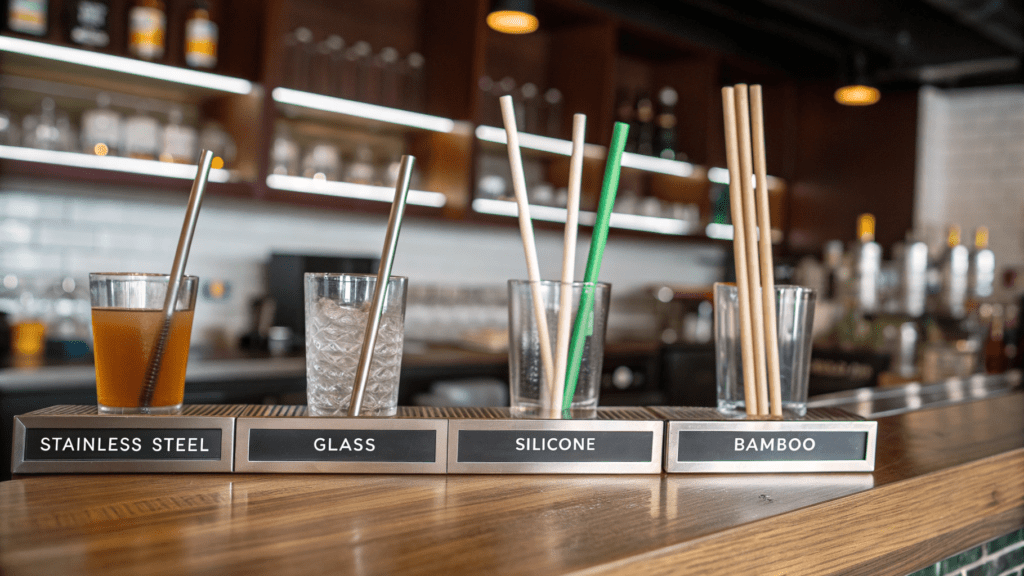
Choosing the right reusable straw material is paramount for commercial success, balancing durability, hygiene, guest experience, and operational efficiency. Each material presents a unique set of advantages and considerations for high-volume environments.
A. Stainless Steel Straws: Durability Meets Professional Aesthetic
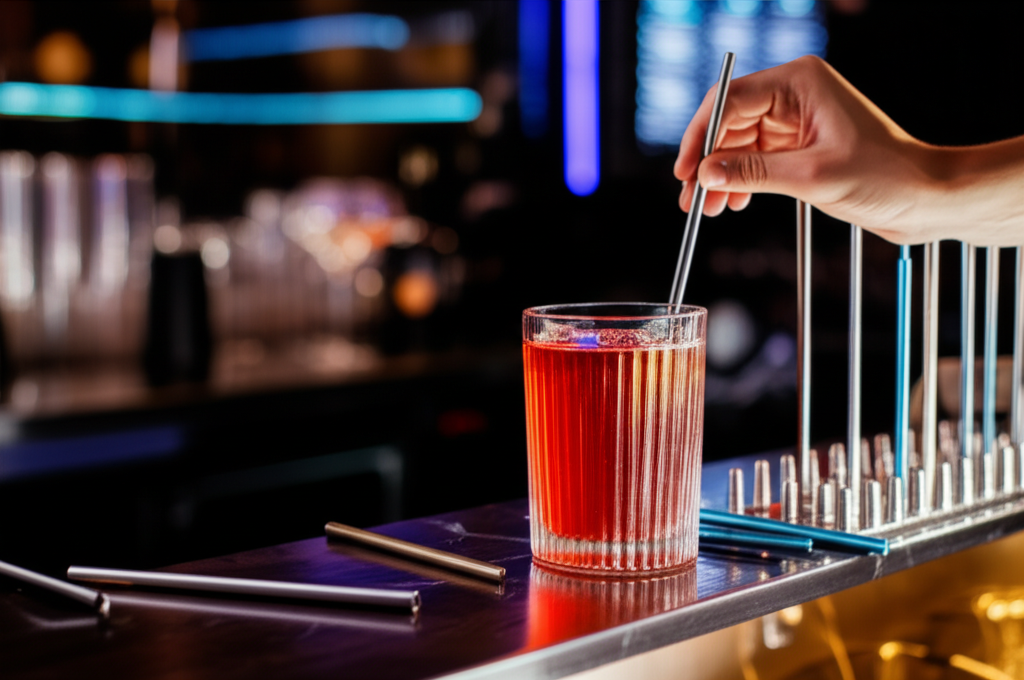
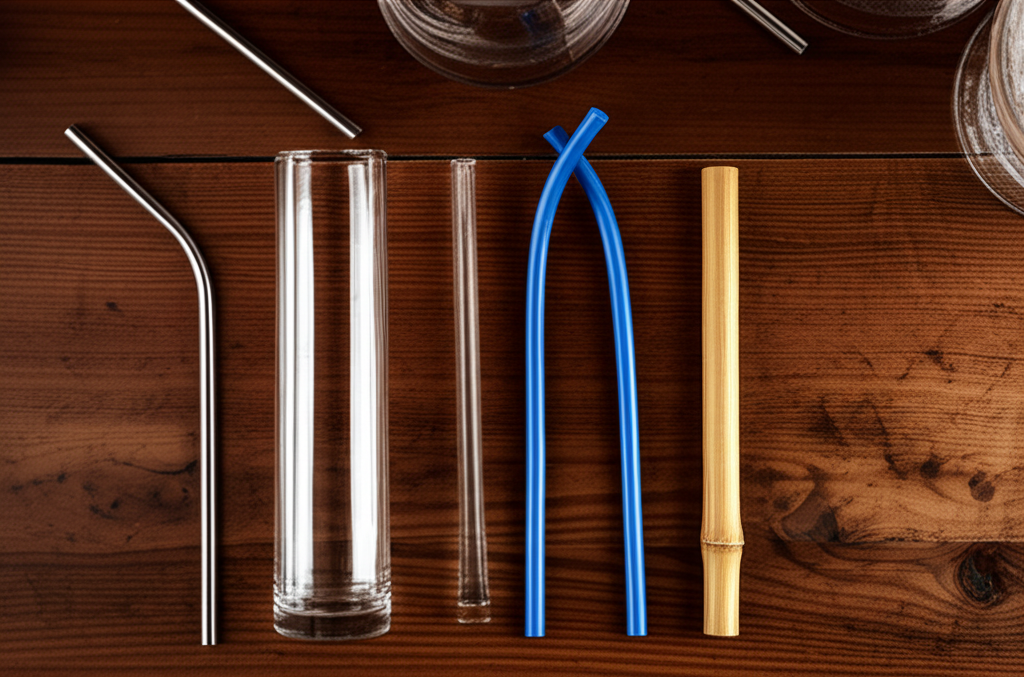
Stainless steel straws are a top-tier choice for commercial longevity. Highly durable and corrosion-resistant, they can withstand the rigorous demands of busy bars and nightclubs, maintaining their integrity through countless uses. Their sleek, professional aesthetic complements any upscale beverage presentation. Crucially, stainless steel straws are dishwasher-safe, capable of enduring high-heat commercial sanitization protocols without degradation. Research from the University of Edinburgh indicates that a reusable steel straw needs to be used 100 to 150 times to offset its initial production environmental impact compared to a single-use plastic straw, making long-term usage key to their sustainability benefit.
B. Glass Straws: Premium Experience with Unmatched Hygiene Transparency
Borosilicate glass straws offer a premium experience that elevates the perception of any beverage. This specialized glass resists extreme temperatures from -30°C to 150°C, making them ideal for both hot and cold drinks. A key advantage for hospitality is their transparency, which allows for immediate visual confirmation of cleanliness – a critical hygiene factor that instills confidence in patrons. Despite initial perceptions, high-quality borosilicate glass straws are sturdy and non-porous, a crucial attribute for HACCP compliance. Adoption by bars in Vancouver, Canada, has demonstrated a rapid return on investment (ROI) in as little as 2-3 weeks, thanks to their reusability and premium appeal.
C. Silicone Straws: Safety, Flexibility, and Broad Appeal for Hospitality Industry Reusable Straws
Silicone straws are a versatile and safe option, particularly valuable for establishments catering to diverse clientele, including families or those with mobility impairments. Their soft, flexible, and virtually indestructible nature significantly reduces the risk of injury, such as throat pokes or chipped teeth, associated with rigid straws. Leading brands, like GIR, produce platinum-cured, food-grade silicone straws that are BPA/BPS-free, ensuring no harmful chemical leaching into beverages. They are also dishwasher-safe and can be easily sterilized in boiling water, accommodating rigorous cleaning requirements.
D. Bamboo Straws: The Natural Choice with Operational Considerations
Bamboo straws offer a rustic, eco-friendly branding opportunity, being compostable and biodegradable. They possess natural antibacterial properties. However, their porous surface can present significant challenges for hygiene and HACCP compliance in commercial settings, as they can potentially harbor pollutants and are difficult to clean thoroughly, making visual inspection challenging. Furthermore, bamboo straws typically have a shorter lifespan, ranging from a few months to a year, and are generally unsuitable for commercial dishwashers due to their tendency to deform. This necessitates hand-washing, increasing labor costs and potentially hindering operational flow in high-volume environments.
Choosing the right straw material balances durability, hygiene, and guest experience for commercial success.
Strategic Comparison: Reusable Straw Materials for B2B Operations
The decision to invest in a specific reusable straw material hinges on a careful assessment of its operational impact, compliance adherence, and ROI potential.
| Functie | B2B operationele impact | Nalevingsopmerking | ROI-potentieel |
|---|---|---|---|
| Roestvrij staal | Highly durable, withstands commercial dishwashers. Low taste transfer. | FDA compliant, ISO 9001:2008 standards for manufacturing. Recyclable. | High; economical after 50+ uses ($0.03-$0.55/piece). |
| Glass (Borosilicate) | Easy visual cleanliness, elegant, sturdy, but prone to breakage if dropped. | HACCP compliant, non-porous surface. BPA-free. | Rapid; 2-3 weeks (Vancouver bars). Premium perception. |
| Siliconen | Flexible, safe for all clientele, easy to clean, comfortable mouthfeel. | BPA-free, FDA approved, Canadian food safety compliant. No chemical leaching. | Moderate; long-lasting, low replacement needs. |
| Bamboe | Natural aesthetic, hand-wash only, shorter lifespan. Can absorb liquids. | Generally not HACCP compliant due to porosity. Degradable. | Lower; frequent replacement, higher labor for cleaning. |
Material choice impacts operations, compliance, and return on investment for your business.
Ensuring Flawless Hygiene for Reusable Straws in Bars and Nightclubs
Maintaining impeccable hygiene is non-negotiable for reusable straws in commercial environments. Public health concerns and regulatory scrutiny demand rigorous cleaning and sanitization protocols to ensure guest safety and preserve brand reputation.
A. Rigorous Cleaning and Sanitization Protocols
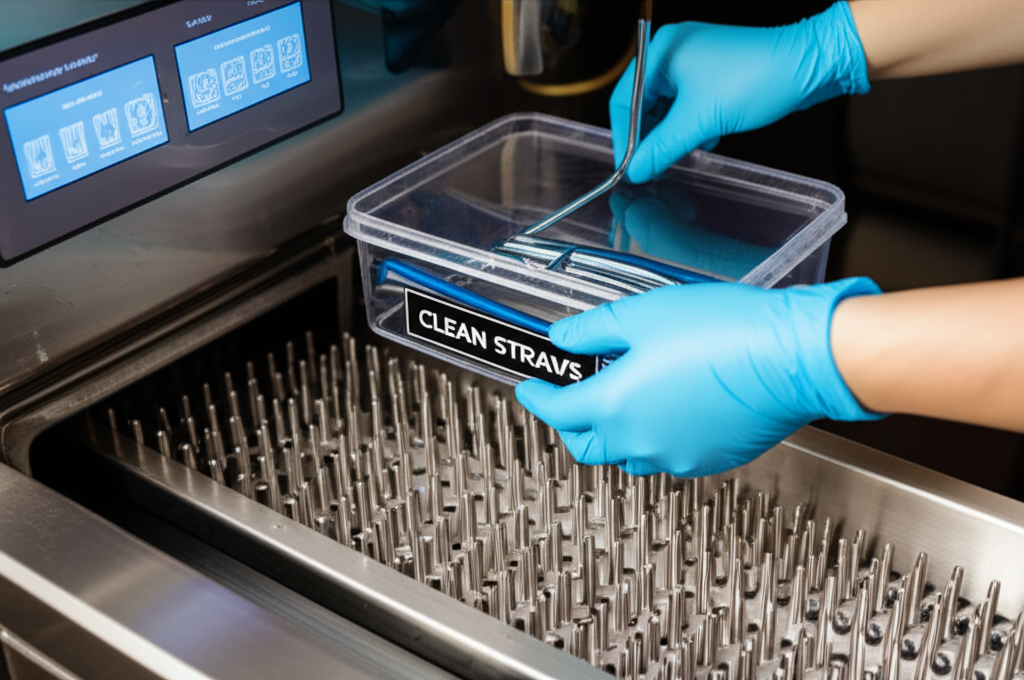
Thorough cleaning of reusable straws with hot soapy water and a dedicated straw brush is essential after every use. For high-volume bars and nightclubs, relying on commercial dishwashers or adhering to the three-compartment sink method (wash, rinse, sanitize) is critical for effective sanitization. Studies have highlighted the risks of inadequate cleaning, with one HACCP study detecting mold in 10% of reusable straws, underscoring the necessity of stringent protocols. The German Federal Institute for Risk Assessment (BfR) explicitly recommends against using multiple-use drinking straws if thorough cleaning cannot be guaranteed. NYC Public Health Law § 1352 also mandates sanitary dispensing of unwrapped straws, emphasizing the need for proper storage and handling post-cleaning.
B. Strategic Storage and Staff Training
Once cleaned and air-dried, reusable straws must be stored meticulously in covered, vertical containers to prevent re-contamination. This practice not only maintains hygiene but also streamlines operations by ensuring easy access for staff. Comprehensive staff training on proper collection, cleaning, handling, and storage procedures is paramount. This includes educating them on preventing cross-contamination between clean and dirty items and recognizing when a straw is damaged and needs to be discarded.
C. Addressing Public Health Concerns
While reusable straws are a sustainable solution, their improper maintenance can pose health risks. A University of Arizona study found that reusable straws, if not cleaned properly, can harbor various bacteria, including coliform, a marker of fecal contamination. Dr. Jolene Brighten, founder of Rubus Health, also warns of endocrine disruptors from BPA/PFAS that can leach from some materials. Regular visual inspection for any signs of damage, such as cracks, chips, or rough edges, is crucial for both safety and hygiene. For an exploration of other non-paper biodegradable straw alternatives, visithttps://momoio.com/best-biodegradable-straws-not-paper/.
Rigorous cleaning, proper storage, and staff training are crucial for reusable straw hygiene.
Overcoming Implementation Challenges for Sustainable Bar Operations
Transitioning to reusable straws is a strategic investment that comes with its own set of implementation challenges. Proactive planning and a clear understanding of these hurdles are vital for a smooth and successful shift.
A. Initial Cost vs. Long-Term Savings
The most immediate challenge is often the higher upfront cost of reusable straws compared to their disposable counterparts. While a single-use plastic straw might cost around 1 cent and a paper straw 5 cents, a high-quality reusable metal or glass straw can range from $0.03 to $0.55 per piece. However, this initial investment is offset by significant long-term savings. After approximately 50 or more uses, reusable straws become more economical than continuously purchasing disposables. Furthermore, businesses can leverage bulk purchasing, often securing 30-60% discounts for orders exceeding 50,000 units, drastically improving the cost-efficiency over time.
B. Operational Logistics and Staff Adoption
Managing the collection, washing, and storage of hundreds, or even thousands, of reusable straws daily presents considerable logistical challenges for high-volume venues. This requires optimized workflow, designated collection points, and efficient commercial dishwashing systems. Overcoming deeply ingrained disposable habits among staff and patrons can also be a significant barrier. Implementing new processes may lead to a short-term increase in operational costs as staff adapt and new routines are established.
C. Addressing Accessibility and Safety Concerns
Rigid reusable straws, particularly those made of metal or glass, pose an impalement risk, especially when used with lid-secured cups or by individuals with limited motor control. Reports from emergency departments have documented injuries, predominantly lacerations and oral trauma, disproportionately affecting young children using metal straws. To address this, New York City law, for example, permits plastic straws upon request for individuals with disabilities, highlighting the importance of offering flexible alternatives. Silicone straws, due to their inherent softness and flexibility, are a safer option, particularly for children and the mobility impaired, mitigating liability concerns.
Proactive planning addresses initial costs, logistics, and safety for smooth straw transition.
Case Study: Ends and Means Cocktail Bar – A Blueprint for Eco-Friendly Bar Practices
Melbourne’s Ends and Means Cocktail Bar, established in 2018, exemplifies a successful blueprint for integrating sustainability from inception. This pioneering establishment on Gertrude Street made a deliberate commitment to minimal waste, never offering single-use plastic items, including straws, to its customers. Instead, they exclusively utilize reusable metal or bamboo straws.
Their dedication to eco-friendly practices extends beyond straws, incorporating recycled timber, eco-friendly wallpaper, and pre-loved glassware. By installing taps for beer and sparkling water, they significantly reduced bottle and can waste. They also source soft drink syrup from local, ethical producers, diligently reusing or recycling empty bottles. The cumulative impact of these initiatives is remarkable: Ends and Means produces less than 8 liters of total waste per week while serving over 250 customers, a testament to their operational efficiency and environmental stewardship. The reusable straws, in particular, became a unique talking point, enhancing the bar’s brand image and fostering strong customer support for their green initiatives. This real-world example demonstrates that a commitment to sustainability, even in high-traffic environments, can translate into tangible waste reduction and enhanced customer perception.
Ends and Means Cocktail Bar proves sustainability enhances brand and reduces waste.
Future Trends & Innovation
The trajectory of the drinking straw market over the next 5-10 years indicates a clear and irreversible shift towards innovative, sustainable solutions. The global reusable straw market alone is projected to reach approximately $4.5 billion by 2033, signaling continuous expansion and diversification.
- 1. Material Evolution: Beyond traditional metal, glass, and silicone, the market will see increased adoption of advanced plant-based and edible straws. Innovations include straws derived from seaweed, rice, sugarcane fiber, and even bacterial cellulose, offering diverse aesthetics, functionalities, and improved biodegradability. These materials are engineered to be sturdier than first-generation paper straws while maintaining compostability.
- 2. Smart Design and Portability: Expect a rise in collapsible and modular reusable straw designs, often coupled with UV-sanitizing cases, catering to the “on-the-go” consumer. This addresses convenience concerns and promotes better personal hygiene.
- 3. Regulatory Harmonization and Expansion: While regional bans on single-use plastics will continue to expand, there will likely be increasing efforts towards harmonizing standards for compostable and reusable products across larger economic blocs. This includes stricter enforcement of certifications like ASTM D6400 (US) and EN 13432 (EU) for compostability.
- 4. Circular Economy Integration: Bars and nightclubs will increasingly explore closed-loop systems, potentially partnering with specialized industrial composting facilities or material recovery programs to ensure their eco-friendly straws truly complete a circular lifecycle.
- 5. “Straw on Request” Becomes Standard: The “straws upon request” model will become the default globally, significantly reducing overall straw usage and associated cleaning/disposal burdens for establishments. This behavioral shift, driven by both regulation and consumer awareness, will redefine default service.
- 6. Emphasis on Life Cycle Assessments (LCAs): Decision-makers will increasingly demand comprehensive LCAs for all straw alternatives, moving beyond superficial environmental claims to understand the true impact from production to disposal. This data-driven approach will guide procurement.
- 7. Customization and Branding: The demand for custom-branded reusable straws will grow, allowing establishments to subtly reinforce their sustainability commitment and enhance brand visibility with every sip.
This future landscape underscores that embracing sustainable straw solutions is not a temporary trend but a fundamental, evolving component of responsible business operations. The overall drinking straw market is projected to reach USD 23,196 million by 2031, with a 7.1% CAGR from 2025, showing this shift is part of a larger, robust market evolution. The proactive adoption of sustainable practices, including the procurement of innovative straw materials, will be a hallmark of market leadership. Businesses seeking to stay ahead in this evolving market might also explore the best biodegradable straw options available for B2B use in 2025 athttps://momoio.com/best-biodegradable-straws-b2b-2025/.
Future trends indicate a clear shift towards innovative, sustainable straw solutions.
Competitive Advantage & Business Case
For procurement managers, operations directors, sustainability officers, and supply chain executives, the business case for transitioning to reusable straws is compelling, extending far beyond mere compliance. It’s a strategic move that delivers quantifiable benefits and cements market leadership.
- 1. Quantifiable Cost Savings: Despite the higher initial outlay, reusable straws offer substantial long-term cost efficiencies. By eliminating the continuous purchase of disposable straws, businesses can achieve significant savings within months, as demonstrated by Vancouver bars seeing ROI in 2-3 weeks with glass straws. Bulk purchasing discounts, up to 60% for large orders, further enhance this financial advantage. These savings directly impact your operational budget, freeing up capital for other investments.
- 2. Risk Mitigation and Compliance Assurance: Proactive adoption of reusable straws ensures seamless compliance with evolving global and local regulations, effectively mitigating the risk of substantial fines and legal challenges. This foresight prevents operational disruptions and protects your business from potential revenue loss due to non-compliance. It also minimizes the risk of negative press and legal entanglements associated with environmental violations.
- 3. Brand Value Uplift and Market Share Opportunity: Embracing sustainability positions your brand as environmentally responsible and forward-thinking. This resonates deeply with the growing segment of eco-conscious consumers, enhancing brand loyalty and attracting new clientele. As noted by George Leonard, Chief Scientist for the Ocean Conservancy, the reduction of plastic waste through initiatives like reusable straws speaks directly to consumer values. This differentiation can translate into increased foot traffic, higher average spend per customer, and ultimately, a larger market share in a competitive hospitality landscape. By becoming an early adopter or a leader in sustainable practices, you build a positive public image that distinguishes your establishment.
- 4. Operational Efficiency and Innovation: While initial implementation may present logistical challenges, the optimized cleaning protocols and streamlined inventory management required for reusable straws can lead to overall improvements in operational efficiency. Furthermore, the exploration of innovative materials and cleaning technologies fosters a culture of continuous improvement and sustainability within your organization.
The transition to reusable straws is not just about environmental responsibility; it’s a shrewd business decision that drives financial performance, reduces risk, and builds a stronger, more resilient brand.
Reusable straws offer significant cost savings, risk mitigation, and brand value uplift.
Conclusion: Elevate Your Bar or Nightclub with Sustainable Solutions
The hospitality industry stands at the precipice of a sustainable revolution, where embracing reusable straws is no longer optional but a strategic imperative. By aligning with stringent regulatory mandates and catering to the surging demand for eco-conscious practices, bars and nightclubs can transform compliance challenges into unparalleled competitive advantages.
The discerning choice of material, underpinned by robust hygiene protocols and meticulously planned operational practices, is key to ensuring long-term success and delivering a superior, safe, and sustainable customer experience. This proactive shift future-proofs your establishment, enhances your brand reputation, and champions environmental responsibility for generations to come.
Embracing reusable straws is a strategic imperative for sustainable hospitality leadership.
Act Now: Future-Proof Your Bar with Premium Reusable Straw Solutions!
Don’t let outdated practices compromise your brand or bottom line. Contact us today to explore our full range of commercial-grade reusable straw solutions, designed for unparalleled durability, hygiene, and guest satisfaction. Secure your competitive edge and lead the charge towards a truly sustainable nightlife experience.Neem vandaag nog contact met ons op
Secure your competitive edge with premium reusable straw solutions now.
Veelgestelde vragen (FAQ)
What are the primary benefits of switching to reusable straws for bars and nightclubs?
Switching to reusable straws offers significant benefits including compliance with evolving plastic bans, substantial long-term cost savings, enhanced brand reputation among eco-conscious consumers, and improved operational efficiency through optimized cleaning and inventory management.
How do bars and nightclubs ensure hygiene with reusable straws in high-volume environments?
What are the best materials for reusable straws in a bar or nightclub setting?
Stainless steel offers durability and a professional aesthetic, borosilicate glass provides a premium experience with hygiene transparency, and silicone straws ensure safety and flexibility for diverse clientele. Bamboo straws, while natural, pose hygiene challenges for commercial use.
Are there specific regulations regarding reusable straws for accessibility in hospitality?
Yes, some regulations, like New York City law, permit plastic straws upon request for individuals with disabilities, highlighting the importance of offering flexible alternatives like silicone straws to ensure accessibility and mitigate impalement risks associated with rigid materials.
How can bars and nightclubs overcome the initial cost of reusable straws?
While the upfront cost is higher, reusable straws become more economical after approximately 50 uses. Businesses can leverage bulk purchasing discounts (30-60% for large orders) to drastically improve cost-efficiency and achieve rapid ROI, often within weeks.
Addressing common questions helps businesses transition smoothly to reusable straws.