The global business landscape is undergoing a profound transformation, driven by an urgent imperative for environmental stewardship. For procurement managers, operations directors, sustainability officers, and supply chain executives in the **hospitality & foodservice industries**, the choice of seemingly minor items, such as drinking straws, now carries significant strategic weight. Non-compliance with evolving sustainability mandates and a failure to meet shifting consumer expectations can lead to substantial operational and commercial repercussions, including regulatory fines, diminished brand value, and erosion of market share.
The Imperative for Sustainable Straws: Navigating Global Regulations & Market Shifts
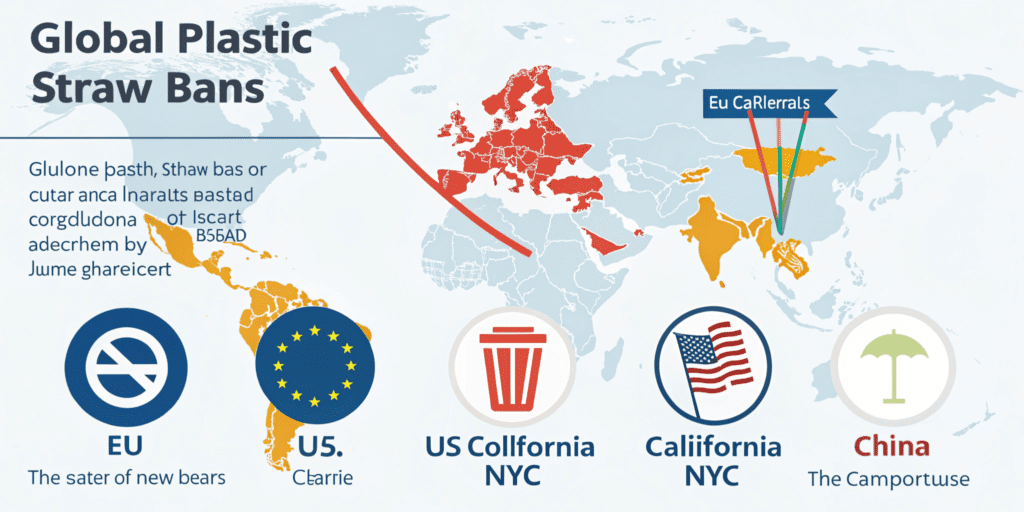
Het tijdperk van onbeperkt plastic voor eenmalig gebruik loopt snel ten einde, aangedreven door een mondiale wetgevende impuls. De **EU-Plasticproductenrichtlijn 2019** verbood op 3 juli 2021 plastic rietjes voor eenmalig gebruik en een groot aantal andere artikelen, waardoor bedrijven die binnen de Europese Unie actief zijn, gedwongen werden snel te veranderen. Het Verenigd Koninkrijk volgde dit voorbeeld en voerde vanaf oktober 2023 een eigen verbod op plastic voor eenmalig gebruik in. Aan de andere kant van de Atlantische Oceaan heeft het regelgevingslandschap, hoewel gefragmenteerd, evenveel impact; Vanaf maart 2025 hebben 19 Amerikaanse staten en territoria een verbod op één of meer kunststoffen voor eenmalig gebruik in het hele rechtsgebied, waarbij het Amerikaanse ministerie van Binnenlandse Zaken van plan is om tegen 2032 plastic producten voor eenmalig gebruik uit nationale parken en openbare gronden geleidelijk uit te bannen. Voor elke onderneming met een mondiale voetafdruk of regionale activiteiten is naleving van de regelgeving een niet-onderhandelbare factor in de inkoopstrategie geworden, die een directe invloed heeft op de markttoegang en de operationele continuïteit.
Deze regeldruk wordt versterkt door de dwingende marktdynamiek. De mondiale markt voor milieuvriendelijke rietjes zal naar verwachting in 2035 een omvang van bijna 25,1 miljard dollar bereiken, met een robuust samengesteld jaarlijks groeipercentage (CAGR) van 7,3%, vergeleken met een geschatte 12,3 miljard dollar in 2025. Meer specifiek werd de markt voor biologisch afbreekbare rietjes in 2024 gewaardeerd op 40,367 miljard dollar en zal naar verwachting omhoogschieten naar 204,167 miljard dollar in 2024. 2031, wat een indrukwekkende CAGR van 22,46% laat zien. Deze explosieve groei is een directe reactie op het consumentenvertrouwen; Ongeveer 70% van de consumenten geeft nu de voorkeur aan bedrijven die actief gebruik maken van milieuvriendelijke opties. Het negeren van deze dubbele druk – handhaving van de regelgeving en de stijgende consumentenvraag – is niet langer een haalbare optie voor vooruitstrevende organisaties. Het stelt bedrijven bloot aan compliancerisico's, compliceert inkoop en heeft een negatieve invloed op de perceptie van klanten, waardoor uiteindelijk het concurrentievoordeel wordt uitgehold.Forward-thinking hospitality and foodservice businesses must embrace sustainable straws to ensure compliance and meet consumer demand.
Deep Dive: Sugarcane Drinking Straws – The Agri-Waste Advantage
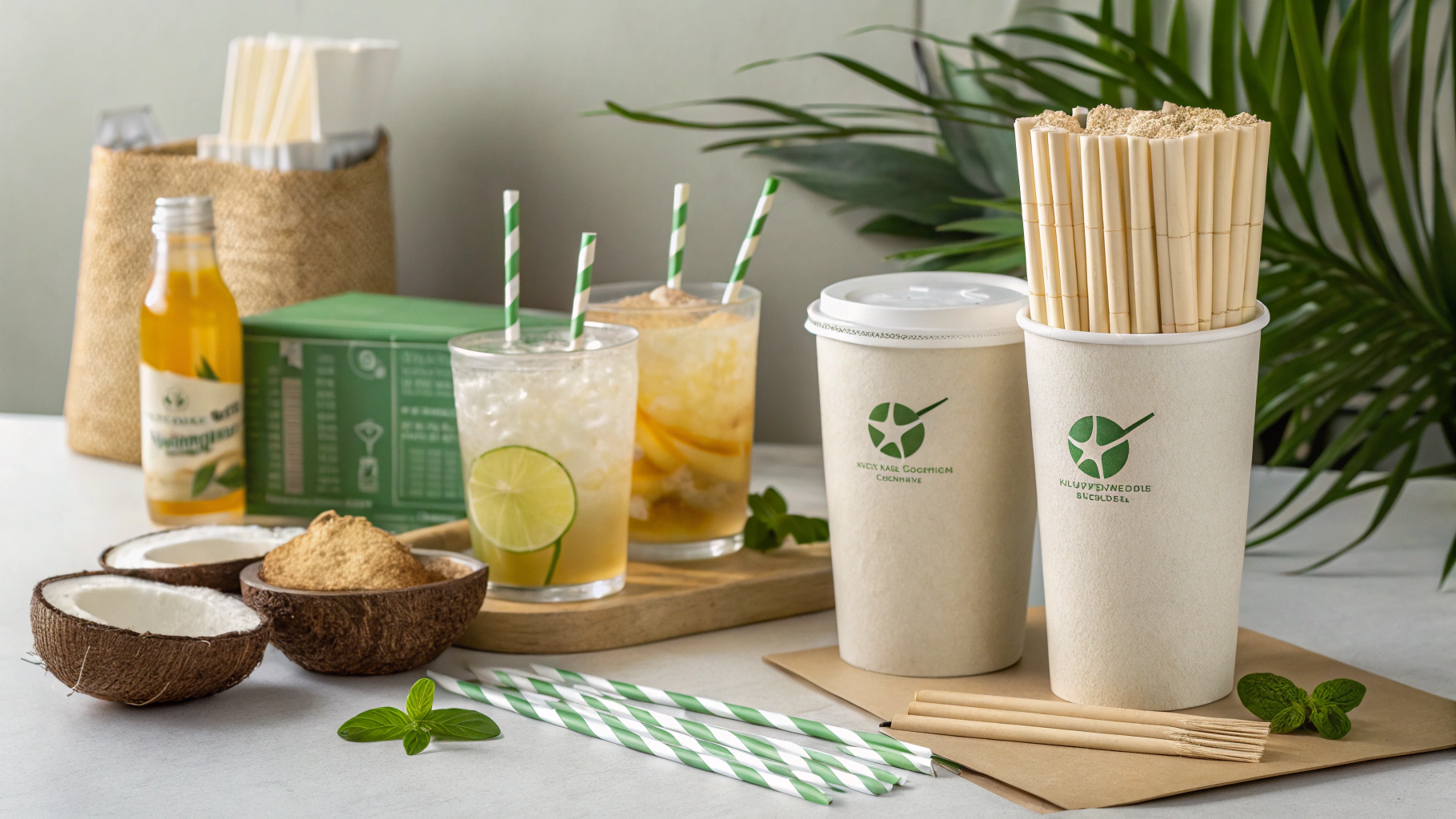
Sugarcane drinking straws represent a significant leap forward in sustainable materials science. Unlike traditional plastics, these straws are crafted from bagasse, the fibrous byproduct remaining after sugarcane juice extraction. This innovative approach repurposes agricultural waste, transforming a potential disposal challenge into a valuable, renewable resource.
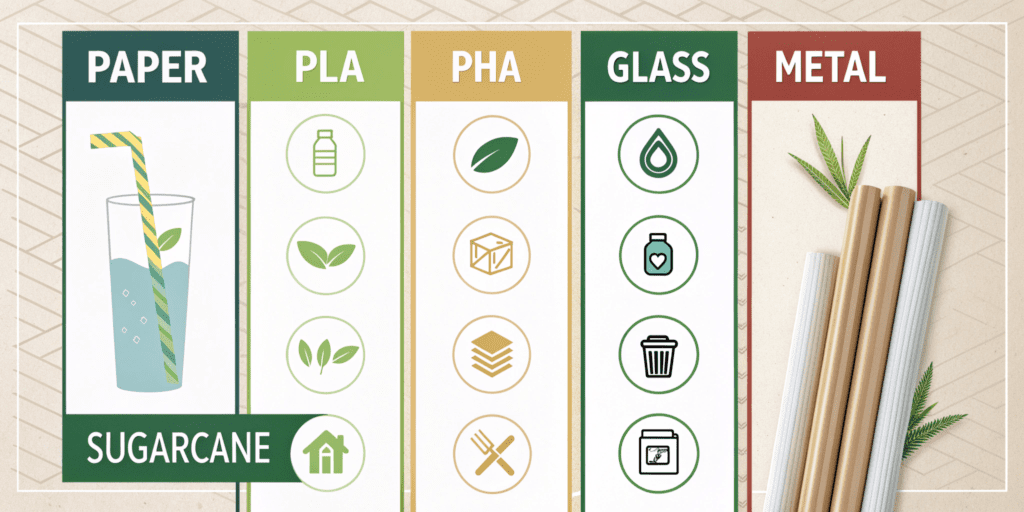
Rietjes van suikerriet zijn 100% plantaardig, waardoor ze volledig biologisch afbreekbaar en composteerbaar zijn. Toonaangevende producten worden doorgaans binnen 90 tot 180 dagen afgebroken in commerciële composteringsinstallaties, waarbij sommige varianten ook gecertificeerd zijn voor thuiscompostering, waardoor een nog gestroomlijnder einde van de levenscyclus wordt geboden. Wat de prestaties betreft vallen ze op door hun duurzaamheid en flexibiliteit, en zijn ze bestand tegen drassigheid, zelfs als ze worden ondergedompeld in hete vloeistoffen tot 104 °C (220 °F). Deze veerkracht zorgt voor een consistente gebruikerservaring van hoge kwaliteit, een cruciale factor voor **foodservice- en hospitality-activiteiten** die erop gericht zijn de “doorweekte stro”-klachten te voorkomen die verband houden met eerdere papieren alternatieven. Cruciaal is dat gerenommeerde suikerrietrietjes van nature smaakvrij, niet-giftig en uitdrukkelijk vrij zijn van schadelijke chemicaliën zoals BPA en PFAS (Per- en Polyfluoralkylstoffen), waardoor zowel de gezondheid van de consument als de merkintegriteit worden gewaarborgd.
Voor inkoopprofessionals zijn certificeringen van cruciaal belang om duurzaamheidsclaims te valideren. Toonaangevende suikerrietrietjes beschikken over een reeks certificeringen die getuigen van hun milieu- en veiligheidsreferenties. Deze omvatten BPI Industrial, TUV OK Compost Home en Amerikaanse FDA-goedkeuring. Bovendien zijn veel producten gecertificeerd als fluorvrij, 5 plasticvrij (dus geen PP, PE, PS, PVC, PET) en PFAS-vrij, wat een robuuste garantie biedt tegen ‘forever chemicaliën’. Naleving van mondiale composteerbaarheidsnormen zoals AS5810 (thuis) en AS4736 (commercieel) is een belangrijke indicator voor de werkelijke impact op het milieu. Het begrijpen van deze certificeringen is essentieel voor het maken van werkelijk duurzame inkoopkeuzes. Lees meer over hoe deze innovatieve oplossingen de toekomst van duurzame foodservice vormgevensuikerrietrietjes en de duurzame foodservice-toekomst.
Impact in de echte wereld: een casestudy over suikerrietstro
De transitie naar duurzame alternatieven gaat vaak gepaard met waargenomen uitdagingen, maar toepassingen in de praktijk laten aanzienlijke voordelen zien. Strwd, een vooraanstaande leverancier van duurzaam stro, biedt een overtuigend voorbeeld hiervan. In het eerste jaar heeft Strwd op 60 locaties met succes meer dan 500.000 papieren rietjes vervangen door suikerrietalternatieven. Dit initiatief leidde niet alleen tot een substantiële vermindering van het plasticafval, maar bewees ook de operationele levensvatbaarheid en superieure prestaties van suikerrietrietjes in een commerciële omgeving met grote volumes. Dergelijke transities onderstrepen het potentieel voor bedrijven om een aanzienlijke impact op het milieu te bereiken zonder de operationele efficiëntie of klanttevredenheid in gevaar te brengen.Rietjes van suikerriet bieden een duurzame, composteerbare en PFAS-vrije oplossing, ideaal voor grote volumes in de horeca en foodservice.
Deep Dive: Bamboe rietjes – De herbruikbare, natuurlijke keuze
Bamboo straws, crafted from whole bamboo stalks, represent another compelling sustainable alternative. Bamboo is celebrated as a rapidly renewable resource, requiring minimal water and no pesticides for cultivation, making it an inherently eco-friendly material. A primary advantage of bamboo straws lies in their durability and design for reusability; with proper care, these straws can last for years, offering a truly long-term solution to single-use waste. Beyond their functional benefits, bamboo straws offer a unique, rustic, and natural aesthetic, appealing strongly to eco-conscious brands and consumers seeking an organic touch.
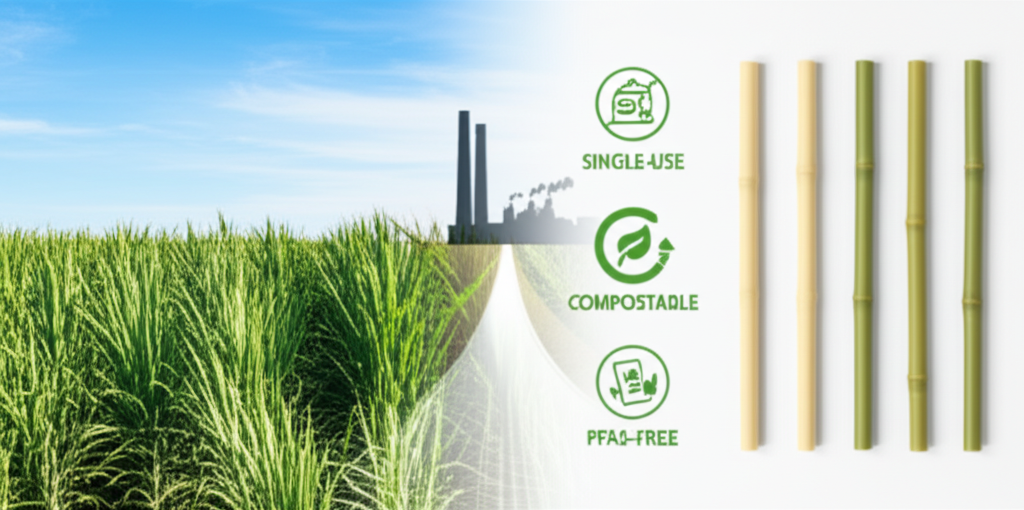
However, the procurement of bamboo straws necessitates a careful consideration of their challenges, particularly concerning hygiene and potential PFAS contamination. A concerning Belgian study revealed the presence of PFAS in 80% of bamboo straw brands tested, raising significant red flags about these “forever chemicals.” This finding complicates the narrative of bamboo as a universally safe and green option, demanding rigorous supplier vetting.
Bovendien vereist de poreuze aard van bamboe een zorgvuldige reiniging met een speciale borstel en een grondige droging om schimmel- en bacteriegroei te voorkomen, een cruciale operationele overweging voor bedrijven. In commerciële omgevingen, waar strikte schoonmaakprotocollen essentieel zijn, kan de praktische levensduur korter zijn dan verwacht, vaak variërend van 2-3 maanden. Deze kortere commerciële levensduur kan leiden tot hogere jaarlijkse kosten, waarbij in één analyse jaarlijkse kosten van € 7,97 per rietje worden genoemd, waardoor ze mogelijk minder kosteneffectief zijn dan sommige alternatieven voor eenmalig gebruik in omgevingen met een hoge omzet. Sommige gebruikers melden ook een milde, natuurlijke “houtachtige” smaakoverdracht naar dranken, die, hoewel subtiel, de klantervaring voor delicate dranken kan beïnvloeden.Bamboo straws offer reusability and natural aesthetics but require careful hygiene and vetting for PFAS contamination.
Procurement Insights: Sugarcane vs. Bamboo – A Strategic Comparison
Kiezen tussen suikerriet- en bamboerietjes vereist een genuanceerde, datagestuurde aanpak die is afgestemd op de specifieke operationele behoeften en duurzaamheidsdoelstellingen van een bedrijf. Elk materiaal heeft duidelijke voor- en nadelen, en de optimale keuze hangt vaak af van factoren zoals het beoogde gebruik, de mogelijkheid om het weg te gooien en het gewenste merkimago.
Feature-by-Feature: B2B Operational Impact & ROI Potential
| Functie | B2B operationele impact | Nalevingsopmerking | ROI-potentieel |
|---|---|---|---|
| Materiaal | Suikerrietvezels/bagasse (hergebruikt landbouwafval) versus hele bamboestelen (snel hernieuwbare hulpbron). Bij de productie van suikerriet wordt landbouwafval hergebruikt, wat modellen voor de circulaire economie ten goede komt. Bamboe heeft een natuurlijke, vaak handgemaakte uitstraling. | Both support plastic ban compliance (e.g., EU SUPD, UK ban, US state-level restrictions). Ensure third-party certifications (e.g., BPI for sugarcane, FSC for bamboo sourcing). | Reduced plastic waste disposal fees; enhanced brand image as an eco-conscious leader. |
| Herbruikbaarheid | Sugarcane: Primarily single-use, eliminating labor-intensive cleaning and storage for high-volume operations. Bamboo: Designed for reusability, requiring robust cleaning protocols and dedicated staff training for hygiene. | Sugarcane: Simplifies adherence to single-use regulations while ensuring compostability. Bamboo: Requires adherence to strict hygiene and sanitation standards for reuse. | Sugarcane: Lower direct operational costs (no cleaning labor, no re-stocking of individual clean straws). Bamboo: Lower per-use cost over very long term *if* meticulously managed and re-used hundreds of times. |
| Duurzaamheid | Sugarcane: Resists sogginess and maintains integrity across temperatures (up to 220°F/104°C), performing consistently like plastic without environmental harm. Bamboo: Sturdy, but can crack/splinter with frequent commercial use and is less consistent than manufactured products. | Sugarcane: Consistent performance minimizes customer complaints and waste from failed straws, supporting compliance with quality standards. Bamboo: Requires quality control to prevent issues that could lead to consumer dissatisfaction or waste. | Sugarcane: Higher customer satisfaction due to consistent, reliable performance; fewer re-servings; reduced waste from prematurely discarded straws. Bamboo: Longevity requires meticulous care, potentially offsetting some durability advantages in busy commercial settings. |
| Taste/Odor | Sugarcane: Neutral taste, ensuring no alteration to beverage flavor. Vital for high-end beverages or sensitive customer palates. Bamboo: Mild natural taste, can subtly affect delicate flavors, a potential concern for gourmet beverage offerings. | Both can align with food safety standards if properly manufactured and cleaned (for bamboo). | Sugarcane: Higher customer satisfaction and brand reputation due to superior taste neutrality. Minimizes complaints or re-servings based on taste impact. |
| Beschikbaarheid | Sugarcane: Commercial & home compostable (2-4 months); transforms into nutrient-rich soil. Offers a clear, eco-friendly end-of-life solution reducing landfill burden. Bamboo: Biodegradable, but may require industrial composting for efficient breakdown; slower decomposition than sugarcane. | Sugarcane: Meets stringent compostability certifications (AS5810, AS4736, TUV OK Compost). Bamboo: Biodegradability varies; requires careful consideration of local composting infrastructure to ensure proper disposal. | Sugarcane: Easier, faster end-of-life cycle; reduces landfill burden and associated waste disposal fees; enhances circular economy credentials. Bamboo: If not properly composted, can still contribute to landfill issues. |
| Cost (Unit/Upfront) | Sugarcane: More affordable in bulk per unit, ideal for high-volume, single-use environments. A plant-based PLA straw (similar category) costs ~$0.24 compared to ~$0.052 for plastic. Bamboo: Higher initial cost due to handcrafted production, but reusable over time. | Cost-effectiveness needs to align with budget and waste reduction goals. | Sugarcane: Suitable for high-volume, quick-turnover environments; lower initial investment for large-scale adoption. Bamboo: Higher initial outlay; long-term savings for consistent, disciplined reuse. |
| PFAS-risico | Sugarcane: Leading brands claim PFAS-free and are certified Fluorine-Free. Crucial for mitigating regulatory and reputational risk. Bamboo: Belgian study found PFAS in 80% of brands tested, raising significant concern about “forever chemicals.” | Sugarcane: Compliance with emerging PFAS regulations and consumer safety expectations. Bamboo: Requires rigorous vetting to ensure PFAS-free certification, or risk significant compliance and reputational damage. | Sugarcane: Mitigates regulatory/reputational risk from PFAS contamination, enhancing consumer trust and market access. Bamboo: Potential for PFAS exposure could lead to product recalls, fines, and severe brand erosion. |
For a more comprehensive guide on procurement for sustainable hospitality, including bamboo and sugarcane options, refer to ourbamboo sugarcane sustainable hospitality procurement guide.Strategic procurement of sustainable straws requires evaluating material, reusability, durability, taste, disposal, cost, and PFAS risk.
Overcoming Adoption Barriers in Sustainable Straw Procurement
Despite the clear environmental and ethical drivers, several barriers can impede the widespread adoption of sustainable straws in B2B settings. One significant hurdle is the perception of higher procurement costs. Indeed, while single-use plastic straws might cost around $0.052, a plant-based alternative, like a PLA straw, can be approximately $0.24—a substantial difference for high-volume operations. This cost disparity demands a shift in perspective from unit price to total cost of ownership, factoring in environmental impact, brand value, and regulatory compliance.
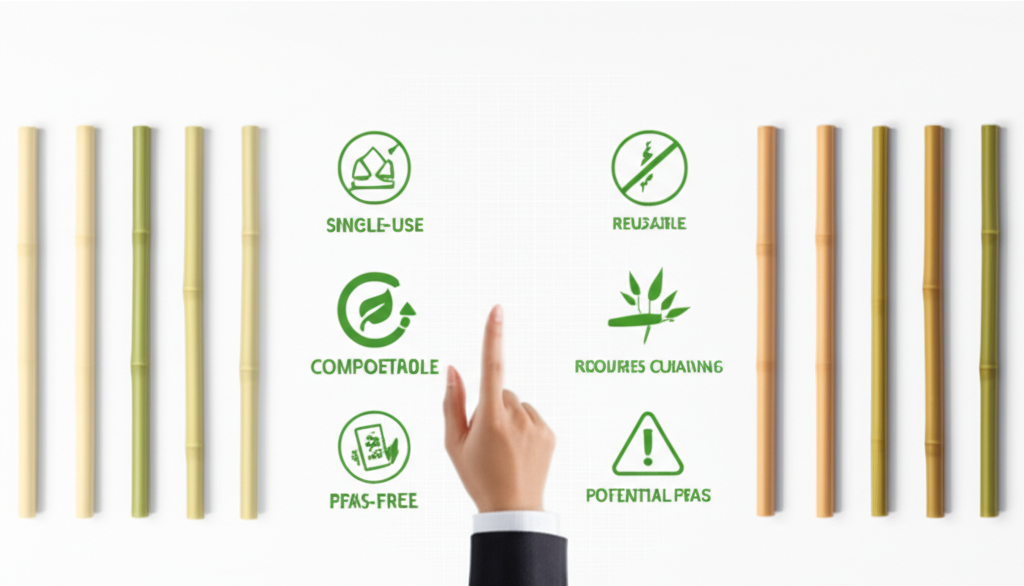
Customer experience is another critical consideration. Early iterations of paper straws, for example, often suffered from the “soggy straw” phenomenon, leading one major Quick Service Restaurant (QSR) chain to experience a 15% decrease in positive beverage reviews after switching. This highlights the importance of selecting high-performance sustainable alternatives that do not compromise the end-user experience.
Furthermore, the complexities surrounding disposal can create confusion and undermine environmental efforts. Many “compostable” options, like PLA, require specific industrial composting facilities to break down effectively. With only approximately 15% of U.S. composting facilities accepting bioplastics, many such items still end up in landfills, where they can take centuries to decompose and may even release potent greenhouse gases like methane. This underscores the need for clear communication and access to appropriate disposal infrastructure.
Navigating the supply chain for bio-based straws also presents complexities. While the global biodegradable straws market was valued at USD 41,521.6 million in 2024, indicating robust supply, logistical challenges, such as long transport routes from Asia for some bamboo products, can impact overall carbon footprint and lead times. Continuous innovation, however, is focused on reducing production costs and enhancing product performance to overcome these operational and supply chain hurdles.Overcoming sustainable straw adoption barriers involves addressing cost perception, ensuring customer experience, and clarifying disposal complexities.
Future Outlook: Innovations and Policy in the Sustainable Straw Market
The journey of drinking straws has been a long one, from Sumerian gold tubes in 3000 BCE to rye grass, then plastic, and now, a diverse array of sustainable materials. The future of the sustainable straw market is marked by relentless innovation and evolving policy landscapes. We are witnessing the emergence of truly novel solutions, such as edible straws made from ingredients like wheat, rice, or pasta, offering a zero-waste solution. New bioplastics, including Polyhydroxyalkanoates (PHA), are also gaining traction, promising enhanced biodegradability and performance.
Experts project the eco-friendly straw market to grow from $1.8 billion in 2023 to $5.1 billion by 2030, according to the *Journal of Industrial Ecology*. This exponential growth will be fueled by continuous advancements in material science, leading to more durable, cost-effective, and truly compostable solutions. Regulatory bodies are expected to intensify their focus, not just on banning single-use plastics, but on scrutinizing the entire lifecycle of alternatives, particularly concerning PFAS and genuine biodegradability.
Procurement teams are uniquely positioned to act as catalysts for this greener supply chain. By proactively seeking and demanding truly sustainable materials, they can drive innovation and adoption throughout the industry. While plastic straw bans represent a tiny fraction (less than 1%) of overall plastic pollution, they serve as a critical entry point for businesses to engage with broader sustainability initiatives and reduce their environmental footprint. Strategic procurement of eco-friendly products like sugarcane straws fosters a positive cycle of demand and innovation, pushing the entire market towards more sustainable practices. Read more about how procurement can drive sustainability in hospitality by reviewing this resource onsustainable straws in hospitality.The sustainable straw market is rapidly evolving with innovations and policies driving demand for truly eco-friendly solutions.
Competitive Advantage & Business Case
For B2B decision-makers, the shift to sustainable straws is more than just compliance; it’s a profound opportunity to establish a competitive advantage and bolster the business case for environmental responsibility. Quantifiable benefits include:
- Kostenbesparingen: While initial unit costs may be higher, adopting genuinely compostable solutions like sugarcane straws can lead to significant long-term cost savings by reducing waste disposal fees, which are increasingly tied to volume and type of waste. Avoiding regulatory fines for non-compliance further safeguards profitability.
- Risicobeperking: Proactively transitioning to PFAS-free and fully certified compostable straws insulates your brand from future regulatory crackdowns and potential litigation related to environmental and health concerns. This foresight minimizes operational disruptions and protects against reputational damage.
- Verhoging van de merkwaarde: In an era where consumers and corporate partners prioritize sustainability, a demonstrable commitment to eco-friendly practices enhances brand perception, attracts a growing segment of environmentally conscious customers, and improves employee morale and retention. This can translate directly into increased market share and stronger customer loyalty.
- Kans op marktaandeel: By leading the charge in sustainable procurement, businesses can differentiate themselves in a crowded market. This positions them as innovators and responsible corporate citizens, opening doors to new partnerships, tenders, and customer segments that value environmental alignment. The projected multi-billion dollar growth in the eco-friendly straw market signals a clear opportunity for market leadership for those who act decisively.
Adopting sustainable straws offers significant competitive advantages, including cost savings, risk mitigation, and enhanced brand value.
Conclusie
Choosing between sugarcane and bamboo **drinking straws** requires a nuanced **procurement guide** approach, weighing operational demands against unwavering environmental commitments. **Sugarcane straws** offer a reliable, compostable single-use solution, minimizing hygiene concerns and simplifying disposal for high-volume settings, while explicitly avoiding PFAS and repurposing agricultural waste. **Bamboo straws** excel in reusability and natural aesthetics, ideal for lower-volume applications where cleaning protocols can be meticulously managed, despite potential PFAS concerns and shorter commercial lifespans in demanding environments.
The market is clearly moving towards sustainable alternatives, driven by both legislation and consumer demand. Embrace this shift now. Request a comprehensive sample pack of certified PFAS-free sugarcane straw varieties today to assess their superior performance and secure your supply chain before regulatory pressures tighten further and competitors seize market advantage.Request a Sample Pack Today
Veel Gestelde Vragen
Q: Why should hospitality businesses switch to sugarcane straws?
A: Sugarcane straws offer superior durability, remain taste-neutral, are 100% compostable, and repurpose agricultural waste, enhancing your brand’s sustainability without compromising customer experience.
Q: Are sugarcane straws truly compostable in commercial settings?
A: Yes, leading sugarcane straws are certified for commercial composting (e.g., AS4736, BPI Industrial), breaking down within 90-180 days into nutrient-rich soil, reducing landfill burden.
Q: How do sugarcane straws compare to bamboo straws for hygiene in foodservice?
A: Sugarcane straws are single-use and non-porous, simplifying hygiene. Bamboo straws, while reusable, require meticulous cleaning and drying to prevent mold and bacterial growth, which can be challenging in high-volume foodservice.
Q: What are the cost implications of switching to sustainable straws for a large hotel chain?
A: While unit costs might be higher than plastic, sugarcane straws offer long-term savings by reducing waste disposal fees, avoiding regulatory fines, and boosting brand value, leading to increased customer loyalty and market share.
Q: Are sugarcane straws free from harmful chemicals like PFAS?
A: Yes, reputable sugarcane straw brands are certified PFAS-free and Fluorine-Free, ensuring consumer safety and mitigating regulatory and reputational risks for your business.