A comprehensive guide for procurement managers, operations directors, and sustainability officers in hospitality & foodservice.
I. Inleiding: de goede kant van duurzaamheid in de drankenservice
De moderne drankenindustrie, vooral het levendige segment dat milkshakes en dikke gemengde dranken serveert, staat voor een kritiek moment. Decennia lang hebben plastic rietjes voor eenmalig gebruik, waaronder de robuuste jumbo-varianten, een stille, maar toch belangrijke bijdrage geleverd aan de mondiale vervuiling. Nu het milieubewustzijn toeneemt en de regelgevingskaders strenger worden, worden bedrijven geconfronteerd met toenemende druk om over te stappen op duurzame alternatieven. Dit is niet slechts een vluchtige trend; het is een fundamentele verschuiving in de operationele en commerciële levensvatbaarheid.
De markt onderstreept deze noodzaak: het segment milieuvriendelijke rietjes zal naar verwachting een substantiële groei doormaken, van naar schatting 12,3 miljard dollar in 2025 tot ongeveer 25,1 miljard dollar in 2035, wat een robuuste samengestelde jaarlijkse groei (CAGR) van 7,3% aantoont. Deze uitbreiding is een direct antwoord op een mondiaal mandaat voor minder plastic afval. Voor inkoopmanagers en operationeel directeuren is het begrijpen en strategisch toepassen van deze alternatieven voor jumbo-rietjes niet langer optioneel. Deze gids biedt bruikbare inzichten in haalbare, hoogwaardige, milieuvriendelijke opties, waardoor uw bedrijf compliant, concurrerend en afgestemd op een duurzame toekomst blijft.Omarm duurzame jumborietjes om aan te sluiten bij de marktgroei en de toekomstige operationele levensvatbaarheid te garanderen.
II. De zakelijke noodzaak: verschuivingen in de regelgeving zorgen voor een duurzame adoptie van jumbo-stro
Het mondiale landschap voor plastic voor eenmalig gebruik is onherroepelijk veranderd, gedreven door wetgevende maatregelen en een beter begrip van de impact op het milieu. Voor elk bedrijf dat actief is of wil uitbreiden naar belangrijke markten, is het begrijpen van deze verschuivingen in de regelgeving van cruciaal belang.
Verboden plastic rietjes en hun rimpeleffect op de inkoop
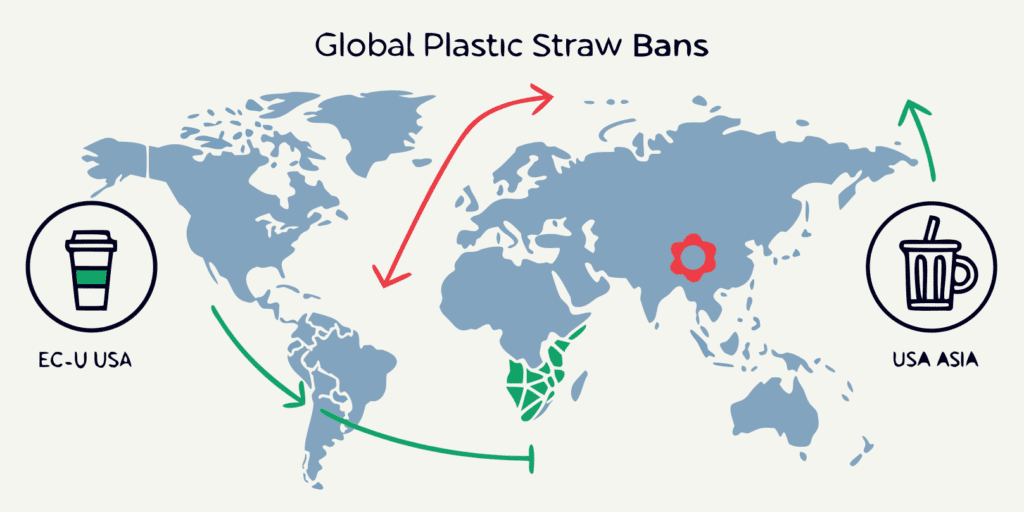
Overheden over de hele wereld voeren beslissende verboden en beperkingen in op plastic voor eenmalig gebruik, en rietjes lopen vaak voorop. De Europese Unie heeft bijvoorbeeld op 3 juli 2021 een alomvattend verbod op plastic artikelen voor eenmalig gebruik, inclusief rietjes, uitgevaardigd. Deze richtlijn dwong bedrijven in alle lidstaten onmiddellijk om alternatieve oplossingen te zoeken en toe te passen. Buiten Europa hebben talloze Amerikaanse staten en steden soortgelijke verboden of ‘rietjes-op-verzoek’-beleid ingevoerd. Seattle heeft bijvoorbeeld al op 1 juli 2018 een verbod op plastic rietjes en keukengerei voor eenmalig gebruik ingevoerd.
Bij het naleven van deze evoluerende mandaten gaat het niet alleen om het vermijden van hoge boetes; het is een strategische zet die uw merk positioneert als een verantwoordelijke marktleider. Proactieve adoptie stemt uw activiteiten af op de mondiale duurzaamheidsdoelstellingen, voorkomt toekomstige beperkingen en verbetert uw marktreputatie.
Milieutol van plastic voor eenmalig gebruik en de oplossing voor duurzame jumbo-rietjes
The scale of plastic straw pollution is staggering. Americans alone discard an estimated 500 million plastic straws daily. These lightweight items frequently evade traditional recycling systems, often ending up in landfills or, more alarmingly, in oceans, where they can persist for centuries. Plastic straws are consistently ranked among the top 10 items found in beach cleanups, posing significant harm to marine life through ingestion and entanglement. As they break down over time, they contribute to the proliferation of microplastics, contaminating ecosystems and entering the food chain, with unknown long-term impacts.
Transitioning to sustainable jumbo drinking straws directly addresses these critical environmental challenges. By choosing certified biodegradable or reusable options, businesses can drastically reduce plastic waste, prevent microplastic contamination, and actively contribute to protecting delicate ecosystems. This commitment goes beyond mere compliance; it becomes a powerful statement of corporate social responsibility. To delve deeper into the larger ecosystem of alternatives, explore our comprehensive guide onbiodegradable drinking tubes for B2B applications.
Regulatory shifts and environmental concerns necessitate adopting sustainable jumbo straws for brand leadership.
III. Unpacking Sustainable Jumbo Straw Options for Milkshakes
The market for sustainable jumbo straws has matured significantly, offering a diverse array of options that combine eco-friendliness with robust performance suitable for thicker beverages like milkshakes.
Compostable & Biodegradable Breakthroughs for Milkshakes
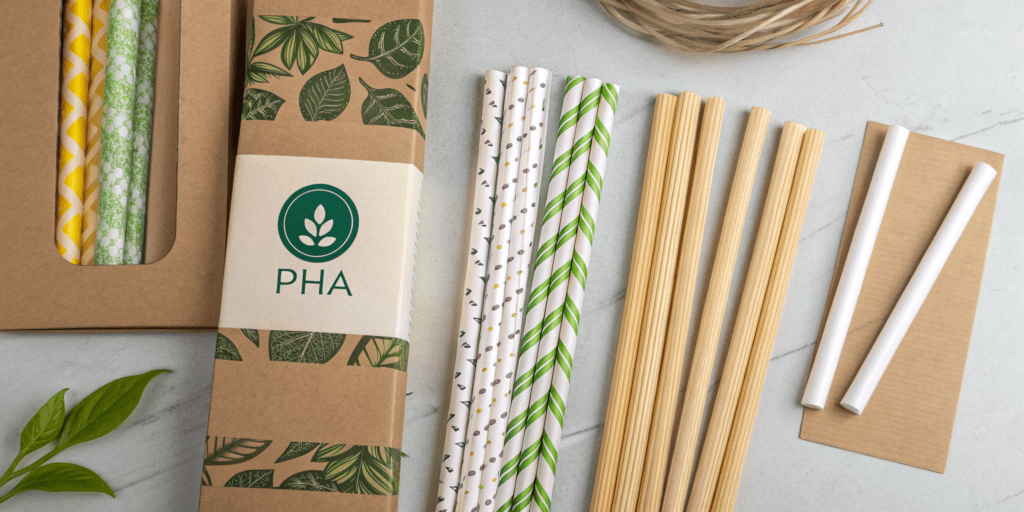
PHA-rietjes:Crafted from polyhydroxyalkanoates (PHA), these innovative straws are derived from renewable plant sources. A key advantage of PHA is its inherent marine biodegradability, meaning it can naturally break down even if it finds its way into ocean environments. Beyond this, PHA straws are certified for both home and industrial composting, meeting rigorous standards such as ASTM D6400, BPI (Biodegradable Products Institute), and TÜV Austria certifications. Brands like Phade® offer 7.75″ Jumbo Eco-STRAWS that provide durability comparable to traditional plastic, making them ideal for a range of cold and hot beverages.
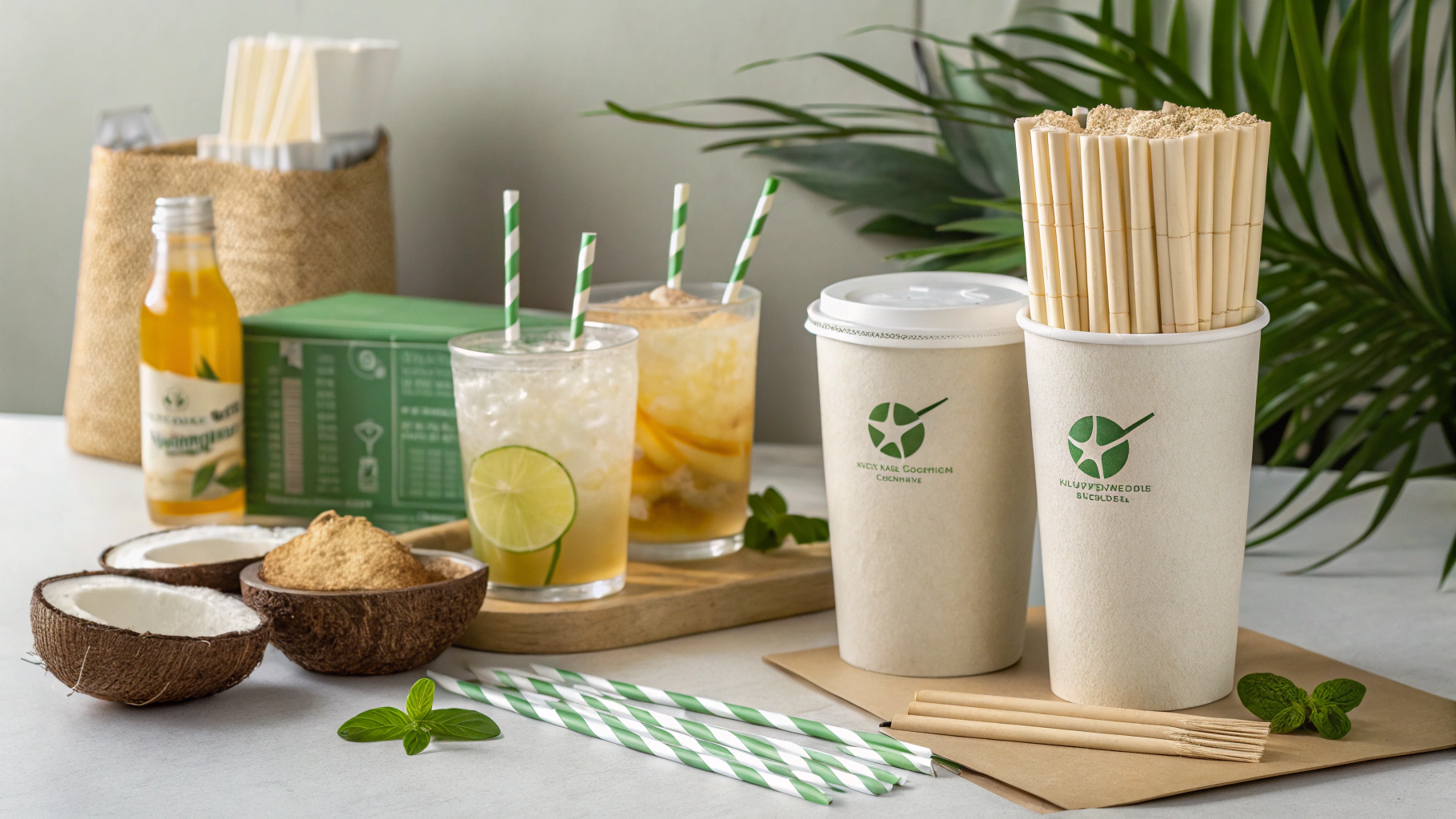
Suikerriet (Bagasse) rietjes:Made from the fibrous byproduct of sugarcane juice extraction, bagasse straws are a prime example of circular economy innovation. These straws boast impressive resilience, resisting sogginess for up to 24 hours and maintaining integrity in temperatures up to 220°F (100°C). They are certified home and industrial compostable (e.g., EN 13432) and are notably PFAS-free, addressing growing concerns about “forever chemicals” in food contact materials.
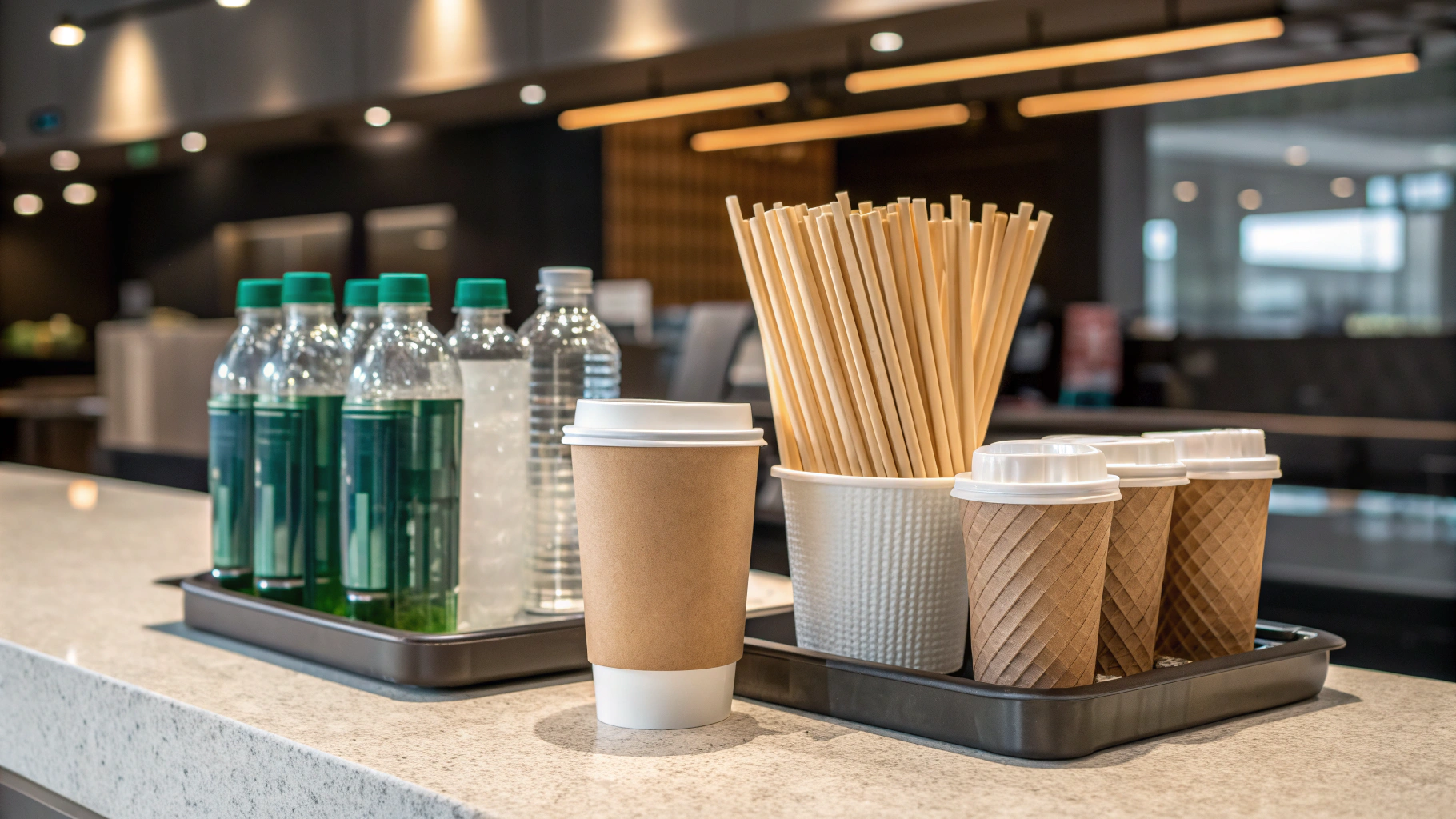
Reed & Wheat Straws:Deze rietjes maken gebruik van het ontwerp van de natuur en zijn gemaakt van natuurlijke stengels die van nature niet drassig worden, wat een unieke gebruikerservaring biedt. Ze zijn 100% composteerbaar en biologisch afbreekbaar in zowel land- als mariene omgevingen. Deze natuurlijke alternatieven zijn vaak USDA BioPreferred-gecertificeerd en bieden een neutrale smaak en zijn een bewijs van echt plantaardige oplossingen. HOOI! De brede jumborietjes van Rietjes, met interne diameters variërend van 7,5-10 mm, illustreren hun geschiktheid voor dikke milkshakes.
Papieren rietjes:Een algemeen erkend alternatief: papieren rietjes zijn doorgaans FSC-gecertificeerd en ontworpen om biologisch afbreekbaar en composteerbaar te zijn, waarbij ze onder de juiste omstandigheden vaak binnen 2-6 weken worden afgebroken en voldoen aan de ASTM-normen. Ze zijn een kosteneffectieve keuze en bieden uitgebreide aanpassingen voor branding. Terwijl vroege versies te maken kregen met problemen met drassigheid (soms afnemend in slechts 10-15 minuten), verbeteren voortdurende innovaties in waterbestendige coatings hun duurzaamheid aanzienlijk, terwijl de voordelen voor het milieu behouden blijven.
Rietjes van plantaardige vezels:Composed of recycled agricultural crop waste, plant gum, and starch, these straws offer a compelling balance of durability and flexibility, performing well with thicker drinks like milkshakes without becoming mushy. They meet stringent compostability standards, including ASTM D6400, ensuring a responsible end-of-life cycle.
Durable Reusable Solutions for Eco-Friendly Milkshake Straws
Beyond single-use compostable options, reusable straws present a long-term solution for businesses with the infrastructure to clean and sanitize.
Stainless Steel Straws:Highly durable, rust-proof, and often made from recycled content (e.g., 45% recycled, 100% FDA Certified, 18/8 stainless steel), these straws are built to last. They are available in various diameters, such as 8mm for smoothies and shakes or 12mm for Boba, making them versatile for a range of thick beverages.
Glass Straws:Crafted from borosilicate glass, these straws are reusable, dishwasher safe, and offer the advantage of visual cleanliness. While elegant, their fragility can be a consideration in high-volume commercial settings.
Bamboe rietjes:A natural, rapidly renewable resource, bamboo straws are reusable and naturally antibacterial. At the end of their long life, they are fully compostable, aligning with circular economy principles.
Silicone Straws:Known for their flexibility, softness, and durability, silicone straws are often dishwasher safe and a popular choice for safety and ease of transport, particularly in family-friendly establishments.
To explore a wider range of sustainable options for your business, including different sizes and materials for various beverages, consider our guide onsustainable boba drinking straws for B2B.

Diverse sustainable jumbo straw options, from compostable PHA to reusable stainless steel, meet varied business needs.
IV. Sustainable Jumbo Straw Alternatives: Feature Comparison
Choosing the right sustainable jumbo straw requires a holistic view of operational impact, compliance, and potential ROI. This comparison table highlights key considerations for leading alternatives.
| Functie | B2B operationele impact | Nalevingsopmerking | ROI-potentieel |
|---|---|---|---|
| Papieren rietjes | Readily available, cost-effective for single-use. May require frequent replacement due to sogginess issues with some varieties. | Biodegradable, compostable (ASTM standards). Crucial to verify PFAS-free status. | Lower upfront cost, but potential for higher consumption rates and customer dissatisfaction if quality is poor. |
| PHA-rietjes | Durable and high-performing, akin to traditional plastic, suitable for hot/cold drinks. Single-use. | Marine biodegradable, home/industrial compostable (ASTM D6400, BPI, TUV Austria). Eliminates microplastic concerns. | Higher upfront investment, but significantly enhances brand image, ensures future regulatory compliance, and reduces environmental liability. |
| Sugarcane (Bagasse) Straws | Resists sogginess for 24+ hours, robust for high temperatures (up to 220°F/100°C). Single-use. | Certified home/industrial compostable (EN 13432), PFAS-free. Strong circular economy alignment. | Mid-range cost with superior performance; contributes to a positive brand narrative and supports waste reduction goals. |
| Roestvrijstalen rietjes | Requires investment in washing/storage infrastructure, staff training for cleaning. Reusable. | No disposal concerns for single-use plastics, promotes zero-waste initiatives. | High upfront cost per unit, but significant long-term savings by eliminating recurring purchases of disposable straws; boosts eco-conscious branding. |
Evaluate sustainable jumbo straw options based on operational impact, compliance, and ROI for informed decisions.
V. Navigating Certifications and Standards for Compliance
In the rapidly evolving landscape of sustainable products, navigating certifications and adherence to global standards is paramount. This ensures that your chosen “eco-friendly” options genuinely deliver on their environmental promises, avoiding common pitfalls like “greenwashing.”
Ensuring True Compostability: Beyond “Biodegradable” for Wide Diameter Biodegradable Straws
The terms “biodegradable” and “compostable” are often used interchangeably, but their distinctions are critical for B2B decision-makers. “Biodegradable” broadly means a material can break down naturally, but the conditions, timeframes, and resulting byproducts can vary immensely. Without specific certifications, a “biodegradable” claim offers little assurance of true environmental benefit.
“Compostable,” on the other hand, implies a much more rigorous process. A product certified as compostable must break down into non-toxic residue within a defined period under specific conditions. For instance, European standard EN 13432 requires at least 90% disintegration within 12 weeks and 90% biodegradation within six months in industrial composting facilities. For home composting, a different set of conditions apply. To ensure genuine environmental benefits and compliance, always prioritize products carrying certifications from reputable third-party organizations like the Biodegradable Products Institute (BPI) in North America or TÜV OK Compost (Industrial or Home) in Europe. These certifications provide verifiable proof of a product’s end-of-life performance.
Global Standards and Local Mandates for Sustainable Straws
Adherence to established international standards is not just a sign of quality; it’s crucial for market access and validating product claims. Key standards include ASTM D6400 in the U.S. (the standard specification for compostable plastics) and EN 13432 in the EU (for packaging recoverable through composting and biodegradation). Products meeting these benchmarks demonstrate a commitment to environmental integrity.
Beyond compostability, an increasingly vital safety and environmental consideration for food contact materials is the absence of harmful “forever chemicals,” or PFAS (Per- and Polyfluoroalkyl Substances). Leading regulatory bodies, such as Germany’s Bundesinstitut für Risikobewertung (BfR), provide recommendations regarding food contact materials that are often seen as benchmarks by both industry and monitoring bodies within the EU regulatory framework. Ensuring your sustainable straws are PFAS-free safeguards consumer health and aligns with best practices for environmental protection. Furthermore, certifications like USDA BioPreferred signal a commitment to renewable, bio-based materials, which can significantly enhance consumer trust and brand perception. For more detailed information on specific certifications and their implications, the European Bioplastics Association provides valuable resources on industry standards and market developments.
Prioritize certified, PFAS-free sustainable straws to ensure genuine eco-friendliness and regulatory compliance.
VI. B2B Strategic Considerations: Beyond the Straw
Adopting sustainable jumbo drinking straws extends far beyond the physical product; it’s a strategic decision that impacts your supply chain, brand value, and financial performance.
Optimizing Your Supply Chain for Eco-Friendly Milkshake Straws
Successful integration of eco-friendly straws demands meticulous supply chain management. Securing reliable, high-volume sourcing from manufacturers offering bulk discounts is crucial for seamless integration into existing operations. This involves evaluating the total cost of ownership, which encompasses not just the unit cost, but also shipping expenses, storage requirements, and potential waste management fees. Given the rapid growth in the eco-friendly straw market—the paper straw segment alone held a significant 38.2% revenue share in 2024—it’s vital to consider lead times and inventory management for new material adoption to prevent supply disruptions. Direct procurement from specialized manufacturing companies often offers the best opportunities for cost efficiency and reliable supply.
Enhancing Brand Value with Sustainable Choices for Jumbo Drinking Straws for Milkshakes
The shift to eco-friendly options offers a powerful opportunity to enhance brand image and foster deeper customer loyalty. Research indicates a strong consumer preference for sustainability: a study on German consumers found that 75% identified as eco-conscious, with 65% expressing a willingness to pay more for sustainable products. By publicly articulating and demonstrating your commitment to sustainable practices, you can effectively attract and retain this growing demographic, particularly Gen Z, who prioritize ethical consumption. This commitment serves as a potent differentiator in a competitive market, allowing your brand to stand out as genuinely environmentally responsible.
The ROI of Eco-Conscious Procurement
While the initial unit cost of sustainable straws may sometimes be marginally higher than traditional plastic, the long-term Return on Investment (ROI) is compelling. This includes tangible benefits such as reduced landfill fees due to decreased waste, avoidance of non-compliance penalties from escalating regulations, and significant uplift in customer loyalty and brand perception. Improved brand perception can directly translate into increased sales and market share.
Mini-casestudy:A compelling example comes from Hung Hau Foods Co Ltd, a Vietnamese company that has successfully leveraged local agricultural byproducts to create innovative rice flour-based wide-diameter straws. This forward-thinking approach has not only addressed the demand for sustainable alternatives but has also propelled their business. Within the last 36 months, Hung Hau Foods has seen growing domestic and international demand, securing orders from diverse markets including South Korea, Russia, the US, and Europe. This case clearly demonstrates the strong market appetite and commercial viability for genuinely plant-based, sustainable solutions, proving that eco-conscious procurement can lead to substantial business growth. Businesses seeking to integrate such responsible sourcing can explore our insights onhow to choose the right biodegradable drinking straw supplier.Strategic adoption of sustainable jumbo straws optimizes supply chains, enhances brand value, and delivers strong ROI.
VII. Innovations and Future Outlook
The trajectory of sustainable jumbo drinking straws is one of continuous innovation, driven by material science breakthroughs and evolving consumer demands.
Pioneering Materials and Performance for Sustainable Jumbo Drinking Straws
The industry is seeing significant investment in research and development, directly addressing past limitations such as the sogginess of early paper straws. This commitment is leading to remarkable improvements in the durability and functionality of alternative materials. Beyond the already prevalent paper, PHA, and sugarcane options, emerging materials like straws made from coffee grounds are pioneering a truly circular economy model, transforming industrial waste into valuable products. Seaweed-based straws are also gaining traction, pushing the boundaries of biodegradability and offering innovative solutions with minimal ecological footprint. Furthermore, manufacturers are focusing on developing solutions tailored for specific applications, such as wider diameters (e.g., 10-15mm) explicitly designed for bubble tea and thicker milkshakes, ensuring they can accommodate inclusions like tapioca pearls or fruit chunks.
The Evolving Landscape of Wide Diameter Biodegradable Straws
The future of the biodegradable straws market appears robust, with projections indicating it will exceed $890 million USD globally by 2032, experiencing a robust Compound Annual Growth Rate (CAGR) of 13.2%. This growth signals a dynamic landscape characterized by several key trends: enhanced water-resistant coatings for paper straws, truly home-compostable options that empower individual consumers and small businesses, and even the development of “smart straws” capable of specialized functions beyond simple beverage consumption. Beyond the materials themselves, the broader supply chain is set for transformation. The adoption of blockchain technology is anticipated to usher in unprecedented levels of transparency, allowing businesses to verify the sustainability claims of their products from source to disposal. Concurrently, AI-powered analytics will enable more precise waste reduction strategies and optimize supply chain efficiencies, further driving market growth and reinforcing the economic viability of sustainable choices. These advancements collectively promise a future where eco-friendly straws are not just an alternative, but the industry standard.

Continuous innovation in materials and supply chain technology will make eco-friendly straws the industry standard.
Conclusie
The transition to sustainable jumbo drinking straws for milkshakes is undeniably a strategic imperative for modern businesses. It is a movement propelled by an undeniable trifecta: increasingly stringent regulations, escalating consumer demand for ethical products, and an undeniable global responsibility to mitigate environmental impact. By meticulously evaluating material performance, adhering to rigorous certifications, and strategically optimizing procurement processes, businesses can achieve far more than mere compliance. They can significantly bolster their brand reputation, enhance operational efficiencies, and secure a distinct competitive advantage in a rapidly evolving market. Embrace these eco-friendly innovations; elevate your brand and lead the charge towards a greener, more profitable future. Secure your leadership position in the sustainable beverage market by requesting a comprehensive sample pack of jumbo eco-friendly straw options today.Embrace sustainable jumbo straws to boost brand, efficiency, and competitive advantage in the evolving market.
Veel Gestelde Vragen
What are the primary benefits of switching to sustainable jumbo straws for milkshakes?
Switching to sustainable jumbo straws offers enhanced brand reputation, compliance with evolving plastic bans, reduced environmental footprint, and potential long-term cost savings through reduced waste fees and increased customer loyalty.
How do PHA straws compare to sugarcane straws for thick beverages like milkshakes?
PHA straws offer durability similar to traditional plastic and are marine biodegradable. Sugarcane straws are robust, resist sogginess for extended periods, and are PFAS-free, making both excellent choices for thick beverages.
Are paper straws truly compostable, and do they hold up well in milkshakes?
Certified paper straws are biodegradable and compostable, often breaking down within weeks. Innovations in water-resistant coatings are significantly improving their durability for milkshakes, addressing past sogginess issues.
What certifications should I look for to ensure a sustainable straw is genuinely eco-friendly?
Look for certifications like BPI (Biodegradable Products Institute) or TÜV OK Compost (Industrial or Home) for compostability, ASTM D6400 or EN 13432 for standards, and ensure they are PFAS-free for safety.
How can hospitality businesses manage the transition to reusable jumbo straws effectively?
Effective transition requires investing in proper washing and sanitization infrastructure, staff training for cleaning protocols, and clear communication with customers about the reusable program.
Ready to Make the Switch?
Secure your leadership position in the sustainable beverage market. Request a comprehensive sample pack of jumbo eco-friendly straw options today!Request a Sample Pack