Choosing the Right Compostable Drinking Straws for Hospitality & F&B
The hospitality and F&B sectors stand at a critical juncture. The escalating global crisis of single-use plastic pollution demands immediate action, with an estimated 170 to 390 million plastic straws discarded daily in America alone, contributing significantly to landfill and ocean marine debris. This environmental imperative is no longer a distant concern but a direct challenge impacting hotels, restaurants, and cafes worldwide. Consumers are increasingly discerning, with a growing demand for sustainable practices directly influencing their purchasing decisions and fostering brand loyalty. Moreover, the regulatory landscape is rapidly tightening, evidenced by widespread plastic straw bans and restrictions in major cities across the US and countries like those within the European Union. This shift isn’t merely about compliance; it’s a strategic business opportunity for forward-thinking establishments to gain a significant competitive advantage and differentiate themselves in a conscious market.Explore como elevar sua marca com soluções de embalagens sustentáveis.

The journey towards sustainable straws hasn’t been without its hurdles. Early compostable alternatives, particularly paper straws, were often criticized for rapidly becoming soggy, impacting the customer experience and bringing back unpleasant memories of rye grass straws from the 1800s. However, modern innovations have largely addressed these “soggy straw” perceptions, with new materials and coatings significantly enhancing durability. A crucial distinction must be made between “biodegradable” and “compostable.” While biodegradable materials eventually break down, they may still require specific, sometimes unachievable, conditions to fully decompose and can leave microplastic residues. “Compostable” materials, on the other hand, are specifically designed to break down completely into nutrient-rich compost within a defined timeframe under controlled conditions, leaving no toxic residue. This distinction is vital for avoiding greenwashing and ensuring genuine environmental impact. Today, the market offers a diverse landscape of modern compostable straw materials, predominantly plant-based, each with unique properties designed to meet varied F&B demands.
Selecting the ideal compostable straw for your operation goes beyond simply choosing an eco-friendly option; it requires a strategic assessment of key performance metrics. Durability in various beverages, heat resistance for hot drinks, and neutrality of taste and odor are paramount to ensuring a consistent, positive customer experience. Crucially, validating compostability claims through reputable third-party certifications like BPI (Biodegradable Products Institute) in the US, TÜV AUSTRIA (OK compost INDUSTRIAL / OK compost HOME) in Europe, or ASTM D6400 and CMA-S, is essential for verifiable environmental impact.
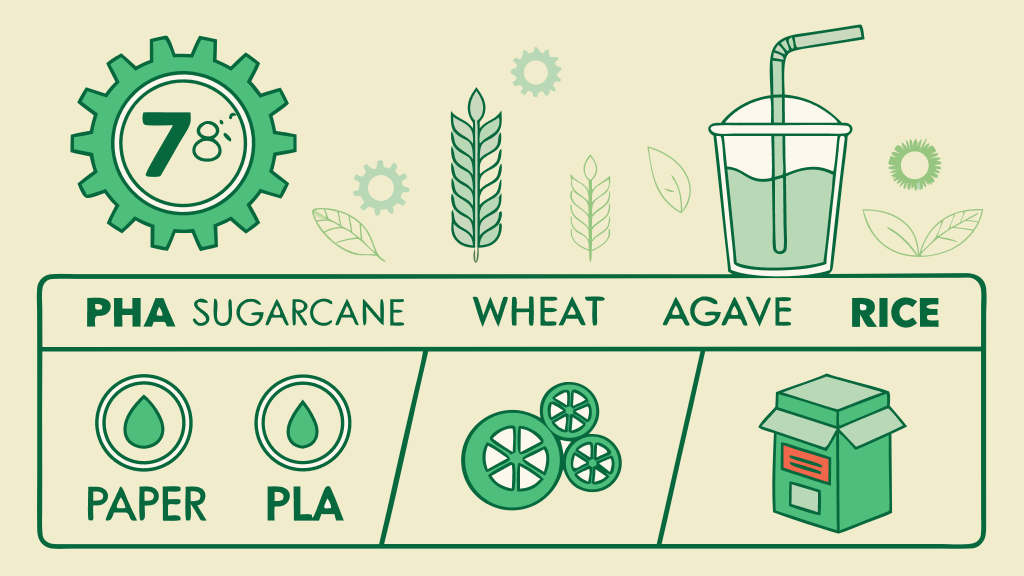
Here’s a comparison of leading compostable straw materials for hospitality & F&B:
| Tipo de material | Key Properties & Performance | Compostability & Certifications | Ideal for |
|---|---|---|---|
| Canudos PHA | Mimic traditional plastic feel and durability. Resistant to sogginess and maintain integrity. Withstand temperatures up to 212°F (100°C). | Certified home compostable (approx. 1 year) and marine degradable (4-8 months). Do not produce microplastics. Often BPI certified. | All beverage types, including hot and cold; premium feel, suitable for extended use. |
| Palhinhas de Cana-de-Açúcar (Bagaço) | Sturdy, durable, and resist sogginess, even after prolonged immersion (e.g., 24 hours). Withstand up to 220°F (100°C). Smooth, neutral taste and faint natural aroma. | Certified home and industrial compostable (weeks to months, e.g., 70% in 12 weeks). Often EN 13432 certified. | Cold, warm, and hot beverages; good for thicker drinks like smoothies and cocktails. |
| Wheat & Reed Straws | Caules de origem natural; não fique encharcado; funcionam excepcionalmente bem em bebidas quentes e frias. Fornece uma estética rústica. Sem glúten, pois vêm do caule e não do grão. | 100% compostável e biodegradável em terra ou mar. Compostável comercial certificado (por exemplo, 42 dias) e muitas vezes compostável em casa. Programa BioPreferred do USDA reconhecido. | Todos os tipos de bebidas, incluindo coquetéis; forte apelo estético para marcas ecologicamente conscientes. |
| Palhinhas de Agave | Feito com fibras recicladas de agave, subproduto da produção de tequila e xarope de agave; sem plástico e altamente durável. Resista à umidade por várias horas. Adequado para bebidas quentes e frias devido à resistência ao calor. Geralmente de sabor neutro. | Biodegradable and compostable; some home-compostable versions break down quickly on land or in the ocean (e.g., 95% in 180 days in active landfill). | Hot and cold drinks; offers strong durability for extended use, excellent for high-volume settings. |
| Palhinhas de Arroz | Resilient, sturdy, and tolerate hot drinks and thick liquids. Can be edible after use, offering a unique customer experience. Scentless. | Fully edible and compostable. Biodegradable in less than 90 days. | All beverage types; unique, zero-waste option; particularly popular in settings prioritizing novelty and complete disposability. |
| Canudos de papel | Cost-effective. Modern versions have undergone significant improvements in durability with plant-based coatings, lasting 2-4 hours in cold drinks and about 1 hour at room temperature. | Rapidly decompose in composting environments (2-6 weeks). Compostable, but may not biodegrade effectively in oxygen-free landfill settings. | Cold and room temperature beverages; suitable for high-volume, cost-sensitive operations where rapid consumption is common. |
| Plaudos de PLA | Mimic the look and feel of traditional plastic straws. | Primarily require industrial composting facilities for effective breakdown; do not decompose in home composts or landfills. Low heat resistance; can deform above 113°F (45°C). | Cold drinks only, best suited for areas where industrial composting infrastructure is robust and accessible. |
Otimizar a eficiência operacional com canudos ecológicos envolve mais do que apenas selecionar o material certo. Exige uma avaliação cuidadosa da sua infraestrutura interna de gestão de resíduos e das capacidades locais de compostagem. Por exemplo, nos EUA e na Europa, a disponibilidade de instalações de compostagem industrial varia significativamente por região, como evidenciado por relatórios sobre infraestruturas de gestão de resíduos. As empresas devem garantir que as palhas “compostáveis” escolhidas possam realmente ser desviadas dos aterros para um fluxo de compostagem adequado; caso contrário, o seu benefício ambiental será negado.Aprenda como simplificar sua cadeia de suprimentos B2B para otimizar a aquisição de embalagens.As melhores práticas para um armazenamento adequado também são cruciais; Os canudos de PLA, por exemplo, são sensíveis ao calor e à umidade, exigindo armazenamento entre 15 e 25°C (59-77°F) com menos de 50% de umidade relativa para evitar empenamento. Por outro lado, materiais naturais como palha de arroz e trigo precisam de baixo teor de umidade para evitar decomposição prematura e mofo. Por último, a formação do pessoal e a educação dos clientes são fundamentais para maximizar os benefícios ambientais e reforçar o compromisso da sua marca com a sustentabilidade. A comunicação transparente sobre as suas escolhas ecológicas pode promover a confiança e a lealdade.

Embracing the right compostable straws is not just a trend; it’s a strategic imperative that future-proofs your F&B business. This commitment to sustainability significantly enhances your brand reputation, attracting the growing segment of environmentally conscious consumers and securing a distinct competitive edge in an evolving market. The long-term benefits extend beyond improved public perception, including potential reductions in waste disposal fees and a strengthened market position aligned with global sustainability trends. Proactive sustainable sourcing is a tangible way to achieve your Environmental, Social, and Governance (ESG) goals and contribute meaningfully to a circular economy model within the hospitality industry.Descubra mais sobre como alcançar as metas ESG na hotelaria.