Otimizando Resíduos Agrícolas: Acelerando a Decomposição da Palha para Ganho Comercial

Numa era que exige práticas sustentáveis e uma gestão eficiente dos recursos, a palha agrícola representa um ativo significativo, embora muitas vezes subutilizado. Além de ser apenas um subproduto ou resíduo, representa um contributo valioso para o enriquecimento do solo, um componente crítico na economia circular florescente e um caminho para uma maior sustentabilidade empresarial. No entanto, para os produtores agrícolas, as empresas de gestão de resíduos e os fabricantes de produtos sustentáveis, o percurso desde a palha bruta até ao composto utilizável pode ser longo e inconsistente. Esta variabilidade representa desafios operacionais e financeiros substanciais para as empresas que dependem de alterações orgânicas previsíveis e de alta qualidade. O que realmente determina o cronograma para a decomposição da palha e, mais importante, como as empresas podem otimizar esse processo natural para obter eficiência máxima, custos reduzidos e um retorno atraente sobre o investimento? Compreender a ciência e a estratégia por trás da compostagem de palha não é apenas uma preocupação ecológica; é um imperativo estratégico para qualquer empresa que pretenda reduzir a sua pegada ambiental, melhorar a saúde do solo e desbloquear novos fluxos de receitas a partir do que antes era considerado desperdício.
Ilustração 1: O percurso da palha desde o campo até ao composto acabado.
Decodificando a decomposição: a ciência e as variáveis por trás dos cronogramas de compostagem de palha
O processo de transformação da matéria orgânica é complexo e a palha, de natureza fibrosa, não foge à regra. Sob condições típicas de compostagem de quintal, você pode esperar que a palha se decomponha em composto utilizável em cerca de seis a nove meses. No entanto, se for deixado sem vigilância numa pilha passiva, sem trituração, este prazo pode estender-se até um ano ou mais. Por outro lado, com condições óptimas e uma gestão diligente, este período de decomposição pode ser significativamente reduzido para apenas três meses. Para as empresas, este espectro destaca a diferença crítica entre a gestão passiva de resíduos e a valorização ativa de recursos. A velocidade e a qualidade da decomposição não são aleatórias; eles são meticulosamente controlados por uma série de fatores interligados, cada um oferecendo uma alavanca para a otimização operacional.
No cerne da compostagem eficiente de palha está oRazão carbono-nitrogênio (C:N). A palha é inerentemente rica em carbono (um material “marrom”), apresentando uma relação C:N normalmente variando de 40:1 a 100:1. Para uma rápida atividade microbiana e uma decomposição eficaz, a proporção ideal de C:N do composto gira em torno de 30:1. Isto significa que a palha deve ser estrategicamente equilibrada com materiais “verdes” ricos em azoto, como aparas de relva, restos de cozinha ou, mais eficazmente para operações em grande escala, estrume animal. Um desequilíbrio pode levar a uma decomposição lenta ou até mesmo a um resultado desagradável e mofado. Além do equilíbrio químico,Níveis de umidadesão primordiais; a pilha de compostagem precisa manter uma umidade consistente, semelhante a uma esponja espremida, idealmente entre 45-55% de umidade para compostagem quente. Muita água leva a condições anaeróbicas, produzindo odores desagradáveis e retardando o processo, enquanto pouca água inibe a atividade microbiana crucial.
Aeração e Torneamentotambém não são negociáveis para acelerar a decomposição. A reviravolta regular da pilha de composto introduz oxigénio, que é vital para os microrganismos aeróbicos – os trabalhadores incansáveis que decompõem a matéria orgânica. O giro também evita a compactação e ajuda a manter as temperaturas ideais, normalmente entre 32 e 60°C (90-140°F). A reviravolta consistente pode reduzir o tempo de compostagem em até 50%. Para materiais como palha de arroz, recomenda-se virar a cada três ou quatro semanas. OTamanho de partículada palha também influencia profundamente a velocidade de decomposição; cortar ou triturar palha em pedaços menores (idealmente de 1 a 3 polegadas) aumenta drasticamente a área de superfície disponível para colonização e decomposição de microrganismos, garantindo um retorno mais rápido. Os materiais não triturados, por outro lado, demoram consideravelmente mais tempo.
Gerenciamento de temperaturadentro da pilha há um subproduto natural da atividade microbiana. Monitorizar e gerir este calor são cruciais; se as temperaturas excederem 60°C (140°F), virar a pilha pode resfriá-la e evitar a morte de micróbios benéficos. Para resíduos agrícolas, uma fase inicial quente (55-65°C) é particularmente benéfica, pois ajuda a matar sementes de ervas daninhas e agentes patogénicos, garantindo um produto final mais limpo e seguro. Além disso, oComposting Method and Management Intensitydirectly dictate speed. From passive “dumped” piles that can take a year, to well-managed aerobic systems that finish in 40-60 days (or even 20 days with optimal conditions and cattle manure), the choice of method is a strategic business decision. Finally, the strategic addition ofInoculants and Effective Microorganisms (EM)can significantly boost decomposition rates, especially in the initial stages. These microbial agents introduce or bolster the beneficial bacteria and fungi necessary for breaking down recalcitrant materials like lignin and cellulose found in straw. However, a crucial consideration for businesses is theType of Straw and potential Contaminants. Embora diferentes tipos de palha (por exemplo, trigo, arroz) tenham taxas de decomposição variadas, a presença de herbicidas persistentes, frequentemente encontrados no feno, é uma preocupação significativa. Estes produtos químicos podem permanecer activos mesmo após a compostagem, representando um risco para as culturas e potencialmente tornando o solo inutilizável durante anos. Obter palha com cuidado e garantir que não seja tratada é, portanto, fundamental para a integridade e conformidade do produto final. Para um mergulho mais profundo nos fatores que influenciam a decomposição de vários materiais compostáveis, explore este recurso emtempos de decomposição de palha compostável.
Ilustração 2: Condições ideais para atividade microbiana numa pilha de compostagem.
Compostagem estratégica: aproveitando a palha para melhorar a saúde do solo e a sustentabilidade dos negócios
A otimização da compostagem de palha em escala comercial requer uma abordagem estratégica, combinando métodos comprovados com tecnologias inovadoras. Para volumes menores e controlados ou aplicações específicas,Compostores Elétricosoferecem decomposição rápida, convertendo resíduos em semanas a um ano. No entanto, para operações agrícolas maiores, métodos escaláveis são essenciais.Compostagem Aeróbica, quando bem gerido com corretivos, pode atingir a decomposição em 40-60 dias e, em alguns sistemas intensivos com viragem diária e estrume de gado, esta decomposição pode demorar apenas 20 dias.Compostagem de leiras, um método altamente escalonável, normalmente amadurece em 110-120 dias, tornando-o adequado para fluxos de resíduos agrícolas de alto volume.
The efficacy of these methods is significantly enhanced by intelligent use ofAdditives and Amendments. Carbon-rich additives like wood chips, mushroom residues, rice bran, and biochar are not just bulking agents; they actively improve porosity, regulate nitrogen loss, and control greenhouse gas emissions. Biochar, in particular, has shown promise in enhancing compost stability and nutrient retention. Conversely, nitrogen-rich additives like manure, grass clippings, and food scraps are vital for balancing straw’s high carbon content. Furthermore, the burgeoning field of microbial biotechnology offers powerful tools. SpecificMicrobial Inoculantssuch asC. iranensis(ZJW-6), Effective Microorganisms (EM), and Waste Decomposers (WD) have been scientifically proven to accelerate the degradation of complex lignocellulose in straw, significantly shortening composting periods and improving nutrient mineralization. Research from institutions like Iowa State University consistently highlights the critical interplay of these factors in achieving optimal compost.
Let’s consider the commercial viability of different composting methods:
| Recurso | Passive Piles | Regularly Turned Piles | Windrow Systems | Mechanized Systems (e.g., IRRI Tech) | Electric Composter/Bio-digesters |
|---|---|---|---|---|---|
| Impacto B2B | Minimal, disposal focus | Moderate, basic soil amendment | High volume, consistent output | High efficiency, premium quality | Niche, rapid, localized solution |
| Composting Time | 1 year+ | 6-9 months | 110-120 days | 20-60 days | Weeks to a year (variable) |
| Management Intensity | Mínimo | Moderado | Higher, structured | High-tech, less manual | Low manual (automated) |
| Output Quality | Variable, often coarse | Good, consistent | Consistent, large scale | High, nutrient-rich, pathogen-free | High, concentrated |
| Capital Investment | Muito baixo | Baixo-moderado | Moderado | Mais alto | Alto |
| Compliance Risk (Herbicides) | High (if unverified straw) | Moderate (if unverified straw) | Moderado | Lower (controlled inputs) | Lower (controlled inputs) |
| ROI potencial | Low (disposal savings) | Moderate (soil health, some sales) | Good (large-scale sales) | Very High (premium product, efficiency) | Moderate-High (niche markets, speed) |
Illustration 3: Commercial viability of different composting methods.
A prime example of innovation in this space is the award-winning mechanized rice straw-based composting technology, a collaborative effort pioneered by the International Rice Research Institute (IRRI) and the Can Tho Department of Crop Production and Plant Protection in Vietnam. This system successfully converts agricultural residue into high-quality organic fertilizer, embodying a no-waste, low-carbon farming approach that aims to boost farming productivity, value, and profitability while significantly reducing the environmental footprint. Such advancements are propelling the agricultural waste market towards consistent growth, with projections suggesting it could reach USD 3.3 billion by 2033. This growth is driven by the escalating demand for sustainable waste management and the increasing valorization of agricultural residues for bioenergy, compost, and organic fertilizers.
The industry is undergoing a significant transformation, shifting from a waste-driven model to a product-driven one. This means a greater emphasis on creating specialized compost products tailored for diverse urban and agricultural applications, leading to differentiated pricing and quality. This shift is fueling the global compostable straws market, which is projected to grow from USD 1.9 billion in 2025 to USD 3.8 billion by 2035, at a Compound Annual Growth Rate (CAGR) of 7.1%. This expansion is largely spurred by increasing plastic bans, heightened environmental consciousness, and the widespread adoption of eco-friendly alternatives in the foodservice and hospitality sectors. You can delve deeper into how businesses are embracing sustainability by exploring topics likeas palhas de bambu se decompõem para a sustentabilidade B2B.
The technological frontier in composting is rapidly evolving.Biotechnological Advancesare leading to new microbial technologies that accelerate organic material decomposition, enabling faster compost production and allowing for targeted composting processes optimized for specific agricultural needs. This includes innovations like vermicomposting integrated with traditional methods for enhanced nutrient content.Precision Compostingis also emerging, where GPS-guided spreaders and variable rate technologies enable precise compost application, minimizing waste and maximizing soil benefits. Furthermore,Smart Compostingis integrating IoT into composting machines to monitor temperature, moisture levels, and other critical parameters in real-time. These connected devices with automated controls minimize manual intervention, making large-scale composting more accessible and efficient.
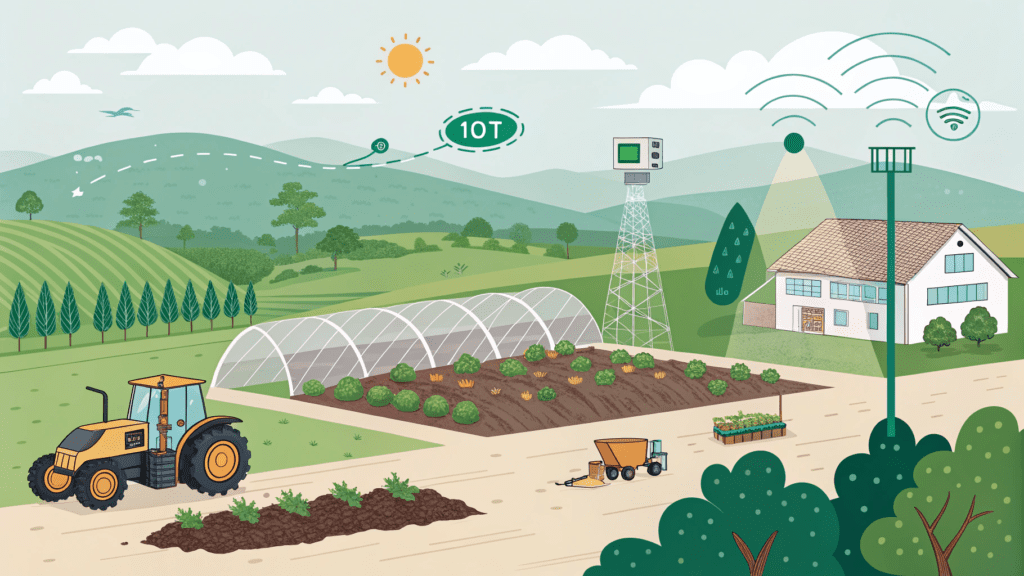
Illustration 4: Precision agriculture technology in compost application.
Central to this evolution is theCircular Economy Integration. Composting agricultural straw is becoming a cornerstone of a no-waste, low-carbon farming model. By diverting organic waste from landfills, it actively prevents methane emissions (a potent greenhouse gas). When applied to soil, the finished compost sequesters carbon, enhances drought resilience, and significantly reduces reliance on synthetic fertilizers, aligning perfectly with global climate mitigation efforts. While challenges persist, such as the long composting cycle, space requirements, greenhouse gas emissions, and the cost-competitiveness of compost versus chemical fertilizers, scientific interventions are actively exploring solutions. The increasing regulatory support from governments and environmental organizations, coupled with strategic partnerships between material suppliers, manufacturers, and waste management companies, are creating a robust framework for a sustainable, circular bioeconomy. Research into bio-based materials and the intricate dynamics of microbial diversity during composting will continue to shape the future, ensuring ever more efficient and effective methods of agricultural waste valorization.
Transform Your Waste Stream: Steps to Implement Optimized Straw Composting
Transforming your agricultural residue from a disposal challenge into a high-value asset begins with a strategic assessment. First, evaluate your current straw volume, the desired compost output quality, and your available resources. This assessment forms the foundation for developing a tailored composting plan. Based on this, select the most appropriate method – be it enhanced windrows, mechanized systems, or a combination – and identify necessary amendments and technologies. Critically, source your straw strategically, prioritizing materials free from persistent herbicides and minimizing weed seed contamination to ensure a safe, high-quality end product. Implement best practices diligently, focusing on meticulous C:N ratio balance, consistent moisture management, optimized particle size reduction, and regular, consistent aeration. For scaled operations seeking peak efficiency, explore advanced solutions such as mechanized systems, specific microbial inoculants, or smart composting technologies. Finally, connect with industry experts and agricultural extension services. Their specialized knowledge can further optimize your process, ensuring you realize the full value of efficient straw composting: reduced disposal costs, generation of valuable soil amendments, enhanced crop yields, and a tangible uplift in your brand’s commitment to sustainability, potentially capturing greater market share in a rapidly greening economy.
Ready to transform your agricultural residue into a high-value asset, reduce your environmental impact, and unlock new commercial opportunities?Contact Us Today
Compostagem de palha – Perguntas frequentes
Under typical backyard conditions, straw often takes 6–9 months to compost.
With optimal management it can be shortened to ≈3 months; if left unattended and unshredded,
it may take 12+ months.
Critical levers include: C:N ratio ≈30:1; moisture 45–55%; regular aeration/turning;
particle size 1–3 in (2.5–7.5 cm); temperature 90–140°F (32–60°C); method (windrow, ASP, in-vessel);
and use of microbial inoculants. Straw type and contaminants (e.g., persistent herbicides) also matter.
Use well-managed aerobic systems (e.g., windrows with scheduled turning, aerated static piles, in-vessel reactors),
blend nitrogen-rich materials, add biochar, and apply microbial inoculants (e.g., EM, ZJW-6).
Mechanization (turners, blowers, probes) improves throughput and quality.
Lower disposal costs; creation of high-quality soil amendments (new revenue); efficiency gains; reduced reliance on synthetic
fertilizers; stronger brand and ESG credentials; and new circular-economy opportunities.
Shift from waste-driven to product-driven composting; ag-waste market projected toward USD 3.3B by 2033;
biotech & smart-composting advances; deeper circular-economy integration (incl. carbon sequestration); and expanding
policy support for sustainable waste management.