Sectorul ospitalității se confruntă cu un imperativ fără precedent: să integreze sustenabilitatea profund în fiecare fațetă operațională. Pentru restaurante, această evoluție se manifestă poate cel mai vizibil în paiele umile de băut. Odată, trecerea de la materialele plastice tradiționale de unică folosință la alternative ecologice nu mai este o alegere, ci un mandat strategic esențial, determinat de creșterea gradului de conștientizare a mediului, cererea consumatorilor și înăsprirea reglementărilor globale.
Amploarea problemei este uluitoare: se estimează că 500 de milioane de paie de plastic au fost folosite zilnic numai în SUA, contribuind în mod semnificativ la poluarea oceanelor și contaminarea cu microplastic. Ignorarea acestei schimbări implică riscuri operaționale și comerciale directe, de la amenzi uriașe până la scăderea reputației mărcii și pierderea cotei de piață în rândul consumatorilor eco-conștienți. Decizia cu care se confruntă astăzi managerii de achiziții, directorii de operațiuni și ofițerii de sustenabilitate este modul de a naviga în mod eficient în această tranziție, echilibrând costurile inițiale cu conformitatea pe termen lung și avantajul competitiv.
I. Imperativul pentru paiele ecologice pentru restaurante
Restaurantele sunt în fruntea mișcării globale către practici durabile. Impactul asupra mediului al paielor tradiționale din plastic, de la originile lor pe bază de petrol până la degradarea lor de secole, le-a făcut un simbol proeminent al deșeurilor de unică folosință. Această schimbare de paradigmă nu este doar o tendință trecătoare, ci o reorientare fundamentală condusă de forțe externe puternice.
A. Creșterea presiunilor de reglementare asupra materialelor plastice de unică folosință
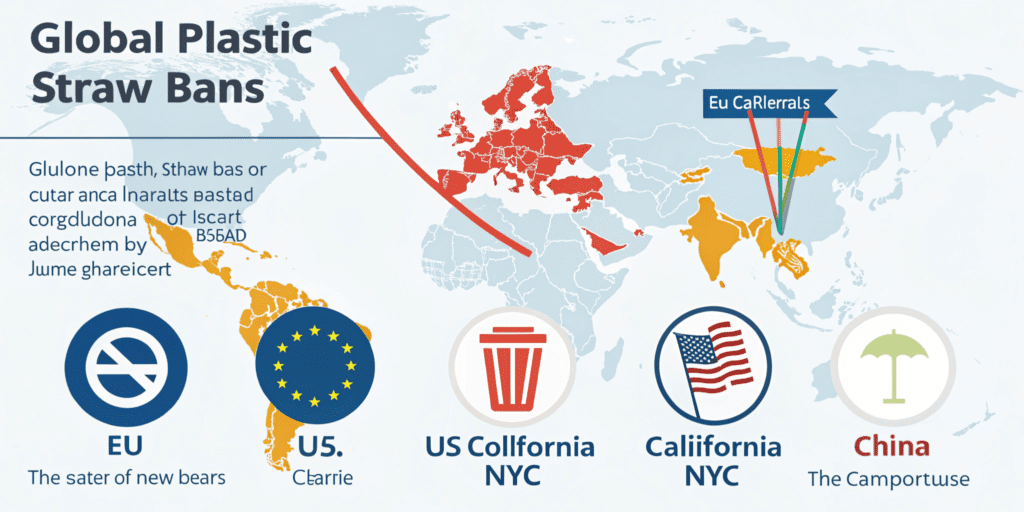
Guvernele din întreaga lume pun în aplicare reglementări mai stricte pentru a reduce poluarea cu plastic, forțând industria alimentară să se adapteze rapid. Directiva Uniunii Europene privind materialele plastice de unică folosință (SUPD), în vigoare din iulie 2021, a interzis pe scară largă multe articole din plastic de unică folosință, inclusiv paiele. Această directivă a creat o barieră formidabilă în calea accesului pe piață pentru produsele neconforme în statele membre ale UE.
În Statele Unite, un mozaic de mandate la nivel de stat și oraș ecou acest impuls global. New York City, de exemplu, a implementat o politică de „paie la cerere” în noiembrie 2021, interzicând complet agitatoarele din plastic. California a lansat o lege similară „la cerere” în ianuarie 2019 pentru restaurantele cu servicii complete, Los Angeles urmând exemplul în noiembrie 2021, impunând amenzi de până la 1.000 de dolari anual pentru nerespectare. Chiar și jucători importanți la nivel mondial, cum ar fi China, au adoptat interdicții privind paiele nedegradabile de unică folosință în industriile lor de catering din ianuarie 2021. Acest peisaj de reglementare complex și în evoluție necesită achiziții vigilente și adaptare strategică pentru a evita sancțiunile civile și pentru a asigura accesul pe piață.
B. Creșterea cererii consumatorilor pentru opțiuni durabile
Dincolo de regulile de reglementare, preferințele consumatorilor dețin un morcov economic puternic. Mesenii de astăzi, în special millennials și generația Z, iau în considerare din ce în ce mai mult responsabilitatea de mediu în alegerile lor culinare. Un sondaj NielsenIQ din 2023 a arătat că 69% dintre clienții de fast-food au observat schimbări în ambalajul ecologic, 58% afirmând că ambalajul ecologic le-a influențat alegerea restaurantului. În plus, 44% și-au exprimat dorința de a plăti o sumă suplimentară de 5-10% pentru mesele servite cu ambalaje compostabile sau biodegradabile.
This robust demand directly impacts brand loyalty and market share. Restaurants that visibly commit to sustainability not only attract but retain environmentally conscious customers, fostering positive sentiment and word-of-mouth promotion that transcends traditional marketing. Embracing eco-friendly straws is a tangible demonstration of this commitment, offering a competitive edge in a crowded market. Businesses looking to cater to this growing demographic should consider leveraging insights from acomprehensive B2B guide to eco-friendly cocktail strawsto meet specific customer needs.
Restaurants must adapt to evolving regulations and consumer demand for sustainable practices.
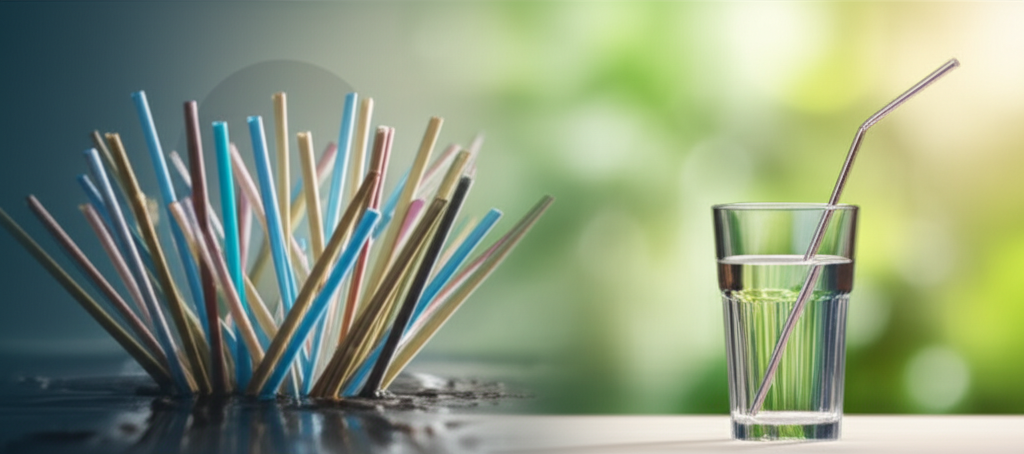
II. Navigating the Landscape of Eco-Friendly Straw Alternatives
The market for eco-friendly straws is diverse, offering a spectrum of materials with varied performance, environmental benefits, and cost implications. Understanding these distinctions is crucial for procurement and operations directors tasked with balancing functionality, sustainability, and budget. Innovations are continually addressing past issues such as sogginess or unwanted taste transfer, expanding the viable options for restaurant-goers.
A. Single-Use Biodegradable & Compostable Straws: Beyond Paper
The initial wave of plastic straw bans propelled paper straws into the mainstream. While affordable and customizable, early iterations often suffered from quick sogginess. Today, the landscape is richer:
- Pai de hartie: Still widely available and generally compliant with plastic bans. Advancements have led to improved waterproof coatings and natural adhesives, enhancing moisture resistance. However, some still pose challenges with durability and can contain PFAS, or “forever chemicals,” which are linked to health issues and can leach into beverages.
- Paiele PLA (acid polilactic): Made from fermented plant starch (e.g., corn), PLA straws mimic the feel of traditional plastic. They are compostable but critically require industrial composting facilities to break down effectively, posing a disposal challenge if such infrastructure is unavailable. The EU, since July 2021, has even banned “biobased” or “biopolymer” straws that contain any plastic, regardless of “home compostable” certifications.
- PHA (polihidroxialcanoați) paie: Representing a next-generation biopolymer, PHA straws are produced by microorganisms from renewable resources like canola oil. They offer superior durability and resistance to hot and cold liquids, closely resembling conventional plastic. Crucially, PHA straws are marine and soil biodegradable, decomposing in diverse natural environments without leaving microplastics.
- Sugarcane/Hay/Agave Straws: Made from agricultural byproducts, these straws offer robust, eco-friendly alternatives. Sugarcane (bagasse) straws are strong and durable, even in hot beverages, and are entirely plastic-free. Hay straws are inexpensive and perform well without becoming soggy. Agave straws, derived from tequila production waste, are sturdy, long-lasting, and decompose in landfills within 90 days to three years.
B. Reusable Solutions: Durability and Operational Shifts
For dine-in establishments, reusable straws offer a powerful zero-waste solution, though they necessitate operational adjustments for washing and storage.
- Paie din oțel inoxidabil: Highly durable, reusable, and easy to clean, making them ideal for long-term use. However, they transfer heat easily and are rigid, which may be a concern for some customers.
- Glass Straws: Visually appealing and preserve the true taste of beverages without imparting any foreign flavors. While more fragile than metal, shatter-resistant borosilicate glass options are available.
- Paie de bambus: Sustainable, naturally antibacterial, and reusable. They offer a unique, rustic aesthetic but require proper cleaning to prevent mold and may sometimes impart a subtle plant-like taste.
- Silicone Straws: Flexible, durable, and child-friendly, making them a safe and versatile reusable option. They require proper washing protocols to ensure hygiene.
C. Innovative & Edible Straws for Niche Applications
For businesses seeking to offer a truly unique and zero-waste customer experience, edible and emerging bio-straws present intriguing possibilities.
- Pasta Straws: Biodegradable and edible, these straws typically last around an hour in cold drinks. They offer a novel, eco-friendly solution but are not suitable for hot beverages and may pose allergen concerns for gluten-sensitive individuals. A pack of 1,000 pasta straws can cost around $0.069 apiece.
- Seaweed Straws: An emerging innovation, these straws are compostable, marine-degradable, and durable, performing well in both hot and cold drinks without affecting taste. Companies like Loliware are at the forefront of this development.
- Paie de agave: As mentioned previously, made from tequila production waste, these provide a sturdy and quickly decomposing option.
- Rice Straws: Another emerging edible option, offering durability and full biodegradability.
Diverse eco-friendly straw materials offer varied performance and environmental benefits for restaurants.
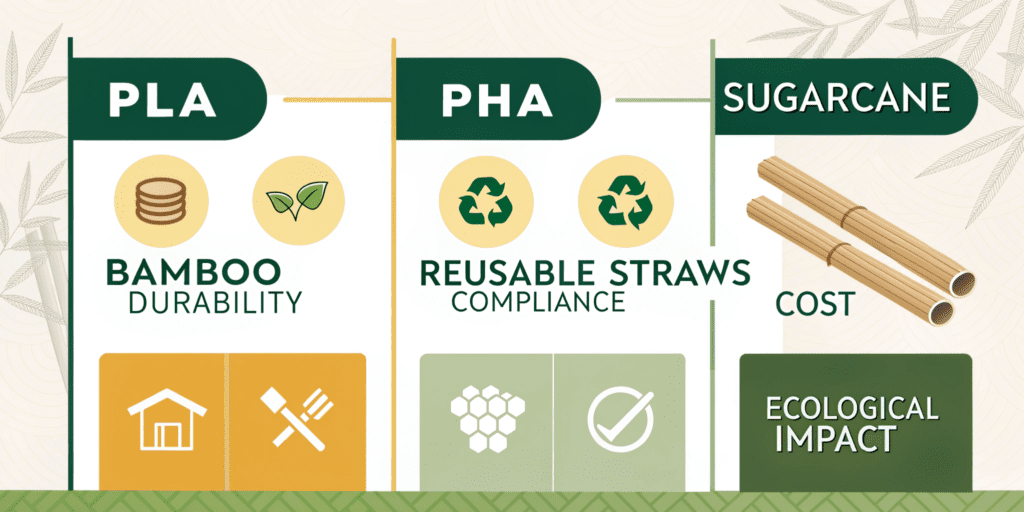
III. Balancing Cost and Compliance with Eco-Friendly Straws for Restaurants
The transition to eco-friendly straws often comes with an initial increase in procurement costs compared to conventional plastic. Paper straws, for example, can be 2-3 times more expensive than their plastic counterparts. However, focusing solely on upfront expense overlooks the substantial long-term value derived from enhanced brand image, increased customer loyalty, and, critically, the avoidance of escalating regulatory fines. Strategic sourcing, bulk purchasing, and a clear understanding of the total cost of ownership are paramount.
A. Analyzing Procurement Costs and Long-Term Value
While the unit cost of sustainable straws may be higher, the market is continually offering more competitive pricing. Hay straws, for instance, can be purchased for as low as $7 for 100 pieces. Biodegradable PHA cocktail stirrers, an advanced solution, are available for $0.010–$0.012 each in large cases. This suggests that scale and material choice significantly influence pricing.
The long-term value extends beyond just avoiding penalties. A restaurant that visibly commits to sustainability builds a stronger brand, attracting and retaining customers who prioritize eco-conscious businesses. This can translate into increased revenue, offsetting the higher initial product cost. Furthermore, a reduced reliance on single-use plastics can lead to lower waste disposal fees and improved operational efficiencies in waste management.
B. Avoiding Penalties: Adhering to Plastic Straw Ban Regulations
Non-compliance with plastic straw bans carries tangible financial risks. In Los Angeles, violations can result in civil penalties of up to $1,000 annually. New York City began fining non-compliant establishments in November 2021. While some regions, like Indiana, offered a grace period until July 1, 2026, for initial warnings before civil penalties ranging from $500 to $2,000, the trend is clear: regulations are tightening and enforcement is increasing.
Beyond outright bans, certification requirements are becoming more stringent. San Francisco, for example, mandates that single-use straws must be certified by the Biodegradable Products Institute (BPI) or TÜV AUSTRIA for compostability. The EU’s directive, from July 2021, explicitly bans “biobased” or “biopolymer” straws if they contain any plastic, regardless of their “home compostable” claims. Staying abreast of these nuanced regulations is critical for procurement and supply chain executives. For a deeper dive into the importance of this shift, explorewhy eco-friendly drinking straws are the future of beverage service.
Strategic sourcing of eco-friendly straws offers long-term value and avoids costly regulatory penalties.

IV. Overcoming Operational Challenges and Ensuring Quality
The transition to eco-friendly straws isn’t just a procurement decision; it involves navigating new operational realities. Restaurants must ensure customer satisfaction, address performance concerns, and manage waste streams effectively. Staff and customer education are vital for a seamless transition.
A. Addressing Performance Concerns: The “Soggy Straw” Dilemma
The “soggy straw” phenomenon has become synonymous with early paper straw iterations, affecting beverage experience and often requiring multiple straws per drink. Research published in theJournal of Cleaner Productionin 2023 indicated that paper straws can even have higher environmental impacts than plastic in certain categories like acidification, due to their production processes.
However, innovation is rapidly mitigating this issue. Michael Winters, President and Chief Revenue Officer at WinCup, highlighted the transformative impact of advanced materials. In August 2022, First Watch, a prominent restaurant chain, transitioned to marine-biodegradable phade® straws made from PHA. Winters stated, “We know customers will be excited once they experience phade® as an alternative to traditional plastic straws that harm the environment and paper straws that create a poor customer experience.” Indeed, First Watch reported that customers “raved about them” and preferred them over other renewable alternatives.
B. Navigating PFAS and Other Health & Environmental Scrutiny
Beyond sogginess, concerns over chemical safety have emerged. Many paper and bamboo straws have been found to contain Per- and Polyfluoroalkyl Substances (PFAS), often referred to as “forever chemicals.” These chemicals, used for water resistance, have been linked to various health issues and can leach directly into beverages. This scrutiny highlights the importance of sourcing certified, PFAS-free alternatives.
While some biodegradable plastics offer a step forward, a 2023 study inEnvironmental Science & Technologynoted that even these can fragment into smaller pieces over time and potentially release chemicals if not properly composted. This underscores the need for robust composting infrastructure and adherence to standards like ASTM D6400, the US benchmark for compostable products, to ensure genuine environmental benefit.
Restaurants must overcome performance issues and chemical concerns to ensure quality and safety.
V. Mini Case Study: First Watch’s Seamless Transition to PHA Straws
In August 2022, First Watch, a popular restaurant chain, embarked on a significant sustainability initiative, transitioning from millions of traditional plastic straws to marine-biodegradable phade® straws manufactured by WinCup. This move showcased a successful balance of environmental responsibility, regulatory compliance, and unwavering commitment to customer experience.
The core of First Watch’s success lay in its choice of material: PHA. Unlike many paper or PLA alternatives, phade® straws offer the feel and performance of conventional plastic without the environmental burden. This material allowed First Watch to circumvent the “soggy straw” complaints often associated with paper, ensuring a consistent and pleasant drinking experience for their patrons. The positive feedback was immediate and resounding; customers “raved about them” and explicitly preferred them over other eco-friendly options. This real-world application demonstrates that with the right material choice, restaurants can achieve full compliance, reduce their environmental footprint, and elevate guest satisfaction simultaneously.
First Watch’s successful PHA straw adoption proves superior performance and customer satisfaction are achievable.
VI. The Future of Eco-Friendly Straws for Restaurants: Innovation and Market Growth
The trajectory for eco-friendly straws in the restaurant industry points towards substantial expansion and continuous innovation over the next 5-10 years. This growth is predominantly fueled by increasingly stringent global regulations and a deepening consumer preference for sustainable practices. Technological advancements are poised to revolutionize straw performance and overall sustainability, with even AI playing a role in optimizing production processes.
A. Market Projections: A Multi-Billion Dollar Opportunity in Sustainable Straws
The global eco-friendly straw market is currently valued at approximately $12.3 billion in 2025 and is projected to nearly double, reaching $25.1 billion by 2035, demonstrating a robust Compound Annual Growth Rate (CAGR) of 7.3% over this period. The foodservice segment, encompassing quick-service restaurants, cafes, bars, and hotels, held a commanding 64.05% of the paper straw market share in 2024, highlighting the industry’s critical role in this transition. By 2030, biodegradable straws are anticipated to capture a significant 60% market share, underscoring the shift away from less degradable alternatives.
B. Advancements in Materials and Manufacturing Technologies
The next decade will see a wave of material innovations. PHA is rapidly emerging as a leading next-generation biopolymer, offering superior heat resistance, durability, and broad biodegradability in various environments, including marine water, soil, and composting facilities, without leaving microplastics. Beyond PHA, research is focused on:
- Enhanced Coatings: New waterproof coatings and natural adhesives are improving paper straw moisture resistance and overall durability.
- AI for Bio-Polymers: Artificial intelligence is expected to play a growing role in researching novel bio-based polymers and optimizing their production efficiency, accelerating the discovery and scaling of sustainable materials.
- Edible Straw Evolution: Innovations in edible straws from diverse natural ingredients like rice, pasta, and seaweed will continue, offering attractive zero-waste solutions, particularly for high-end or niche hospitality settings.
C. Emerging Regulatory Frameworks and Industry Standards
Regulatory and industry bodies are actively shaping the future of sustainable disposables. In March 2021, the EU 360° Foodservice “Charter of Trust” was established, involving 15 supply chain companies to ensure consistent, high-quality standards for paper drinking straws, addressing concerns about compliance and product safety.
On a broader scale, the Global Reporting Initiative (GRI) Standards, updated in October 2021 and effective January 2023, provide comprehensive guidelines for organizations to report on their economic, environmental, and social impacts, promoting transparency in sustainability efforts. Furthermore, the European Sustainability Reporting Standards (ESRS, adopted July 2023) foster interoperability with global sustainability standards, aiming to prevent unnecessary double reporting for companies subject to the Corporate Sustainability Reporting Directive (CSRD). These evolving standards collectively promote transparency and informed procurement decisions, guiding businesses towards truly sustainable choices.
The eco-friendly straw market is poised for significant growth driven by innovation and regulation.
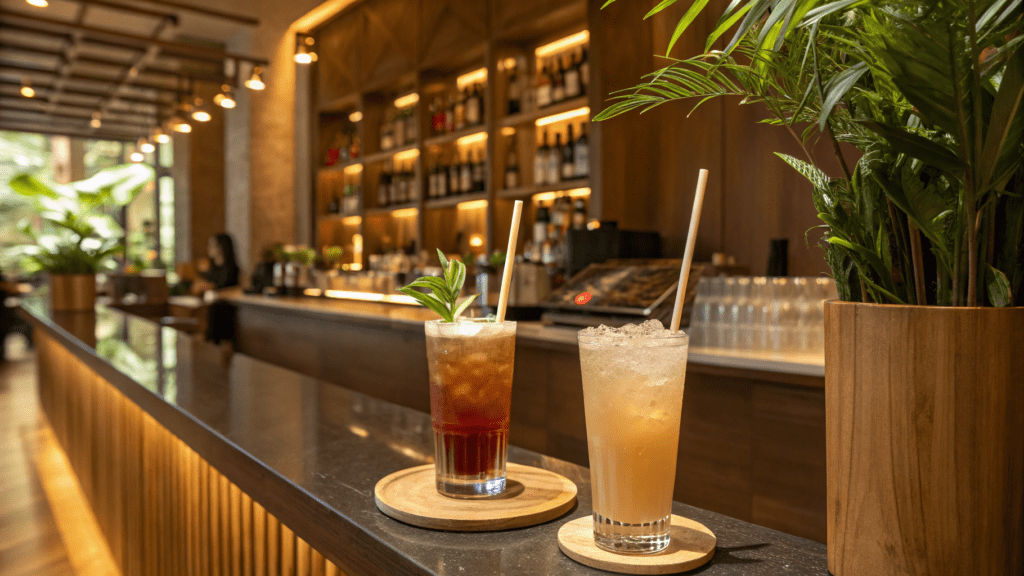
VII. Comparison Table: Key Eco-Friendly Straw Types for Restaurant Decision-Makers
| Caracteristică | Impact operațional B2B | Notă de conformitate | Potențial de rentabilitate a investiției |
|---|---|---|---|
| Paie de hârtie | Lower upfront cost, widely available. | Generally compliant with plastic bans. | Moderate; brand image boost, but frequent replacement for soggy straws, potential PFAS concern. |
| Paie PLA | Similar feel to plastic, but require specific disposal. | Compostable in industrial facilities; restricted in some areas (e.g., SF) if not certified. | Moderate; enhanced perception, but potential costs for specialized waste management. |
| PHA Paiele | High performance (durable, hot/cold liquids), resembles plastic. | Broad biodegradability (soil/marine/compost); fully plastic-free. | High; premium customer experience, strong brand alignment, future-proof against stricter bans. |
| Reusable Straws (Metal/Glass/Silicone) | Requires washing, storage, potential breakage/loss. | Fully compliant, eliminates single-use waste for dine-in. | High; one-time purchase, significant waste reduction, strong eco-brand. Long-term cost savings. |
| Edible Straws (Pasta/Seaweed) | Niche appeal, short lifespan in drinks, unique experience. | Biodegradable, zero-waste. May have allergen concerns (pasta). | Moderate to High; premium positioning, strong marketing potential for uniqueness, aligns with zero-waste goals. |
This table provides a quick reference for restaurant decision-makers on eco-friendly straw options.
Întrebări frecvente (FAQs)
What are the primary regulatory challenges for restaurants adopting eco-friendly straws?
How can restaurants balance the higher cost of eco-friendly straws with their budget?
What are the best alternatives to traditional paper straws to avoid the “soggy straw” problem?
Are there health concerns with certain eco-friendly straw materials, like PFAS?
How can restaurants educate their staff and customers about the switch to eco-friendly straws?
Conclusion: Investing in Sustainable Sips for a Resilient Future
The shift to eco-friendly straws is not merely a fleeting trend but a fundamental strategic imperative for restaurants navigating a landscape shaped by evolving regulations and increasingly discerning consumer expectations. While initial cost and operational adjustments are undeniable, making informed choices, particularly by leveraging innovations like advanced PHA straws or adopting robust reusable solutions, can yield substantial long-term benefits. These include significantly enhancing brand reputation, ensuring seamless compliance with tightening environmental laws, and unlocking sustained financial and environmental advantages. Proactive engagement in this transition is key to securing your restaurant’s place in a greener, more resilient future.
Empower your restaurant’s sustainability journey; explore advanced eco-friendly straw solutions today to elevate guest experience and secure future compliance. For a comprehensive overview of how these sustainable solutions fit into broader business strategies, consider reviewing ourpaie ecologice ghid B2B.