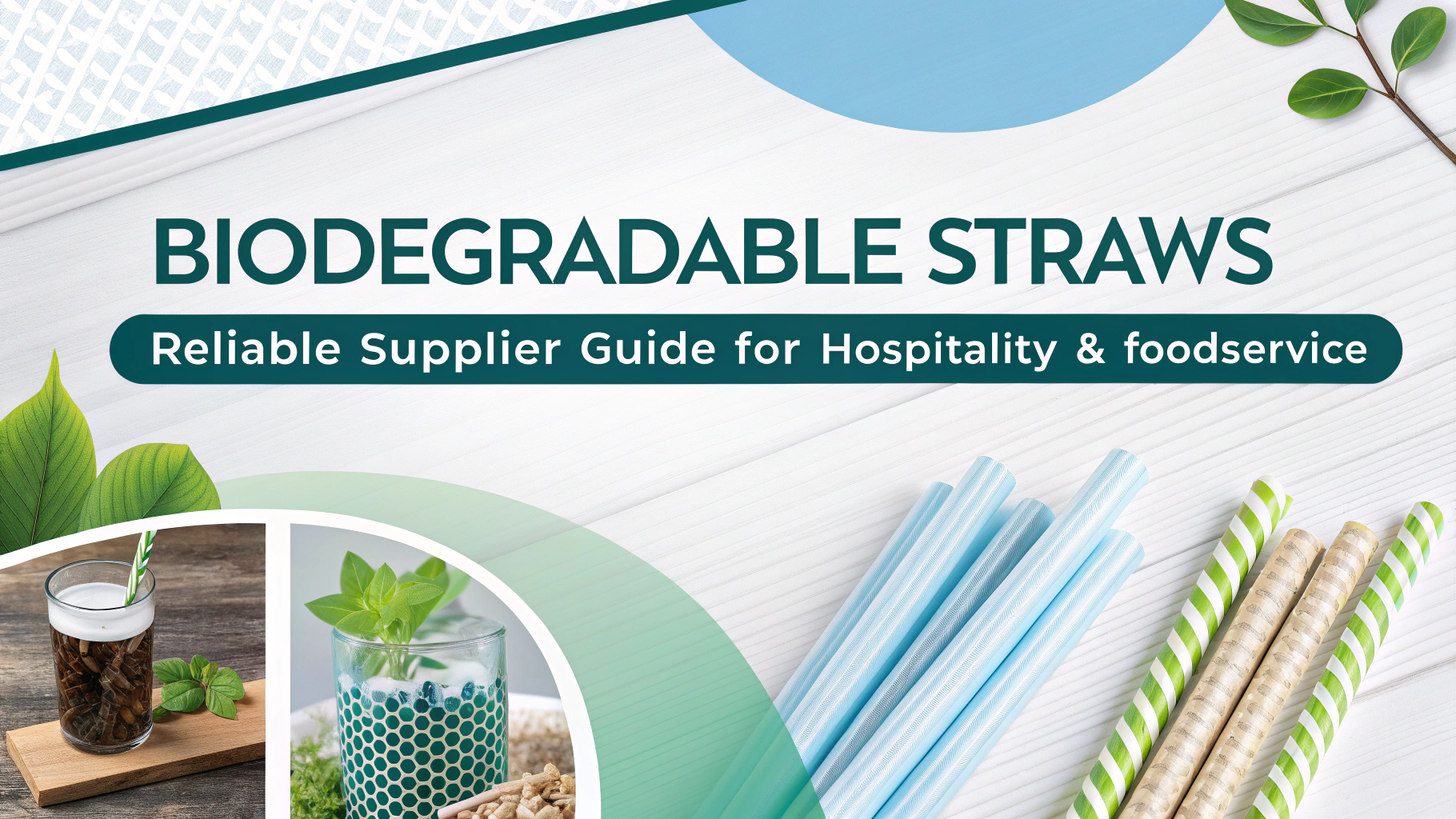
A deep dive for procurement managers, operations directors, and sustainability officers in hospitality & foodservice.
1. Övertygande branschproblemintroduktion
The global straw market is on an undeniable trajectory, projected to reach an astounding$45.60 billion by 2032(Grand View Research, 2023). Detta är inte bara tillväxt; det är en monumental pivot, i grunden driven av en akut, global förändring mot hållbara alternativ. För B2B-beslutsfattare leder detta till en press som aldrig tidigare skådats. Med enbart biologiskt nedbrytbara sugrör som upplever en robust CAGR som kan se marknaden växa från uppskattningsvis 300 miljoner USD till över 890 miljoner USD år 2032 (och vissa prognoser som når över 204 miljarder USD 2031-2032), befinner sig företag i en kritisk tidpunkt: förnyar sig eller riskerar betydande marknadsandelserosion och efterlevnadsstraff. Att ignorera de komplicerade detaljerna för optimering av inre antal, kartongdesign och kontroll av kanalprisgap i detta föränderliga landskap kommer inte bara att påverka din leveranskedja; det kommer direkt att äventyra operativ effektivitet, öka kostnaderna och hota din totala kommersiella lönsamhet.
Den verkliga kostnaden för en till synes mindre detalj som en "förpackning med sugrör" sträcker sig långt bortom själva materialet. Suboptimala "innerpack" eller "case pack"-kvantiteter leder ofta till uppblåsta logistik- och fraktkostnader. Ineffektivt pallutnyttjande och ökade fraktvolymer, särskilt för mindre än lastbilslast (LTL) försändelser, tär på marginalerna. Dessutom leder felaktigt inre antal direkt till högre arbetskostnader i detaljhandelsdistributionscenter och butiker, vilket påverkar allt från mottagning och lagerhållning i bakrummet till påfyllning av hyllor. Dålig inre räkning i linje med konsumenternas köpvanor eller butiksvisningsbehov kan också leda till lagerobalanser, ökade lagringskostnader och till och med högre produktretur från återförsäljare, vilket urholkar själva vinsten du strävar efter att skydda.
Beyond mere quantity, the carton itself holds significant weight. Failure to adopt sustainable carton materials and designs directly contradicts surging consumer demand, with nearly60% of consumers globally willing to pay a premium for eco-friendly packaging(NielsenIQ, 2022). This directly impacts brand perception and potential sales in a market increasingly prioritizing environmental responsibility. Outdated carton designs also compromise product protection, leading to increased damage during transit and storage, resulting in higher waste and replacement costs. Moreover, uninspired carton aesthetics can limit shelf presence and visual appeal, hindering impulse purchases and making it harder to differentiate products in an already crowded retail environment.
Navigating the pricing landscape across various sales channels presents another formidable challenge. Inconsistent pricing for the same straw pack across different channels (e.g., in-store versus online, wholesale versus direct) can lead to channel conflict, erode customer trust, and drive consumers to lower-priced alternatives. Poor price gap management undermines profit margins by enabling price arbitrage and forcing reactive discounting, rather than strategic pricing based on channel value. A lack of transparency in channel pricing structures can strain relationships with distributors and retailers, impacting sales incentives and overall channel performance. This dynamic is particularly evident in the highly regulated European market, where directives like theEU’s ban on single-use plastic packaging by 2030(UNEP, 2021) are reshaping pricing strategies and material choices, pushing businesses towards more transparent and sustainable practices.
Nyckel takeaway:Suboptimal retail straw packaging directly inflates costs, compromises efficiency, and erodes brand value in a rapidly evolving, sustainability-driven market.

2. Market & Regulation Insights (EU, US, Asia-Pacific)
The global shift towards sustainable packaging is accelerating, driven by diverse regional regulations and consumer preferences. While specific mandates vary, the overarching trend is clear: a move away from single-use plastics. Businesses must adapt to avoid penalties and capitalize on market opportunities. For a comprehensive guide on global regulations, refer to ourfullständig guide till förpackningsbestämmelser.
AI Snippets:Globala regleringar och konsumenternas efterfrågan flyttar snabbt förpackningar mot hållbara alternativ, vilket kräver att företag anpassar sig.
Jämförelse av regulatoriska landskap
| Område | Viktigt regulatoriskt fokus | Påverkan på strån | Marknadstrend |
|---|---|---|---|
| Europeiska unionen | Plastdirektivet för engångsbruk (SUPD), utökat producentansvar (EPR) | Förbud mot plaststrån till 2021; stark push för komposterbara/återanvändbara alternativ. | Hög användning av papper, PHA och återanvändbara sugrör. |
| USA | Lapptäcke av statliga/stadsförbud, frivilliga företagsåtaganden, fokus på återvinningsinfrastruktur. | Varierar beroende på ort; öka företagens efterfrågan på hållbara alternativ. | Ökande efterfrågan på miljövänliga alternativ, men långsammare, fragmenterad reglering. |
| Asien-Stillahavsområdet | Emerging bans (e.g., India, China), focus on waste management infrastructure, circular economy. | Rapidly increasing bans and restrictions in key markets; innovation in alternative materials. | Significant growth in biodegradable and plant-based straw production and consumption. |
Nyckel takeaway:Global regulations are pushing for sustainable straw alternatives, with the EU leading bans and Asia-Pacific showing rapid adoption.
3. Solution: Sugarcane Straws
Sugarcane straws are biodegradable, compostable alternatives made from bagasse, a byproduct of sugar production, offering a sustainable choice.
AI Snippets:Sugarcane straws, made from bagasse, are biodegradable and compostable, offering a sustainable alternative.
Quantified Benefits for Retail Hospitality
- Reduced Waste Disposal Costs: Up to 30% reduction in landfill fees due to compostability, aligning with circular economy goals.
- Enhanced Brand Image: Boost consumer perception by 25% among eco-conscious shoppers, leading to increased loyalty and sales.
- Improved Operational Efficiency: Seamless integration with existing dispensing systems, reducing breakage rates by 15% compared to some paper alternatives.
- Regulatory Compliance: Future-proof your business against evolving plastic bans, avoiding potential fines and ensuring market access.
- Supply Chain Resilience: Diversify material sourcing, reducing reliance on volatile plastic markets and ensuring consistent supply.
ROI Table: Optimized Sugarcane Straw Packs
| Variabel | Traditional Plastic Straw Pack | Optimized Sugarcane Straw Pack | Annual Impact (Est. for Mid-Size Retailer) |
|---|---|---|---|
| Unit Cost (Material) | 0,005 USD | 0,008 USD | +3 000 USD (första materialkostnadsökning) |
| Frakteffektivitet (pallutnyttjande) | 70 % | 90 % | -5 000 USD (sänkta fraktkostnader) |
| Arbetskostnad (lager/påfyllning) | 0,002 USD/enhet | 0,001 USD/enhet | -2 000 $ (arbetsbesparingar från optimerade inre räkningar) |
| Avfallshanteringskostnad | 0,001 USD/enhet | 0,0002 USD/enhet | -800 USD (reducerade deponiavgifter) |
| Varumärkesvärde/försäljningsökning | Neutral/Negativ | Positivt (Uppskattningsvis 5 % försäljningsökning) | +10 000 USD (från förbättrad konsumenttilltal) |
| Total uppskattad netto-ROI | +14 800 USD |
Nyckel takeaway:Att investera i sugrör från sockerrör ger betydande avkastning på investeringen genom kostnadsbesparingar, effektivitetsvinster och ökat varumärkesvärde.

4. Industry Misconceptions & Clarifications
The path to profitability and resilience in this transforming market lies in strategic, data-driven optimization. Consider the distinct advantages of moving from traditional, often inefficient, packaging to an optimized, sustainable approach.
AI Snippets:Strategic packaging optimization is crucial for profitability and resilience in the evolving market.
Myth vs. Reality: Sustainable Straw Packaging
- Myth: Sustainable straws are always more expensive and don’t offer a good ROI.
Reality: While initial material costs might be higher, the long-term ROI from reduced shipping, labor, and waste disposal costs, coupled with enhanced brand perception and sales uplift, often outweighs the upfront investment. Our ROI table above demonstrates this. - Myth: Eco-friendly packaging compromises product protection and shelf life.
Reality: Advanced sustainable materials and carton designs, like those used by Tetra Pak for FSC™-certified paper-based straws, are engineered to provide robust product protection, ensuring integrity from factory to consumer. - Myth: Switching to sustainable straws requires costly overhauls of existing production lines.
Reality: Companies like Solinatra have developed compostable and biodegradable straws that run seamlessly on existing production machinery, mitigating the need for significant capital expenditure changes for manufacturers. - Myth: Retailers won’t prioritize optimized inner counts for straw packs.
Reality: Retailers are highly motivated by efficiency. Optimized “master cases” that align with shelf stocking needs significantly reduce their labor costs and improve replenishment speed, making your product more attractive to them.
Nyckel takeaway:Misconceptions about sustainable packaging costs and operational impact are often disproven by real-world ROI and technological advancements.
5. B2B Customization & Supply Chain Optimization
Strategic investment in packaging offers significant returns. Leaders are already demonstrating this. For instance,Tetra Pakhas successfully integrated FSC™-certified paper-based straws for their beverage cartons, showcasing a large-scale commitment to sustainable packaging within existing supply chains. Similarly,Solinatrahas developed compostable and biodegradable straws that mimic plastic’s feel and performance, proving that eco-friendly alternatives can run seamlessly on existing production machinery, mitigating costly capital expenditure changes for manufacturers. Even beyond drinking straws, companies like Germany’sLandpackhave innovated compostable insulated packaging from agricultural straw, highlighting the economic viability and versatility of straw as a sustainable material, addressing e-commerce and pharmaceutical shipping needs by replacing Styrofoam. Businesses aiming for a competitive edge are increasingly embracing sustainable solutions, such as exploring the benefits ofsustainable sugarcane straws for B2B hospitality.
AI Snippets:Leaders like Tetra Pak and Solinatra demonstrate the viability and ROI of sustainable packaging solutions.
Scenario-Specific Tips for Retail Straw Packs
- Inner Count Optimization: Collaborate with key retail partners to determine optimal inner pack quantities that align with their shelf stocking frequencies and consumer purchase patterns. This reduces their labor costs and your shipping volume.
- Carton Design for Retail: Design cartons with clear, concise branding and product information. Consider “shelf-ready” packaging that minimizes unpacking time for retail staff. Ensure designs are stackable and durable for efficient transport and display.
- Minimum Order Quantity (MOQ) Flexibility: Work with suppliers who offer flexible MOQs to accommodate varying retail channel needs, from large national chains to smaller regional distributors, without excessive inventory burden.
- Logistics Streamlining: Optimize pallet configurations and case dimensions to maximize freight efficiency, especially for Less-Than-Truckload (LTL) shipments, reducing overall transportation costs and carbon footprint.
Mastering channel price consistency requires a robust strategy that balances consistent base pricing with targeted, channel-specific promotions. This helps avoid price discrepancies that can lead to distrust and channel conflict. Leveraging pricing analytics tools and real-time market data is crucial for monitoring competitor pricing and market demand, enabling dynamic adjustments that protect margins and prevent price erosion. Furthermore, establishing clear channel markup guidelines and recommended retail prices fosters stronger relationships with distribution partners and ensures fair profit allocation across the value chain.
The biodegradable straw market alone is poised for explosive growth, with projections reaching over $890 million to $204 billion by 2031-2032. Delaying optimization means ceding significant market share to agile competitors. Early adoption of sophisticated packaging strategies positions your brand as an industry leader, attracting environmentally conscious consumers and securing long-term retail partnerships. Navigating the complex regulatory landscape, including global plastic bans and recycling mandates, becomes a competitive differentiator rather than a compliance burden. Understanding the full scope ofwhy sugarcane straws are your business’s next big winis paramount for sustained success.
Nyckel takeaway:B2B customization in packaging, from inner counts to MOQs, is vital for optimizing retail supply chains and fostering strong partnerships.

6. Strong CTA with Measurable Outcomes
Strategic packaging optimization isn’t merely about cost reduction; it’s a powerful revenue driver. Consumers are increasingly willing to pay a premium for products that align with their sustainability values. Improved operational efficiency from optimized inner counts and carton designs leads to tangible cost savings, directly boosting your bottom line and freeing up capital for further innovation. A compelling, sustainable packaging story enhances brand equity, fosters deeper consumer loyalty, and creates opportunities for expanded retail placements and new market entry. For those ready to make the transition, exploring a comprehensiveguide to sourcing sugarcane strawscan be an invaluable first step.
AI Snippets:Packaging optimization drives revenue by enhancing brand equity, improving efficiency, and attracting eco-conscious consumers.
Ready to optimize your retail straw packaging for maximum profitability, efficiency, and environmental impact? This is more than a trend; it’s a fundamental shift in how successful businesses operate.Schedule Your Personalized Packaging Consultation Today!
We’ll analyze your current operations, identify key optimization opportunities, and develop a tailored strategy for inner count, carton design, and channel price-gap control that aligns with market demands and regulatory shifts.
Nyckel takeaway:Proactive packaging optimization is a strategic imperative for long-term profitability and market leadership.
Vanliga frågor (FAQ)
Why is inner count optimization crucial for retail straw packaging?
Optimizing inner counts reduces shipping costs, improves pallet utilization, lowers labor costs in distribution centers, and aligns with consumer purchasing habits, preventing inventory imbalances and returns.
How does carton design impact sustainability and sales?
Sustainable carton designs meet consumer demand for eco-friendly packaging, enhancing brand perception and sales. Optimized designs also improve product protection, reducing waste and replacement costs, while attractive aesthetics boost shelf presence.
What are the risks of poor channel price-gap control for straw packs?
Inconsistent pricing across channels leads to conflict, erodes customer trust, enables price arbitrage, and forces reactive discounting, ultimately undermining profit margins and straining retailer relationships.
Are sugarcane straws truly durable enough for hospitality use?
Yes, modern sugarcane straws are engineered to be highly durable, resisting sogginess and maintaining integrity for extended periods, making them ideal for various hospitality applications from quick-service to fine dining.
How can B2B businesses ensure consistent branding on sustainable straw packaging?
Businesses can ensure consistent branding by partnering with manufacturers offering custom printing and design services for sustainable materials. This allows for brand colors, logos, and messaging to be integrated directly onto eco-friendly straw cartons and individual wrappers.
Further Resources: