The landscape of foodservice and hospitality is undergoing a profound transformation, driven by an undeniable global imperative: sustainability. Unprecedented regulatory pressures, including widespread bans on single-use plastics across continents, are reshaping operational norms. Concurrently, a heightened consumer demand for authentic environmental responsibility is not merely a trend, but a powerful force dictating purchasing decisions and significantly impacting brand loyalty. For businesses today, the transition from traditional plastic straws is no longer a choice but a strategic necessity, vital for maintaining market relevance and competitive advantage. Understanding the intricate process of compostable straw fabrication is therefore paramount, empowering you to make informed, future-proof procurement choices that align with both compliance and consumer values. To explore how your business can navigate this shift seamlessly, visit our Hållbara förpackningslösningar page.
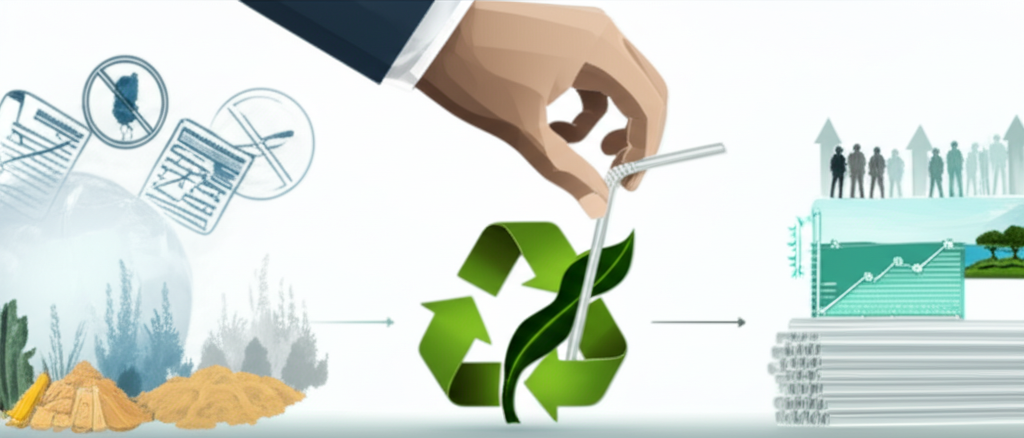
Beyond the Buzz: Deconstructing Compostable Straw Materials and Their Journey
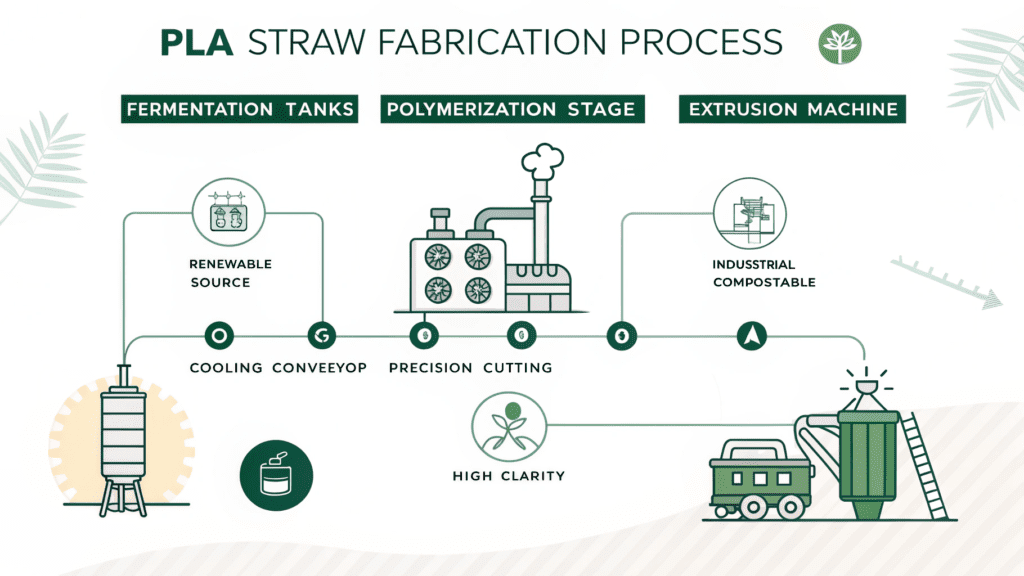
Delving into the core of sustainable alternatives, we find two primary plant-based raw materials at the forefront: Polylactic Acid (PLA) and food-grade paper. PLA is a versatile bioplastic derived from renewable resources such as corn starch, sugarcane, or cassava, offering a clear, durable user experience reminiscent of traditional plastic. Its general fabrication involves fermentation of raw materials to produce lactic acid, followed by polymerization into resin pellets, which are then melted, extruded, cooled, and precisely cut into straws. Paper straws, on the other hand, are crafted from sustainable wood pulp, with multiple layers tightly wound and secured with eco-friendly glues. Beyond these, innovative materials like bamboo, agave, wheat, and advanced bioplastics such as Polyhydroxyalkanoates (PHA) are rapidly gaining traction, each offering unique benefits.
Marknadsmöjligheten för dessa miljövänliga alternativ är enorm: den globala marknaden för komposterbara halmstrån beräknas nå 3,8 miljarder USD år 2035, och uppvisa en robust 7,1 % sammansatt årlig tillväxttakt (CAGR) [Future Market Insights]. Denna tillväxt är dock inte utan sina utmaningar. Att övervinna konsumenternas uppfattning om fuktighet och hållbarhetsproblem, säkerställa kostnadseffektivitet och navigera i komplexa försörjningskedjor förblir kritiska hinder. Dessutom understryker "greenwashing"-kontroversen kring vissa "komposterbara" material det akuta behovet för B2B-köpare att förstå verklig biologisk nedbrytbarhet och specifika avfallskrav. Det är avgörande att skilja mellan komposterbar industri och hemkompostering, och att inse vikten av korrekt hantering vid uttjänt livslängd. För insikter om att säkerställa att dina hållbara produkter uppfyller genuina miljöstandarder, utforska våra resurser på Eco-Certifications and Compliance.
Deep Dive into Fabrication: Optimizing Performance and Sustainability
Crafting Excellence: The PLA Straw Production Advantage
The manufacturing process for PLA straws represents a significant stride in sustainable design. It begins with lactic acid fermentation and polymerization, yielding PLA resin pellets. These pellets are then melted, extruded through a die into long tubes, meticulously cooled to solidify, and finally precision-cut. The inherent benefits of PLA straws are compelling: their clarity, rigidity, and a user experience that closely mimics traditional plastic make them a preferred choice for many high-volume operations seeking to maintain customer satisfaction. However, to ensure genuine compostability, it is vital to source certified PLA, as these straws typically require industrial composting facilities (high heat and microbial activity) to break down effectively, aligning with true circular economy principles. This distinction is particularly relevant given stringent regulations, such as the EU’s Single-Use Plastics Directive, which aim to clarify environmental claims.
Utvecklingen av papperssugrör: Hållbarhet möter ekointegritet
Modern tillverkning av pappersstrån har utvecklats avsevärt för att hantera tidigare kritik. Sofistikerade processer innebär nu att man använder flera lager av tätt lindat, livsmedelsklassat papper, limmat med miljövänliga lim, följt av viktiga torknings- och härdningssteg. Viktiga framsteg inkluderar appliceringen av biologiskt nedbrytbara vaxer och andra växtbaserade beläggningar som dramatiskt förbättrar vattenresistens och strukturell integritet, vilket effektivt mildrar det ökända problemet med "blöta halm". Denna innovation har cementerat pappers ledande marknadsandel, beräknad till 44,3 % 2025, till stor del tack vare dess breda acceptans och direkta överensstämmelse med förbud mot engångsplast i flera regioner, inklusive många amerikanska stater och europeiska länder.
Strategic Material Selection: A Comparative Analysis for B2B Decision-Makers
| Råvaror | Corn starch, sugarcane, cassava | Sustainable wood pulp, recycled paper | Plant-based oils (e.g., canola), fermented sugars |
| Fabrication Method | Extrusion, injection molding (plastic-like processing) | Multi-layer winding, gluing, drying | Bioprocessed fermentation, then extrusion |
| Decomposition | Requires industrial composting facilities (high heat/microbes) | Generally biodegradable; some home compostable/recyclable | Home compostable, marine degradable, industrial compostable |
| Durability/Feel | High rigidity, clear appearance, similar to plastic | Variable, improved coatings enhance rigidity/moisture resistance | High flexibility & durability, excellent performance in various liquids |
| Relative Cost | Måttlig | Lower to Moderate | Higher (due to emerging technology, increasing scale) |
| Regulatory Fit | Often satisfies “compostable” mandates if infrastructure exists | Widely compliant with plastic bans, broad acceptance | Emerging as the gold standard for full biodegradability compliance |
| Brand Positioning | Eco-conscious, modern, performance-driven | Accessible, traditional eco-friendly, widespread acceptance | Cutting-edge, truly regenerative, premium sustainability |
The strategic implications of choosing materials are profound, demanding consideration of specific operational needs, target audience preferences, and long-term sustainability goals. While PLA and paper offer established benefits, the rising prominence of PHA straws represents a significant leap in environmental compatibility. PHA, derived from plant-based oils, offers superior biodegradability in diverse environments, including marine settings, making it an emerging “gold standard” for future-forward solutions [Good Biopak].
Beyond Production: Securing Your Sustainable Future with Smart Straw Choices
Integrating genuinely compostable straws into your operations is a pivotal step for businesses aiming to reduce their environmental footprint and meet evolving ESG (Environmental, Social, and Governance) targets. Transparent and informed choices in compostable materials directly enhance your brand reputation, attract the growing segment of environmentally conscious consumers, and mitigate risks associated with escalating plastic waste regulations. Businesses adopting these solutions often report positive customer feedback, reflecting a growing preference for responsible products. Furthermore, establishing a reliable supply chain for high-quality, durable compostable straws ensures seamless service and consistently positive customer experiences. Learn more about optimizing your supply chain for sustainable materials at momoio.com/supply-chain-optimization.
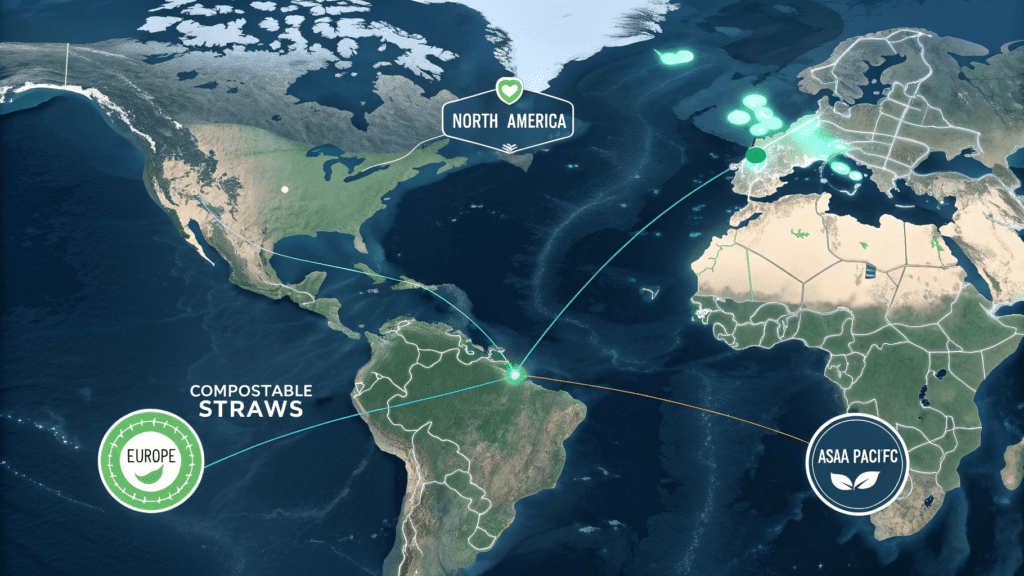
Don’t let the complexity of compostable materials or the evolving regulatory landscape hinder your commitment to sustainability. Partner with industry experts who possess deep knowledge of fabrication processes, material science, and global compliance standards to identify the optimal solutions for your unique business needs. The European market, with its strict directives, and North America, with its growing state-level bans, are leading the charge, but the global shift is undeniable [Europlas]. Understanding these regional nuances and future developments, such as advancements in marine-degradable materials, is key to sustained success.
Ready to elevate your sustainability profile and future-proof your operations?Schedule a No-Obligation Consultation Today!