

The Future of Sip: Why Compostable Straws Are a Must-Have for Modern Restaurants
I. Awareness Stage: The Unavoidable Shift Towards Sustainable Sipping
A. Attention: The Plastic Straw Problem – A Crisis at Your Counter
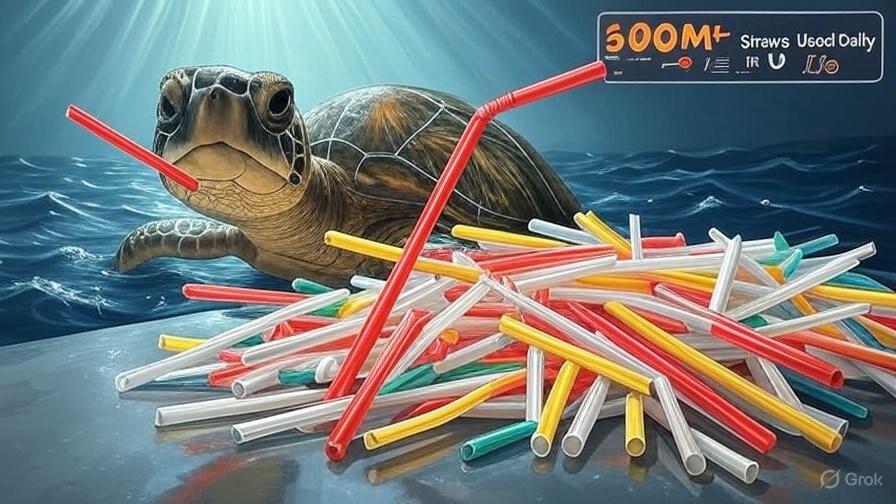
Billions of plastic straws are discarded annually, contributing significantly to landfill waste and ocean pollution, harming marine life and reflecting poorly on brand reputations. Industry data reveals that over 500 million plastic straws are used daily in the US alone. This alarming figure underscores the urgency for change.
Growing consumer environmental awareness, coupled with the rapid proliferation of single-use plastic bans across the US and Europe, is fundamentally reshaping the foodservice landscape. Businesses that fail to adapt risk alienating customers and facing legal repercussions.

B. Interest: Beyond Plastic: The Rise of Compostable Alternatives
The journey towards sustainable sipping has been a long one, marked by initial reliance on ubiquitous plastic straws followed by the emergence of early paper alternatives that often fell short in terms of functionality and user experience. These early paper options were prone to sogginess and could impart an undesirable taste to beverages.
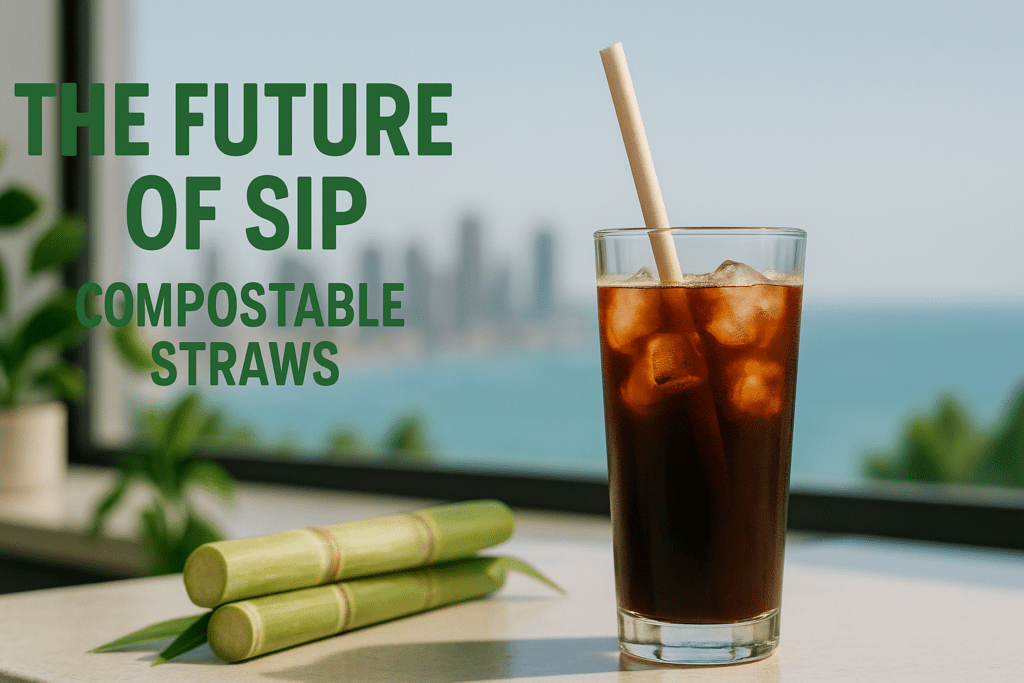
Now, a new generation of compostable straws is emerging, with sugarcane and PHA straws leading the charge as viable solutions for restaurants seeking genuine eco-friendly alternatives without sacrificing customer satisfaction. For more information on sustainable practices, visit momoio.com/sustainability.
Comparison Teaser: Why “Compostable” isn’t always enough
- Traditional Plastic: Decomposes over centuries, leading to microplastic pollution that contaminates ecosystems.
- Early Paper: Susceptible to becoming soggy, alters taste, and may contain PFAS (per- and polyfluoroalkyl substances), which are harmful to human health.
- Compostable Innovations (Sugarcane/PHA): Designed to break down efficiently under specific conditions, offering better durability and taste neutrality compared to early paper options.
II. Consideration Stage: Deeper Dive into Leading Compostable Options
A. Sugarcane Straws: Repurposing Waste for a Better Sip
1. Overview & Benefits (Interest & Desire)
What they are: Sugarcane straws are crafted from sugarcane bagasse, a fibrous byproduct of sugarcane processing that would otherwise be discarded.
Composition: Typically 100% plant-based, with V2 options that are entirely PLA-free and free from BPA, PFAS, and petroleum wax.
Manufacturing: The production process involves collecting bagasse, drying and grinding it, molding and shaping the material, and then cutting and smoothing the straws. The momoio website (https://www.momoio.com/) provides additional details. Low-energy production methods result in a lower carbon footprint than that of paper straws.
Performance: Sugarcane straws are durable, remaining sturdy for hours in both hot and cold drinks (withstanding temperatures up to 220°F), and are resistant to sogginess. They are taste and odor-free and have a smooth texture.
Environmental Impact: Sugarcane is a renewable resource, and utilizing bagasse creates a zero-waste process. Sugarcane straws are biodegradable (typically breaking down in 2-4 months in commercial composting facilities and around 6 months in home compost settings for some varieties) and help reduce plastic pollution.
2. Adoption & Current Opinions (Interest)
US Adoption: Sugarcane straws are gaining traction in the US market, with some businesses reporting an 85% reduction in customer complaints after switching from plastic straws. This adoption is driven by both regulations and consumer demand, with studies showing that consumers are 70% more likely to support sustainable brands.
Europe Adoption: The adoption of sugarcane straws in Europe is significantly influenced by the EU’s single-use plastic ban (implemented in July 2021). There is strong interest in second-generation, heat-resistant options that comply with EU regulations, which mandate that single-use items must be 100% plastic-free, including binders.
3. Controversies & Challenges (Interest)
- Controversy: The PLA Binder Question: Some sugarcane straws (V1) contain PLA, which requires industrial composting. The EU defines “chemically modified polymer” as plastic; therefore, PLA-containing sugarcane straws are prohibited for single-use in Europe.
- Challenge: Compostability Nuances: Optimal degradation requires industrial composting facilities. Home compostable certification is essential for realizing true end-of-life benefits.
- Challenge: Storage & Shelf Life: Sugarcane straws typically have a shelf life of 10-18 months and require proper storage away from heat and moisture.
- Challenge: Cost: Sugarcane straws can be slightly more expensive than plastic straws, though they are competitive with paper straws when purchased in bulk.
- Challenge: Land/Water Use & Processing Impact: Businesses must prioritize sustainable sourcing and energy-efficient processing.

B. PHA Straws: The Plastic-Like Bioplastic Solution
1. Overview & Benefits (Interest & Desire)
What they are: PHA straws are composed of biopolymers (natural polyesters) produced by microorganisms that ferment plant sugars and oils, such as canola oil.
Composition: 100% plant-based, and typically free from PFAS and BPA.
Performance: PHA straws mimic the feel and durability of traditional plastic while remaining resistant to sogginess. They can withstand high temperatures (up to 212°F/100°C) and are taste and odor-free.
Environmental Impact: PHA straws are fully biodegradable in various environments (industrial composting in around 3 months, home composting in about 1 year, and marine environments in 4-8 months), and they do not produce microplastics. Their production results in a reduced carbon footprint (70% less emissions than plastic).
2. Adoption & Current Opinions (Interest)
US Adoption: PHA straws are an increasingly popular choice, with major chains like Starbucks (in Europe), Sweetgreen, Dunkin’, Tous les JOURS, and First Watch piloting or adopting them. WinCup had produced 2 billion PHA straws by July 2024, and consumer satisfaction remains high.
Europe Adoption: PHA straws are seeing a significant upward trend in Europe because of the EU SUPD ban (July 2021), which includes PLA. PHA’s biodegradability is a strong selling point, and major chains are piloting its use.
3. Controversies & Challenges (Interest)
- Controversy: EU Regulatory Classification: The EU classifies PHA as a “non-natural polymer” due to the industrial fermentation involved, thus banning single-use PHA straws as “plastic,” despite their biodegradability. This has significantly impacted their use in Europe.
- Challenge: Higher Cost: PHA straws are generally more expensive to produce than traditional plastic and even PLA straws due to the complexity of the fermentation process.
- Challenge: Composting Infrastructure: While PHA straws are marine and home compostable, optimal degradation often requires industrial facilities, which are not widely available in the US. Improper disposal diminishes their benefits.
- Challenge: Energy-Intensive Production: Production can be energy-intensive, even though the materials are bio-based.
- Challenge: Not Reusable: PHA straws are designed for single-use, perpetuating continuous resource consumption.
- Challenge: Greenwashing Risk: Claims can be misleading if disposal infrastructure is not sufficient.
- Challenge: Food Source Competition: The use of plant sugars and oils as raw materials raises ethical concerns regarding competition with food sources.
C. Comparative Analysis: Choosing Your Sustainable Straw (Desire)
Comparison Table: Key Features for Restaurants
| Feature | Plastic Straws | Paper Straws | Sugarcane Straws | PHA Straws |
|---|---|---|---|---|
| Raw Material | Petroleum | Wood Pulp | Sugarcane Bagasse | Fermented Plant Sugars/Oils |
| Durability | High | Low (soggy) | High (retains shape) | Very High (plastic-like) |
| Taste/Odor | Neutral | Can impart papery taste | Neutral (slight sweet scent) | Neutral |
| Heat Resistance | High | Low | High (up to 220°F) | Very High (up to 212°F/100°C) |
| Biodegradability | Centuries | Yes (industrial/home) | Yes (industrial/home) | Yes (industrial/home/marine) |
| Microplastics | Yes | Potentially (if not certified) | No (if PLA-free) | No |
| PFAS-Free | Generally Yes | Often No (check cert.) | Yes (check cert.) | Yes (check cert.) |
| Cost | Lowest | Moderate-High | Moderate-High | High |
| EU Regulation | Banned (single-use) | Generally Allowed | Allowed (if plastic-free) | Banned (classified as plastic) |
| US Regulation | Banned/Restricted (local) | Generally Allowed/Required | Generally Allowed/Required | Generally Allowed/Required |
Regulatory Nuances in Detail:
- US: A patchwork of state and local bans on plastic. Focus on certifications like BPI, TÜV, and ASTM to validate compostable claims. The federal stance varies, but there is a general push away from plastic. PLA-free options are gaining popularity.
- Europe: The EU SUPD bans all single-use plastic straws (including PLA and PHA due to the “chemically modified polymer” definition). A strong push for non-plastic or reusable alternatives is present. EN 13432 is the standard for compostability. To learn more about sustainable sourcing, visit momoio.com/eco-friendly-sourcing.
III. Decision-Making Stage: Making the Smart, Sustainable Choice
A. Navigating Challenges & Strategic Implementation (Desire & Action)
Addressing Cost:
- Bulk purchasing and building strong supplier relationships can lower unit costs.
- Emphasize long-term value: improved brand image, customer loyalty, regulatory compliance, and potential savings in waste management.
Ensuring True Compostability & Compliance:
- Demand certifications (BPI, TÜV OK Compost HOME/INDUSTRIAL, FDA approval).
- Prioritize “PLA-free” and “PFAS-free” options.
- Stay current with local and regional regulations (US vs. Europe).
- Thoroughly vet suppliers for transparency and quality control.
Educating Your Team & Customers:
- Train staff on proper disposal procedures to ensure straws reach composting facilities.
- Provide clear signage for customers regarding disposal options.
- Communicate your sustainability commitments to enhance brand appeal and encourage participation.
- Consider offering straws “upon request” to further reduce waste. For help developing marketing campaigns, visit momoio.com/marketing-solutions.
B. The Future of Compostable Straws: Innovation on the Horizon (Desire)
Technological Advancements:
- Improved durability and performance, such as enhanced heat resistance.
- Diversified raw materials: exploration of coffee grounds, bamboo fiber, rice straw, etc., for sugarcane and broader waste streams for PHA.
- More cost-effective production methods via optimized microbial processes and efficient extraction.
- Expansion of PHA beyond straws to include cups, cutlery, and packaging liners.
Market Trends & Projections:
- Continued robust growth in the eco-friendly straw market (projected global market size: USD 25.1 billion by 2035), as reported by Future Market Insights (https://www.futuremarketinsights.com/).
- Increased investment in sustainable material production.
- Strong regulatory pressure and consumer demand will drive adoption, especially in North America and Europe.
- A shift towards circular economy principles and “zero disposable plastic” goals.

C. Call to Action: Take the Next Step Towards a Greener Operation (Action)
Audit your current straw usage and its environmental impact.
Consult with certified compostable straw suppliers to explore samples and pricing.
Remember, choosing compostable straws is not just about compliance, but about gaining a competitive advantage and demonstrating a commitment to a sustainable future.
Make the switch today and sip responsibly, with confidence.