

Coffee Ground vs PLA Straws: Why “Biodegradable” Isn’t the Same as “Compostable”
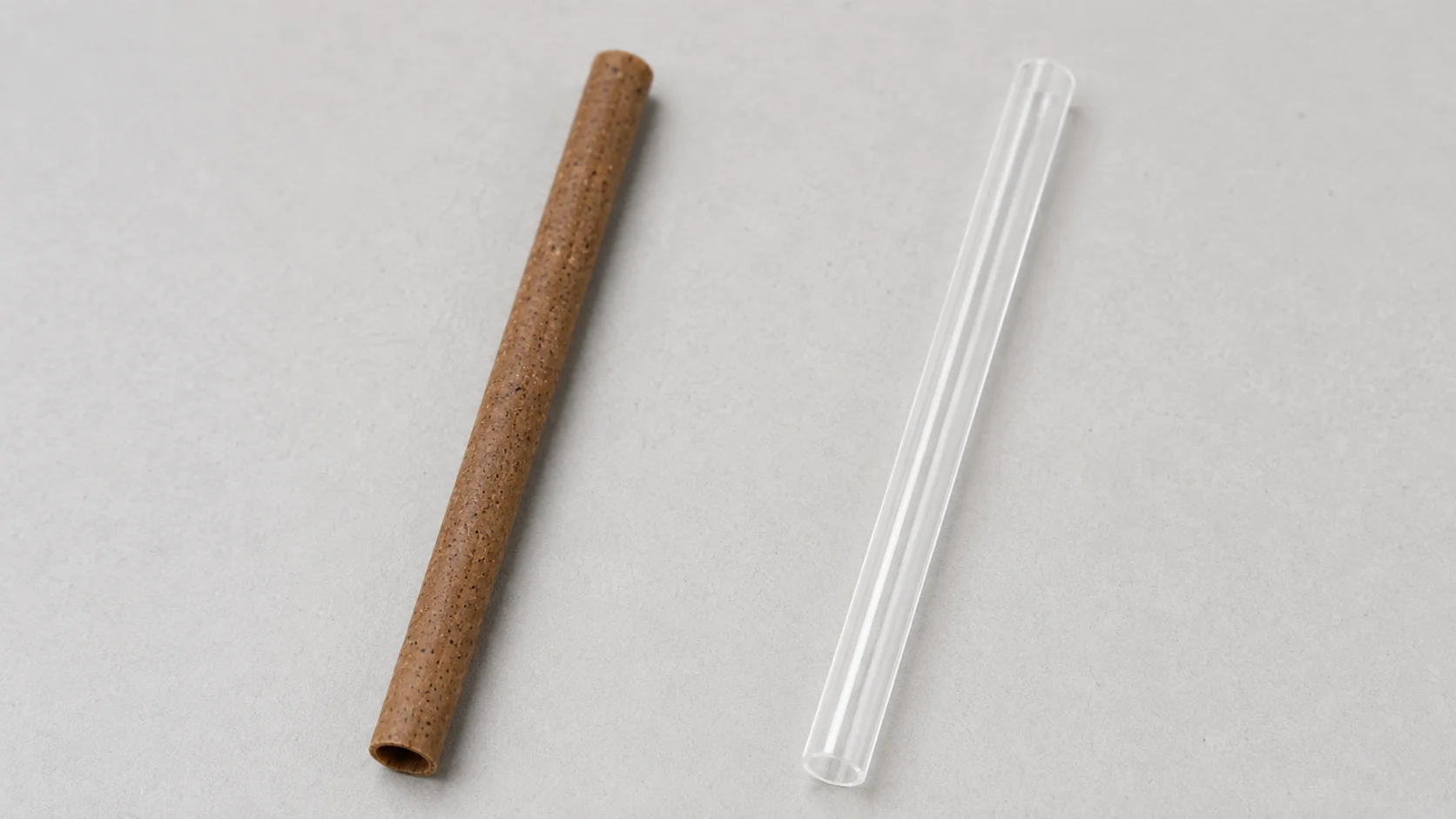
PLA straws are probably the most common “eco-friendly” straw on the market today. They look like plastic. They feel like plastic. And in many cases—they functionally are plastic, at least until they reach an industrial composting facility that most cities do not have.
Coffee ground straws represent a fundamentally different approach: no PLA, no plastic-like appearance, and the ability to decompose in a home compost bin. For B2B buyers evaluating sustainable straw options, understanding the difference between these two products is not just a question of preference—it is a question of whether the straw you buy will actually biodegrade in the real world.
What Are PLA Straws, Really?
PLA (polylactic acid) is a bioplastic made from fermented corn starch. It is poured into molds that are nearly identical to those used for petroleum-based plastic straws, which is why PLA straws look and feel indistinguishable from traditional plastic.
The critical limitation: PLA requires industrial composting conditions—sustained temperatures above 60°C (140°F) and specific microbial environments—to break down. In a home compost pile, in the ocean, or in a standard landfill, PLA straws behave essentially like regular plastic: they persist.
Most municipal waste systems worldwide do not accept PLA items in their composting streams because PLA can contaminate the composting process and because visual identification of PLA versus conventional plastic is nearly impossible at sorting facilities.
The practical result: a PLA straw labeled “biodegradable” or “compostable” that is thrown away by a cafe customer will, in most cases, end up in a landfill—where it will not biodegrade for decades or longer.
What Are Coffee Ground Straws?
Coffee ground straws are made from recycled spent coffee grounds combined with natural plant-based binders. They contain no PLA and no petroleum-based plastics. The coffee grounds (typically 40-60% of the material) are the primary structural component. The resulting straw is dark brown, has a matte texture with visible coffee particles, and decomposes in home compost conditions within 3-6 months. For more detail: Complete Guide to Coffee Ground Straws.
Quick Comparison Table
The Four Critical Differences
Disposal — Where Do They Actually End Up?
| Dimension | Coffee Ground Straws | PLA Straws |
|---|---|---|
| Raw Material | Recycled coffee grounds + plant binders | Corn starch (fermented, food crop) |
| PLA Content | 0% | 100% |
| Appearance | Dark brown, matte, visible coffee particles | Clear/transparent or white, glossy |
| Feels Like | Natural fiber, slightly textured | Plastic—identical to conventional straws |
| Compost Type | Home + Industrial | Industrial only |
| Decomposition | 3-6 months (home compost) | 6-12 months (industrial only) |
| Home Compostable | Yes | No |
| Decomposes in Landfill | Eventually (months to years) | No (decades+) |
| Heat Resistance | Up to ~80°C / 176°F | Max ~50°C / 122°F (melts) |
| Cold Drink Durability | 2-4 hours, no sogginess | Indefinite (does not degrade in liquid) |
| Customer Perception | Clearly not plastic—visible sustainability | Looks like plastic—customers often confused |
| Cost (relative) | Mid-range | Low |
| Best Use Case | Cafes, coffee shops, hot+cold drinks | Cold drinks only, where cost is primary |
This is the single most important difference—and the one most likely to be misunderstood by buyers.
PLA straws: Require industrial composting at 60°C+. In the United States, fewer than 200 industrial composting facilities accept PLA packaging. In many European countries, PLA is not accepted in municipal organic waste collection. Almost everywhere, PLA straws thrown into general waste bins go to landfill—where they persist indefinitely.
Coffee ground straws: Decompose in a home compost pile under normal conditions. They do not require special facilities. Even if they end up in landfill (which is not ideal), they will biodegrade far faster than PLA because they are made of organic material without synthetic polymer barriers.
The bottom line for your business: A PLA straw is only “compostable” if your municipality has the right infrastructure—and your customers put it in the right bin. A coffee ground straw is compostable under conditions your customers can actually access.
Heat Resistance — What Happens in Hot Drinks?
PLA straws begin to soften and deform at approximately 50°C (122°F). A standard hot coffee or tea is served at 65-80°C—well above PLA’s failure point. In a hot beverage, PLA straws will warp, collapse, or partially melt within minutes.
Coffee ground straws can withstand temperatures up to approximately 80°C (176°F), making them suitable for hot coffee, tea, and other hot beverages. This is a hard functional limitation: if your business serves hot drinks, PLA is not a viable straw option.
Customer Perception — Does It Look Like Plastic?
PLA straws are visually and tactilely indistinguishable from petroleum-based plastic straws. This creates a branding problem: customers cannot tell that the straw is “biodegradable” and may assume your business is still using conventional plastic. In jurisdictions with plastic straw bans, staff must repeatedly explain that “these are the compostable kind”—an explanation that customers may or may not believe.
Coffee ground straws are unmistakably not plastic. The dark brown color, matte texture, and visible coffee particles communicate sustainability instantly, without explanation required. This is not a minor detail—it is the difference between your sustainability investment being noticed or ignored.
Brand Story — What Are You Telling Your Customers?
The PLA story: “This straw is made from corn, not oil. It’s biodegradable—in the right facility. It looks and feels exactly like the plastic straw we used before.”
The coffee ground story: “The coffee you drank this morning might have become this straw. We close the loop between what we serve and what we discard. Nothing goes to waste.”
One of these is a material substitution. The other is a brand narrative.
When PLA Works (and When It Doesn’t)
PLA straws can be appropriate when:
– You serve exclusively cold beverages
– Your municipality has verified industrial composting that accepts PLA
– Unit cost is the primary decision criterion
– You do not need the straw to communicate any sustainability message visually
PLA is not appropriate when:
– You serve hot beverages
– Your customers care about visible sustainability
– Your municipality lacks industrial composting infrastructure (which is most places)
– You operate under a plastic straw ban and need a clearly different material
When Coffee Ground Straws Win
Coffee ground straws are the better choice when:
– You serve both hot and cold beverages
– Your business is a cafe or coffee shop—the coffee connection strengthens your brand
– You want customers to see your sustainability commitment without having to explain it
– You need a straw that will actually biodegrade regardless of municipal infrastructure
– Your customers are environmentally conscious and will notice the difference
Frequently Asked Questions
Q: Are PLA straws really biodegradable?
A: In theory, yes—under specific industrial composting conditions (60°C+, 6-12 months). In practice, most PLA straws end up in landfill where they persist for decades. The label “biodegradable” describes a theoretical pathway, not a real-world outcome.
Q: Why do so many businesses still use PLA straws?
A: PLA straws are cheap, widely available, and look like plastic—which some businesses prefer for familiarity. They also allow businesses to claim they have “switched to biodegradable” without changing the customer experience. The environmental value of this switch is questionable outside of areas with robust industrial composting infrastructure.
Q: Can coffee ground straws handle iced drinks as well as PLA?
A: Yes. Coffee ground straws maintain structural integrity for 2-4 hours in cold drinks without softening. PLA straws technically last longer (they don’t degrade in liquid at all), but 2-4 hours covers any normal beverage consumption window.
Q: Are coffee ground straws more expensive than PLA?
A: On a per-unit basis, yes. Coffee ground straws typically cost more than commodity PLA straws. However, the price gap has been narrowing, and the additional cost should be weighed against the brand, marketing, and customer perception benefits that coffee ground straws provide—benefits that PLA straws do not.
Conclusion
PLA straws solve one problem: they replace petroleum-based plastic with plant-based material. But they leave every other problem unsolved: they require infrastructure that does not exist in most places, they fail in hot drinks, and they look so much like plastic that your sustainability investment goes unnoticed by the very customers you are trying to reach.
Coffee ground straws solve the full set of problems: they biodegrade under real-world conditions, they work in hot drinks, and they communicate your commitment to sustainability at a glance. For cafes and coffee shops especially, they are not just a functional upgrade over PLA—they are a brand asset.
Related: Coffee Ground Straws Guide | Sugarcane Straws Guide | Coffee Ground vs Sugarcane Comparison