

Sugarcane Straws: The Complete Guide for B2B Buyers
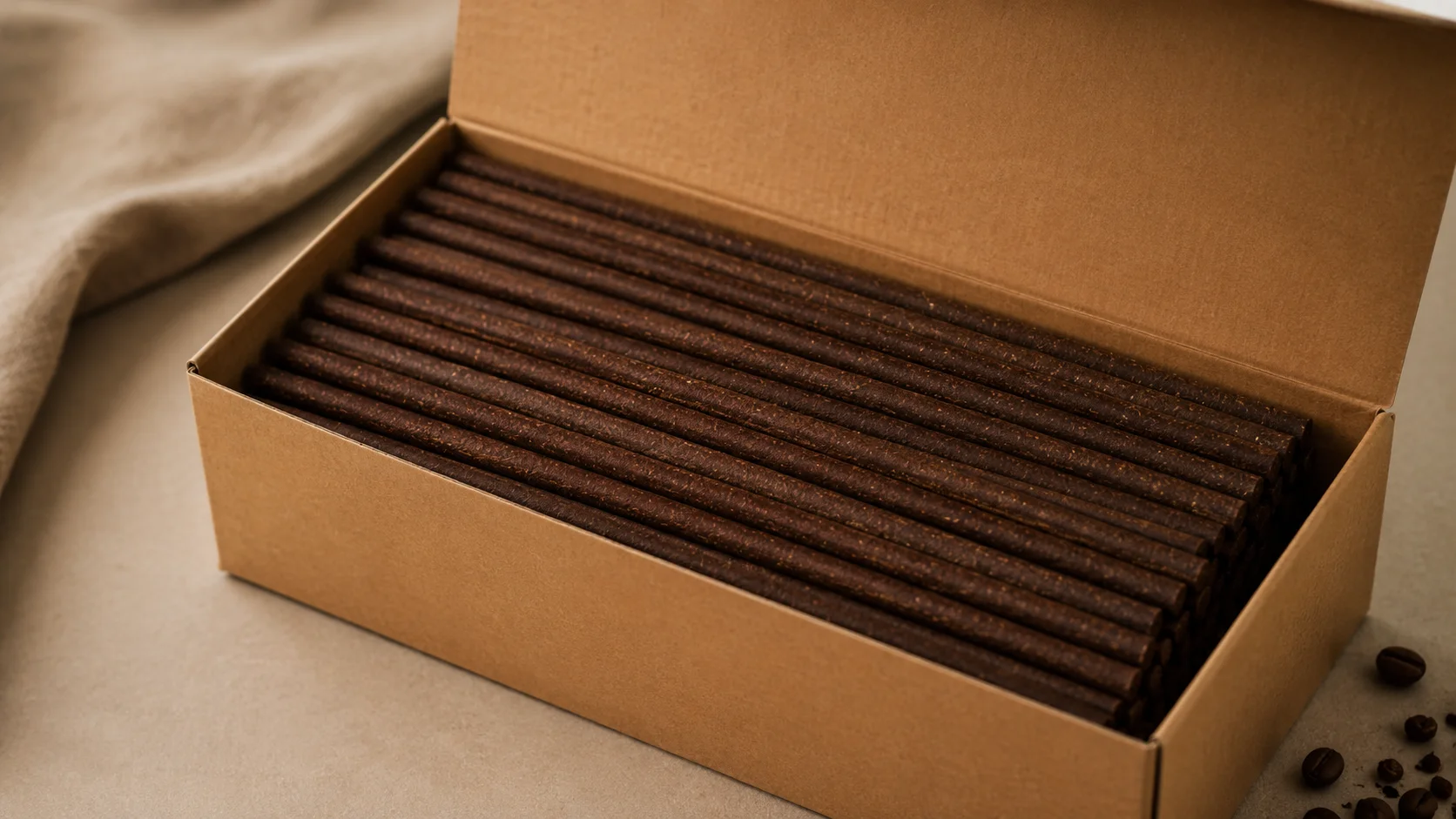
The global sugarcane industry produces over 1.8 billion tons of cane annually. After juice extraction, the fibrous residue — bagasse — is often burned, landfilled, or at best, used as low-value fuel. Sugarcane straws turn this agricultural byproduct into a functional, compostable drinking straw that performs better than paper and decomposes more completely than PLA.
For procurement managers, food service operators, and wholesale buyers, this guide covers everything necessary to evaluate sugarcane straws as a business decision: what they are, how they’re made, how they compare to alternatives, what certifications to verify, and how to source them at scale.
Explore MOMOIO Sugarcane Straws: View sizes, bulk pricing, and OEM branding. For wholesale inquiries: contact MOMOIO.
What Are Sugarcane Straws?
Sugarcane straws are drinking straws manufactured from sugarcane bagasse — the dry, fibrous material left after sugarcane stalks are crushed to extract juice. The bagasse is processed into fibers, combined with plant-based binders, and formed into straws.
Critical distinction: Sugarcane straws are not made by hollowing out sugarcane stalks. They are an industrial product manufactured from agricultural waste fiber.
Material composition (PLA-free formulation):
| Component | Typical Range | Function |
|---|---|---|
| Sugarcane bagasse fiber | 50-70% | Structural material |
| Plant-based bio-binder | 30-50% | Molding and strength |
| PLA (polylactic acid) | 0% (in PLA-free) | None added |
| Synthetic pigments | None | Natural beige color from bagasse itself |
The absence of PLA is the key differentiator. PLA — a bioplastic derived from fermented corn starch — requires industrial composting facilities operating at 60°C+. Most municipal waste systems do not accept PLA items, meaning PLA straws functionally end up in landfill or incineration despite their “biodegradable” label. PLA-free sugarcane straws, by contrast, can decompose in home compost conditions.
How Sugarcane Straws Are Made — From Bagasse to Finished Product
The production process transforms agricultural waste into a food-contact-grade product through four controlled stages.
Step 1 — Bagasse Collection
After sugarcane stalks are crushed for juice extraction at sugar mills, the remaining bagasse — a fibrous, pale-brown material — is collected. At industrial scale, sugar mills are the primary source: a single large mill can produce hundreds of thousands of tons of bagasse annually. For straw manufacturing, bagasse is sourced from mills that can guarantee consistent quality and traceability.
Step 2 — Fiber Processing
The raw bagasse undergoes cleaning to remove residual sugar, dirt, and non-fibrous material. It is then dried to a controlled moisture level and mechanically refined into a consistent fiber size. This step determines the surface smoothness and structural integrity of the finished straw.
Step 3 — Compounding & Extrusion
The processed bagasse fibers are blended with natural plant-based binders — bio-based polymers that serve the same forming function as traditional plastics but are themselves biodegradable. The compound is heated and extruded through dies to form continuous straw tubes at specific diameters.
Temperature control at this stage is critical: too low and the straw lacks structural density; too high and the bio-binders may degrade prematurely. Quality manufacturers maintain extrusion parameters within tight tolerances.
Step 4 — Cutting, Finishing & Quality Control
The extruded tubes are cut to specified lengths, deburred at both ends, and inspected. QC checks typically include: dimensional accuracy, surface finish, structural integrity under load, moisture content, and visual inspection for discoloration or defects. Batches are sampled and tested before packaging.
The Agricultural Waste Story — Why Sugarcane Bagasse Matters
Sugarcane straws exist at the intersection of two pressing challenges: plastic waste and agricultural byproduct management.
The agricultural waste problem: The global sugar industry generates approximately 500 million tons of bagasse annually. While some is burned for cogeneration energy, a significant portion remains underutilized — decomposing in piles, releasing CO2, or being openly burned. Converting bagasse into durable products captures carbon that would otherwise be released and displaces petroleum-based materials.
Why this matters for your business:
– Quantifiable sustainability: Unlike vague “eco-friendly” claims, bagasse utilization can be measured in tons of agricultural waste diverted. This metric supports ESG reporting and sustainability certifications.
– Supply security: Bagasse is an annually renewable resource independent of petroleum markets. Unlike PLA, which depends on corn harvests that compete with food supply, bagasse is a true waste product with no food competition.
– Regulatory alignment: The EU Single-Use Plastics Directive (SUP) and expanding plastic bans globally make agricultural-waste-based products strategically relevant for long-term procurement planning.
Sugarcane Straws vs Other Biodegradable Straws — Complete Comparison
Not all “biodegradable” straws perform the same way. The table below compares sugarcane straws against the three alternatives most commonly evaluated by B2B buyers.
Why Sugarcane Beats PLA
| Feature | Sugarcane Straws | PLA Straws | Paper Straws | Coffee Ground Straws |
|---|---|---|---|---|
| **Raw Material** | Sugarcane bagasse (waste) | Corn starch (food crop) | Wood pulp | Recycled coffee grounds |
| **PLA Content** | 0% (PLA-free) | 100% PLA | 0% | 0% (PLA-free) |
| **Compost Type** | Home + Industrial | Industrial only | Home + Industrial | Home + Industrial |
| **Decomposition** | 3-6 months (home) | 6-12 months (industrial only) | 2-4 months | 3-6 months |
| **Heat Resistance** | Up to ~80°C | Max ~50°C (melts) | ~60-70°C | Up to ~80°C |
| **Soak Durability** | 2-4 hours in cold drinks | Indefinite (doesn’t degrade) | 15-30 min (dissolves) | 2-4 hours |
| **Sogginess** | None | None | High (fails quickly) | None |
| **Taste Transfer** | Neutral | Neutral | Paper/cardboard taste | Faint coffee (dissipates) |
| **Color** | Natural beige/tan | Transparent or white | White/brown/various | Natural brown |
| **Cost (relative)** | Low-Mid | Low | Lowest | Mid |
| **Best For** | All food service, hot & cold | Cold drinks only | Short-use, cold drinks only | Cafes, coffee shops |
PLA straws’ biggest advantage — they look like plastic — is also their biggest liability. Customers perceive them as regular plastic, undermining the sustainability message. They also cannot handle hot beverages and will not decompose outside industrial facilities. For businesses that serve hot drinks or lack access to industrial composting, PLA is a functional dead end.
Sugarcane straws solve both problems: heat-resistant and home-compostable.
Why Sugarcane Beats Paper
Paper straws are the cheapest option — and the worst performing. They begin softening within minutes, impart a cardboard taste, and often require customers to request a second straw for longer drinks. For premium food service establishments, the user experience cost outweighs the unit cost savings.
Sugarcane straws last a full beverage duration without structural failure and add no taste.
Sugarcane vs Coffee Ground Straws — Which Should You Choose?
Both are PLA-free and home-compostable. The choice comes down to narrative and aesthetics:
– Choose sugarcane if you serve a broad range of beverages and prefer a neutral beige straw that works across all drink types.
– Choose coffee ground if you operate a cafe or coffee shop and want the “waste-to-product” circular narrative tied directly to coffee.
The two are complementary: many wholesalers stock both to offer customers a choice.
Key Benefits of Sugarcane Straws for Businesses
1. Performance That Matches (and Exceeds) Customer Expectations
Unlike paper, sugarcane straws do not collapse mid-use. Unlike PLA, they survive hot beverages. The user experience is comparable to what customers remember from traditional straws — which means fewer complaints and less waste from discarded failed straws.
2. Home-Compostable Credentials
The “home compostable” claim carries regulatory and consumer trust weight that “industrially compostable” does not. Industrial composting infrastructure is limited; home composting is universally accessible. Products that can genuinely claim home compostability have a long-term regulatory advantage.
3. Supply Chain Stability
Bagasse is a byproduct of the sugar industry, which operates at massive scale globally. Sugarcane is grown across 90+ countries, with major producers in Brazil, India, China, and Thailand. Unlike petroleum-based plastics, the feedstock is not subject to oil price volatility or geopolitical supply disruption.
4. Procurement Story for ESG Reporting
“Sugarcane straws made from agricultural waste” is a specific, verifiable claim that procurement teams can include in sustainability reports. It is more substantive than “plant-based straws” — a claim that also applies to PLA, which performs very differently.
5. Broad Application Range
Sugarcane straws work across the entire food service spectrum: quick-service restaurants, hotels, bars, bubble tea shops, catering, airlines, and institutional food service. One straw type covers hot and cold, thick and thin beverages.

Certifications and Safety Standards
When evaluating sugarcane straw suppliers, verify the following certifications. Do not accept “eco-friendly” or “biodegradable” as substitutes for specific, verifiable certification numbers.
| Certification | What It Verifies | Market Relevance |
|---|---|---|
| **EN 13432** | Industrial compostability (EU standard) | EU market |
| **OK Compost HOME (TÜV Austria)** | Home compostability | EU + global consumer trust |
| **OK Compost INDUSTRIAL (TÜV Austria)** | Industrial compostability | EU market |
| **BPI Certification** | Biodegradable in industrial compost (US) | US market |
| **ASTM D6400** | Industrial compostability (US standard) | US market |
| **EU No.10/2011** | Food contact material safety (EU) | EU regulatory compliance |
| **FDA 21 CFR** | Food contact substance safety (US) | US regulatory compliance |
| **PFAS-Free Test Report** | No per- and polyfluoroalkyl substances | Global health safety |
> ⚠️ Verification tip: Request the actual certificate document with the issuing body’s reference number. Cross-check against the certifier’s public database where available. A supplier that hesitates to share certificate documents should raise a red flag.
For MOMOIO sugarcane straws, 【需用户确认】 the specific certifications held and their certificate reference numbers.
Which Industries Use Sugarcane Straws
Sugarcane straws are deployed across a wide range of B2B sectors:
Restaurants and cafes: The primary market. Both chain operations and independent venues use sugarcane straws to meet sustainability goals without compromising customer experience.
Hotels and hospitality: Premium properties use sugarcane straws in bars, room service, and event catering. The neutral beige color and smooth finish align with upscale brand aesthetics.
Bubble tea and specialty beverage shops: The wider-diameter (12mm) sugarcane straws are specifically produced for boba and thick beverages — a segment where paper straws perform particularly poorly.
Airlines and transport catering: Lightweight, compact packaging, and regulatory compliance make sugarcane straws suitable for inflight and onboard food service.
Institutional food service: Universities, hospitals, and corporate cafeterias with sustainability mandates specify compostable straws as part of broader waste reduction programs.
Wholesale distributors: Stocking sugarcane straws alongside plastic and paper options allows distributors to offer a performance-competitive sustainable alternative to their existing customer base.
How to Store and Dispose of Sugarcane Straws
Storage requirements:
– Store in a cool, dry environment away from direct sunlight
– Maintain ambient humidity below 60% to prevent premature moisture absorption
– Typical shelf life: 12-24 months from manufacture when stored correctly
– No refrigeration or climate control required beyond standard dry storage
Disposal pathways (ranked by environmental outcome):
1. Best — Home composting: Place in a home compost bin or pile. The straw will biodegrade within approximately 3-6 months, depending on temperature, moisture, and microbial activity. The decomposed material returns to soil as organic matter.
2. Good — Industrial composting: If your municipality offers industrial composting collection, sugarcane straws meet EN 13432 / ASTM D6400 standards and will process within 90-180 days under controlled conditions.
3. Acceptable — Landfill: If no composting option is available, landfill disposal still represents an improvement over plastic: the straw will eventually biodegrade rather than persisting for centuries. However, the anaerobic conditions in landfills slow decomposition and may generate methane.
4. Do not — Plastic recycling: Sugarcane straws are not compatible with plastic recycling streams. Placing them in recycling bins contaminates the plastic recycling process.
For business customer communication: Provide clear in-store signage distinguishing compost bins from general waste and recycling. A sample message: “These sugarcane straws are home compostable. Please place them in the compost bin.”
Wholesale and Custom Sourcing
Standard wholesale order structure:
– Product codes typically available for: 6mm × 210mm (regular), 8mm × 230mm (long/jumbo), 12mm × 210mm (boba/smoothie)
– Bulk packaging: 500-6,000 straws per carton, with inner sleeves of 50-100 units
– Pallet quantities available for high-volume buyers
– Mixed-SKU orders: typically available, allowing buyers to order multiple sizes in one shipment
Custom options:
– Branded individual paper or PLA-free sleeve wrapping
– Custom-printed outer cartons with company logo and sustainability messaging
– Custom straw dimensions subject to minimum order quantities and tooling requirements
– Color matching: limited options due to natural material; custom pigments possible but may affect compostability certification
> 📌 For MOMOIO wholesale pricing, minimum order quantities, and sample availability, visit: https://momoio.com/sustainable-eco-friendly-sugarcane-straws/ or use the contact form below.
Frequently Asked Questions
Q: What are sugarcane straws made of?
Sugarcane straws are made from sugarcane bagasse — the fibrous residue left after sugarcane stalks are crushed to extract juice. The bagasse fibers (typically 50-70% of the material) are combined with natural plant-based bio-binders. No PLA, no petroleum-based plastics.
Q: Are sugarcane straws really biodegradable?
Yes — in the specific sense that they will decompose into organic matter under composting conditions. PLA-free sugarcane straws are home-compostable and will biodegrade in a home compost pile within approximately 3-6 months. However, like all organic materials, they will not meaningfully biodegrade if thrown into general trash and sent to an anaerobic landfill. Proper disposal matters.
Q: Can sugarcane straws be used for hot drinks?
Yes. Unlike PLA straws, which soften and deform above approximately 50°C, PLA-free sugarcane straws can withstand beverage temperatures up to approximately 80°C. This makes them suitable for hot coffee, tea, and other hot beverages.
Q: Do sugarcane straws have a taste?
No. Sugarcane straws are taste-neutral. Unlike paper straws, which can impart a cardboard or glue-like taste, sugarcane straws add no detectable flavor to beverages.
Q: Do sugarcane straws get soggy like paper straws?
No. Sugarcane straws maintain structural integrity throughout a normal beverage consumption window of 30-60 minutes, and will last 2-4 hours in cold drinks without softening or collapsing. This is one of their primary advantages over paper.
Q: What certifications should I look for when buying sugarcane straws?
For EU buyers: EN 13432 (industrial compostability), OK Compost HOME (TÜV Austria, home compostability), EU No.10/2011 (food contact safety). For US buyers: BPI certification, ASTM D6400, FDA 21 CFR. Also request PFAS-free testing documentation. Do not accept uncertified claims of “biodegradable” or “eco-friendly.”
Q: Are sugarcane straws more expensive than paper straws?
Yes, on a per-unit basis. Sugarcane straws are typically priced between paper and PLA straws — more expensive than basic paper but often comparable to or less than premium branded PLA. However, cost-per-use can favor sugarcane because paper straws frequently require a second straw when the first one fails, effectively doubling the per-drink cost.
Q: How should I dispose of sugarcane straws?
Ideally: home or industrial composting. Acceptable: general waste (will biodegrade, though slowly in landfill conditions). Do not: place in plastic recycling bins. For businesses, provide clearly labeled compost collection bins with signage explaining proper disposal to customers.
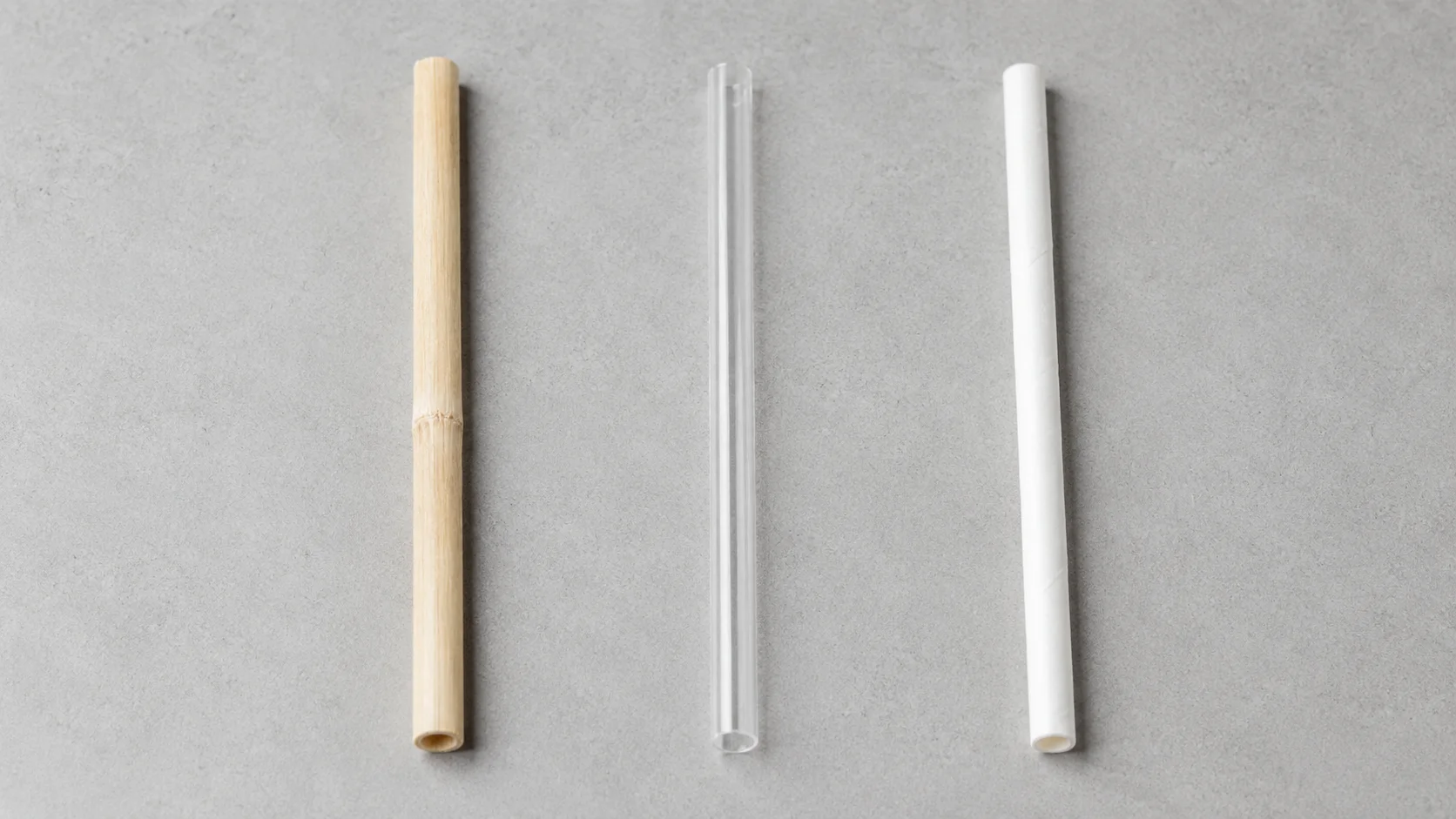
Related: Coffee Ground Straws: The Complete B2B Guide — Learn how recycled coffee grounds become compostable drinking straws in our complementary guide.
Conclusion — Is This the Right Straw for Your Business?
Sugarcane straws are the right choice if your business:
– Serves both hot and cold beverages (eliminating the need for separate PLA and paper straw inventories)
– Has customers who care about sustainability and will notice if a straw collapses mid-use
– Operates in a jurisdiction with existing or upcoming single-use plastic bans
– Wants a single, versatile straw type that works across your entire menu
– Needs sustainability claims that are specific and verifiable, not vague marketing language
They may not be the right choice if your sole decision criterion is the lowest possible unit cost, or if you exclusively serve short-duration cold drinks where paper straws’ 15-minute functional window is acceptable.
For most food service businesses, the combination of performance, compostability, and supply chain stability makes sugarcane straws the strongest all-around sustainable straw option available today.
Quick Answer for B2B Buyers
- Sugarcane straws are made from bagasse, the renewable fiber left after sugarcane juice extraction.
- For B2B foodservice buyers, they are a strong plastic straw replacement when the purchase criteria include PLA-free materials, food-contact safety, compostability, and stable performance in cold drinks.
- MOMOIO supplies sugarcane straws for restaurants, cafes, hotels, distributors, and private-label packaging programs.
Best fit keywords: sugarcane straws, bagasse straws, sugarcane straws wholesale, compostable sugarcane straws, plant based straws.
Need Samples or Wholesale Pricing?
MOMOIO helps cafes, restaurants, hotels, distributors, and private-label buyers compare sustainable straw options, request samples, and prepare bulk orders with clear documentation.
Contact MOMOIO for samples, MOQ, lead time, carton specs, and custom packaging options.
Buyer FAQ
Are sugarcane straws biodegradable?
Yes. Sugarcane straws made from bagasse are designed to biodegrade under suitable composting conditions. Buyers should confirm the supplier’s material composition and certification documents before bulk purchasing.
Are sugarcane straws better than paper straws for restaurants?
Sugarcane straws are often preferred when restaurants need a plant-based straw with a firmer mouthfeel and better wet-use performance than many paper straws.
Can MOMOIO supply sugarcane straws wholesale or private label?
Yes. MOMOIO supports wholesale sugarcane straw orders, custom packaging, and B2B sourcing for cafes, restaurants, hotels, distributors, and event suppliers.