

Unpacking the Truth: Are Compostable Straws Really Compostable?
The global push to curb plastic pollution has thrust “compostable” alternatives into the spotlight, particularly for high-volume consumables like drinking straws. However, a lingering skepticism pervades boardrooms and procurement offices: do these seemingly eco-friendly options genuinely decompose as promised, or are they merely another form of greenwashing? For procurement managers, operations directors, sustainability officers, and supply chain executives in the hospitality & foodservice industries, this question isn’t academic; it’s a critical operational and commercial imperative.
Ignoring the nuances of true compostability carries significant operational and commercial repercussions. The European Union’s Single-Use Plastics Directive (2019/904), enforced since 2021, has effectively banned conventional plastic straws, mandating compliance with stringent standards like EN13432 for alternatives. Similarly, key US markets, such as San Francisco (Jan 2020) and New York City (Nov 2021), have imposed regulations requiring BPI or TÜV AUSTRIA-certified compostable foodware or restricting plastic straw use. Failure to comply can result in hefty fines, disrupted supply chains, and a damaged brand reputation among an increasingly eco-conscious consumer base. This article delves into the science, certifications, and tangible operational impacts of compostable straws, providing B2B decision-makers with the clarity needed to make informed, high-conversion choices.
Understanding true compostability is crucial for hospitality and foodservice businesses to avoid fines and enhance brand reputation.
Understanding Compostable Straws: A Spectrum of Solutions for B2B
The decomposition process of compostable straws in an industrial composting facility.
The term “compostable” is often confused with “biodegradable,” yet the distinction is crucial for B2B applications. Compostable straws are specifically engineered to break down into organic matter, water, and carbon dioxide within a defined timeframe, under specific conditions, and without leaving behind toxic residues. This is a far cry from generic “biodegradable” claims, which often lack certified standards for full decomposition and can still result in microplastic contamination or take an indeterminate amount of time to break down.
Defining True Compostability: Beyond “Biodegradable” Labels
True compostability implies a managed, controlled process. These straws are formulated to fully reintegrate into the natural cycle, becoming a beneficial soil amendment. The decomposition typically occurs within weeks to a few months in professional composting environments, in stark contrast to conventional plastics which can persist for centuries, breaking down into harmful microplastics that permeate ecosystems. The absence of toxic residues is a non-negotiable criterion for certification, ensuring that the end-product is safe for the environment.
The Dual Pathways: Industrial vs. Home Compostable Straws
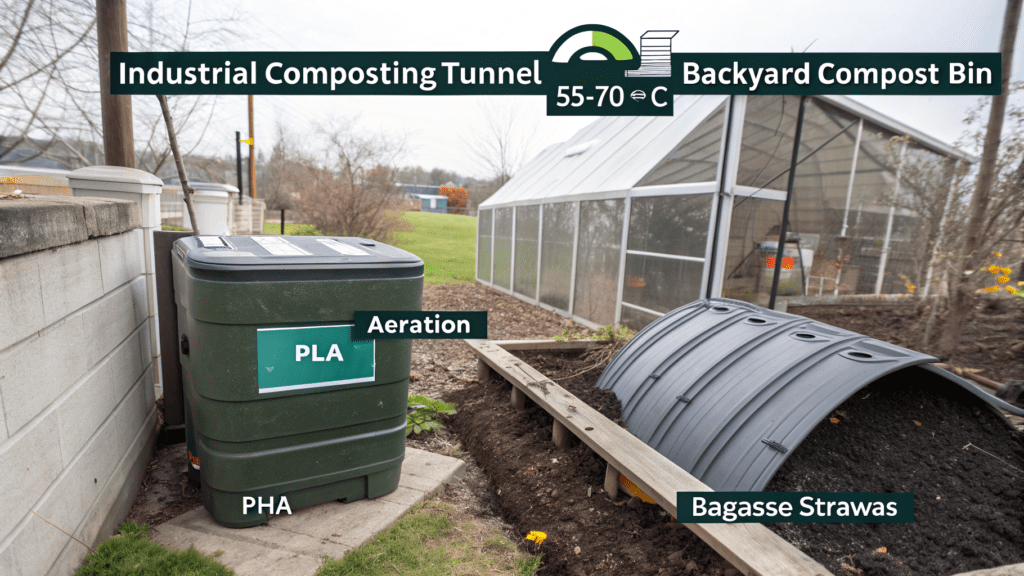
Understanding the specific composting pathway is paramount for effective waste management and compliance in hospitality and foodservice.
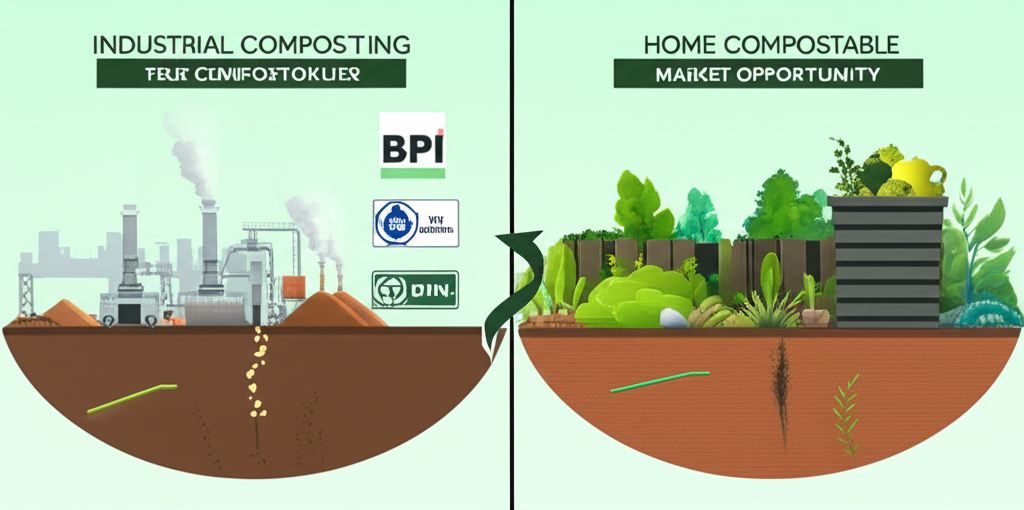
- Industrial Composting: This pathway utilizes specialized facilities that maintain precise high temperatures (typically 55-70°C / 131-160°F), controlled moisture levels, and optimal aeration. These conditions accelerate decomposition, allowing straws to break down within a few weeks to a few months. Materials like polylactic acid (PLA) often require these industrial conditions due to their higher temperature requirements for degradation. If an industrial compostable straw ends up in a home compost bin or, worse, a landfill, it may not decompose as intended, potentially increasing its global warming potential by up to six times.
- Home Composting: Designed for backyard compost bins or piles, home compostable straws operate at lower, more variable temperatures (around 50-65°C / 122-149°F). Their decomposition process is slower, typically taking 6 to 12 months, depending on local conditions. Materials often include bagasse (sugarcane fiber) and some advanced PHA (Polyhydroxyalkanoates) formulations, chosen for their ability to break down without requiring the intense heat of industrial facilities.
Common materials for compostable straws include sugarcane bagasse, corn starch (PLA), PHA, and wood pulp. Each offers distinct properties that cater to different needs and composting requirements.
Compostable straws are engineered to decompose safely, unlike generic biodegradable claims.
Navigating Certifications: Ensuring True Compliance for Compostable Straws
Key certification logos for compostable straws.
For B2B decision-makers in hospitality and foodservice, navigating the landscape of compostable products requires more than just good intentions; it demands adherence to recognized certifications and regional mandates. These certifications are the bedrock of trust in the sustainable packaging market.
Decoding Compostable Straws Certifications: BPI, TÜV AUSTRIA, & DIN-CERTCO
To differentiate genuine compostable products from misleading “greenwashing” claims, relying on independent certification bodies is essential.
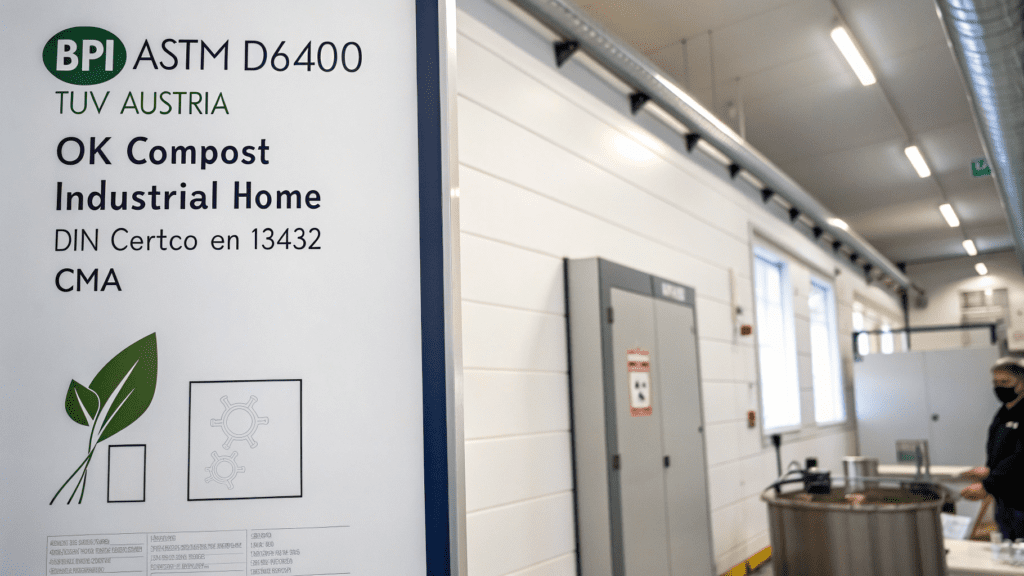
- BPI (Biodegradable Products Institute): A leading North American certification body, BPI certifies industrial compostability based on ASTM D6400 standards. Products must biodegrade at least 90% within six months and disintegrate adequately within 12 weeks to achieve BPI certification, ensuring they break down efficiently in commercial composting facilities without leaving toxic residues.
- TÜV AUSTRIA: This reputable European certification body offers “OK compost INDUSTRIAL” (meeting EN 13432 or ASTM D6400) and “OK compost HOME” certifications. The “OK compost HOME” certification is particularly relevant for businesses seeking products that can break down in backyard composting environments, adhering to standards like NF T51-800.
- DIN-CERTCO: A prominent German and European certification body, DIN-CERTCO awards a mark indicating compliance with the European standard EN 13432 for industrial compostability. They also offer a “DIN Tested – Garden Compostable” certification for home composting.
- Australasian Bioplastics Association (ABA) Seeding Mark: Recognized in Australia and New Zealand, this certification verifies compostable products for those markets.
- Compost Manufacturing Alliance (CMA): In the US, CMA certifies commercially compostable products through rigorous lab and field tests, ensuring they meet ASTM D6400 or D6868 standards.
These certifications assure businesses that their chosen straws will decompose safely, leaving no microplastics, heavy metals, or other toxic chemicals, thereby contributing to soil enrichment.
Regulatory Compliance and Regional Mandates (plastic bans)
The global regulatory environment is rapidly evolving, with a clear trend towards restricting single-use plastics, directly impacting hospitality and foodservice supply chains.
- The EU Single-Use Plastics Directive (2019/904): Enforced since 2021, this directive has effectively banned plastic straws, including those labeled “bio-sourced” or “home compostable” if they contain any plastic. This mandates that alternatives must comply with EN13432, pushing businesses towards certified compostable options to maintain market access.
- US City and State Mandates: In the United States, while a federal ban is absent, numerous state and municipal governments have implemented strict regulations. San Francisco, as of January 2020, requires BPI or TÜV AUSTRIA-certified compostable foodware. New York City, since November 2021, allows compostable plastic straws only with on-premise use and proper organics collection. These localized plastic bans create a complex compliance landscape that requires vigilant procurement strategies.
Businesses must proactively seek out certified products to avoid compliance risks and align with these tightening regulations, ensuring seamless operations across diverse markets.
Certifications like BPI and TÜV AUSTRIA are vital for ensuring compliance with global plastic bans.
Beyond the Hype: The Environmental Equation of Compostable Straws
Comparing the durability of sugarcane and paper straws in beverages.
While the concept of compostable straws is inherently appealing, a deeper dive into their material science, potential contaminants, and waste infrastructure reveals a more nuanced environmental profile for hospitality and foodservice.
Materials Matter: Composition and Durability Challenges
The choice of material profoundly impacts a straw’s environmental footprint and operational performance in high-volume settings.
- Sugarcane Bagasse and PHA: These materials offer superior durability for both hot and cold beverages, making them ideal for diverse foodservice needs. Sugarcane bagasse straws are sturdy and provide a neutral taste, appealing to customers seeking a natural feel. PHA, notably, stands out for its marine biodegradability, meaning it can break down even in ocean environments, offering an important failsafe if mismanaged.
- Paper Straws: While widely available and cost-effective, paper straws have historically presented durability challenges. Peer-reviewed research indicates that paper straws can lose 70-90% of their compressive strength after less than 30 minutes in liquid, absorbing approximately 30% of their weight. This can lead to a poor customer experience and potentially increase overall straw consumption as customers might request multiple straws.
- PLA (Polylactic Acid): PLA straws mimic the feel of traditional plastic, which is a strong point for consumer acceptance for cold beverages. However, their reliance on industrial composting facilities means improper disposal can negate their environmental benefits.
The Hidden Threat: PFAS in “Eco-Friendly” Compostable Straws (PFAS)
A critical concern for B2B buyers in hospitality is the presence of per- and polyfluoroalkyl substances (PFAS) in some “eco-friendly” straws. These “forever chemicals,” used for water and grease resistance, pose significant health and environmental risks.
- A study published in the peer-reviewed journal Chemosphere found PFAS in 36 of 38 tested paper and bamboo straw brands, with common detections including perfluorobutanoic acid, perfluorooctanoic acid, and perfluorohexanoic acid. PFOA, one of these, has been globally banned since 2020.
- These chemicals are linked to various human health problems, including compromised immune responses, thyroid disease, and certain cancers. They persist in the environment for thousands of years, making the “biodegradable” marketing claims for PFAS-containing products highly misleading.
- Environmental scientists, like Dr. Thimo Groffen from the University of Antwerp, advise using reusable alternatives such as stainless steel straws or avoiding single-use straws entirely due to PFAS concerns. For businesses committed to true sustainability, sourcing PFAS-free compostable straws is paramount.
Waste Infrastructure & Lifecycle Impact: A Holistic View
The true environmental benefit of compostable straws hinges on proper end-of-life management, especially for high-volume hospitality waste streams.
- Disposal Challenges: As noted, improper disposal of compostable straws in landfills can increase their global warming potential by up to six times due to anaerobic decomposition. This underscores the urgent need for expanded industrial composting infrastructure and clear labeling standards.
- Holistic Assessment: Research indicates that the primary contributor to environmental impact across various straw types is often the initial feedstock manufacturing stage. However, advancements are mitigating this. For example, PHA straws derived from diverting anthropogenic methane have shown the potential to achieve a net-negative global warming potential, demonstrating the power of material innovation combined with sustainable sourcing.
Material choice, PFAS presence, and proper disposal infrastructure significantly impact compostable straws’ environmental benefits.
Strategic Adoption: Driving Value with Compostable Straws in B2B Operations
For forward-thinking businesses in hospitality and foodservice, adopting certified compostable straws is not just about compliance; it’s a strategic move that enhances brand value, mitigates risk, and captures a growing market opportunity.
The Growing Market: Seizing Sustainable Procurement Opportunities
The global market for compostable straws is experiencing robust growth, reflecting a significant shift in consumer and corporate priorities. The market is projected to grow from USD 1.9 billion in 2025 to USD 3.8 billion by 2035, exhibiting a substantial Compound Annual Growth Rate (CAGR) of 7.1%. In 2024, sales were already at USD 1.8 billion.
The foodservice segment is set to lead this expansion, commanding a 52.8% market share in 2025. This growth is directly driven by increasing sustainability commitments from major players in restaurants, quick-service restaurants (QSRs), hotels, and cafes, alongside rising consumer demand for eco-friendly dining experiences. While paper straws are expected to dominate as the material of choice (44.3% of the market in 2025), the focus is increasingly on high-performing, certified alternatives that genuinely deliver on their environmental promise. This represents a prime opportunity for businesses to align their procurement with evolving market demands. To explore options for your hospitality business, check out this guide on BPI compostable straws for hospitality compliance and ROI.
B2B Operational Impact & ROI Considerations
Selecting the right compostable straw involves balancing material properties with operational realities and ROI for hospitality and foodservice.
| Feature | B2B Operational Impact | Compliance Note | ROI Potential |
|---|---|---|---|
| Material Durability (e.g., Sugarcane Bagasse) | Ensures customer satisfaction for hot/cold beverages, reducing complaints and need for multiple straws in cafes and hotels. | Meets performance expectations for certified compostable products. | Reduced straw consumption, improved customer experience, enhanced brand perception, leading to repeat business. |
| Certified Compostability (e.g., BPI) | Guarantees proper breakdown in industrial composting facilities, aligning with waste management goals. | Essential for compliance with EU, US city, and other regional plastic bans. Avoids fines. | Avoidance of regulatory fines, enhanced brand reputation, access to markets with strict sustainability mandates. |
| PFAS-Free Assurance | Protects customer and employee health, aligns with growing consumer demand for chemical-free products in foodservice. | Critical for meeting emerging health and environmental regulations; prevents future liabilities. | Mitigated legal and reputational risks, increased consumer trust, competitive differentiation in a health-conscious market. |
| Supply Chain Optimization (MOQ, Logistics) | Ensures consistent availability and efficient delivery for high-volume hospitality operations. | Adherence to supplier agreements and delivery schedules. | Reduced inventory costs, minimized stockouts, improved operational efficiency, and reliable product flow. |
For hospitality businesses, understanding Minimum Order Quantities (MOQ) and logistics is crucial for efficient supply chain management. Most suppliers offer flexible MOQs to accommodate various business sizes, from small cafes to large hotel chains. Branding options, such as custom logos or colors, are often available to reinforce your commitment to sustainability. For full details on regulatory compliance, MOQ, and branding, refer to our comprehensive internal resource on sustainable packaging solutions.
Strategic adoption of certified compostable straws enhances brand value and mitigates operational risks.
Real-World Sustainability: Mini Case Study & Best Practices
Leading organizations are already demonstrating the practical benefits of adopting compostable straw solutions in their operations.
- Kaiser Permanente: This healthcare giant made a significant commitment to sustainability by adopting compostable straws across its facilities, a move that substantially reduced its single-use plastic waste footprint. This decision was driven by a holistic view of environmental stewardship, recognizing the link between environmental health and community well-being.
- Bon Appetit: As a major restaurant management company, Bon Appetit took proactive steps, committing to banning plastic straws and stirrers by September 2019 across its more than 1,000 cafes. This initiative showcased a top-down commitment to sustainable practices that could be scaled across diverse operations.
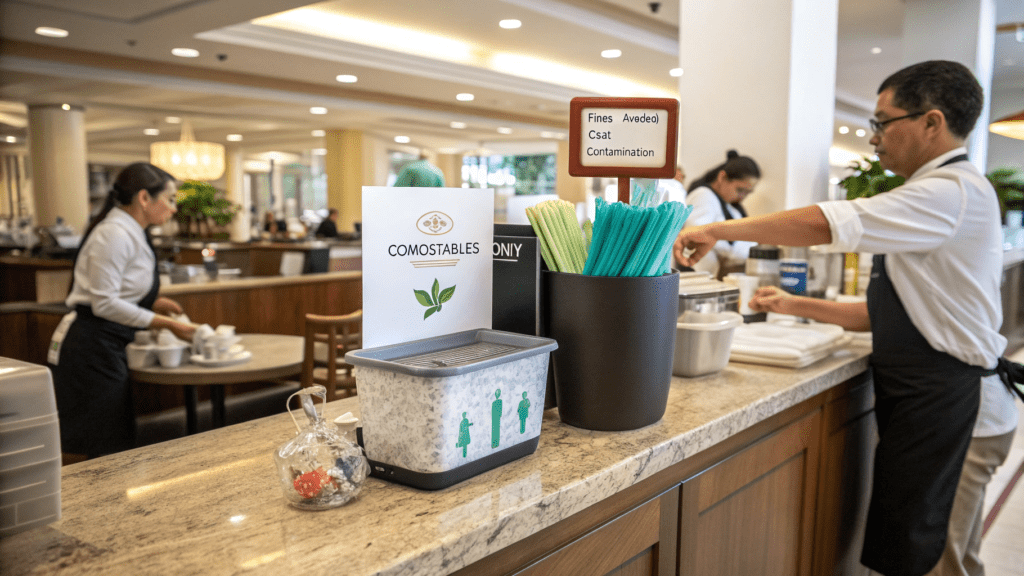
- Starbucks: While global brands like Starbucks have implemented significant sustainable packaging initiatives, including compostable straws, their journey highlights both success and challenges. With 89.5% consumer awareness of sustainable packaging, the intention is clear. However, only 67.6% of consumers reported familiarity with their “Green Packaging Initiative,” indicating a gap in active participation often due to inconvenience or lack of clear disposal instructions. This emphasizes the need for comprehensive communication and accessible disposal infrastructure to maximize the environmental impact of sustainable products. For cafes and restaurants keen on navigating this shift, resources on compostable straws for coffee shops can offer tailored insights.
These examples underscore that while the intent for sustainability is strong, successful implementation requires careful consideration of material properties, consumer behavior, and robust waste management infrastructure.
Leading companies demonstrate that successful compostable straw adoption requires material, behavior, and infrastructure alignment.
The Evolving Landscape: Future Innovations in Compostable Straws
The field of compostable materials is a hotbed of innovation, continuously striving to overcome existing limitations and offer even more sustainable, high-performance solutions. The next 5-10 years promise revolutionary advancements in materials, processes, and regulatory frameworks for hospitality and foodservice.
Pioneering Materials & Technologies (innovation)
The future of compostable straws is being shaped by cutting-edge material science:
- Bacterial Cellulose: Emerging research points to bacterial cellulose as a game-changer. Produced by bacteria feeding on sugar, these straws offer plastic-like durability at potentially low costs and, remarkably, can degrade without the need for traditional industrial composting. While edible, their primary benefit lies in their robust performance and environmental profile.
- PLA-Free Innovations: Recognizing the limitations of early PLA formulations (particularly their reliance on industrial composting), companies are investing heavily in new solutions. Sulapac Ltd., a Finnish sustainable packaging innovator, secured €15 million in 2023 to develop PLA-free compostable straw technology, directly addressing microplastic concerns and broadening disposal options.
- Edible Straws: Beyond bacterial cellulose, edible straws made from materials like pasta or rice offer a novel, truly zero-waste solution. These provide a unique customer experience while ensuring complete biological degradation.
- Enhanced Barrier Coatings: Future innovation will focus on advanced, truly compostable coatings that provide superior moisture and temperature resistance, ensuring compostable straws remain durable for longer durations in various beverages, outperforming current paper straw limitations.
Overcoming Challenges: Cost, Performance, and Disposal (industrial composting)
Addressing key challenges is central to the widespread adoption of next-generation compostable straws in B2B settings:
- Cost Competitiveness: Technological advancements are continuously working to lower production costs, making certified compostable straws more competitive with traditional plastics. Economies of scale and improved manufacturing efficiencies will play a crucial role.
- Consistent Performance: Ensuring consistent performance across a wide range of hot and cold beverages remains a continuous focus for material science innovation, guaranteeing customer satisfaction regardless of drink choice.
- Expanding Infrastructure: The most critical challenge lies in expanding industrial composting infrastructure globally. For these products to realize their full environmental benefits, proper end-of-life collection and processing must be ubiquitous. Regulatory incentives and public-private partnerships will be vital in developing this crucial infrastructure.

Future innovations in compostable straws aim for better performance, lower costs, and broader disposal options.
Competitive Advantage & Business Case: Elevate Your Brand with Certified Compostable Straws
In an era defined by environmental consciousness and stringent regulations, adopting certified compostable straws is more than a responsible choice—it’s a potent strategic differentiator for hospitality and foodservice businesses.
By proactively transitioning to certified compostable solutions, your business can quantify significant benefits:
- Cost Savings: Mitigate the risk of hefty fines and penalties associated with non-compliance with single-use plastic bans in key markets. Avoid potential legal costs and operational disruptions.
- Risk Mitigation: Shield your brand from reputational damage and consumer backlash linked to plastic pollution. Public awareness of environmental issues is at an all-time high, and missteps can severely impact brand loyalty.
- Brand Value Uplift: Enhance your corporate social responsibility (CSR) profile and brand image, appealing to the rapidly growing segment of eco-conscious consumers. Studies show that a strong commitment to sustainability can drive purchasing decisions and foster customer advocacy.
- Market Share Opportunity: Seize a competitive edge in a market increasingly valuing sustainability. As consumer preferences shift and regulations tighten, businesses that lead with verified eco-friendly practices are positioned to capture a larger share of the growing eco-friendly straws market. The global compostable straws market’s projected growth from USD 1.9 billion in 2025 to USD 3.8 billion by 2035 clearly illustrates this expansive opportunity.
This strategic alignment transforms compliance from a burden into a powerful lever for growth and market leadership.
Adopting certified compostable straws offers significant cost savings, risk mitigation, and brand value uplift.
Conclusion: Elevate Your Brand with Certified Compostable Straws
The question “Are compostable straws really compostable?” can be answered with a resounding “yes,” provided they adhere to rigorous certifications. For B2B decision-makers in hospitality and foodservice, embracing these verified alternatives is not merely an environmental gesture but a vital step towards future-proofing operations, mitigating risks, and securing a competitive advantage in a rapidly evolving market. While challenges like PFAS contamination and infrastructure gaps persist, ongoing innovation and stringent certification standards offer a clear path forward.
Do not allow uncertainty to impede your sustainability goals. Invest in certified compostable straws today to align with global sustainability imperatives and drive positive, quantifiable change for your business and the planet.
Certified compostable straws are a strategic investment for future-proofing hospitality and foodservice operations.
Frequently Asked Questions (FAQ)
Are compostable straws truly compostable in hospitality and foodservice settings?
Yes, certified compostable straws are genuinely compostable, breaking down into organic matter without toxic residues under specific conditions. For hospitality and foodservice, industrial composting is often required for full decomposition.
What is the difference between industrial and home compostable straws for B2B use?
Industrial compostable straws require high-temperature commercial facilities to break down quickly (weeks to months). Home compostable straws decompose slower (6-12 months) at lower, variable temperatures, suitable for backyard bins. B2B operations typically need industrial-certified options.
Do ‘eco-friendly’ compostable straws contain harmful PFAS chemicals?
Some paper and bamboo straws have been found to contain PFAS ‘forever chemicals’ for water resistance. Businesses must source certified PFAS-free compostable straws to ensure true sustainability and avoid health/environmental risks.
How can adopting certified compostable straws benefit my hospitality business’s ROI?
Adopting certified compostable straws mitigates compliance fines from plastic bans, enhances brand reputation among eco-conscious consumers, and captures market share in the growing sustainable packaging sector, leading to significant long-term ROI.
What certifications should procurement managers look for when buying compostable straws?
Procurement managers should look for certifications like BPI (ASTM D6400), TÜV AUSTRIA (EN 13432, NF T51-800), DIN-CERTCO (EN 13432), ABA Seeding Mark, and Compost Manufacturing Alliance (CMA) to ensure genuine compostability and compliance.