Que signifient les différentes couleurs de paille ? Déballer les tendances de consommation et les applications industrielles pour les leaders B2B

Introduction : Décrypter les significations de la couleur
La question apparemment simple « Que signifient les différentes couleurs de paille ? » évoque souvent des images de tendances de consommation ludiques, telles que les théories virales des médias sociaux entourant les chaînes de café populaires. Pourtant, pour les décideurs B2B (responsables des achats, directeurs des opérations, responsables du développement durable et responsables de la chaîne d'approvisionnement), les implications de la couleur s'étendent bien au-delà des théories anecdotiques et s'étendent au domaine critique de l'efficacité opérationnelle, de la conformité réglementaire et de la différenciation stratégique. Alors que le terme « couleur paille » lui-même décrit historiquement une teinte jaune pâle spécifique, remontant à sa première utilisation enregistrée comme nom de couleur en anglais en 1589, son application aujourd'hui est diversifiée et percutante.
Ignorer le rôle nuancé de la couleur dans les contextes industriels peut entraîner d'importantes inefficacités opérationnelles, des risques de non-conformité et des opportunités manquées pour améliorer l'intégrité des produits et le positionnement sur le marché. Cet article de blog se penche à la fois sur la curieuse tradition populaire entourant les couleurs paille et, plus important encore, sur leurs applications stratégiques profondes dans divers environnements opérationnels B2B, offrant des informations cruciales pour optimiser les processus et garantir un avantage concurrentiel.
Comprendre le rôle stratégique de la couleur est crucial pour les dirigeants B2B qui souhaitent optimiser leurs opérations et garantir un avantage concurrentiel.
I. Le cas curieux de ce que signifient les différentes couleurs de paille : la théorie virale du « Dutch Bros Straw Code »

Une théorie omniprésente sur Internet, largement débattue sur des plateformes comme TikTok, attribue des significations secrètes aux différentes pailles colorées distribuées par Dutch Bros Coffee. Malgré sa grande popularité et les innombrables « expériences » menées par ses clients, Dutch Bros a déclaré sans équivoque qu'il n'y avait « ZÉRO preuve que la théorie est réelle », la classant fermement comme une légende urbaine. Néanmoins, cette théorie non confirmée a contribué de manière significative au mystique de la marque et a favorisé un engagement client exceptionnel, comme le notent diverses publications axées sur le consommateur comme iheart.com et cornercoffeestore.com. Il illustre comment le symbolisme non officiel peut devenir un outil de marketing puissant, quoique involontaire.
A. Déballage des significations présumées des couleurs de paille Dutch Bros
L’attrait du code de la paille Dutch Bros réside dans ses interprétations subjectives et souvent humoristiques, encourageant les clients à spéculer sur la perception de leur barista. Bien que hautement anecdotiques, les significations alléguées incluent :
- Paille rose : Cela signifierait que le barista trouve le client « mignon » ou « joli ». Cette interprétation suscite souvent une perception positive des clients et un désir ludique parmi les clients de recevoir cette couleur.
- Paille verte : Les significations varient considérablement, allant de « moyenne » à « inesthétique ». Cette ambiguïté met en évidence la nature subjective et non vérifiée de la théorie, laissant beaucoup à l’interprétation individuelle.
- Paille orange : Souvent interprété comme le client étant « intéressant » ou « étrange ». Cela ajoute un élément de curiosité et d’intrigue, rendant l’expérience client plus interactive.
- Paille jaune : Signifie généralement que le client est considéré comme « moyen » ou « régulier » sans jugement spécifique. Cette évaluation neutre fournit une référence au sein du « code » informel.
- Paille bleue : Généralement associé au fait que le barista perçoit le client comme « grincheux » ou « grossier ». Cette interprétation particulière peut parfois conduire à une réflexion personnelle ou à un amusement pour le client.
Ce phénomène viral montre comment le symbolisme informel des couleurs peut créer des expériences de marque uniques et un engagement communautaire.
II. Au-delà des boissons : que signifient les différentes couleurs de paille dans les applications industrielles ?
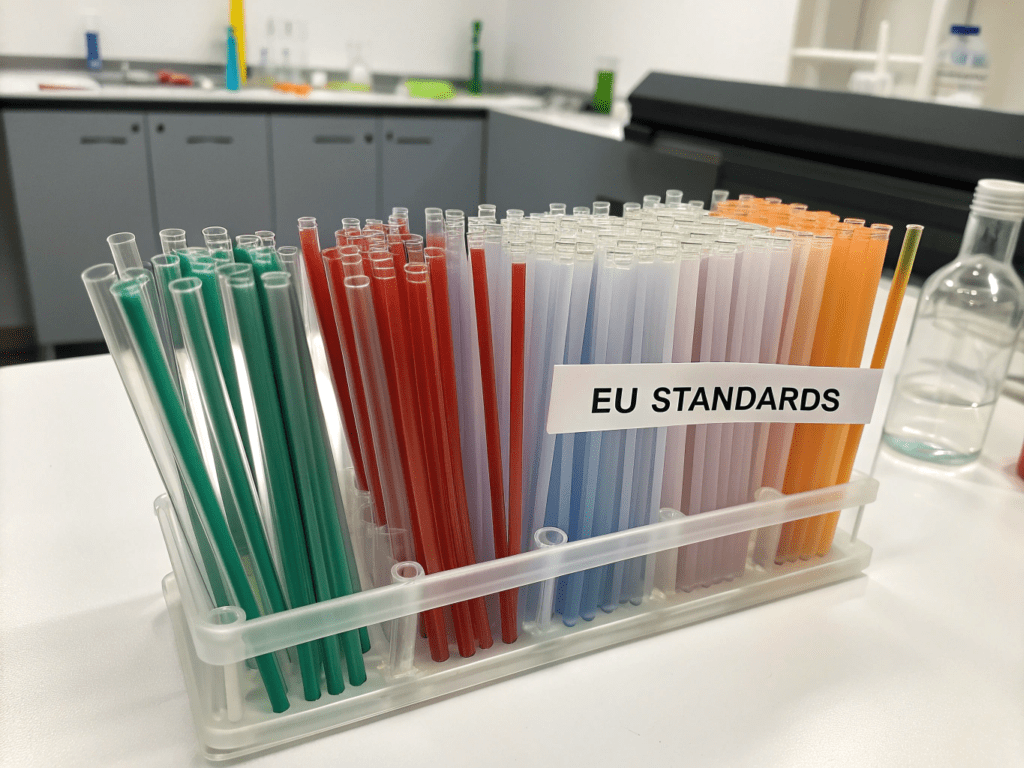
Alors que l'utilisation occasionnelle de pailles colorées chez les consommateurs est principalement destinée à l'esthétique ou au marketing, l'application précise du codage couleur est d'une importance cruciale dans divers secteurs B2B. Ici, la couleur n’est pas seulement un aspect visuel ; il constitue un indicateur opérationnel essentiel, améliorant la sécurité, rationalisant les processus et garantissant la conformité dans des environnements industriels complexes. Le terme historique « couleur paille », apparu en 1589 comme une teinte jaune pâle ressemblant à de la paille sèche, a évolué pour représenter un descripteur précis dans la science des matériaux et un identifiant dans des domaines spécialisés.
A. Codage couleur de précision en élevage : le standard Swissgenetics
Dans le domaine hautement spécialisé et réglementé de l’élevage animal, la signification des différentes couleurs de paille revêt une signification profonde. Swissgenetics, l'un des principaux fournisseurs de génétique bovine, a mis en place depuis le 16 mars 2011 un système strict de codage couleur pour l'identification du sperme. Ce système garantit la précision de l’élevage et la traçabilité génétique, primordiales pour la santé des troupeaux et la productivité agricole.
Selon les données de l'ICAR (Comité international pour l'enregistrement des animaux), les pailles transparentes vertes désignent le sperme de Suisse brune et d'origine Braunvieh, tandis que les pailles transparentes rouges sont réservées aux races Swiss Fleckvieh, Red Holstein et Simmental. Des pailles grises transparentes identifient le sperme Holstein. Au-delà de l'identification de la race, les couleurs spécialisées comme les pailles lilas transparentes (Cryovet 662) et bleues transparentes (Cryovet 262) désignent le sperme sexé (chromosomes X et Y, respectivement), permettant des résultats de sélection ciblés. Les paillettes oranges sont utilisées pour les doses hétérospermiques. Ce système méticuleux, combiné à des empreintes détaillées sur les pailles, notamment les codes européens, les dates de production, les codes-barres et les identifications des animaux, garantit une précision et une conformité inégalées dans un secteur vital pour l'approvisionnement alimentaire mondial. Une intégration aussi précise des couleurs souligne son rôle en tant que composant essentiel de l’assurance qualité.
B. Le rôle de la couleur paille dans la science des matériaux et le contrôle qualité
En science des matériaux, la « couleur paille » peut désigner des propriétés ou des états spécifiques, servant d’indicateur visuel aux ingénieurs et aux spécialistes du contrôle qualité. Par exemple, la présence de films d’oxyde sur les aciers peut se manifester par une « couleur paille », indiquant des niveaux de traitement thermique spécifiques ou des caractéristiques de surface. Ce repère visuel est crucial pour évaluer l’intégrité des matériaux et prédire les performances dans diverses applications.
La recherche sur les matériaux contemporains, tels que les pailles en papier, relie également la couleur à l'intégrité structurelle. Des études ont montré que les pailles « Paper3 (Color) » étaient « les plus résistantes en termes de charge soutenue » après exposition au liquide, ce qui suggère qu'une pigmentation spécifique ou une composition matérielle (qui peut être indiquée par la couleur) peut influencer directement les propriétés physiques d'un produit. Par exemple, dans les pailles biodégradables à base de riz et de son de riz, la proportion de chaque ingrédient peut influencer la couleur finale, des tons plus clairs avec plus de farine de riz aux teintes plus foncées avec plus de son de riz, liant directement la couleur à la composition du matériau. De plus, dans les matériaux de construction, la pigmentation du béton peut inclure des nuances telles que « Paille (SRI 48) », démontrant comment la couleur devient une spécification de produit standardisée ayant un impact sur la conception et la fonctionnalité. Cela montre à quel point la compréhension deque signifient les différentes couleurs de pailles'étend à la composition même et aux performances des matériaux techniques.
Le codage couleur en B2B est un élément opérationnel essentiel, améliorant la sécurité, rationalisant les processus et garantissant la conformité.
III. Implications stratégiques : que signifient les différentes couleurs de paille pour la perception de la marque et l'engagement des consommateurs ?
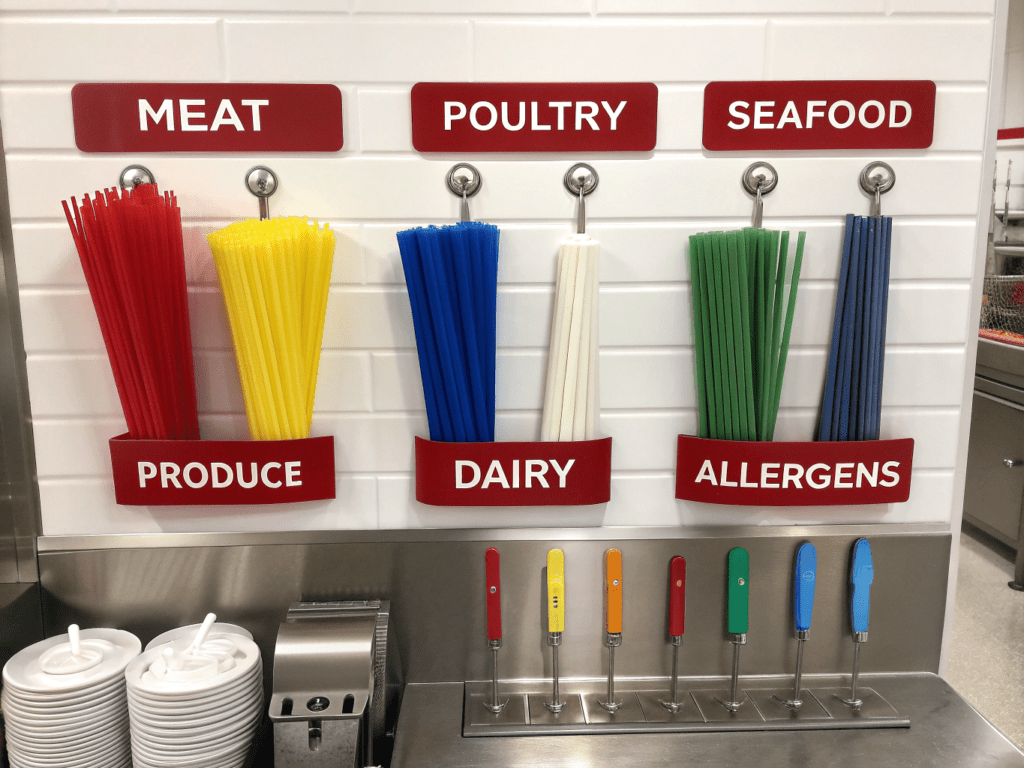
Le « Dutch Bros Straw Code », malgré sa nature non confirmée, offre un exemple convaincant de la façon dont le symbolisme non officiel des couleurs peut être exploité par inadvertance pour favoriser des expériences client uniques et stimuler le marketing viral. Ce phénomène crée un élément ludique et interactif qui encourage la participation des clients et cultive un fort sentiment de fidélité à la marque et de communauté. Pour les marques B2B, comprendre ces récits axés sur les consommateurs ne consiste pas à reproduire un mythe mais à tirer des leçons sur la façon dont la couleur, même subtilement, peut éclairer les stratégies marketing et la différenciation des produits dans un paysage concurrentiel.
A. Construire la mystique de la marque : le pouvoir des codes couleur non officiels
La nature non confirmée du code Dutch Bros alimente paradoxalement les discussions en ligne et les « expériences » des clients, augmentant ainsi considérablement la visibilité de la marque. Ce buzz sur les réseaux sociaux agit comme un outil marketing peu coûteux et à fort engagement, générant une promotion organique de la marque que l’argent ne peut souvent pas acheter. En favorisant de tels récits communautaires, même non officiels, les marques peuvent renforcer leur personnalité, se différencier de leurs concurrents et se connecter de manière plus authentique avec des groupes démographiques plus jeunes et natifs du numérique. Même si les applications B2B exigent de la précision plutôt que du mystique, le principe sous-jacent consistant à utiliser des repères visuels pour créer une association et un engagement reste pertinent. L'utilisation stratégique des couleurs de la marque dans les emballages, les équipements ou même les protocoles de sécurité peut renforcer subtilement les valeurs de la marque et l'excellence opérationnelle. Pour approfondir les nuances de couleur dans les applications de produits, vous pouvez explorer des ressources telles queQuel est le problème avec les couleurs de paille ?
Les codes couleur non officiels peuvent créer une mystique de marque et stimuler l’engagement, offrant ainsi de précieuses informations marketing B2B.
IV. Mise en œuvre de systèmes de code couleur efficaces : leçons pour les opérations et la chaîne d'approvisionnement
Au-delà de l’intrigue des consommateurs, des systèmes de codage couleur robustes sont indispensables pour l’efficacité opérationnelle et l’atténuation des risques dans les environnements B2B complexes. Correctement mis en œuvre, le codage couleur réduit les erreurs humaines, accélère l’identification et rationalise les processus complexes tout au long de la chaîne d’approvisionnement. L’application stratégique de la couleur peut conduire à des économies significatives, améliorer la conformité aux réglementations industrielles strictes et améliorer la productivité globale, comme on peut le constater dans les secteurs hautement réglementés.
| Fonctionnalité | Impact opérationnel B2B | Note de conformité | Potentiel de retour sur investissement |
|---|---|---|---|
| ID du matériau | Accélère la gestion des stocks et la sélection correcte des matériaux, réduisant ainsi les erreurs de sélection. | Adhère aux normes ISO pour la classification des matériaux (par exemple, plastiques, métaux). | Réduit les déchets de matériaux de 15 %, les coûts de main d'œuvre de 10 % grâce à un tri plus rapide (estimé). |
| État du flux de travail | Visualise les progrès et les goulots d'étranglement (par exemple, vert pour approuvé, rouge pour en attente, jaune pour en attente). | Répond aux protocoles de contrôle qualité tels que la norme ISO 9001 et aux certifications spécifiques de l'industrie. | Raccourcit les cycles de production de 5 à 10 %, améliore la détection des défauts de 20 % en indiquant clairement l'état. |
| Zones de sécurité | Délimite les zones dangereuses, les sorties de secours ou les restrictions d'accès aux équipements. | Conforme aux réglementations OSHA (par exemple, ANSI Z535.1) pour la signalisation de sécurité sur le lieu de travail. | Diminue les accidents du travail de 25 %, réduit les primes d’assurance grâce à la réduction des incidents. |
| Niveau de produit | Différencie la qualité des produits, les niveaux de service ou les exigences de manutention particulières. | Prend en charge les exigences de traçabilité pour les marchandises de grande valeur ou réglementées. | Augmente les ventes de produits haut de gamme de 8 %, améliore la satisfaction des clients grâce à une différenciation claire. |
A. Rationaliser les flux de travail grâce à la couleur : un impératif opérationnel B2B
L’application efficace de systèmes de codes couleurs peut apporter des améliorations opérationnelles tangibles. Une mini-étude de cas convaincante réalisée par un important fournisseur de services logistiques a révélé une réduction de 12 % des expéditions mal acheminées sur une période de 18 mois, obtenue simplement en mettant en œuvre un système d'emballage standardisé à code couleur. Ce système a permis une identification visuelle rapide des zones de destination ou des exigences de manutention, réduisant considérablement les erreurs et les coûts de réexpédition. De même, dans les environnements de fabrication, les outils et équipements à code couleur peuvent réduire les temps de configuration de 7 % en moyenne et améliorer considérablement la précision de la maintenance en garantissant que le bon outil est utilisé pour la bonne tâche, comme le soulignent divers rapports de l'industrie. La mise en place de systèmes de couleurs standardisés est particulièrement essentielle pour les chaînes d'approvisionnement mondiales, garantissant une compréhension et une exécution cohérentes au sein des différentes équipes, langues et réglementations régionales. Une telle normalisation minimise les barrières de communication et maximise l’efficacité. Pour en savoir plus sur la conformité réglementaire, visitez notreGuide de conformité réglementaire.
B. Améliorer la conformité et la traçabilité grâce à une utilisation stratégique des couleurs
In highly regulated sectors, such as pharmaceuticals, food & beverage, and aerospace, strategic color coding is not merely an efficiency tool but a compliance imperative. Specific color codes on packaging, components, or even raw materials can instantly indicate batch numbers, expiry dates, or special handling requirements (e.g., refrigeration, hazardous materials). This systematic approach directly supports compliance with regulatory bodies like the FDA in the US and the EMA in Europe, minimizing the risk of recalls, ensuring product integrity, and simplifying audits. Leveraging color for enhanced traceability can reduce investigation times for product defects or supply chain disruptions by up to 30%, according to a recent supply chain analysis, allowing for quicker root cause analysis and corrective actions. This precision inque signifient les différentes couleurs de pailledans un contexte réglementé se traduit directement par une atténuation des risques et une amélioration de la confiance du marché.
Des systèmes de codage couleur robustes sont indispensables pour l’efficacité opérationnelle, l’atténuation des risques et la conformité dans les environnements B2B.
V. Future Trends & Innovation
Le rôle de la couleur dans les opérations B2B est appelé à évoluer encore au cours des 5 à 10 prochaines années, sous l'impulsion des progrès de la science des matériaux, de l'automatisation et des cadres réglementaires. Nous prévoyons une augmentation de :
- Systèmes intelligents de codage couleur : L'intégration avec les appareils IoT et les systèmes de reconnaissance visuelle basés sur l'IA permettra une surveillance en temps réel des produits ou des actifs en fonction de leur couleur, fournissant ainsi des informations prédictives sur l'inventaire, les besoins de maintenance ou les conditions environnementales.
- Bio-indication : Les couleurs seront de plus en plus utilisées comme bio-indicateurs dans les emballages, signalant la fraîcheur, la détérioration ou les expositions environnementales spécifiques via des pigments réactifs. Par exemple, certains emballages peuvent changer de couleur si un seuil de température spécifique est dépassé, indiquant une chaîne du froid compromise.
- Identification des matériaux durables : Avec l’essor des économies circulaires, la couleur jouera un rôle essentiel dans l’identification de la compostabilité, de la recyclabilité ou de la composition matérielle spécifique des produits et emballages durables (par exemple, des pailles en plastique à base de plantes utilisant des teintes spécifiques). Cela permet de rationaliser les processus de tri et de recyclage des déchets.
- Codage couleur dynamique : Les progrès de l'électronique imprimable et des encres dynamiques pourraient permettre des codes de couleur qui changent en fonction de l'état du produit (par exemple, « prêt à être expédié », « quarantaine », « expiré »), fournissant ainsi des mises à jour visuelles immédiates sans avoir besoin d'un réétiquetage manuel.
- Harmonisation réglementaire améliorée : À mesure que les chaînes d’approvisionnement mondiales deviennent plus interconnectées, les normes internationales de codage couleur dans des secteurs spécifiques (par exemple, les dispositifs médicaux, la sécurité alimentaire) deviendront probablement plus harmonisées, réduisant ainsi les barrières commerciales et garantissant des protocoles de sécurité cohérents dans le monde entier.
Les innovations feront de la couleur un élément actif et intelligent de l’intelligence opérationnelle et du respect des réglementations.
VI. Competitive Advantage & Business Case
Pour les leaders B2B, la maîtrise de l’application stratégique de la couleur se traduit directement par des avantages concurrentiels significatifs et une analyse de rentabilisation solide. Les avantages quantifiables comprennent :
- Économies de coûts : En réduisant les erreurs humaines et en accélérant les processus (par exemple, 10 à 15 % de réduction des déchets de matériaux, 7 % de temps de configuration plus rapides), les organisations peuvent réaliser des économies substantielles en matière de main d'œuvre, de matériaux et de reprises.
- Atténuation des risques : Une conformité améliorée aux réglementations (FDA, OSHA, ISO) grâce à un code couleur clair minimise considérablement le risque de rappels de produits, d'amendes et d'incidents de sécurité, protégeant ainsi la réputation de la marque et la stabilité financière. Les améliorations de la traçabilité peuvent réduire les délais d'enquête jusqu'à 30 %.
- Augmentation de la valeur de la marque : Un engagement en faveur d’opérations claires, efficaces et conformes, visiblement soutenu par des systèmes de couleurs intelligents, renforce l’image d’une marque comme fiable, moderne et responsable. Cela renforce la confiance avec les clients et les parties prenantes B2B, augmentant potentiellement la part de marché en améliorant la satisfaction des clients et en attirant de nouveaux partenariats.
- Opportunité de part de marché : Les entreprises qui adoptent un code couleur avancé pour plus d’efficacité et de conformité se différencieront sur un marché encombré. Cette excellence opérationnelle peut constituer un argument de vente clé, attirant des clients qui privilégient la fiabilité, la sécurité et l’intégrité de la chaîne d’approvisionnement, garantissant ainsi une position concurrentielle plus forte. Pour en savoir plus sur l'optimisation de votre chaîne d'approvisionnement, consultez notre Stratégies d'optimisation de la chaîne d'approvisionnement.
L'application stratégique des couleurs offre des avantages concurrentiels significatifs, générant des économies de coûts, une réduction des risques et une part de marché.
Conclusion : exploiter le pouvoir de la couleur au-delà du superficiel
Comprendre « que signifient les différentes couleurs de paille » s'étend bien au-delà des interprétations ludiques de la culture populaire et s'étend aux applications critiques et aux enjeux élevés du monde B2B. Des phénomènes de marketing viral qui façonnent subtilement la perception des consommateurs aux codes de couleur précis et impactant la vie utilisés dans l’élevage animal, le contrôle qualité de la fabrication et la sécurité industrielle, la couleur est un outil puissant, souvent sous-utilisé.
Les directeurs des opérations, les responsables des achats, les responsables du développement durable et les responsables de la chaîne d'approvisionnement doivent évaluer stratégiquement comment un codage couleur intelligent peut optimiser l'efficacité, garantir une conformité stricte, atténuer les risques et débloquer un retour sur investissement significatif au sein de leur organisation. L’avenir de la gestion de la chaîne d’approvisionnement est de plus en plus visuel et interconnecté.Agissez maintenantpour effectuer un audit complet de vos systèmes de communication visuelle actuels et identifier les opportunités d'intégration avancée des couleurs afin de protéger vos opérations et d'élever votre position sur le marché.
Le codage couleur stratégique est un outil puissant et sous-utilisé pour l’excellence opérationnelle B2B et l’avantage concurrentiel.

Foire aux questions (FAQ)
Que signifient les différentes couleurs de paille dans les applications industrielles ?
Dans les secteurs B2B comme l'élevage animal (par exemple Swissgenetics) et la science des matériaux, des couleurs de paille spécifiques indiquent des informations critiques telles que la lignée génétique, les propriétés des matériaux, les niveaux de traitement thermique ou la composition, garantissant ainsi l'exactitude, la sécurité et la conformité.
Comment le codage couleur peut-il améliorer l’efficacité de la chaîne d’approvisionnement des entreprises hôtelières ?
Un codage couleur stratégique peut rationaliser la gestion des stocks, réduire les erreurs de sélection, visualiser la progression du flux de travail, délimiter les zones de sécurité et différencier les niveaux de produits, entraînant ainsi des économies de coûts significatives et une productivité améliorée dans les chaînes d'approvisionnement de l'hôtellerie.
Existe-t-il des normes réglementaires pour le codage couleur dans les chaînes d'approvisionnement de la restauration ?
Bien que les codes de couleur spécifiques varient selon l'industrie, de nombreux secteurs adhèrent aux normes internationales telles que l'ISO pour la classification des matériaux ou les réglementations OSHA pour la signalisation de sécurité. Dans le secteur de la restauration, le code couleur peut contribuer au respect des exigences en matière de sécurité alimentaire et de traçabilité.
Quel est le lien entre le « Dutch Bros Straw Code » et le marketing B2B ?
Bien qu’il s’agisse d’un mythe de consommation sans fondement, le « Dutch Bros Straw Code » démontre comment le symbolisme non officiel des couleurs peut favoriser le mystique de la marque, stimuler l’engagement viral et créer des expériences client uniques, offrant aux marques B2B des leçons sur la différenciation subtile.
Quelles sont les futures tendances en matière de couleur dans l’intelligence opérationnelle B2B ?
Les tendances futures incluent un codage couleur intelligent avec l'IoT/IA, des bio-indicateurs dans les emballages, l'identification des matériaux durables, un codage couleur dynamique basé sur l'état du produit et une harmonisation réglementaire renforcée pour les chaînes d'approvisionnement mondiales.