Waar zijn composteerbare stromaterialen van gemaakt? Een strategische gids voor B2B-leiders
Door een Senior B2B Content Strateeg op het gebied van Duurzaamheid
The global imperative to reduce plastic waste has escalated from an environmental concern to a critical business challenge, reshaping supply chains and procurement strategies worldwide. As plastic pollution continues to rise, projected to reach 1.2 billion tonnes by 2050 without intervention (UN Environment Programme, 2018), legislative pressures and consumer preferences are rapidly shifting towards sustainable alternatives. For B2B leaders in procurement, operations, and sustainability within the hospitality & foodservice industries, understanding the nuances of these alternatives – particularly compostable straws – is no longer optional but a strategic necessity.
De markt voor composteerbare rietjes maakt een aanzienlijke groei door, aangewakkerd door strenge milieuregels zoals de EU-richtlijn voor eenmalig gebruik van plastic (2019/904), die sinds 2021 een verbod op plastic rietjes voorschrijft. Deze richtlijn, naast soortgelijke verboden in tal van Amerikaanse staten en steden als Seattle en San Francisco, heeft voor bedrijven een duidelijk mandaat gecreëerd om over te stappen. Als u zich niet aanpast, riskeert u niet alleen boetes voor niet-naleving, maar ook aanzienlijke reputatieschade en verminderde markttoegang voor hotels, cafés en luchtvaartmaatschappijen.
Deze uitgebreide gids gaat dieper in op de diverse materialen waaruit composteerbare rietjes bestaan, en licht hun eigenschappen, operationele implicaties en strategische overwegingen voor B2B-adoptie toe, zodat uw organisatie met vertrouwen en een duidelijk concurrentievoordeel door dit evoluerende landschap kan navigeren.Het begrijpen van composteerbare stromaterialen is van cruciaal belang voor horeca en foodservice om naleving en concurrentievoordeel te garanderen.
Composteerbaarheid begrijpen: cruciale onderscheidingen voor inkoopmanagers
De termen ‘biologisch afbreekbaar’ en ‘composteerbaar’ worden vaak door elkaar gebruikt, maar toch duiden ze fundamenteel verschillende kenmerken aan met aanzienlijke gevolgen voor de impact op het milieu en de naleving van de regelgeving. Voor inkoopmanagers in de horeca is het begrijpen van deze verschillen van het grootste belang.
Biologisch afbreekbaar onderscheiden van composteerbaar: normen zijn belangrijk
WAARcomposteerbaarHet is wetenschappelijk bewezen dat materialen worden afgebroken tot natuurlijke componenten – koolstofdioxide, water en biomassa – onder specifieke composteringsomstandigheden (bijvoorbeeld hoge temperaturen, microbiële activiteit). Cruciaal is dat dit proces binnen een bepaald tijdsbestek moet plaatsvinden, doorgaans 180 dagen of minder, en dat er geen giftige resten achterblijven. Deze strenge norm zorgt ervoor dat het materiaal daadwerkelijk terugkeert naar de natuur en bijdraagt aan een gezonde bodem.
Daarentegen is ‘biologisch afbreekbaar’ een bredere, vaak ongereguleerde term. Hoewel een materiaal uiteindelijk kan afbreken, kan dit tientallen jaren of zelfs eeuwen duren, en het biedt geen garantie dat het geen microplastics of schadelijke bijproducten achterlaat. Zonder specifieke certificering kan een claim over ‘biologisch afbreekbaar’ misleidend zijn en mogelijk de duurzaamheidsinspanningen van een hotel of restaurant ondermijnen.
Navigating Certification Bodies and Regulatory Compliance: ASTM D6400 & EN 13432
Om echte composteerbaarheid te garanderen, moeten bedrijven vertrouwen op producten die zijn gecertificeerd door gerenommeerde externe organisaties. In Noord-Amerika is deInstituut voor Biologisch Afbreekbare Producten (BPI)is de toonaangevende certificeringsinstantie die producten verifieert die voldoenASTM D6400ofASTM D6868standards for commercial composting. These standards ensure products decompose completely and safely in municipal and commercial composting facilities, leaving no harmful residues.
In Europe,TÜV AUSTRIA (OK compost INDUSTRIAL/HOME)EnDIN CERTCOare key certification bodies, ensuring compliance with the European standardEN 13432. This standard mandates at least 90% disintegration within 12 weeks and 90% biodegradation within six months, alongside strict limits on chemical composition, heavy metals, and ecotoxicity. It’s critical to note that theEU-richtlijn inzake kunststoffen voor eenmalig gebruik (2019/904), van kracht sinds 2021, verbiedt expliciet plastic rietjes voor eenmalig gebruik, zelfs als ze het label ‘bio-sourced’ of ‘thuiscomposteerbaar’ hebben. Dit betekent dat gecertificeerde composteerbare rietjes het enige conforme alternatief voor conventioneel plastic zijn voor Europese horecagelegenheden. Op dezelfde manier hebben staten als Californië en New York en steden als Seattle en San Francisco in de VS, hoewel er geen federaal verbod bestaat, plastic rietjes verboden en de overstap naar gecertificeerde composteerbare producten gestimuleerd door middel van verschillende maatregelen, die een directe impact hebben op de inkoop voor foodservice-activiteiten.Gecertificeerde composteerbare rietjes voldoen aan strenge normen en garanderen echte milieuvoordelen en naleving van de regelgeving voor de horeca.

Core Compostable Straw Materials: A Deep Dive into Plant-Based Innovation for Supply Chains
De innovatie op het gebied van composteerbare stromaterialen is aanzienlijk uitgebreid en biedt een breed scala aan plantaardige oplossingen. Elk materiaal heeft unieke eigenschappen die geschikt zijn voor verschillende operationele behoeften en duurzaamheidsdoelen binnen de toeleveringsketens van de horeca en foodservice.
Composteerbare materialen van polymelkzuur (PLA): een algemeen aanvaard bioplastic
Polymelkzuur (PLA) is een van de meest gebruikte bioplastics voor composteerbare rietjes. Afgeleid van hernieuwbare bronnen zoals maïszetmeel, suikerriet of cassave, biedt PLA een plasticachtig gevoel en functionaliteit, waardoor het een vertrouwde overgang is van traditionele op aardolie gebaseerde kunststoffen voor cafés en restaurants. PLA-rietjes zijn stijf en ideaal voor koude dranken, waarbij ze hun structurele integriteit behouden zonder drassig te worden. Ze domineren de markt vanwege hun wijdverbreide beschikbaarheid, biologische afbreekbaarheid en hoge duurzaamheid voor koude toepassingen.
Een belangrijke overweging voor PLA is echter de composteringsbehoefte: er zijn commerciële composteringsfaciliteiten nodig, die werken bij specifieke hoge temperaturen (56-60°C), voor een effectieve afbraak. Hoewel het biologisch afbreekbaar is, zal het enkele jaren duren voordat PLA bij kamertemperatuur of in een natuurlijke omgeving wordt afgebroken als het niet op de juiste manier wordt verwerkt, wat een uitdaging is voor diverse afvalstromen in de horeca.
Polyhydroxyalkanoaten (PHA) Composteerbare stromaterialen: het revolutionaire biopolymeer
Polyhydroxyalkanoaten (PHA) vertegenwoordigen een nieuwere, meer revolutionaire klasse bioplastics. Geproduceerd door bacteriën die plantaardige suikers of oliën fermenteren, beschikt PHA over een superieure veelzijdigheid bij de afbraak ervan. In tegenstelling tot PLA zijn PHA-rietjes ontworpen om niet alleen te ontbinden in industriële composteringsfaciliteiten, maar ook in thuiscomposteringsomgevingen en zelfs op zee, waardoor ze ongeëvenaarde flexibiliteit bieden voor hotels en cruisemaatschappijen.
PHA-rietjes zijn flexibel, zeer duurzaam en vertonen een hoge hittebestendigheid, waardoor ze geschikt zijn voor zowel warme als koude dranken. Hoewel de productie momenteel duurder is dan PLA, wordt PHA beschouwd als een baanbrekende optie voor merken die zich richten op uitgebreide duurzaamheid en toekomstbestendige naleving, en biedt het een echt veelzijdige verwijderingsoplossing voor de horecasector.
Papier en houtpulp: verbeterde composteerbare stromaterialen voor veelzijdigheid
Papier- en houtpulprietjes zijn gemaakt van plantaardige vezels, vaak afkomstig uit verantwoord beheerde bossen (FSC-gecertificeerd). Hoewel ongecoate papieren rietjes van nature composteerbaar zijn, zijn veel papieren rietjes nu voorzien van geavanceerde plantaardige coatings (bijvoorbeeld dunne PLA-lagen) om de duurzaamheid en waterbestendigheid aanzienlijk te verbeteren, waarmee het algemene probleem van drassigheid in drukke restaurantomgevingen wordt aangepakt.
Innovative solutions like Sulapac Flow 1.7, a wood-based biopolymer with 72% USDA biobased content, exemplify this progress. Straws made from Sulapac Flow 1.7 can last up to 24 hours without becoming soggy, offering a high-performance alternative to traditional paper. This material is industrially compostable according to BPI (ASTM D6400) and Seedling (EN 13432) standards.
Mini-casestudy:A notable example of successful adoption comes fromTranscend Packaging, which has rapidly become a key supplier for major global brands. In response to widespread plastic bans, Transcend Packaging, a verified source, produces home-compostable, paper, and fiber-based alternatives for clients such as McDonald’s, showcasing the viability of large-scale transitions to sustainable materials in foodservice.
Agrarische bijproducten: duurzame composteerbare stromaterialen uit afvalstromen
Het benutten van agrarische afvalstromen biedt een inherent duurzame benadering van de composteerbare stroproductie, ideaal voor horecabedrijven die hun ecologische voetafdruk willen minimaliseren.
- Suikerriet (Bagasse): Gemaakt van het vezelige afval dat overblijft na de verwerking van suikerriet, staan bagasse-rietjes bekend om hun uitzonderlijke stevigheid en waterbestendigheid, waardoor ze duurzaam zijn voor koude dranken. Veel bagasse-rietjes zijn gecertificeerd thuiscomposteerbaar, worden binnen 30-90 dagen volledig afgebroken en geven geen enkele smaak aan de drank, een belangrijk voordeel voor de gastervaring.
- Tarwestro: A natural byproduct of wheat harvesting, these simple, unassuming straws break down quickly and safely in the environment, offering a direct, low-impact solution for eco-conscious establishments.
- Agave: Produced from FSC-certified waste fibers of the agave plant, agave straws offer a sturdy, natural composition and are both biodegradable and compostable.
- Rijst stro: Formulated from rice flour and tapioca starch, these innovative straws are not only biodegradable but also edible. Companies like NLYTech Biotech manufacture rice straws that decompose within 90 days if not consumed, offering a unique zero-waste solution for high-end dining or events.
Niche and Innovative Compostable Straw Materials: Expanding the Horizon
Naast de reguliere opties verleggen voortdurend onderzoek en ontwikkeling de grenzen van composteerbare materialen, wat toekomstige mogelijkheden biedt voor toeleveringsketens in de horeca.
- Kokosbladeren: Droge kokosnootblaadjes (lamina) leveren 100% biologisch afbreekbare rietjes op. Eén enkel kokosnootblad kan ongeveer 200 rietjes produceren, wat het potentieel aantoont voor lokale, circulaire economieën, zoals verdedigd door bedrijven als Sunbird Straws, met name relevant voor resortbestemmingen.
- Gras: Deze wegwerprietjes zijn gemaakt van zeggegras, zijn 100% plasticvrij en veilig biologisch afbreekbaar in de bodem, waardoor ze een natuurlijk en eenvoudig alternatief bieden.
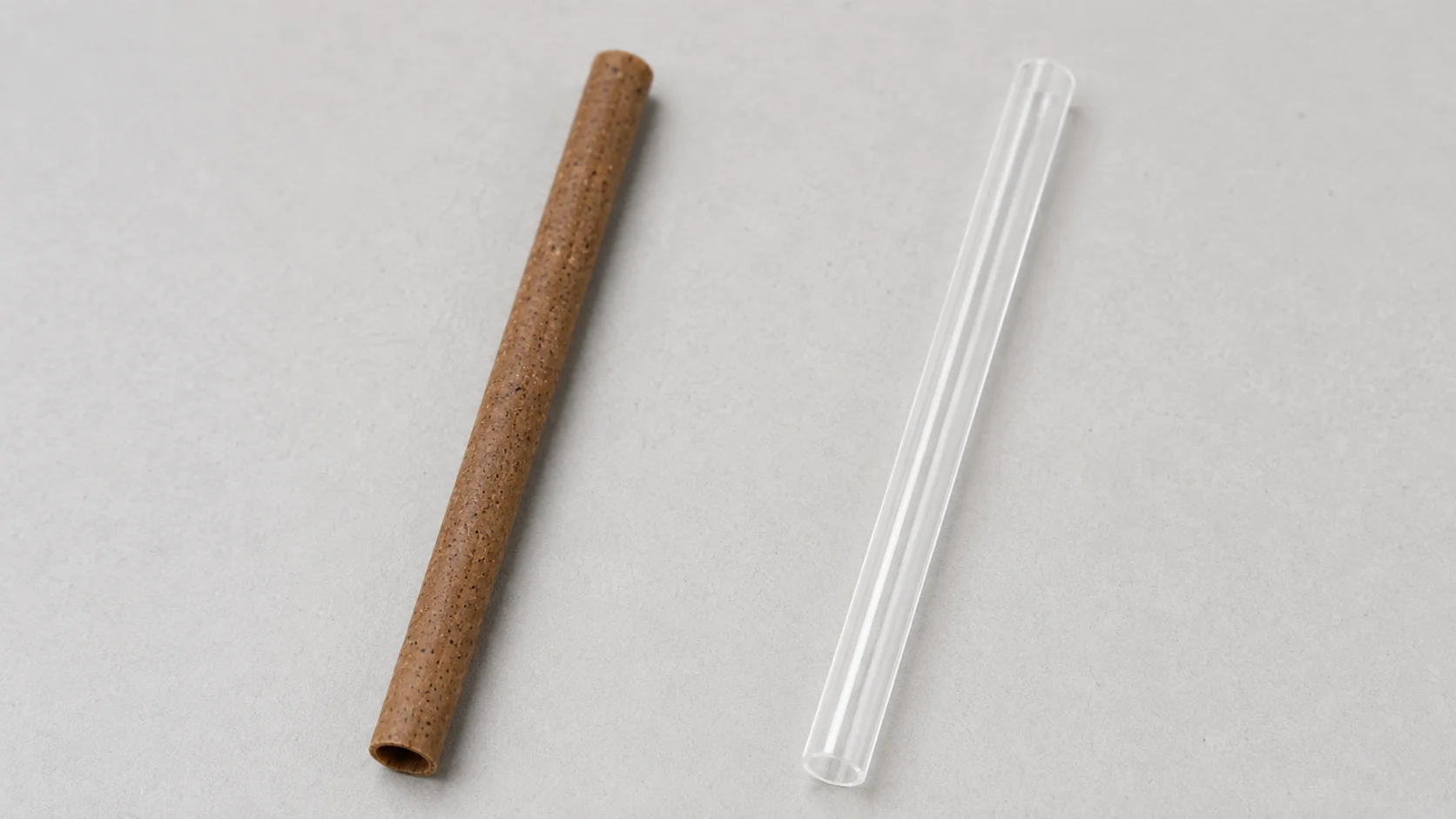
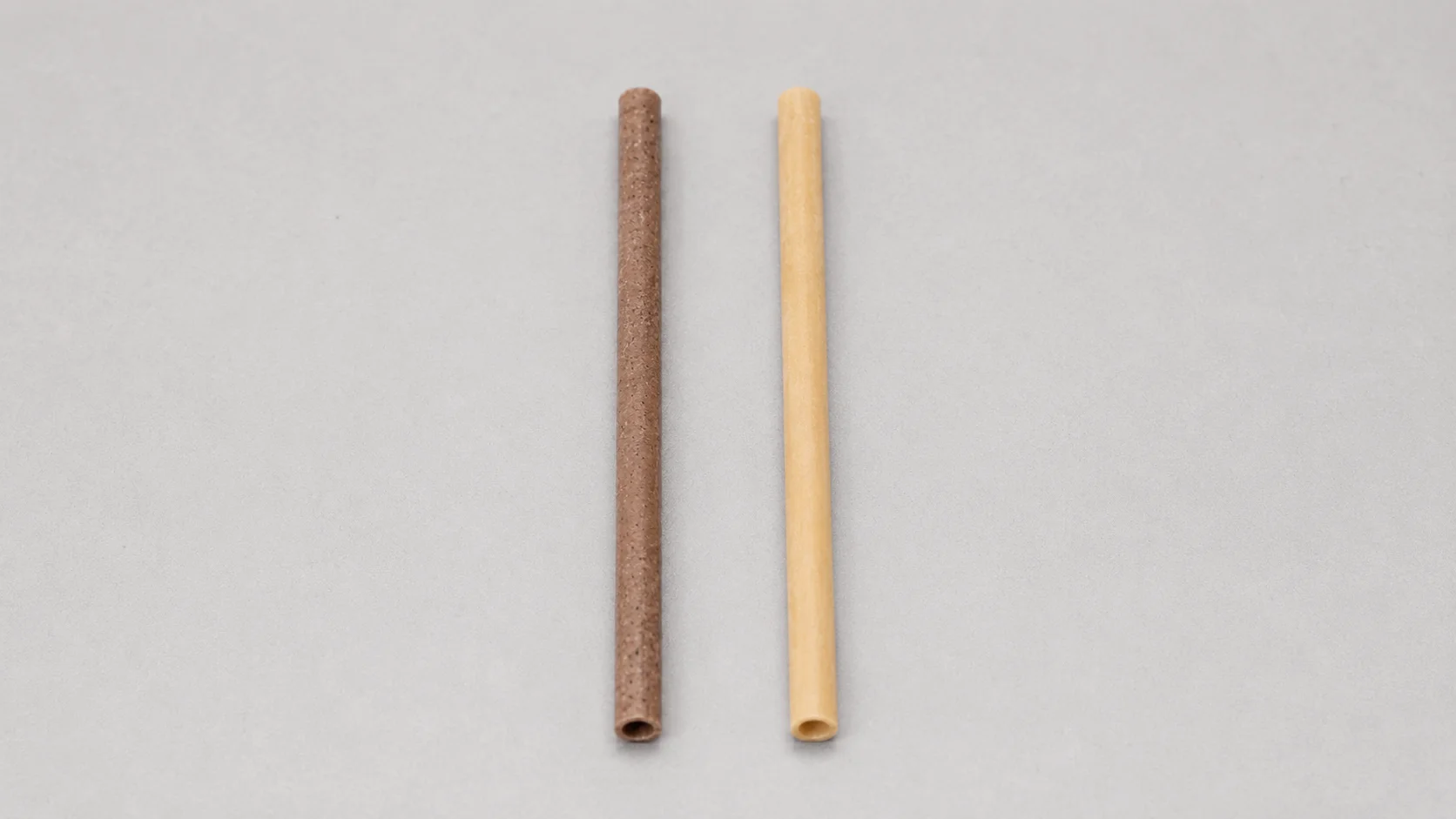
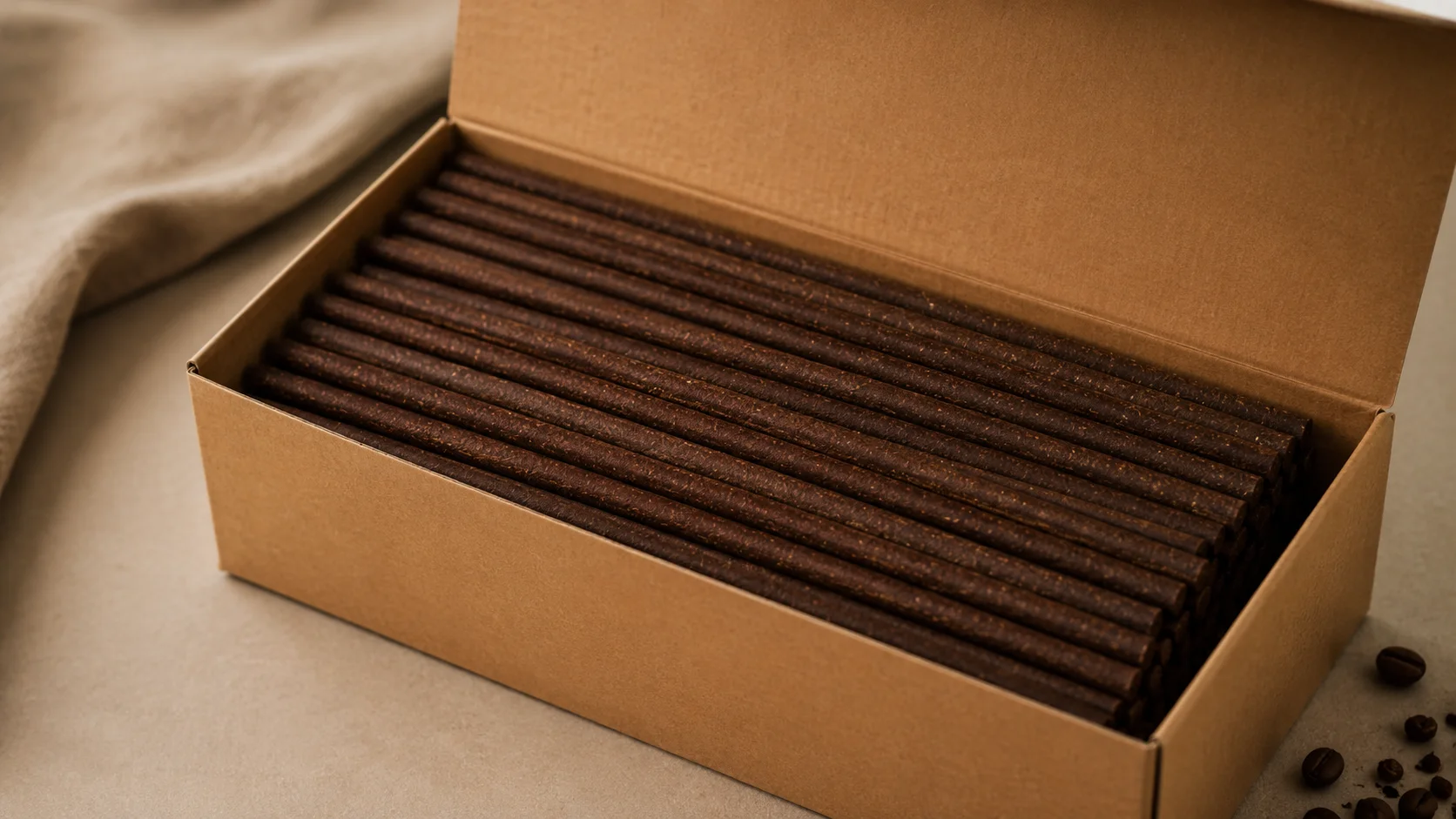
- Gemalen koffie: Deze rietjes zijn gemaakt van gerecycled koffiebezinksel en zijn geur- en smaakloos. Ze zijn opmerkelijk goed bestand tegen doorweektheid in zowel warme als koude dranken, waardoor afval een waardevol product voor cafés wordt.
- Zeewier: Baanbrekende bedrijven zoals Loliware hebben ‘Lolistraws’ ontwikkeld, die eetbaar en hypercomposteerbaar zijn, gemaakt van een gepatenteerd materiaal op basis van zeewier dat binnen 60 dagen of minder afbreekt, wat de ultieme zero-waste oplossing vertegenwoordigt voor innovatieve horecamerken.
- Academic research continues to explore advanced materials, including enhanced starch-based compounds (incorporating lignin and citric acid for improved film properties), cellulose-based innovations (using rice husk and sugarcane bagasse for hydrostability), and stereocomplex PLA (SC-PLA) to overcome the heat resistance limitations of conventional PLA. Further research includes chitin, zein, and novel starch blends to enhance mechanical strength, water stability, and heat resistance.
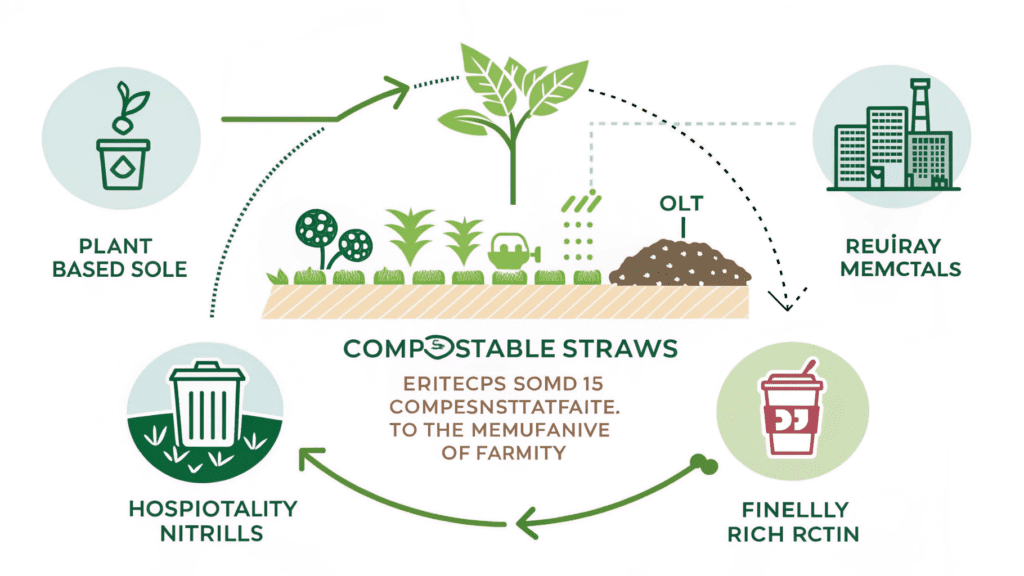
Diverse plant-based materials offer varied performance and disposal options for sustainable hospitality supply chains.
Strategic Considerations: Operational Impact & ROI of Compostable Straw Materials
For procurement managers and operations directors in hospitality, understanding the return on investment (ROI) and operational implications of different compostable straw materials is crucial for a smooth transition and long-term success.
| Functie | B2B operationele impact | Nalevingsopmerking | ROI-potentieel |
|---|---|---|---|
| PLA | Requires reliable access to commercial composting facilities; ensures proper end-of-life management for the material. | Certified under ASTM D6400 and EN 13432 for industrial composting. Crucial for EU and US city-level compliance where plastic straws are banned. | Reduced landfill fees through waste diversion; enhanced brand image as a sustainably-minded enterprise; meeting immediate regulatory mandates to avoid fines and market access restrictions. |
| PHA | Offers the widest disposal flexibility, compatible with industrial, home, and even marine environments, simplifying end-user disposal instructions and expanding reach for diverse hospitality settings. | Biodegradable in diverse environments, supported by emerging certifications (e.g., BPI for certain PHA products). Positions brands as forward-thinking and fully compliant with evolving environmental standards. | Commands a premium brand positioning due to superior environmental attributes; future-proof compliance against stricter regulations; broader consumer appeal by addressing varied disposal options, potentially increasing market share among eco-conscious consumers. |
| Papier (gecoat) | May require specific plant-based coatings for extended use duration, though some users report sogginess over prolonged periods. Often not recyclable due to mixed materials. | Certifications like BPI/EN 13432 for compostability. While plastic-free, ensure coatings are also compostable and avoid PFAS. | Cost-effective entry point to sustainability for many businesses; aligns with immediate consumer demand for plastic-free options, especially in quick-service environments. Can be a quick win for public perception and immediate compliance needs. |
| Bagasse van suikerriet | Excellent durability for both cold and hot beverages, offering robust performance. Readily home or commercially compostable, simplifying waste streams for businesses and consumers. | High biodegradability, often certified home compostable. Utilizes agricultural waste, supporting circular economy principles and reducing reliance on virgin materials. | Strong positive consumer perception due to its waste-derived nature; contributes to significant reductions in landfill waste; demonstrates a commitment to sustainable sourcing, appealing to a growing segment of environmentally aware customers. |
| Edible (Rice/Seaweed) | Provides a true zero-waste solution; however, requires careful consideration for food safety, allergen management, and potential alterations to beverage taste. Storage and shelf life are critical operational factors for foodservice. | Requires food-grade certifications (e.g., FDA, EFSA). Complete consumption means no disposal required, aligning with ultimate sustainability goals. | Ultimate sustainability achievement and unique marketing differentiator; attracts niche markets and innovative brands; potential for new revenue streams if marketed as a consumable product, creating a distinctive competitive advantage. |
Choosing compostable straws impacts operations, compliance, and ROI, requiring strategic material selection for hospitality.
Addressing Challenges: PFAS and Regulatory Scrutiny in Compostable Straw Materials
While the shift to compostable materials is a positive step for hospitality, it is not without complexities. A critical challenge facing the “compostable” claim in some products, particularly paper and bamboo straws, is the widespread presence of Per- and Polyfluorofluoroalkyl Substances (PFAS).
The PFAS Problem: Undermining “Biodegradable” Claims
Recent academic research has uncovered a concerning truth: PFAS, often referred to as “forever chemicals” due to their extremely slow degradation—potentially over thousands of years—have been found in many seemingly eco-friendly straws. A study published in *Chemosphere* in April 2021 analyzed 38 biodegradable paper straw brands and found detectable PFAS in 36 of them, including common variants like PFBA, PFOA, and PFHxA. This finding was corroborated by a Belgian study published in *Food Additives and Contaminants* in August 2023, which identified PFAS in the majority of tested straws, predominantly those made from paper and bamboo.
The presence of PFAS fundamentally undermines the “biodegradable” and “compostable” claims of these products. If a product contains chemicals that persist indefinitely in the environment, it cannot truly be considered a sustainable end-of-life solution for hospitality waste streams.
Health and Environmental Implications of PFAS Contamination
PFAS are used to provide water, heat, and stain resistance, but their environmental persistence raises significant health and environmental concerns. Exposure to PFAS has been linked to a range of serious health issues, including lower vaccine response, thyroid disease, increased cholesterol levels, liver damage, kidney cancer, and testicular cancer.
Contamination can occur from various sources, including the soil where the plant materials were grown, the water used during manufacturing, or even intentional application as a water-repellent coating. For procurement teams in hospitality, this necessitates a critical shift in due diligence. It is no longer sufficient to merely ask for “compostable” certification; procurement managers must demand robust third-party testing for PFAS in all “compostable” products to ensure genuine environmental and public health integrity. PrioritizingBPI-certified compostable strawsthat are explicitly verified as PFAS-free offers a path to genuine compliance and consumer trust.PFAS contamination in compostable straws undermines sustainability claims, demanding rigorous testing for hospitality procurement.
The Future Landscape: Innovation and Strategic Sourcing of Compostable Straw Materials
The journey towards truly sustainable packaging for hospitality and foodservice is dynamic, marked by continuous innovation and a growing emphasis on circularity.
Continuous Research and Development for Enhanced Performance
Ongoing academic and industrial efforts are focused on improving the mechanical strength, water stability, and heat resistance of plant-based materials. New frontiers in material science are exploring substances like chitin (derived from crustacean shells), zein (a protein from corn), and innovative starch-based blends, often incorporating natural additives like lignin and citric acid to enhance performance and overcome current limitations such as sogginess or specific composting requirements. The development of stereocomplex PLA (SC-PLA) aims to improve heat resistance and rigidity, expanding PLA’s usability. This relentless pursuit of better materials is crucial for meeting diverse operational needs while adhering to strict environmental standards in high-volume hospitality settings.
Driving a Circular Economy Through Responsible Sourcing
Compostable straws contribute significantly to driving a circular economy by diverting waste from landfills and oceans, which can then be returned to the earth as nutrient-rich soil. Sourcing these materials from renewable resources, particularly agricultural byproducts, further supports sustainable agriculture and reduces reliance on fossil fuels. This approach transforms waste into a valuable resource, closing the loop on material use for the hospitality supply chain.
For procurement managers and supply chain executives, this means prioritizing certified, transparent supply chains. Verifying that materials are sourced sustainably and that end products meet stringent compostability and safety standards (e.g., PFAS-free) is paramount. Strategic partnerships with suppliers committed to these principles are essential to ensure the true environmental benefit of compostable solutions. Discover howBPI compostable strawsoffer a compellinghospitality compliance and ROIsolution.Innovation and responsible sourcing of compostable straws drive circularity and enhance sustainability for hospitality.
Conclusion: Embracing Certified Compostable Straw Materials for a Sustainable Future
The transition to compostable straws is no longer just an environmental aspiration but a critical business imperative for the hospitality and foodservice industries, driven by escalating consumer demand, evolving regulatory landscapes, and the undeniable need for corporate social responsibility. By strategically understanding the diverse compostable straw materials, their specific operational impacts, and the stringent certification requirements, businesses can make informed decisions that safeguard their brand, ensure compliance, and unlock new market opportunities. Prioritizing certified, high-performance, and critically, PFAS-free options ensures genuine sustainability, enhances brand reputation, and positions your organization as a leader in environmental responsibility.
Act now: Evaluate your current straw procurement strategy and commit to certified, high-performance compostable straw materials to meet regulatory demands and achieve your sustainability goals before market access is restricted or consumer trust erodes.Embrace certified, PFAS-free compostable straws for genuine sustainability, compliance, and enhanced brand reputation.
Veel Gestelde Vragen
What is the primary difference between ‘biodegradable’ and ‘compostable’ straws for hospitality businesses?
Compostable straws are certified to break down into natural components within a specific timeframe (e.g., 180 days) under controlled conditions, leaving no toxic residues. Biodegradable is a broader, often unregulated term, offering no guarantee of complete, timely, or safe decomposition, which is crucial for hospitality’s waste management.
How do EU and US regulations impact the choice of compostable straws for foodservice supply chains?
The EU Single-Use Plastics Directive (2019/904) bans plastic straws, making certified compostable straws the only compliant alternative. In the US, while no federal ban exists, many states and cities have similar prohibitions, incentivizing certified compostable products to avoid penalties and ensure market access for foodservice.
What are the key benefits of switching to sugarcane (bagasse) straws for hotels and cafes?
Sugarcane (bagasse) straws are exceptionally sturdy, water-resistant, and often home compostable, breaking down in 30-90 days. They offer a durable, taste-neutral solution derived from agricultural waste, enhancing a hotel or cafe’s sustainability image and reducing landfill contributions.
Why is it critical for procurement managers to test compostable straws for PFAS?
PFAS (“forever chemicals”) undermine compostable claims, persisting indefinitely and posing health risks. Procurement managers must demand third-party PFAS testing to ensure genuine environmental integrity and consumer trust, especially for BPI-certified options.
How can hospitality businesses ensure their compostable straw sourcing aligns with circular economy principles?
Prioritize certified, transparent supply chains that source materials from renewable resources, especially agricultural byproducts. This diverts waste, reduces fossil fuel reliance, and ensures products return to the earth as nutrient-rich soil, closing the loop on material use.