A Critical Look for Procurement Managers, Operations Directors, and Sustainability Officers in Hospitality & Foodservice
De mondiale verschuiving naar waargenomen ‘duurzame’ alternatieven heeft plantaardige rietjes in de schijnwerpers gezet, gedreven door de escalerende consumentenvraag en strengere milieuregels. Voor inkoopmanagers, operations directors, duurzaamheidsfunctionarissen en leidinggevenden in de toeleveringsketen in de horeca- en foodservice-industrie, overschaduwt de aantrekkingskracht van deze ‘milieuvriendelijke’ opties vaak een complexe realiteit. Hoewel ze aanvankelijk werden verdedigd als een eenvoudige oplossing voor plasticvervuiling, introduceren plantaardige rietjes een groot aantal verborgen uitdagingen en onvoorziene kosten. Deze diepgaande duik legt de kritieke problemen bloot die een herevaluatie van hun rol in uw toeleveringsketen vereisen, en herdefiniëert wat echte duurzaamheid voor uw onderneming betekent.
De alomtegenwoordige dreiging van ‘Forever Chemicals’ in plantaardige rietjes
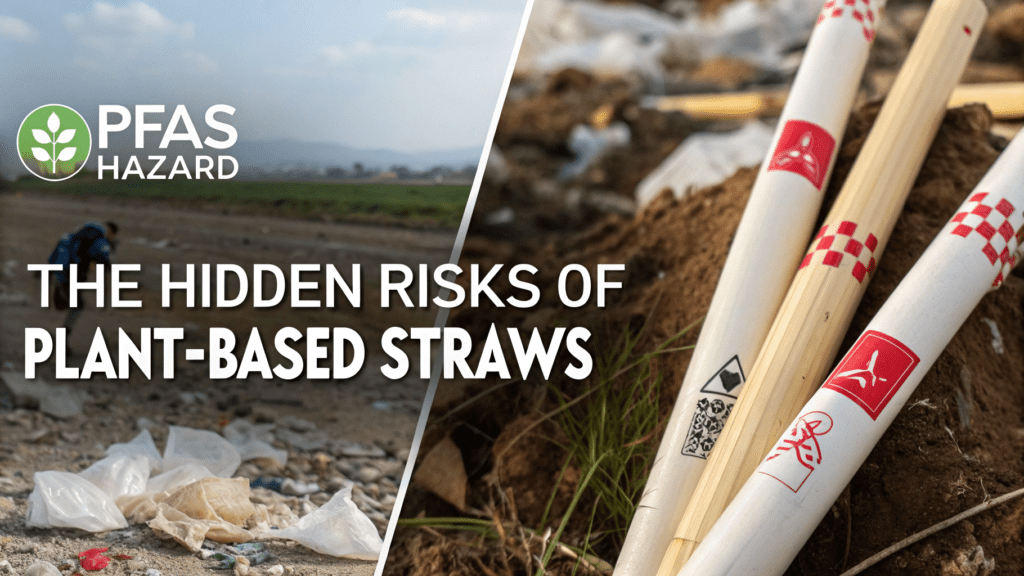
De belofte van een groenere toekomst botst met een alarmerende waarheid: veel plantaardige rietjes bevatten per- en polyfluoralkylstoffen (PFAS), algemeen bekend als ‘forever chemicaliën’. Deze verbindingen worden gewaardeerd om hun waterafstotende eigenschappen, waardoor ze ideaal lijken voor papier- en bamboerietjes. Het voortbestaan ervan brengt echter aanzienlijke milieu- en gezondheidsrisico's met zich mee die een grote impact kunnen hebben op uw merk en bedrijfsresultaten.
Ontmaskering van PFAS-besmetting in plantaardige rietjes
Recent onderzoek werpt een lange schaduw over de ‘groene’ eigenschappen van deze producten. Een baanbrekend onderzoek van de Universiteit van Florida uit 2021, gepubliceerd in *Chemosphere*, vond detecteerbare PFAS in 36 van de 38 geteste biologisch afbreekbare stromerken, rechtstreeks verkregen van Amazon. Om deze bezorgdheid verder te versterken, rapporteerde een uitgebreid Belgisch onderzoek uit 2023 naar *Food Additives and Contaminants* PFAS in maar liefst 90% van de onderzochte merken papierstro en 80% van de onderzochte merken bamboestro. Deze bevindingen wijzen op een systemisch probleem en niet op geïsoleerde incidenten.
De gevolgen voor de gezondheid van blootstelling aan PFAS zijn goed gedocumenteerd en ernstig. De nationale gezondheidsinstituten (NIH.gov) koppelt PFAS aan een reeks schadelijke effecten, waaronder schildklieraandoeningen, leverschade, verhoogd cholesterolgehalte, nierkanker en zaadbalkanker. Hoewel de individuele blootstelling aan een enkel rietje verwaarloosbaar lijkt, stapelen deze chemicaliën zich in de loop van de tijd op in het menselijk lichaam, wat bijdraagt aan een cumulatieve chemische belasting die een groeiende zorg vormt voor de volksgezondheid en, bij uitbreiding, het consumentenvertrouwen in producten die als ‘veilig’ worden beschouwd.
Regelgevend toezicht en nalevingsrisico's bij aanbestedingen
Het persistente karakter van PFAS-chemicaliën betekent dat ze niet gemakkelijk worden afgebroken, wat op de lange termijn risico's voor het milieu en de menselijke gezondheid met zich meebrengt. Toezichthoudende instanties wereldwijd treden steeds meer op. PFOA, een veel voorkomende vorm van PFAS, is bijvoorbeeld sinds 2020 wereldwijd verboden vanwege de ernstige gevolgen voor het milieu en de gezondheid. Dit evoluerende regelgevingslandschap vereist een rigoureuze due diligence in de toeleveringsketen voor elke B2B-entiteit die plantaardige alternatieven inkoopt.
Naast boetes voor directe naleving kan de associatie met ‘forever chemicaliën’ onherstelbare schade toebrengen aan het duurzaamheidimago van bedrijven en het consumentenvertrouwen. In een tijdperk van toegenomen milieubewustzijn en bedrijfsverantwoordelijkheid kan een greenwashing-schandaal of publieke verontwaardiging over PFAS-besmetting de merkwaarde uithollen, milieubewuste klanten vervreemden en tot aanzienlijk marktaandeelverlies leiden. Inkoopleiders moeten erkennen dat de verborgen kosten van PFAS veel verder reiken dan de eenheidsprijs van een rietje.
Veel plantaardige rietjes bevatten schadelijke ‘forever chemicaliën’ van PFAS, wat aanzienlijke merk- en nalevingsrisico’s met zich meebrengt voor horecabedrijven.
De illusie van biologische afbreekbaarheid: waarom plantaardige rietjes niet altijd verdwijnen
De term ‘plantaardig’ roept vaak beelden op van moeiteloze ontbinding terug in de natuur. Voor veel plantaardige rietjes, vooral die gemaakt van polymelkzuur (PLA), is deze biologische afbreekbaarheid grotendeels een illusie zonder specifieke, vaak niet beschikbare, omstandigheden.
The Industrial Composting Conundrum & Compostable Straw Challenges
PLA-rietjes, afgeleid van gefermenteerd plantaardig zetmeel zoals maïs of suikerriet, zijn inderdaad composteerbaar – maar alleen onder zeer specifieke industriële composteringsomstandigheden op hoge temperatuur, waarbij doorgaans temperaturen van 140 ° F (60 ° C) gedurende meerdere dagen nodig zijn, samen met een gecontroleerde microbiële omgeving. Zonder deze precieze instellingen, die slechts in een fractie van de afvalbeheerfaciliteiten gebruikelijk zijn, kan PLA blijven bestaan.
If PLA straws enter a landfill without industrial composting, they can linger for 100 to 1,000 years, slowly releasing potent methane gas, a greenhouse gas significantly more damaging than CO2. The infrastructure gap for effective bioplastic disposal is vast: according to the Sustainable Packaging Coalition, only about 15% of composting facilities in the U.S. accept bioplastics. This means the vast majority of “compostable” straws end up in landfills, negating their intended environmental benefit. The French Agency for Food, Environmental and Occupational Health & Safety (ANSES) has explicitly stated that biobased products may not degrade effectively in home compost and could even release pollutants, further complicating proper disposal.
Ambiguïteit in de regelgeving en besmetting van afvalstromen
De vage en vaak misleidende labels als ‘biologisch afbreekbaar’ kunnen voor grote verwarring zorgen bij zowel operationele teams als eindgebruikers, wat kan leiden tot onjuiste afvalverwerking. Wanneer “composteerbare” PLA-rietjes per ongeluk in traditionele plastic recyclingbakken worden geplaatst, worden ze een vervuilende stof, waardoor de hele recyclingstroom in gevaar komt. PLA, dat chemisch verschilt van de gewone op aardolie gebaseerde kunststoffen, kan niet samen met PLA worden gerecycled, wat de algehele recyclinginspanningen belemmert en de operationele kosten voor afvalbeheer verhoogt.
This challenge has led to direct policy responses. France, for instance, banned some disposable biobased straws under its Single-Use Plastics Directive (SUPD) law in 2021, precisely due to concerns about their incomplete degradation and potential to release pollutants, even if biobased. This regulatory precedent highlights the risk of relying on materials that do not perform as advertised in real-world waste streams.
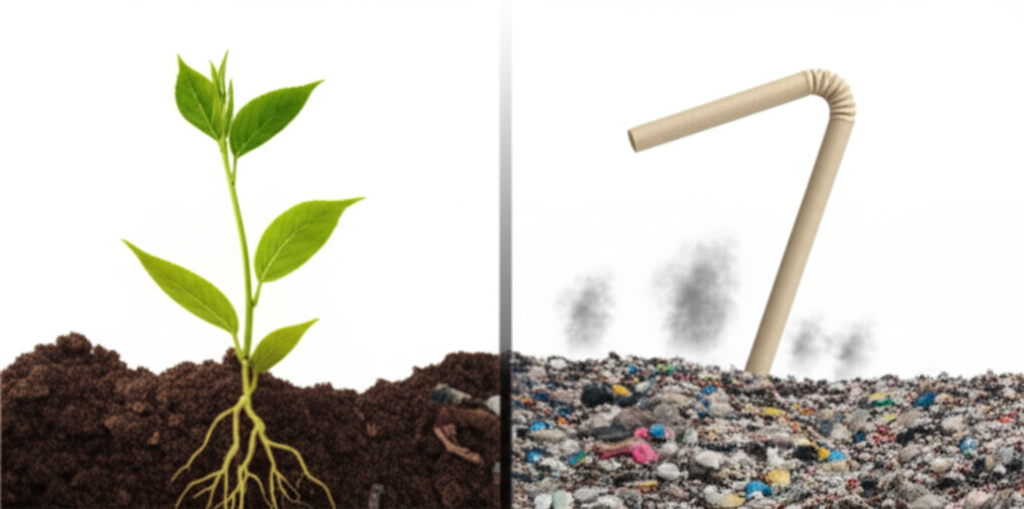
Many “compostable” plant-based straws require specific industrial facilities, often ending up in landfills and contaminating recycling streams.
Operational Hurdles & Customer Dissatisfaction with Plant-Based Straws
Beyond environmental and regulatory concerns, plant-based straws often fall short on fundamental operational and customer experience metrics, creating tangible business problems for B2B enterprises in hospitality and foodservice.
Performance Deficiencies Impacting User Experience
Klanttevredenheid staat voorop. Helaas stellen plantaardige rietjes vaak teleur. Papieren rietjes zijn notoir gevoelig voor snelle degradatie en worden drassig en onbruikbaar, vooral in warme of alcoholische dranken, wat leidt tot de gevreesde ‘doorweekte slok’. Dit heeft een directe invloed op de gebruikerservaring en kan een slechte weerslag hebben op de drankaanbieder. Hoewel PLA-rietjes in eerste instantie duurzamer zijn, zijn ze vaak bros, breken ze en kunnen scherpe, gevaarlijke randen ontstaan, wat een veiligheidsrisico met zich meebrengt. Bovendien melden veel gebruikers een ongewenste “papierachtige smaak” of een subtiele verandering in de smaak van de drank, waardoor de kwaliteit van de drank zelf afneemt.
Supply Chain en kostenimplicaties voor B2B
De verschuiving naar plantaardige rietjes heeft ook aanzienlijke financiële en logistieke gevolgen. Ze zijn over het algemeen duurder in aanschaf dan traditionele plastic rietjes. Een plantaardig PLA-rietje kan bijvoorbeeld ongeveer $ 0,24 per stuk kosten, een aanzienlijke stijging vergeleken met ongeveer $ 0,052 voor een traditioneel plastic rietje. Deze ongelijkheid heeft een directe invloed op de winstgevendheid, vooral bij grootschalige activiteiten zoals QSR's of hotelketens.
Scaling the production of consistent, high-performing plant-based alternatives remains a challenge for manufacturers, leading to potential supply chain instability. For operations directors, managing diverse material types (e.g., paper, PLA, various emerging bio-alternatives) adds layers of logistical complexity to inventory, storage, and waste segregation protocols, increasing operational overheads and the risk of mismanagement.
Plant-based straws often disappoint customers with sogginess or breakage, increasing costs and complicating supply chain management for businesses.
The Unseen Environmental Footprint of “Green” Plant-Based Straws
While marketed for their environmental benefits, the full lifecycle of plant-based straws reveals an often-overlooked ecological footprint that extends beyond just their disposal, impacting the broader hospitality supply chain.
Resource-Intensive Production and Chemical Leaching
The production of PLA bioplastics is inherently tied to agriculture, consuming significant land and water for crops like corn or sugarcane. This raises critical questions about food security, land use changes, and water resource depletion, especially in regions facing water stress. Similarly, the manufacturing of paper straws contributes to deforestation and demands substantial energy and water consumption, along with the use of chemical additives for wet strength and binding.
Moreover, the materials themselves are not inert. A January 2024 study in *Food Packaging and Shelf Life* revealed that 19 chemicals, including known endocrine disruptors, migrated from paper straws into soda samples, highlighting potential health and environmental risks during the product’s use phase. This chemical migration undermines the “natural” and “safe” perception often associated with plant-based products.
Microplastic Formation and Ecosystem Impact
Even if a plant-based straw eventually degrades, the process can still lead to environmental harm. If not properly composted, “degradable” plant-based materials can break down into microplastics. Research by Niu et al. (2024) indicates that while PLA might release fewer microplastics than traditional plastic, the release of these pervasive particles remains a concern.
These microplastics, whether from conventional plastics or poorly degraded bio-materials, pose a significant threat to marine ecosystems. They are readily ingested by marine life, leading to bioaccumulation in the food chain, which can eventually impact human health. Furthermore, the degradation of PLA can increase environmental acidity, directly harming aquatic ecosystems and exacerbating existing environmental challenges.

Plant-based straws have a hidden environmental footprint, including resource-intensive production, chemical leaching, and microplastic formation.
Comparison Table: Evaluating Straw Alternatives for B2B
To make truly informed decisions, B2B leaders in hospitality and foodservice must weigh the operational, compliance, and financial implications of each straw alternative.
| Functie | B2B operationele impact | Nalevingsopmerking | ROI-potentieel |
|---|---|---|---|
| Traditioneel kunststof | Low cost, high durability, established supply chain | Increasing regulatory bans (e.g., EU Single-Use Plastics Directive) | Negative: High environmental cost, potential for future regulatory fines |
| PLA Plant-Based | Moderate cost, durability issues, requires specific disposal | “Compostable” claims often require industrial facilities (ASTM D6400) | Moderate: Perceived sustainability, but high disposal costs if infrastructure lacking |
| Papier | Moderate cost, poor wet strength, inconsistent taste | Risk of PFAS contamination (90% of brands per Belgian study) | Low: Frequent customer complaints, high consumption due to sogginess |
| Herbruikbaar (metaal/glas) | High initial cost, cleaning/storage logistics | High compliance for reusability, reduces waste | High: Long-term cost savings, strong brand sustainability image |
| Emerging Bio-alternatives | Variable performance, limited scalability, higher cost | Evolving standards; requires robust third-party certification (BPI, CMA) | High: Potential for true circularity, strong brand differentiation |
Evaluating straw alternatives requires weighing operational impact, compliance, and ROI, considering hidden costs and true sustainability.
Mini Case Study: The Restaurant Chain’s Sustainable Straw Pivot
A major quick-service restaurant (QSR) chain embarked on an ambitious journey to achieve 100% plastic-free operations by 2023, beginning with a system-wide transition to paper straws. The initial intention was to align with consumer expectations for sustainability and reduce plastic waste.
However, the pivot quickly encountered unforeseen challenges. Within three months of the transition, the chain experienced a significant 15% decrease in positive beverage reviews, with consumer feedback overwhelmingly citing “soggy straws” and an unwelcome alteration to drink taste. This directly impacted customer satisfaction and loyalty. Operationally, the situation worsened. Customers frequently needed multiple soggy straws per drink, leading to an unforeseen increase in procurement volume and inflated expenses. Furthermore, the complexities of managing waste for “compostable” PLA cups and paper straws, which often ended up in general waste due to lack of industrial composting access, inflated overall operational expenses by an additional 10%.
The chain was forced into a strategic re-evaluation, acknowledging the gap between sustainable intent and practical execution. They are now actively exploring certified PFAS-free options and investing heavily in comprehensive consumer education campaigns on proper disposal to mitigate ongoing reputational and operational damage. This highlights a crucial lesson: “green” claims must be backed by real-world performance and disposal infrastructure.
A QSR chain’s shift to paper straws led to decreased satisfaction and increased costs, highlighting the need for practical sustainable solutions.
Navigating the Future: Strategic Alternatives to Problematic Plant-Based Straws
The complexities of current plant-based straw options necessitate a proactive, strategic approach for B2B leaders in hospitality and foodservice. The future of sustainable packaging lies not just in what materials are used, but how they are sourced, certified, and managed across their entire lifecycle.
Prioritizing Truly Sustainable Sourcing and Certification
For procurement and sustainability officers, the imperative is clear: demand transparency and rigorous third-party certifications. Insist on explicit PFAS-free certifications from suppliers. Verify industrial compostability claims with reputable certifications such as those from the Biodegradable Products Institute (BPI) or TÜV Austria’s “OK Compost” labels, ensuring products genuinely break down in appropriate facilities. Partner with manufacturers who offer full lifecycle transparency and provide third-party verified environmental impact data. Staying ahead of evolving global regulations, such as China’s GB/T 41008-2021 standards for biodegradable straws implemented in June 2022, is crucial for maintaining market access and avoiding future compliance headaches.
Reductie en herbruikbare oplossingen omarmen
True sustainability often begins with reduction. Businesses should proactively encourage customers to “skip the straw” when unnecessary or to bring their own reusable options. For in-house dining settings, explore scalable reusable straw programs using durable, easy-to-clean materials like stainless steel or glass, focusing on robust cleaning and sanitization protocols. While initial investment and logistical adjustments are required, reusable solutions offer significant long-term cost savings and bolster a strong brand sustainability image. Furthermore, strategic investment in research and development for next-generation bio-based materials with proven, verifiable biodegradability in diverse environments will be key to unlocking genuinely eco-friendly single-use options.
Future sustainability demands transparent sourcing, third-party certifications, reduction strategies, and exploring reusable or truly biodegradable alternatives.
Conclusion: Rethinking “Green” for True Sustainability
The journey toward sustainable packaging is undeniably complex, and the narrative around plant-based straws, despite their well-intentioned origins, reveals significant challenges. For B2B decision-makers in procurement, operations, and supply chain within hospitality and foodservice, understanding the pervasive issues of PFAS contamination, the misleading nature of biodegradability claims, and the tangible operational impacts is paramount. This knowledge is not merely academic; it is critical to avoiding greenwashing, ensuring regulatory compliance, and safeguarding brand reputation.
True environmental responsibility and a future-proof supply chain demand materials that are genuinely eco-friendly, operationally efficient, and unequivocally safe. The time for a superficial embrace of “green” labels is over. It’s time for materials that deliver on their promise.
True sustainability requires moving beyond superficial “green” claims to genuinely eco-friendly, efficient, and safe supply chain solutions.
Veelgestelde vragen (FAQ)
Do plant-based straws contain ‘forever chemicals’ (PFAS)?
Yes, recent studies, including a 2023 Belgian study, found PFAS in up to 90% of paper and 80% of bamboo straw brands, posing environmental and health risks for hospitality operations.
Are ‘compostable’ plant-based straws truly biodegradable in all settings?
No, most plant-based straws like PLA require specific high-temperature industrial composting facilities to degrade, which are only available in about 15% of U.S. facilities, often ending up in landfills.
How do plant-based straws impact customer satisfaction in foodservice?
Paper straws often become soggy quickly, and PLA straws can be brittle or impart a ‘papery taste,’ leading to decreased beverage reviews and customer dissatisfaction in QSRs and cafes.
What are the hidden costs of switching to plant-based straws for B2B buyers?
Beyond higher unit costs (e.g., $0.24 for PLA vs. $0.052 for plastic), hidden costs include increased procurement due to sogginess, waste management complexities, and potential brand damage from greenwashing claims.
What sustainable alternatives should hospitality businesses consider instead of problematic plant-based straws?
Prioritize PFAS-free, third-party certified options, embrace reduction strategies like ‘skip the straw,’ and explore scalable reusable straw programs for in-house dining to ensure true sustainability.