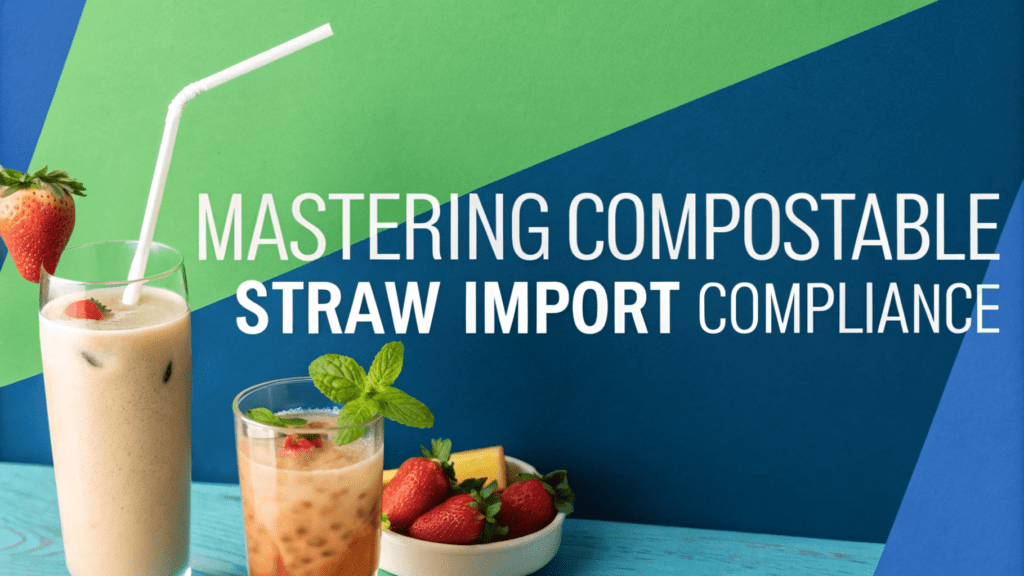
Importera komposterbara sugrör: väsentlig efterlevnad för framtidstänkande distributörer
Den globala ekonomin befinner sig i en kritisk tidpunkt och står inför både aldrig tidigare skådade miljöutmaningar och omvälvande marknadsmöjligheter. För B2B-distributörer, särskilt de inom matservice- och gästfrihetssektorerna, innebär övergången från engångsplaster en utmaning som kräver omedelbara strategiska åtgärder. Med över 70 % av konsumenterna som nu aktivt gynnar hållbara varumärken (NielsenIQ, 2023) och en allt mer intrikat väv av regleringar som styr plastalternativ, är möjligheten att importera och distribuera komposterbara sugrör som uppfyller kraven inte längre ett nischövervägande – det är ett grundläggande krav för marknadstillgång och hållbar lönsamhet.
Bara den globala marknaden för rakt halm värderas till uppskattningsvis 1,2 miljarder USD och förväntas växa med en sammansatt årlig tillväxttakt (CAGR) på 6,8 % fram till 2028 (Grand View Research, 2021). Denna tillväxt drivs nästan helt av den snabba utfasningen av konventionell plast. Att navigera i det komplexa regelverket, från EU:s stränga engångsplastdirektiv (SUPD) till ett växande lapptäcke av förbud på statlig nivå i USA och federala förbud i Kanada, kan dock vara skrämmande. Underlåtenhet att proaktivt bemästra dessa efterlevnadskrav kan leda till kostsamma importkvarhållanden, betydande böter, varumärkesskador från "gröntvättande" anklagelser och i slutändan uteslutning från nyckelmarknader. För operativa direktörer, inköpschefer och chefer för leveranskedjan är förståelsen av dessa nyanser avgörande för att säkra en konkurrensfördel och främja ansvarsfull och lönsam tillväxt.
Proaktiv efterlevnad av regler för komposterbart halm är avgörande för distributörer av hotell- och matservice för att säkerställa marknadstillträde och lönsamhet.
The Shifting Landscape of Single-Use Plastics & Importing Compostable Straws
Den globala rörelsen för att stävja plastföroreningar har dramatiskt omformat försörjningskedjor. DeEU:s engångsplastdirektiv (SUPD), från och med juli 2021, står som en landmärkesreglering, som helt och hållet förbjuder plaststrån – ett förbud som även inkluderar de som är märkta som "biokällor" eller "biologiskt nedbrytbara" på grund av deras industriella jäsningsprocess. Detta direktiv skapar ett prejudikat och klassificerar många biobaserade polymerer som plaster, vilket kräver en djupare förståelse av materialvetenskap bortom påståenden på ytnivå.

Tvärs över Atlanten presenterar USA en mångfaldig och föränderlig lagstiftningsmiljö. Medan ett enda federalt förbud saknas, har ett "lapptäcke" av statliga och lokala bestämmelser uppstått. Kaliforniens AB-1884, till exempel, begränsar distribution av plasthalm, medan New York City tillåter komposterbart papper eller BPI-certifierade PLA-strån på begäran. Mer strängt har District of Columbia mandat sedan 1 januari 2019, att företag inte längre får använda engångsstrån eller omrörare av plast, vilket endast tillåter material på Mayor's List of Compostables, såsom papper, hö eller BPI-certifierad PLA. Detta fragmenterade landskap understryker behovet av att distributörer är mycket medvetna om regionala särdrag.
Kanadas tillvägagångssätt speglar EU:s proaktiva hållning. DeEngångsföreskrifter för plastförbud (SOR/2022-138), implementerad i etapper, förbjuder tillverkning och import av de flesta engångsstrån av plast sedan december 2022, med ett förbud mot försäljning som träder i kraft i december 2023. Detta omfattande förbud sträcker sig till komposterbar och oxo-nedbrytbar engångsplast, vilket betonar en tydlig förändring mot verkligt hållbara alternativ. På liknande sätt begränsade Nya Zeeland den allmänna försäljningen av engångsstrån av plast från och med juli 2023.
För distributörer representerar denna globala regelkonvergens både en utmaning och en enorm marknadsmöjlighet. Den växande efterfrågan på certifierade, genuint hållbara alternativ skapar ett lukrativt segment, men det lägger också en betydande börda på importörer att noggrant verifiera produktpåståenden. Risken för "greenwashing" – där produkter vilseledande marknadsförs som miljövänliga – är hög, och distributörer hålls i allt högre grad ansvariga för integriteten i deras leveranskedja. Detta kräver aktivt engagemang, transparent kommunikation med leverantörer och strikt efterlevnad av globalt erkända standarder för att undvika inte bara efterlevnadsrisker utan också skador på rykte och misstroende hos kunder.
Globala regleringar fasar snabbt ut engångsplaster, vilket skapar både utmaningar och möjligheter för komposterbar halmdistribution.
Core Compliance Pillar 1: Understanding Compostability Standards & Certification for Importing Compostable Straws
Termen "komposterbar" är exakt och juridiskt definierad, till skillnad från det vaga och ofta missvisande "biologiskt nedbrytbart" eller "nedbrytbart". För distributörer är denna distinktion inte semantisk; det är en kritisk efterlevnadströskel.
Att skilja mellan "komposterbart" och "biologiskt nedbrytbart" för import av komposterbara sugrör (Greenwashing)
"Komposterbar"material är utformade för att bryta ner fullständigt till icke-toxiska komponenter (koldioxid, vatten, oorganiska föreningar och biomassa) inom en specifik tidsram under specifika industriella komposteringsförhållanden, vanligtvis över 56°C. De får inte lämna efter sig skadliga rester eller negativt påverka den resulterande komposten. Produkter som uppfyller dessa kriterier är avsedda att bidra positivt till markhälsa och den cirkulära ekonomin.
Däremot"biologiskt nedbrytbar"betyder helt enkelt att ett material kommer att brytas ned över tiden på grund av mikrobiell verkan, men det saknar definierade tidsramar, specifika miljöförhållanden eller en garanti för miljönytta. En "biologiskt nedbrytbar" produkt kan ta hundratals år att bryta ner på en soptipp och lämna kvar mikroplaster eller skadliga rester. Många föremål som marknadsförs som "biologiskt nedbrytbara" kan kräva specifika, ofta otillgängliga, miljöförhållanden för att bryta ned och, om de hamnar på soptippar eller hav, kan de bete sig identiskt med konventionell plast. Denna tvetydighet är ett utmärkt exempel på "gröntvätt" och kan resultera i förorening av komposteringsströmmar, vilket leder till reglerande åtgärder och en förlust av konsumenternas förtroende.
För att undvika att oavsiktligt delta i greenwashing måste framtidstänkande distributörer prioritera produkter med verifierbara tredjepartscertifieringar. För en djupare dykning i dessa avgörande skillnader, konsultera vår B2B-guide omKomposterbara vs biologiskt nedbrytbara sugrör.
Viktiga globala komposterbarhetsstandarder
Laglig marknadstillträde för komposterbara strån beror på att stränga regionala standarder följs:
- USA: De ASTM D6400 är "guldstandarden" för komposterbar plast i Nordamerika, som kräver fullständig nedbrytning inom 180 dagar i industriella komposteringsanläggningar, utan att lämna skadliga rester eller toxicitet. ASTM D6868 gäller för flerskiktsmaterial, vilket kräver att varje lager uppfyller D6400 biologisk nedbrytning.
- Europeiska unionen: EN13432 är den grundläggande standarden för komposterbara livsmedelsförpackningar och serviser som säljs i EU. Det föreskriver att produkter måste uppnå 90 % sönderfall inom 12 veckor och 90 % biologisk nedbrytning inom 6 månader i en industriell komposteringsanläggning. Den ställer också upp strikta kriterier för kemisk sammansättning, inklusive tungmetallgränser och ekotoxicitetstestning.
- Australien: De Australian Standard AS 4736 (industriell kompostering) och AS 5810 (hemkompostering) gäller för komposterbar plast, med ytterligare tester för daggmasktoxicitet.
- Kanada: Samtidigt som det har ett federalt förbud mot många engångsplaster, Kanadas SOR/2022-138 kräver tredje parts komposterbar certifiering för tillåtna alternativ och förbjuder PFAS, PVC eller polystyren i komposterbara förpackningar.
- Internationell: ISO 14855:2018-2 detaljer om metoder för aerob biologisk nedbrytbarhet, och ISO 20200:2015 specificerar sönderdelningstestning under simulerade komposteringsförhållanden.
Produkter måste bevisligen uppfylla dessa regionala standarder för att kunna marknadsföras lagligt och förhindra importförvar.
Viktiga tredjepartscertifieringar för komposterbara sugrör
Tredjepartscertifieringar är avgörande för att validera påståenden om komposterbarhet och ge garantier till tulltjänstemän, återförsäljare och slutanvändare. Overifierade påståenden kan vara olagliga i många amerikanska delstater och EU-länder.
- BPI-certifierad: De Institutet för biologiskt nedbrytbara produkter (BPI) är det ledande certifieringsorganet i Nordamerika, som verifierar överensstämmelse med ASTM-standarder. En BPI-certifiering betyder att en produkt har testats oberoende och verifierats för att gå sönder i en kommersiell komposteringsanläggning. Sedan januari 2020 måste BPI-certifierade produkter innehålla mindre än 100 ppm totalt organiskt fluor, vilket effektivt säkerställer att de är PFAS-fria. Besök BPI hemsida för detaljerade certifieringskriterier.
- TÜV AUSTRIA (Fröplanta, OK Kompost): Validerar komposterbarhet för industri och hem enligt den europeiska standarden EN 13432. "Seedling-logotypen", godkänd av European Bioplastics, och "OK compost Industrial" indikerar att dessa rigorösa krav följs.
- DIN CERTCO (Tyskland): Ett erkänt oberoende organ för europeisk komposterbarhetsverifiering, ofta sedd tillsammans med TÜV AUSTRIA-certifieringar.
- Australian Certified Compostable / ABA Home Composting: Dessa etiketter bekräftar överensstämmelse med australiensiska standarder.
- US Composting Council (USCC) komposterbar logotyp: Ytterligare en erkänd certifiering i USA.
Dessa certifieringar fungerar som oumbärliga bevispunkter, effektiviserar importprocesser och bygger upp marknadens förtroende.
Verifierbara tredjepartscertifieringar som BPI och TÜV AUSTRIA är avgörande för laglig import och distribution av komposterbara sugrör.
Core Compliance Pillar 2: Navigating Food Contact Material Regulations & Chemical Restrictions for Importing Compostable Straws
Utöver komposterbarhet måste sugrör, som material i kontakt med livsmedel (FCM), följa stränga regler för att säkerställa att de är säkra för konsumenter och inte läcker ut skadliga ämnen i drycker.
FDA och globala standarder för livsmedelssäkerhet (material i kontakt med livsmedel)
- US FDA: De Federal Food, Drug and Cosmetic Act (FFDCA), som administreras av US Food and Drug Administration (FDA), reglerar FCMs under avdelning 21 i Code of Federal Regulations (CFR), särskilt delarna 174-179. Distributörer måste säkerställa att material är säkra för sin avsedda användning och inte överför skadliga ämnen. Även om FDA inte kräver förmarknadsgodkännande för plast från återvinning efter konsument, måste återvunnen plast FCM uppfylla samma strikta regulatoriska krav som jungfruliga material. Många komposterbara sugrör som uppfyller kraven marknadsförs uttryckligen som "US FDA-godkända".
- EU:s ram: EG 1935/2004 är EU:s grundläggande ramförordning för FCM, som säkerställer att material inte överför beståndsdelar till livsmedel i mängder som kan äventyra människors hälsa, förändra livsmedelssammansättningen eller försämra dess organoleptiska egenskaper. Specifika regler som EU-kommissionens förordning (EU) nr 10/2011 tillämpas på FCM av plast, och Europarådets resolution AP (2002)1 täcker pappersmaterial i kontakt med livsmedel.
Att säkerställa att leverantörer följer dessa kritiska livsmedelssäkerhetsstandarder är inte förhandlingsbart för marknadsinträde och konsumentskydd.
Det kritiska trycket för PFAS-fria komposterbara sugrör
Ett snabbt växande problem inom livsmedelsförpackningar är närvaron av per- och polyfluoralkylämnen (PFAS), ofta kallade "för evigt kemikalier". Dessa ämnen, som historiskt har använts för vatten- och fettbeständighet, är alltmer begränsade på grund av deras kopplingar till allvarliga hälsoproblem och deras persistens i miljön.
- PFAS-begränsning: Lagstiftningsåtgärder mot PFAS accelererar. Till exempel har tolv amerikanska delstater förbjudit eller fasat ut avsiktligt tillsatt PFAS i livsmedelsförpackningar från och med mars 2024.
- BPI Standard: Som nämnts uppdaterades BPI-standarden för certifierade komposterbara produkter i januari 2020 för att kräva mindre än 100 ppm totalt organiskt fluor, vilket sätter ett de facto industririktmärke för PFAS-fria produkter.
Distributörer måste aktivt söka och verifiera att leverantörer tillhandahåller bevis på PFAS-fri tillverkning för att säkerställa långsiktig efterlevnad och minska både regulatoriska risker och ryktesrisker.
Biosäkerhet och efterlevnad av jordbruksprodukter (USDA APHIS)
För komposterbara strån gjorda av växtbaserade material som sockerrör eller stärkelse är det avgörande att förstå biosäkerhetsreglerna. DeUSDA Animal and Plant Health Inspection Service (APHIS)reglerar import av växtbaserade produkter till USA för att förhindra införandet av skadedjur och sjukdomar.
- Tillståndskrav: Även om högförädlade växtprodukter för servis inte alltid kräver särskilda importtillstånd, måste distributörer kontrollera om fytosanitära certifikat eller andra APHIS-krav gäller för de specifika råvarorna som används.
- Renlighet: Produkterna måste vara rena och fria från föroreningar. Dessutom måste allt reglerat träförpackningsmaterial (WPM) som används i transporter uppfylla specifika behandlings- och certifieringskrav. Strikt efterlevnad förhindrar kvarhållande av import, karantän och tillhörande kostnader, vilket avsevärt kan störa leveranskedjorna. Ytterligare vägledning om importbestämmelser finns på USDA APHIS webbplats.
Föreskrifter om material i kontakt med livsmedel, PFAS-restriktioner och efterlevnad av biosäkerhet är avgörande för säker import av komposterbara sugrör.
Grundpelare för efterlevnad 3: Märkning, identifiering och marknadsbegränsningar för import av komposterbara sugrör
Noggrann och transparent märkning är inte bara god praxis. det är ett juridiskt krav. Felmärkning är en ledande orsak till importförvar och kan leda till betydande böter.
Accurate & Transparent Labeling for Compostable Straws (Compliance Note)
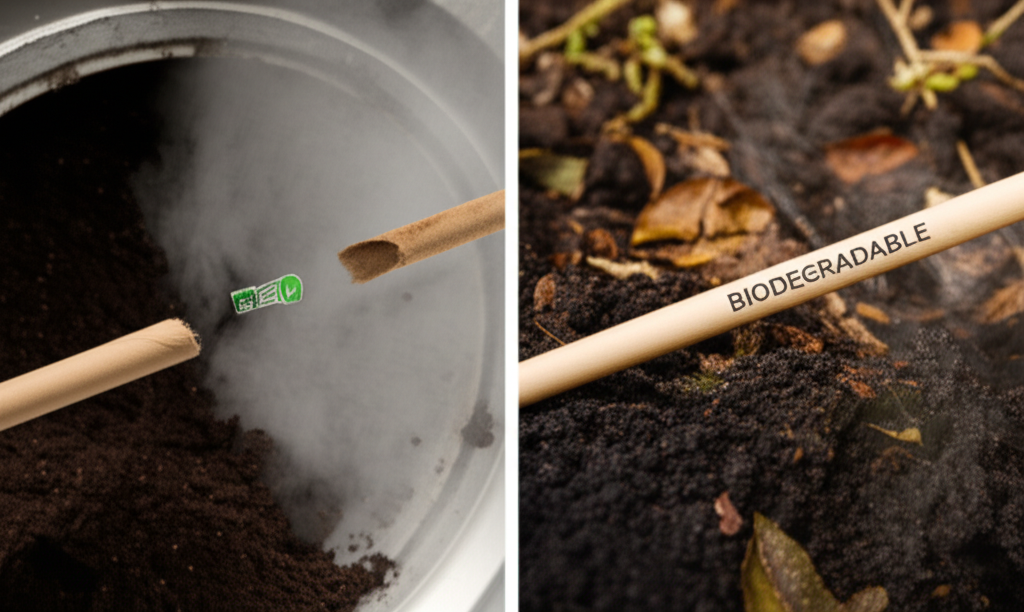
- Certifieringslogotyper: Produkter måste tydligt visa varumärkesskyddade certifieringslogotyper som BPI, Seedling eller OK Compost. Dessa logotyper ger omedelbar visuell bekräftelse på efterlevnad till konsumenter, kompostörer och tillsynsmyndigheter.
- Förbjudna villkor: Undvik vilseledande eller ogrundade termer som "biologiskt nedbrytbar" eller "nedbrytbar" om de inte stöds av fullständig, specifik certifiering för det påståendet. Lagar slår allt mer ner på vaga "miljövänliga" påståenden utan robust vetenskapligt stöd.
- Konsumenttydlighet: Etiketterna måste tydligt vägleda korrekt avfallshantering och anger om produkten är lämplig för industri- eller hemkompostering. Denna tydlighet är avgörande, eftersom felaktig identifiering ofta leder till att komposterbara föremål sållas bort och skickas till deponier, vilket förnekar deras miljöfördelar.
- Regionala detaljer: Från och med 2024 kommer Washington och Colorado, till exempel, att kräva att bioplast och bioplastfodrade föremål uppfyller ASTM-standarder, visar en tredjepartscertifieringslogotyp, har ordet "Compostable" och använder specifik färg (endast grön i Colorado; grön eller brun i Washington) eller symboler för att skilja dem åt. För en omfattande guide om korrekt kassering och identifiering av BPI-certifierade produkter, läs vår detaljerade handbok: Vad gör jag med BPI Compostable?.
Regional Single-Use Plastic Bans & Their Impact on Compostable Straws
Distributörer måste spåra nyanserna av regionala plastförbud för engångsbruk, eftersom vissa sträcker sig till "komposterbara" versioner om den lokala infrastrukturen är otillräcklig.
- Kanadas federala förbud: Även om det generellt förbjuds de flesta engångsstrån av plast, innehåller Kanadas SOR/2022-138 undantag för flexibla plaststrån för att säkerställa tillgänglighet för personer med funktionshinder eller medicinska behov. Dessa kan importeras och säljas i paket med 20 eller fler på begäran, men vanligtvis inte för offentlig visning.
- Nya Zeelands restriktioner: Från och med juli 2023 är den allmänna försäljningen av engångsstrån av plast (inklusive komposterbar och biologiskt nedbrytbar plast) begränsad.
- Amerikansk delstatsnivå: Kaliforniens AB-1884 begränsar distribution av halm av plast, medan New York City tillåter komposterbart papper/BPI-certifierat PLA på begäran. District of Columbia har ett direkt förbud mot engångsstrån av plast.
Minifallstudie – British Columbia:I juli 2024 utökade British Columbia sitt förbud till "svår att återvinna" komposterbar plast om den lokala komposteringsinfrastrukturen är otillräcklig. Detta belyser en kritisk trend: även certifierade komposterbara produkter kan drabbas av restriktioner om regionen saknar nödvändiga bearbetningsanläggningar. Denna avvikelse understryker behovet för distributörer att utföra granulära marknadsundersökningar utöver federala regler. Montreals engångsförordning för plaster begränsar också komposterbar plast i vissa sammanhang.
System för utökat producentansvar (EPR) för importerade förpackningar
System för utökat producentansvar (EPR) blir allt vanligare globalt och flyttar den ekonomiska och operativa bördan av att hantera uttjänta förpackningar från kommuner till producenter och, framför allt, importörer.
- Producentansvar: I EU och Kanada anses importörer ofta vara "producenter" och är därför ansvariga för insamling, sortering och återvinning eller kompostering av de förpackningar som de introducerar på marknaden.
- Rapporteringsmandat: EPR kräver registrering hos nationella system (t.ex. LUCID i Tyskland, CITEO i Frankrike) och regelbunden rapportering om kvantitet, typ och sammansättning av förpackningsmaterial som importeras.
- Ekonomiska bidrag: Distributörer måste vanligtvis bidra ekonomiskt för att täcka kostnaderna för avfallshanteringsinfrastruktur och drift.
Bristande efterlevnad av EPR-system kan resultera i betydande tullförseningar, betydande böter och juridiska utmaningar, vilket gör proaktiv registrering och rapportering avgörande.
Noggrann märkning, förståelse för regionala förbud och efterlevnad av EPR-system är avgörande för import av komposterbara sugrör.
Strategic Procurement & Supply Chain Due Diligence for Importing Compostable Straws
Att uppnå efterlevnad är inte en engångskontroll utan ett fortlöpande engagemang för robust försörjningskedja. Detta börjar med noggrann granskning av leverantörer och en djup förståelse för materialalternativ.
Granskning av leverantörer för certifierade komposterbara sugrör
Kvaliteten och efterlevnaden av dina importerade komposterbara strån är direkt kopplade till din leverantörs noggrannhet.
- Certifieringsverifiering: Kräv alltid giltiga och aktuella certifikat för komposterbarhet (t.ex. BPI, TÜV AUSTRIA, DIN CERTCO), livsmedelskontaktsäkerhet (FDA, LFGB) och kemikalierestriktioner (PFAS-fri, BPA-fri, PLA-fri om tillämpligt). Acceptera inte bara anspråk; be om de officiella dokumenten och verifiera dem med det attesterande organet.
- Materialgranskning: Verifiera den äkta materialsammansättningen. Se till att alla komponenter, inklusive bläck, lim och eventuella beläggningar, uppfyller de nödvändiga komposterbarhets- och livsmedelssäkerhetsnormerna. Vissa pappersstrån kan till exempel ha beläggningar som hindrar kompostering eller innehåller PFAS. Lim utgör vanligtvis mindre än 5 % av den totala torkade vikten för att halmen ska anses komposterbart.
- Tillverkningsmetoder: Fråga om leverantörens miljöavtryck under produktionen, inklusive energiförbrukning, vattenanvändning och avfallshantering. Etiskt anskaffning av råvaror bör också vara ett viktigt övervägande.
- Track Record: Leverantörer med en historia av samarbete med Fortune 500-företag visar ofta mer robusta efterlevnadsramverk och kvalitetskontrollprocesser, vilket minskar din risk.
Material Options & Performance Considerations (ROI Potential)
Valet av material för komposterbara sugrör innebär en avvägning mellan prestanda, kostnad och specifika miljöegenskaper.
| Särdrag | B2B operationell påverkan | Efterlevnadsanteckning | ROI -potential |
|---|---|---|---|
| Pappersstrån | Benägen till fuktighet, potentiell smakpåverkan. | Efterlevnaden varierar; potentiellt PFAS-problem. | Lägre initial kostnad, hög volym inköp. |
| PLA sugrör | Plastliknande känsla, bra användarupplevelse. | Kräver industriell kompostering (ASTM/EN). | Mellankostnad, bred acceptans, förbättrad tillfredsställelse. |
| Sockerrörsbagasse sugrör | Återanvänder jordbruksavfall, hållbart. | Ofta hemmakomposterbar (3-6 månader); PLA-fria alternativ. | Higher cost, enhanced brand reputation & sustainability. |
| PHA sugrör | Utmärkt hållbarhet, premiumkänsla. | Anses som "guldstandard" för B2B hållbarhet. | Högsta kostnad, marknadsledarskap, framtidssäker. |

- Nya material: Innovation inom komposterbara material går snabbt. Nya framsteg, som sugrör av lignin och citronsyra (utvecklade i februari 2023), erbjuder förbättrad hydrostabilitet och styrka, och överträffar traditionella sugrör av papper och till och med plast i vissa funktioner. Stärkelsebaserade sugrör (vete, ris, majs) kan erbjuda förbättrad mekanisk styrka och vattenbeständighet.
- Marknadsefterfrågan förskjutning: Den totala efterfrågan på växtbaserade alternativ till engångsplaster har ökat med 40 % från år till år (Eco-Business, 2023), tillsammans med en liknande ökning i efterfrågan på återanvändbara sugrör av rostfritt stål och glas i kommersiella sektorer. Detta belyser en tydlig marknadssignal för hållbara alternativ. För en djupare förståelse för hur antagandet av dessa lösningar kan ge en strategisk fördel för företag som hotell och flygbolag, utforska vår artikel om strategiska fördelar med individuellt förpackade komposterbara sugrör.
Säkerställa kvalitetskontroll och hållbarhet (konsumentupplevelse)
Konsumentupplevelsen är fortfarande viktigast, även för produkter som uppfyller kraven. Ett komposterbart sugrör som misslyckas under användning kan undergräva varumärkesuppfattning och kundnöjdhet.
- Hållbarhetstestning: Genomför interna tester för kritiska prestandaindikatorer som fuktighet, kollapsmotstånd och smakneutralitet. Till exempel kan traditionella pappersstrån absorbera upp till 30 % vatten på bara 10 minuter, vilket leder till användarens frustration.
- Key Performance Indicators: Prioritera säkerhet, fuktbeständighet och smakneutralitet. Forskning visar att konsumenter ogillar blöta sugrör, vilket direkt påverkar deras uppfattning om drycken och i förlängningen ditt varumärke.
- Inverkan på verksamheten: Kvalitetskontroll påverkar direkt kundnöjdheten, återkommande affärer och övergripande produktuppfattning. Att investera i hållbara, högpresterande komposterbara sugrör är en investering i ditt varumärkes rykte.
Noggrann leverantörskontroll och förståelse av materialprestanda är avgörande för framgångsrik, komposterbar halmanskaffning.
Affärsfallet för kompatibel import av komposterbara sugrör
För inköpschefer, verksamhetschefer, hållbarhetsansvariga och chefer för leveranskedjan överskrider beslutet att importera komposterbara sugrör som uppfyller kraven enbart regelefterlevnad. Det är ett strategiskt affärsbehov som erbjuder kvantifierbara fördelar.
- Höj varumärkets rykte: Att anpassa sig till konsumenternas växande preferens för hållbara varumärken (över 70 % föredrar dem) förbättrar marknadsuppfattningen, visar företagens sociala ansvar och bygger kundlojalitet. Detta leder till ökat varumärkesvärde och en starkare konkurrensposition.
- Framtidssäkrad verksamhet: Proaktiv efterlevnad är den ultimata riskreduceringsstrategin. Genom att ligga steget före nya regelverk kan distributörer undvika kostsamma böter, förhindra tullförseningar som stör leveranskedjor och kringgå potentiella begränsningar av marknadstillträde. Denna framsynthet säkerställer kontinuitet i verksamheten och minskar oförutsedda utgifter.
- Förbättra kundupplevelsen: Att tillhandahålla överlägsna, kompatibla produkter som uppfyller både prestandaförväntningar (t.ex. hållbarhet, smakneutralitet) och miljömål bidrar direkt till kundnöjdhet. Nöjda kunder betyder återkommande affärer och positiv mun till mun, vilket främjar organisk tillväxt.
- Drive Sustainability & Capture Market Share: Att bidra till den cirkulära ekonomin genom att köpa verkligt komposterbara produkter minskar avfallet avsevärt och sänker koldioxidavtrycket i hela din leverantörskedja. Detta engagemang resonerar med miljömedvetna företag och slutkonsumenter, vilket skapar en övertygande skillnad på en trång marknad. Eftersom den globala marknaden för rakt halm fortsätter sin snabba förändring, positionerar din verksamhet genom att vara en pålitlig leverantör av komposterbara alternativ av hög kvalitet som uppfyller kraven för att ta en större andel av denna växande, värderingsdrivna marknad.
Att importera komposterbara sugrör som uppfyller kraven höjer varumärkets rykte, framtidssäkrar verksamheten, förbättrar kundupplevelsen och ökar marknadsandelar.
Slutsats: Mästaren importerar komposterbara sugrör för hållbar framgång
Att navigera i de invecklade och snabbt föränderliga reglerna för import av komposterbara sugrör är inte längre valfritt; det är ett strategiskt krav för alla framtidstänkande B2B-distributörer. Eran av vaga "miljövänliga" påståenden är över, ersatt av ett krav på rigorös, verifierbar efterlevnad. Genom att på djupet förstå globala standarder som ASTM D6400 och EN 13432, säkra viktiga tredjepartscertifieringar som BPI och TÜV AUSTRIA, noggrant följa livsmedelskontaktmaterial och PFAS-restriktioner och utföra rigorös due diligence i försörjningskedjan, kan distributörer omvandla regulatoriska utmaningar till betydande marknadsfördelar.
Detta noggranna tillvägagångssätt skyddar inte bara ditt företag från efterlevnadsrisker, ekonomiska påföljder och störningar i leveranskedjan utan positionerar dig också som en pålitlig ledare inom hållbar upphandling. Genom att konsekvent leverera högkvalitativa, genuint komposterbara produkter som uppfyller både regulatoriska krav och konsumenternas förväntningar, kommer du att höja ditt varumärke, framtidssäkra din verksamhet och säkra din marknadsposition i en allt mer miljömedveten global ekonomi.
Lyft din försörjningskedja och säkra ditt marknadsledarskap:Begär ett komposterbart halmprovpaket som är klart och klart idagför att säkerställa att dina produkter uppfyller globala standarder och fångar den växande efterfrågan på certifierade hållbara lösningar.
Att bemästra efterlevnaden av komposterbart halmimport är ett strategiskt krav för hållbar affärsframgång och marknadsledarskap.
Vanliga frågor (FAQ)
Compostable straws break down completely into non-toxic components under specific industrial conditions, leaving no harmful residues.
Biodegradable straws simply break down over an undefined time, often leaving microplastics, making ‘compostable’ the only truly sustainable choice for hospitality.
Ensure suppliers provide documentation proving compliance with FDA Title 21 CFR Parts 174-179, confirming materials are safe and do not leach harmful substances.
Many compliant straws are explicitly marketed as ‘US FDA Approved.’
PFAS are ‘forever chemicals’ used for water/grease resistance, linked to health concerns.
Many states and certifications (like BPI) now restrict them.
Prioritizing PFAS-free straws mitigates regulatory and reputational risks for your hospitality clients.
Always demand valid third-party certifications like BPI (ASTM D6400) for North America or TÜV AUSTRIA/DIN CERTCO (EN13432) for Europe.
Verify these certificates directly with the certifying body to ensure authenticity.
Some regional bans (e.g., Canada, New Zealand, specific US states) restrict even compostable straws if local infrastructure is inadequate or for specific accessibility reasons.
Hotels and airlines must research local regulations beyond federal laws.