In an era defined by heightened environmental consciousness and evolving consumer expectations, businesses globally are under immense pressure to demonstrate genuine commitment to sustainability. The widespread shift away from single-use plastic straws towards what are marketed as “eco-friendly” alternatives is a prime example of this imperative. However, for procurement managers, operations directors, sustainability officers, and supply chain executives, a critical oversight often goes unnoticed: not all green solutions are created equal, and some pose hidden health and environmental risks that could severely impact brand reputation, complicate regulatory compliance, and erode customer trust. This article serves as a comprehensive guide for B2B decision-makers, offering a deep dive into discerning genuinely non-toxic straw materials to safeguard your business and its stakeholders.
The journey of the drinking straw, from ancient Sumerian gold implements designed to bypass beer sediment around 3000 BCE to the 16th-century South Americanglödlampa, highlights a long history of functional innovation. The modern disposable straw, however, gained prominence in the 20th century, culminating in a plastic proliferation that contributed significantly to global waste. Estimates suggest up to 8.3 billion plastic straws contaminate the world’s beaches, with millions washing up on America’s coastlines alone. These petroleum-based plastics can take centuries to degrade, breaking down into microplastics now found in human blood, placentas, and even breast milk.
Ändå, när företag gick snabbt för att ersätta plast, har en ny, lömsk utmaning dykt upp: kemisk kontaminering i förment säkra alternativ. Nyligen genomförda studier har lyft fram den genomgripande frågan om per- och polyfluoralkylsubstanser (PFAS), ofta kallade "för evigt kemikalier", i populära engångsalternativ. Dessa syntetiska kemikalier är långlivade i miljön och har kopplats till allvarliga hälsoproblem, inklusive sköldkörtelsjukdom, ökat kolesterol, leverskador och vissa cancerformer. Alarmerande forskning, inklusive en belgisk studie, avslöjade PFAS i 90 % av testade pappersstrån och 80 % av bambustrån, främst på grund av deras användning i vattenbeständiga beläggningar. Även glasstrån visade PFAS i 40 % av proverna, om än vid lägre frekvenser. Denna förekomst undergräver de mycket "miljövänliga" påståendena som dessa produkter står på, och utgör en betydande blind fläck för företag som är engagerade i ansvarsfulla inköp.
For businesses, this isn’t merely an environmental footnote; it’s a high-stakes operational and commercial challenge. Offering products laden with undisclosed chemicals can lead to severe reputational damage, consumer backlash, and potential legal liabilities. In Europe, the EU Single-Use Plastics Directive has driven much of the straw alternative market, yet the focus on materialorigin(e.g., plant-based) has sometimes overshadowed thechemical compositionof the finished product. US companies face similar scrutiny, with consumers increasingly demanding transparency beyond surface-level greenwashing. Navigating this evolving regulatory landscape and meeting heightened consumer expectations for chemical safety is paramount. Failure to do so can result in costly product recalls, erosion of trust, and a public perception of insincerity regarding sustainability efforts.
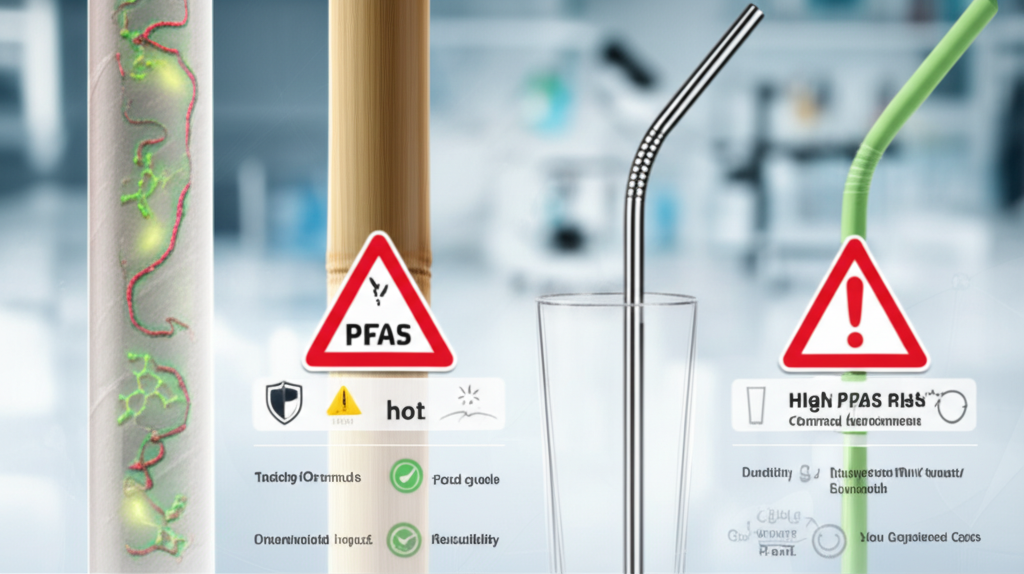
Evaluating your straw options requires a rigorous, B2B-centric approach, moving beyond marketing claims to scrutinize material science and lifecycle impacts.
Stainless Steel: The Durable & Proven Non-Toxic Choice
When considering the pinnacle of safety and reusability,stainless steel strawsconsistently emerge as a top contender. They are generally considered one of the safest and least toxic options, with the Belgian study finding no detectable PFAS in stainless steel straws – a unique distinction among the materials tested. Food-grade stainless steel is naturally non-toxic, rust-proof, and chemically inert, meaning it won’t leach chemicals or microplastics into drinks, offering unparalleled peace of mind regarding compliance and customer well-being.
From an operational perspective, stainless steel straws offer exceptional durability and a long lifespan, reducing the frequency of replacement and contributing to a lower overall environmental footprint. They are easy to clean, often dishwasher safe, and recyclable at the end of their very long life. However, considerations for commercial use include their thermal conductivity, making them unsuitable for hot beverages where they can become dangerously hot. Some users may also perceive a metallic taste, and their hardness requires caution for young children or individuals with certain disabilities, as they could pose a dental injury risk.
Glass: Elegance Meets Inertness (with a Fragile Caveat)
Glass straws, vanligtvis tillverkad av slitstarkt borosilikatglas, utgör ett elegant och till stor del giftfritt återanvändbart alternativ. Deras säkerhetsprofil är hög: de är icke-porösa, kemiskt inerta och läcker inte ut gifter eller mikroplaster till drycker. Medan vissa studier upptäckte PFAS i en del av glasstrån, var frekvensen lägre än i papper eller bambu, vilket tyder på potentiell förorening av råmaterial snarare än en inneboende materialrisk. Deras transparens är en betydande fördel i hotellmiljöer, vilket möjliggör enkel visuell inspektion för att säkerställa renlighet – en nyckelfaktor för att upprätthålla höga hygienstandarder. De är också lämpliga för både varma och kalla drycker, och erbjuder mångsidighet.
The primary limitation for glass straws in high-volume B2B environments is their fragility. Breakage risk, especially in bustling cafes, restaurants, or events, can increase replacement costs and operational disruption. While durable, they are heavier than plastic or silicone, requiring more careful handling.
Food-Grade Silicone: Flexible Safety for Specialized Needs
For businesses catering to diverse customer needs,food-grade silicone strawserbjuda en flexibel och mjuk lösning. Dessa är i allmänhet BPA-fria, ftalatfria och utgör ingen mikroplastrisk när de verkligen är livsmedelsklassade. Deras smidighet gör dem idealiska för barn, personer med funktionsnedsättning som kräver en mjukare munkänsla och för applikationer på språng där stelhet kan vara ett problem. De kan användas med både varma och kalla drycker och är vanligtvis diskmaskinssäkra.
However, silicone is a synthetic material and not biodegradable or easily recyclable, presenting a different environmental challenge compared to truly natural or metal options. There are also concerns that lower-quality silicone might leach chemicals or attract dust, necessitating careful sourcing. Their porous surface can also make them more challenging to clean thoroughly than stainless steel or glass, requiring diligent maintenance to prevent bacterial buildup.

The Disposable Dilemma: A Critical Look at Plant-Based & Paper Straws
The market for single-use “eco-friendly” straws is vast, but it’s here that the “green illusion” is most pronounced.
- Pappersstrån: Despite their widespread adoption as a plastic alternative, paper straws carry a high risk of PFAS contamination. As mentioned, 90% of tested brands contain these “forever chemicals,” often integrated into water-resistant coatings. Beyond the chemical concerns, their practical performance often falls short: they tend to break down or get soggy quickly, especially in hot or alcoholic beverages, and can impart an unpleasant papery taste. Many “100% recyclable” claims are misleading, as PFAS coatings can hinder true recyclability. For businesses seeking truly non-toxic biodegradable options, paper straws often miss the mark, as detailed in our guide on best biodegradable straws not paper.
- Bambu sugrör: Promoted for their natural origin, bamboo straws also face significant PFAS contamination, with 80% of tested samples showing these chemicals. Furthermore, their natural, often irregular shape and non-transparency make cleaning difficult, raising hygiene concerns and potential for mold growth if not dried properly. They can also absorb flavors, soften over time, and have a shorter lifespan than other reusable options.
- Other Biodegradable Alternatives (Agave, Wheat, Rice, Sugarcane, Pasta): This diverse category of straws, often made from agricultural by-products, represents innovation in biodegradable solutions. They are typically lightweight, sustainable, and plastic-free, with options like sugarcane straws noted for retaining firmness. Rice straws can even incorporate natural food dyes, and pasta straws offer an edible novelty. However, like bamboo, the potential for PFAS contamination exists if raw materials are sourced from polluted environments or treated with certain coatings. Performance issues like mushiness (especially in pasta straws for hot drinks) or flavor absorption can impact user experience. Crucially, “biodegradable” often means they require specific industrial composting facilities, which are not universally available, leading many to end up in landfills. Allergens (e.g., gluten in pasta straws) also need to be considered. For a deeper dive into the broader market, explore our insights on best biodegradable straws B2B 2025.

Strategic Procurement: Making Informed Decisions for Your Brand
Choosing the right straw material is a strategic decision that aligns with your brand’s values, operational realities, and commitment to genuine sustainability. Here’s a critical comparison framework for B2B straw procurement:
| Särdrag | Rostfritt stål | Glas | Food-Grade Silicone | Paper/Bamboo/Plant-Based Disposable |
|---|---|---|---|---|
| Toxicity/Chemicals | PFAS-Free (verified), Chemically inert, Food-grade safe | Mycket låg PFAS-risk, kemiskt inert, icke-porös | BPA/Ftalatfri, ingen mikroplast (livsmedelsgodkänd) | Hög PFAS-risk (papper: 90 %, bambu: 80 %), potential för andra okända beläggningar |
| Hållbarhet/Återanvändbarhet | Extremt hållbar, flerårig livslängd, återanvändbar | Hållbar men ömtålig, återanvändbar | Flexibel, hållbar, flerårig livslängd, återanvändbar | Engångsbruk, bryts ofta ned snabbt, kort livslängd |
| Miljöpåverkan | Högt fotavtryck, mycket låg långsiktig effekt (återanvändbar, återvinningsbar) | Måttligt fotavtryck, mycket låg långsiktig påverkan (återanvändbar, viss återvinningsbarhet) | Syntet (inte biologiskt nedbrytbart), kräver särskilda återvinningsvägar | Biologiskt nedbrytbart (men PFAS hämmar sann kompostering/återvinning), hamnar ofta på deponi |
| Användarupplevelse | Neutral smak, kan bli varm, robust, kräver borste för rengöring | Neutral smak, estetiskt tilltalande, transparent, kräver noggrann hantering | Mjuk munkänsla, säker för alla åldrar, lätt att rengöra (men kolla efter rester) | Ofta fuktig, pappersaktig/jordig smak, kan gå sönder, hygienproblem för naturmaterial |
| Driftskostnader | Högre i förväg, mycket låg på lång sikt | Måttlig i förväg, högre utbyte på grund av brott, låg lång sikt | Måttlig i förväg, mycket låg på lång sikt | Låg i förväg, hög återkommande på grund av potentiella kostnader för avfallshantering för engångsbruk |
| Certifieringar | FDA Food-Grade, PFAS-fri verifiering | FDA Food-Grade, PFAS-fri verifiering | FDA livsmedelsklassad, BPA/ftalatfri | ASTM Composting Standards (om tillämpligt), PFAS-fri certifiering avgörande |
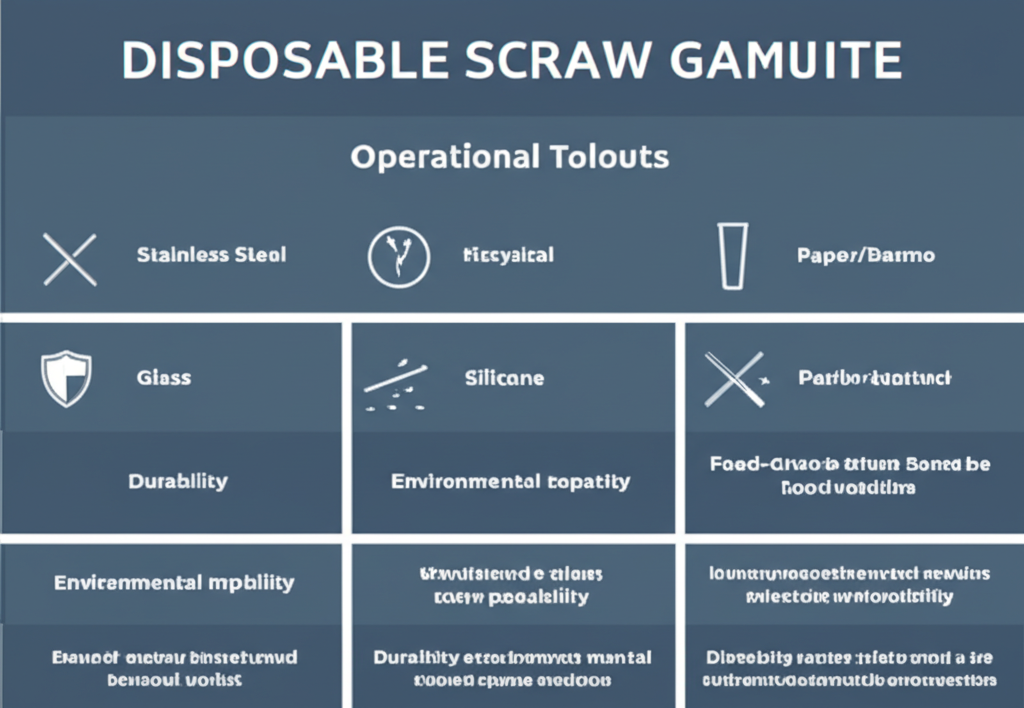
The global eco-friendly straws market is projected to reach USD 17.46 billion by 2030, reflecting a powerful market shift towards sustainable alternatives. This trajectory underscores the need for businesses to future-proof their supply chains with truly non-toxic and environmentally sound solutions. Future developments are heavily focused on genuinely PFAS-free alternatives, with research prioritizing innovative materials and coatings that offer water and fat repellency without relying on these harmful chemicals. We’re seeing advancements in plant-based bioplastics that truly break down in diverse environments, not just industrial composting facilities. Novel materials like coffee ground straws and grass straws are emerging, pushing the boundaries of what’s possible in sustainable design.
För ditt företag innebär detta en nödvändighet för större insyn i leveranskedjan. Kräv tredjepartsverifiering för kemikaliesäkerhets- och miljöpåståenden. Till exempel, när man överväger växtbaserade alternativ, är att förstå nyanserna mellan material som PLA (Polylactic Acid) och nyare, mer genuint biologiskt nedbrytbara plastalternativ nyckeln för informerade B2B-beslut. Vår detaljerade analys påbästa biologiskt nedbrytbara plaststrån b2bger ytterligare vägledning. Att anpassa sig till konsumenternas förväntningar innebär att möta kraven på autentisk hållbarhet och hälsomedvetna val, och gå bortom ytligt grönt varumärke.
I slutändan kommer ditt engagemang för äkta hållbarhet och hälsa att definiera ditt varumärkes ledarskap på en konkurrensutsatt marknad. Att skydda ditt varumärkes rykte och säkerställa kundsäkerhet samtidigt som du verkligen bidrar till miljövård är inte längre valfria utan grundläggande affärsbehov. Genomför noggrann due diligence utöver tilltalande marknadsföringsanspråk, prioritera material med beprövade giftfria profiler som rostfritt stål och noggrant verifierat glas. För alla engångsbehov, kräv omfattande kemiska tester och certifieringar, särskilt för PFAS-fri status. Utforska långsiktiga partnerskap med transparenta leverantörer som är engagerade i hållbar innovation och utnyttjar deras expertis för att navigera i detta komplexa landskap. Genom att välja halmlösningar som inte bara uppfyller miljömålen utan också upprätthåller de högsta standarderna för säkerhet och integritet, kan ditt företag stärka sitt engagemang för en hälsosammare framtid, mildra regulatoriska risker och ta en större andel av den växande medvetna konsumentmarknaden. Detta proaktiva tillvägagångssätt kommer inte bara att undvika potentiella ekonomiska påföljder och varumärkeskriser utan också höja ditt varumärkesvärde avsevärt, attrahera och behålla kunder som värdesätter genuint företagsansvar.
Vanliga frågor
PFAS (Per- and Polyfluoroalkyl Substances), often called “forever chemicals,” are synthetic compounds used for water-resistant coatings. They persist in the environment and have been linked to health issues such as thyroid disease, liver damage, and certain cancers. Studies report high detection rates in ostensibly eco-friendly options—paper (~90%) and bamboo (~80%) straws—challenging “green” claims and raising concerns about potential leaching into beverages.
For B2B applications, food-grade stainless steel and borosilicate glass are consistently among the safest due to chemical inertness and verified PFAS-free status (for stainless steel). Food-grade silicone is also a non-leaching option—especially useful where flexibility or softer mouthfeel is required. These materials typically do not shed microplastics or leach harmful chemicals into drinks.
The labels “biodegradable” and “compostable” can be misleading. Many plant-based disposables—especially paper and bamboo—have been found to contain PFAS, undermining true biodegradability and recyclability. “Compostable” products may require industrial facilities that aren’t widely available. Without careful sourcing and third-party PFAS-free verification, many of these items still end up in landfills or contribute to chemical pollution.
Go beyond marketing claims. Prioritize materials with proven non-toxic profiles (e.g., stainless steel, verified glass). For disposables, require comprehensive chemical testing and certifications—explicitly PFAS-free. Work with transparent suppliers, review lifecycle assessments, and align procurement with evolving regulations (e.g., EU SUPD) and consumer expectations for authentic sustainability.
Förvänta dig verkligen PFAS-fria beläggningar, förbättrad växtbaserad bioplast som bryts ner i olika miljöer, och nya råvaror (t.ex. kaffesump, gräs). Sektorn går mot mer hållbara återanvändbara produkter, cirkulära affärsmodeller och djupare insyn i leveranskedjan för att möta den ökande efterfrågan på säkra, verifierade, och hållbara produkter.