Çevre Dostu mu yoksa Yeşil Yıkanmış mı? B2B Straw Başucu Kitabı
İşletmeniz gerçekten çevre dostu mu, yoksa sadece yeşil aklama tuzağına mı düşüyorsunuz? "Biyolojik olarak parçalanabilen" pipetlerin dünyası göründüğünden daha karmaşıktır ve yanlış seçim yapmak size anlık bir karar kaybından daha pahalıya mal olabilir. Tek kullanımlık plastik kirliliği, konaklamadan perakendeye kadar her sektörü sürdürülebilir alternatifler aramaya iterek küresel bir krize dönüştü. Ancak bu acil değişim talebi ne yazık ki yanıltıcı iddialarla ve gizli çevresel tuzaklarla dolu, kafa karıştırıcı bir manzarayı doğurdu. İşletmeler kendilerini "sonsuza kadar kimyasallar", yerine getirilmeyen ayrışma vaatleri ve deşifre edilmesi zor olabilecek bir dizi sertifikayla dolu bir mayın tarlasında gezinirken buluyor.
B2B şirketleri için bu yalnızca soyut bir çevre tartışması değil. Riskler son derece yüksektir: Önemli olan marka itibarınızı korumak, mevzuata sıkı uyumluluk sağlamak ve sadece sahte bir bağlılık değil, gerçek bir sürdürülebilirlik bekleyen tüketicilerin gelişen, giderek daha fazla fark edilen taleplerini karşılamaktır. Görünüşte küçük olan saman seçimi, operasyonel bütünlüğünüze ve pazar algınıza büyük bir gölge düşürebilir.
Hasır Malzemelerin Değişen Manzarası: Kağıdın ve Plastiğin Ötesinde
Plastik içermeyen çözümlere yönelik arayış, her biri kendi vaatlerine ve karmaşıklıklara sahip olan çok çeşitli alternatif saman malzemelerinin yolunu açtı. Geçmişin dayanıksız kağıdının veya dayanıklı plastiğinin ötesine geçen günümüz pazarı, bitki bazlı biyoplastiklerden doğal elyaflara kadar çeşitli yenilikler sunuyor. Bu materyalleri anlamak, bilinçli, uyumlu ve gerçekten sürdürülebilir bir seçim yapmanın ilk adımıdır.
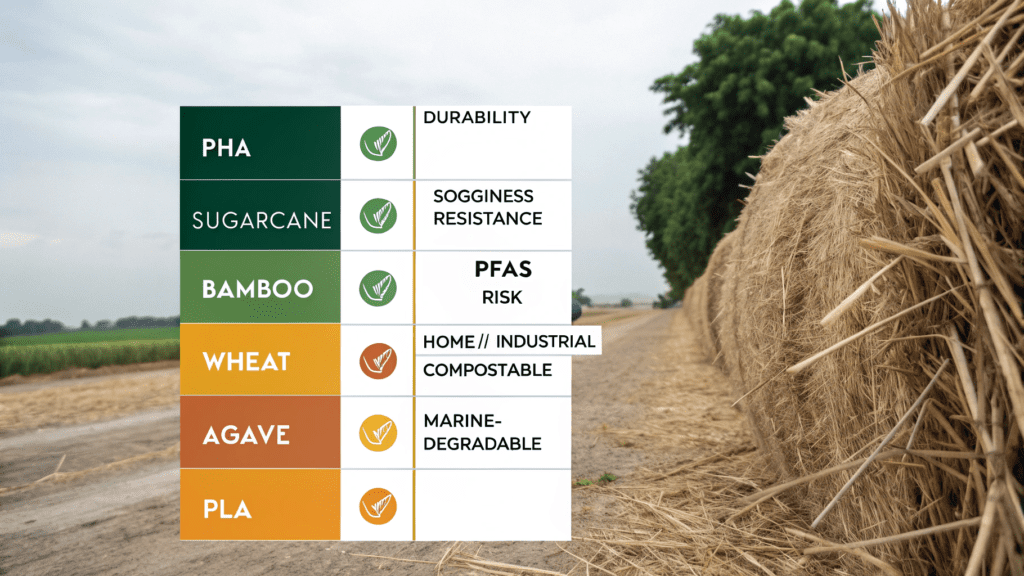
- Polilaktik Asit (PLA): Often derived from cornstarch or sugarcane, PLA is a bioplastic that mimics the feel and appearance of traditional plastic. While it’s marketed as biodegradable, PLA typically requires specific high temperatures and microbial activity found only in industrial composting facilities to decompose effectively. In a landfill, it can take significantly longer and may even contaminate traditional recycling streams if not correctly identified.
- Şeker kamışı (Bagasse): Made from the fibrous residue left after sugar extraction, bagasse straws are celebrated for their sturdiness, durability, and natural resistance to sogginess. Many varieties are home compostable, offering a robust, genuinely eco-friendly alternative to fragile paper or persistent plastic.
- Bambu: Hızlı büyüyen, yenilenebilir bir kaynak olan bambu, doğal olarak estetik, yeniden kullanılabilir ve dayanıklı saman seçenekleri sunar. Doğal özellikleri onu çekici bir alternatif haline getiriyor ve çoğu zaman minimum düzeyde işlem gerektiriyor.
- Buğday: Bu kamışlar, tarımın bir yan ürünü olan buğday bitkilerinin saplarından üretiliyor. Mevcut atık akışlarını kullanarak uygun fiyatlı ve sağlam tek kullanımlık bir seçenek sunuyorlar.
- Agav: Agav bitkisinin atık liflerinden elde edilen bu pipetler, dayanıklılıkları ve biyolojik olarak parçalanabilirlikleriyle bilinir ve başka bir sağlam, bitki bazlı seçenek sunar.
- Polihidroksialkanoatlar (PHA): This promising bioplastic is produced through the fermentation of plant-based oils. PHA straws are durable, highly resistant to sogginess, and uniquely capable of degrading in industrial and home composting environments, as well as in marine settings, offering a truly versatile solution.
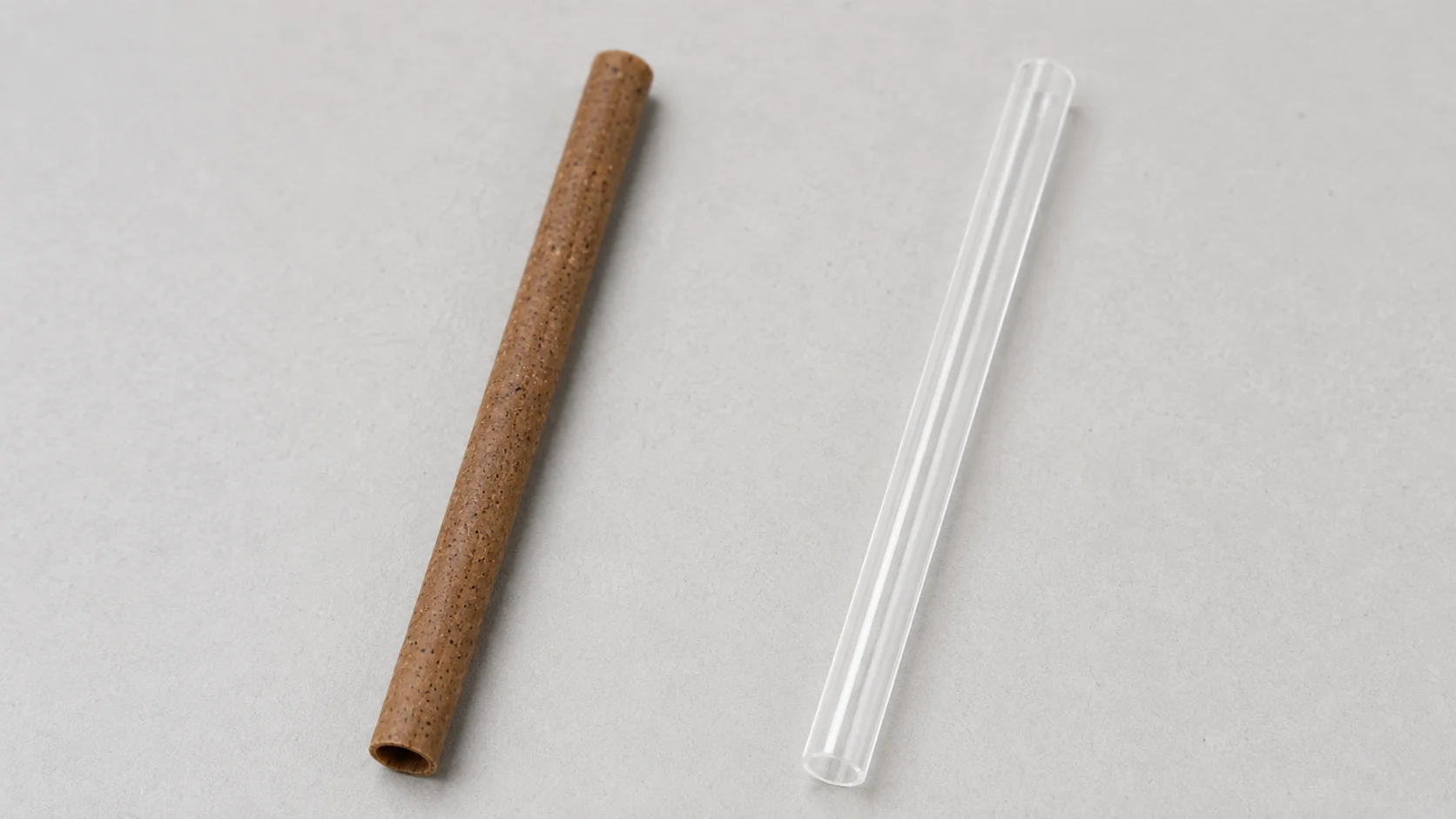
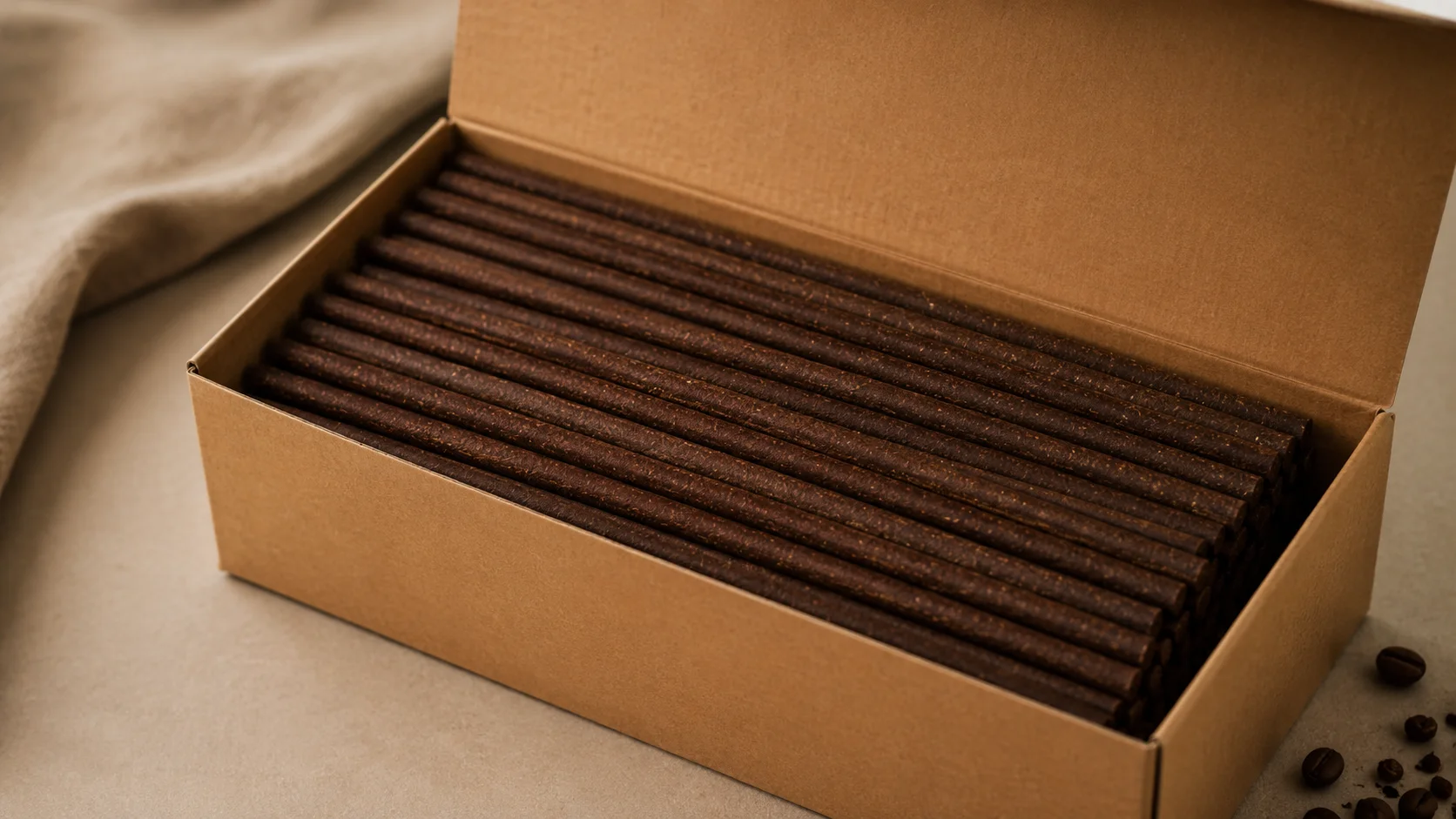
- Coffee Grounds, Rice, Grass, Seaweed: Innovative approaches are also leveraging other agricultural byproducts and natural resources, such as coffee grounds, rice plant stems, various grasses, and seaweed, to create unique, biodegradable straw solutions, each bringing distinct benefits in terms of resource utilization and decomposition properties.
"Biyolojik olarak parçalanabilir" teriminin kendisinin genel bir garanti olmadığını anlamak çok önemlidir. Bu, bir malzemenin belirli çevresel koşullara maruz kaldığında zamanla daha basit bileşiklere parçalanacağı anlamına gelir. Bununla birlikte, zaman dilimi aylardan yıllara kadar büyük ölçüde değişebilir ve gerekli koşullar (örn. nem, ısı, belirli mikroorganizmalar) tipik bir çöp depolama sahasında genellikle karşılanmaz. Burası, "kompostlanabilir"in daha kesin ve değerli bir terim haline geldiği yerdir; bu, bir ürünün, bir "ev kompostu" kutusunda veya bir "endüstriyel kompost" tesisinde belirli, kontrollü koşullar altında besin açısından zengin gübreye dönüşmek üzere tasarlandığını gösterir. "Denizde çözünebilir", tuzlu su ortamlarında güvenli bir şekilde parçalanmak üzere özel olarak tasarlanmış ve okyanuslardaki plastik kirliliği gibi kritik bir sorunu ele alan malzemeleri ifade eder.
Here’s a snapshot comparing common straw materials:
| Malzeme Türü | Primary Composition | Temel Avantajlar | Decomposition Requirements | Common Challenges |
|---|---|---|---|---|
| Geleneksel Plastik | Petroleum-based polymers | Cheap, durable, widely available | Hundreds of years in landfill | Microplastic pollution, finite resource, toxic additives |
| Kağıt | Odun hamuru | Widely available, perceived as eco-friendly | Biodegrades in ideal conditions | Can get soggy, potential PFAS, often not truly compostable |
| PLA (Biyoplastik) | Mısır nişastası, Şeker kamışı | Looks/feels like plastic, renewable source | Industrial composting facilities (high heat) | Slow degradation in landfill, recycling contamination |
| Şeker kamışı (Bagasse) | Bagasse (sugar residue) | Sturdy, water-resistant, home compostable | Home/Industrial composting | Availability, cost compared to plastic |
| Bambu | Natural bamboo stems | Reusable, natural aesthetic, fast-growing resource | Biodegradable, can be reused | Requires cleaning for reuse, natural variations |
| PHA (Biyoplastik) | Plant-based oils | Durable, resists sogginess, marine-degradable | Home/Industrial composting, marine | Currently higher cost, newer to market |
The Regulatory Maze: Staying Compliant is Non-Negotiable
The global push for sustainability is rapidly transforming the regulatory landscape, making compliance a critical, rather than optional, component of B2B operations. Ignorance of these evolving frameworks is no longer an excuse and can lead to severe penalties, reputational damage, and a loss of market trust.
AB Tek Kullanımlık Plastik Direktifi (SUPD): Oyun Değiştirici
3 Temmuz 2021'den itibaren geçerli olmak üzere, AB Tek Kullanımlık Plastik Direktifi (SUPD), tüm AB üye ülkelerinde tek kullanımlık plastik pipetlere yönelik kapsamlı bir yasak getirdi. Bu direktif özellikle katıdır ve "plastik" terimini, ana yapısal bileşen olarak görev yapan bir polimer içeren herhangi bir malzemeyi kapsayacak şekilde geniş anlamda tanımlar. Daha da önemlisi, bu yasak, kökenlerine bakılmaksızın plastik polimerler içeriyorsa "biyolojik bazlı", "biyolojik olarak parçalanabilir" veya "kompostlanabilir" olarak pazarlanan pipetleri bile kapsamaktadır (örneğin, mısırdan türetilen PLA bu tanım kapsamında hala plastik olarak kabul edilmektedir). Hedef açıktır: İşletmeleri gerçekten sürdürülebilir, plastik olmayan alternatiflere veya sağlam yeniden kullanılabilir seçeneklere yönlendirerek, özellikle deniz ortamlarındaki plastik kirliliğini ortadan kaldırmak. AB içinde faaliyet gösteren veya AB'ye ithalat yapan işletmeler, pipet çözümlerinin kesinlikle plastik içermediğinden emin olmalıdır. Bu direktif aynı zamanda daha sonra tartışılacak olan ve üreticileri atık yönetimi maliyetlerinden sorumlu tutan Genişletilmiş Üretici Sorumluluğu (EPR) planlarını da getirmektedir.
US State-Level Bans & Federal Directives: A Patchwork of Progress
While the US lacks a single federal ban on single-use plastics, a growing number of states are taking decisive action. States like California and New York have implemented stringent bans on single-use plastics, including straws, and are increasingly restricting the use of Per- and Polyfluoroalkyl Substances (PFAS) in food packaging. California’s ban on PFAS in paper, paperboard, or plant-based food packaging, utensils, and paper straws became effective in January 2023. New York enacted a similar ban on intentionally added PFAS in food packaging on December 31, 2022. Several other states, including Connecticut, Vermont, and Maine, have also enacted or are developing similar restrictions.
In a significant federal development,Executive Order 14208, issued in February 2025, directly impacts the US federal government’s policy on paper straw use. This order directs federal agencies to cease purchasing paper straws and to develop a national strategy to end their use, largely driven by mounting health concerns associated with PFAS contamination found in many paper products. This federal shift signals a broader move away from paper straws, even those considered “eco-friendly,” if they pose a PFAS risk.
The FTC Green Guides: Battling Greenwashing with Strict Scrutiny
The Federal Trade Commission’s (FTC) Green Guides serve as a critical framework for environmental marketing claims in the US, designed to prevent greenwashing and ensure truthfulness in advertising. For B2B companies, understanding these guides is paramount to avoid deceptive practices and potential legal ramifications.
- “Biodegradable” Claims: The FTC considers unqualified “biodegradable” claims to be deceptive unless the marketer can prove the product will completely break down and decompose into elements found in nature within a reasonably short period (typically one year) in the customary disposal settings where it is discarded. This is a crucial distinction, as most landfills are not designed for biodegradation, meaning a product that might biodegrade in a specialized facility but not in a landfill cannot be unqualifiedly labeled “biodegradable.”
- “Compostable” Claims: Similarly, “compostable” claims require clear and prominent qualification if the product necessitates a specialized industrial composting facility that is not widely available to a substantial majority of consumers or communities where the item is sold. Without these qualifications, consumers may mistakenly believe they can home compost or dispose of the item in a readily available industrial compost stream, when in reality, it may end up in a landfill, undermining the entire environmental premise. The FTC has actively pursued enforcement actions against companies making unsubstantiated “green” claims, imposing significant penalties. For reliable information on environmental marketing claims, businesses should consult the FTC Green Guides directly at ftc.gov.
Unmasking the Hidden Threat: PFAS in “Eco-Friendly” Straws
Just as businesses embraced paper and bamboo straws as seemingly safe eco-friendly alternatives, a new and alarming threat emerged: the widespread presence of Per- and Polyfluoroalkyl Substances (PFAS). These synthetic chemicals, often dubbed “forever chemicals” due to their extreme persistence in the environment and the human body, have been found in a significant majority of paper and bamboo straws tested in both European and US studies. Their presence challenges the very definition of “eco-friendly” for these products.
PFAS, suya dayanıklılık sağlamak ve ıslanmayı önlemek için genellikle kağıt ve bambu pipetlere kasıtlı olarak eklenir; bu da kağıt pipetlerin erken yinelemeleriyle ilgili yaygın bir şikayeti ele alır. Ancak bunların varlığı, ham maddelerdeki, geri dönüştürülmüş liflerdeki, işleme suyundaki ve hatta bitki bazlı malzemelerin yetiştirildiği topraktaki kirlenmeden kaynaklanarak kasıtsız da olabilir. İşletmeler için kritik endişe, bu PFAS'ların içeceklere sızabilmesi ve belirli kanserler, yüksek kolesterol, azalan bebek doğum oranları ve azalan bağışıklık tepkisi dahil olmak üzere ciddi sağlık sorunlarıyla bağlantılı kimyasallara insanların doğrudan maruz kalmasına yol açabilmesidir.
PFAS'a yönelik düzenleyici tepkiler küresel olarak yoğunlaşıyor. ABD Gıda ve İlaç İdaresi (FDA) şu anda gıdayla temas eden uygulamalarda bazı PFAS'lara izin verirken, çok sayıda eyalet gıda ambalajında PFAS'ı kısıtlamak veya yasaklamak için harekete geçti. AB'de PFOS, PFOA ve PFHxS gibi belirli PFAS bileşikleri yıllardır kısıtlanmıştır ve tüm PFAS'ları kısıtlamak için Ocak 2023'te Avrupa Kimyasallar Ajansı'na (ECHA) sunulan kapsamlı bir teklif sunulmuştur. Artan bu düzenleyici baskı, artan tüketici farkındalığıyla birleştiğinde, PFAS içermeyen pipet çözümleri tedarik etmeyi sadece etik bir seçim değil, aynı zamanda gelecekteki yükümlülüklerden kaçınmak ve marka güvenini korumak için stratejik bir zorunluluk haline getiriyor.
Sertifikasyon Standartlarının Kritik Rolü
PFAS gibi belirsiz iddialar ve gizli tehlikelerle dolu bir pazarda, üçüncü taraf sertifikasyon standartları çok değerlidir. Bir ürünün çevresel vaatlerini gerçekten yerine getirdiğine dair doğrulanabilir, bilimsel güvence sağlarlar ve işletmelere gerçek sürdürülebilirlik ve uyumluluğa yönelik açık bir yol sunarlar.
Gerçek Gübrelenebilirliğin Sağlanması: Avrupa ve ABD Standartları
- EN 13432 (Avrupa): Bu Avrupa standardı, ambalajların ve ürünlerin endüstriyel olarak kompostlanabilir ve biyolojik olarak parçalanabilir olarak değerlendirilmesine yönelik katı gereklilikleri belirlemektedir. Bir samanın EN 13432 sertifikasını alabilmesi için, içindeki malzemelerin endüstriyel kompostlama tesisinde zararlı kalıntı bırakmadan doğal elementlere parçalanması gerekir. Bu şunları içerir:
- Biyolojik bozunma: At least 90% of the organic carbon converting to carbon dioxide within six months.
- Parçalanma: At least 90% of the material fragmenting into pieces smaller than 2mm within 12 weeks.
- Kimyasal Bileşimi: Kompost kirlenmesini önlemek için ağır metaller ve florür konusunda katı sınırlamalar.
- Ekotoksisite: Ortaya çıkan kompost bitki büyümesini olumsuz etkilememelidir.
EN 13432'nin endüstriyel kompostlama koşullarına odaklandığını ve evde kompostlanabilirliği otomatik olarak ima etmediğini unutmamak önemlidir.
- ASTM D6400 & D6868 (USA): Amerikan Test ve Malzeme Derneği'nin (ASTM) bu standartları, Kuzey Amerika'daki endüstriyel kompostlanabilirlik için referanslardır.
- ASTM D6400: Belediye veya Endüstriyel Tesislerde Aerobik Olarak Kompostlanmak üzere Tasarlanan Plastiklerin Etiketlenmesine İlişkin Standart Şartname. This standard applies to plastics and plastic products intended for aerobic composting in commercial facilities. Products must achieve at least 90% biodegradation within 180 days and 90% disintegration (passing through a 2mm screen) within 12 weeks, with no eco-toxicity to plants.
- ASTM D6868: Belediye veya Endüstriyel Tesislerde Aerobik Olarak Kompostlanmak üzere Tasarlanan Kağıt ve Diğer Substratlarla Kaplama veya Katkı Maddesi Olarak Plastik ve Polimerleri Birleştiren Son Öğelerin Etiketlenmesine İlişkin Standart Şartname. Bu standart özellikle biyolojik olarak parçalanabilen plastik astarlı kağıt pipetler gibi ürünler için geçerlidir. Kaplamalar da dahil olmak üzere tüm ürünün, D6400 ile benzer parçalanma, biyolojik bozunma ve eko-toksisite gereksinimleriyle endüstriyel olarak kompostlaştırılabilmesini sağlar.
For detailed information on these standards, businesses can refer to the American Society for Testing and Materials (ASTM) website at astm.org.
Recognized Certifications: Third-Party Verification You Can Trust
To simplify the complexities of these standards, third-party certification bodies provide easily recognizable logos and assurances.
- Biodegradable Products Institute (BPI): BPI is North America’s leading certification body for compostable products. BPI-certified products comply with ASTM D6400 or D6868 standards, ensuring they break down safely in industrial composting facilities. BPI also certifies products free of intentionally added PFAS, with total organic fluorine levels below 100 parts per million. You can learn more about BPI and their certification process at bpiworld.org.
- TÜV AVUSTURYA: Dünya çapında tanınan bir sertifikasyon kuruluşu olan TÜV AUSTRIA, çeşitli kritik sertifikalar sunmaktadır:
- Tamam kompost ENDÜSTRİYEL: Bu sertifika, endüstriyel kompostlanabilirliği garanti eden EN 13432'ye uygunluğu onaylar.
- Tamam kompost EV: Ürünlerin tipik arka bahçe kompost kutularında daha düşük ve daha az tutarlı sıcaklıklarda bozunabilmesini sağlayan daha katı bir sertifikasyon.
- Tamam biyolojik olarak parçalanabilir DENİZ: Tuzlu su ortamlarında güvenli bir şekilde parçalanabilen ürünleri sertifikalandırır.
Bu sertifikalara sahip pipetleri seçmek yalnızca bir kalite göstergesi değildir; Bu, gerçek bir çevre yönetimini gösteren, tüketicilerin güvenini oluşturan ve işletmenizi yeşil aklama ve uyumsuzluk tuzaklarından koruyan stratejik bir karardır.
Genişletilmiş Üretici Sorumluluğu (EPR): Değişimin İtici Gücü
Extended Producer Responsibility (EPR) schemes are rapidly emerging as a powerful global policy approach, fundamentally reshaping the landscape of packaging and product design. EPR shifts the financial and physical responsibility for the entire lifecycle of products and packaging, including collection, sorting, recycling, and ultimate disposal, from municipalities and taxpayers to the producers themselves. This paradigm shift is not just about waste management; it’s a potent incentive for sustainability and a key driver in the move away from traditional plastic straws.
Shifting Accountability and Incentivizing Sustainability
EPR, üreticileri doğrudan sorumlu kılarak, onları ürünlerinin kullanım ömrü sonu etkilerini tasarım aşamasından itibaren dikkate almaya zorlar. EPR'deki temel eğilimlerden biriekomodülasyonÜreticilerin sisteme ödediği ücretler, ambalajlarının çevresel etkisine göre ayarlanıyor. Geri dönüştürülmesi daha zor, işlenmesi daha maliyetli veya sorunlu malzemeler (PFAS gibi) içeren ambalajlar daha yüksek ücretlere tabidir. Tersine, kolayca geri dönüştürülebilen, geri dönüştürülmüş içerik içeren veya gerçekten gübreleşebilen ambalajlar teşvik alır veya daha düşük ücretler alır. Bu doğrudan finansal kaldıraç, işletmeleri yenilikçi, daha çevre dostu malzeme ve tasarımlara doğru itiyor ve malzemelerin mümkün olduğu kadar uzun süre kullanımda tutulduğu döngüsel ekonomi modellerine doğru ilerlemeyi zorluyor.
Link to Straws: Mandating Sustainable Alternatives
Many EPR laws explicitly include single-use items like straws and stirrers as covered materials, underscoring their environmental significance. For instance, California’s landmark SB 54, a comprehensive packaging EPR law, lists “straws and items used to stir beverages” as covered materials under its mandatory producer responsibility program. This means that producers selling products with straws in these regions must ensure their straw choices align with EPR objectives, favoring genuinely recyclable or compostable alternatives. The proposed U.S. “Break Free From Plastic Pollution Act” (2021) also sought to prohibit single-use plastic straws and classify them as covered products under an EPR scheme, highlighting a growing federal-level interest in this approach.
EPR programs are not just about compliance; they are about fostering a systemic shift. They drive investment in advanced recycling infrastructure, support consumer education on proper disposal, and, most importantly for businesses, push for the development and adoption of packaging solutions that genuinely contribute to a healthier planet. By selecting straws that are not only compliant but also designed for circularity, businesses can actively participate in this global movement, enhancing their brand reputation and gaining a significant competitive edge.
The Momoio Difference: Truly Sustainable Straws for Modern Businesses
Navigating the complexities of eco-friendly claims, evolving regulations, and consumer expectations can be daunting. At MOMOIO, we understand that true sustainability requires more than just good intentions; it demands unwavering commitment to transparency, rigorous compliance, and innovative, high-performing products. We position ourselves as your trusted partner, offering genuinely eco-friendly straw solutions that meet stringent global standards and empower your business to thrive in a greener economy.
A Range of Certified & PFAS-Free Solutions
MOMOIO offers a diverse portfolio of cutting-edge straw solutions, meticulously designed to meet the varying needs of the modern B2B landscape while adhering to the highest environmental and safety benchmarks. We prioritize materials that are genuinely biodegradable, compostable, and, critically, PFAS-free.
- Şeker Kamışı Pipetleri: Experience the perfect blend of durability and environmental responsibility. Our sugarcane straws are sturdy, robust, and inherently water-resistant, eliminating the common issue of sogginess associated with many paper alternatives. They are an exceptional choice for a wide range of beverages and are home compostable, ensuring a truly circular end-of-life. Discover the resilience and sustainability of our sugarcane straws at https://momoio.com/sustainable-eco-friendly-sugarcane-straws/.
- Kahve Öğütülmüş Pipetler: Innovation meets sustainability with our coffee ground straws. These pioneering straws creatively repurpose agricultural byproducts, transforming what would be waste into a valuable, eco-friendly solution. They embody our commitment to utilizing renewable resources and minimizing environmental impact through ingenious material science. Learn more about our unique coffee ground straws at https://momoio.com/coffee-ground-straws/.
- Bamboo Drinking Straws: For businesses seeking reusable, naturally aesthetic options, our bamboo drinking straws are an ideal choice. Crafted from fast-growing, sustainable bamboo, these straws offer durability and a distinctive, natural appeal, perfect for enhancing the customer experience while promoting reusability. Explore our versatile bamboo drinking straws at https://momoio.com/bamboo-drinking-straws/.
Every product in the MOMOIO range is rigorously tested to be PFAS-free, offering peace of mind and protecting your brand from the liabilities associated with “forever chemicals.” Our straws meet relevant compostability certifications, including BPI, TÜV OK compost (Industrial and Home where applicable), EN 13432, and ASTM D6400/D6868, ensuring their genuine environmental credentials.
Beyond Straws: A Holistic Approach to Eco-Friendly Packaging
MOMOIO’s commitment extends far beyond straws. We offer a comprehensive suite of sustainable packaging solutions, enabling your business to adopt a holistic, eco-conscious approach across all operations. From biodegradable food packaging that genuinely returns to nature to eco-friendly paper packaging designed for minimal environmental impact, we provide innovative alternatives for every need. Our plant-based options include robust bagasse bowls and a diverse selection of sustainable cutlery, crafted from bamboo and wood, ensuring every aspect of your serving and packaging meets the highest standards of sustainability.
Benefits for Your Business: Realizing Tangible Value
Partnering with MOMOIO for your straw and packaging needs offers tangible, strategic benefits that extend far beyond simple compliance:
- Achieve Regulatory Compliance: Navigate the complex maze of global environmental regulations with confidence. Our certified, PFAS-free products ensure you avoid costly penalties and legal issues stemming from non-compliance with the EU SUPD, US state-level bans, federal directives like EO 14208, and the FTC Green Guides. Stay ahead of the curve and operate responsibly, everywhere you do business.
- Enhance Brand Reputation: In today’s market, genuine environmental stewardship is a powerful differentiator. By choosing MOMOIO’s truly eco-friendly offerings, you visibly demonstrate your commitment to sustainability, resonating deeply with customers who increasingly prioritize ethical and responsible brands. Studies show that a staggering 92% of shoppers consider sustainability important when making purchasing decisions, and they are often willing to pay more for sustainable products. Elevate your brand perception and build lasting loyalty.
- Gain a Competitive Edge: Differentiate your business in a crowded marketplace. While competitors struggle with greenwashing accusations or outdated plastic solutions, you can confidently offer superior, genuinely sustainable alternatives. This proactive approach fosters positive consumer perception, strengthens customer relationships, and positions your brand as a leader in the green revolution, attracting new business and driving growth.
- Simplify Operations: Entrust MOMOIO’s expertise to supply compliant, high-performing, and readily available products. Our commitment to quality and consistency simplifies your procurement process, reduces the risk of supply chain disruptions related to regulatory changes, and frees your team to focus on your core business operations, rather than the complexities of environmental material sourcing.
- Support the Circular Economy: Make a meaningful contribution to a healthier planet. By choosing products that genuinely biodegrade or compost, you actively participate in the circular economy, drastically reducing plastic waste and supporting materials that truly return to nature. This aligns your business with global sustainability goals, fostering a positive impact that extends far beyond your immediate operations.
We also offer tailored solutions for a variety of B2B sectors, from cafes and restaurants seeking high-volume, cost-effective options to hotels and retail establishments requiring premium, branded sustainable packaging. Our expertise ensures that whatever your industry, your sustainable straw and packaging solutions are perfectly matched to your specific operational and brand requirements.
Comparison Table: Why Choose Certified Sugarcane & PHA Over Uncertified “Eco-Friendly” Options
To illustrate the critical distinction, let’s compare certified sugarcane and PHA straws with common uncertified or problematic “eco-friendly” alternatives:
| Özellik/Kriter | Momoio Sugarcane/PHA Straws (Certified) | Paper Straws (Uncertified/Generic) | PLA Straws (Often Uncertified/Misunderstood) | Bamboo Straws (Often Uncertified/Misunderstood) |
|---|---|---|---|---|
| Malzeme Menşei | Bagasse (sugarcane pulp), PHA (plant-based oils) | Odun hamuru | Corn starch, sugarcane | Doğal bambu |
| Dayanıklılık | Sturdy, water-resistant, resists sogginess | Prone to sogginess, disintegrates in beverages | Similar feel to plastic, can be brittle | Variable, can splinter if poor quality |
| PFAS içermez | Garantili PFAS içermez | Often contain PFAS for water resistance | Generally PFAS-free, but check certification | Often contain PFAS for water resistance |
| Biodegradability Claim | Clearly defined (Home/Industrial Compostable, Marine-Degradable) | Vague “biodegradable” or “eco-friendly” claims | “Biodegradable,” but requires industrial composting | “Biodegradable,” but decomposition variable |
| Kompostlanabilirlik | Certified Home/Industrial Compostable | Rarely home compostable; industrial if certified | Requires Industrial Composting(not home) | Variable; not typically certified compostable |
| Certification (e.g., BPI, TÜV, EN 13432, ASTM D6400) | Yes (verified third-party) | Often no, or only to basic paper standards | Yes, if industrial compostable | Often no |
| Regulatory Compliance (e.g., EU SUPD) | Fully Compliant(non-plastic, certified) | Non-compliant if containing plastic polymers or PFAS | Non-compliant if containing plastic polymers | Non-compliant if containing plastic polymers or PFAS |
| Tüketici Algısı | High trust, genuinely sustainable, responsible | Growing skepticism due to sogginess & PFAS | Confusion due to industrial composting requirement | Positive, but concerns about PFAS in some |
| Brand Risk | Low risk (transparent, verified) | High risk (greenwashing, PFAS, non-compliance) | Moderate risk (misleading claims without qualification) | Moderate risk (PFAS concerns) |
This table clearly illustrates why relying on uncertified or vaguely defined “eco-friendly” options can be detrimental. MOMOIO’s commitment to certified, PFAS-free solutions provides clarity, compliance, and genuine sustainability, protecting your brand and contributing to a healthier environment.
Sıkça Sorulan Sorular
What is the difference between “biodegradable,” “compostable,” and “marine-degradable” straws, and why does it matter for my business?
What is the difference between “biodegradable,” “compostable,” and “marine-degradable” straws, and why does it matter for my business?
These terms describe distinct decomposition pathways and conditions. “Biodegradable” means a material can break down via microbes, but timeframes and conditions vary widely and are rarely met in landfills. “Compostable” means designed to become nutrient-rich compost under controlled conditions (either home-compost veya industrial-compost). “Marine-degradable” refers to materials engineered to degrade safely in seawater. Understanding the differences is essential for accurate claims, FTC Yeşil Kılavuzları compliance, and meeting consumer expectations—helping you avoid greenwashing.
Why are PFAS (forever chemicals) a concern in “eco-friendly” straws, and how can my business ensure its straws are PFAS-free?
Why are PFAS (forever chemicals) a concern in “eco-friendly” straws, and how can my business ensure its straws are PFAS-free?
PFAS are sometimes added to paper/bamboo straws for water resistance or appear via raw-material contamination. They can leach into beverages, pose health risks, and undermine sustainability claims because they persist in the environment. Choose products with third-party verification such as BPI (no intentionally added PFAS; total organic fluorine < 100 ppm) or TÜV AVUSTURYA, and work with suppliers that explicitly guarantee PFAS-free solutions.
What are the key global and US regulations impacting the use of biodegradable straws, and how can my business ensure compliance?
What are the key global and US regulations impacting the use of biodegradable straws, and how can my business ensure compliance?
DESTEKLİYORUM bans plastic straws on the EU market (including many bio-based/compostable plastics if classed as “plastic”). In the US, multiple states (e.g., California, New York) restrict single-use plastics and PFAS in food packaging. At the federal level, policy guidance emphasizes accurate environmental claims via the FTC Yeşil Kılavuzları. To stay compliant, select unequivocally plastic-free、PFAS-free options with recognized certifications, align labels with actual end-of-life pathways, and monitor evolving local requirements.
How do certification standards like EN 13432, ASTM D6400, and BPI help businesses choose truly sustainable straws?
How do certification standards like EN 13432, ASTM D6400, and BPI help businesses choose truly sustainable straws?
Third-party standards provide scientific assurance and reduce greenwashing risk. EN 13432 (EU) 和 ASTM D6400 / D6868 (NA) 规定工业堆肥条件下的生物降解率(常见阈值:≥90%/180 天)和解离率(≥90%/12 周),并要求无毒残留。BPI Ve TÜV AVUSTURYA(OK kompost EV/ENDÜSTRİYEL, OK biyobozunur DENİZ/TOPRAK) buna göre sertifikalandırılmıştır; BPI aynı zamanda gerektirirKasıtlı olarak PFAS eklenmedi,且总有机氟 < 100 ppm。
Sorunlu kağıt veya PLA'nın ötesinde, B2B kullanımına yönelik biyolojik olarak parçalanabilen pipetler için en gerçek anlamda sürdürülebilir malzeme seçenekleri nelerdir?
Sorunlu kağıt veya PLA'nın ötesinde, B2B kullanımına yönelik biyolojik olarak parçalanabilen pipetler için en gerçek anlamda sürdürülebilir malzeme seçenekleri nelerdir?
Önceliklendirin:şeker kamışı (şeker kamışı küspesi)、PHA、bambu、buğday、agav ve diğer malzemeler. Şeker kamışı genellikle güçlü ve suya dayanıklıdır ve evlerde veya endüstriyel kompostlama için uygundur;PHA Endüstriyel/evsel/deniz ortamlarında yumuşamaya karşı dayanıklı ve bozunabilir;bambu Yeniden kullanılabilir ve güzel özelliklere sahiptir. Malzeme ne olursa olsun, seçtiğinizden emin olun.PFAS içermezAyrıca gerçek çevresel faydalar ve uyumluluk sağlamak için yetkili sertifikasyona sahip ürünleri bulunmaktadır.